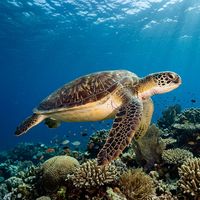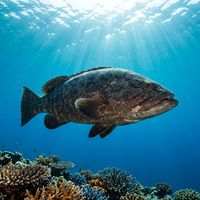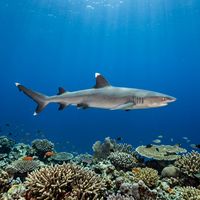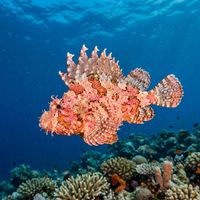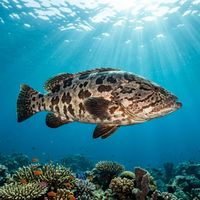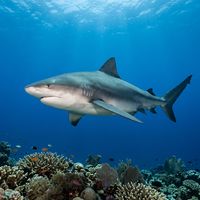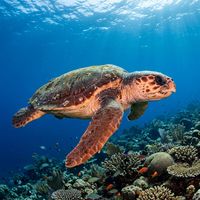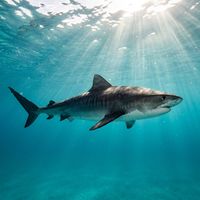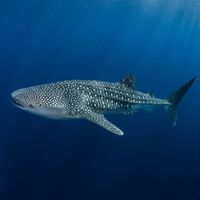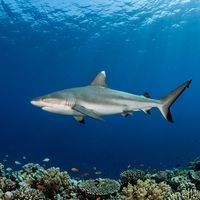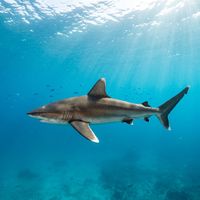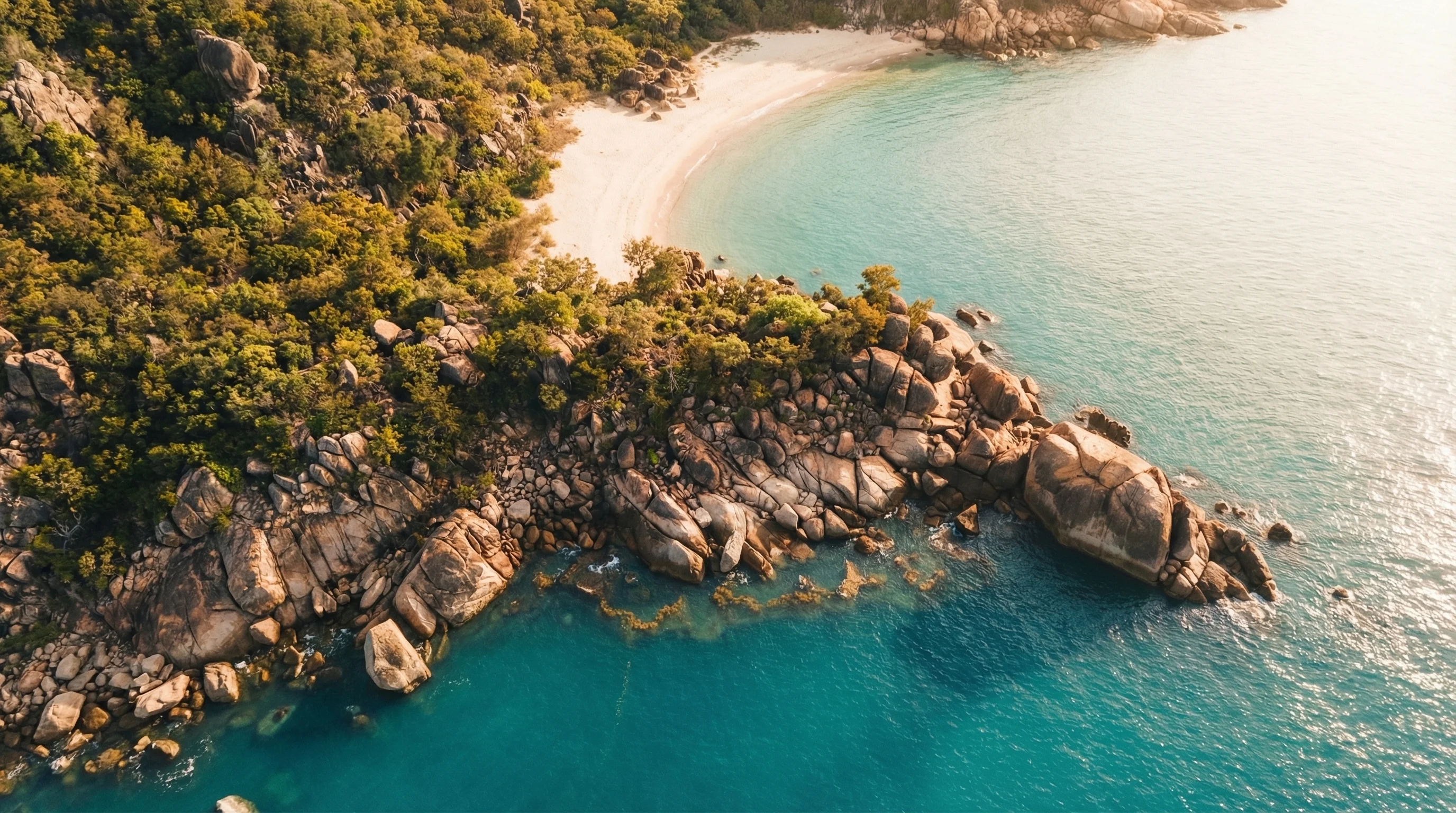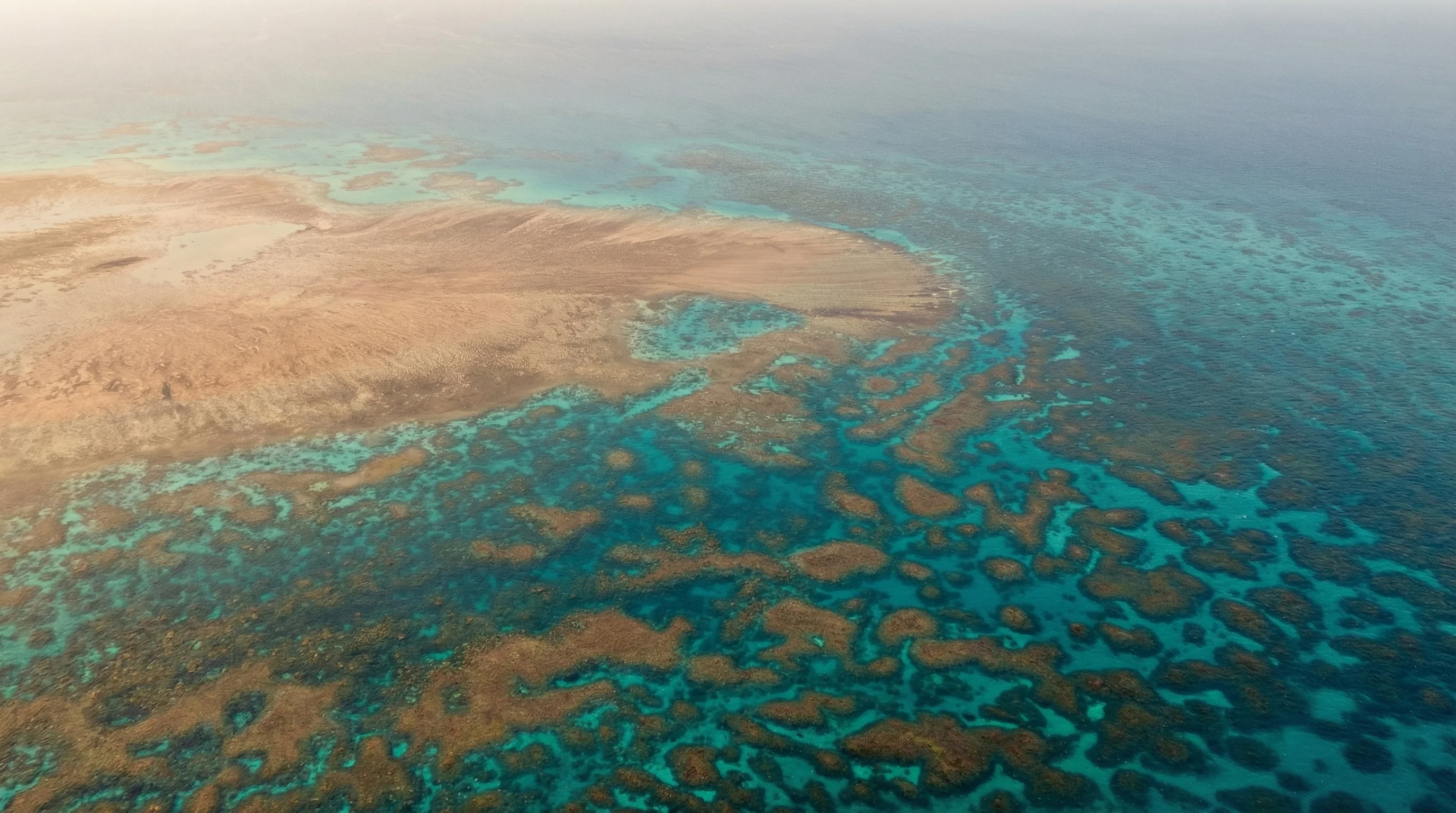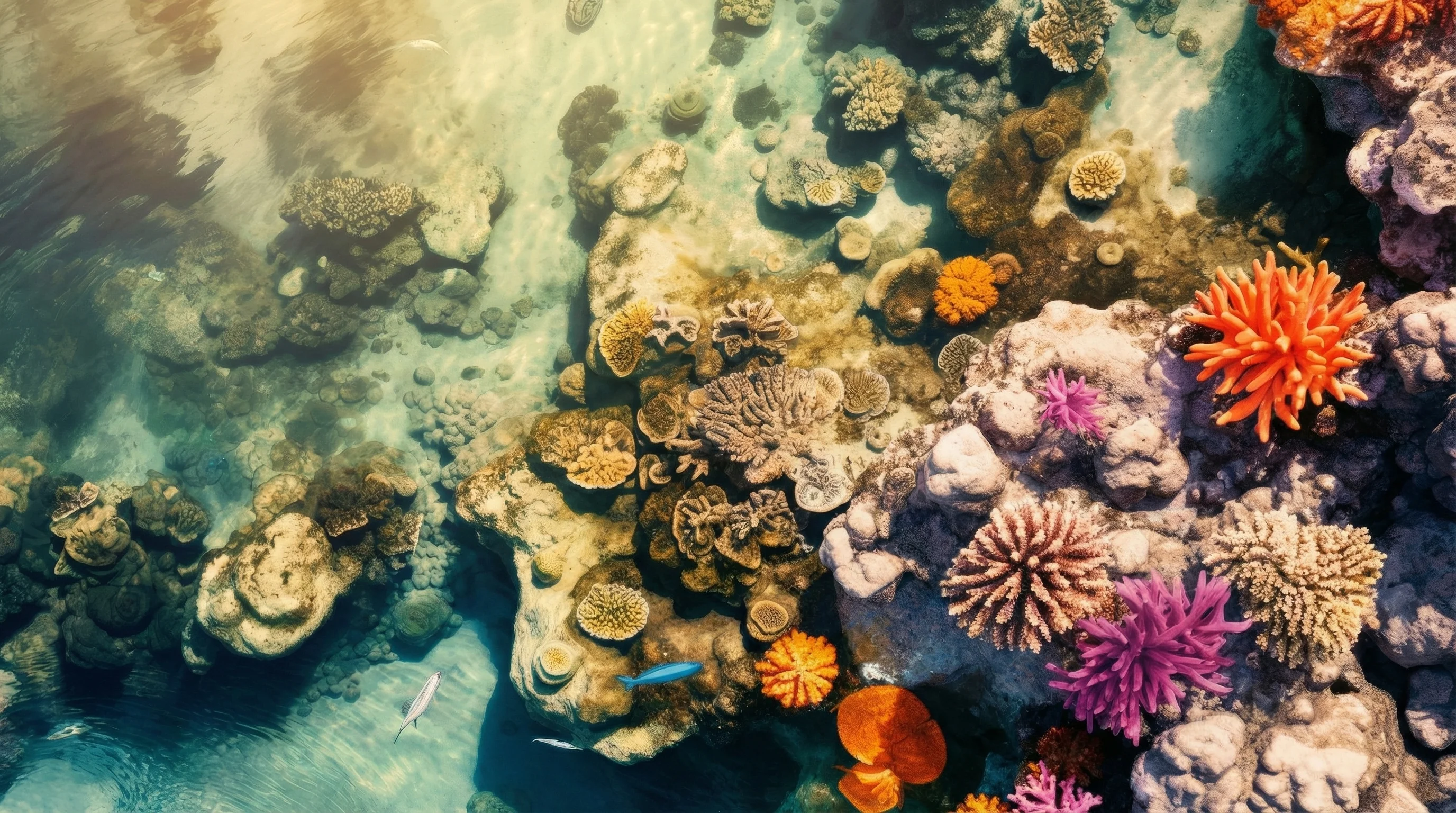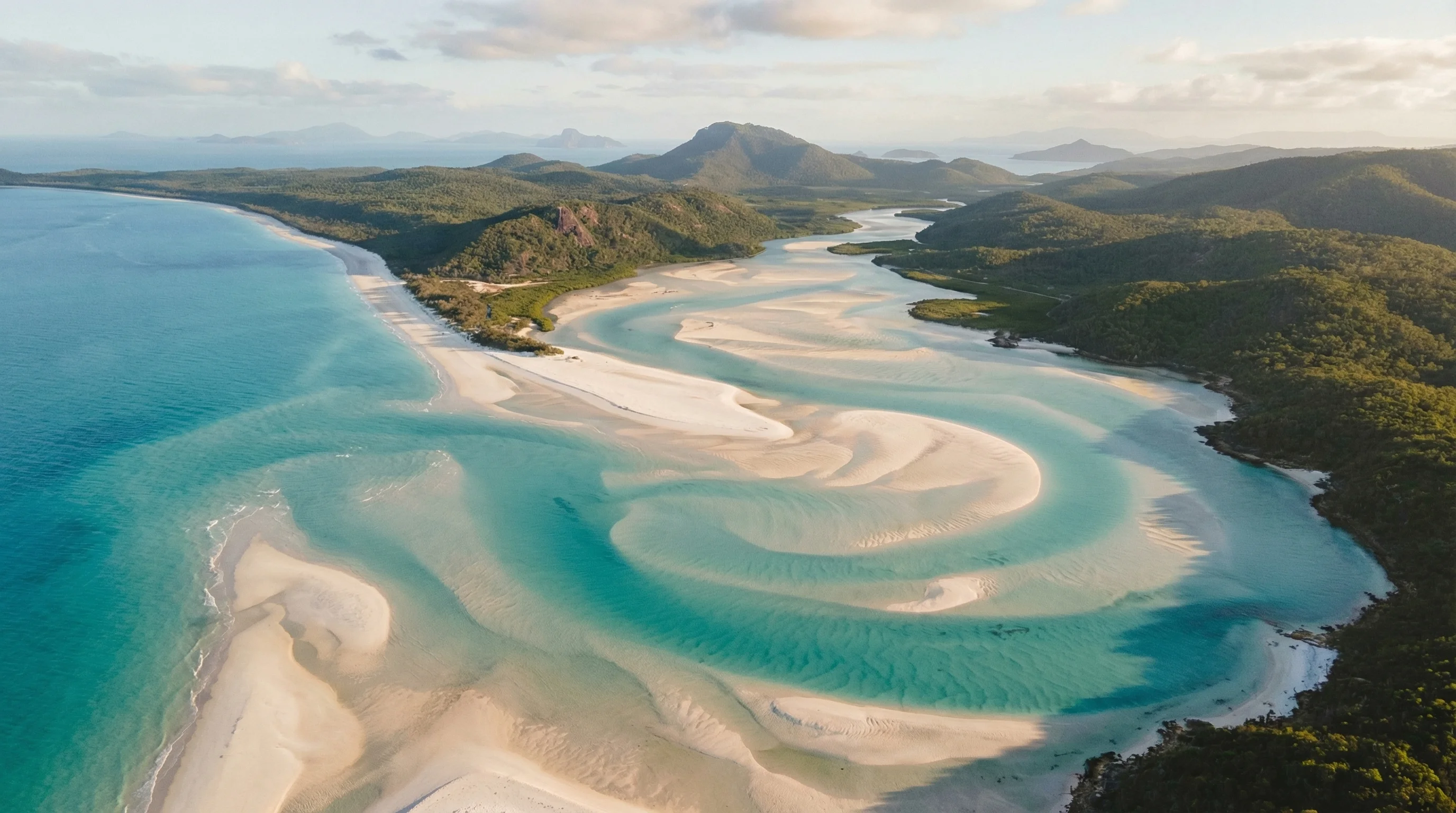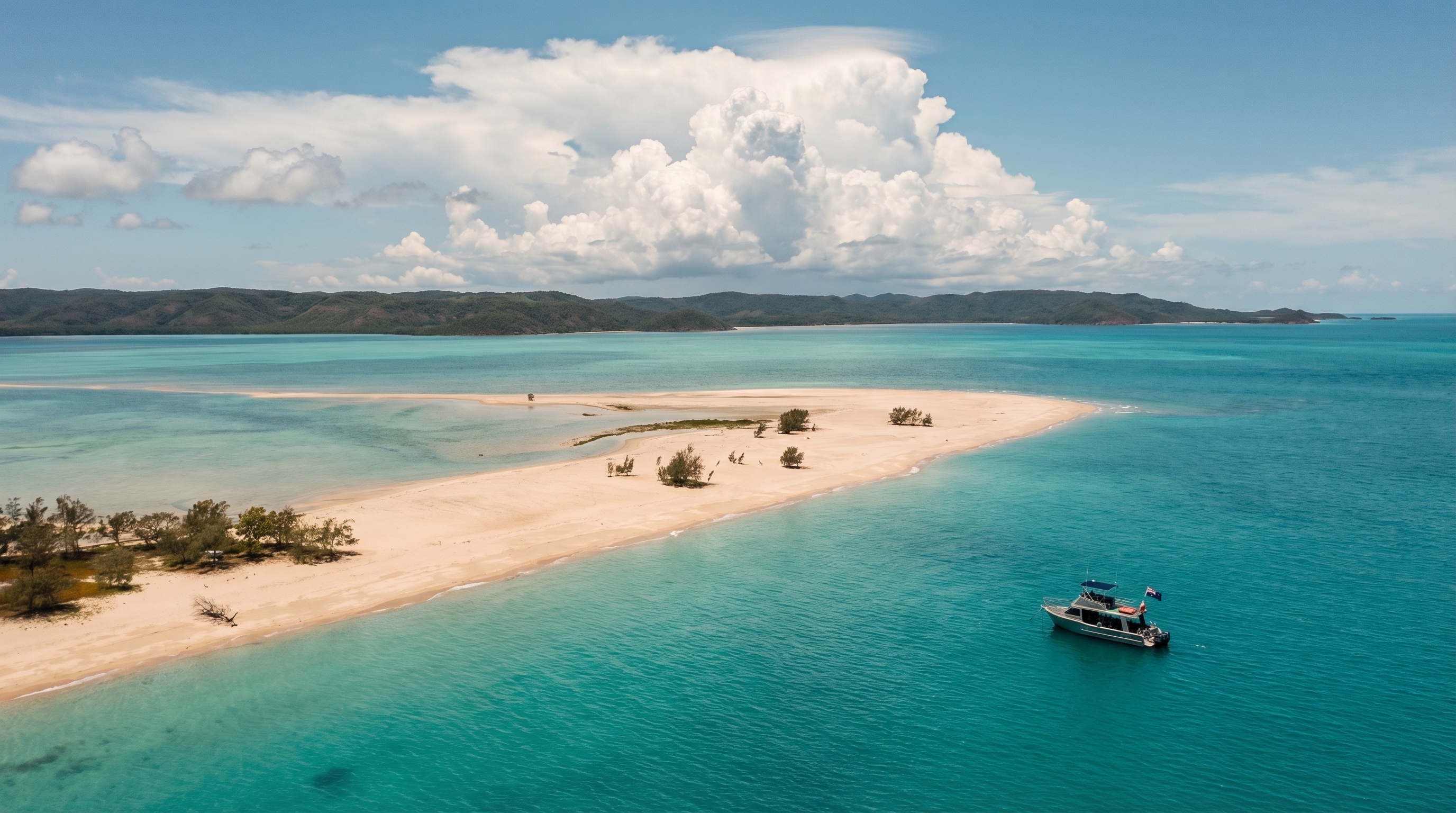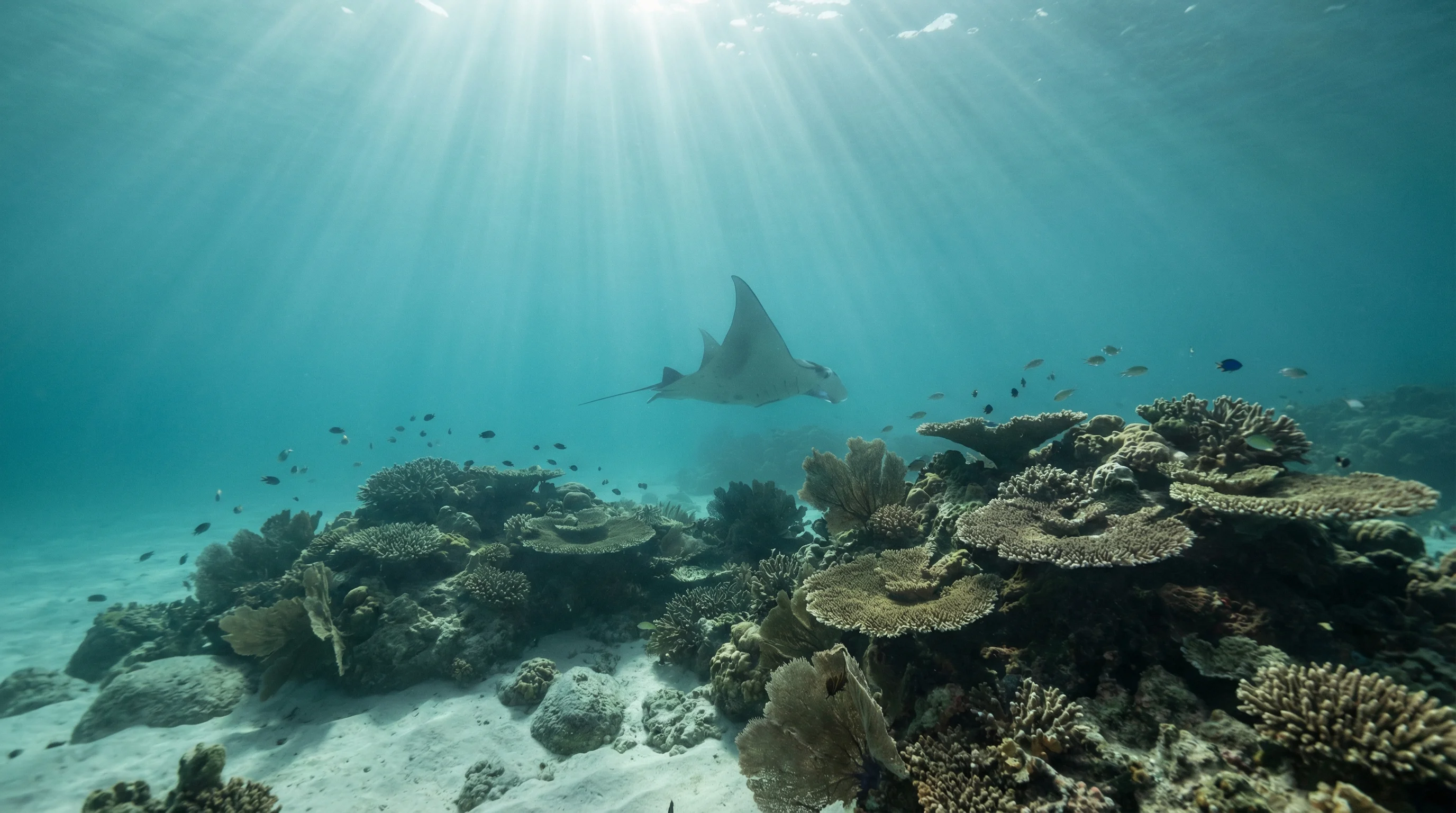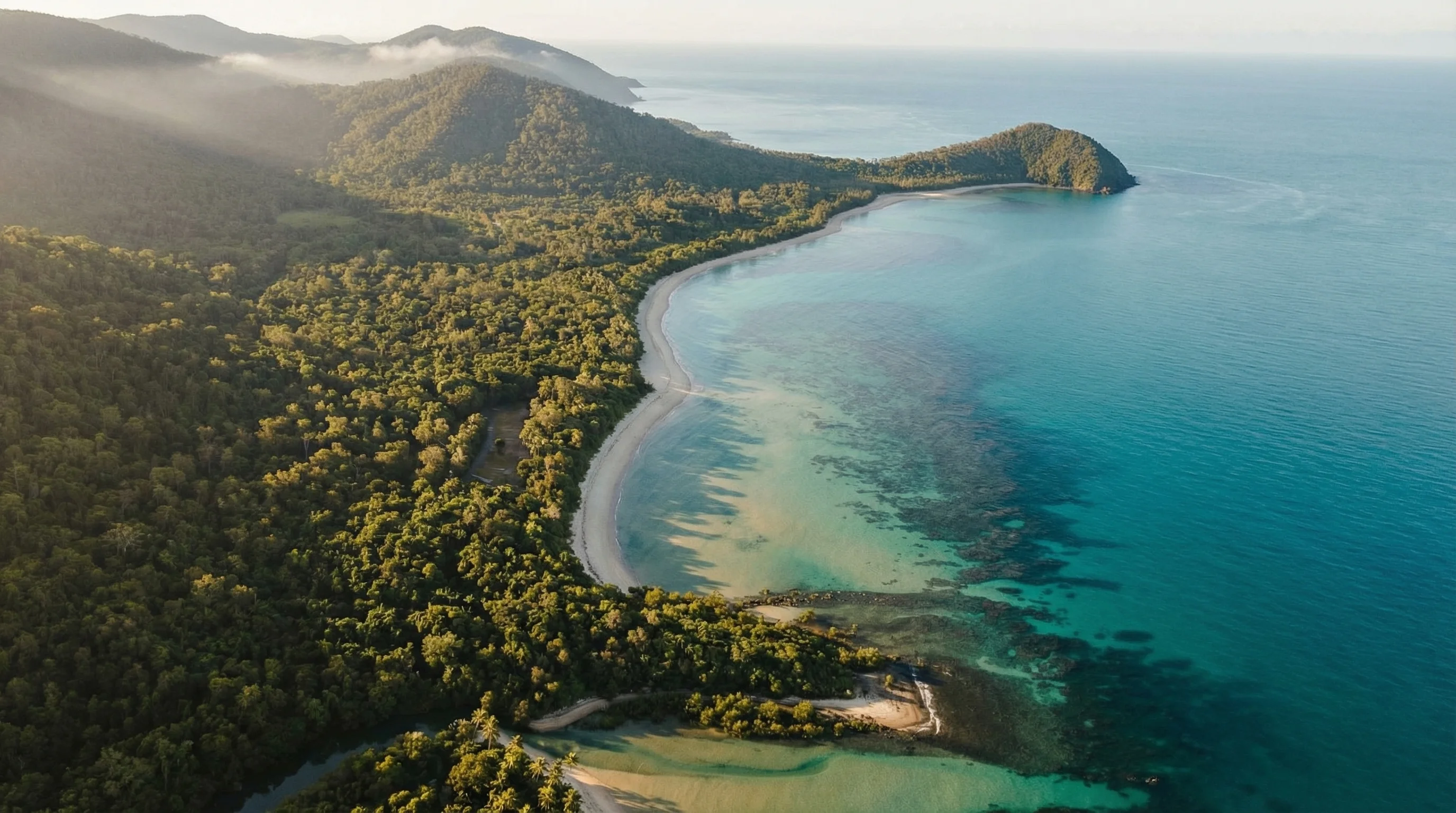
Far North Queensland stretches from the Far Northern Outer Reefs and Raine Island down through the Torres Strait and Lockhart River, covering a spread of reef, wall, wreck and drift sites. The dominant experience is boat-access reef diving, ranging from shallow coral gardens suitable for beginners to deep walls and passages that demand more experience. Green Sea Turtle, Queensland Grouper and Whitetip Reef Shark are observed across nearly all sites, while the region's more remote reaches draw Whale Shark and multiple shark species.
4 areas
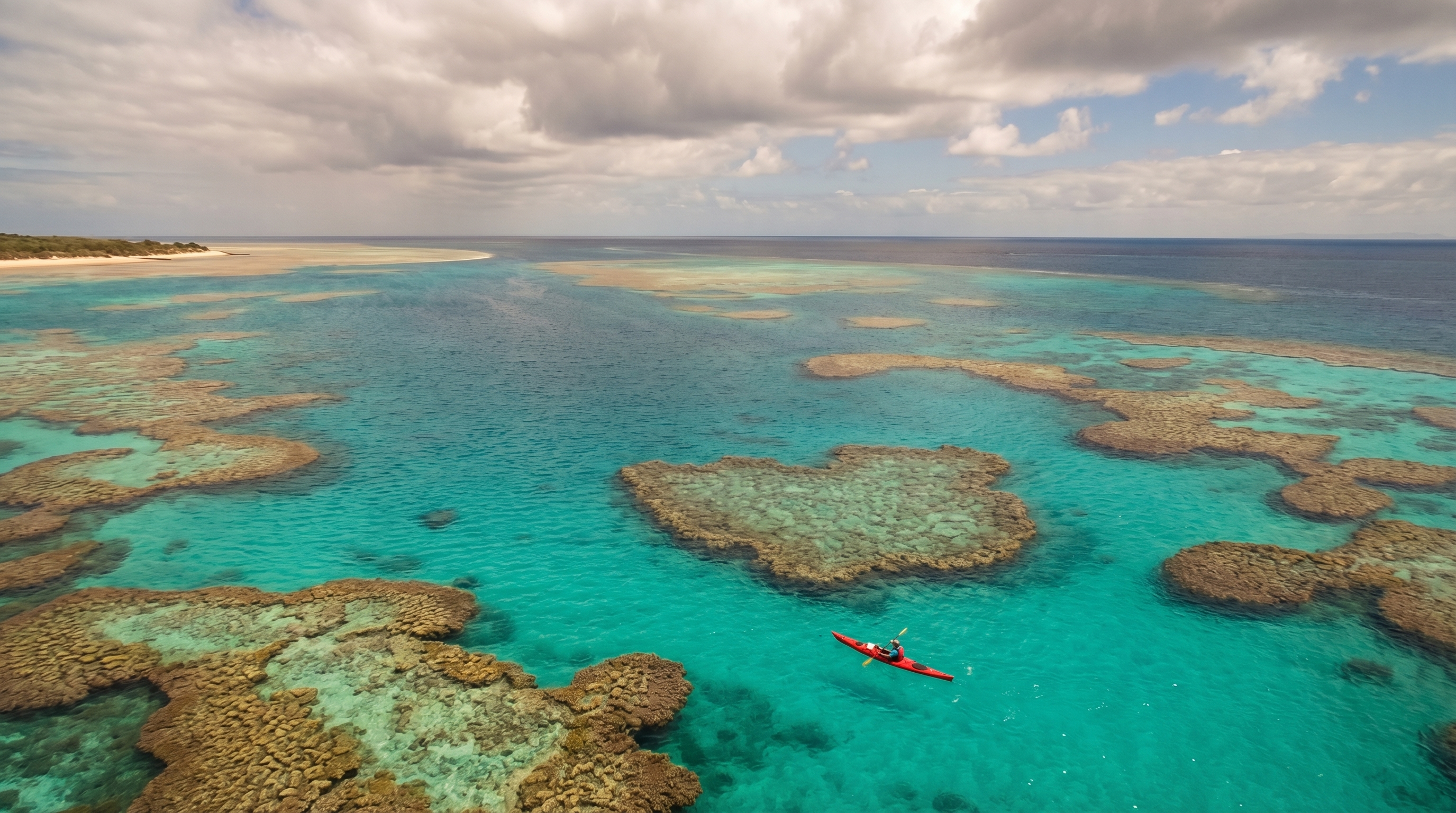
Monthly water temperature across Far North Queensland's sites, from satellite sea-surface data corrected for depth. The band shows the site-to-site spread.
Water stays warm through the wet season from November to April, then cools slightly through the dry months, reaching its lowest point in August before climbing again. Visibility tends to improve through the drier months, which also correspond with the peak in diver activity from April through October. Currents are a real factor at sites like Catcher's Mitt and Stead Passage, so conditions are not uniform across the region.
2 operators
Australia
Australia
14 more sites to explore
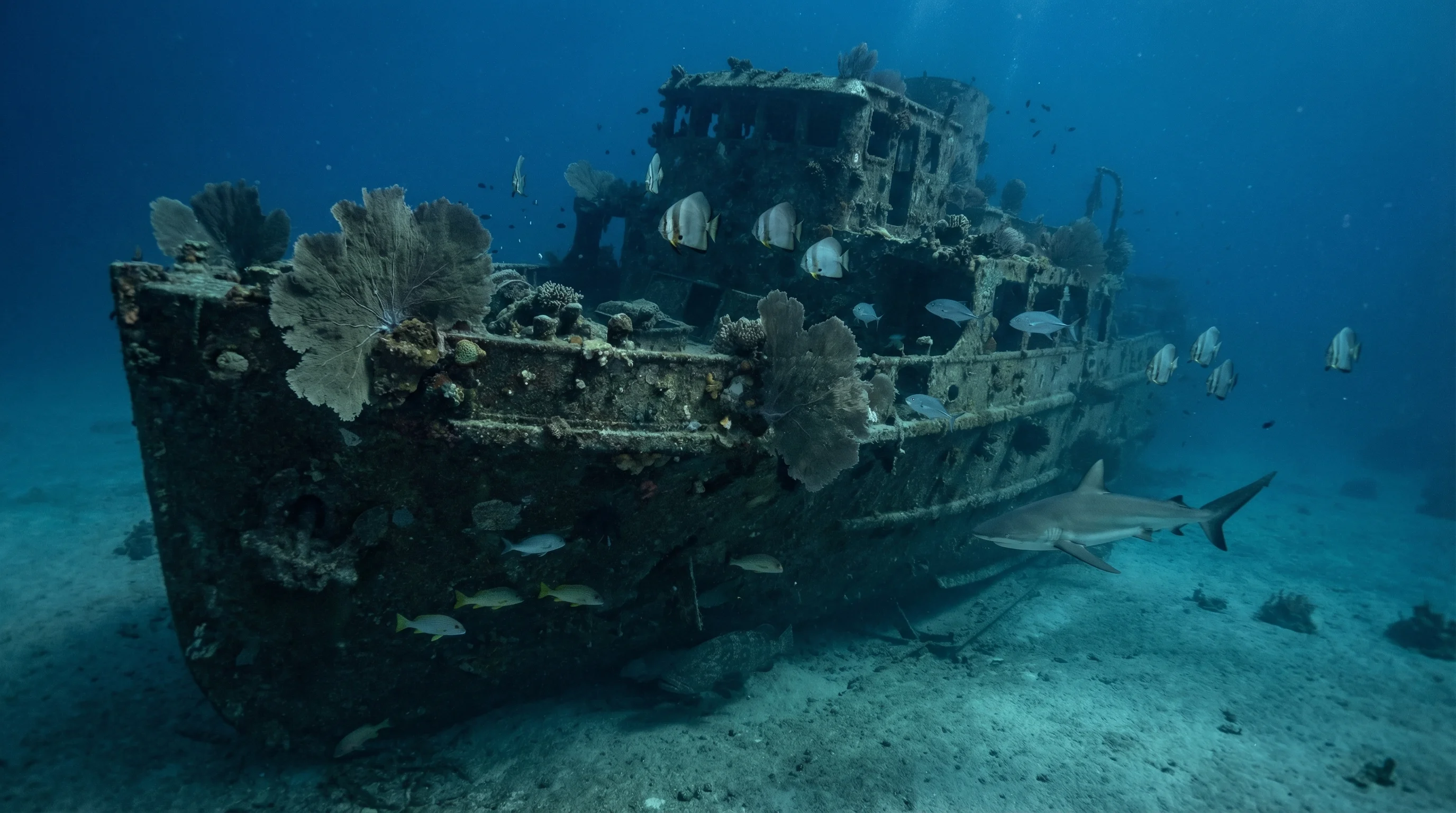
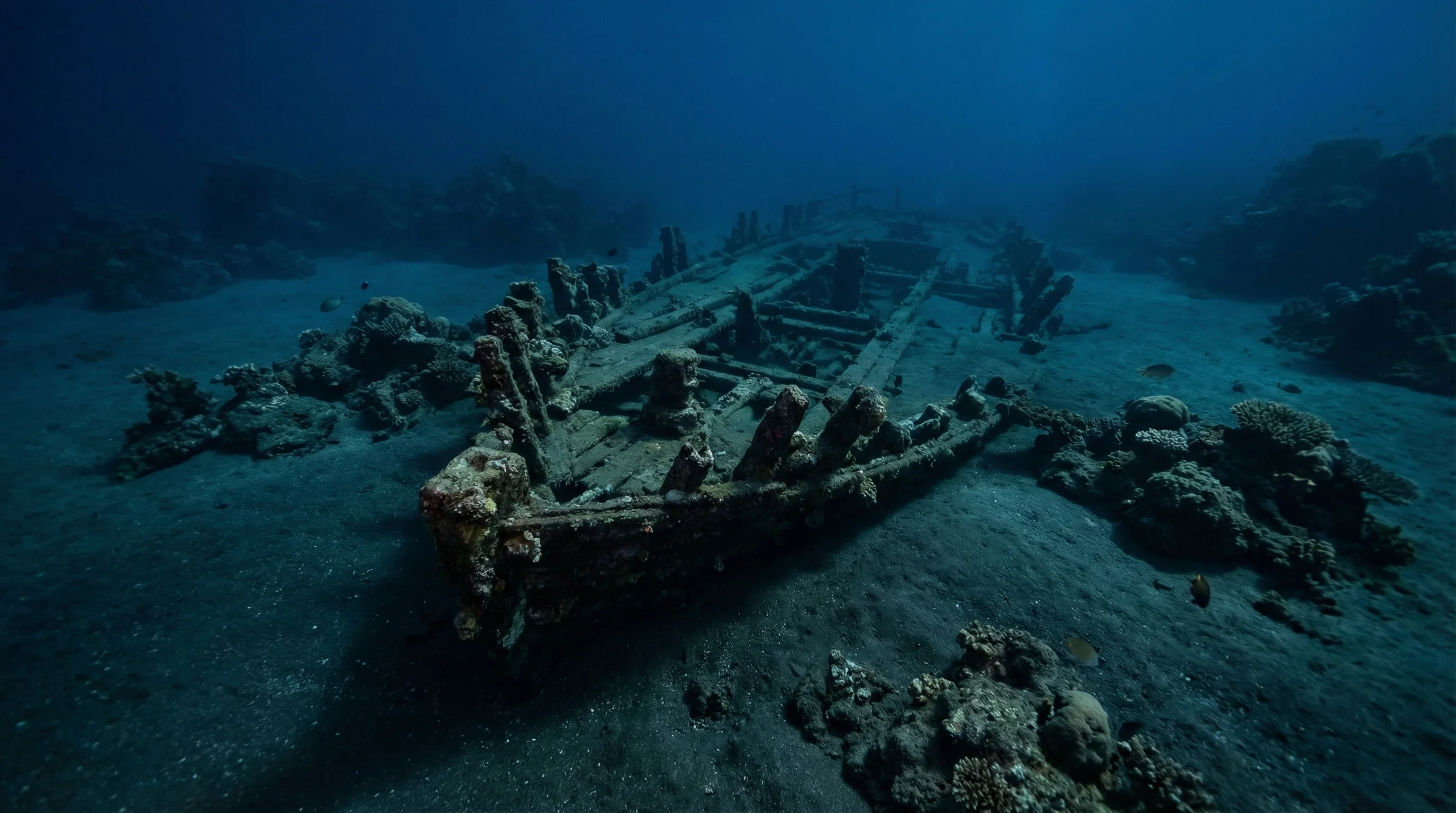
Remote liveaboard diving on the far northern Great Barrier Reef, with deep walls, strong drift sites, and the wreck of HMS Pandora.
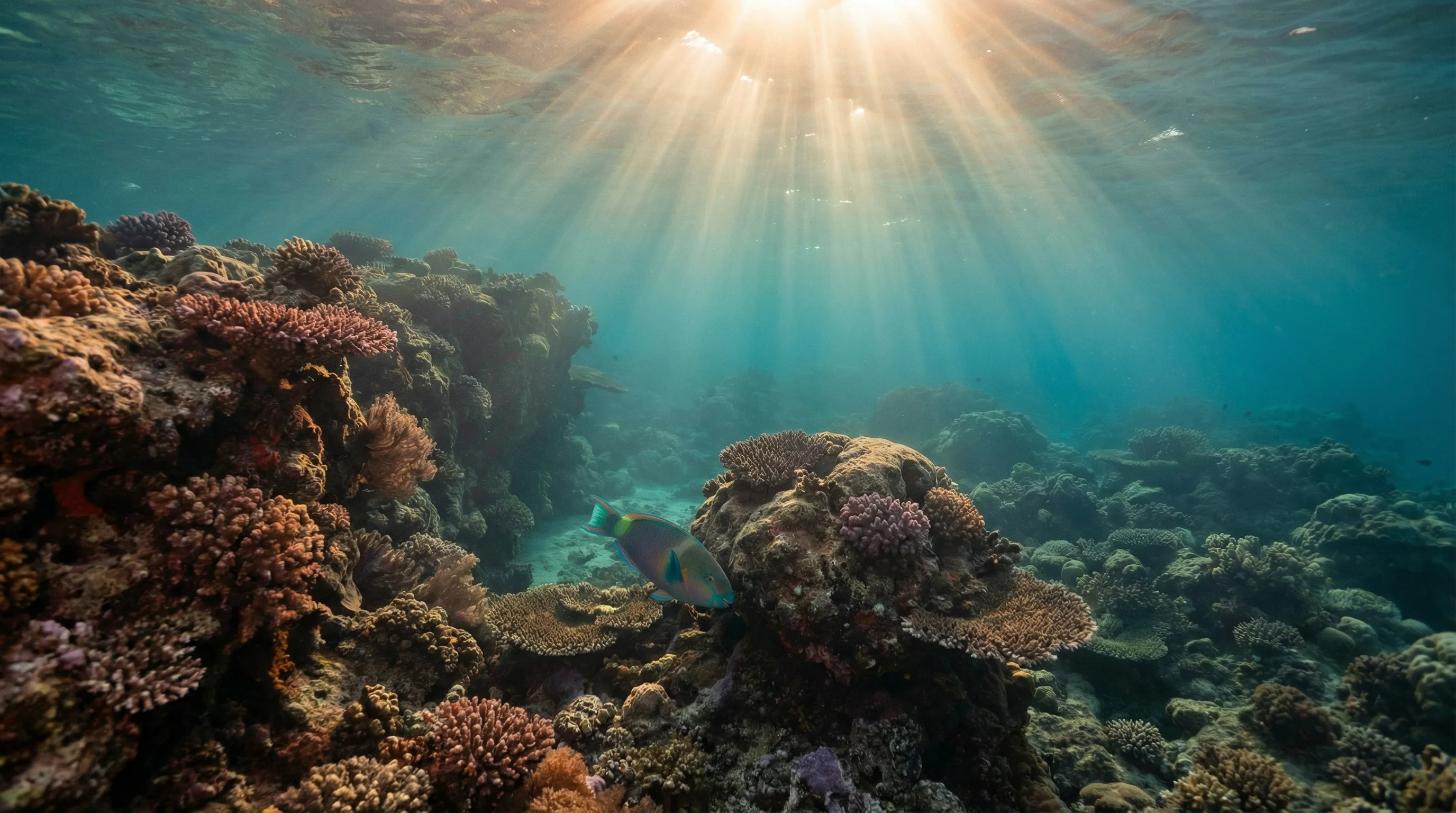
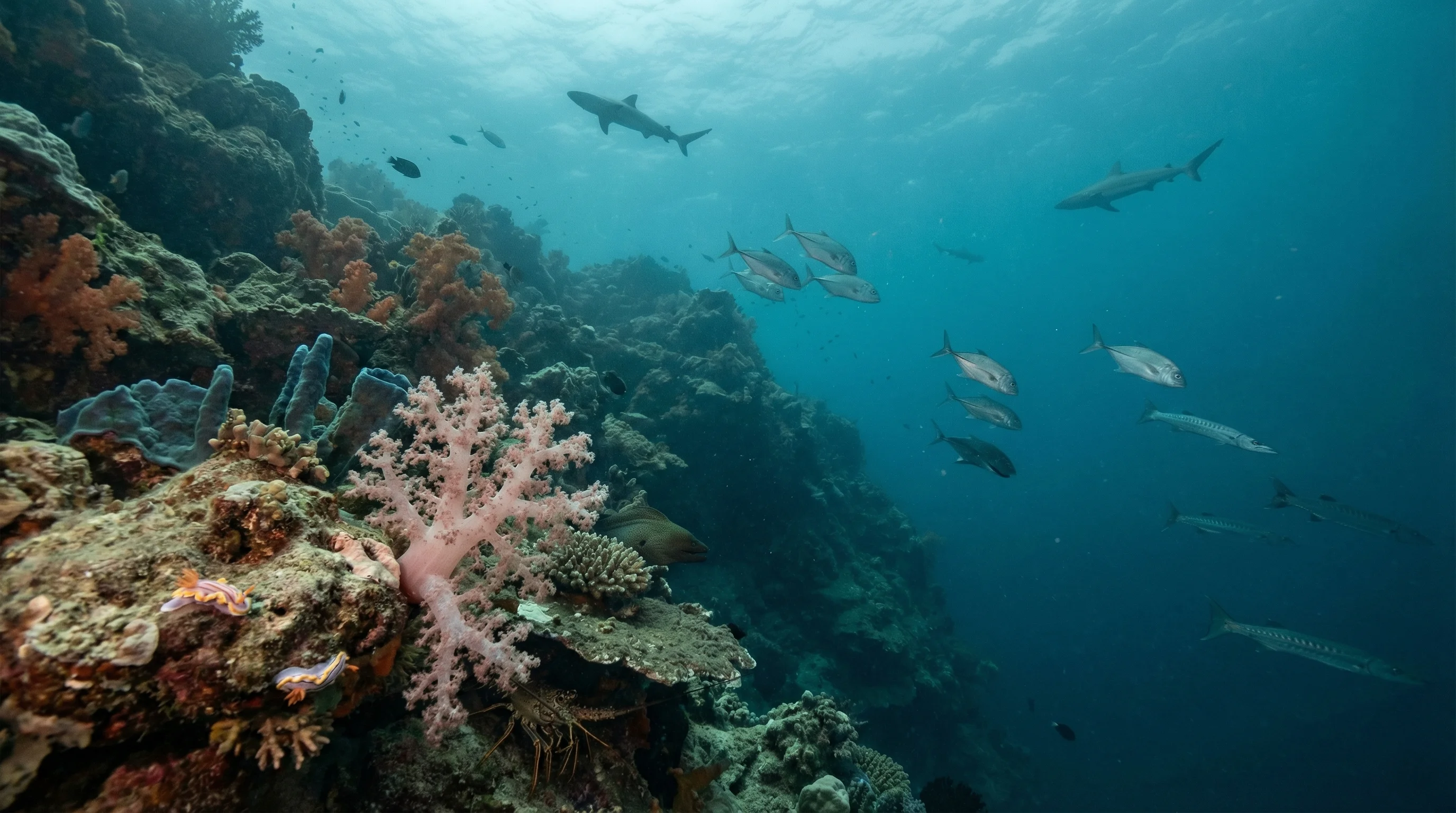
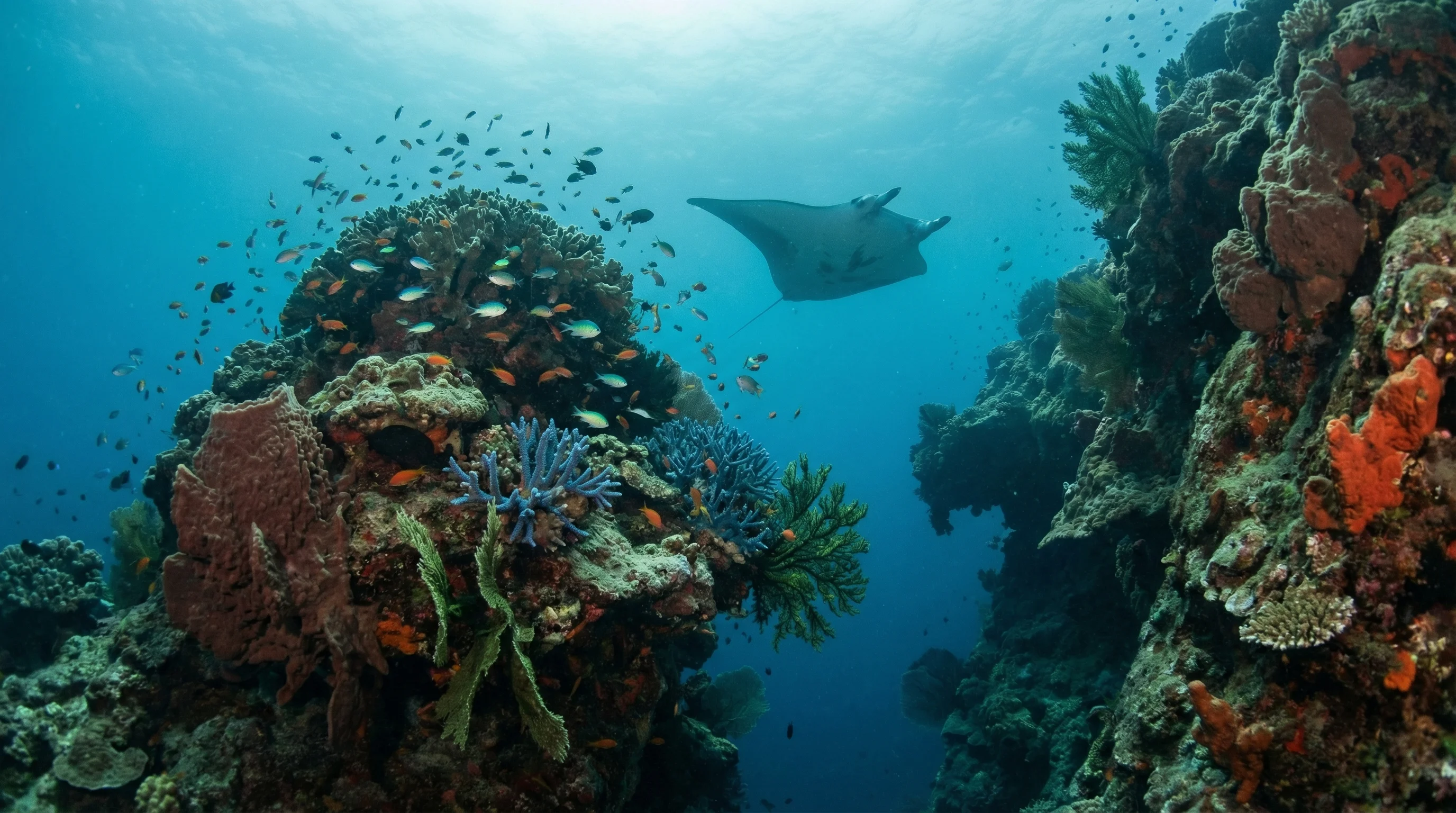
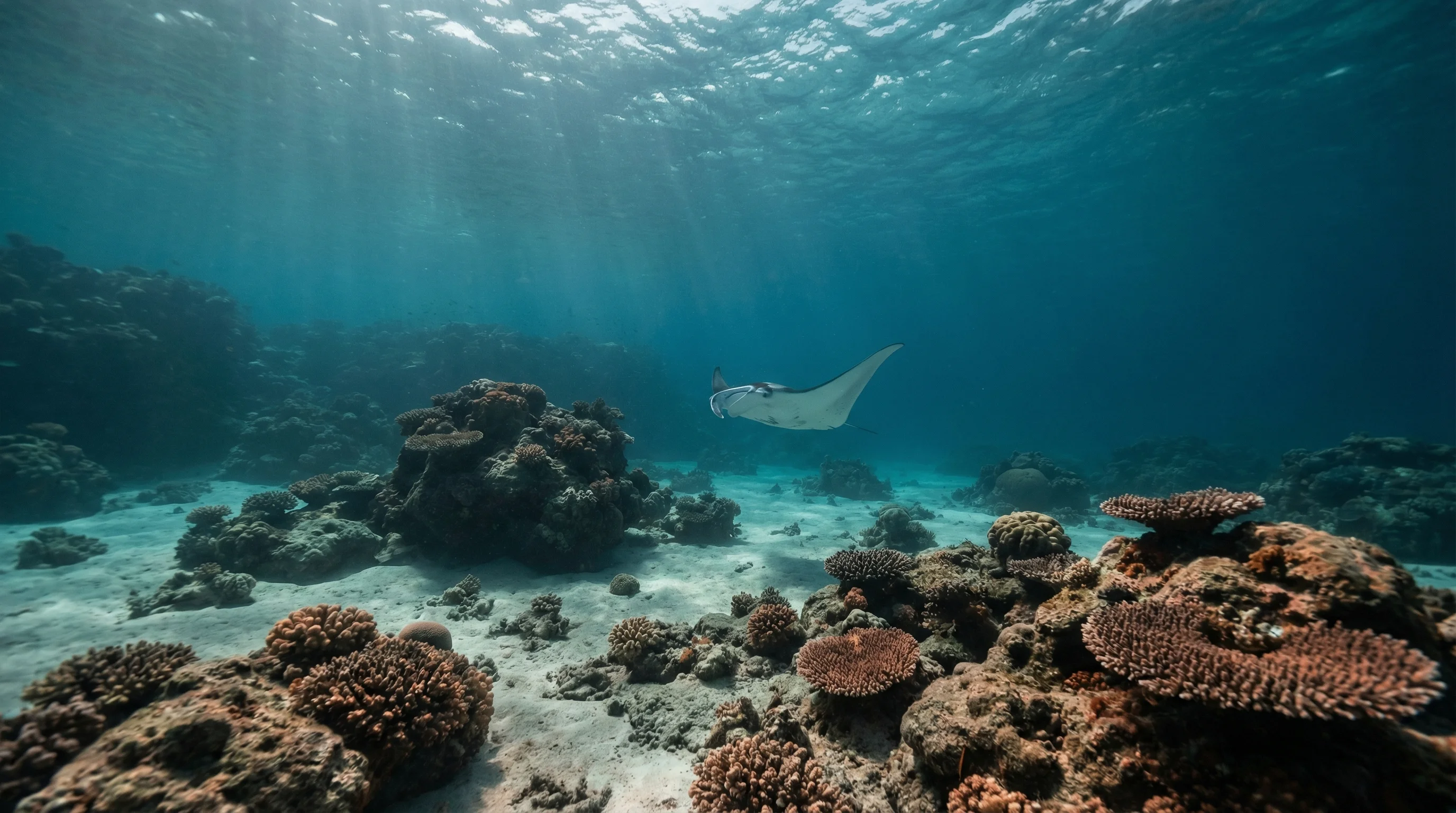
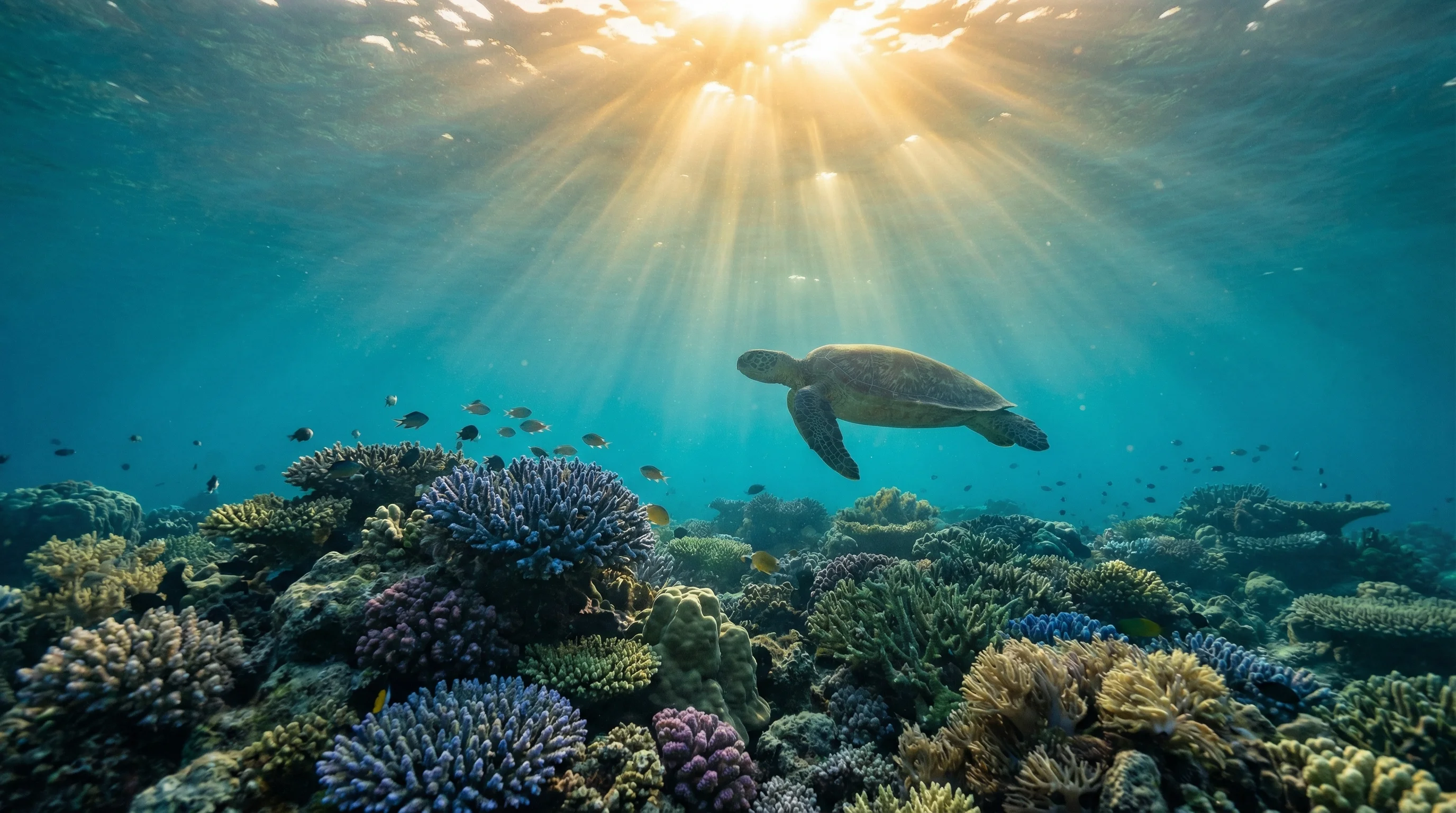
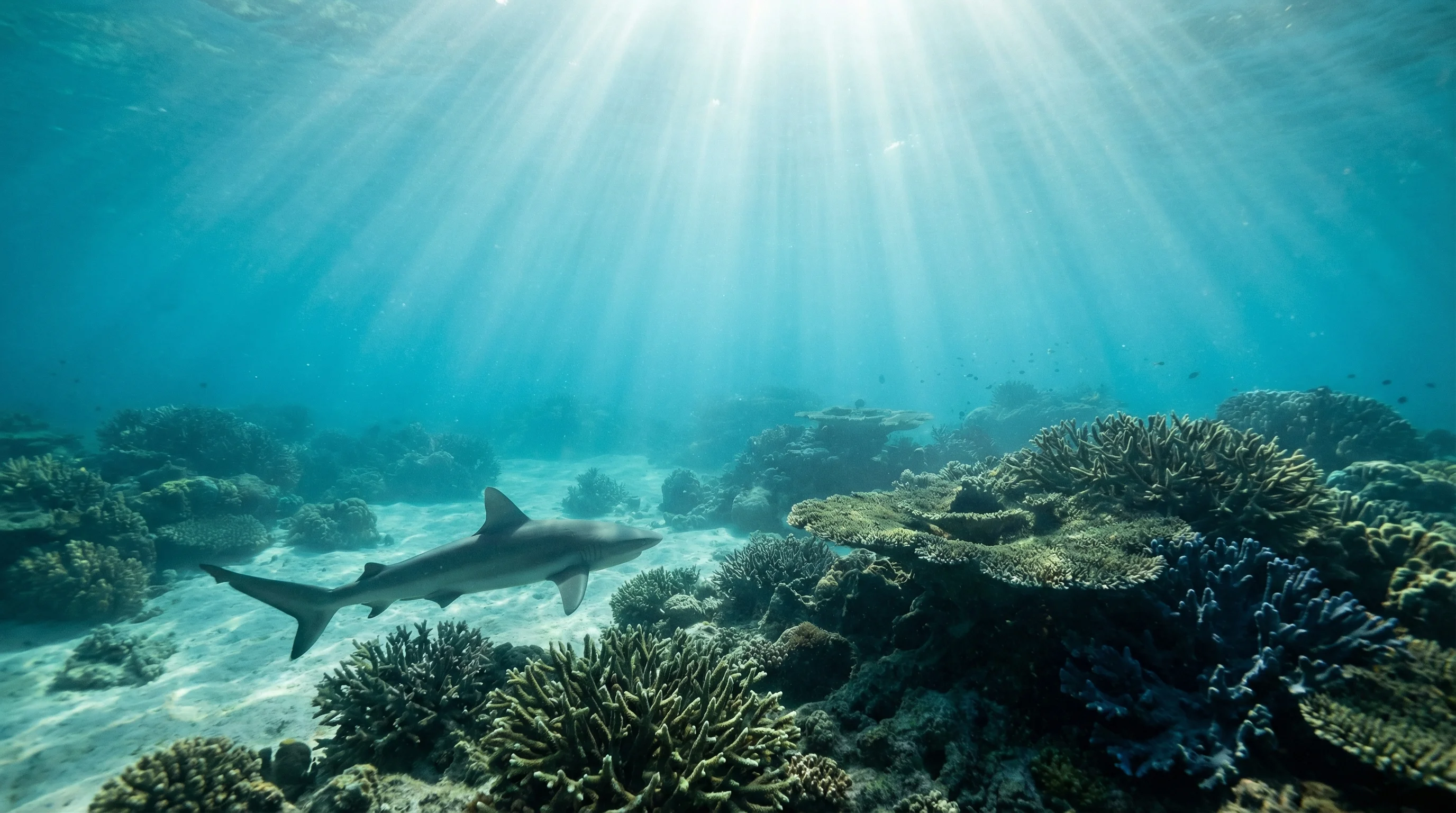
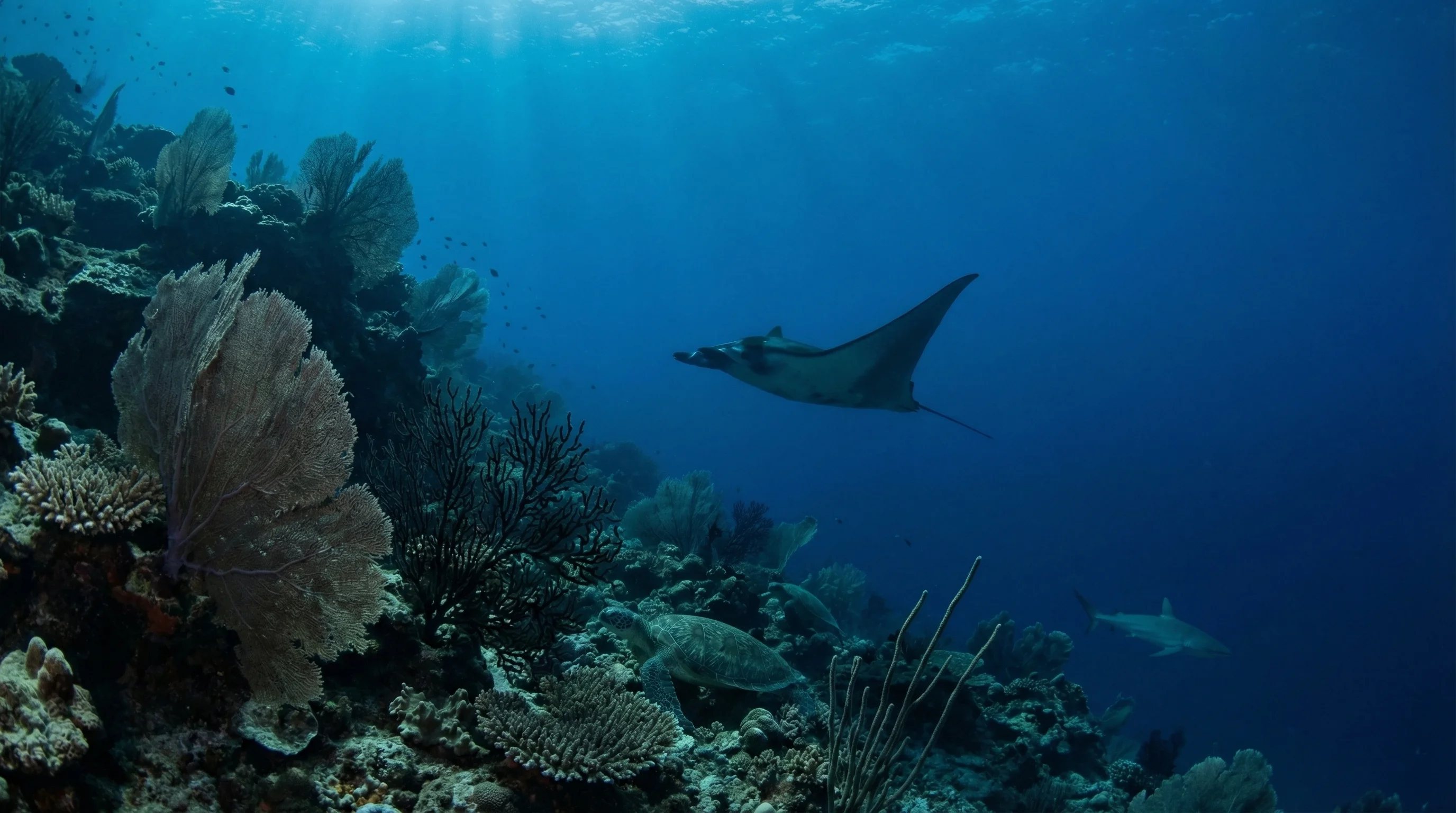
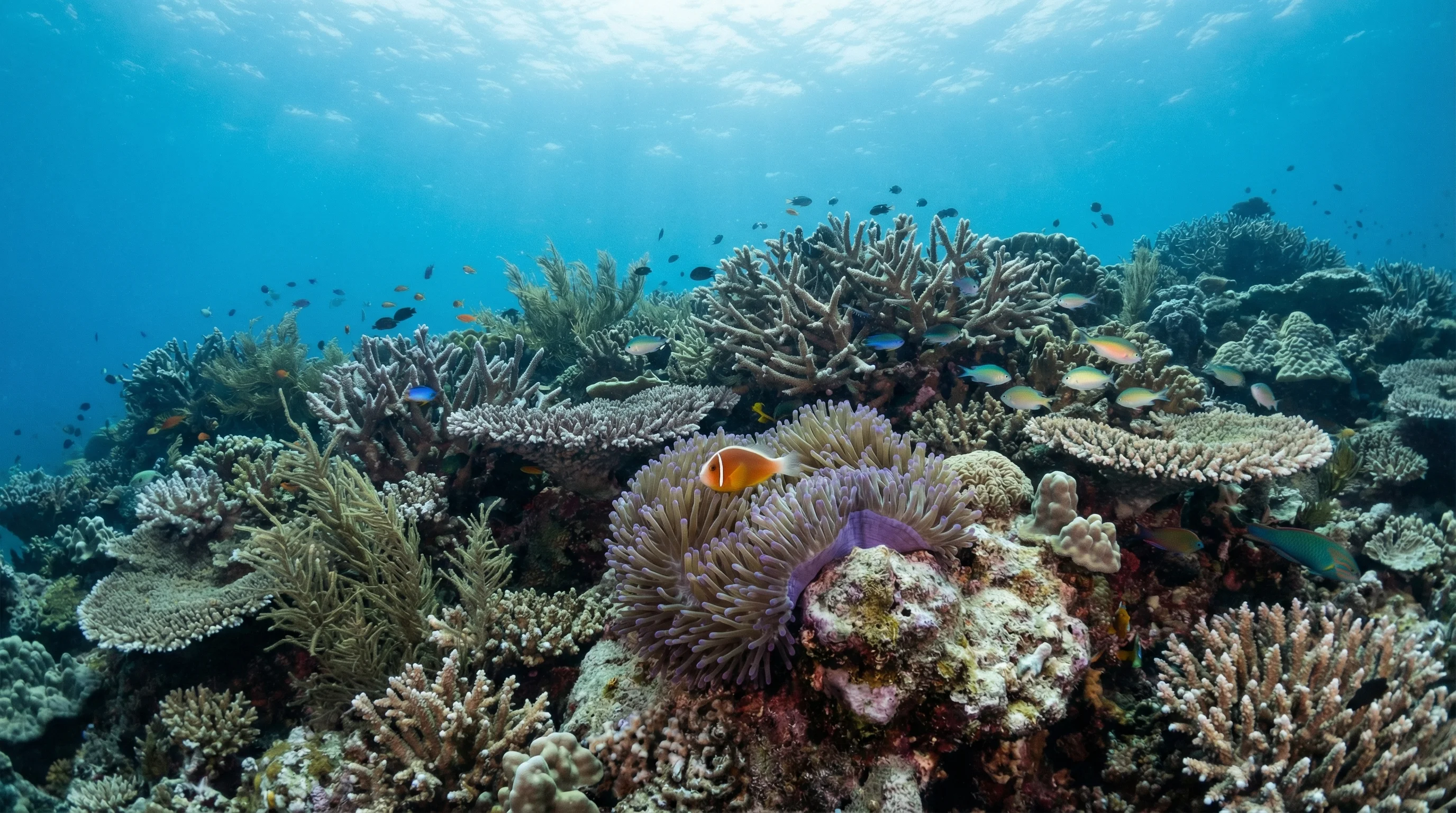
Water temperature around Far North Queensland ranges from about 25°C in August to 29°C in January, based on satellite sea-temperature data for its dive sites.
In the warm season (about 29°C) a rash guard or 3mm shorty is comfortable in Far North Queensland; in the coldest months (about 25°C) step up to a 3mm full suit.
Fin maps 26 sites in Far North Queensland (25 scuba diving sites and 8 snorkelling spots, with some suited to both), organised into 4 areas.
The region has a strong shark presence across multiple species. Whitetip Reef Shark is observed at nearly all sites, while Grey Reef Shark and Silvertip Shark are common throughout. Bull Shark and Tiger Shark are also regularly sighted, and Whale Shark encounters are recorded at a notable portion of sites.
Yes, a good number of sites are rated for beginners. Crowded Garden, Oh My Bommie, Great Detached Reef, Derry Reef and Pirates Wall all offer manageable conditions and shallower reef structures. More advanced sites such as Cathedral Wall, HMS Pandora and The Quetta Wreck are reserved for experienced divers comfortable at depth.
The Far Northern Outer Reefs focus on open-ocean walls and drift dives, including Star Reef and Rainbow Wall, often with strong currents and deep relief. Raine Island adds a wall and reef combination in a remote setting. Torres Strait is home to the historic wrecks, including The Quetta and HMS Pandora. Lockhart River offers a separate cluster of sites in a more coastal context.
All listed sites are accessed by boat, reflecting the remote and offshore nature of this region. There are no shore-entry sites in the current listings. Liveaboard or day-charter vessels are the practical means of reaching the outer reefs, Raine Island and Torres Strait sites in particular.