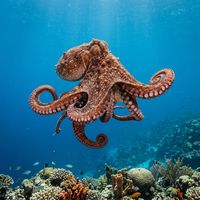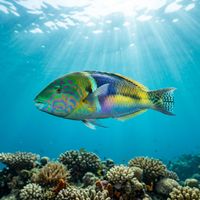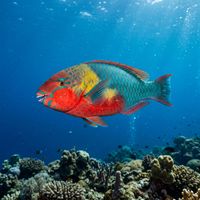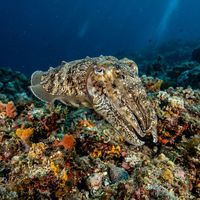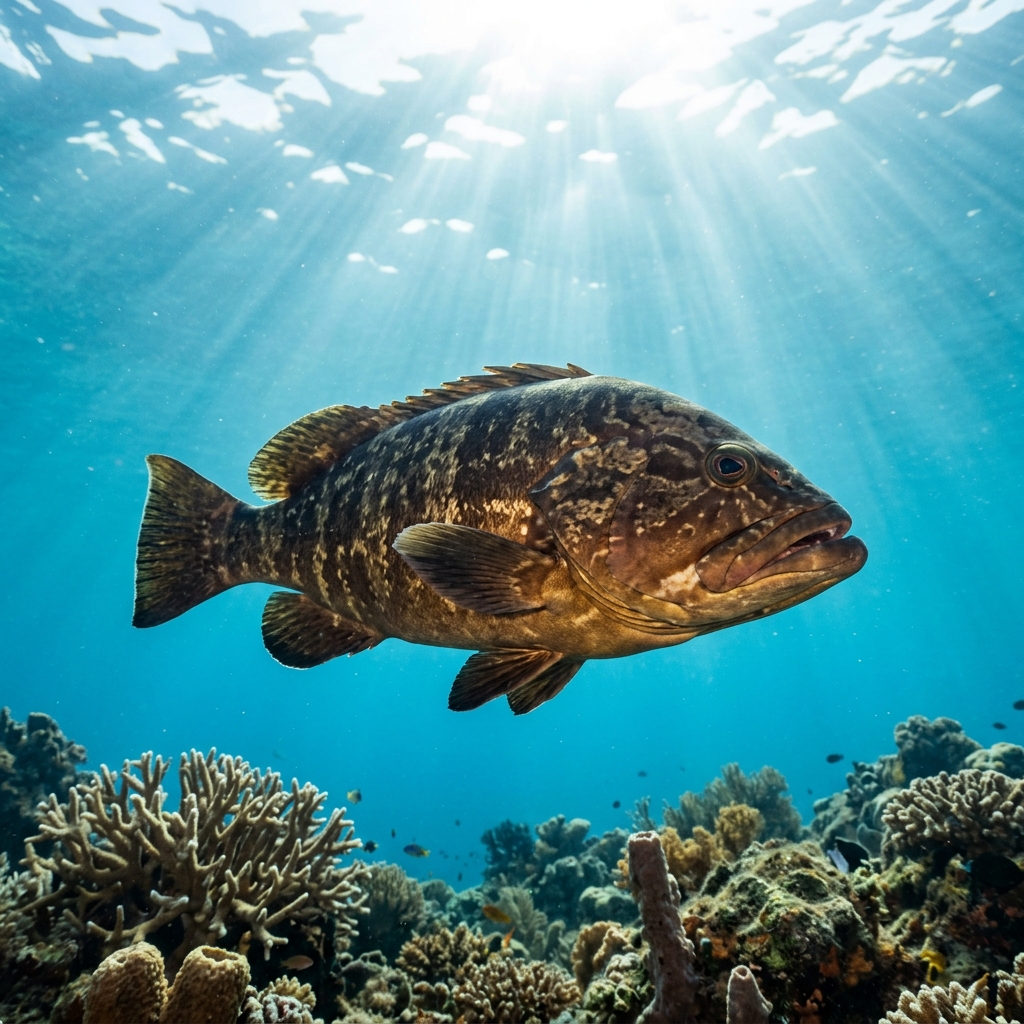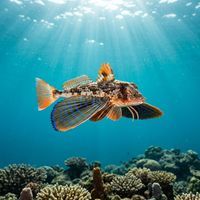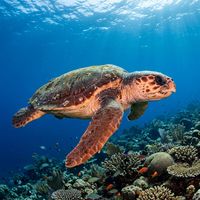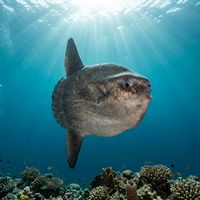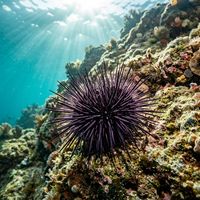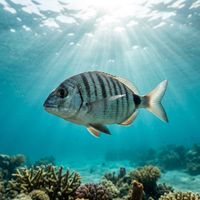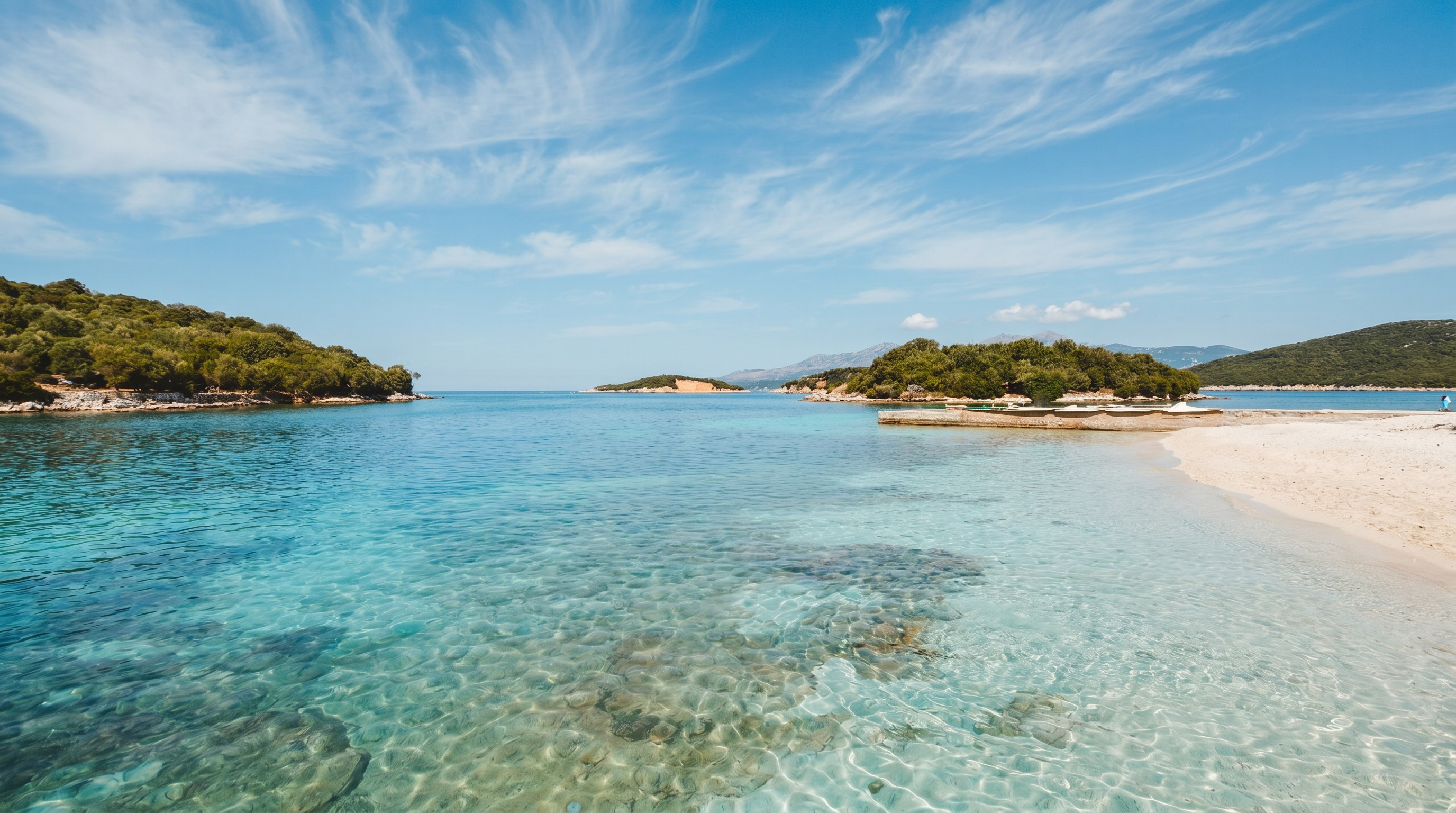
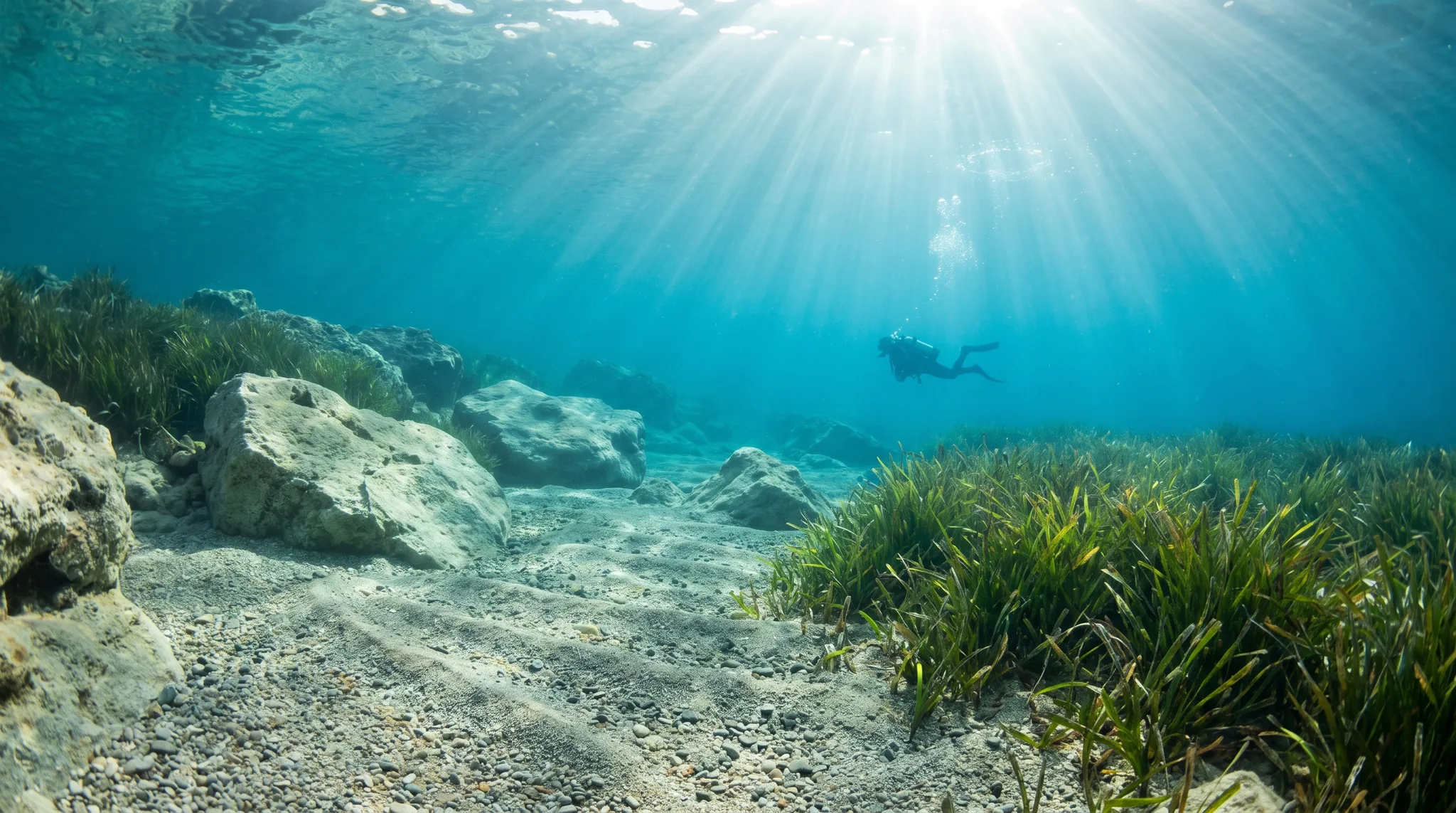
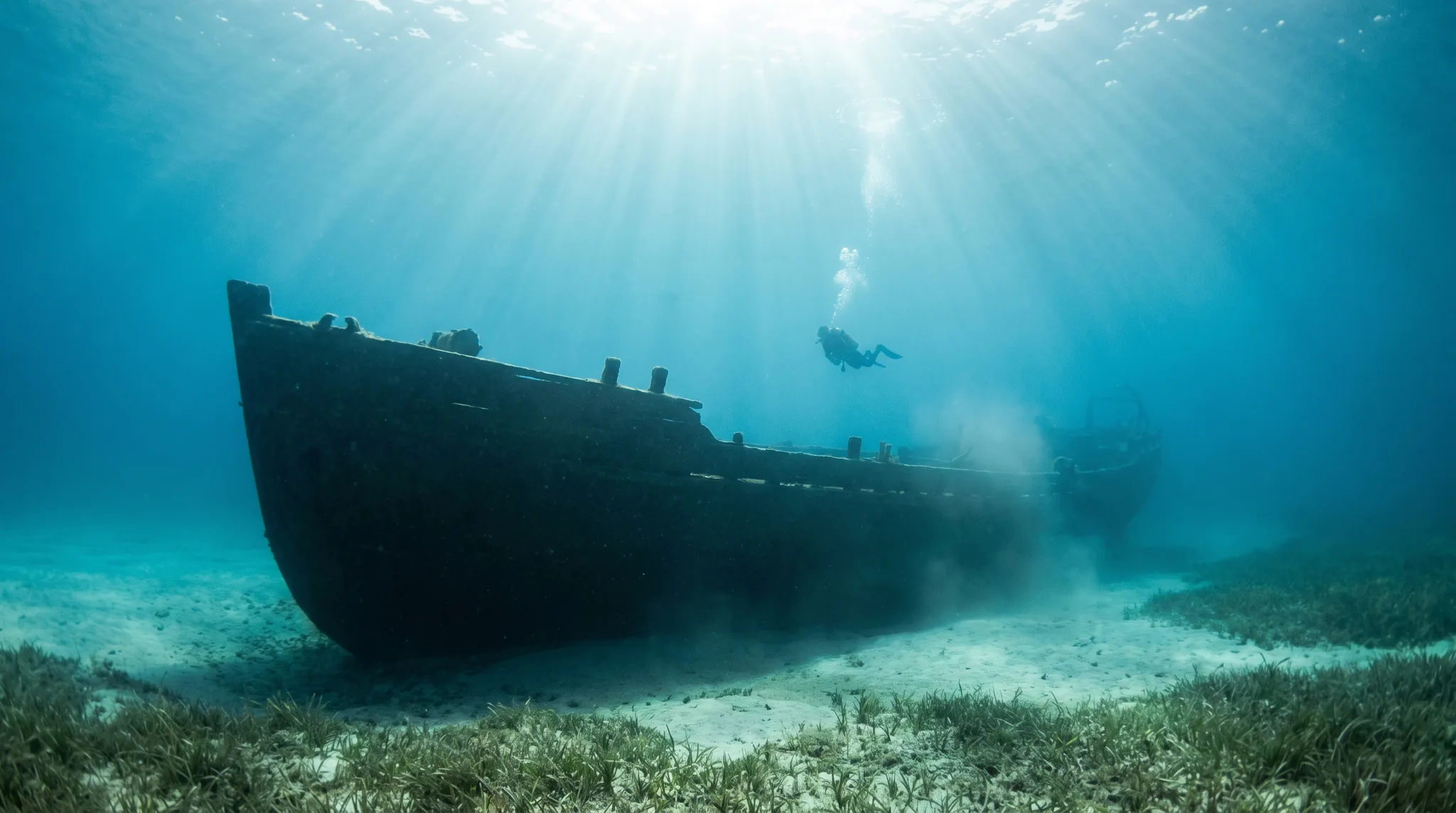
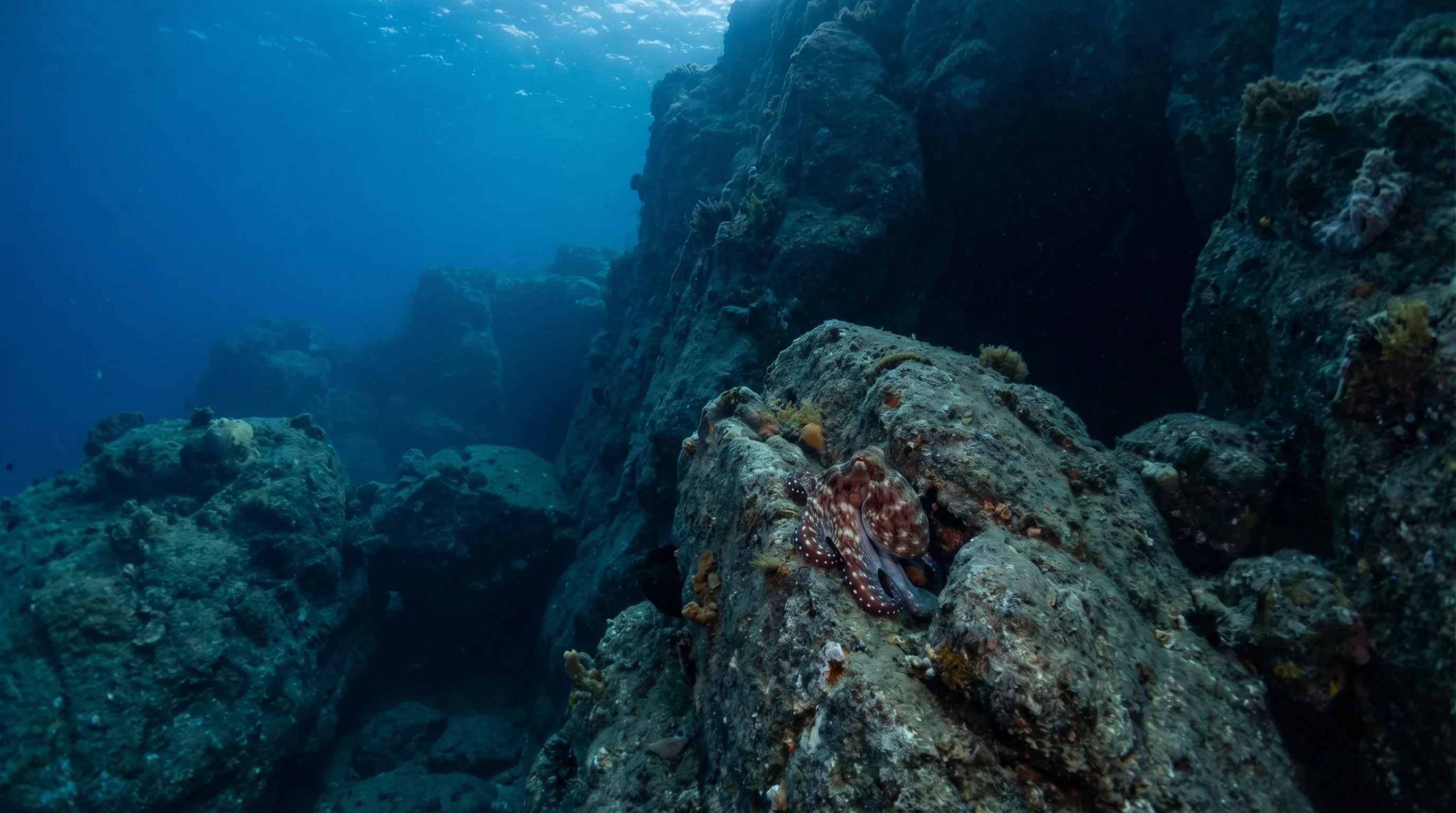
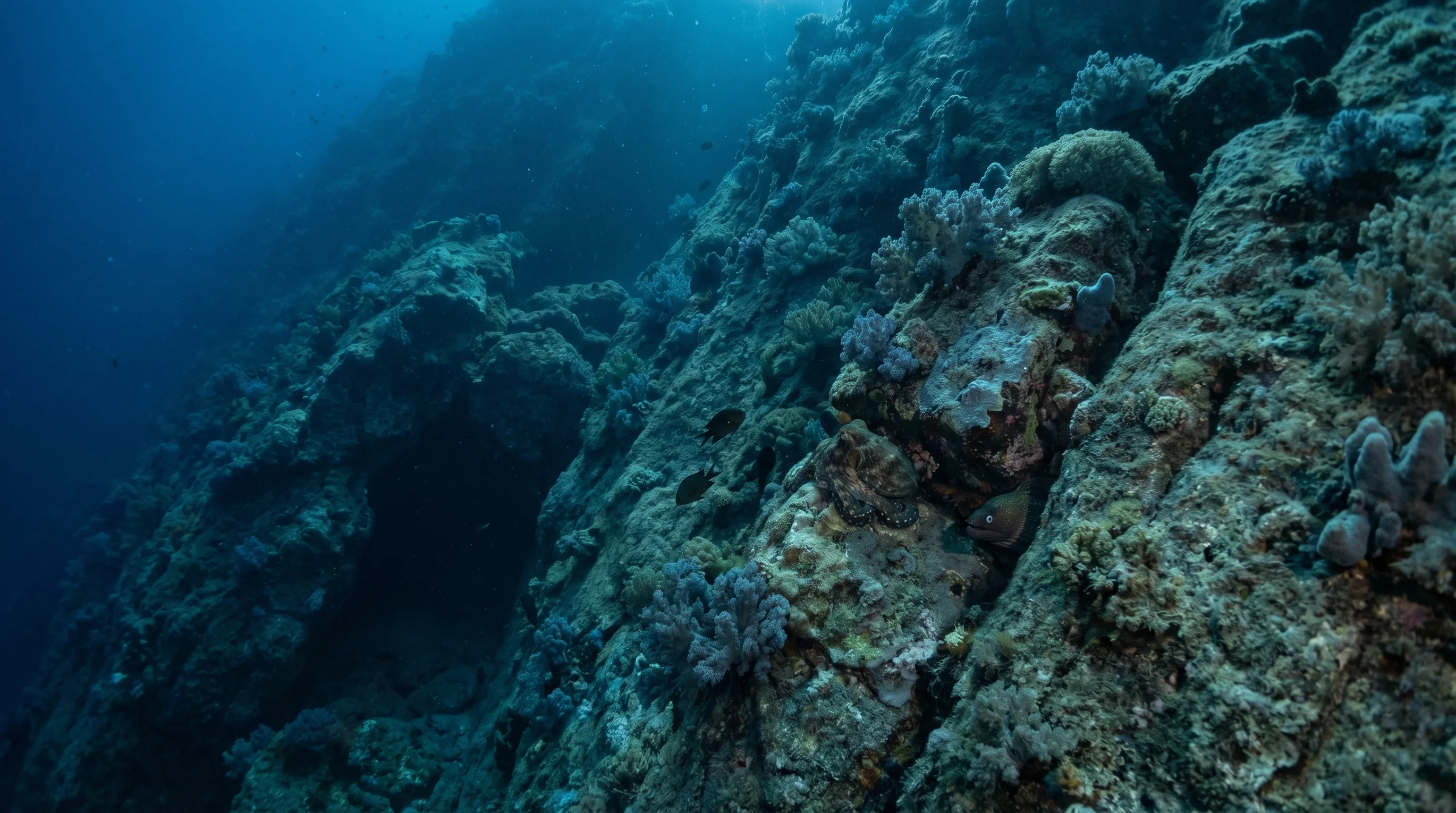
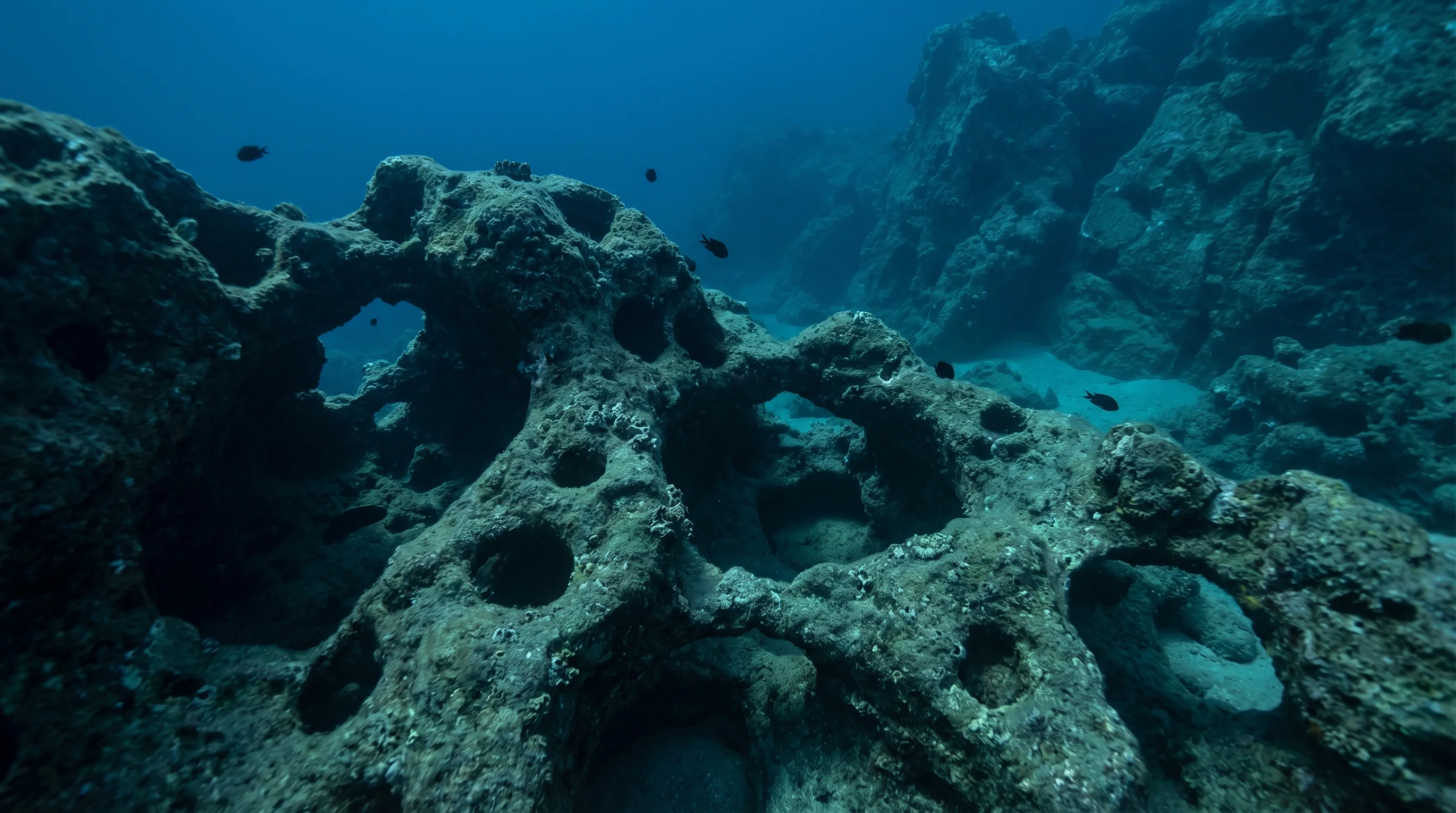
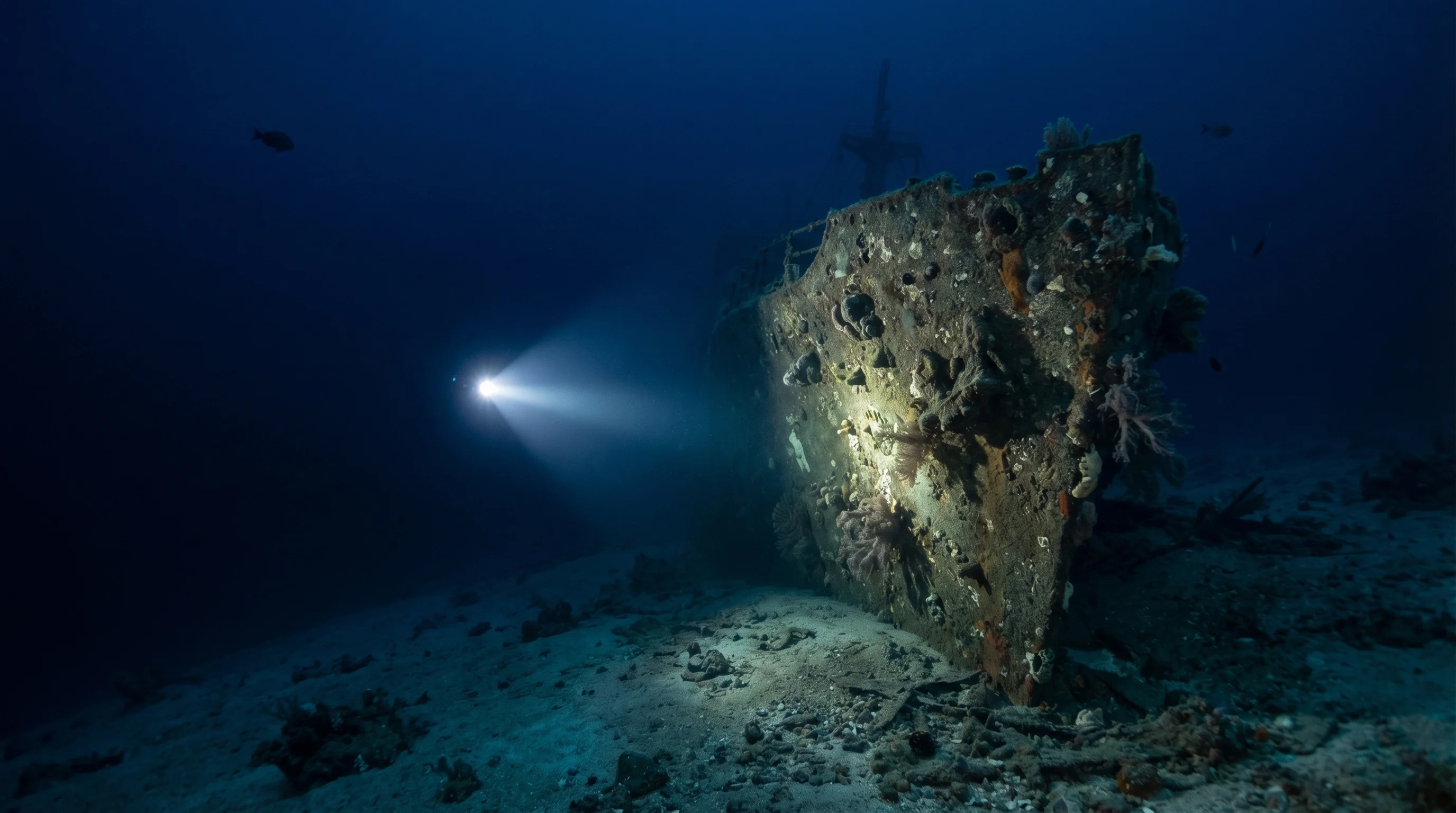
Greece offers one of the broadest underwater landscapes in the region, spanning eight distinct sub-areas from the Cyclades and Crete to the Ionian Islands and Northern Greece. The site mix runs from shallow seagrass beds and beginner-friendly shore entries to deep walls, caverns, and wrecks that reward advanced divers. Reefs dominate the catalogue, but cave systems add real texture: Elephant Cave in Rethymno shelters fossilised remains within stalactite-lined domes, while Swiss Cheese Paleo off Corfu features distinctive pitted rock formations. Wrecks such as the Giannoula K. and the Marianna have become artificial reefs in their own right. The signature species list is strong: Common Octopus, Dusky Grouper, Loggerhead Sea Turtle, Ocean Sunfish, Flying Gurnard, and European Common Cuttlefish are all observation-backed. Turkish Wrasse, White Seabream, and Rabbitfish appear across virtually the entire site network. Conditions are warmest from late summer into early autumn, which also marks the peak of diver activity.
8 areas
 141
141Wrecks, cave systems and diverse reefs across seven island groups, with rich Mediterranean marine life including octopus, grouper and moray.
 116
116Cave systems, walls, wrecks, and reef across five islands, with Loggerhead Sea Turtle and Mediterranean Moray among the signature sightings.
 103
103A rare mix of accessible reefs, artificial wrecks, and deep technical shipwrecks, with Common Octopus, Dusky Grouper, and Loggerhead Sea Turtle among the regular residents.
 99
99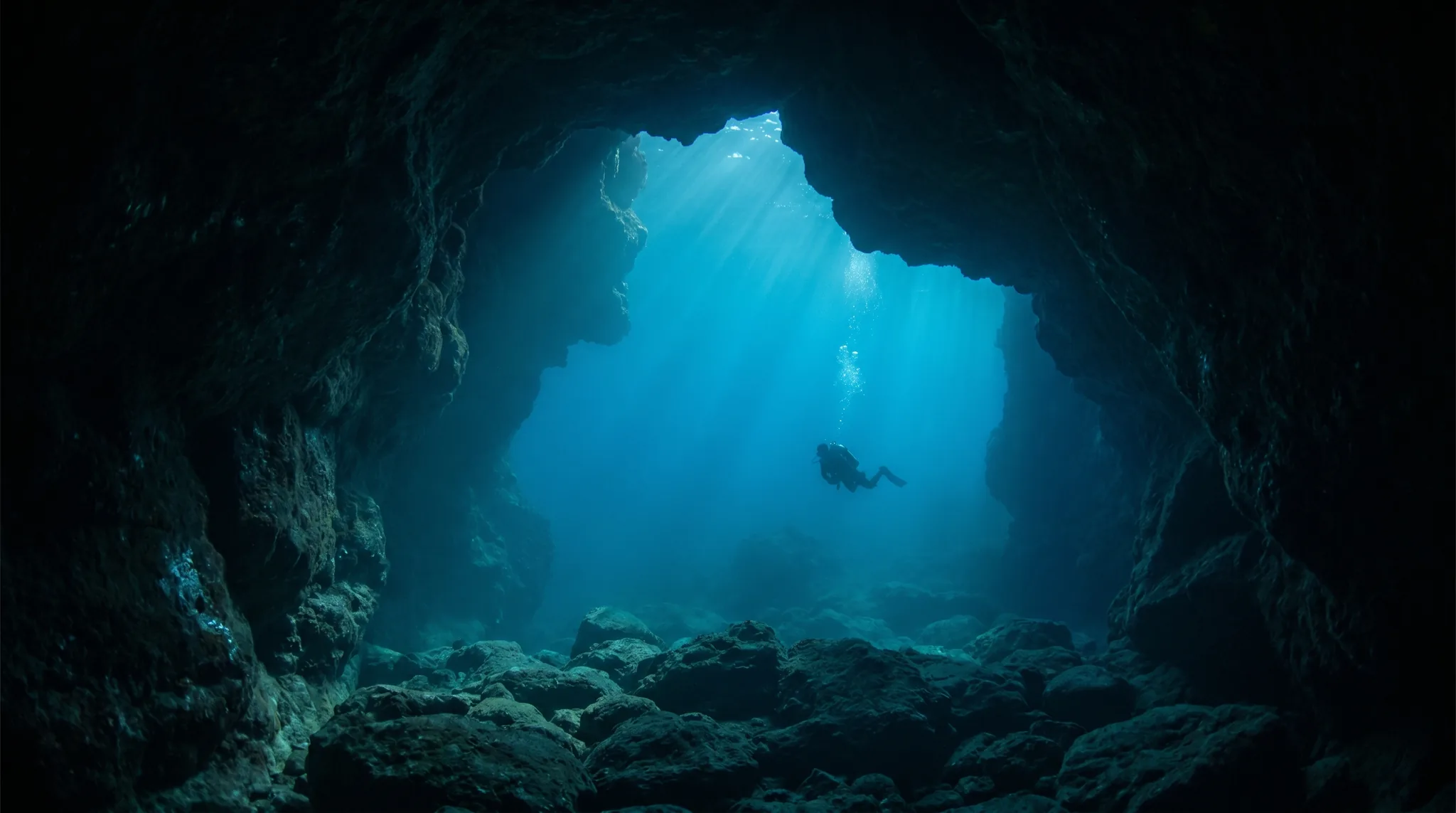
Monthly water temperature across Greece's sites, from satellite sea-surface data corrected for depth. The band shows the site-to-site spread.
Water temperatures rise steadily from spring, reaching their warmest in late summer and holding well into October before cooling through winter to their coolest in February and March. The peak activity window runs from late spring through October, with September standing out as the single most popular month. Winter diving is possible but attracts far fewer divers, and some operators may have reduced schedules outside the main season.
360 operators
Water temperature around Greece ranges from about 16°C in February to 24°C in August, based on satellite sea-temperature data for its dive sites.
Crete offers an exceptional density of cave dives and wrecks, with Common Octopus, Indian Lionfish, and occasional Loggerhead Sea Turtle across four distinct coastal sub-areas.
In the warm season (about 24°C) a 3mm full suit is comfortable in Greece; in the coldest months (about 16°C) step up to a 7mm or semi-dry suit.
Fin maps 629 sites in Greece (567 scuba diving sites and 154 snorkelling spots, with some suited to both), organised into 8 areas.
Across Greece's dive sites, May, June, July, August, September and October are most often reported as the best months to visit.
The most consistently sighted species across Greece include Turkish Wrasse, White Seabream, Rabbitfish, and Common Octopus. Divers also regularly encounter Dusky Grouper, European Common Cuttlefish, Slipper Lobster, and Conger Eel. Loggerhead Sea Turtle and Ocean Sunfish are occasional but observation-backed highlights, and the Flying Gurnard is a distinctive find across many reef sites.
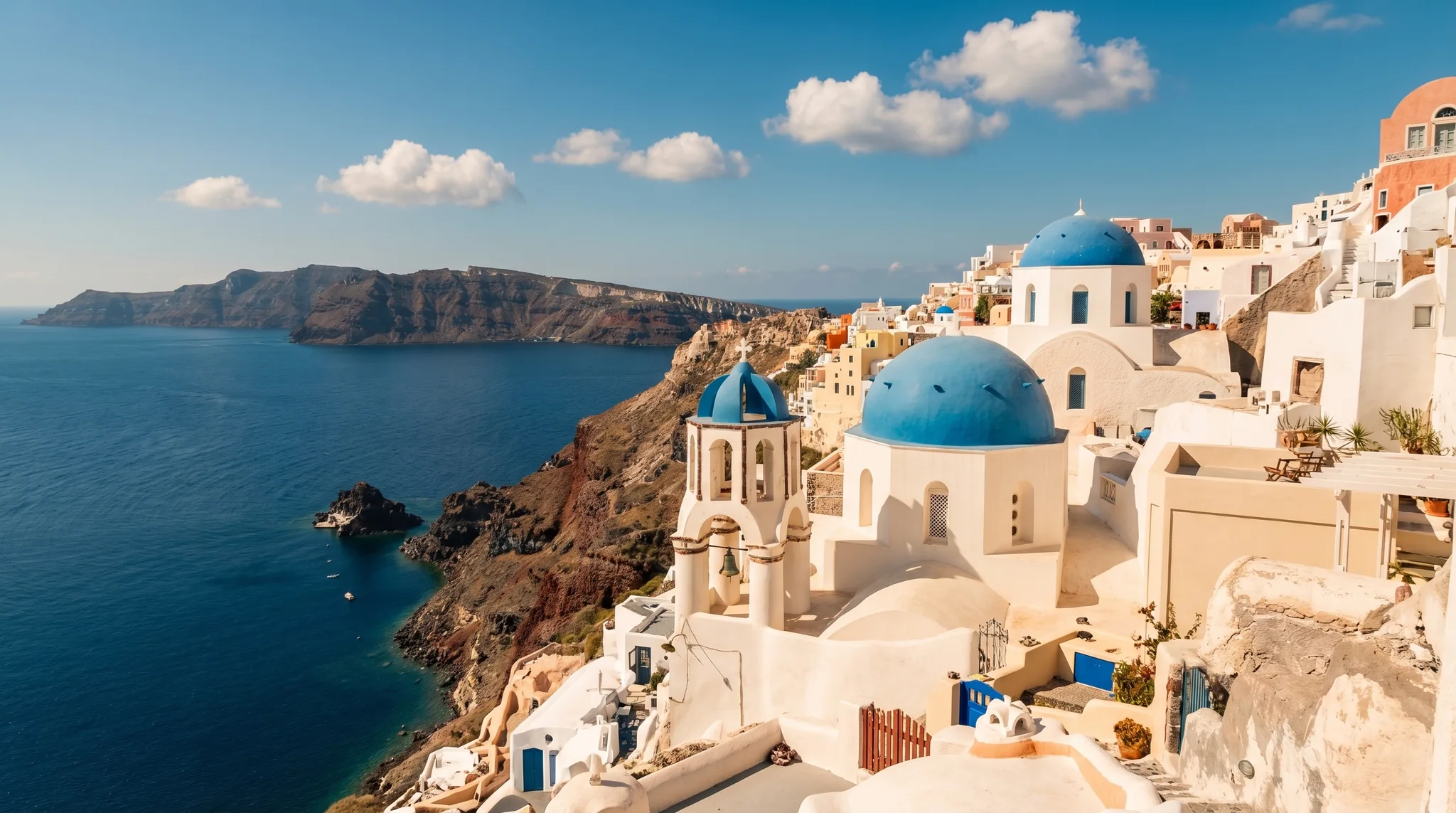
The Cyclades and Ionian Islands have the largest concentrations of listed sites, with the Cyclades featuring wrecks like the Marianna and Giannoula K. alongside volcanic reef structures near Santorini. The Ionian Islands are known for complex cavern and wall topography, including Swiss Cheese Paleo and Migale Iphalos off Corfu. Crete adds cave diving character, particularly through sites like Elephant Cave in Rethymno, while Northern Greece and the Dodecanese round out the network with reef and wall diving.