Cheilinus undulatus
Meet the Napoleon Wrasse in the Maldives, Red Sea, or Indonesia, a curious giant that approaches divers in warm 25-29 °C reef water.
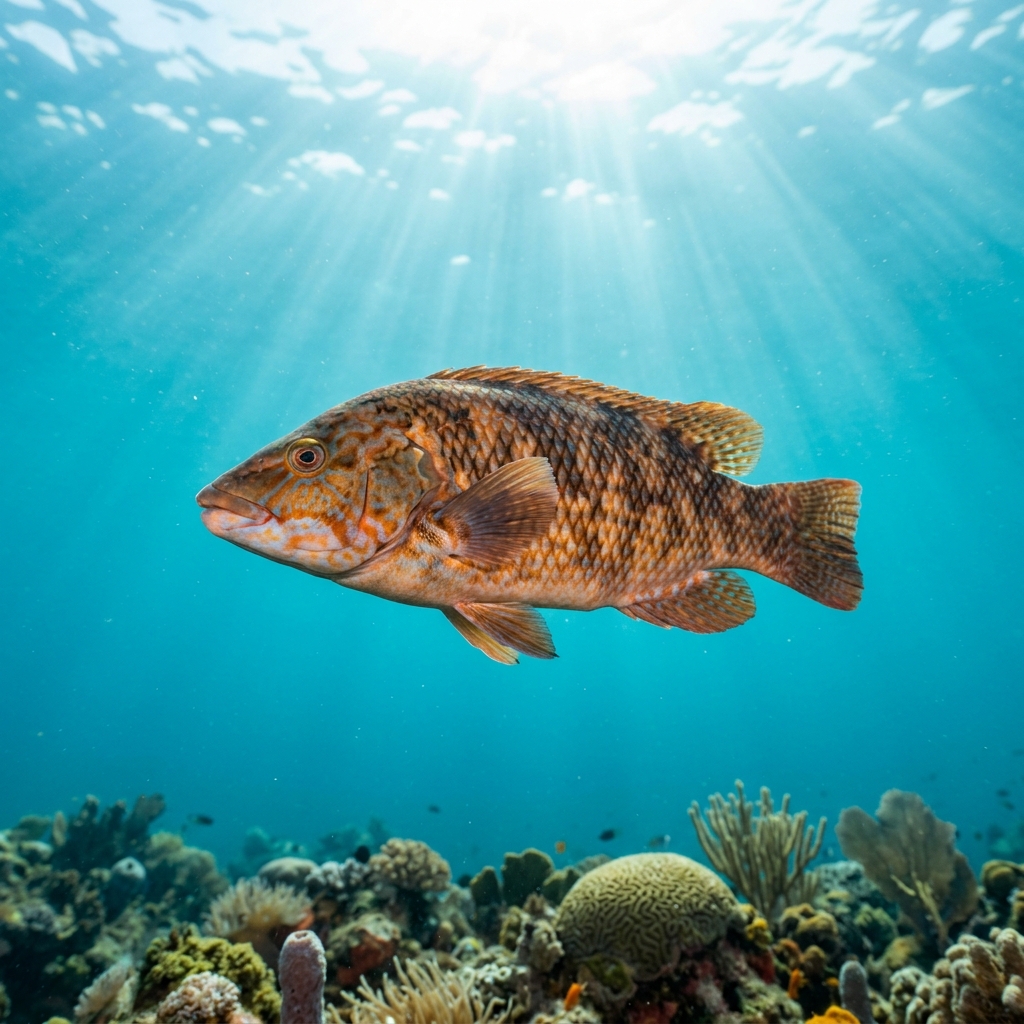
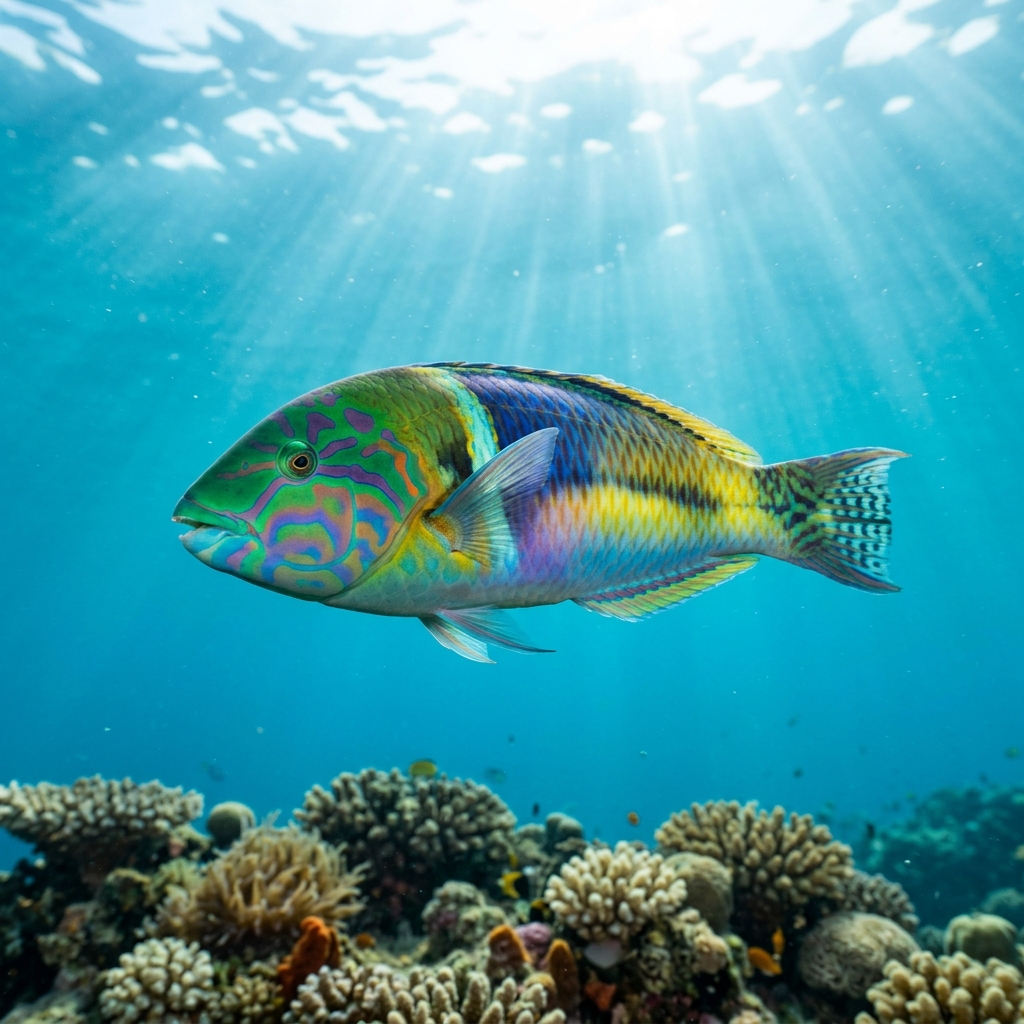
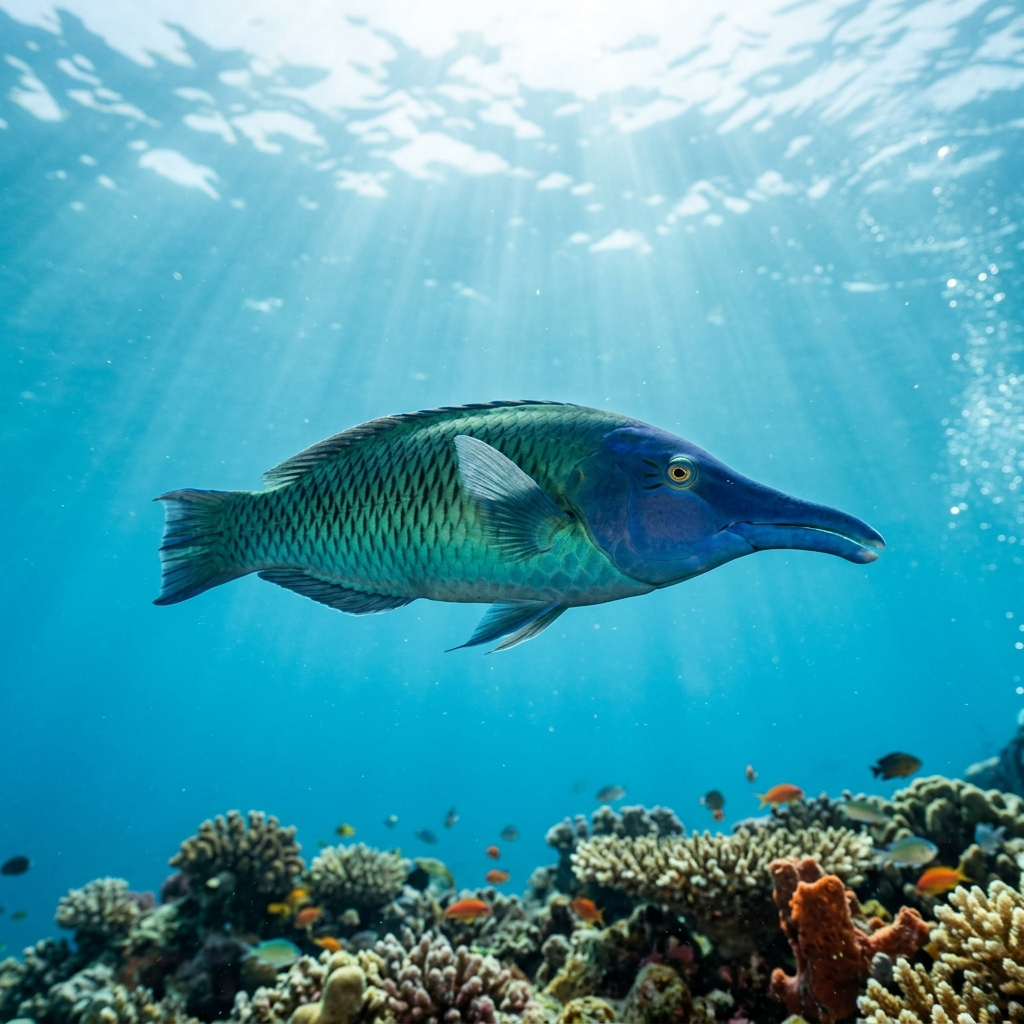
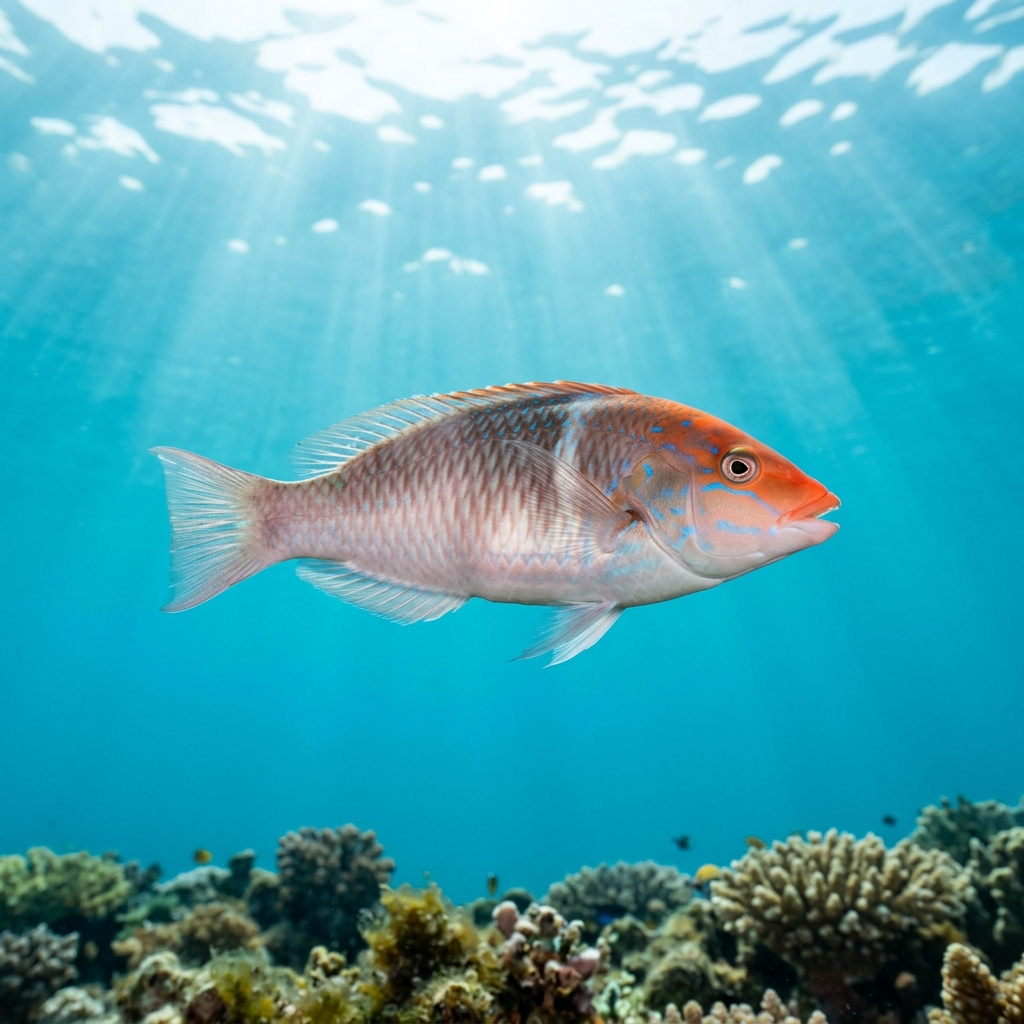
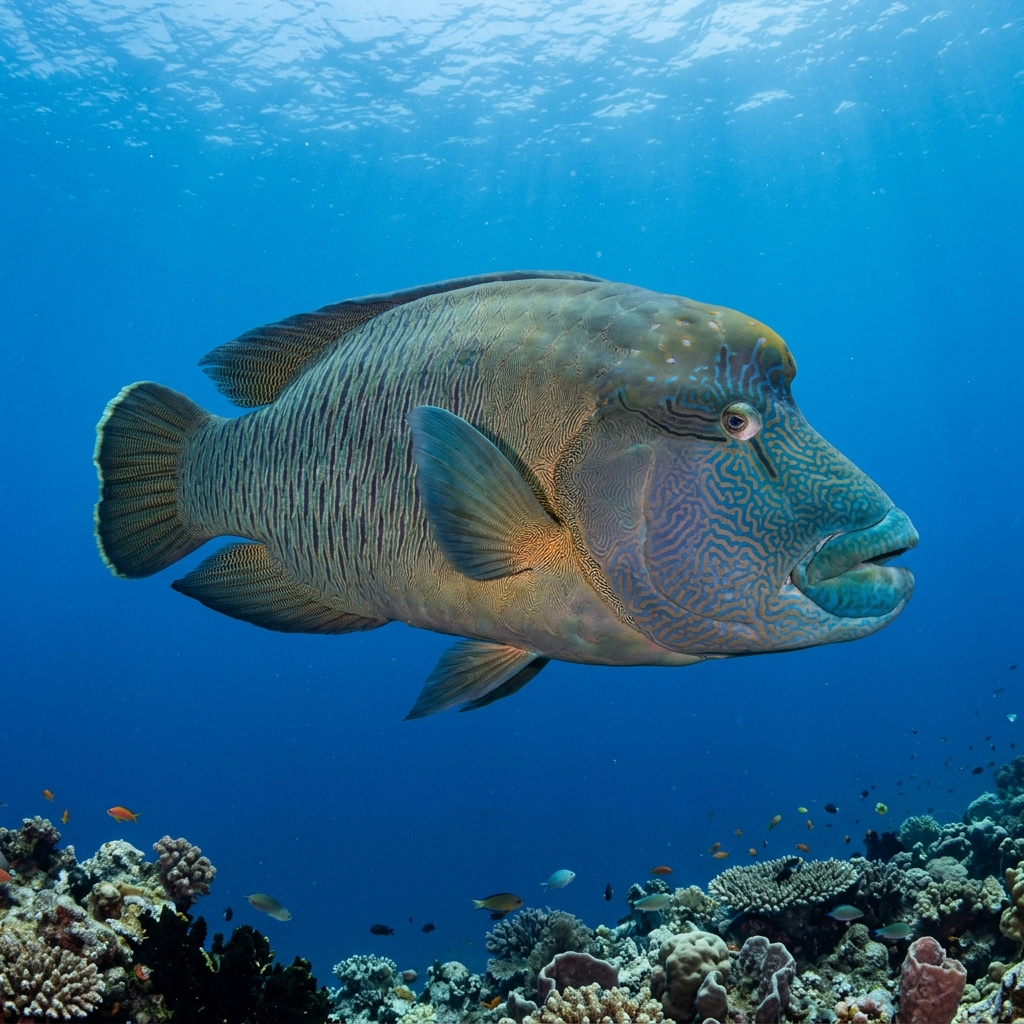
Size alone gives it away: this is one of the largest reef fish a diver will ever encounter, commonly reaching well over a metre in length. Look for the pronounced hump on the forehead, thick rubbery lips, and the overall blue-green body covered in fine, darker-edged scales that create a subtle wave pattern. Males are larger and brighter blue-green with a more dramatic hump; females tend toward orange-brown or pale tones and are noticeably smaller.
Napoleon Wrasse are noticeably curious around divers and will often swim in close for a look rather than retreating, which makes for some of the most face-to-face encounters on the reef. During the day you may watch them methodically working over the reef, using their powerful jaws to crush hard-shelled prey including molluscs and echinoderms. Early morning dives can be especially productive as they tend to be most actively foraging then; larger males occasionally show territorial behaviour during the breeding season but aggression toward divers is not typically observed.
Napoleon Wrasse are protogynous hermaphrodites (born female, capable of changing sex to male later in life), meaning the large, brilliantly coloured males you see on the reef were once females.
In Northern Hemisphere destinations such as the Maldives and Red Sea, sightings concentrate from July through May, effectively covering most of the year. In Southern Hemisphere locations like Queensland, Australia, the peak window runs from April through January.
Most commonly logged across Indonesia, the Philippines, and the Maldives, with particularly strong sighting records in the Male and Ari Atolls and around Palawan and Apo Reef. The Egyptian Red Sea, especially around Sharm el Sheikh, is another reliable region, as is Queensland, Australia. Palau and Malaysia round out the Indo-Pacific hotspots where encounters are most frequently reported.
Mapping where Napoleon Wrasse is logged…
The strongest sighting records come from Indonesia, the Philippines, and the Maldives, particularly around the Male and Ari Atolls. The Egyptian Red Sea around Sharm el Sheikh and Queensland, Australia are also reliable. Palau and Malaysia round out the best Indo-Pacific locations.
In Northern Hemisphere destinations like the Maldives and Red Sea, sightings are recorded across most of the year from July through May. In Southern Hemisphere spots such as Queensland, the best window runs from April through January.
Look for a very large reef fish, over a metre long, with a distinctive hump on the forehead, thick fleshy lips, and a blue-green body with fine darker scale edging. No other common reef fish combines that size, the hump, and those thick lips.
They are one of the largest bony fish on coral reefs, commonly reaching around 160 cm in length. Large males are especially impressive in the water and can weigh well over 100 kg.
Yes, the species is listed as Endangered on the IUCN Red List. Populations have declined significantly due to overfishing and collection for the live reef fish trade. Encountering one on a dive is a privilege worth documenting through citizen-science platforms.
Yes. They are protogynous hermaphrodites, meaning individuals are born female and some later transition to male. The large, brightly coloured animals with the biggest forehead humps are the males, which were all once females earlier in their lives.
The Napoleon Wrasse is listed as endangered by the IUCN. Observe from a distance, avoid touching or feeding it, and report sightings to local marine research organisations.
Listed as Endangered on the IUCN Red List, this species has declined sharply due to overfishing and the live reef fish trade. If you dive with one, keep your distance, do not chase or crowd it, and report sightings through citizen-science platforms to help track population trends.
Site and sighting data is aggregated from diver logs, iNaturalist and GBIF. For taxonomy and conservation status:
Bird Wrasses
3,632 sites