Carcharhinus amblyrhynchos
Grey reef sharks patrol reef edges from the Maldives to the Philippines. Learn to spot them, where they're most reliably logged, and how to dive safely with them.
Safety warning
Rated as dangerous to divers, though the risk is manageable with sensible behaviour. Give them space and never block their path or back them against a reef wall. If you see the hunched-back threat display, back away slowly and calmly without turning your back on the shark. Spearfishing and feeding dives significantly increase risk; avoid both in areas where grey reef sharks are present.
If you're bitten
BiteGeneral first-aid guidance, not a substitute for professional medical care. In an emergency, call your local emergency number.
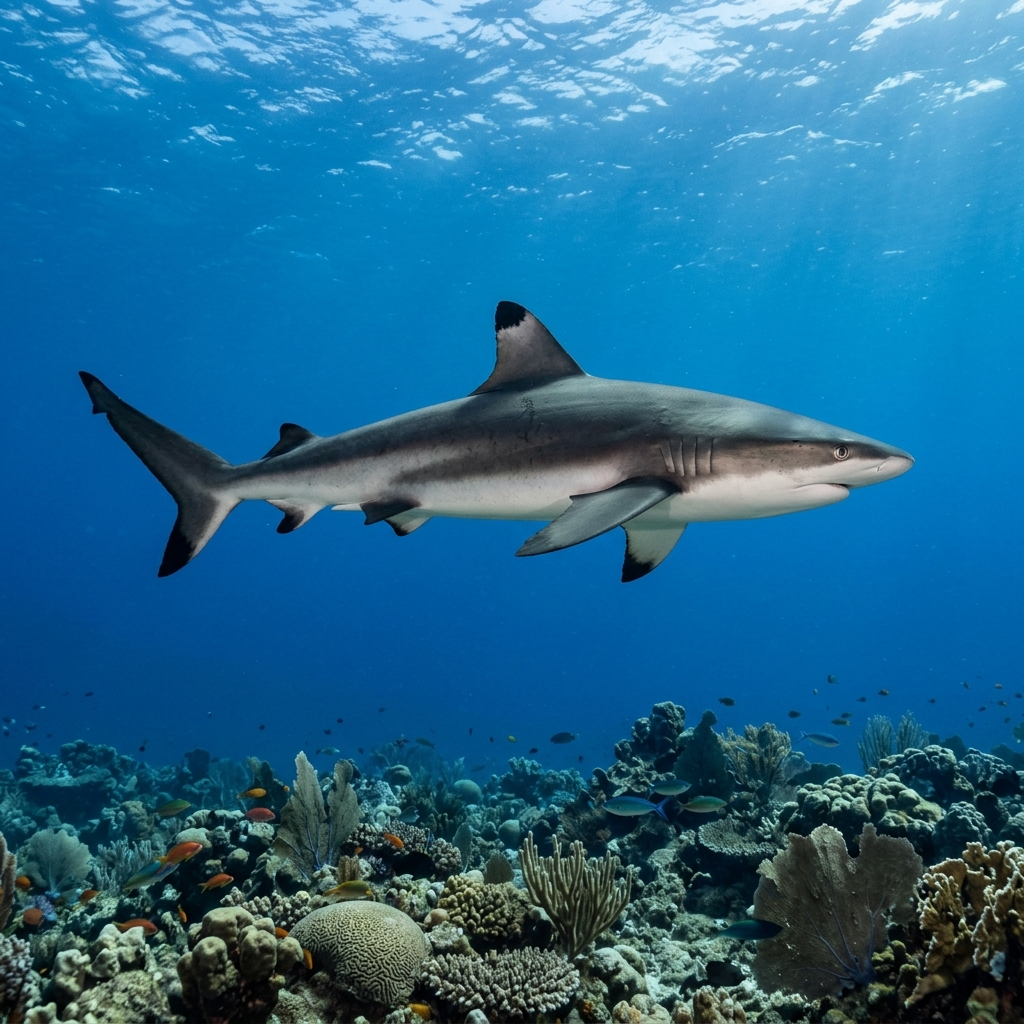
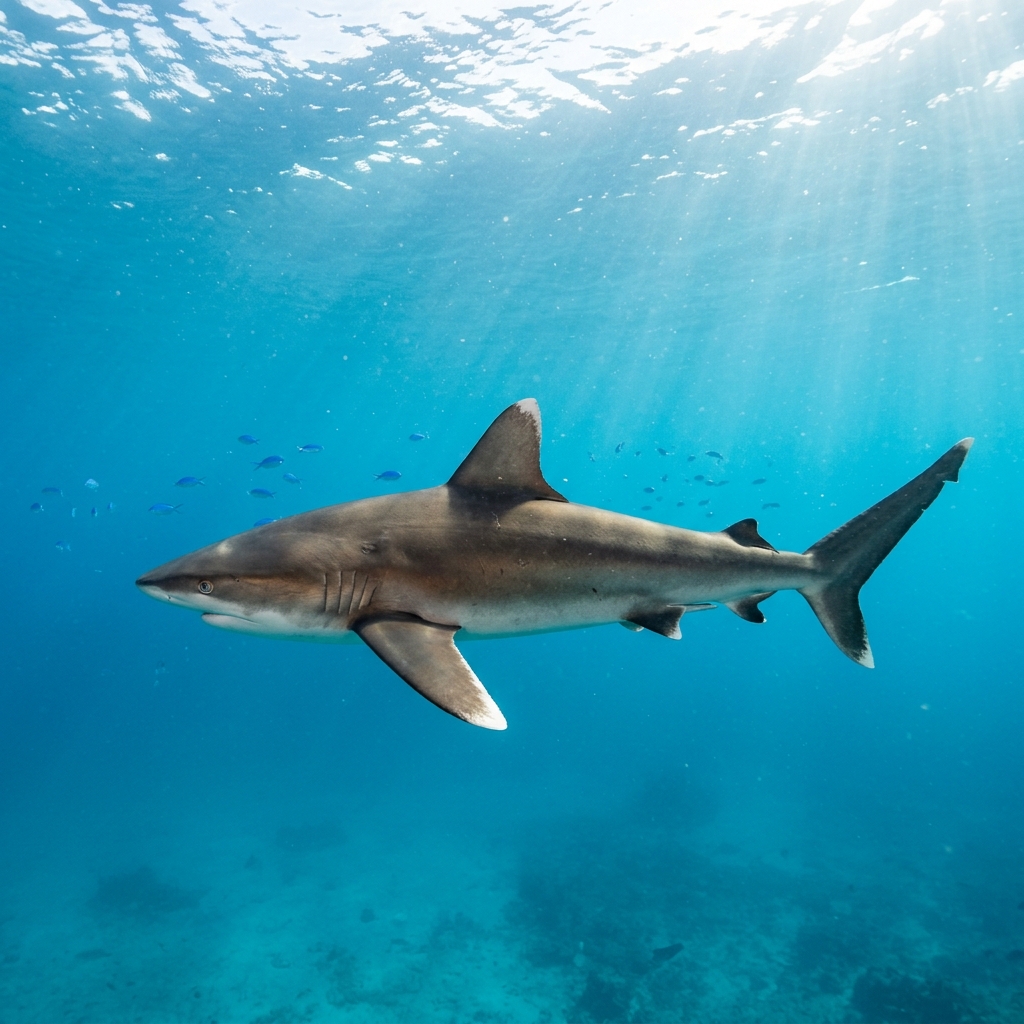
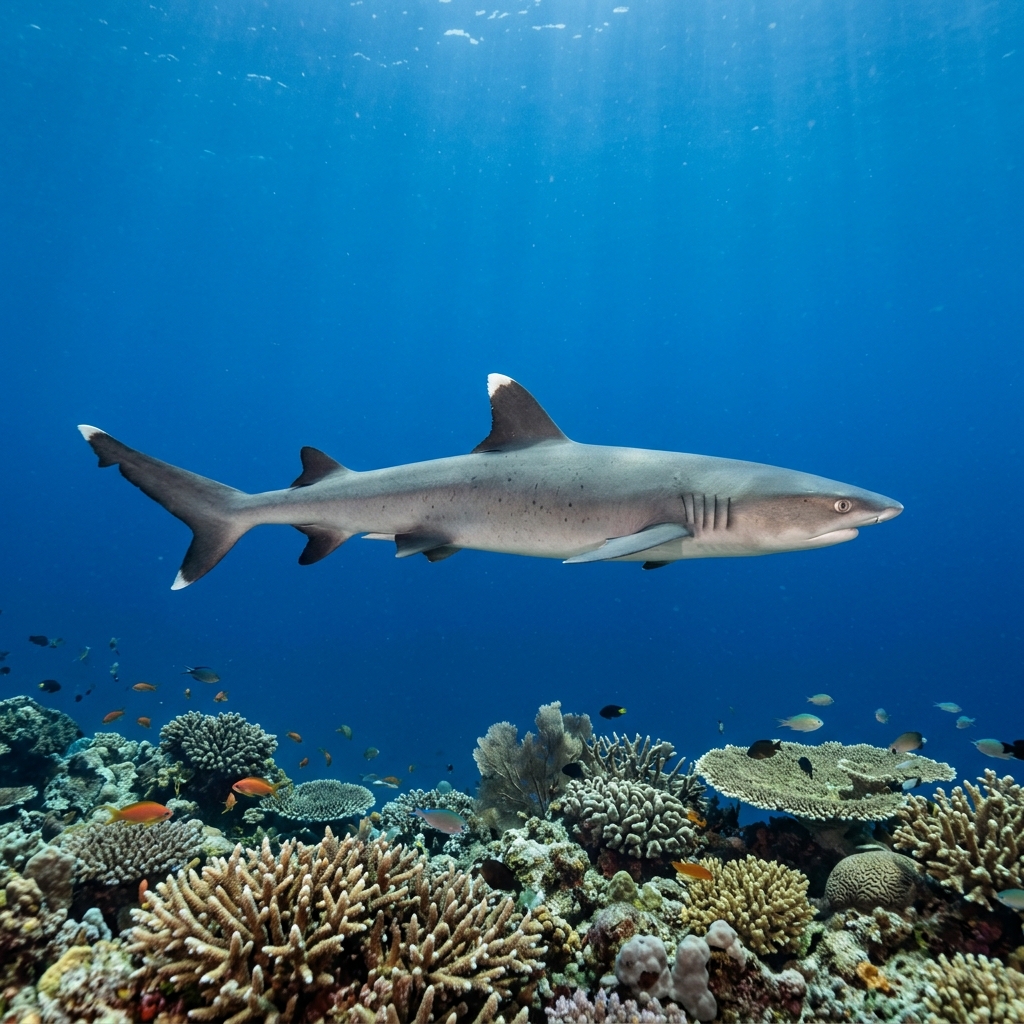
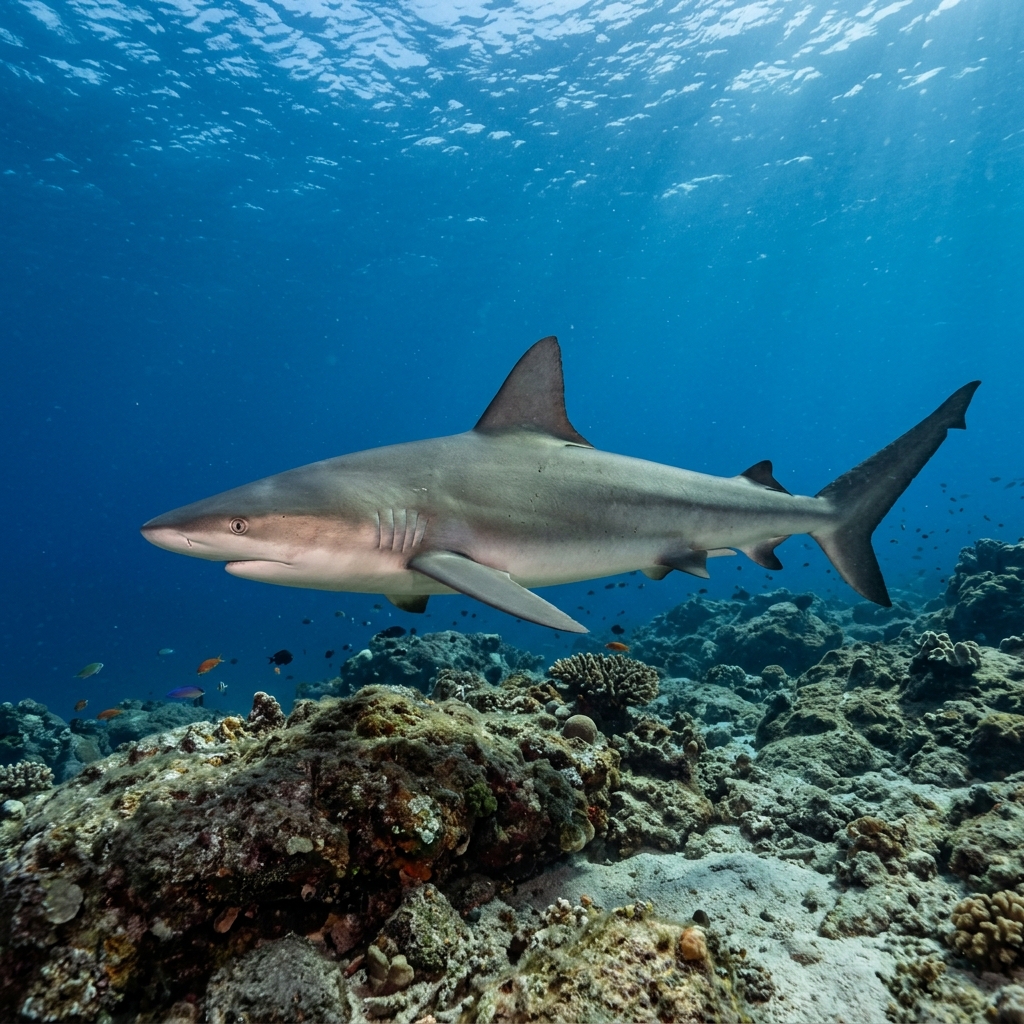
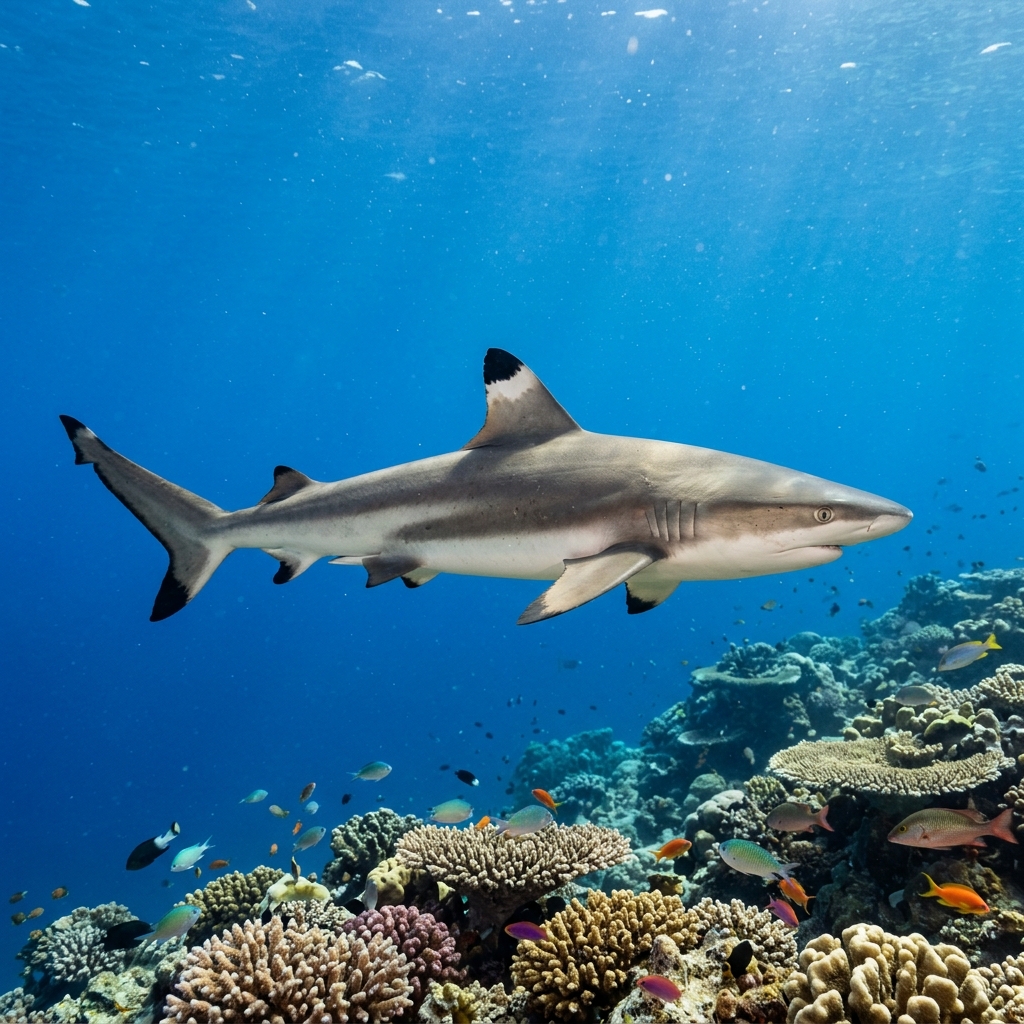
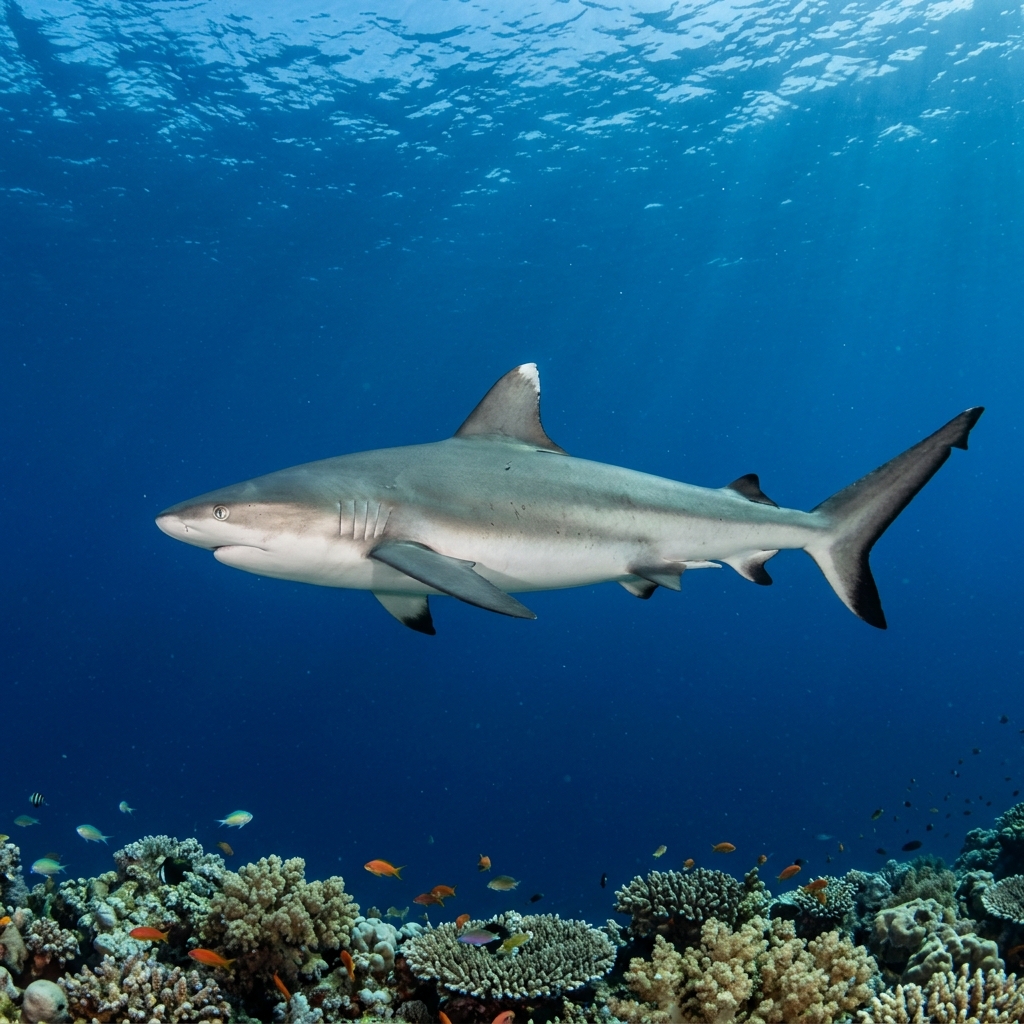
A medium-sized, slender shark averaging around 1.8 metres, with plain grey-brown colouring above and a pale white underside. The key field mark is a prominent dark or black trailing edge running along most of the tail (caudal) fin, which is far more consistent than the subtle white tip on the first dorsal fin. Unlike the blacktip reef shark, it lacks the bold black tips on all fins, and unlike the whitetip reef shark, it has a more streamlined head and typically cruises open water above the reef rather than resting on the bottom.
Most commonly seen cruising slowly along reef edges and drop-offs, often alone or in small loose groups. In areas with regular dive traffic they grow noticeably bolder and may approach divers with curiosity, though in less-visited spots they tend to keep their distance. Dawn and dusk are the most productive windows for a sighting, as this is when they actively hunt; mid-afternoon dives sometimes yield little more than a retreating grey shape.
When threatened or cornered, grey reef sharks perform a distinctive threat display: they arch their back, drop their pectoral fins, and swim in an exaggerated, hunched figure-of-eight pattern. Recognising this posture is the most important thing a diver can learn before getting in the water with them.
Grey reef sharks are present year-round across their tropical and subtropical range, comfortable in the 17.5 to 29 °C water temperatures found across most reef systems where they are logged. No concentrated seasonal peak has emerged from sighting data, so any time is a viable time to look for them.
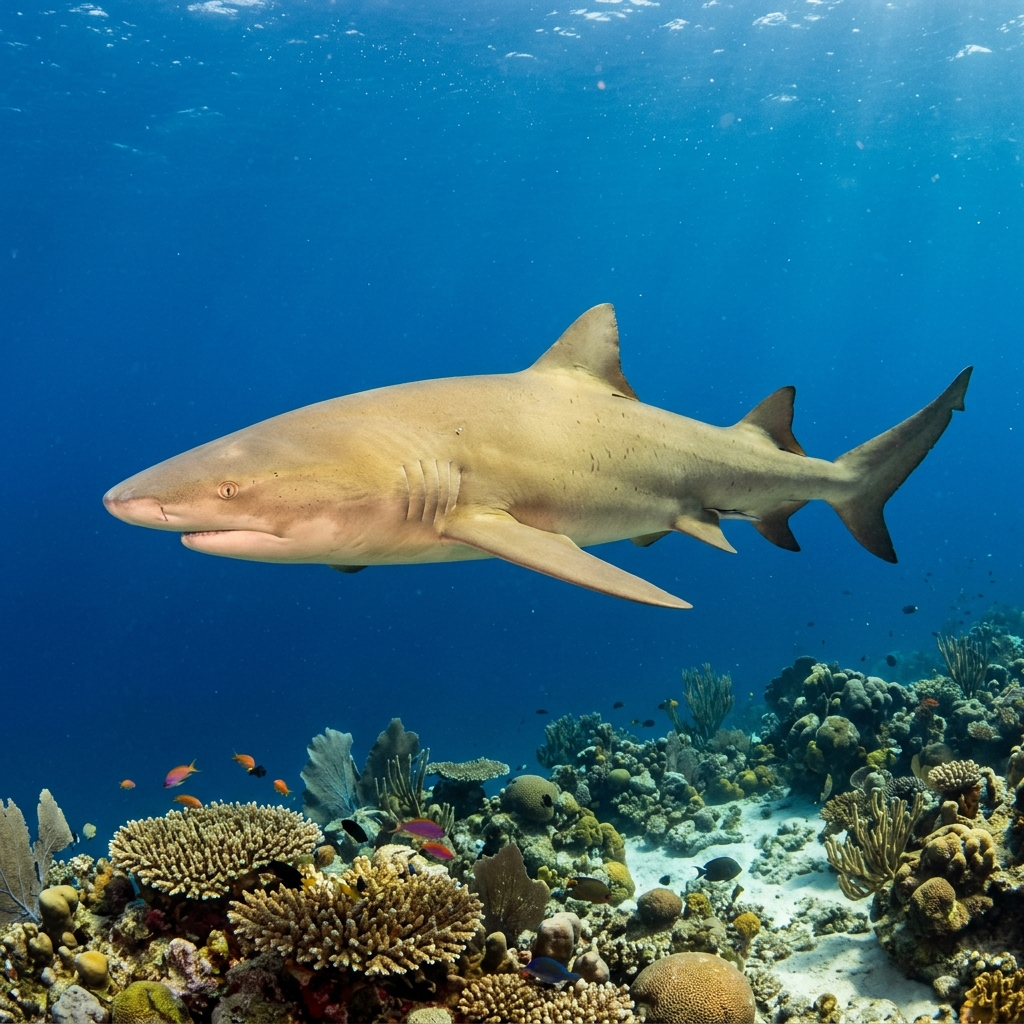
Reef neighbours a diver could mistake it for. Use the identification notes above to tell them apart.
Most commonly logged across the Indo-Pacific, with the strongest representation in the Maldives, particularly the North and Central Atolls, Felidhoo and Mulaku, and Huvadhoo and Laamu. The Philippines, especially Palawan and Apo Reef and the Visayas, alongside Indonesia's Maluku and Papua regions and the Nusa Tenggara and Banda Sea, are also reliable destinations. The Red Sea off the Port Sudan area rounds out the top sites for divers chasing this species.
Mapping where Grey Reef Shark is logged…
The Maldives is the top destination by a wide margin, with strong sightings across the North and Central Atolls, Felidhoo and Mulaku, and Huvadhoo and Laamu. The Philippines (especially Palawan and Apo Reef) and Indonesia (Maluku, Papua, and the Banda Sea) are the next best bets, along with the Red Sea off Sudan.
They can be encountered year-round on tropical Indo-Pacific reefs, as no clear seasonal peak has emerged from sighting data. Dawn and dusk dives are your best bet within any given day, since the species is most active and likely to be hunting during those low-light windows.
Look for the dark trailing edge along the tail fin; it runs across almost the entire rear margin and is the most reliable single field mark. The body is plain grey above with a white belly, and at around 1.8 metres it is a solidly built but streamlined shark. It lacks the bold black-tipped fins of the blacktip reef shark and does not rest on the bottom like the whitetip reef shark.
They can be, particularly when harassed or cornered. The key warning sign is the threat display: a hunched back, dropped pectoral fins, and stiff, exaggerated swimming. If you see it, back away slowly. Unprovoked attacks are uncommon, but respecting their space and avoiding spearfishing near them keeps risk very low.
Yes, they are listed as Endangered by the IUCN. Overfishing and reef degradation have reduced populations across large parts of their Indo-Pacific range. Choosing operators who do not feed sharks and supporting marine protected areas are the most direct ways divers can help.
The Grey Reef Shark is listed as endangered by the IUCN. Observe from a distance, avoid touching or feeding it, and report sightings to local marine research organisations.
Listed as Endangered on the IUCN Red List, with populations declining across much of their range due to habitat degradation and fishing pressure. Divers can support reef protection initiatives and report sightings via citizen-science platforms to help track population trends.
Site and sighting data is aggregated from diver logs, iNaturalist and GBIF. For taxonomy and conservation status:
Blacktip Reef Shark
1,235 sites