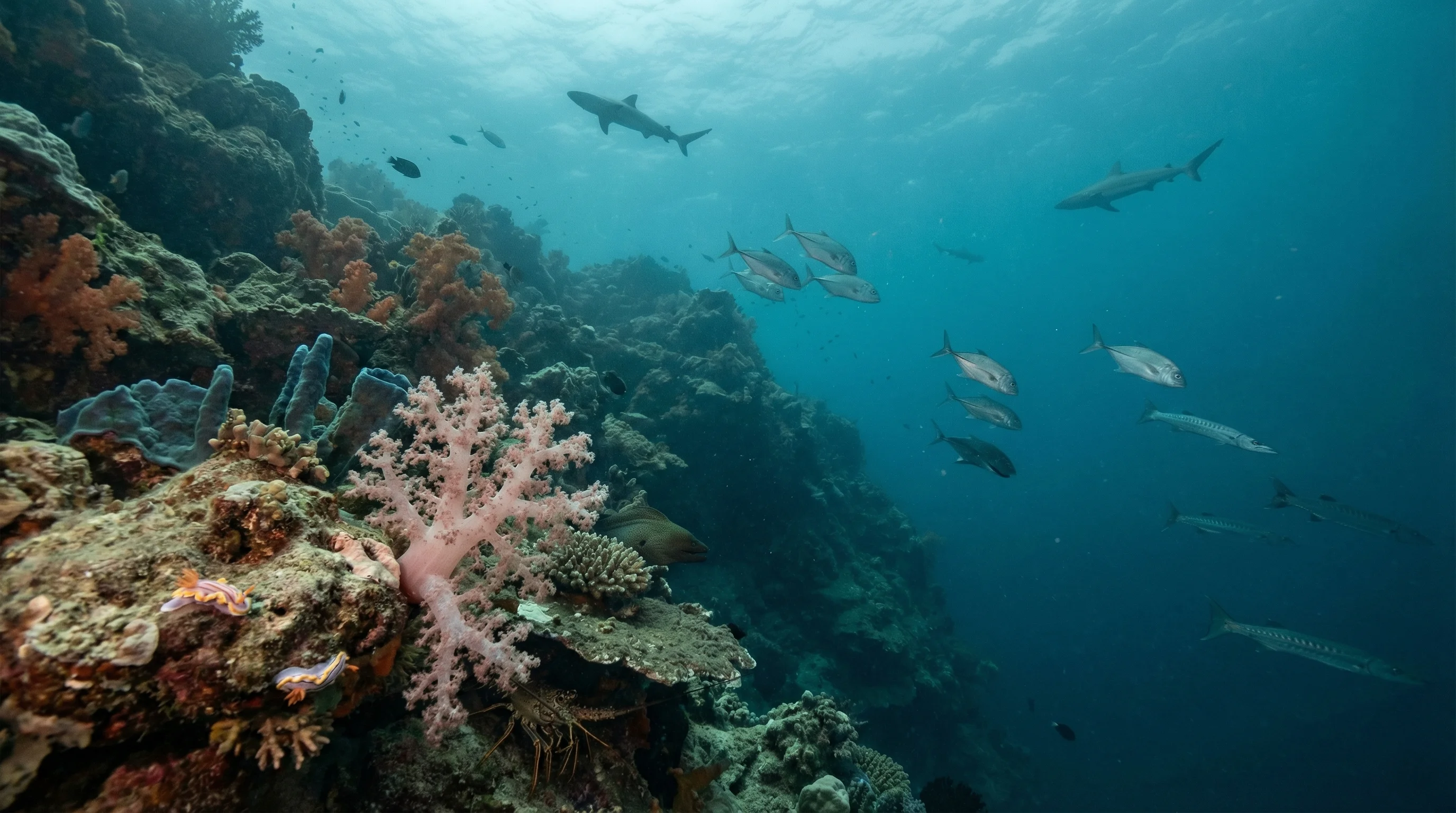
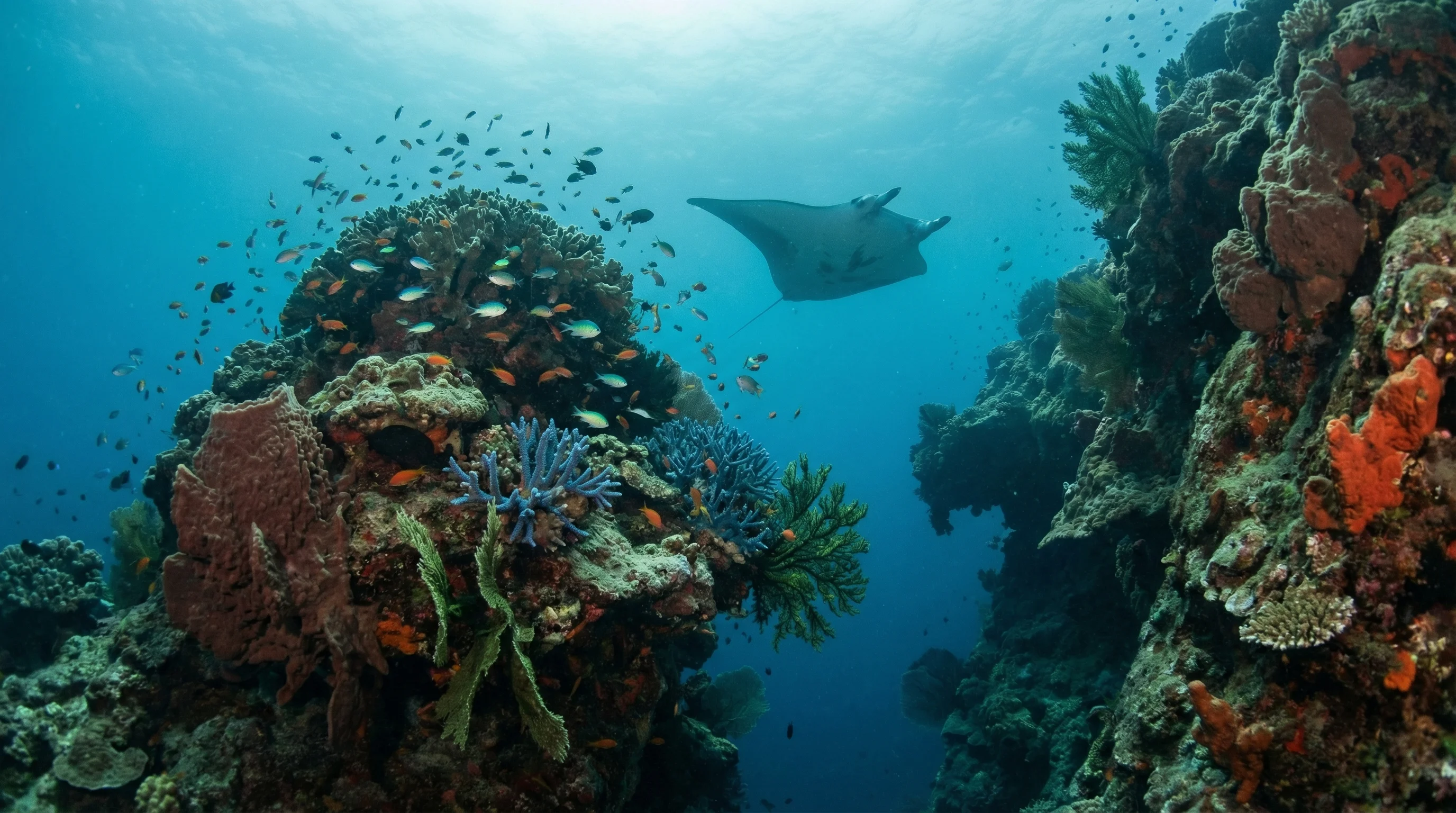
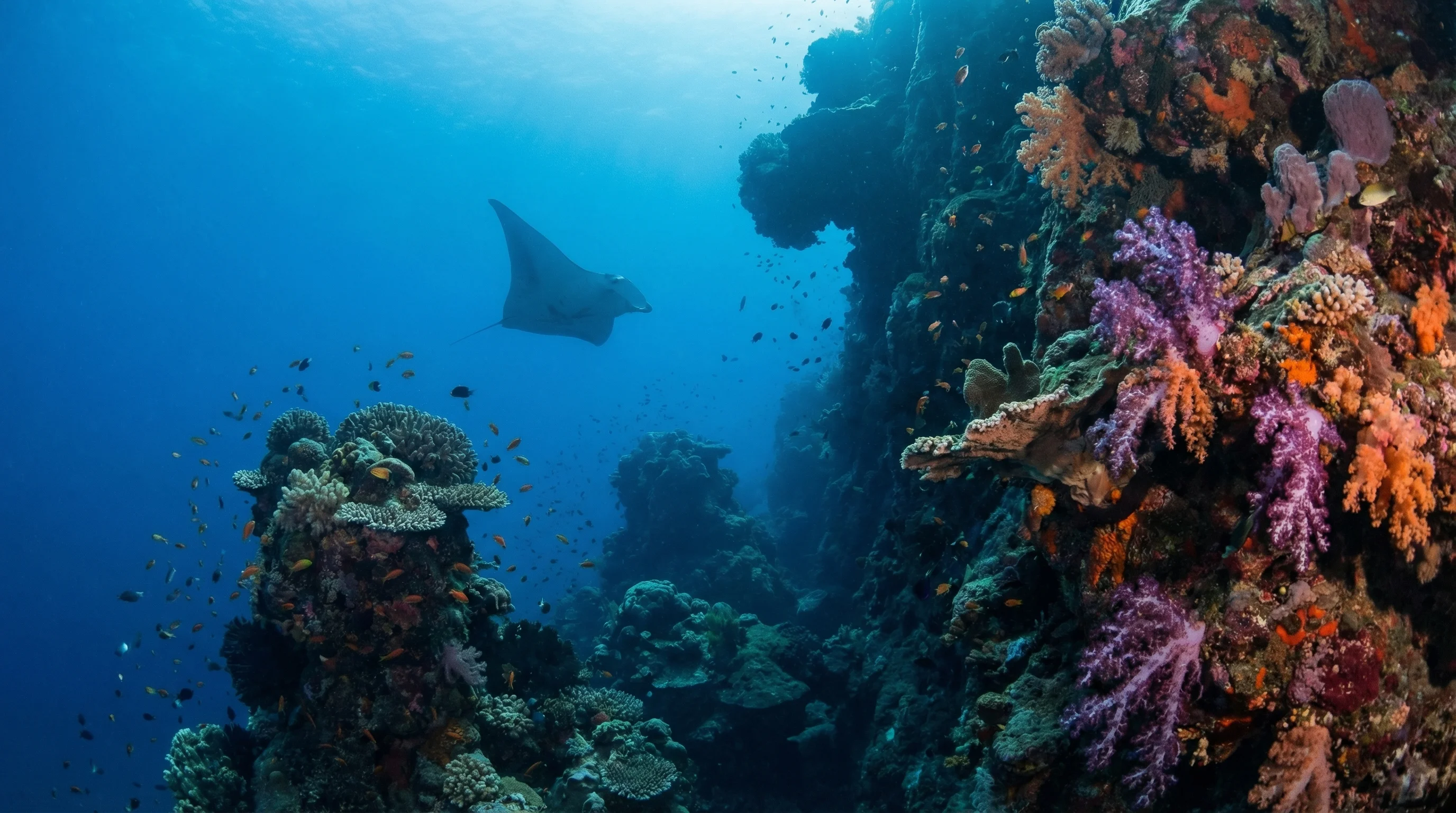
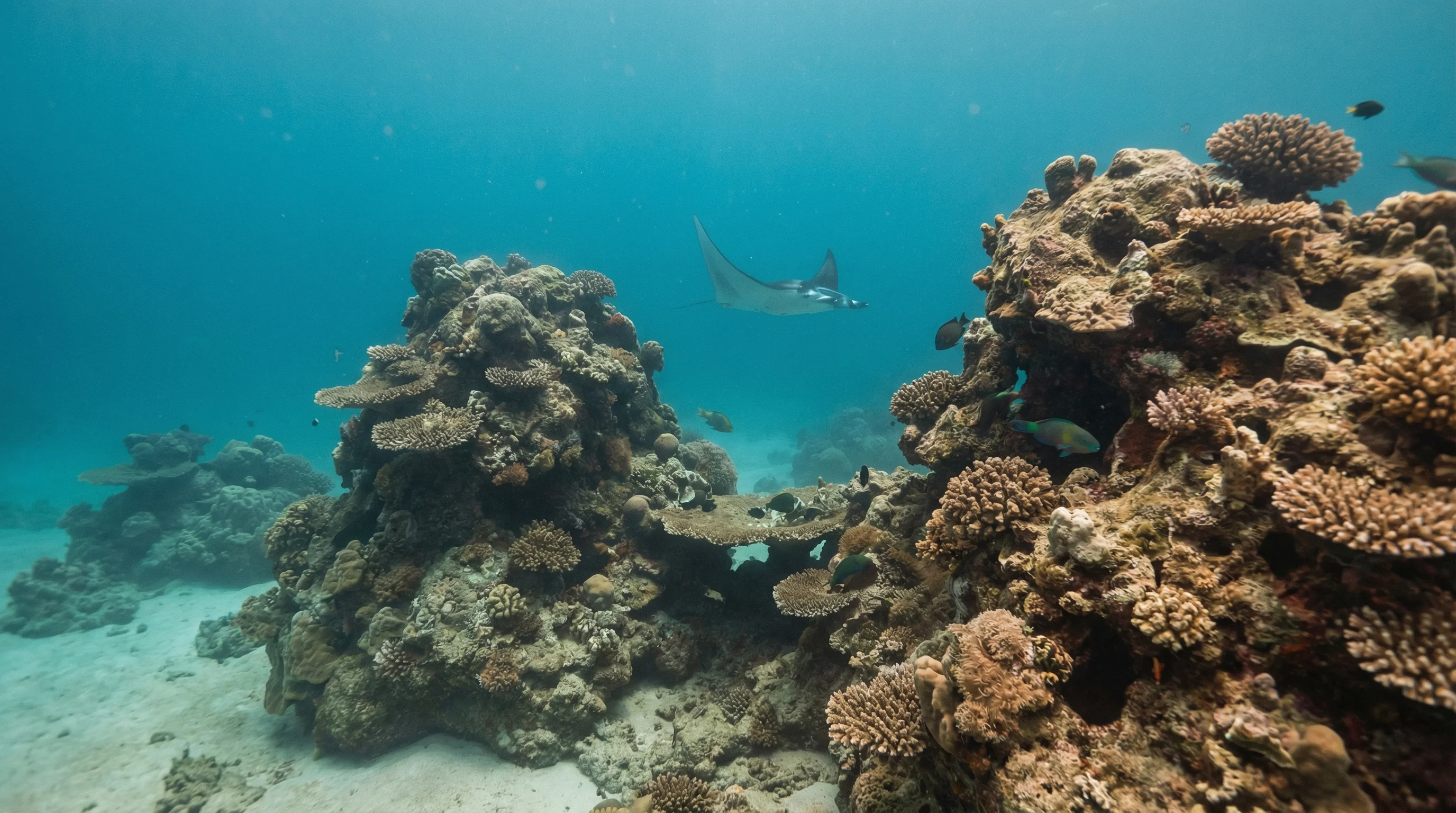
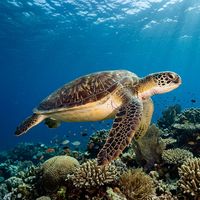
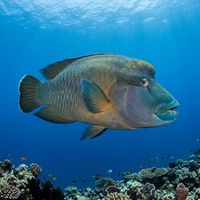
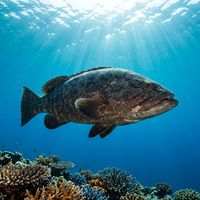
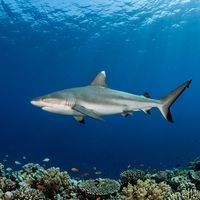
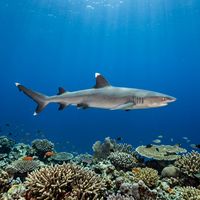
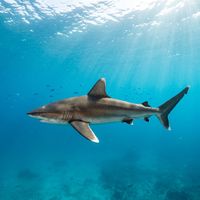
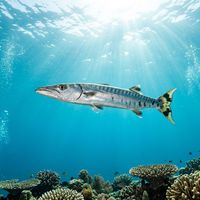
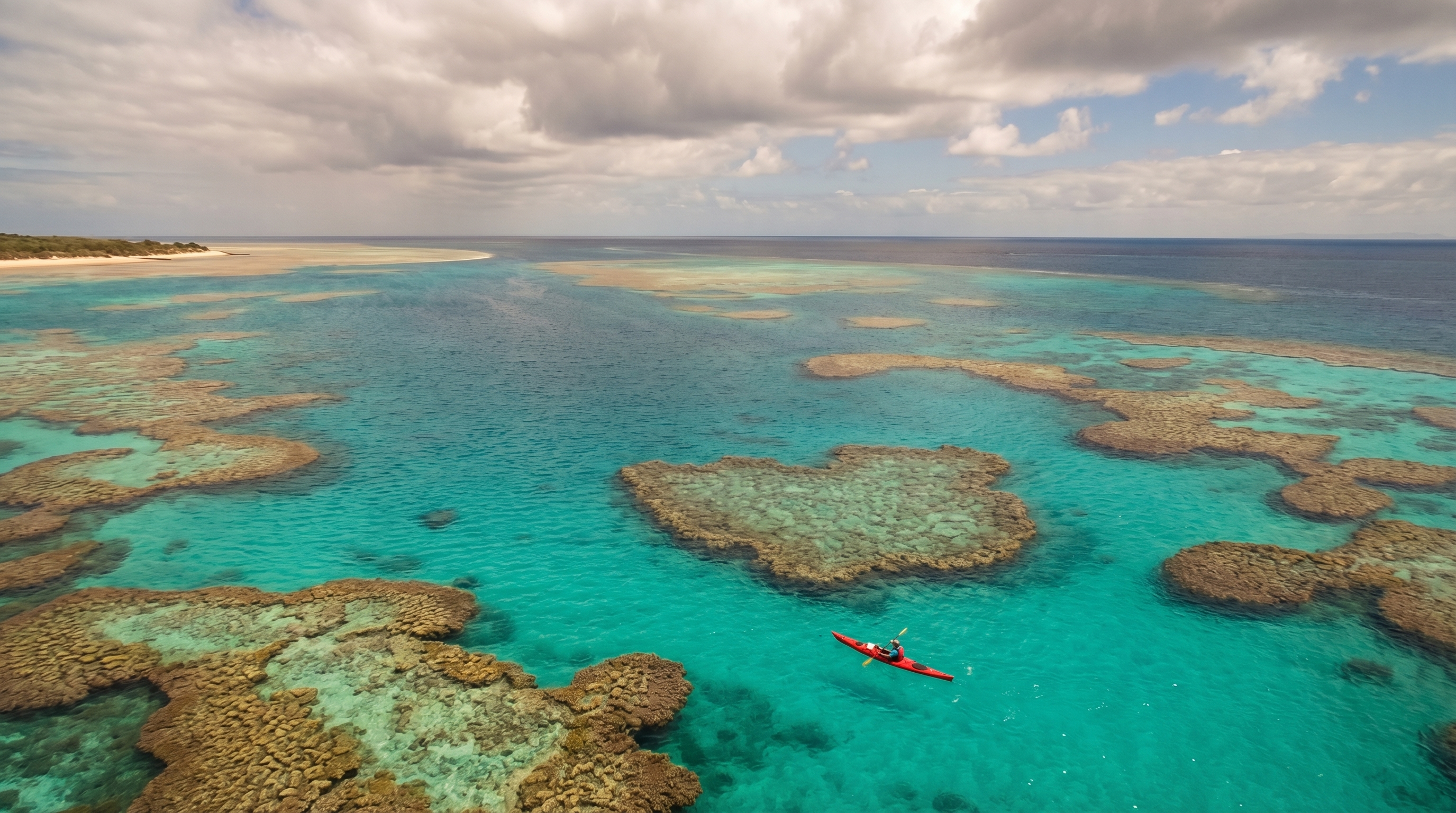
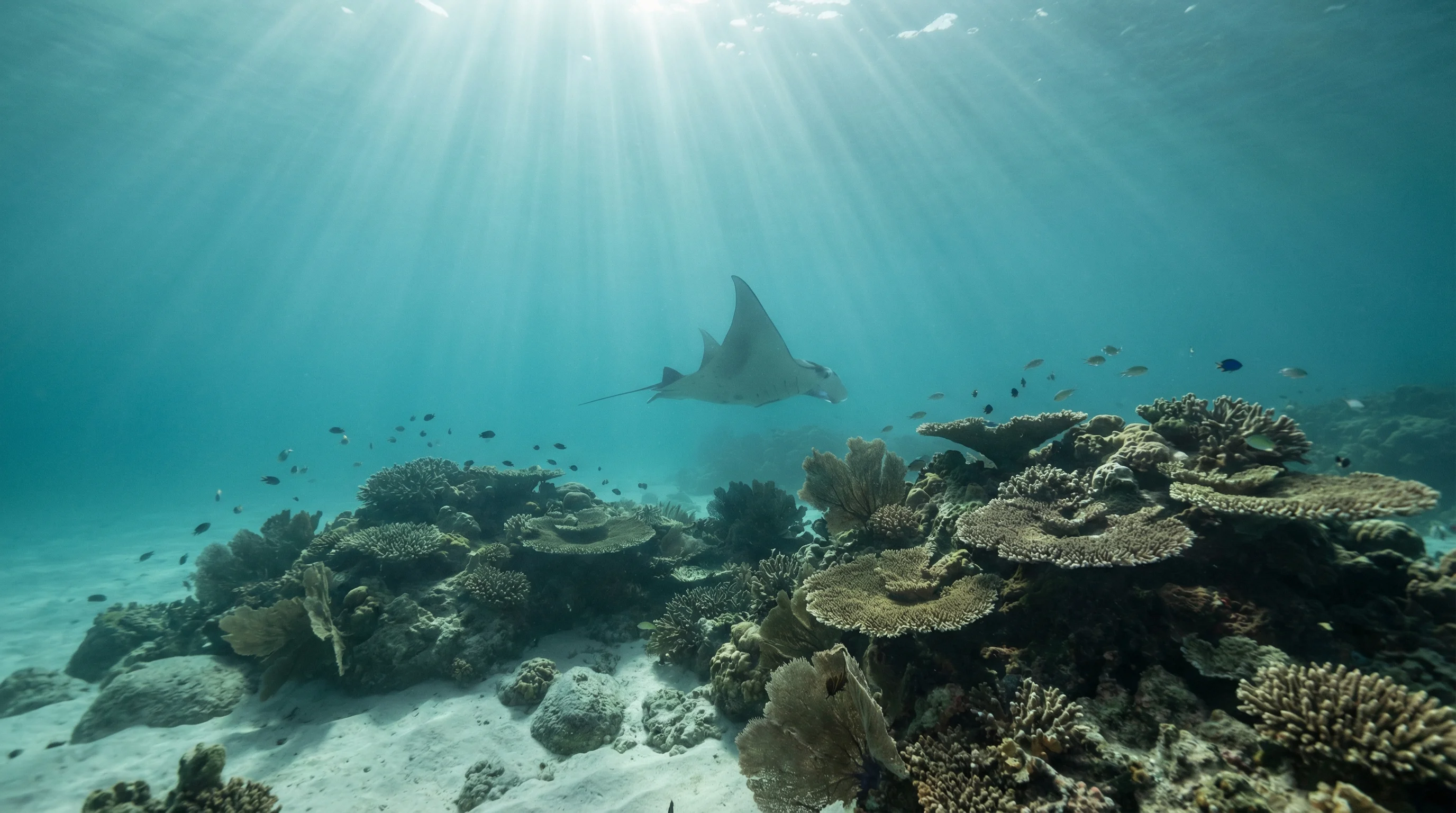
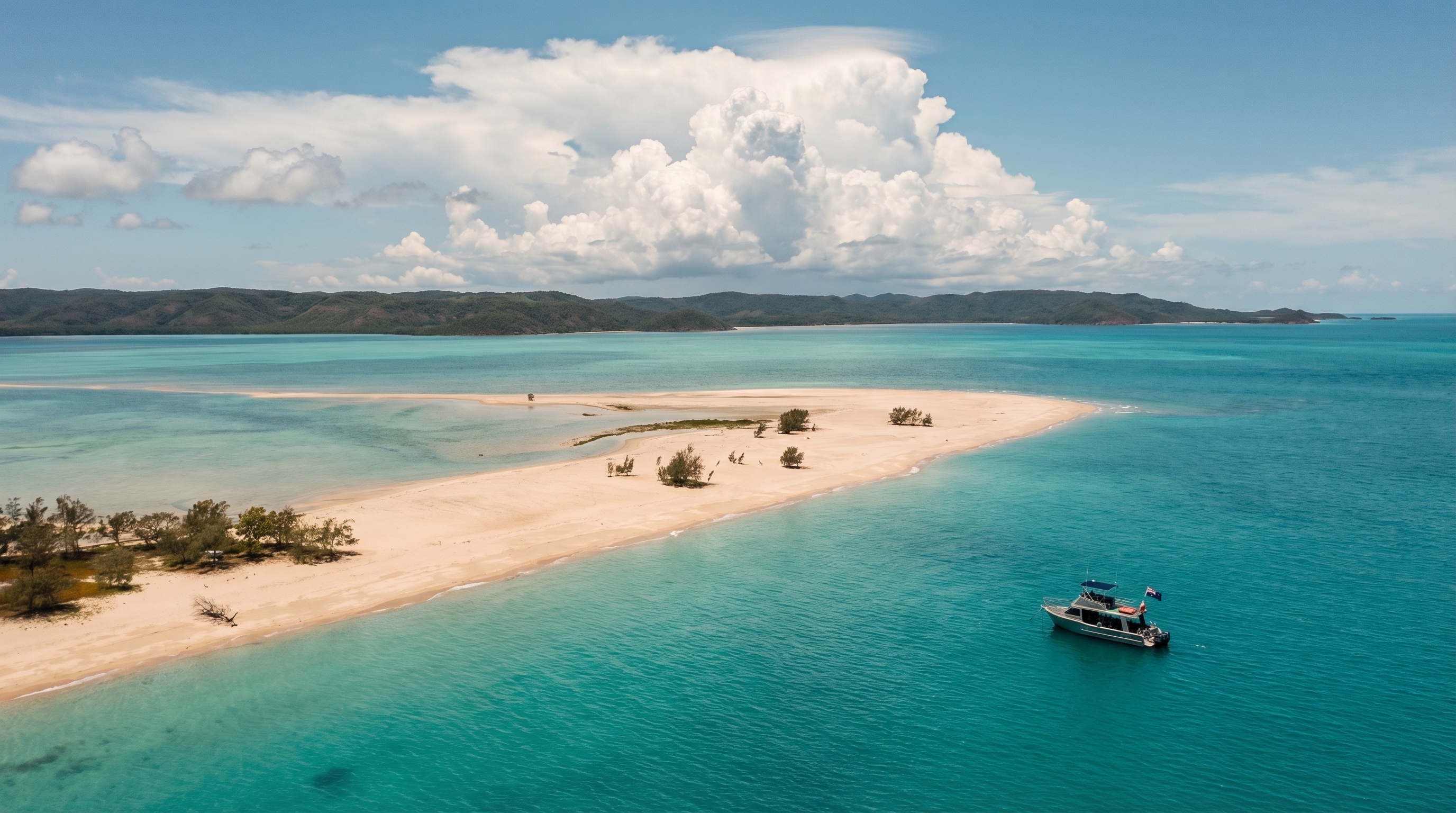
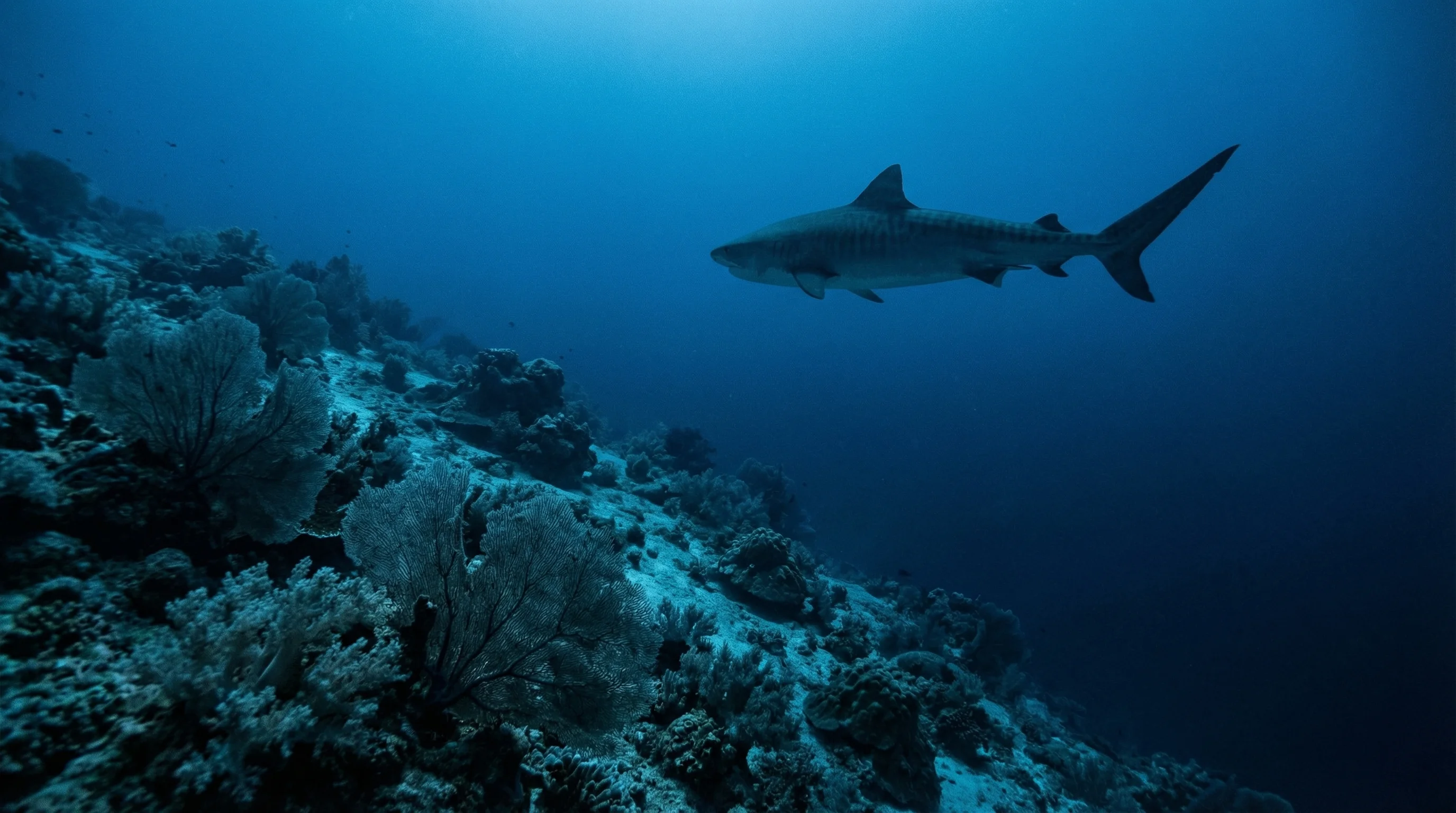
Raine Island is a remote coral cay at the northern end of the Great Barrier Reef, reachable only by liveaboard. The sites here, including Twin Peaks, Crowded Garden, Rainbow Road, and Great Detached Reef, cover shallow reef tops, walls, and drop-offs descending well beyond recreational limits. Currents are a consistent feature and range from moderate to strong, with Rainbow Road requiring drift diving experience. Water is warm year-round and is at its coolest in mid-winter. Species recorded include green sea turtles, whale sharks, blacktip and whitetip reef sharks, Napoleon wrasse, pygmy seahorses, and dogtooth tuna.
2 areas
 5
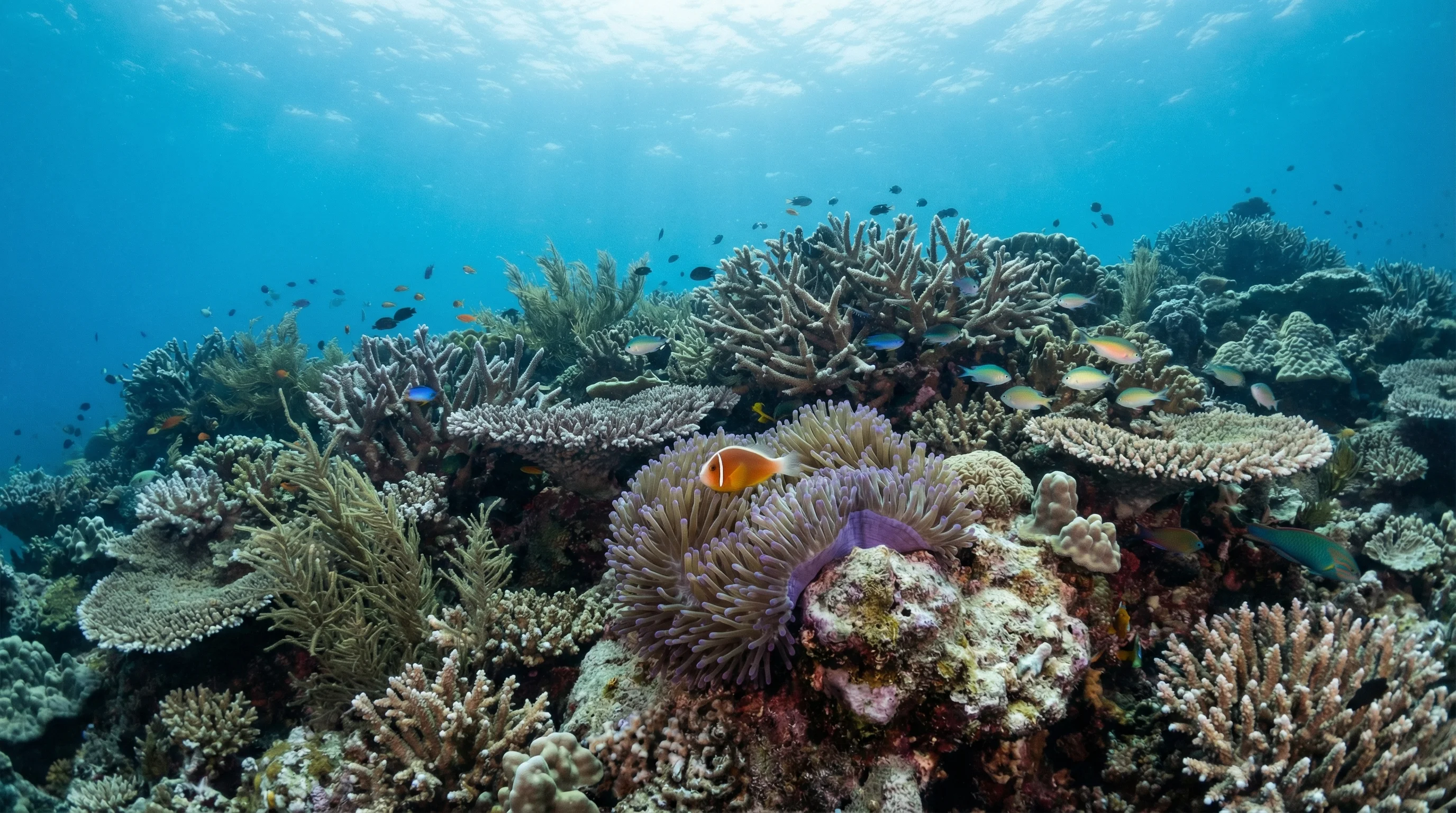
5Remote Coral Sea reef diving in the Great Barrier Reef Marine Park, with bommies, walls, and species including hammerhead and silvertip sharks.
 1
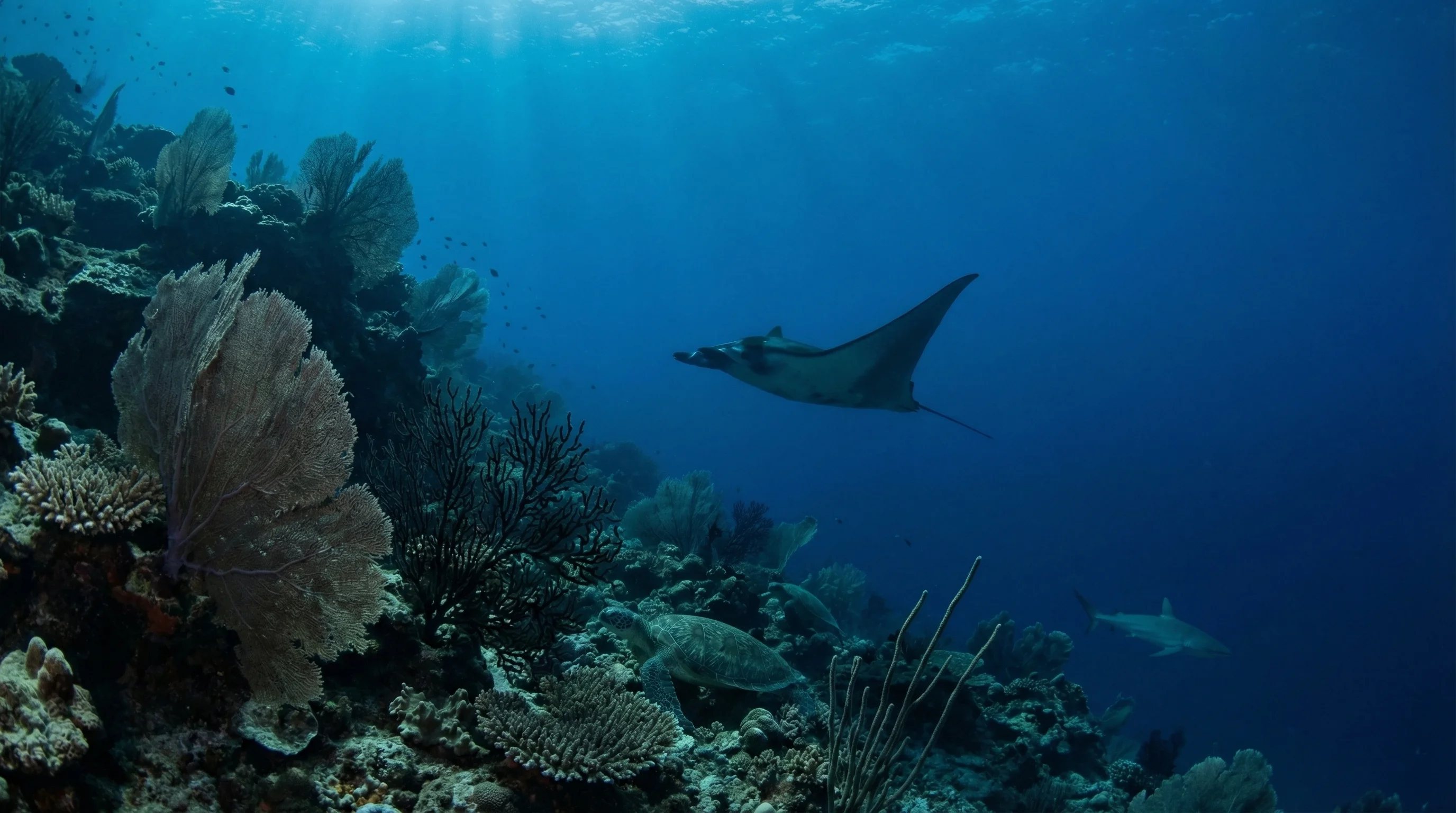
1A far-northern Great Barrier Reef wall site reached only by liveaboard, famous for green turtle aggregations and a wall dropping to sixty metres.
Monthly water temperature across Raine Island's sites, from satellite sea-surface data corrected for depth. The band shows the site-to-site spread.
Water stays warm for most of the year, dropping slightly in the cooler winter months. The remote location and consistent currents mean conditions suit divers who are comfortable with drift diving; the shallower sites such as Crowded Garden are accessible to beginners, while Rainbow Road and the deeper walls require advanced experience.
1 operator
Australia
Water temperature around Raine Island ranges from about 25°C in August to 29°C in January, based on satellite sea-temperature data for its dive sites.
In the warm season (about 29°C) a rash guard or 3mm shorty is comfortable in Raine Island; in the coldest months (about 25°C) step up to a 3mm full suit.
Fin maps 6 sites in Raine Island (6 scuba diving sites and 3 snorkelling spots, with some suited to both), organised into 2 areas.
Across Raine Island's dive sites, October, November and December are most often reported as the best months to visit.
2 more sites to explore