Carcharhinus albimarginatus
Spot silvertip sharks on reefs in the Maldives, Philippines and Red Sea. Recognise them by their bold white-tipped fins and confident diver approach.
Safety warning
This species is marked as dangerous to divers and should be treated with respect at all times. Its bold approach and persistent circling can escalate if divers behave erratically, corner the animal, or if spearfishing is occurring nearby. Maintain a calm posture, avoid rapid movements or blocking its escape route, and never position yourself between a silvertip and open water. Exit the water calmly if an animal becomes increasingly close or agitated.
If you're bitten
BiteGeneral first-aid guidance, not a substitute for professional medical care. In an emergency, call your local emergency number.
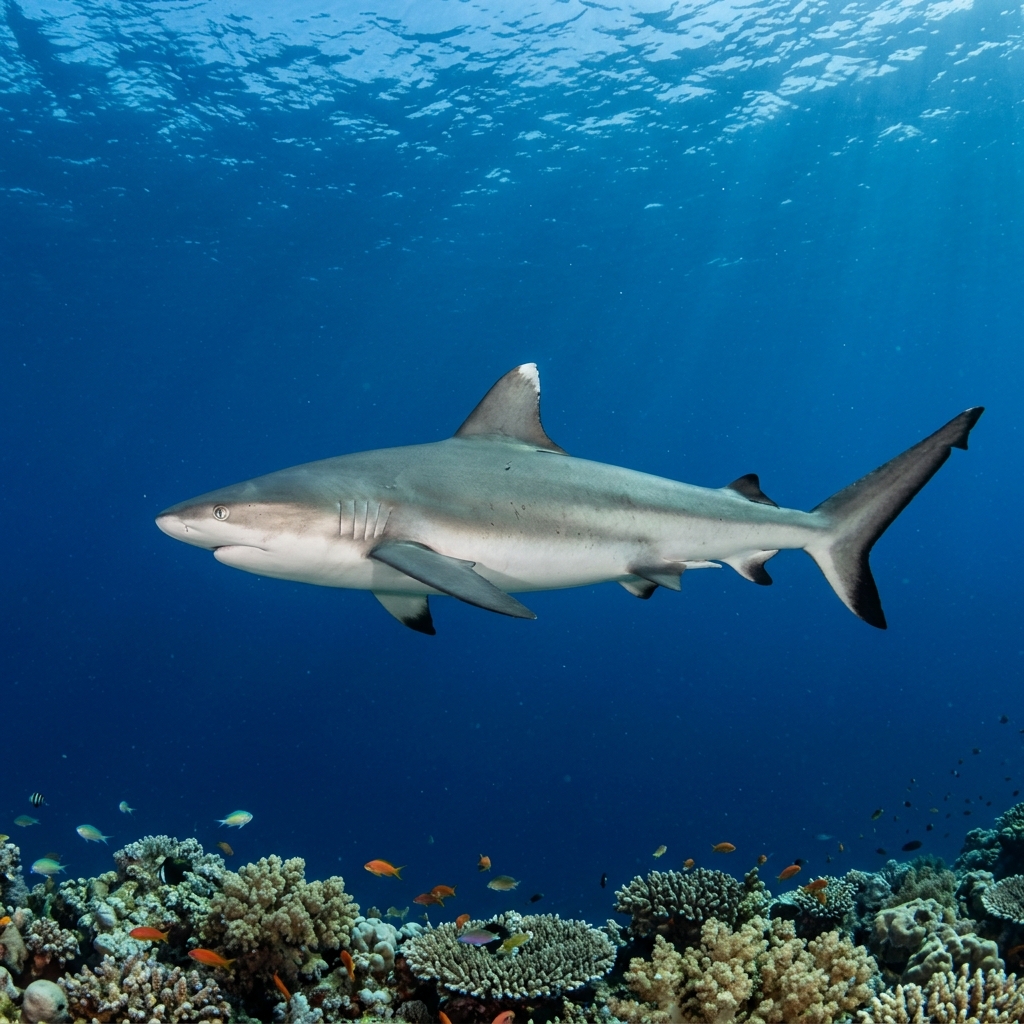
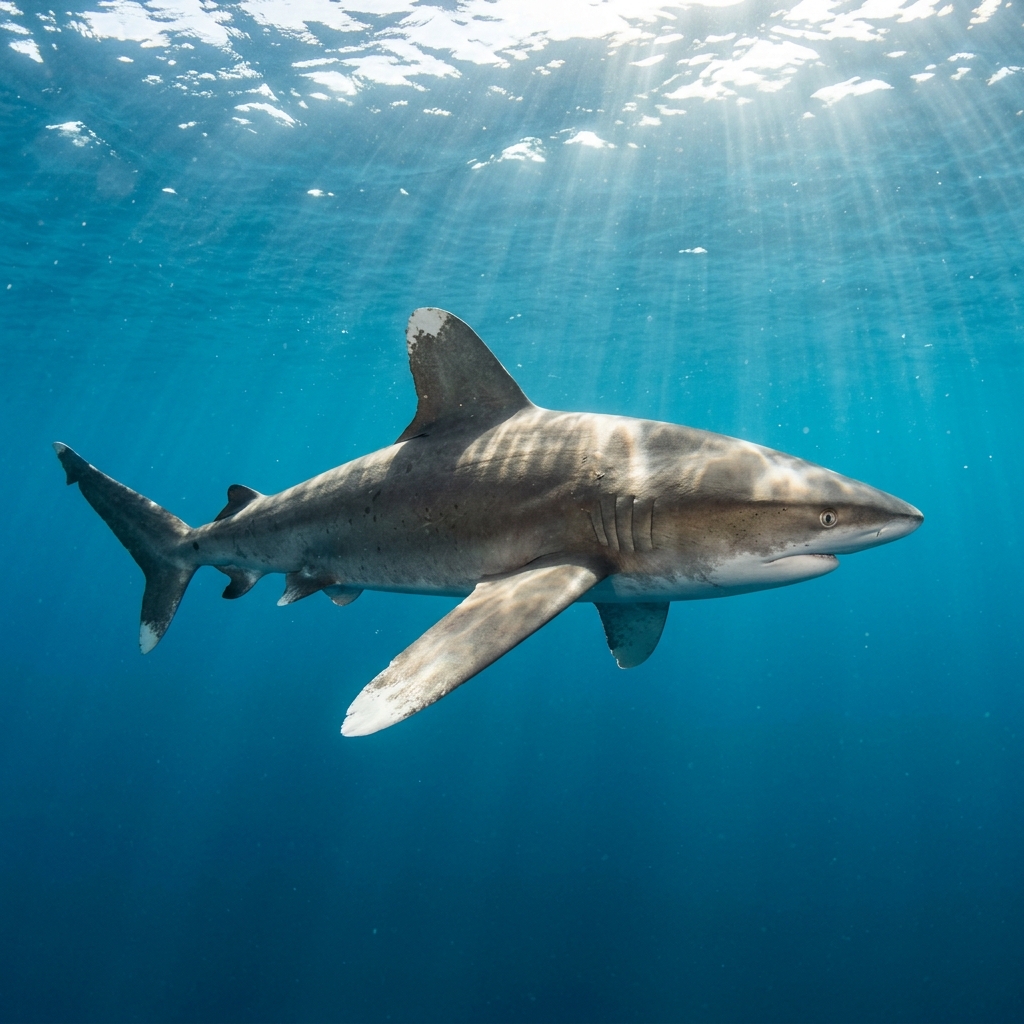
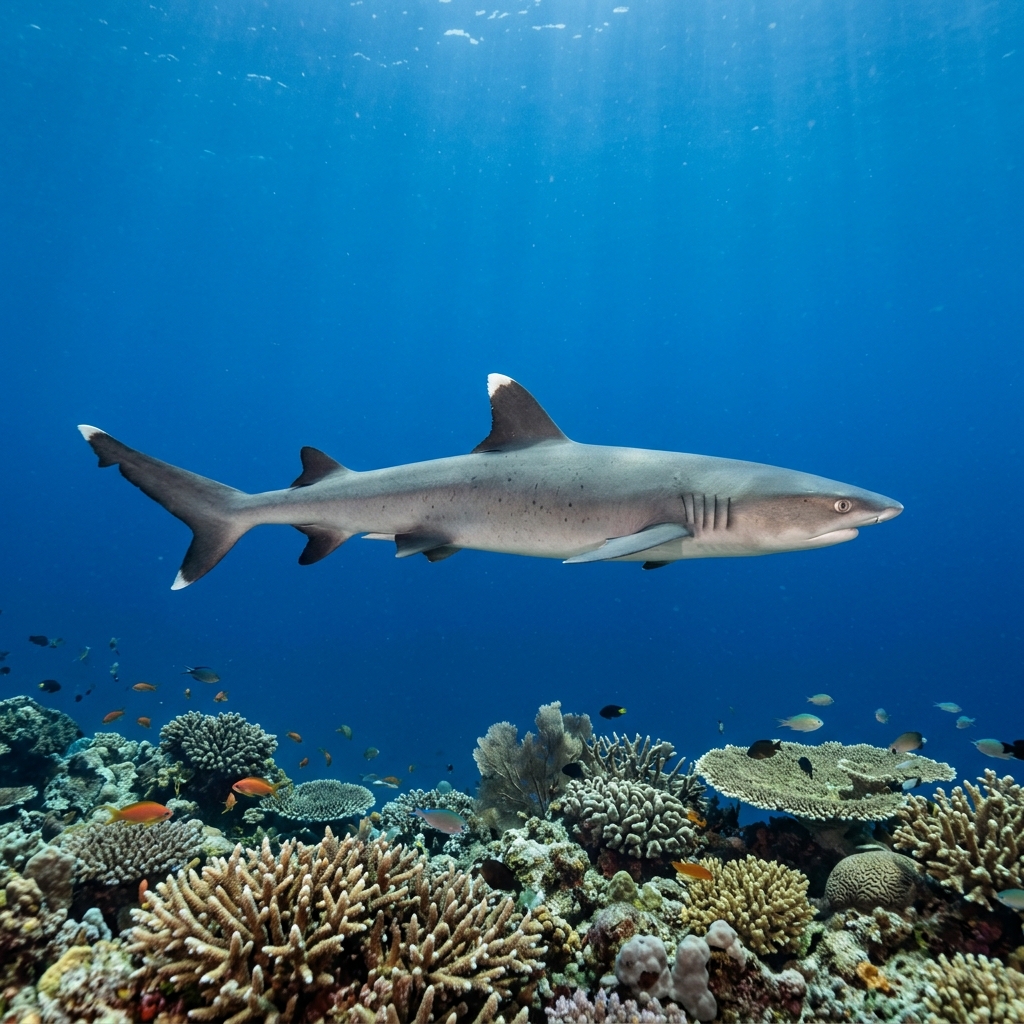
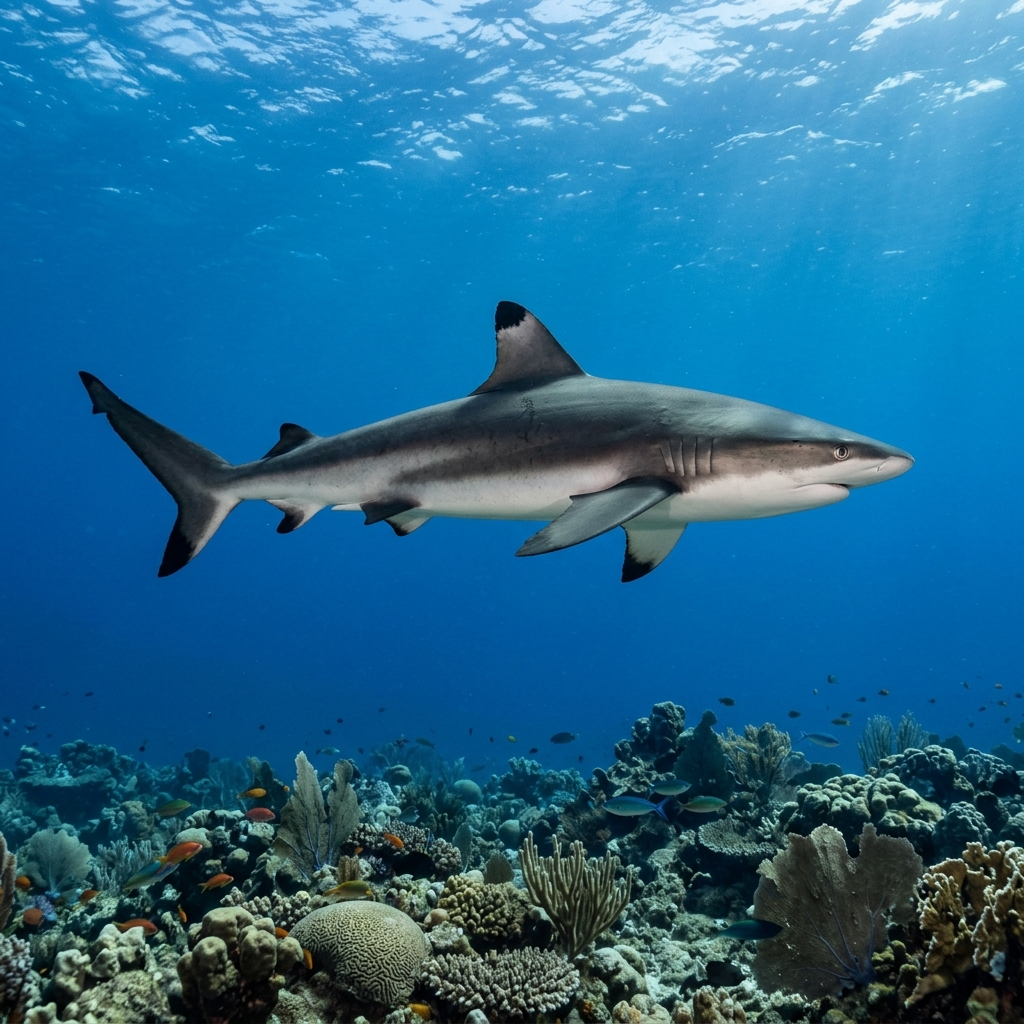
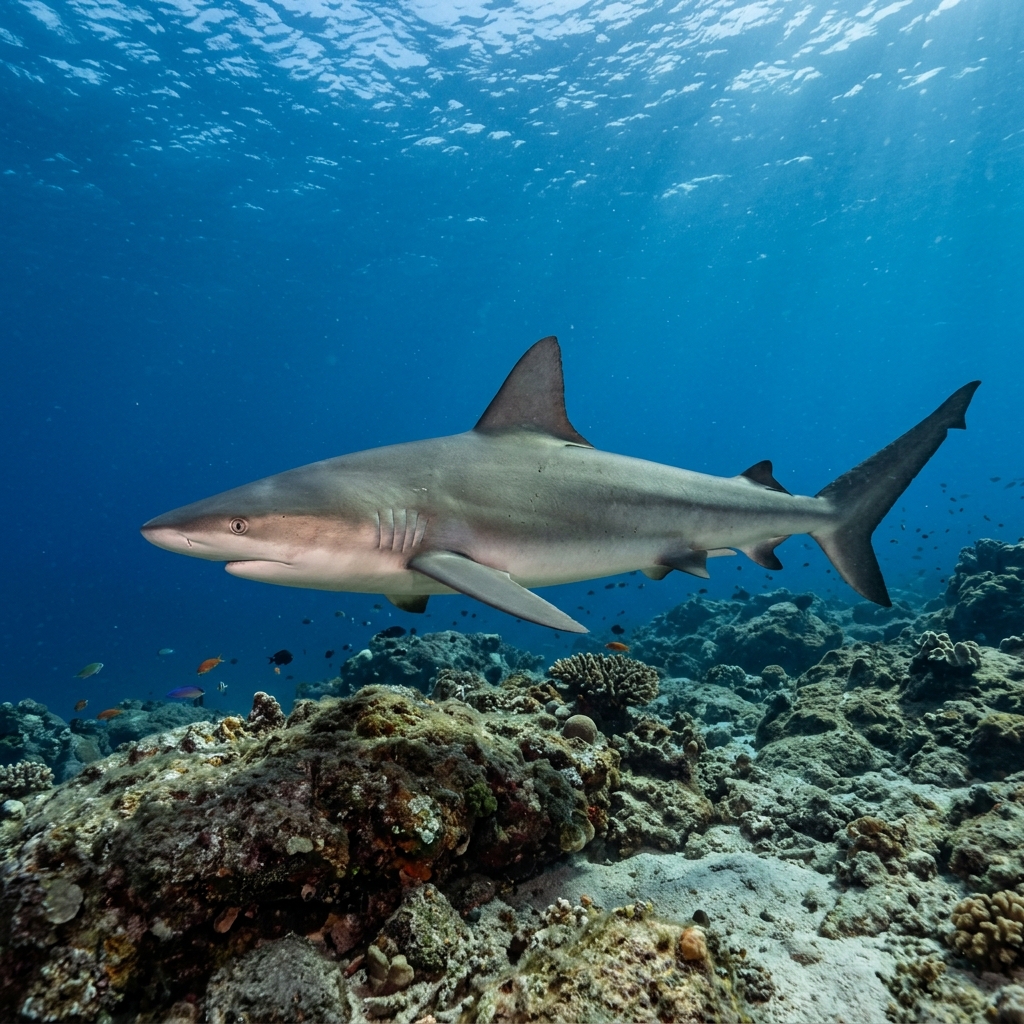
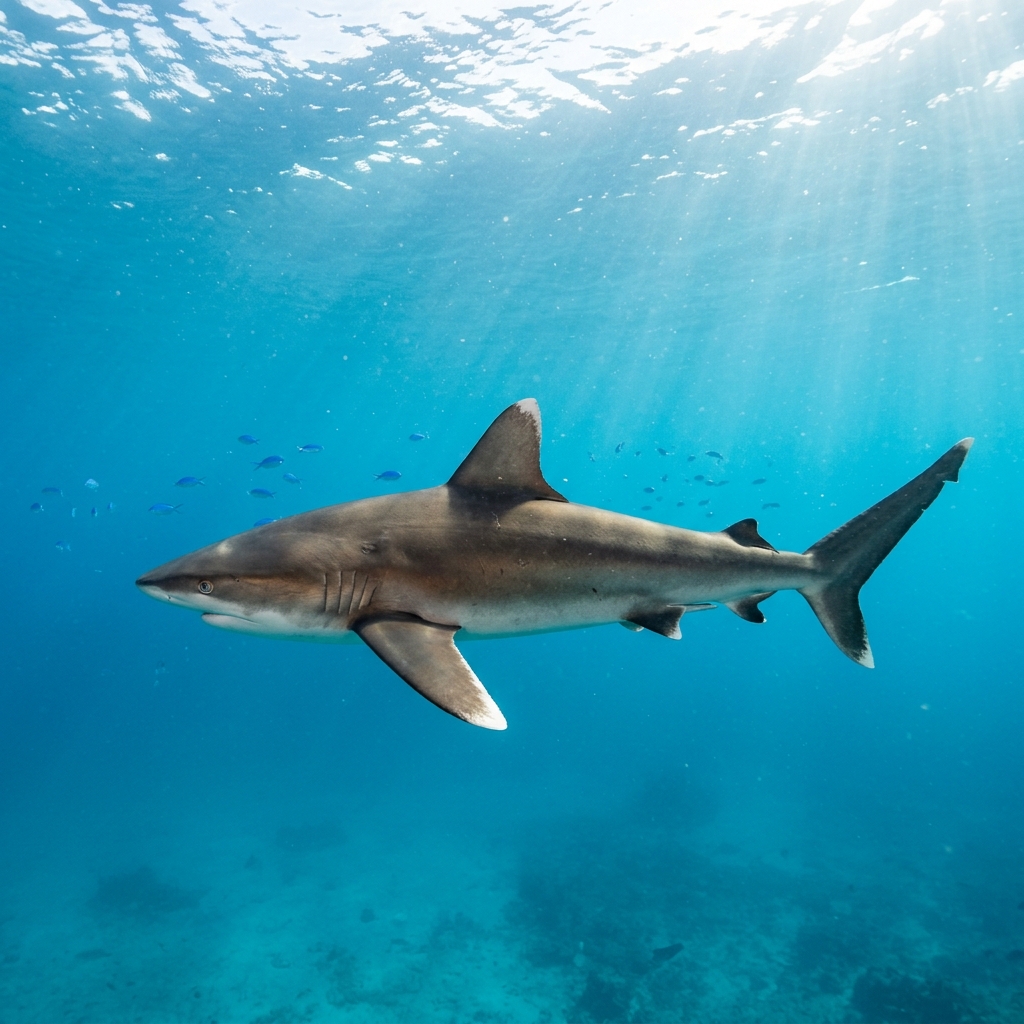
At around two metres, this is a solidly built, grey-backed reef shark with a clean white blaze along the trailing edge and tips of nearly every fin, pectorals, dorsal, tail lobes, and anal fin all carry the mark. Underwater that white trim is visible from a distance and is the single most reliable field clue. The body is stockier and more bronze-tinged than the similarly marked oceanic whitetip, and the snout is broader and more rounded than that of the whitetip reef shark.
Silvertip sharks tend to patrol reef edges and outer drop-offs, often at mid-water rather than tight to the coral. They are notably bold towards divers and can approach closely, sometimes circling persistently, an inquisitive behaviour rather than outright aggression, but one that demands attention. Groups of several individuals around a single dive site are not unusual, particularly on seamounts and channel walls.
Silvertip sharks are known to be territorial around certain reef structures and will actively compete with and displace smaller reef shark species, including grey reef sharks, from preferred sites.
No clear seasonal peak has emerged from diver records, so silvertip sharks appear to be present year-round on their reef habitats. Their observed temperature range of roughly 14 to 29°C spans both warm tropical reefs and cooler offshore drop-offs, meaning visits to top sites such as the Maldives or Philippines at any time of year should offer a reasonable chance of an encounter.
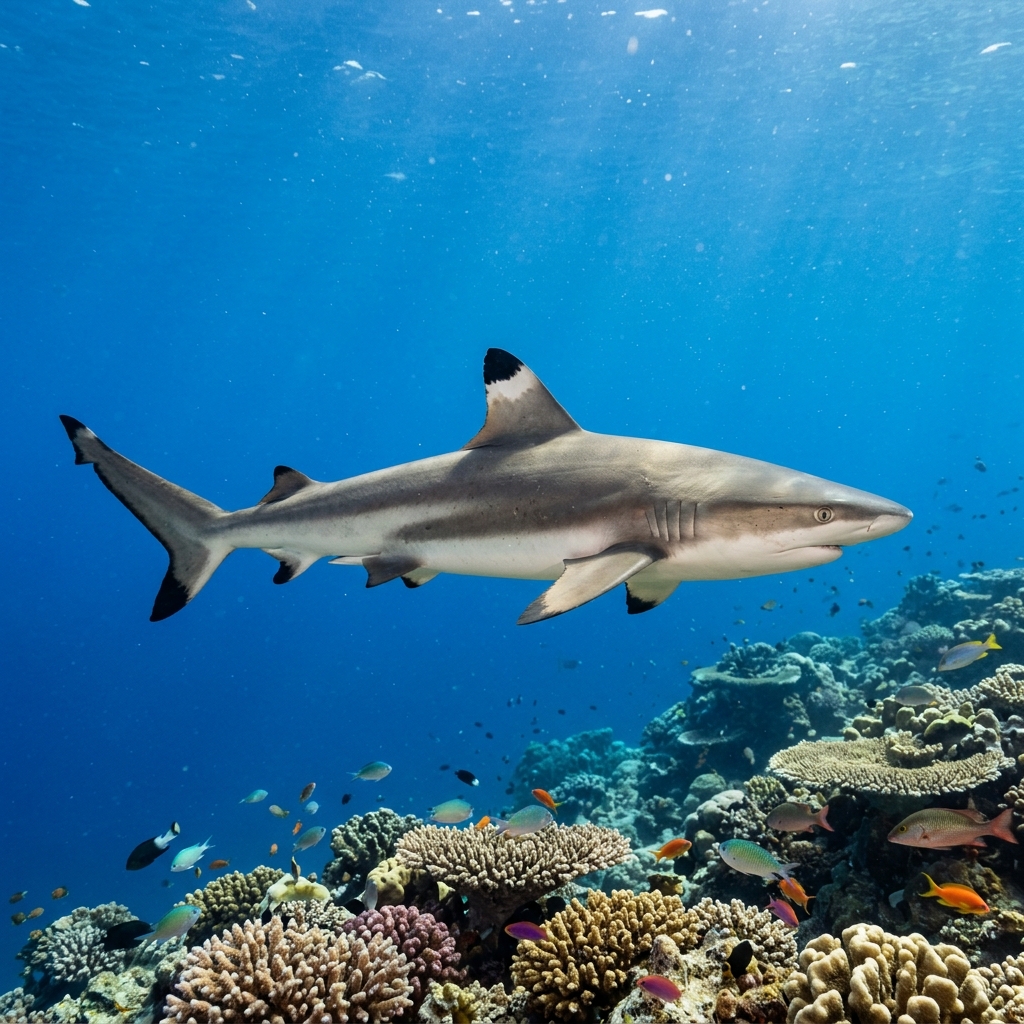
Reef neighbours a diver could mistake it for. Use the identification notes above to tell them apart.
Most commonly logged across the Maldives, with the North and Central Atolls and Felidhoo and Mulaku among the standout regions. Strong populations are also recorded in the Philippines, particularly Palawan and Apo Reef, and throughout Indonesia, with Queensland, Australia and the Port Sudan area of the Red Sea rounding out the reliable spots.
Mapping where Silvertip Shark is logged…
The Maldives offers the greatest spread of sites, particularly the North and Central Atolls and Felidhoo and Mulaku. The Philippines, especially Palawan and Apo Reef, Indonesia, Queensland in Australia, and the Port Sudan area of the Red Sea all have reliable records too.
Diver records don't point to a particular season, and their broad temperature tolerance means they're present on tropical reefs throughout the year. There's no strong reason to time a trip specifically around silvertip sightings, they're an all-year prospect at their core destinations.
Yes, they are considered potentially dangerous. They are bold and will approach closely, sometimes repeatedly circling. While encounters are rarely aggressive without provocation, divers should stay calm, avoid erratic movements, and exit calmly if a shark becomes fixated. Spearfishing in their presence significantly raises risk.
Look for white trim along the trailing edges and tips of almost every fin, dorsal, pectoral, both tail lobes, and the anal fin. No other commonly encountered reef shark has white edging so consistently across all fins. The body is large, stocky, and grey-bronze above.
Adults typically reach around 210 cm in length. They are noticeably larger and more powerfully built than grey reef sharks, which helps with identification when both species share the same reef.
They are classified as Vulnerable by the IUCN. Their slow reproductive rate, females give birth to small litters after a long gestation, makes populations slow to recover from fishing pressure. Logging sightings through dive apps and supporting responsible shark-diving operators both contribute to their conservation.
The Silvertip Shark is listed as vulnerable by the IUCN. Observe from a distance, avoid touching or feeding it, and report sightings to local marine research organisations.
Silvertip sharks are listed as Vulnerable on the IUCN Red List, driven largely by slow reproduction and fishing pressure across their range. Divers can help by recording sightings on platforms that feed into shark population monitoring and by choosing dive operators that follow no-feed, no-touch shark encounter guidelines.
Site and sighting data is aggregated from diver logs, iNaturalist and GBIF. For taxonomy and conservation status:
Sandbar Shark
1,474 sites