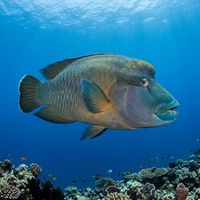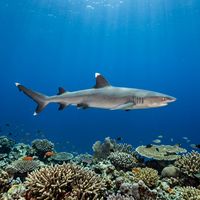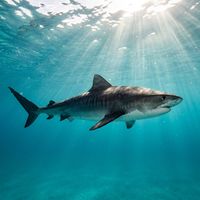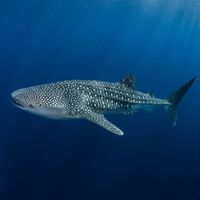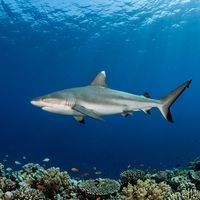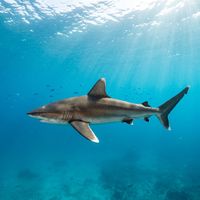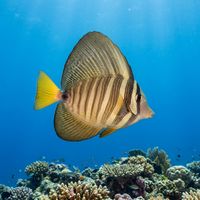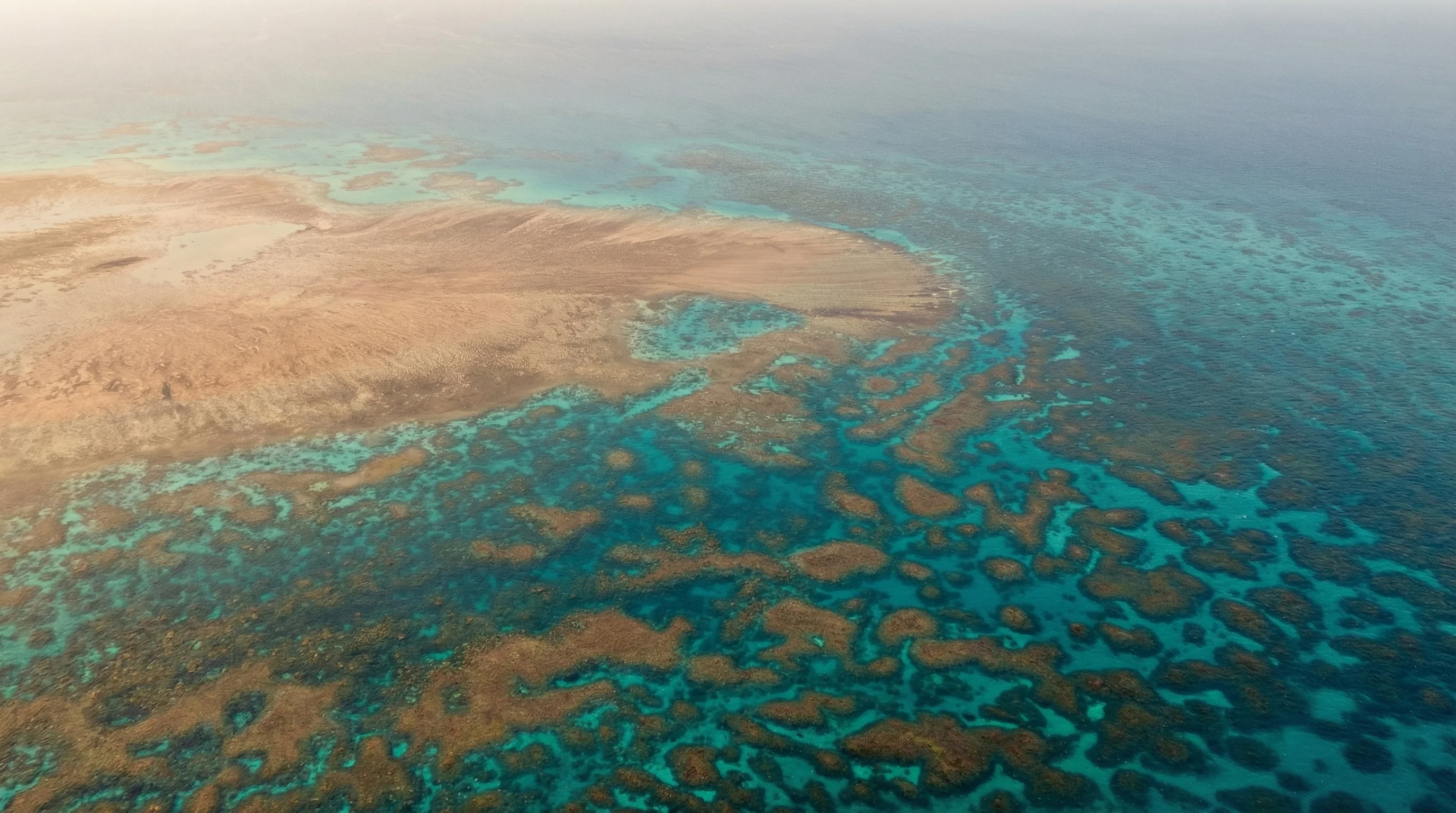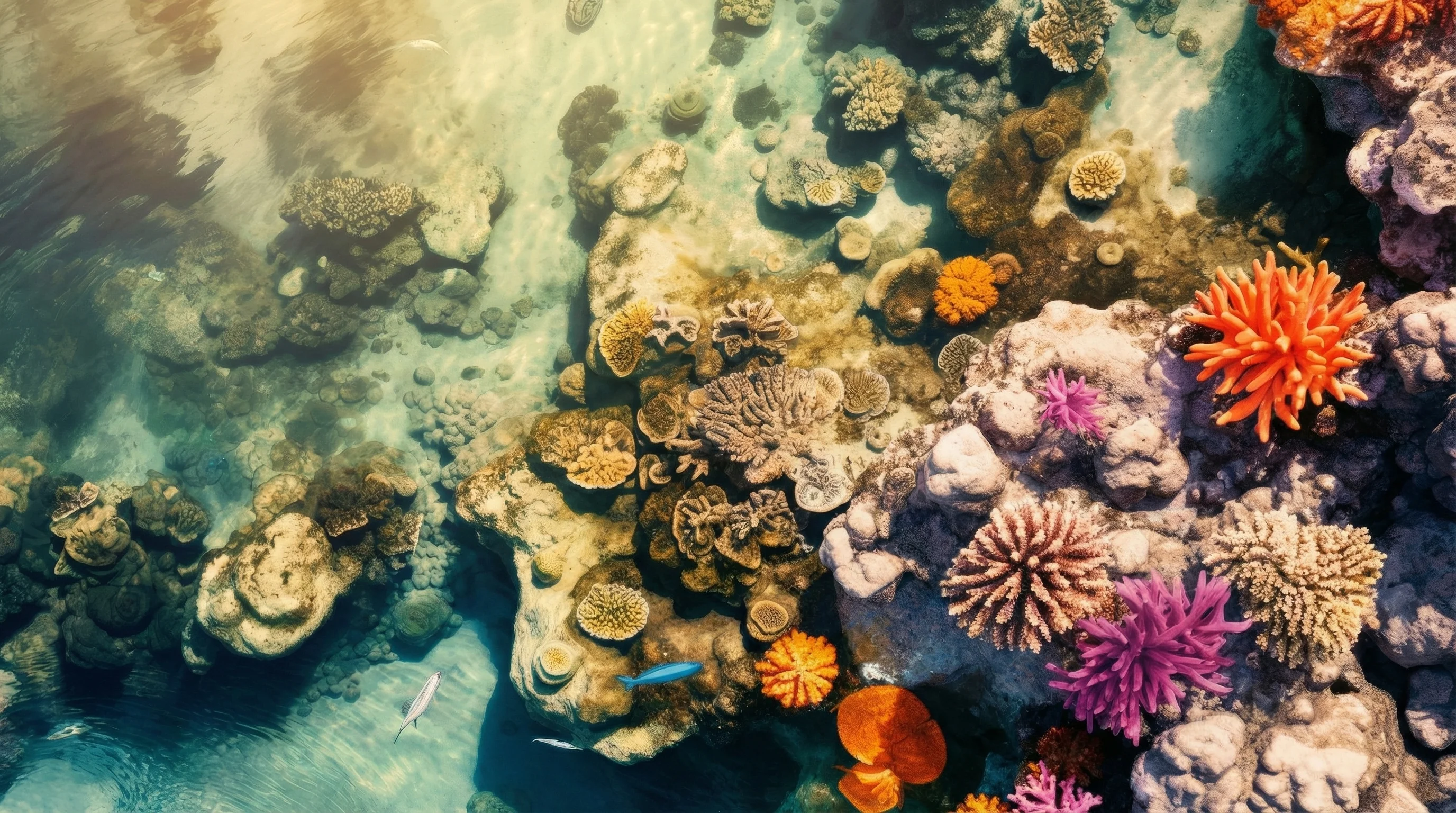
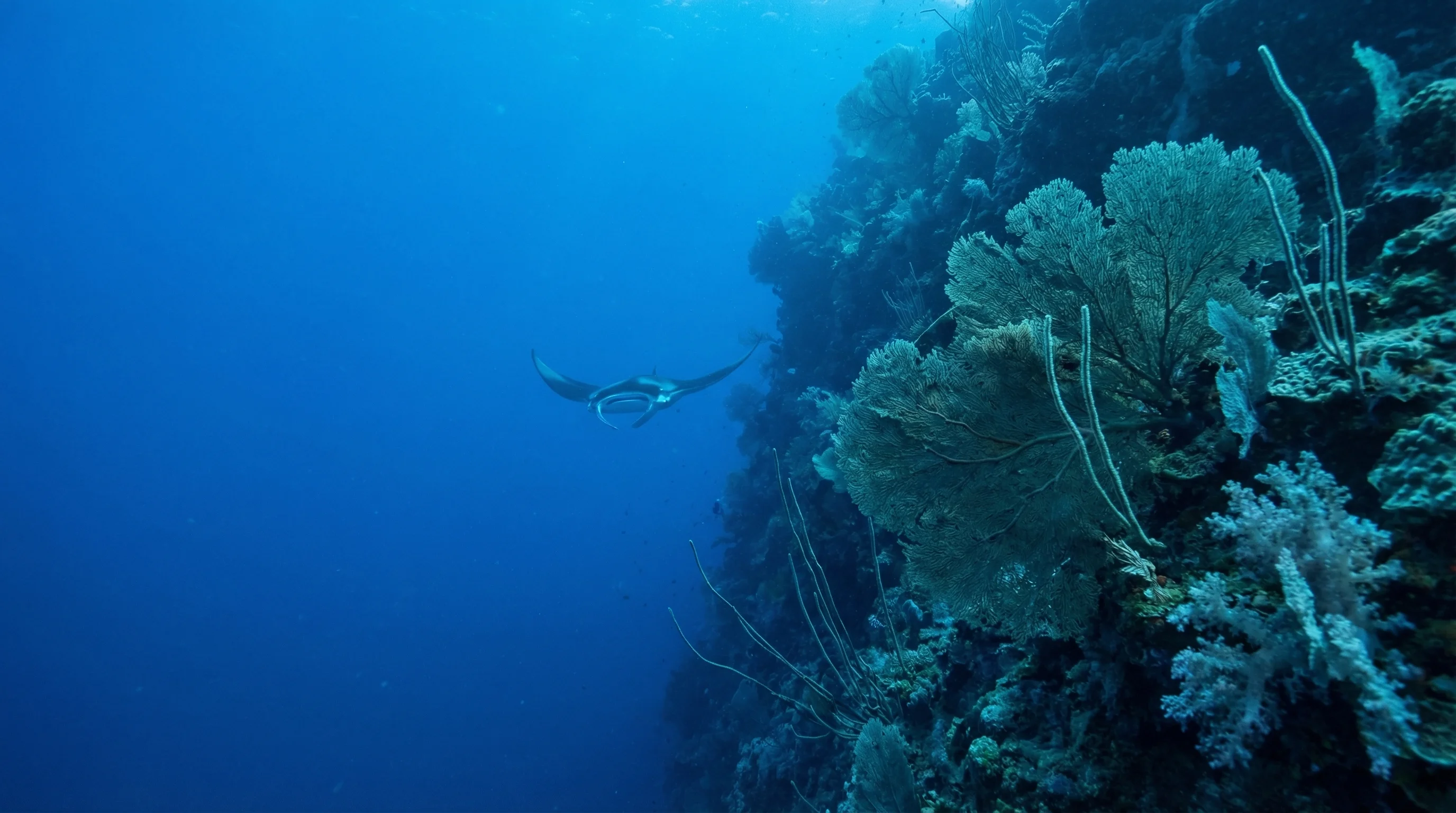
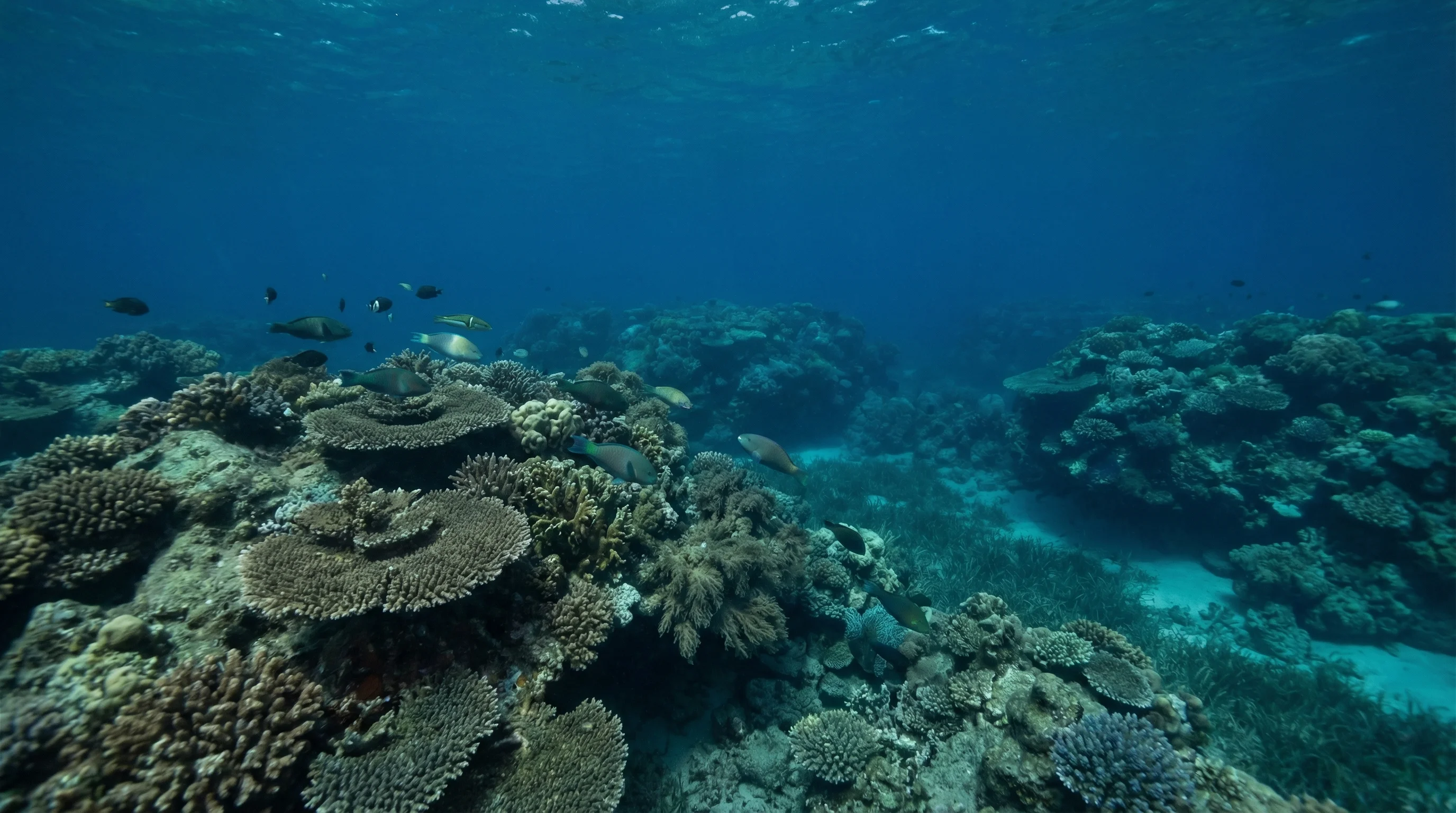
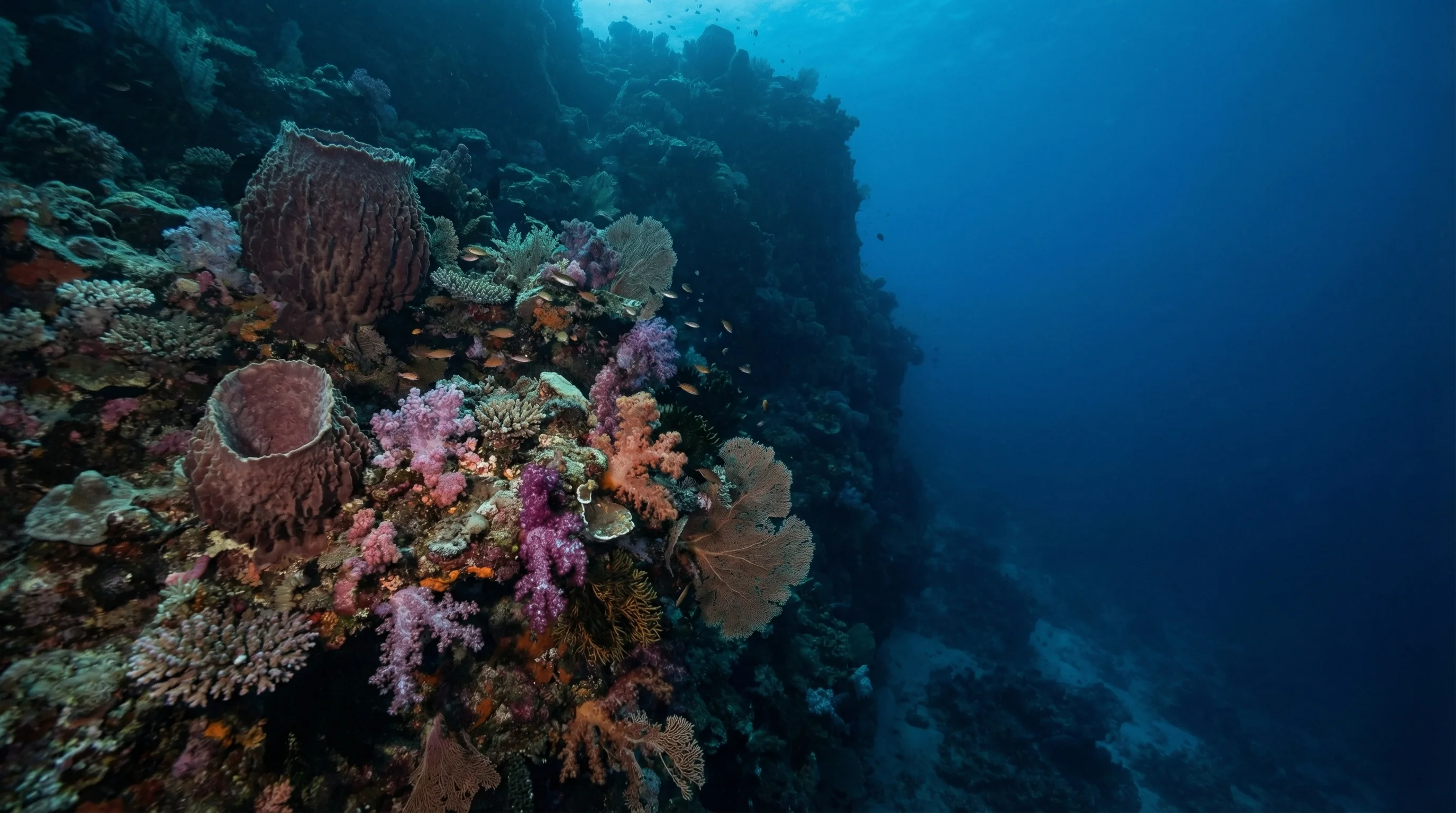
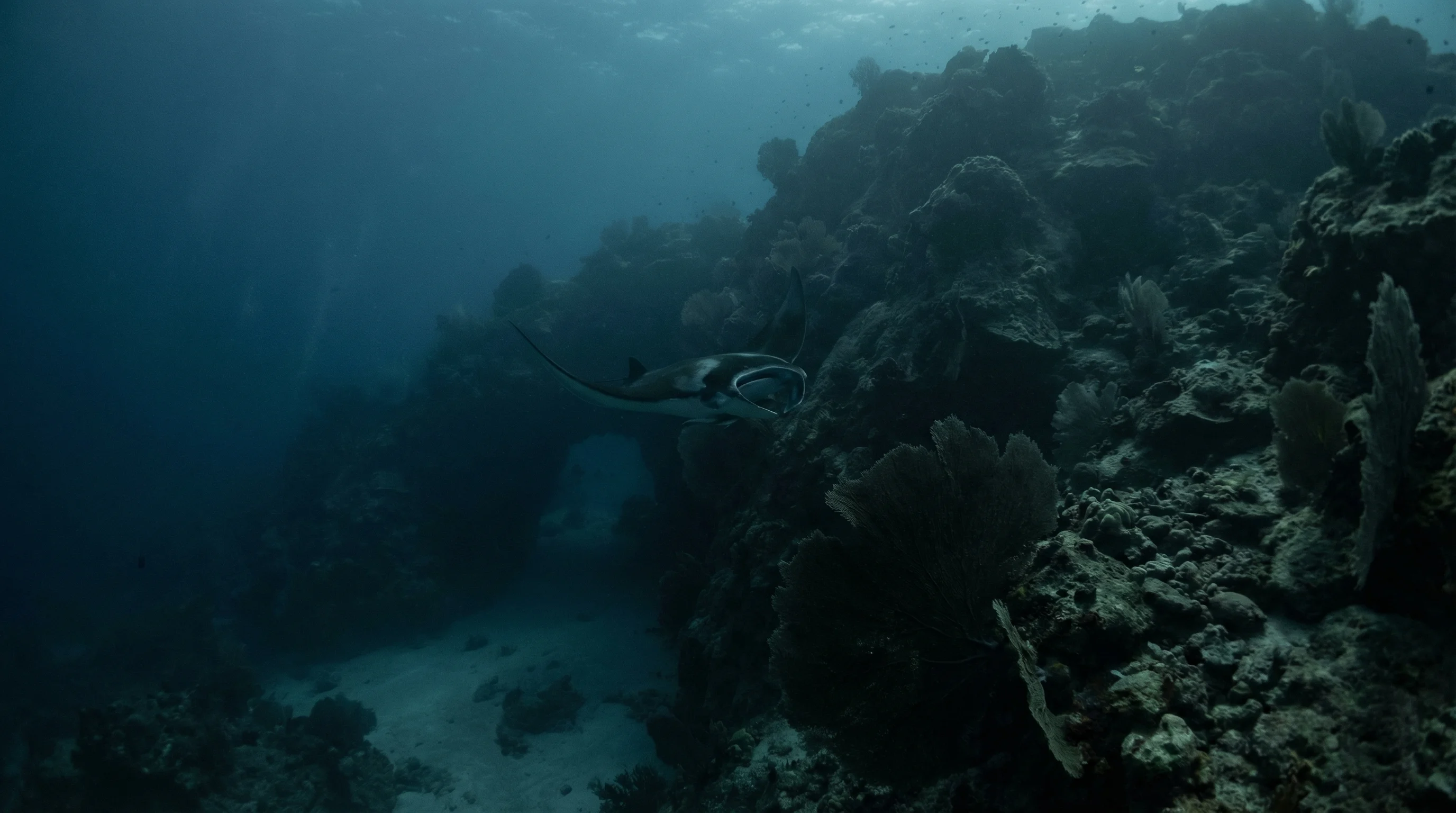
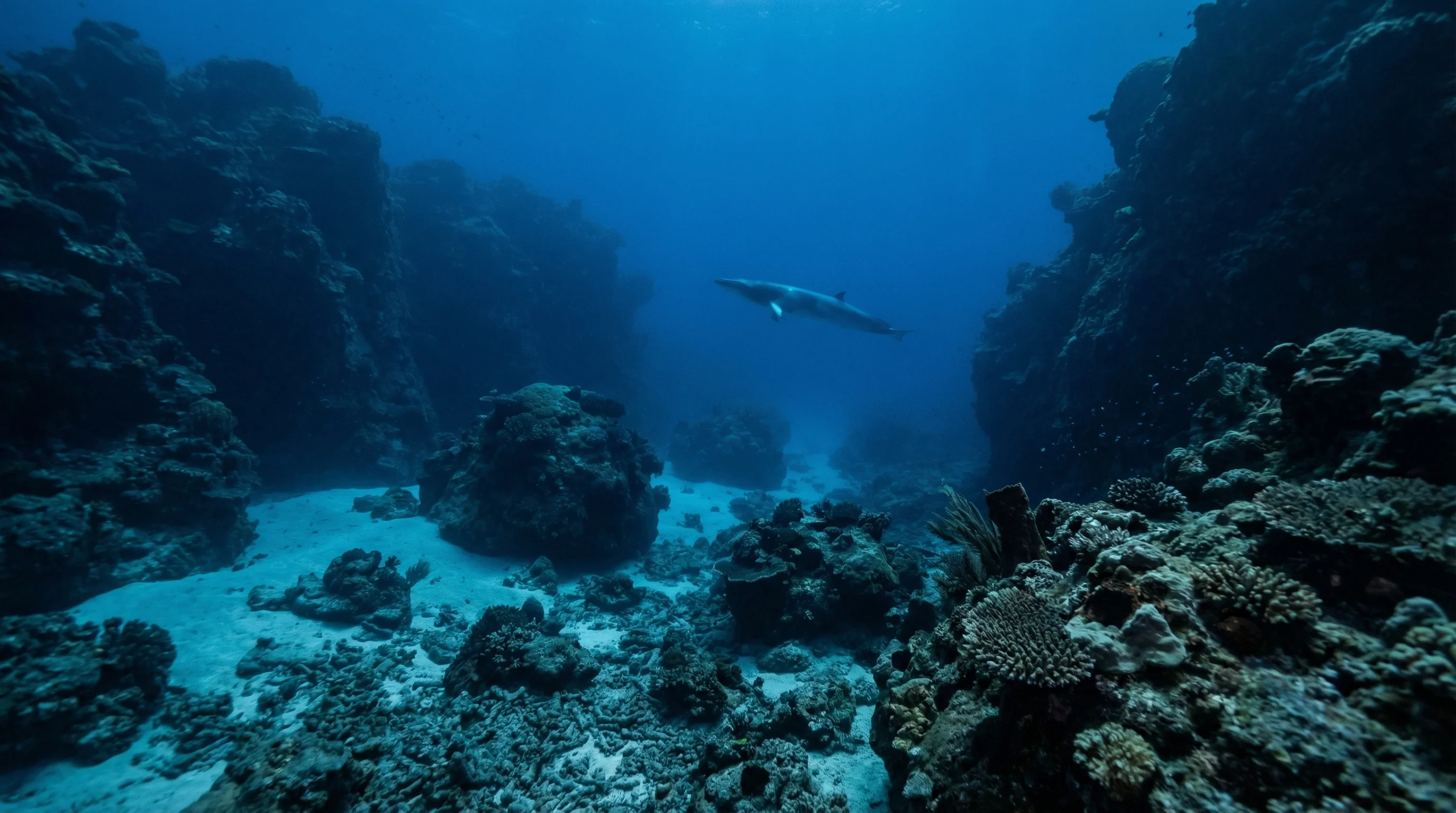
The Coral Sea is defined by remote, deep-water wall diving across three distinct sub-areas: Osprey Reef, Flinders Reef, and Holmes Reef. Vertical drop-offs dominate the site mix, with many walls plunging from the shallows into oceanic depths. Shark encounters are a constant, with Whitetip Reef Shark, Grey Reef Shark, Silvertip Shark, and Tiger Shark all observed regularly. Napoleon Wrasse and Whale Shark add further weight to an already compelling pelagic profile. All sites are boat-access only, and the majority suit advanced divers.
3 areas
 5
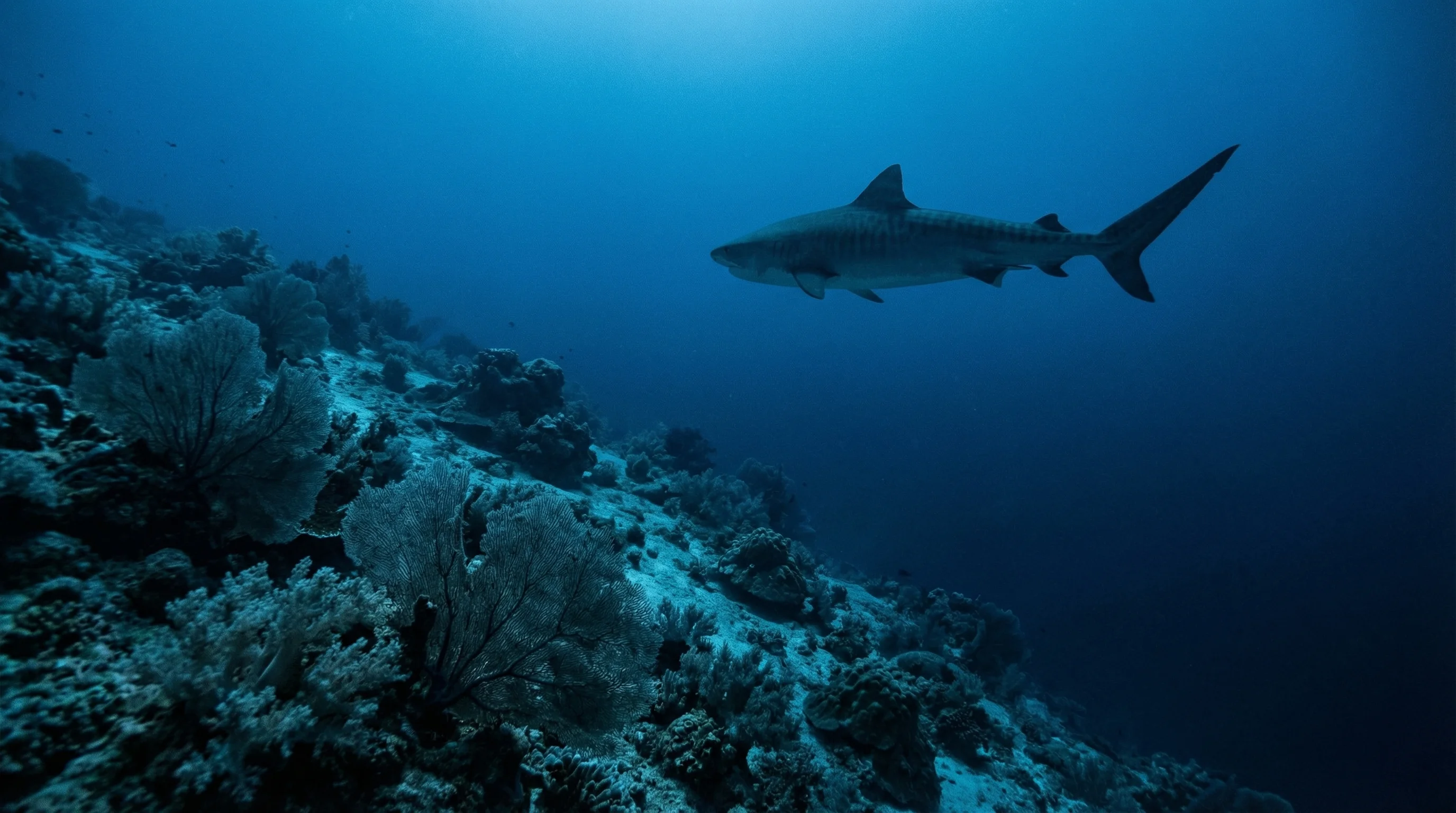
5Remote Coral Sea atoll for advanced liveaboard divers, with vertical walls, exceptional visibility, and dense shark populations.
 4
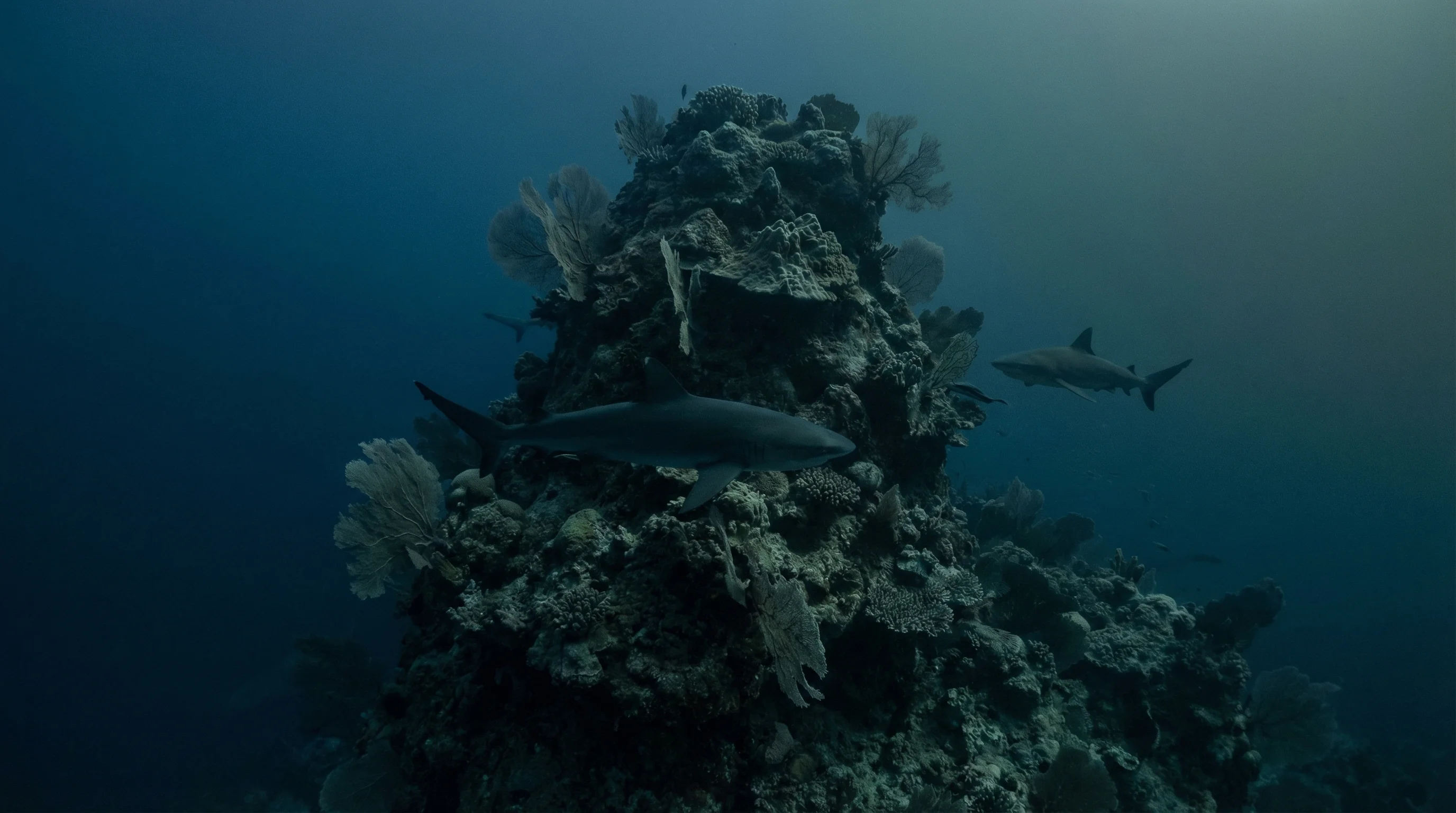
4Remote Coral Sea walls and pinnacles for advanced divers, with high visibility and a diverse mix of pelagic and reef species.
 3
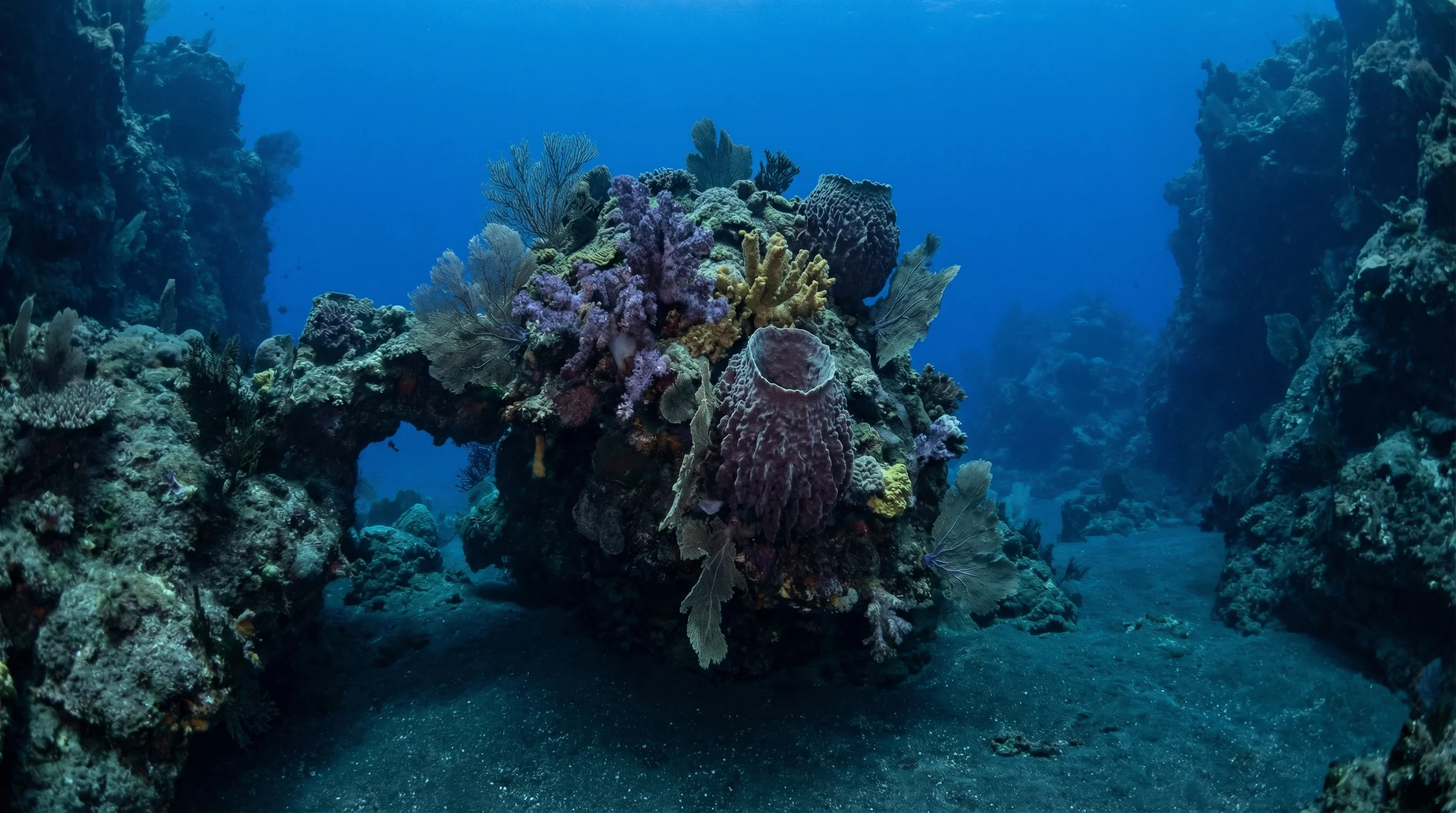
3Remote Coral Sea reef reachable only by liveaboard, with wall dives, strong currents, fifty-metre visibility, and whale sharks among the recorded species.
Monthly water temperature across Coral Sea's sites, from satellite sea-surface data corrected for depth. The band shows the site-to-site spread.
Water stays warm through the southern summer and cools slightly through the middle months of the year, though the range is narrow and conditions remain comfortable year-round. Visibility is consistently outstanding across all seasons, favouring pelagic encounters. The peak popularity window runs from late winter through spring, when conditions on these exposed offshore sites tend to be most settled.
4 operators
Australia
Australia
10 more sites to explore
Water temperature around Coral Sea ranges from about 25°C in July to 28°C in January, based on satellite sea-temperature data for its dive sites.
In the warm season (about 28°C) a rash guard or 3mm shorty is comfortable in Coral Sea; in the coldest months (about 25°C) step up to a 3mm full suit.
Fin maps 22 sites in Coral Sea (21 scuba diving sites and 3 snorkelling spots, with some suited to both), organised into 3 areas.
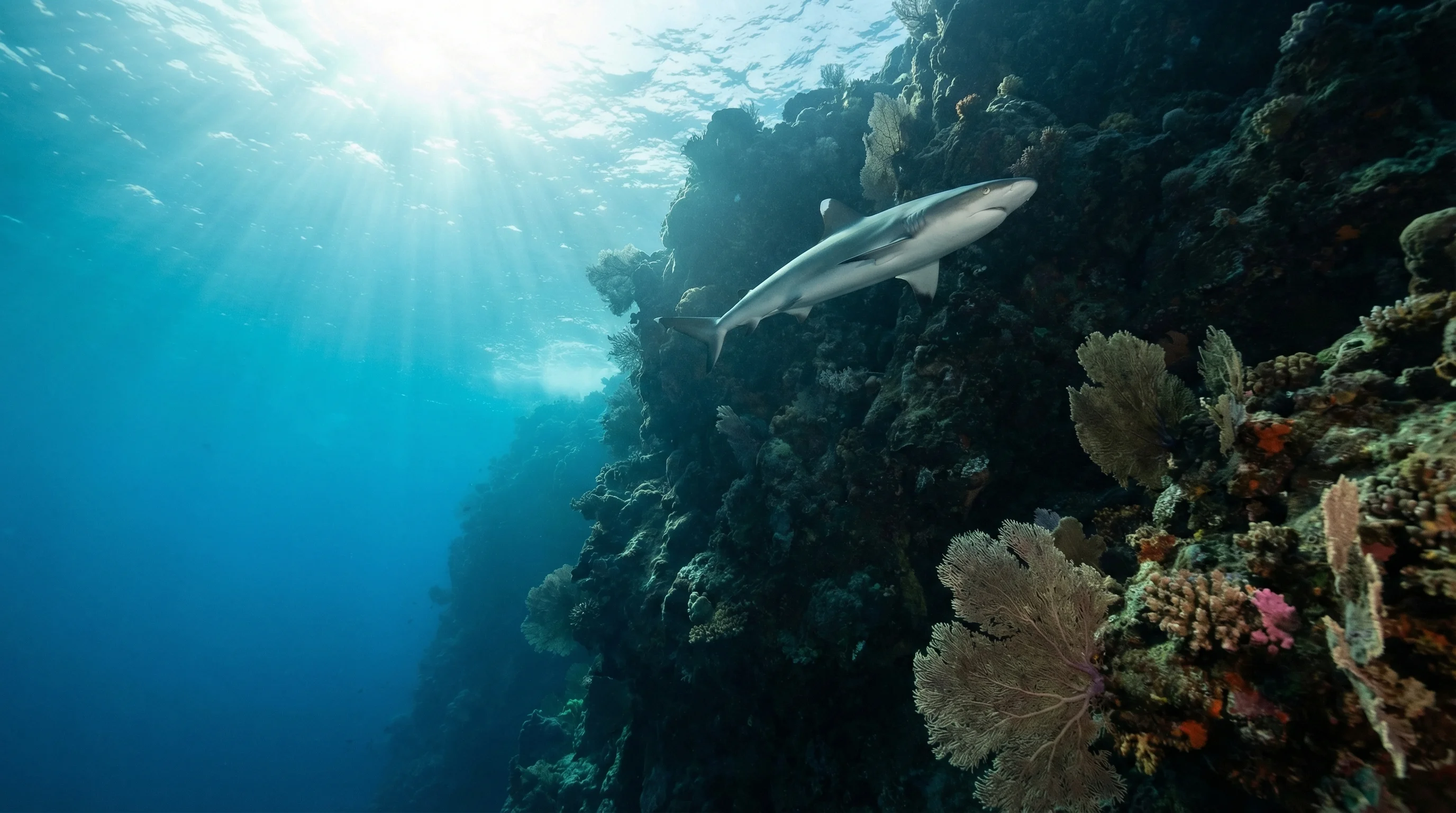
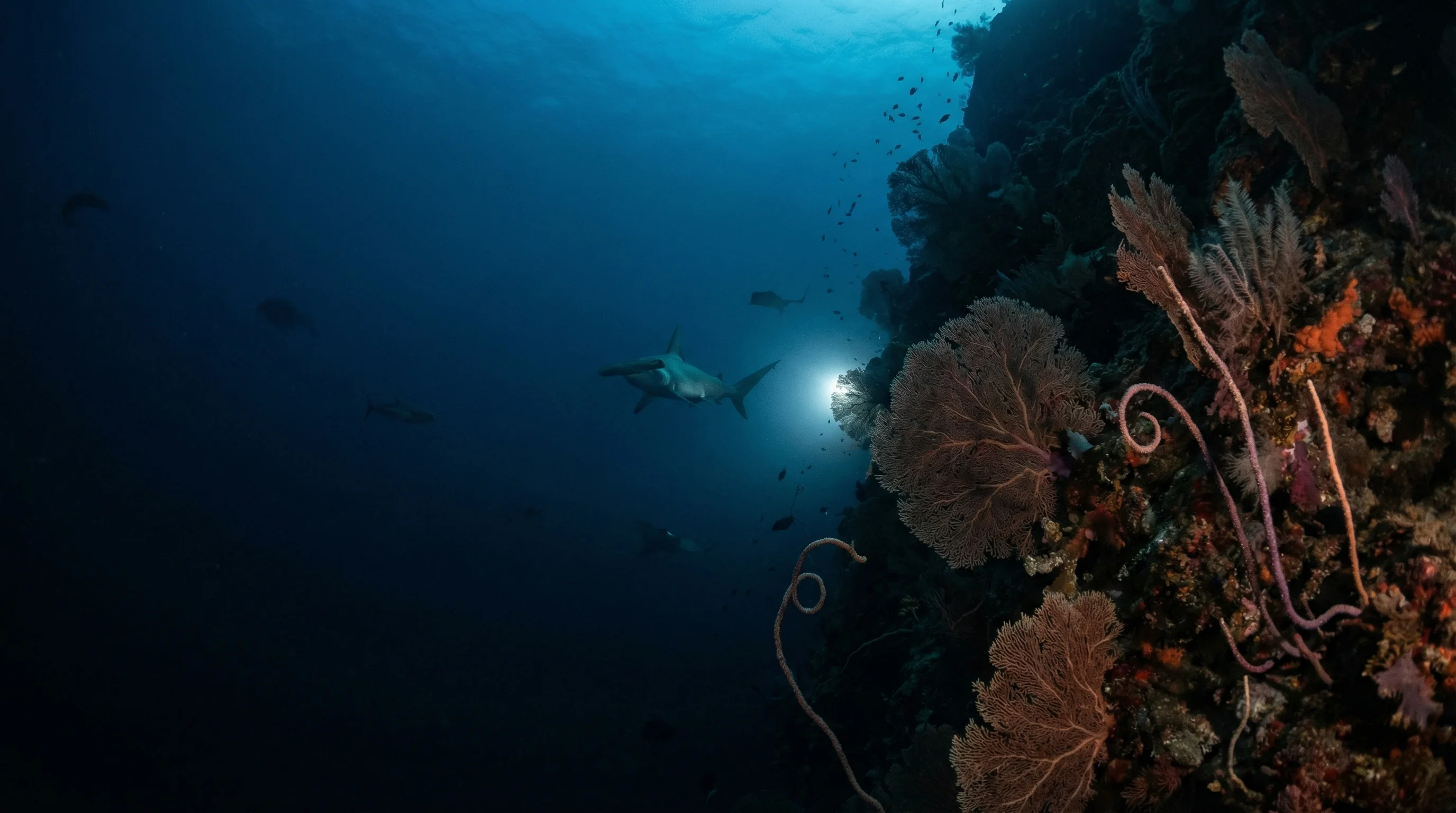
The Coral Sea has an exceptional shark profile. Whitetip Reef Shark and Grey Reef Shark are seen across nearly all sites, while Silvertip Shark and Tiger Shark are also regularly observed. North Horn at Osprey Reef is a particularly well-known site for shark activity, and strong currents at many sites draw pelagic species into view.
The majority of sites in the Coral Sea are rated advanced, given the depth, exposure, and strong open-water currents common across the region. That said, Holmes Reef includes beginner-rated diving, and Chilcot Islet offers a shallow wall environment accessible to newer divers. Intermediates are well served at sites like Tregrosse Reefs and Magdelaine Cays.
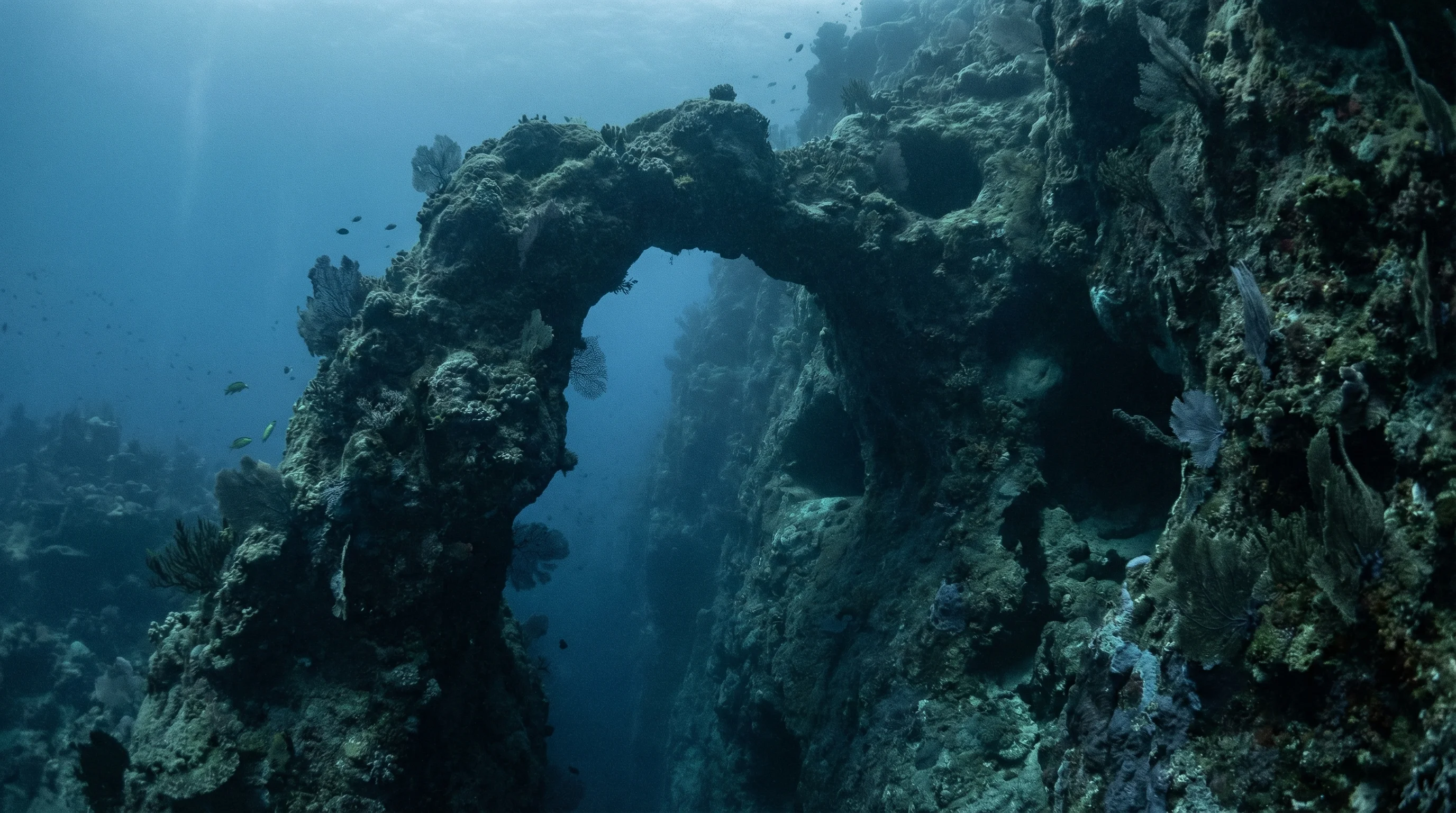
Osprey Reef holds some of the most dramatic topography in the region, including The Abyss and North Horn, both characterised by sheer vertical walls and strong currents. Flinders Reef offers complex structure including cave systems at Rock Arch. Holmes Reef is the most accessible in terms of skill level, with a mix of walls, pinnacles, and caverns spread across its sites.
Every site in the Coral Sea is accessed by boat, and given the distances involved, most require a liveaboard vessel. Sites such as Lithou Reefs and Magdelaine Cays are hundreds of kilometres from the coast, making day-trip access impractical. Planning around a liveaboard itinerary is the standard approach for diving this region.