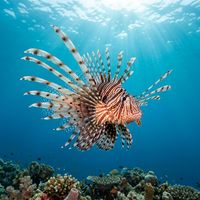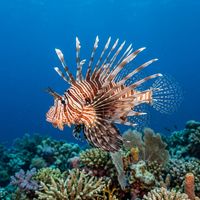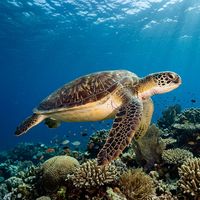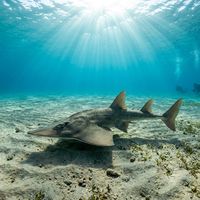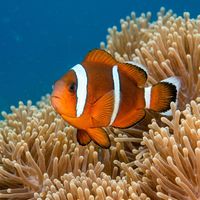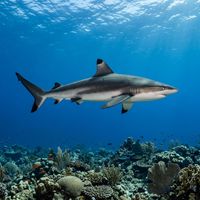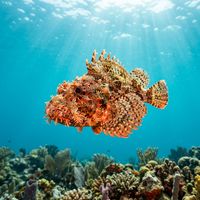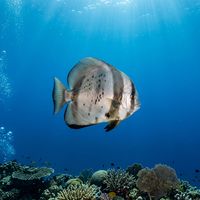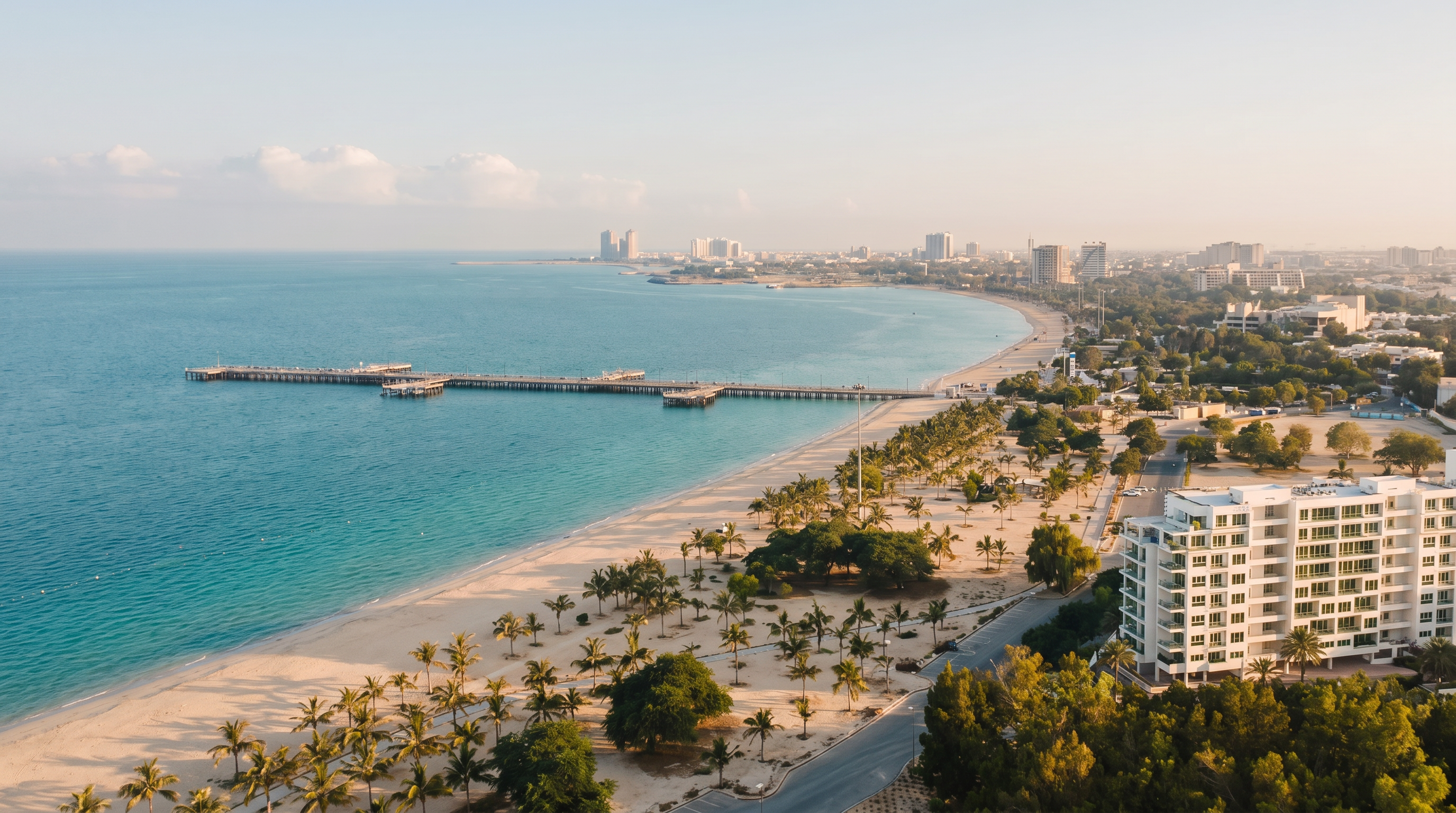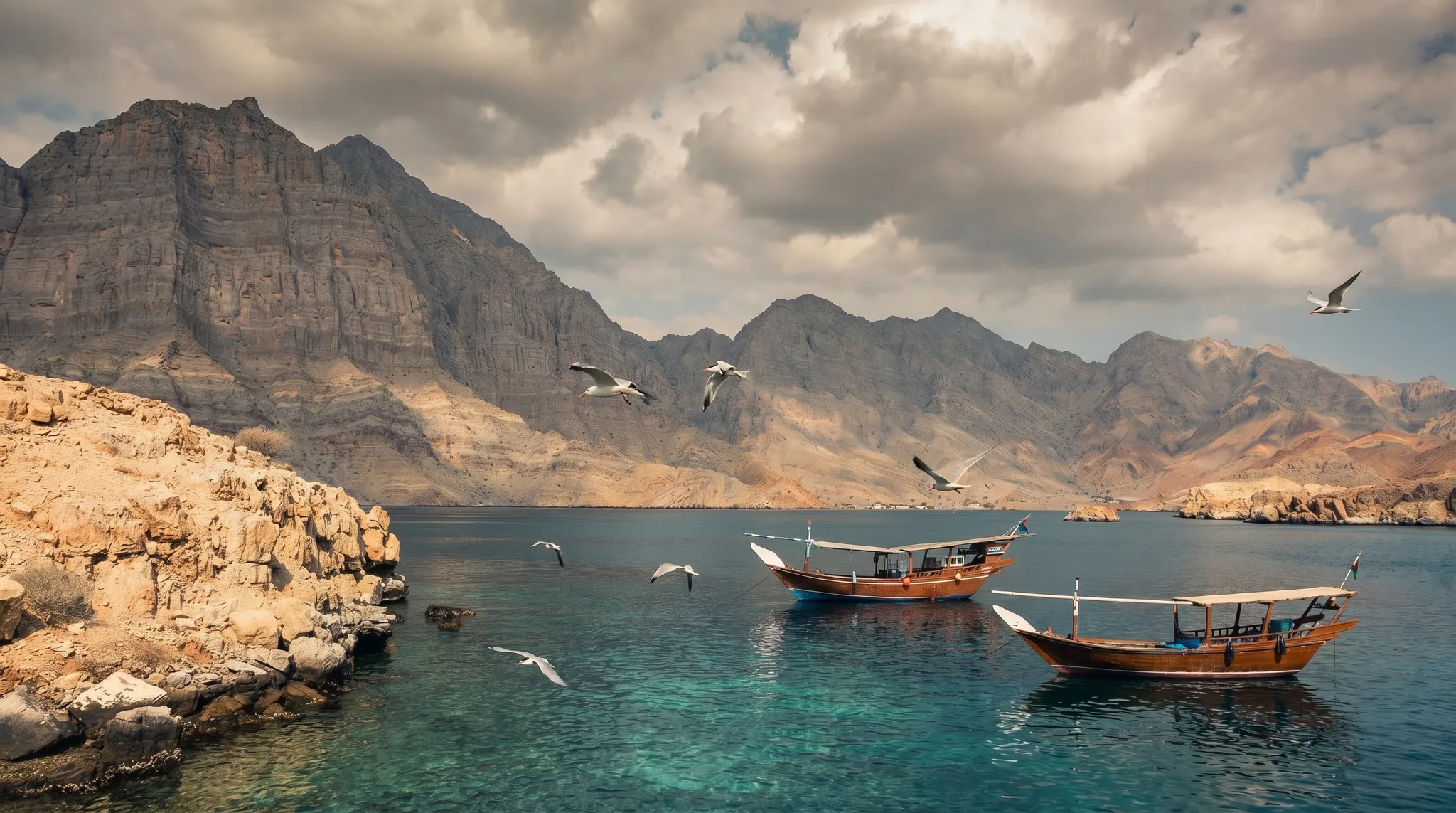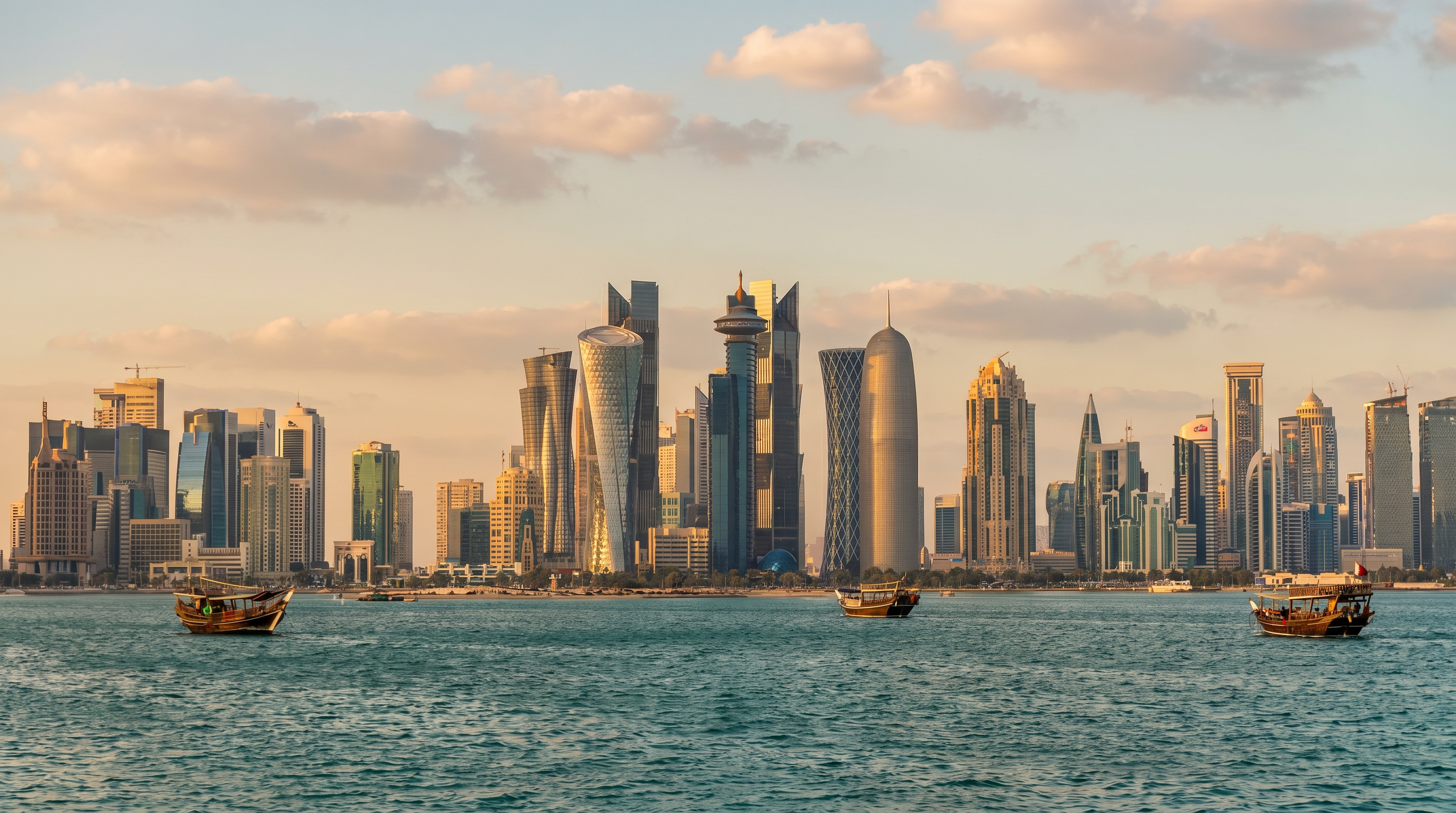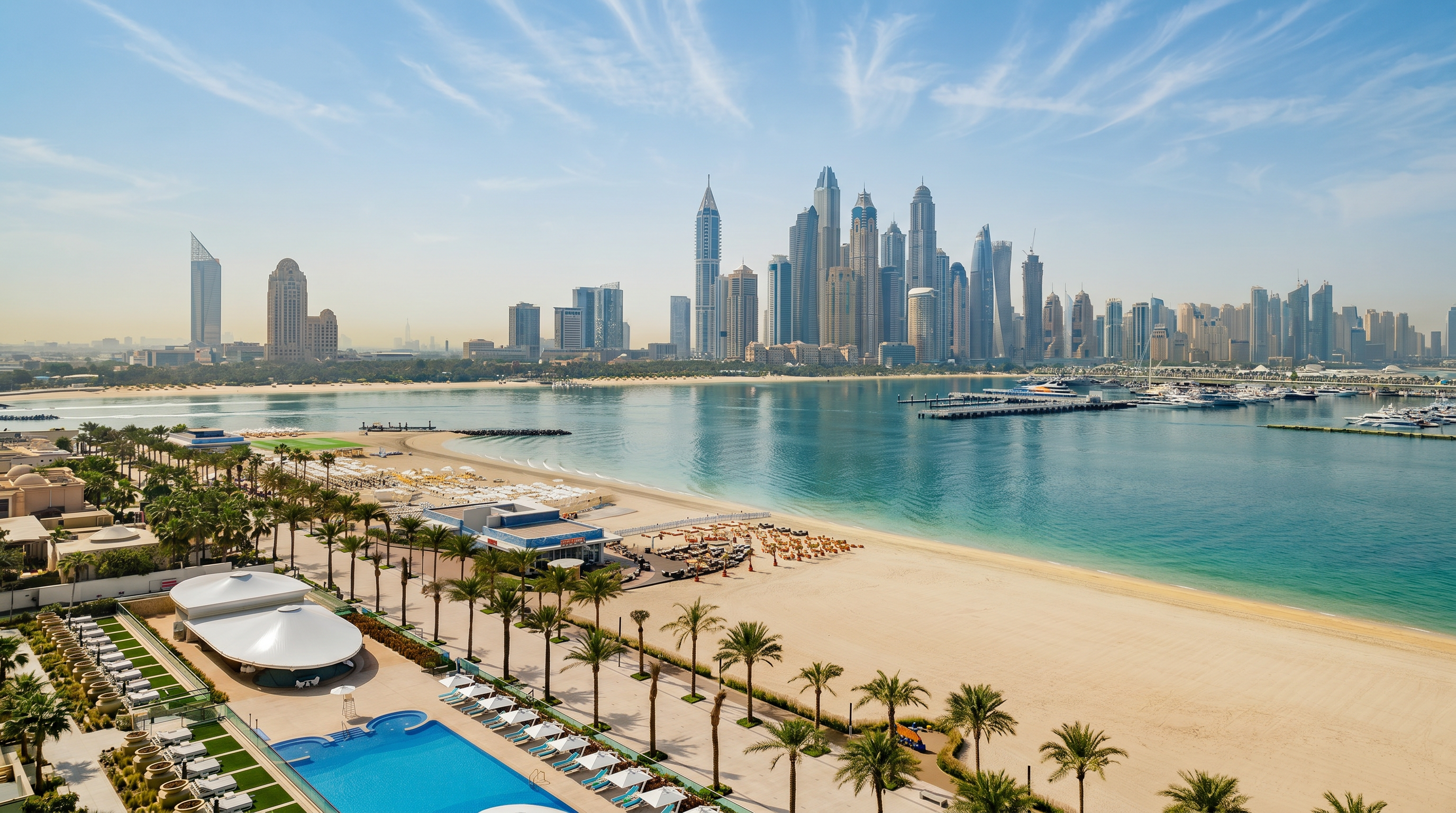
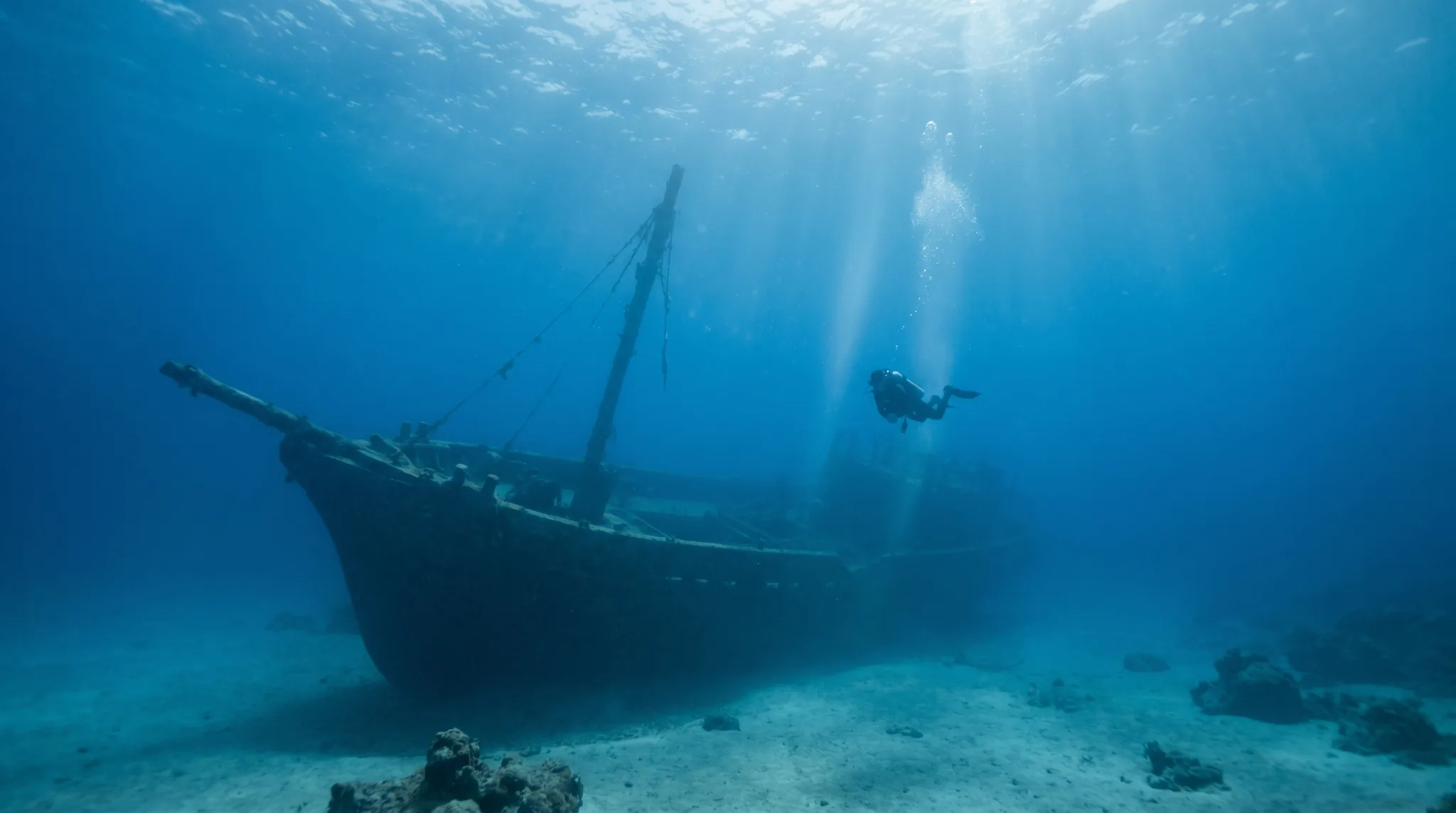
The United Arab Emirates divides neatly into two contrasting dive zones: the Arabian Gulf, with its shallower, warmer sites, and the East Coast, which holds the majority of the country's reef and wreck diving. Purposely sunk wrecks such as Inchcape 1 and Inchcape 2 sit alongside natural reef structures, pinnacles, and walls, giving the country a varied site mix that suits everyone from beginners to advanced divers. Marine life is a real strength: the Spotfin Lionfish and Yellowtail Clownfish appear across almost all sites, while the Guitarfish, Green Sea Turtle, and Common Blacktip Shark are regularly observed. Occasional encounters with the Whale Shark and the vividly coloured Spanish Dancer add further appeal. Water is warmest from midsummer into autumn, while spring and autumn bring the clearest conditions and the highest concentration of diver visits.
2 areas
Monthly water temperature across United Arab Emirates's sites, from satellite sea-surface data corrected for depth. The band shows the site-to-site spread.
Water temperatures climb steadily from their coolest in late winter, peaking at their warmest through summer and into early autumn. Visibility tends to be at its best during spring and autumn, which also draws the most divers. Midsummer diving is warm but visibility can be reduced, making the shoulder months of May, September, and October the sweet spot for comfortable, clear-water dives.
47 operators

Dubai, United Arab Emirates
Water temperature around United Arab Emirates ranges from about 23°C in February to 33°C in September, based on satellite sea-temperature data for its dive sites.
In the warm season (about 33°C) a rash guard or 3mm shorty is comfortable in United Arab Emirates; in the coldest months (about 23°C) step up to a 3mm full suit.
Fin maps 43 sites in United Arab Emirates (40 scuba diving sites and 6 snorkelling spots, with some suited to both), organised into 2 areas.
Across United Arab Emirates's dive sites, March, April, May and October are most often reported as the best months to visit.
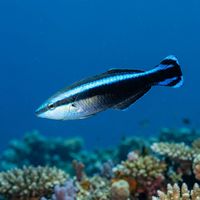
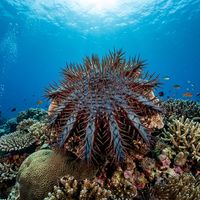
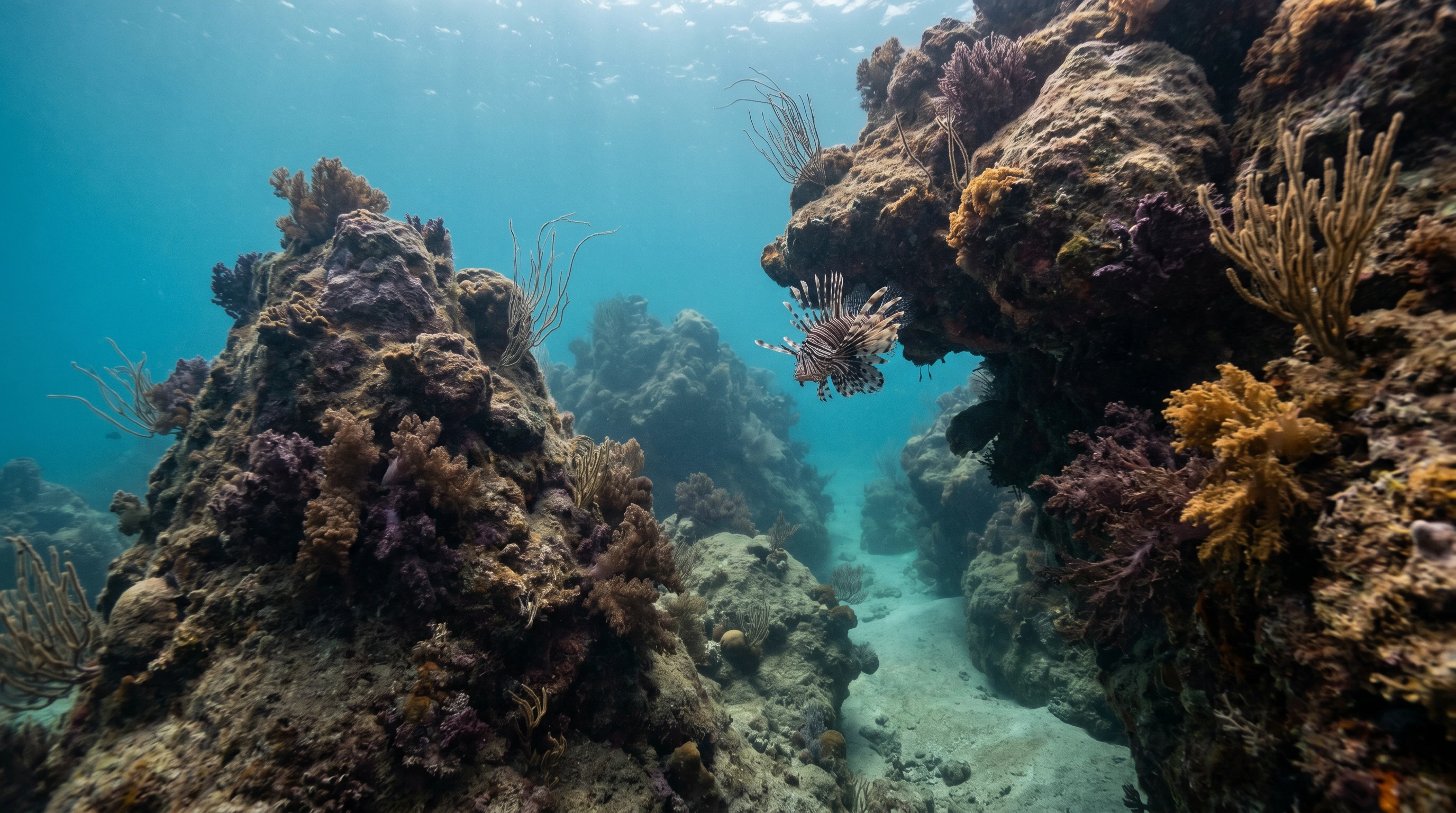
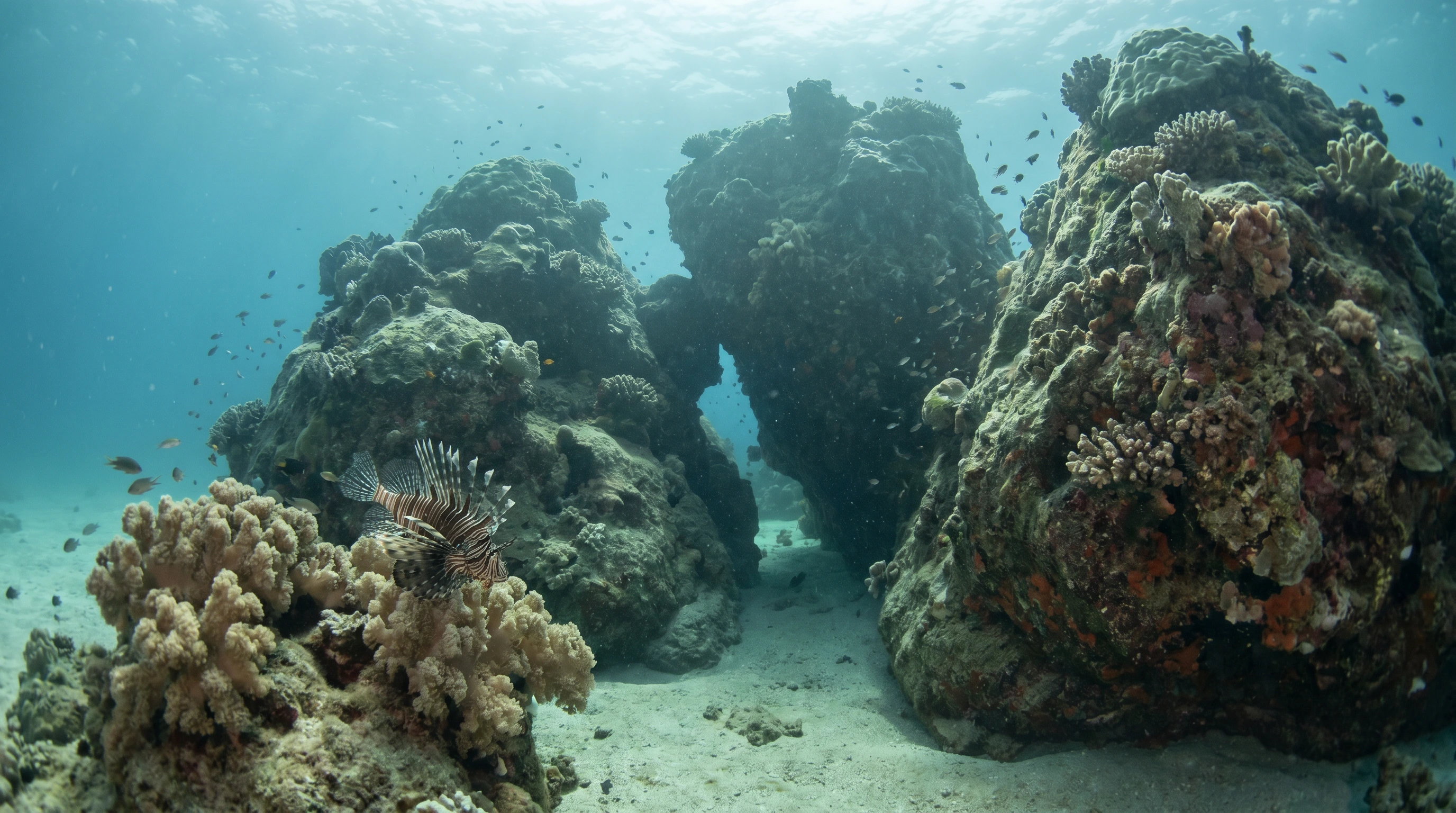
The Spotfin Lionfish and Yellowtail Clownfish are present across nearly every site. The Guitarfish is very commonly observed, as is the Crown of Thorns Sea Star. Green Sea Turtle and Common Blacktip Shark are regularly seen, and with patience divers also encounter the Pharaoh Cuttlefish, Spanish Dancer, and occasionally the Whale Shark.
Yes. A large proportion of the listed sites are rated for beginners, including Snoopy Island, Martini Rock, Sharm Rocks, and Dibba Rock. These offer shallow reef and wall topography accessible by boat or shore. Advanced divers can progress to the deeper wrecks such as Inchcape 1 and Coral Gardens.
The Arabian Gulf zone tends toward shallower, warmer conditions, while the East Coast holds a denser concentration of sites including the most prominent reef and wreck diving. Sites like Inchcape 1, Inchcape 2, Martini Rock, and Coral Gardens are all located on the East Coast around Khor Fakkan and Dibba. The two zones together give the UAE a broad range of site types and skill levels.
The majority of dive sites in the UAE require a boat to access, and most operators listed run regular boat trips. A handful of sites, including Snoopy Island and Sunset Beach, are accessible from shore. Dibba Rock offers both options, making it a flexible choice for those who prefer to enter from land.