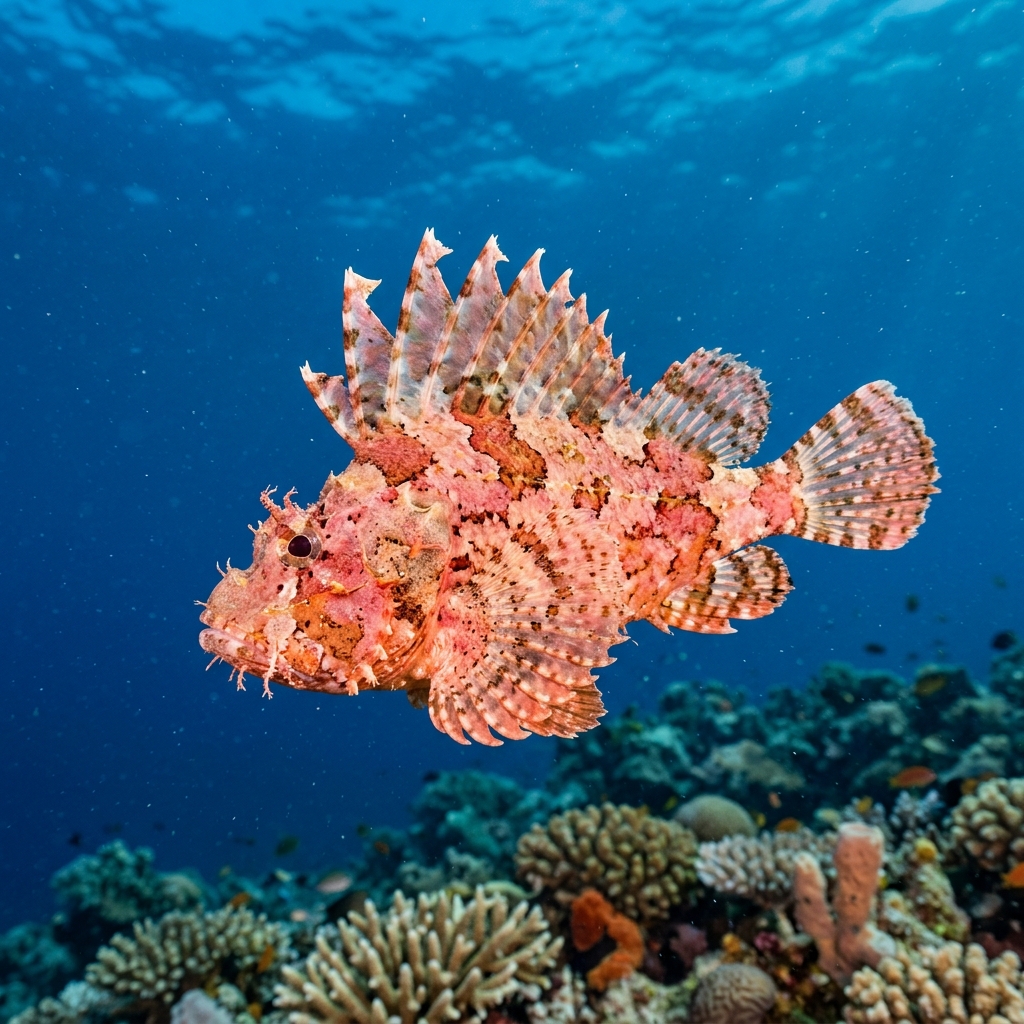
Taenianotus triacanthus
Spot leaf scorpionfish on reefs from Sipadan to the Maldives. Tips on identification, behaviour, and the best seasons across both hemispheres.
Safety warning
Like other scorpionfish, leaf scorpionfish carry venomous dorsal spines capable of delivering a painful, potentially serious sting. Because they rely on camouflage and rarely move, the risk to an observant diver is low, but buoyancy control matters: never rest hands or knees on the reef where one may be hiding, and take particular care not to accidentally brush the dorsal fin with fingers when pointing one out to a buddy.
If you're stung
Venomous spinesGeneral first-aid guidance, not a substitute for professional medical care. In an emergency, call your local emergency number.
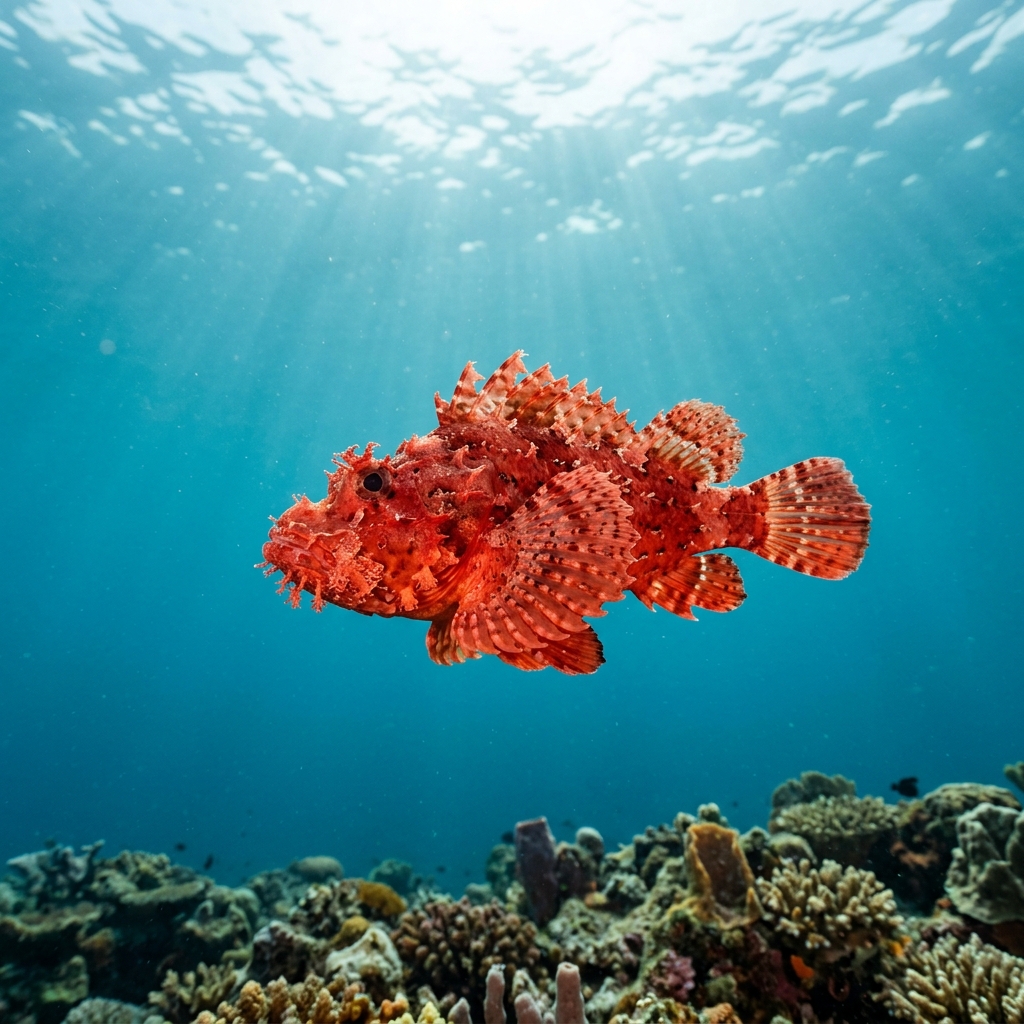
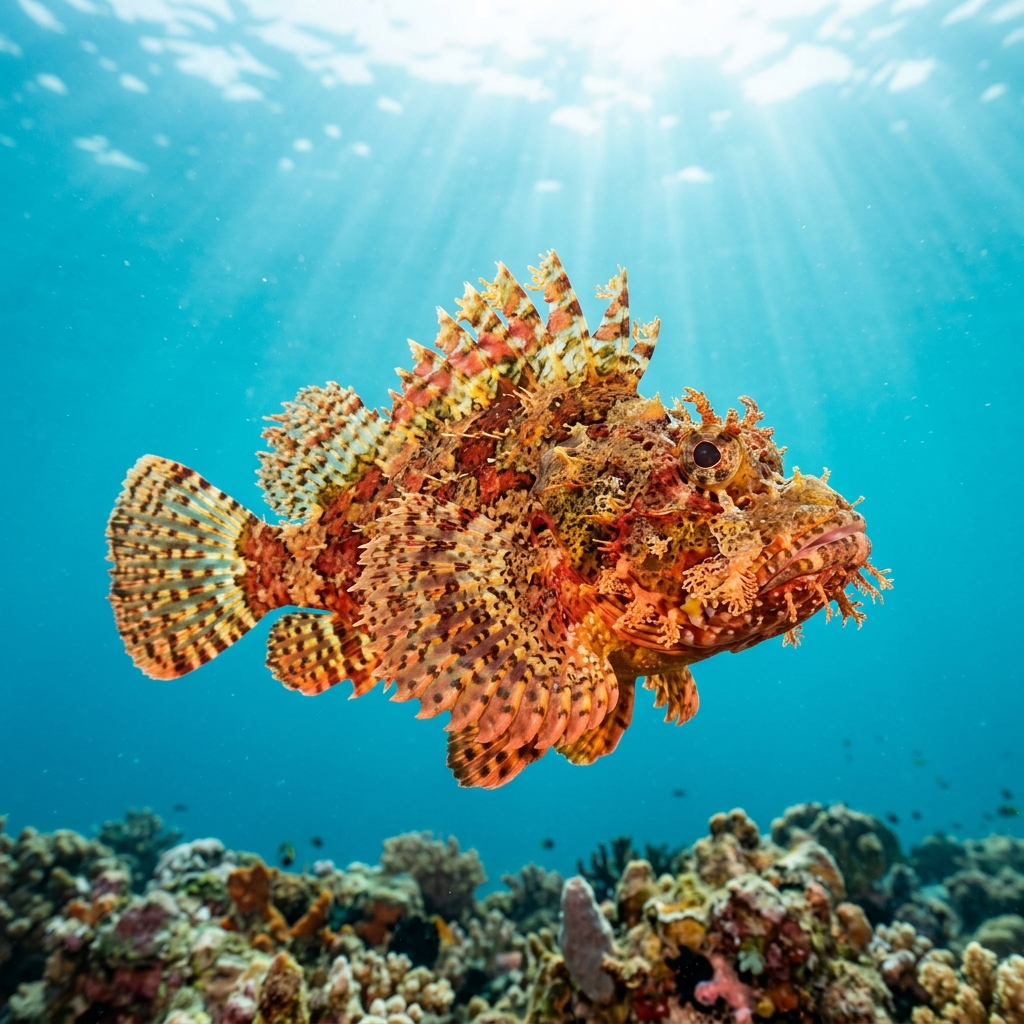
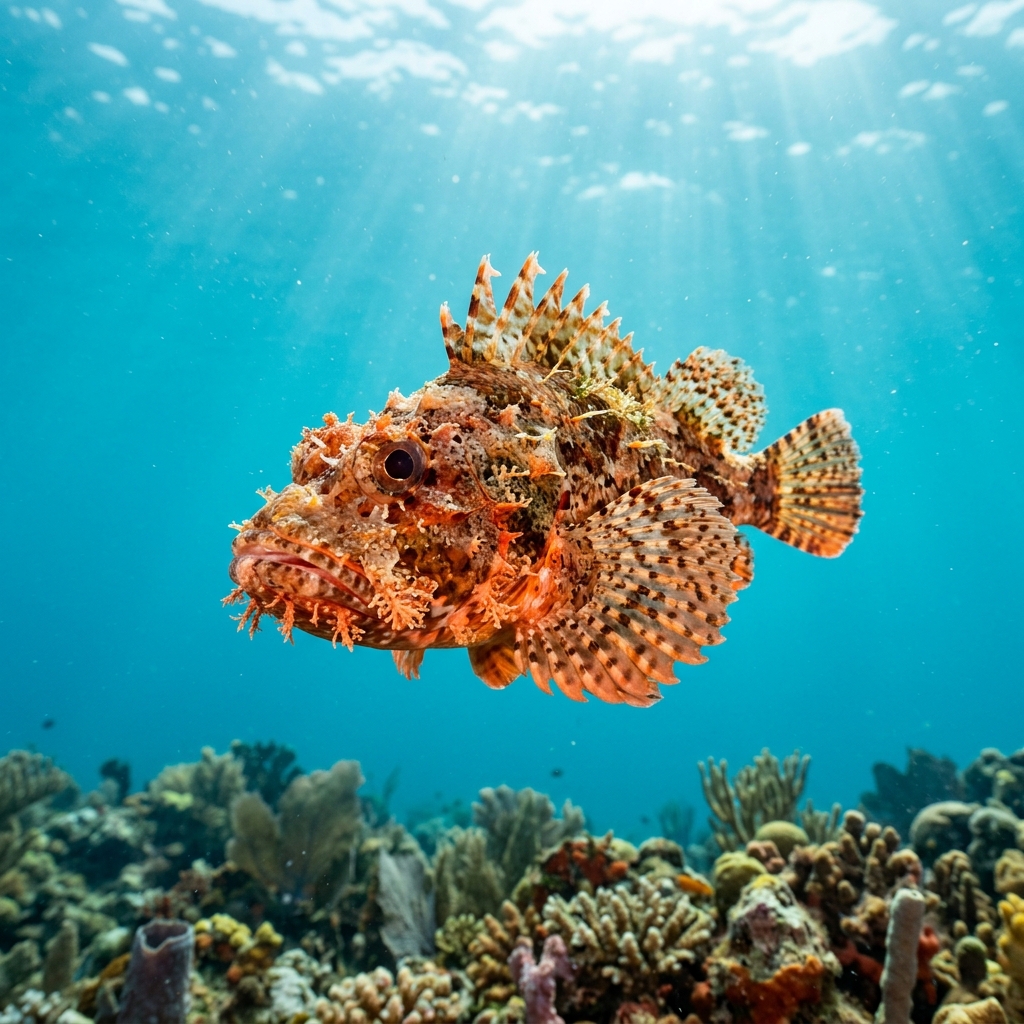
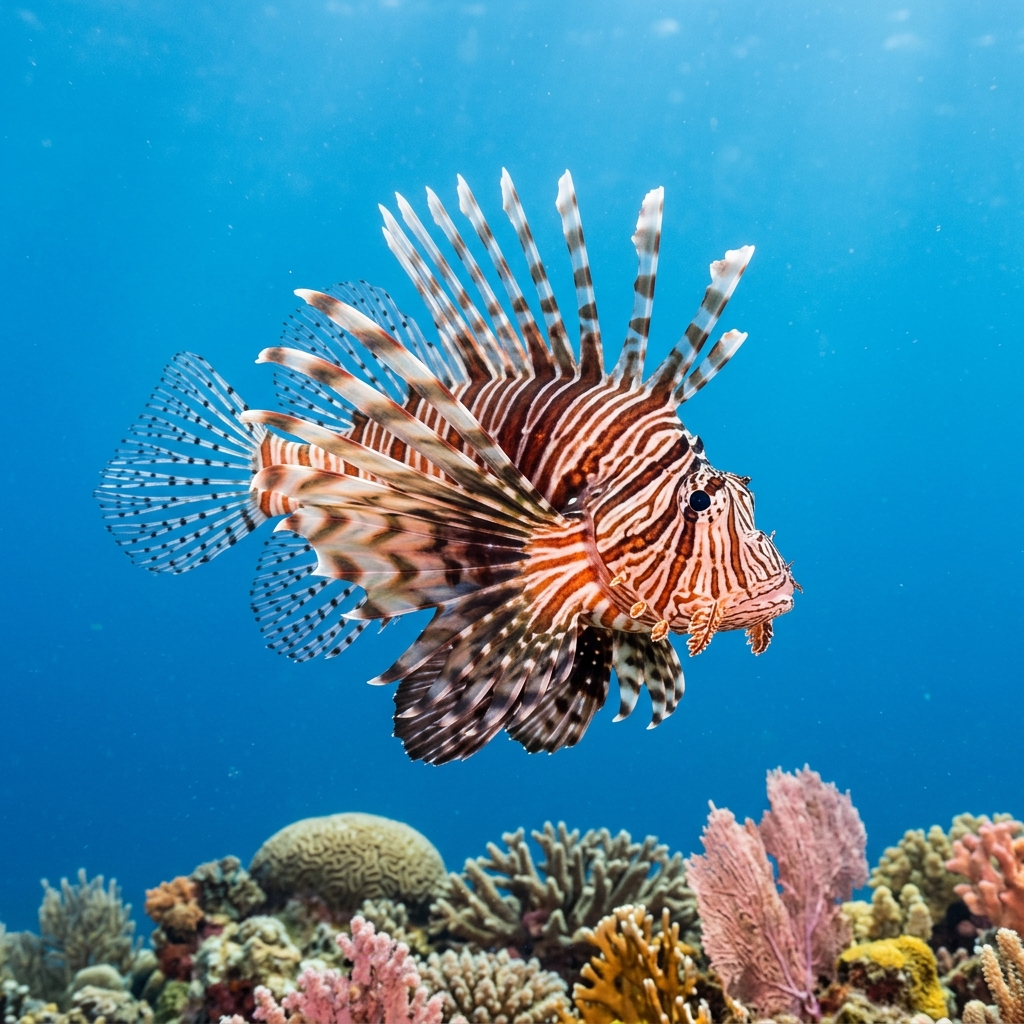
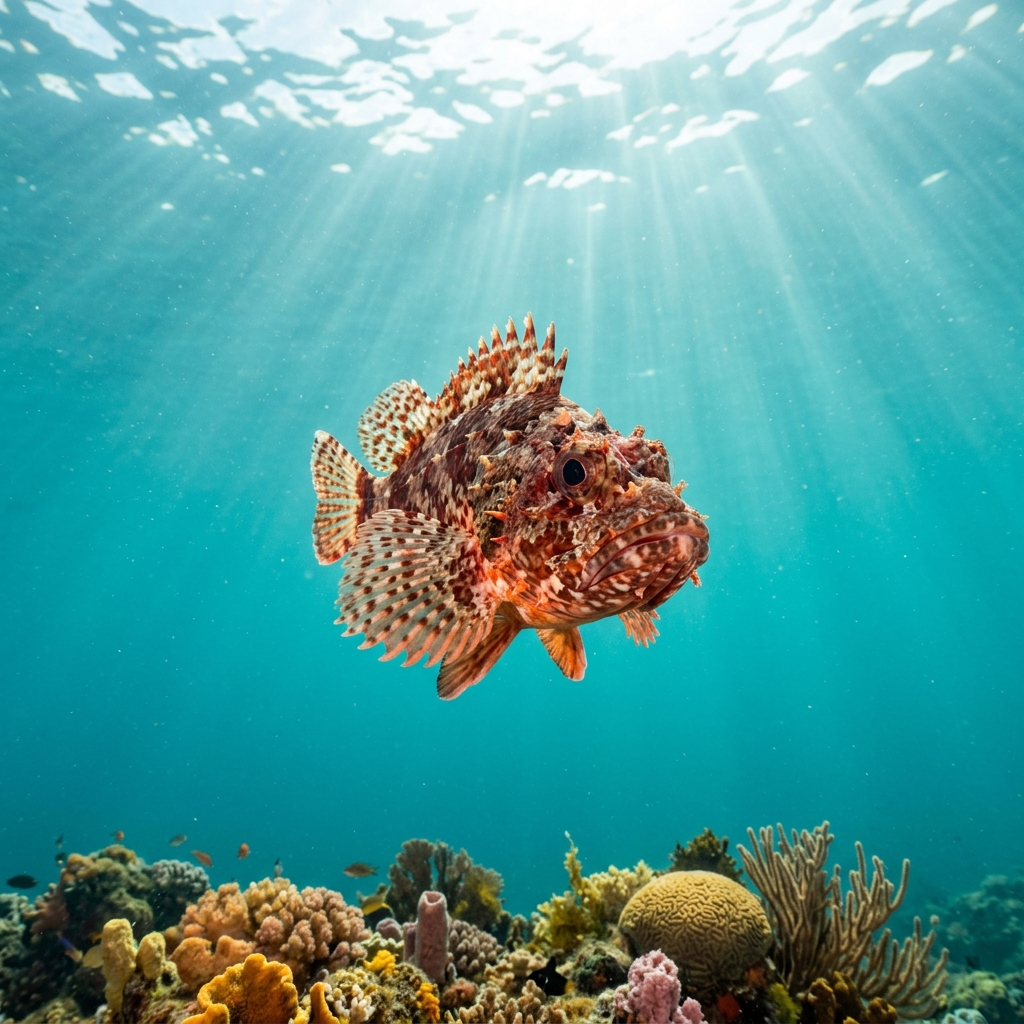
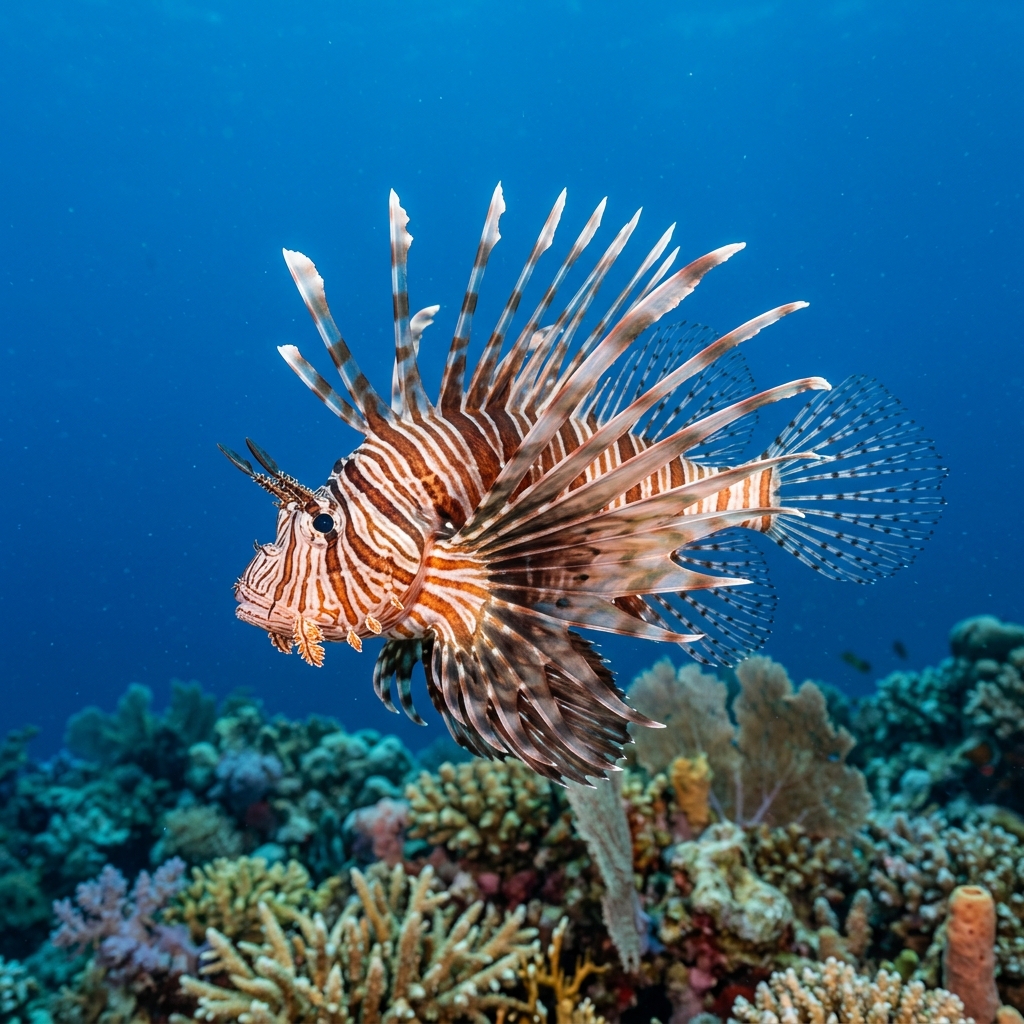
At around 7 cm, this tiny fish looks far more like a dead or drifting leaf than a fish. The body is strongly laterally compressed (flattened side-to-side) and topped by a tall, ragged dorsal fin that mimics the veins and torn edges of a leaf. Colour varies wildly between individuals and can shift over weeks, ranging from white and yellow to pink, red, brown, and near-black. The key underwater cue is that rocking, leaf-in-a-current sway when it moves slightly, combined with a blunt face and a deep, leaf-shaped body no other reef fish quite replicates.
Sit-and-wait is the entire strategy: a leaf scorpionfish settles on or beside a coral head, sponge, or rubble patch and stays there, sometimes for days. When a small fish or crustacean wanders within range, it lunges with surprising speed, engulfing prey whole. Approached by a diver it will almost always hold its position, relying entirely on camouflage rather than fleeing, which makes careful slow movement from the diver's side far more rewarding than rushing in.
Leaf scorpionfish periodically shed their outer skin layer in one piece, much like a snake, which removes fouling organisms and can produce an almost overnight colour shift, so the reddish individual you photograph today may look pale or mottled when you return on a later dive.
In the Northern Hemisphere, sightings concentrate from September through April, making the Maldives, Philippines, and Malaysian sites most productive in those months. Southern Hemisphere sites, including Queensland, see the bulk of sightings from July through January.
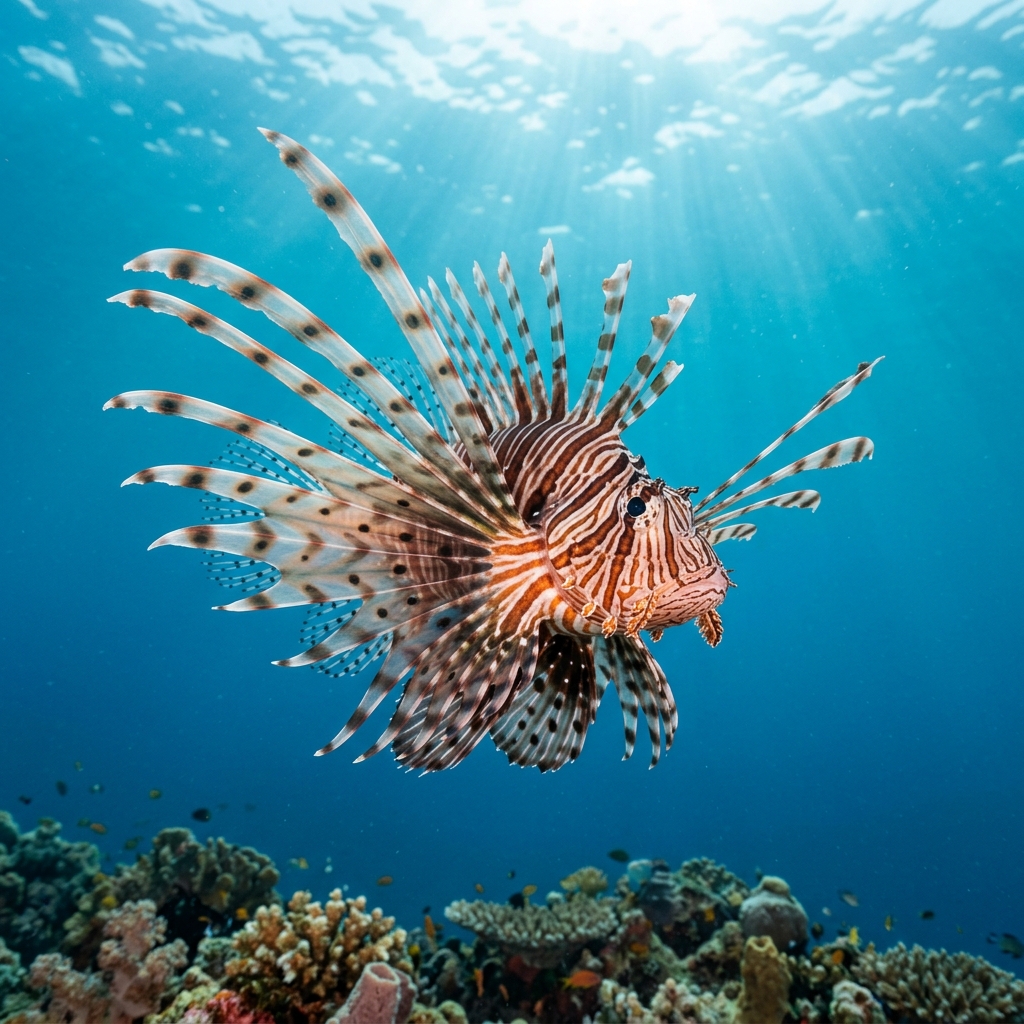
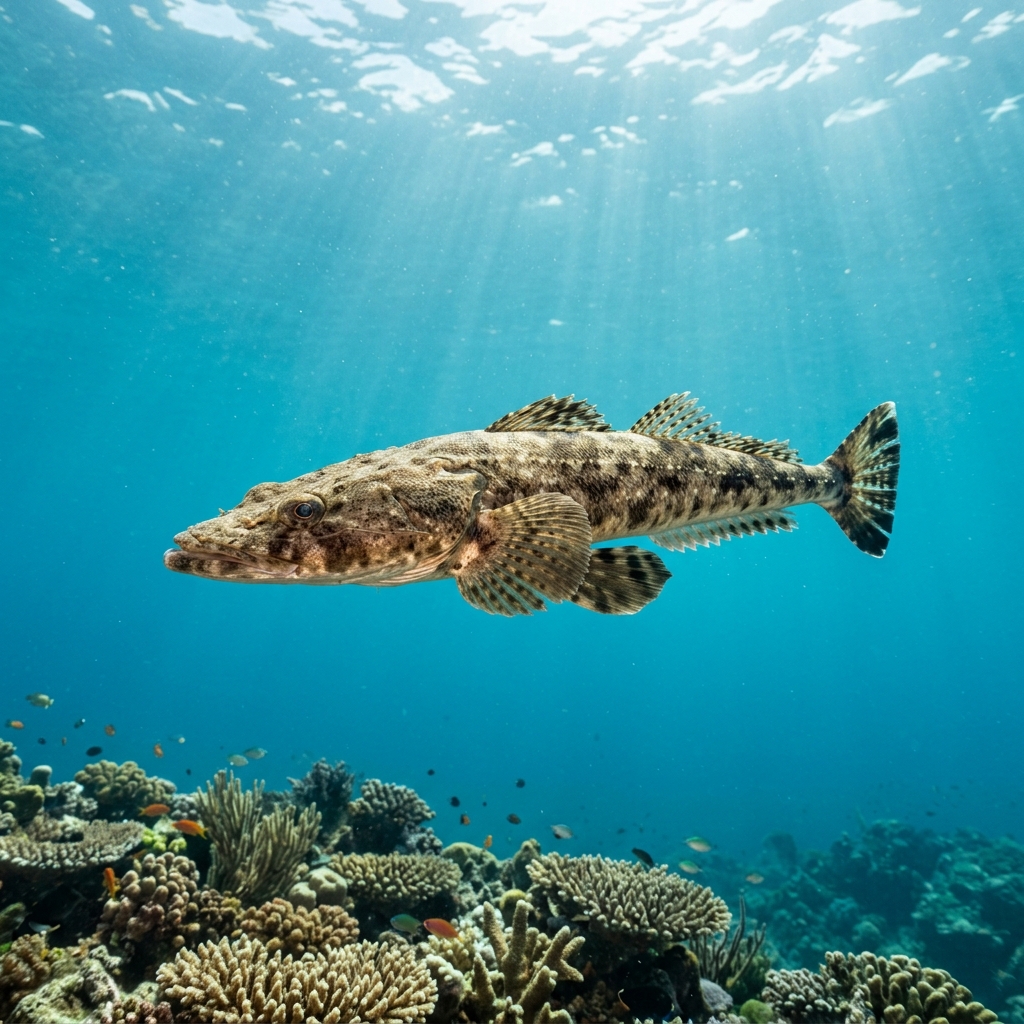
Reef neighbours a diver could mistake it for. Use the identification notes above to tell them apart.
Most commonly logged across Indonesia, the Philippines, the Maldives, and Malaysia, with particularly strong sighting records in Bali and the surrounding Nusa Tenggara region, the Visayas in the Philippines, and Sipadan in East Sabah. The Maldives' North and Central Atolls also stand out as a reliable area, and Queensland, Australia, rounds out the Indo-Pacific spread.
Mapping where Leaf Scorpionfish is logged…
They are most reliably encountered across Indonesia, the Philippines, the Maldives, and Malaysia. Hotspots include Bali, the Visayas, Sipadan in East Sabah, and the North and Central Atolls of the Maldives. Queensland in Australia is another strong region in the Southern Hemisphere.
In the Northern Hemisphere, September through April is when most sightings are logged, covering the prime season for the Maldives, Philippines, and Malaysian sites. For Southern Hemisphere locations such as Queensland, July through January is the stronger window.
Yes. The dorsal spines are venomous and a sting is painful and can require medical attention. The real risk is accidental contact: their camouflage is so effective that divers sometimes reach near one without noticing. Keep hands off the reef and maintain good buoyancy around rubble and coral heads.
Look for a tiny, deeply compressed body with a tall, ragged dorsal fin, roughly the size and shape of a large leaf. The clincher is a gentle side-to-side rocking motion when it moves, mimicking a leaf in a current. Colour alone is unreliable because they range from white and yellow to deep red and black.
They are small fish, typically around 7 cm in length. Their flattened, leaf-like profile makes them look even smaller when viewed head-on, which is part of why so many divers swim right past them.
They do, but not instantly. Leaf scorpionfish shed their outer skin layer periodically, similar to a snake moulting, and the new layer can be a noticeably different colour or pattern. This is one reason an individual found on a reef can look quite different between dives spaced days or weeks apart.
Site and sighting data is aggregated from diver logs, iNaturalist and GBIF. For taxonomy and conservation status:
Madeira Rockfish
2,773 sites