Epinephelus tukula
Spot potato bass on reefs from Tofo to KwaZulu-Natal. Learn the bold dark spots, typical depth, and where divers log this large Indo-Pacific grouper.
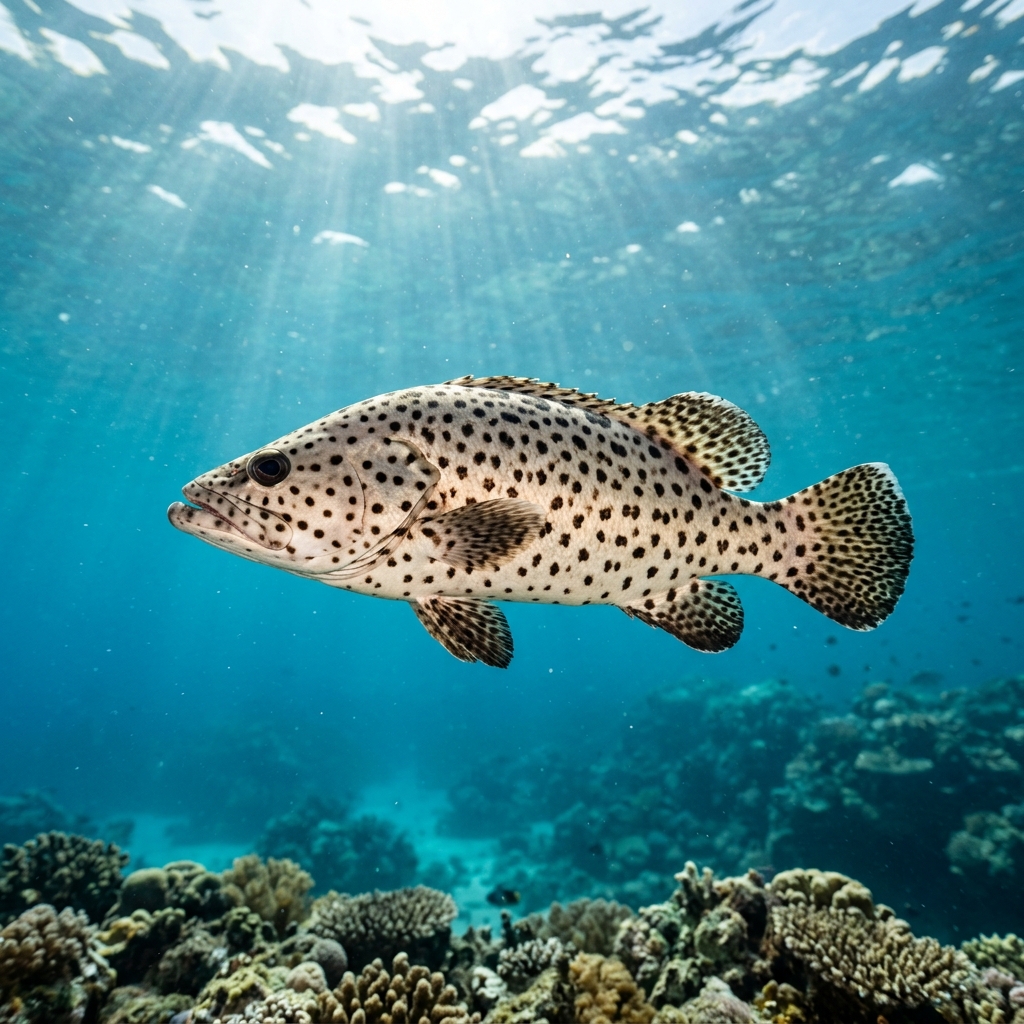
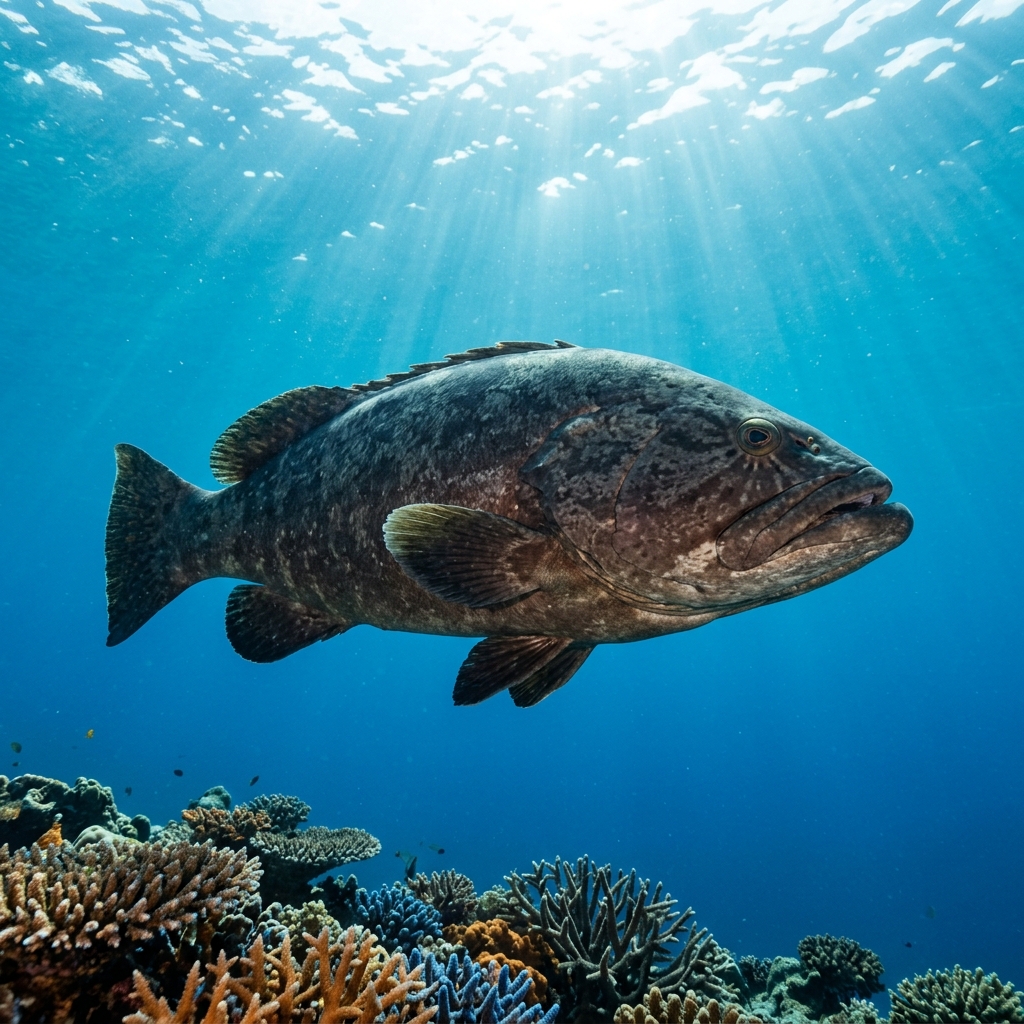
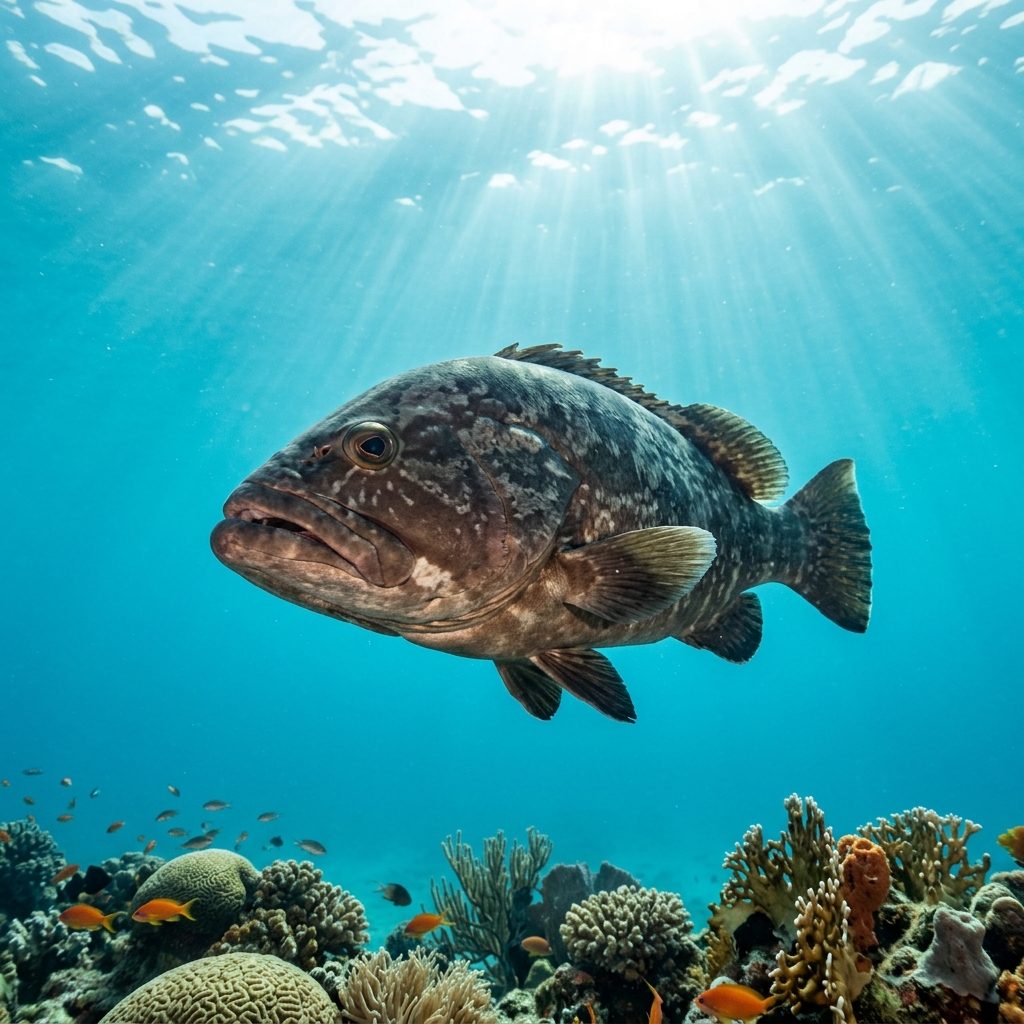
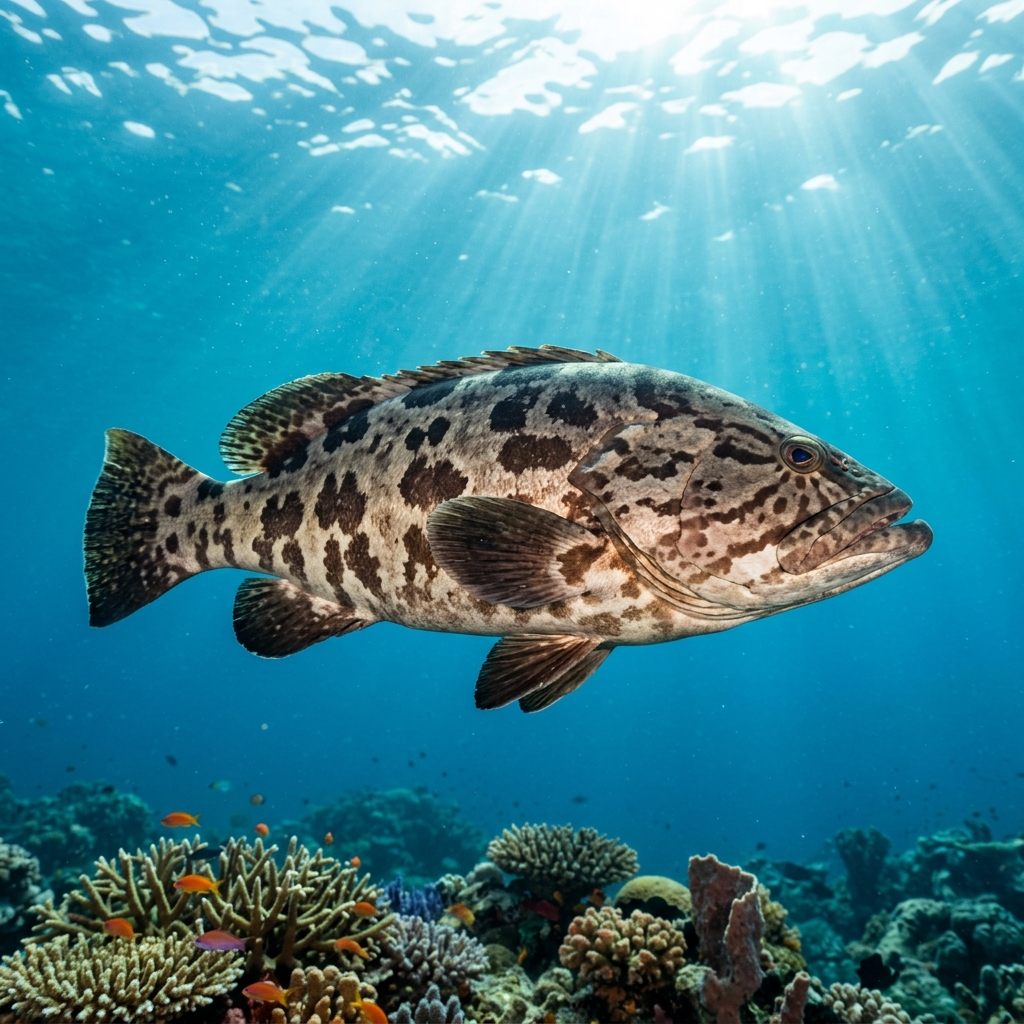
Size alone narrows the field: potato bass reach around 140 cm and carry real bulk, making them one of the largest groupers a diver is likely to meet on an Indo-Pacific reef. The body is pale grey to whitish with a scatter of large, irregular dark brown or black spots, the pattern that earned the common name. The spots extend onto the fins and head, and the mouth is wide and deeply set. Look for this fish sitting close to the reef or hovering just above the bottom rather than actively swimming in open water.
Potato bass tend to be found resting on or just above the reef, often in the same spot on successive dives, which makes them a reliable local fixture once discovered. They are not especially skittish and will typically hold their position and allow a slow approach, though they'll drift away if a diver pushes too close. Like most large groupers, they are ambush predators, so expect to find them near ledges, overhangs, or coral bommies (isolated coral heads) where prey fish congregate.
Potato bass, like other groupers, are protogynous hermaphrodites, they begin life capable of spawning as females and can later transition to males. This means the biggest individuals you see are almost certainly male.
There is not enough monthly sighting data to point to a peak season, so potato bass can be treated as a year-round target across its range. The species tolerates water temperatures from around 17 °C in cooler South African waters up to nearly 28 °C on tropical reefs, which helps explain its broad year-round presence.
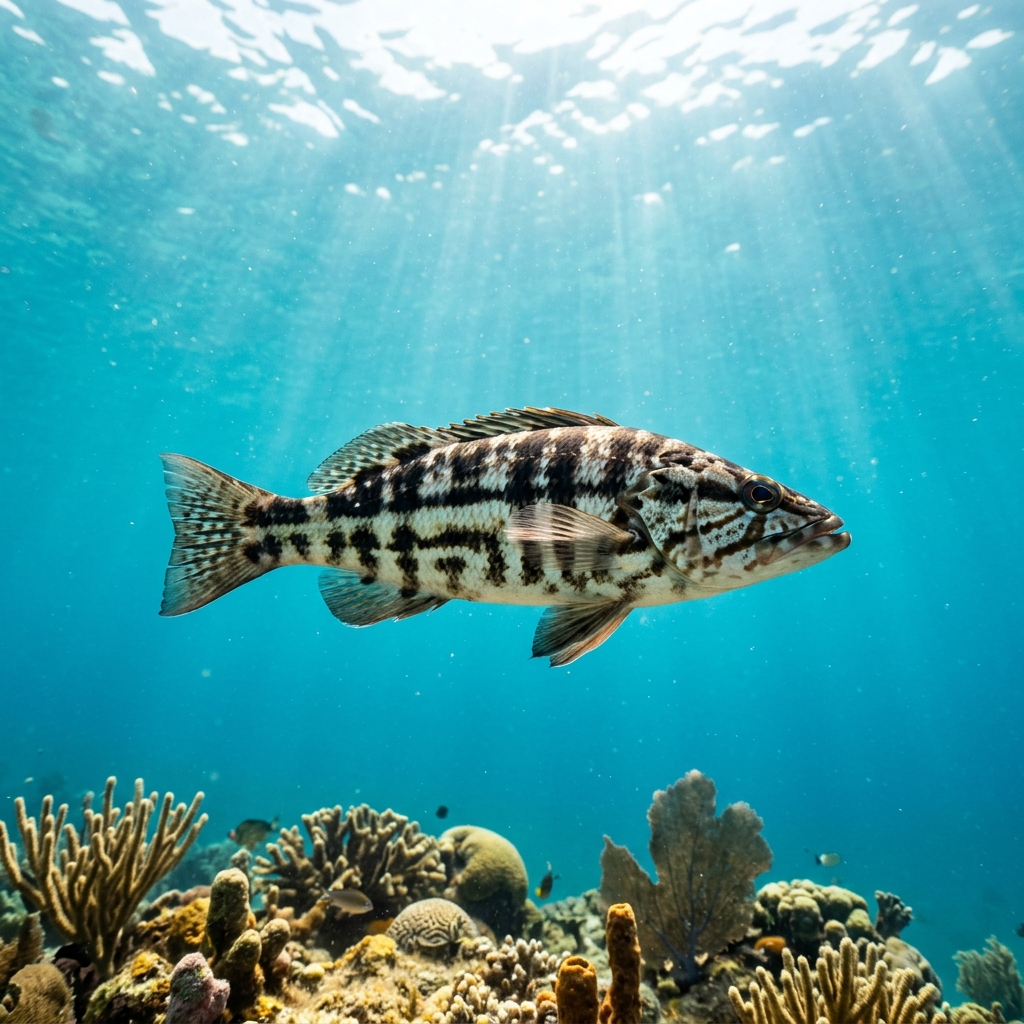
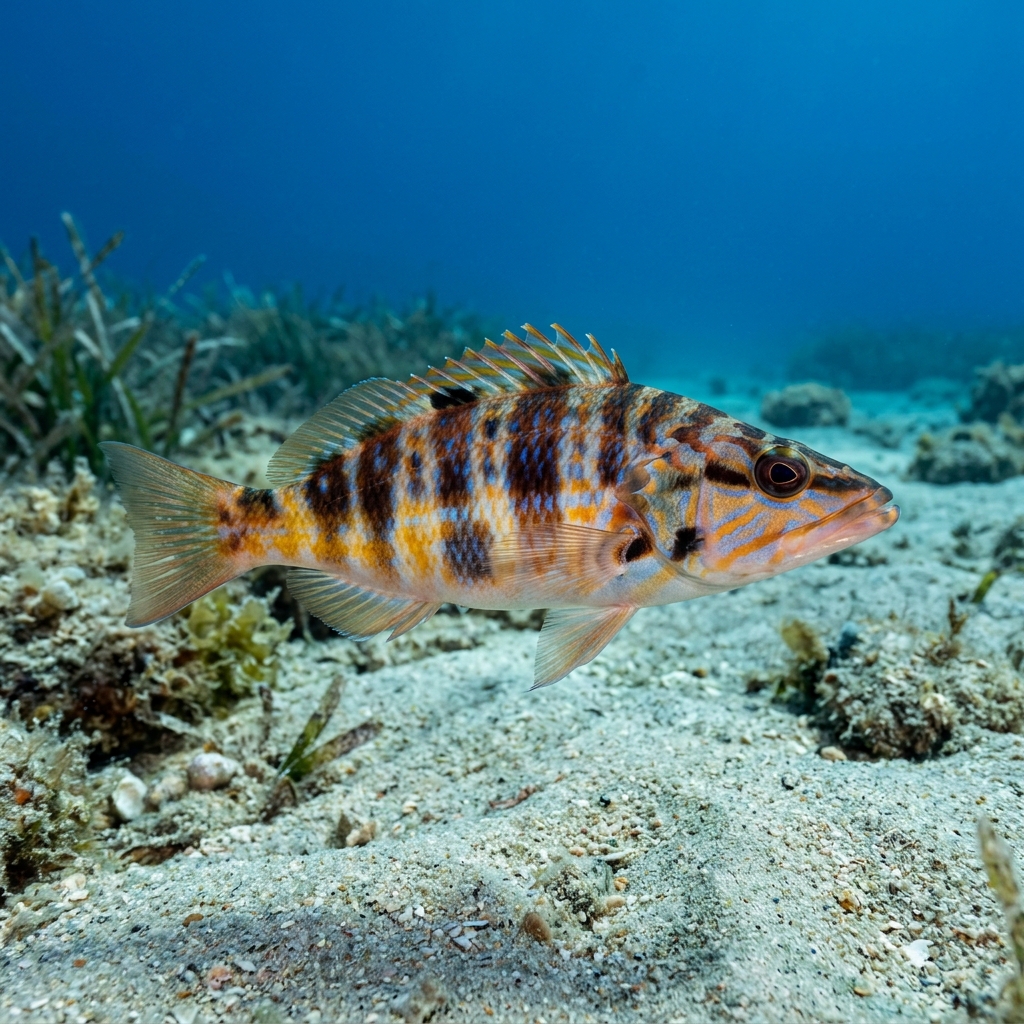
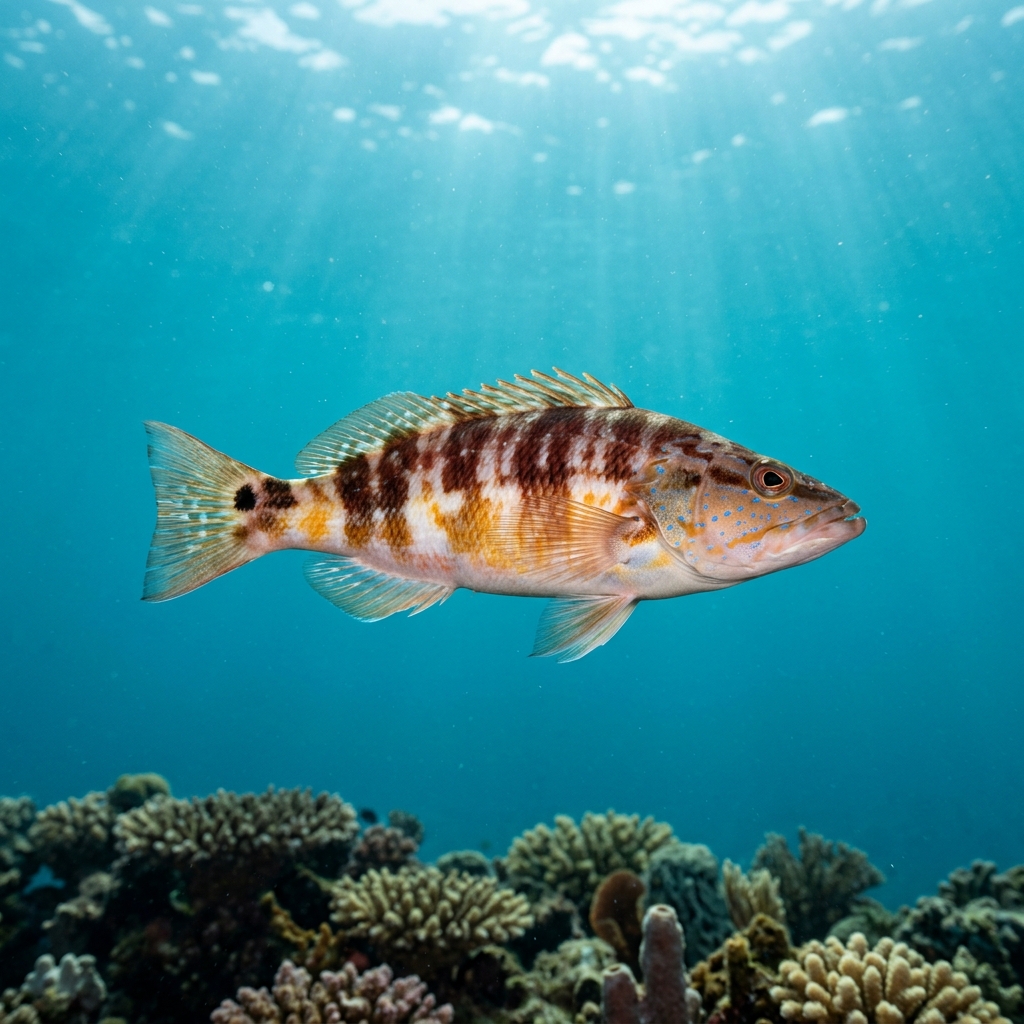
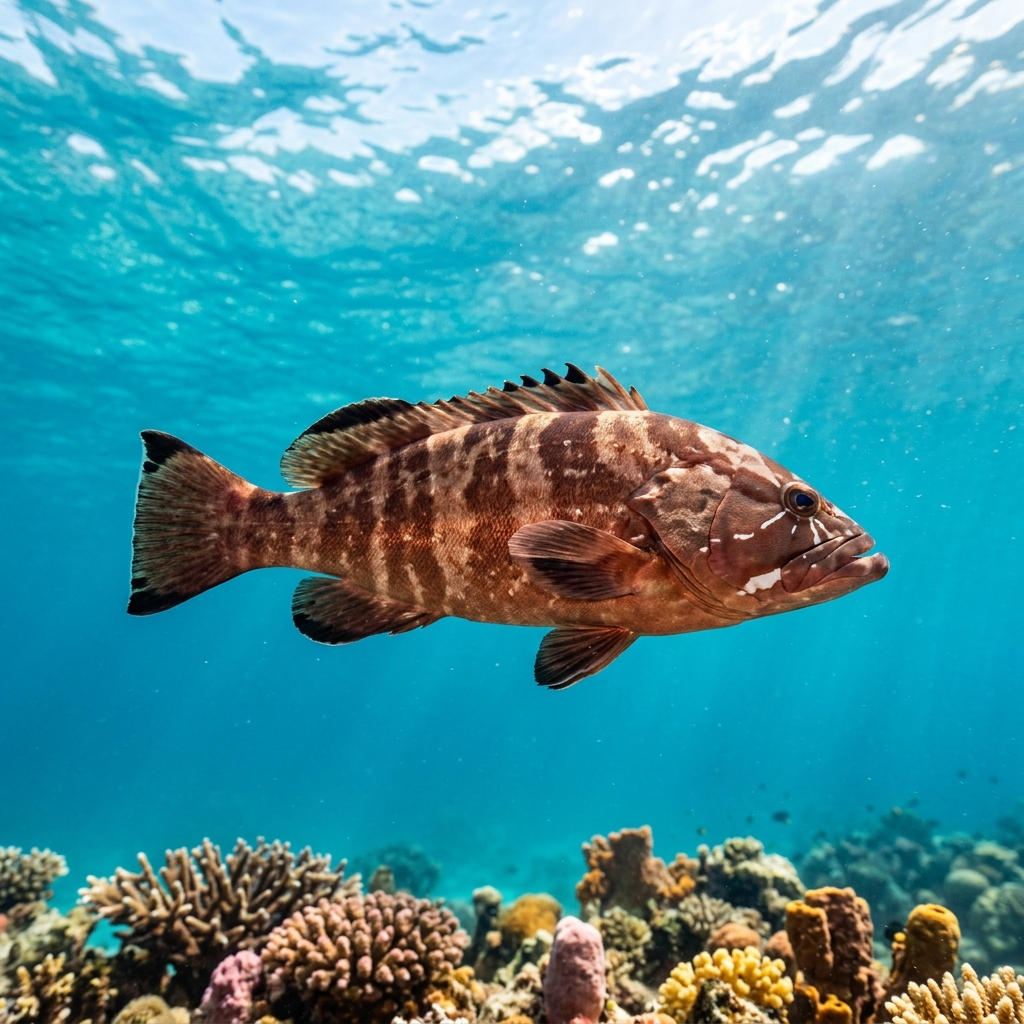
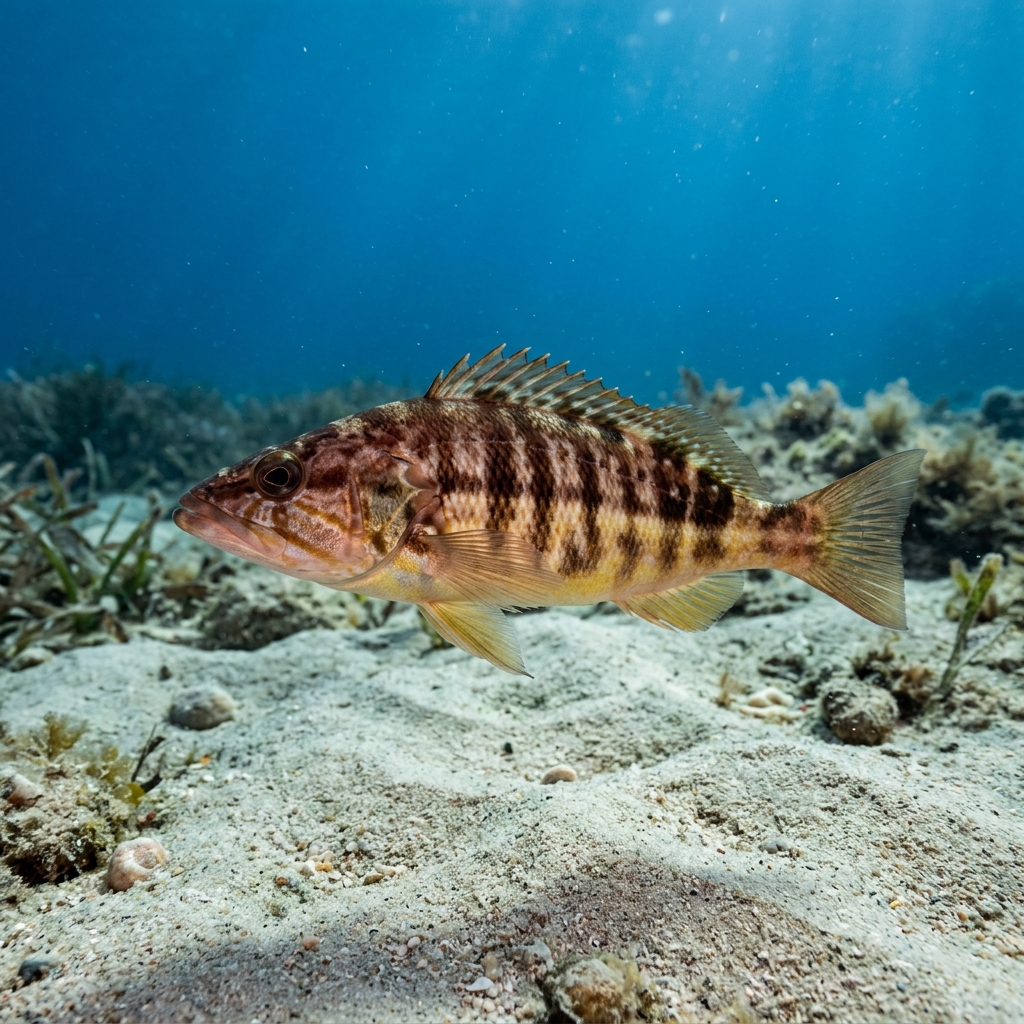
Reef neighbours a diver could mistake it for. Use the identification notes above to tell them apart.
Potato bass are most logged in Australia, particularly Queensland's offshore reefs, and along the southern African coast, where South Africa's Durban and North Coast region and the area around Tofo in Mozambique are the strongest hotspots. Ponta do Ouro in Mozambique and Kenya's Diani and South Coast also produce reliable sightings, and records extend to Madagascar, the Seychelles, Mauritius, and Mayotte.
Mapping where Potato Bass is logged…
The strongest dive sightings come from Queensland in Australia, the Durban and North Coast region of South Africa, and the Tofo area of Mozambique. Ponta do Ouro, Kenya's Diani Coast, Madagascar, and the Seychelles also have records. This is primarily a western Indian Ocean and Indo-Pacific species.
There is no defined peak season in the sighting data, so potato bass can be targeted year-round. The species tolerates a wide temperature range, from about 17 °C in cooler South African waters to nearly 28 °C on tropical reefs, giving it a broad seasonal presence across its range.
Look for a very large, bulky grouper, up to around 140 cm, with a pale grey or whitish body covered in large, irregular dark brown to black spots across the body, head, and fins. The wide, downturned mouth and sheer size help separate it from smaller spotted groupers. It usually sits close to the reef rather than swimming in open water.
Potato bass can reach around 140 cm in length, making them one of the largest groupers a recreational diver is likely to encounter on an Indo-Pacific reef. Their bulk is immediately noticeable, they are substantially heavier-bodied than most other spotted groupers sharing the same reef.
No. Potato bass are not considered dangerous to divers. Despite their size, they are typically calm around divers and will usually hold position or move away slowly if approached. Standard respectful dive behaviour applies: give them space and avoid cornering them near a wall or overhang.
Site and sighting data is aggregated from diver logs, iNaturalist and GBIF. For taxonomy and conservation status:
Blacktip Grouper
2,726 sites