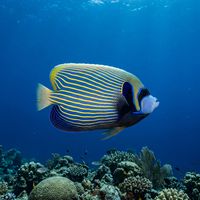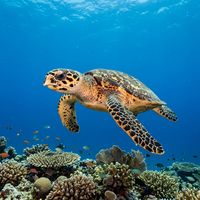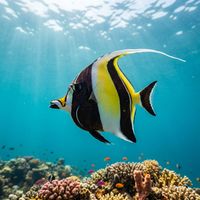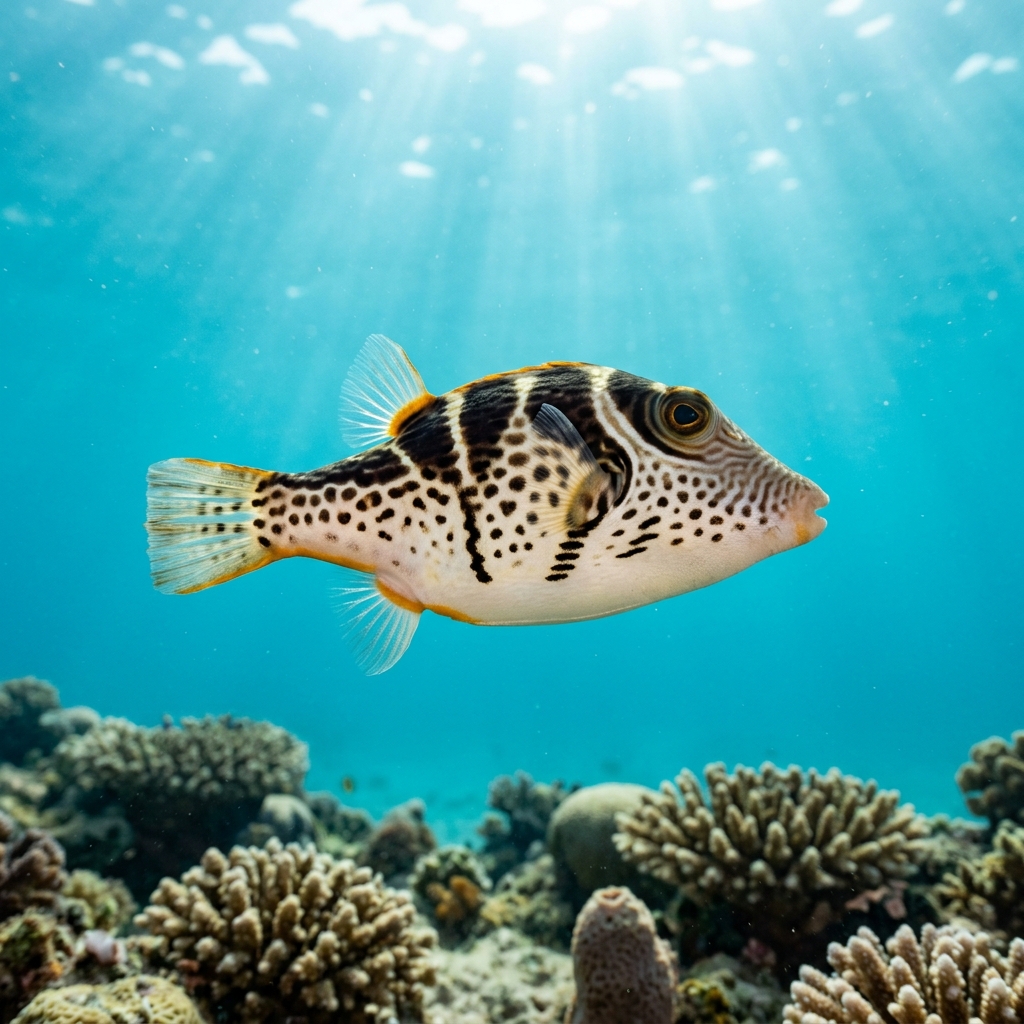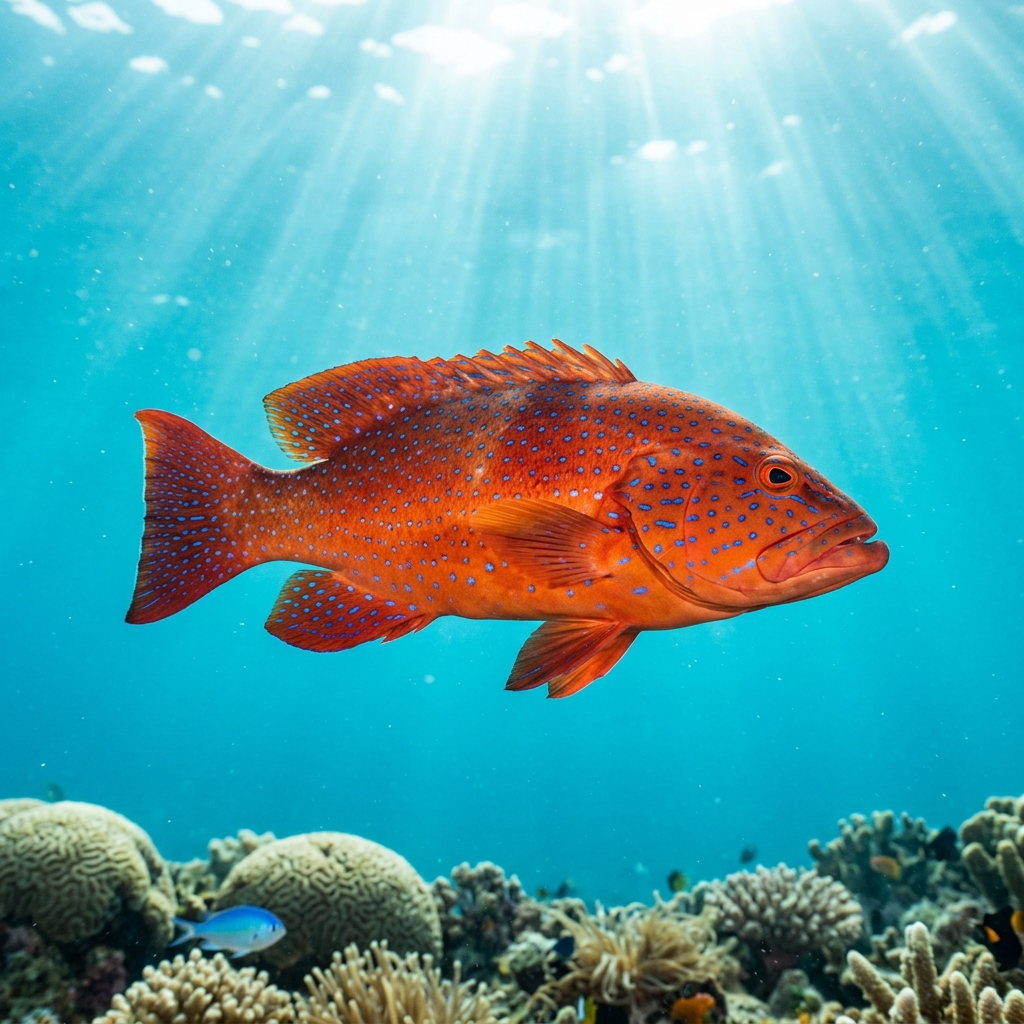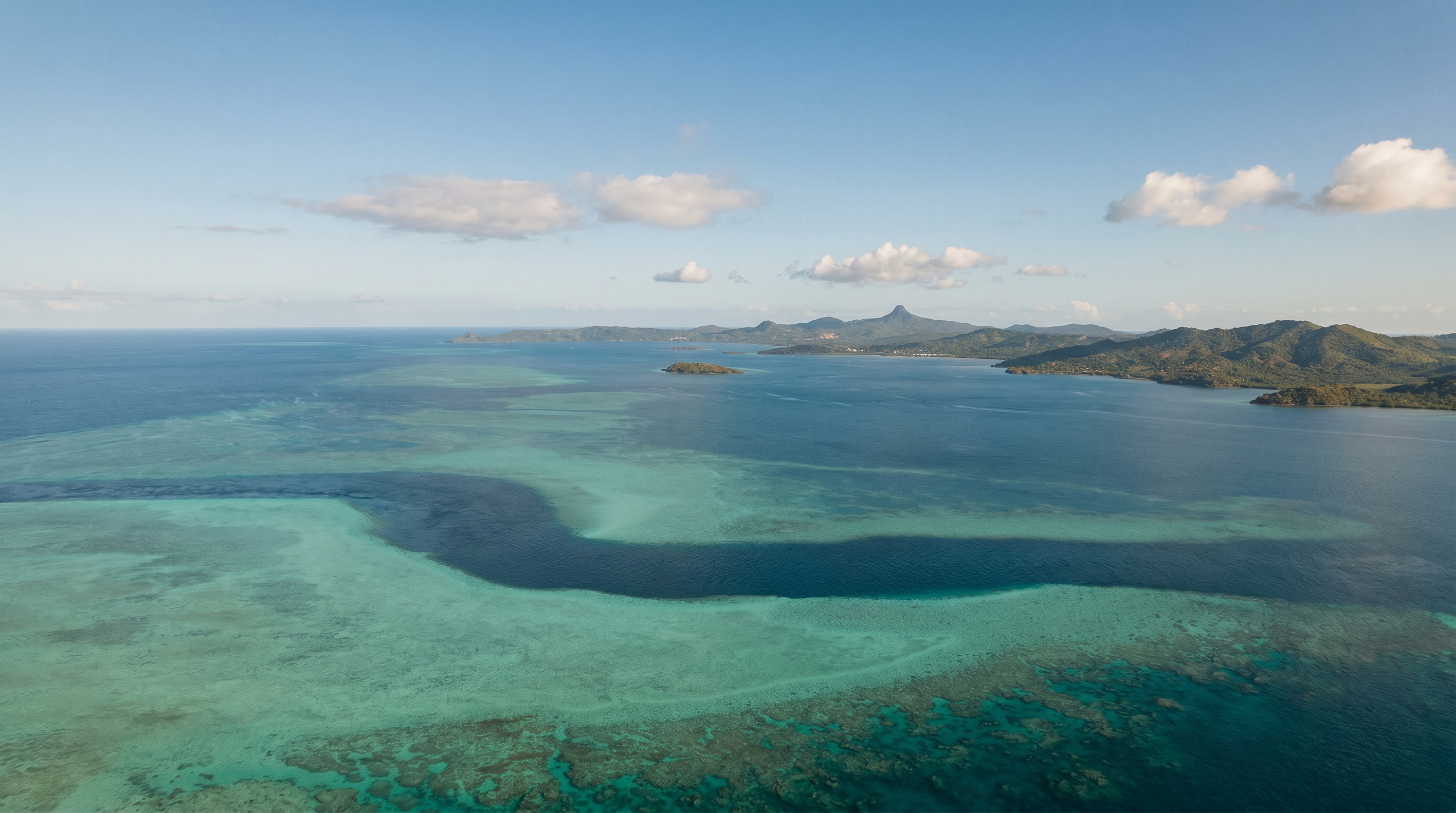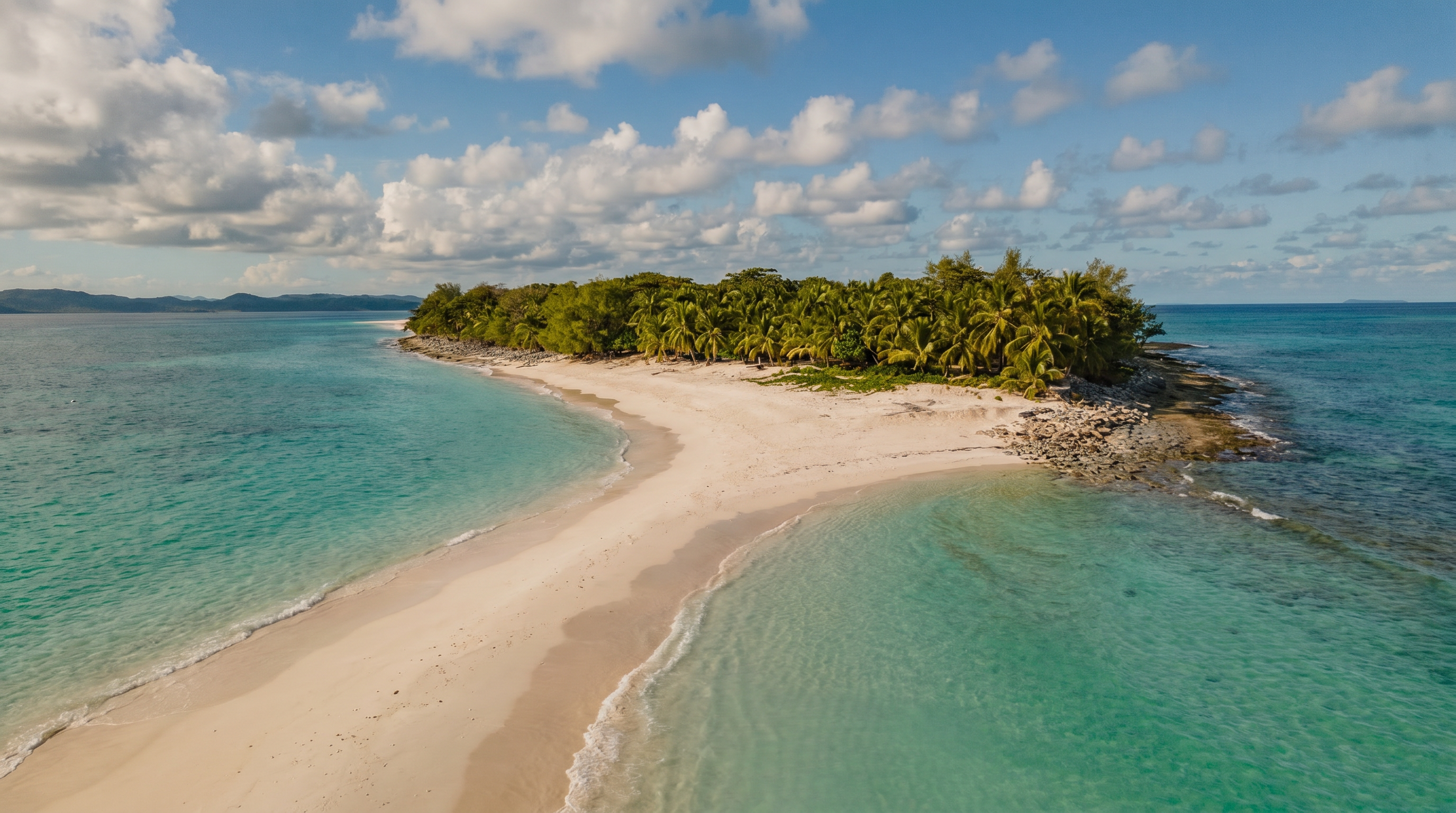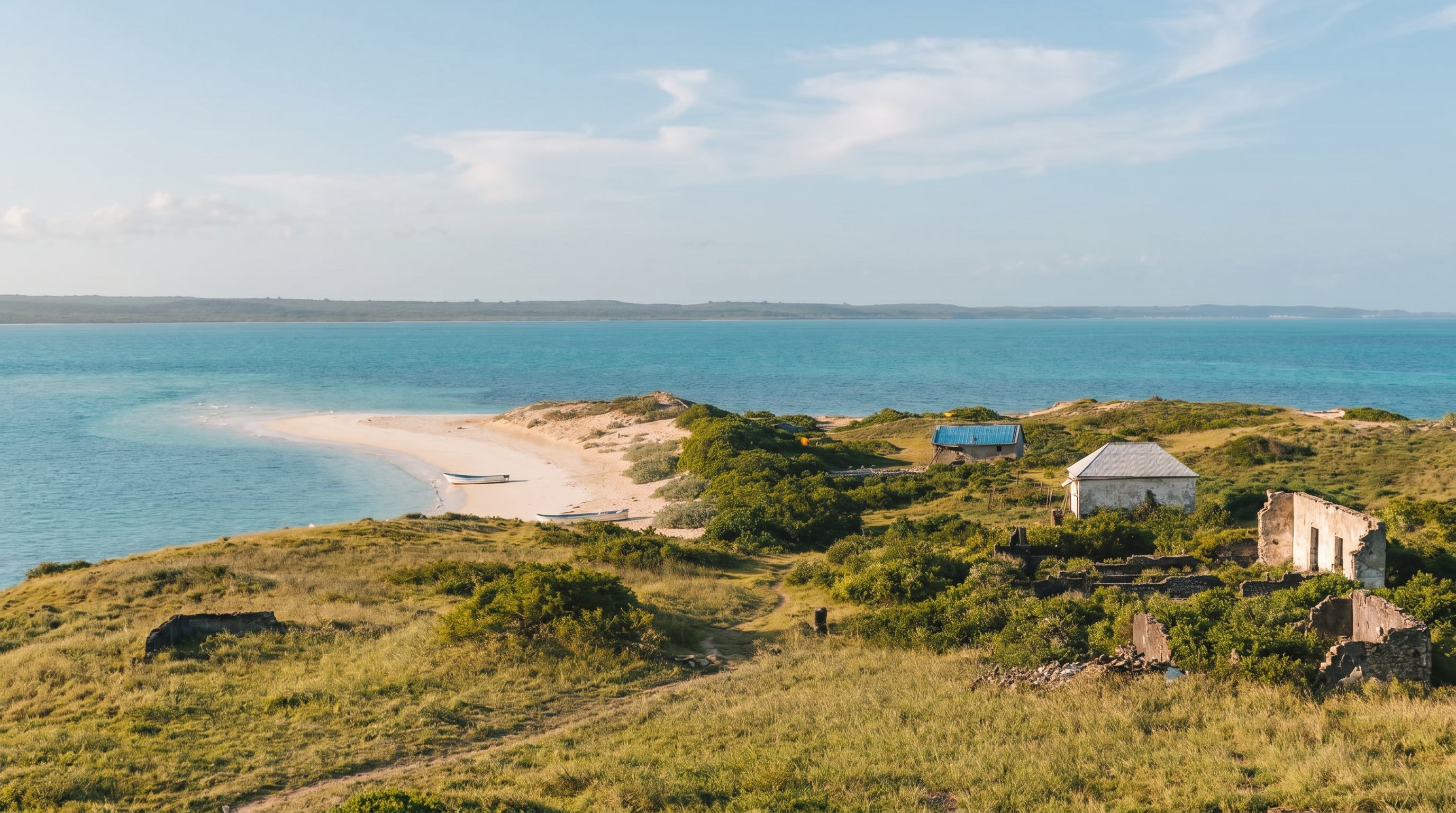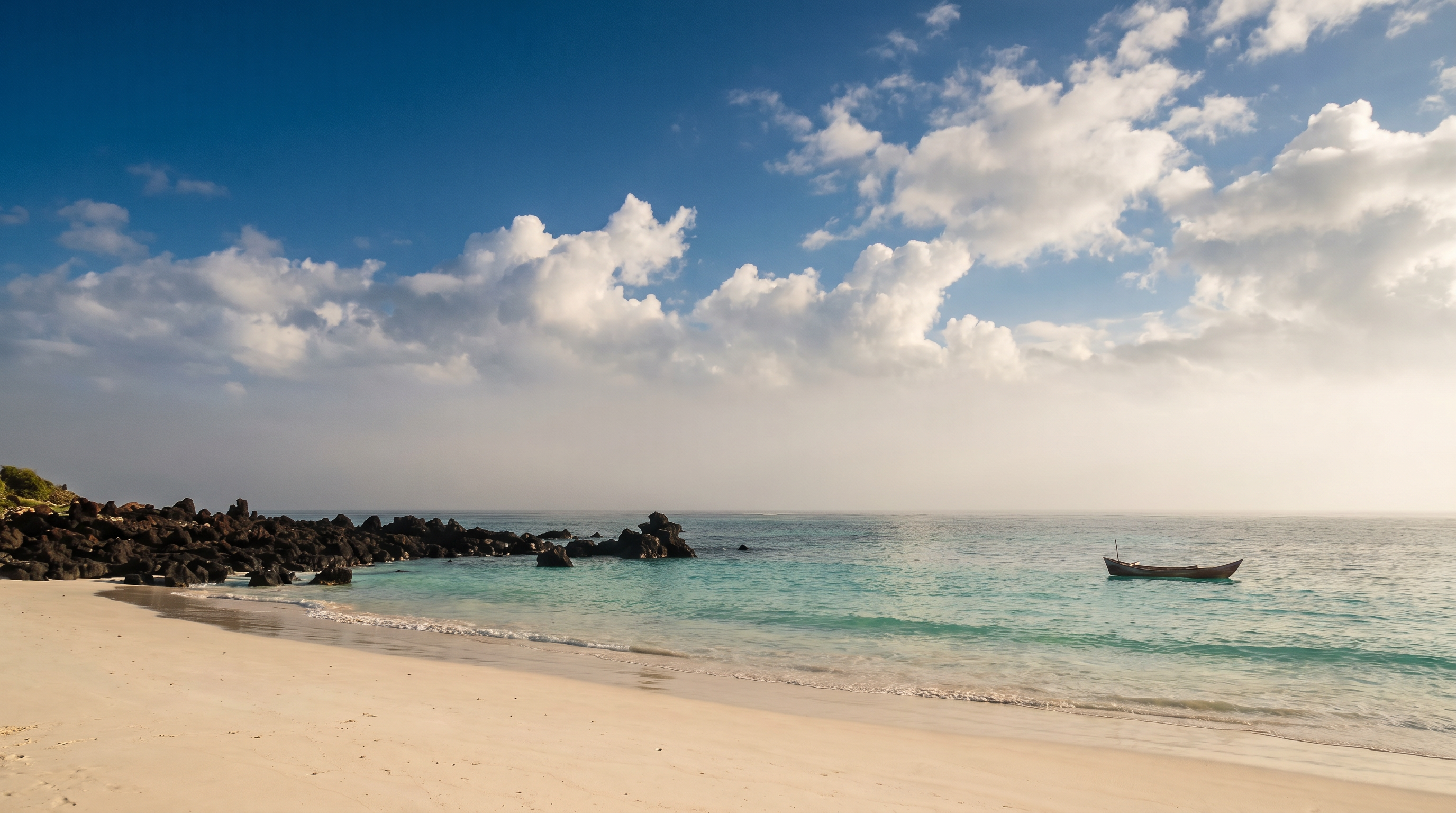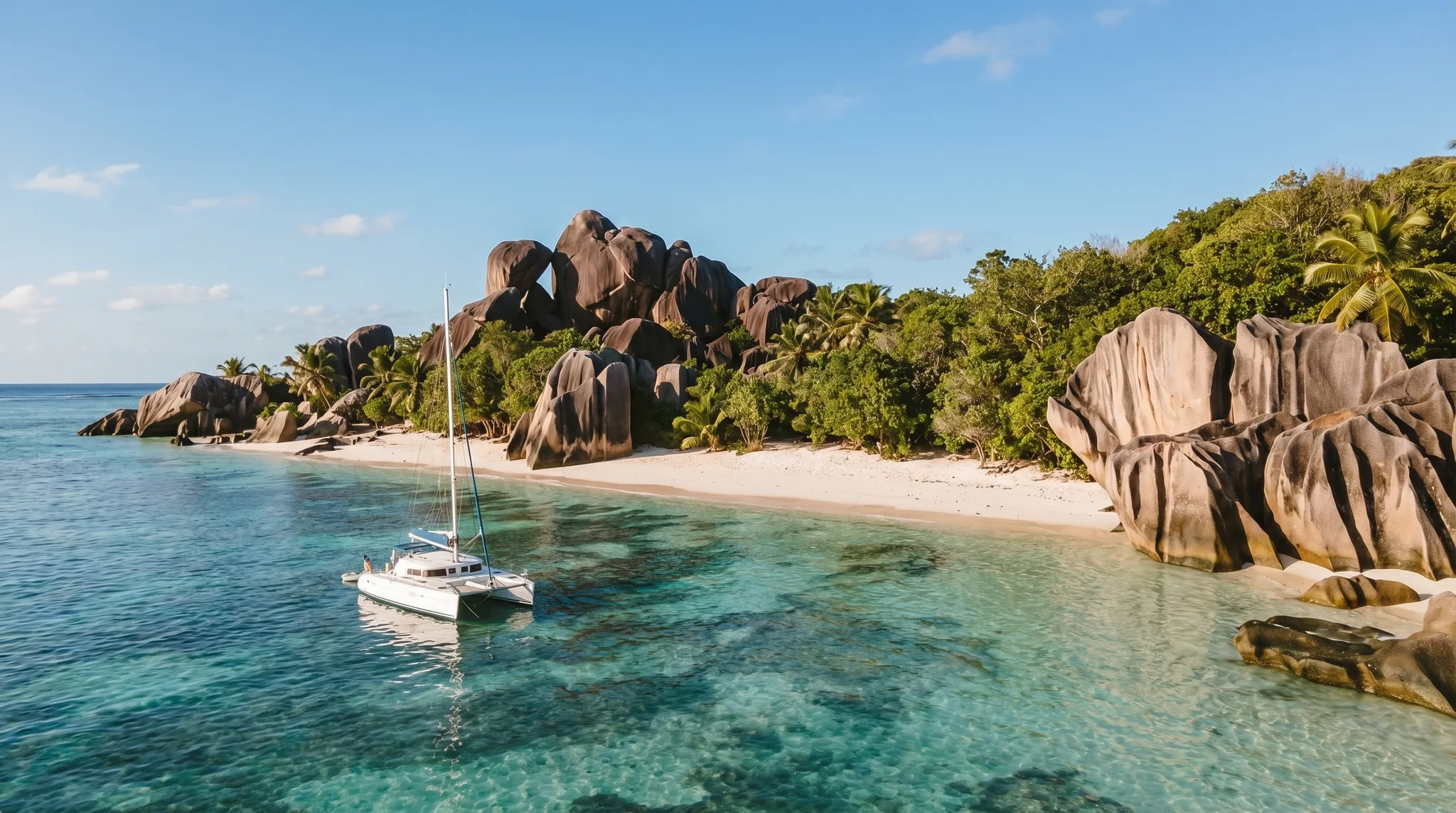
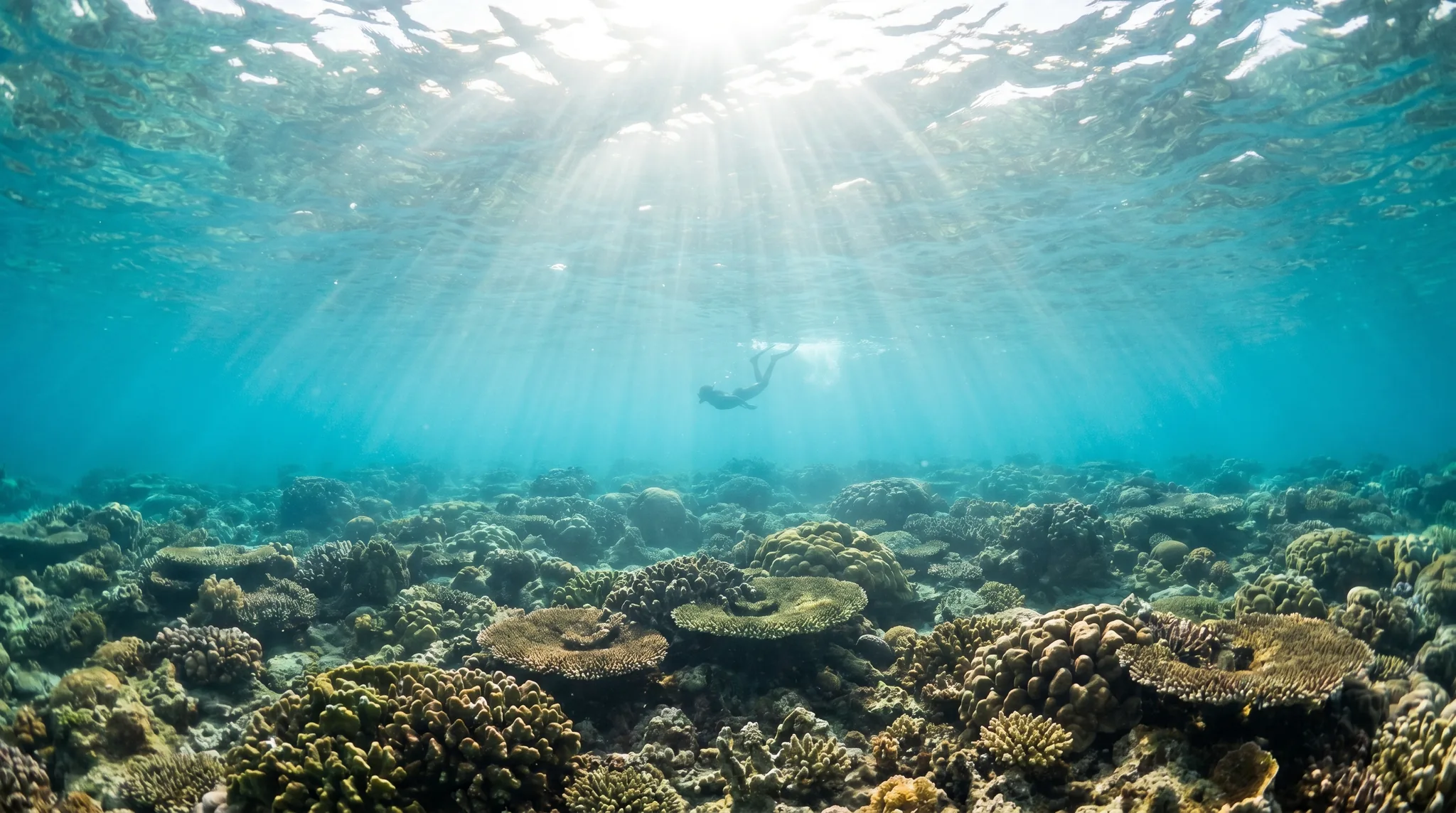
Seychelles divides into two distinct underwater worlds: the Inner Islands, where the bulk of sites cluster around granitic formations, reef systems, seagrass beds, and drift passages, and the more remote Outer Islands, where atoll channels and walls reward those willing to travel further. The site mix spans shallow snorkel-friendly reefs to deep walls and submerged pinnacles, meaning the region suits beginners and advanced divers alike. Emperor Angelfish and Moorish Idol are seen with great regularity across sites, while Spotted Eagle Ray, Hawksbill Sea Turtle, and Whitetip Reef Shark make appearances throughout. Conditions shift meaningfully through the year, with calmer, warmer months drawing the strongest diver ratings. Boat access dominates, though several sites are reachable from shore.
2 areas
Monthly water temperature across Seychelles's sites, from satellite sea-surface data corrected for depth. The band shows the site-to-site spread.
Water is at its warmest from March through May, coinciding with one of the two peak windows rated most highly by divers. A second strong window opens in October and November, when conditions settle again after the cooler mid-year period driven by stronger trade winds. August marks the coolest point in the temperature curve, and combined with more exposed conditions, this period sees notably fewer diver recommendations.
51 operators
Water temperature around Seychelles ranges from about 26°C in August to 30°C in March, based on satellite sea-temperature data for its dive sites.
In the warm season (about 30°C) a rash guard or 3mm shorty is comfortable in Seychelles; in the coldest months (about 26°C) step up to a 3mm full suit.
Fin maps 122 sites in Seychelles (95 scuba diving sites and 47 snorkelling spots, with some suited to both), organised into 2 areas.
Across Seychelles's dive sites, April, May, October and November are most often reported as the best months to visit.
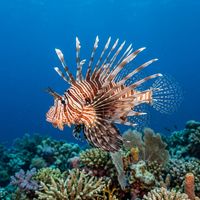
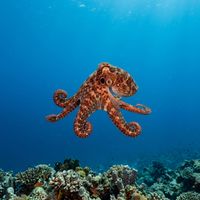
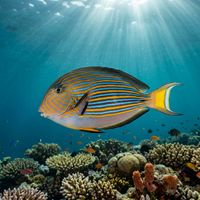
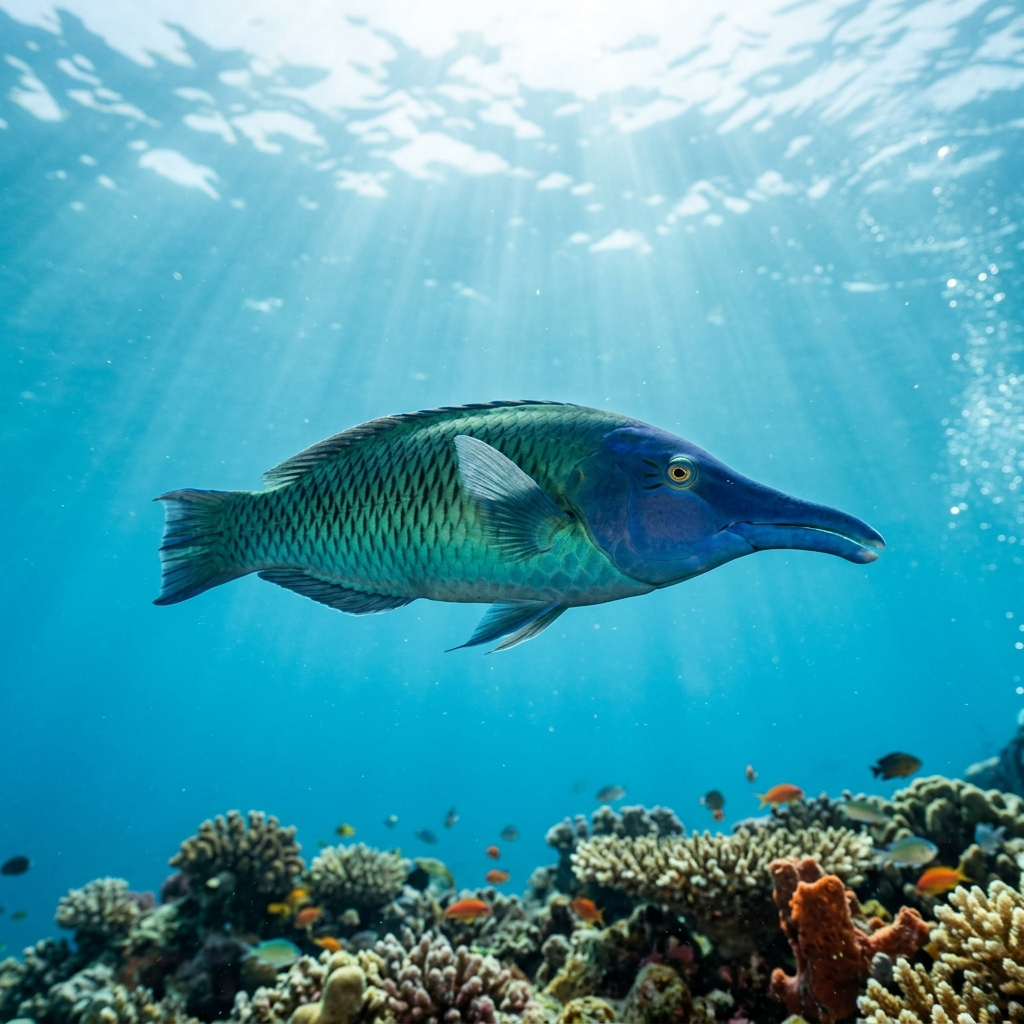
The most frequently observed species across Seychelles sites include Emperor Angelfish, Moorish Idol, Swarthy Parrotfish, Striped Surgeonfish, and Wrasses. Spotted Eagle Ray, Hawksbill Sea Turtle, Indian Lionfish, Great Barracuda, and Giant Moray are all commonly sighted. Whitetip Reef Shark and Day Octopus appear occasionally, and Whale Shark is listed among the region's signature species.
A good number of Seychelles sites are rated for beginners, including Grande Soeur, Passe Dubois, Denis Island, Coral Gardens, and Mannes Bank. These sites offer shallower reef terrain with manageable conditions. Intermediate and advanced sites such as Shark Bank, Grand Bleu, and South Mariane Island are also available for more experienced divers seeking deeper walls, pinnacles, and stronger drift.
The Inner Islands hold the vast majority of listed sites and include well-known reef, drift, and seagrass locations around the main granitic islands. The Outer Islands offer a much smaller number of sites but include remote atoll environments such as Aldabra Main Channel and Passe Dubois, where tidal drift diving through atoll passages is the defining experience. Reaching the Outer Islands requires considerably more planning.
Most dive sites in Seychelles are accessed by boat, including popular locations such as Grande Soeur, Shark Bank, Grand Bleu, and the drift sites around Praslin and La Digue. However, several sites do offer shore entry, including Sainte Anne Marine National Park and Denis Island, which are particularly useful for snorkellers and beginner divers. Coral Gardens can be reached by either method.