Rhincodon typus
Spot whale sharks in the Maldives, Philippines, or Yucatán Peninsula. Sightings peak Jul, Aug in Northern Hemisphere sites. Here's where divers find them.
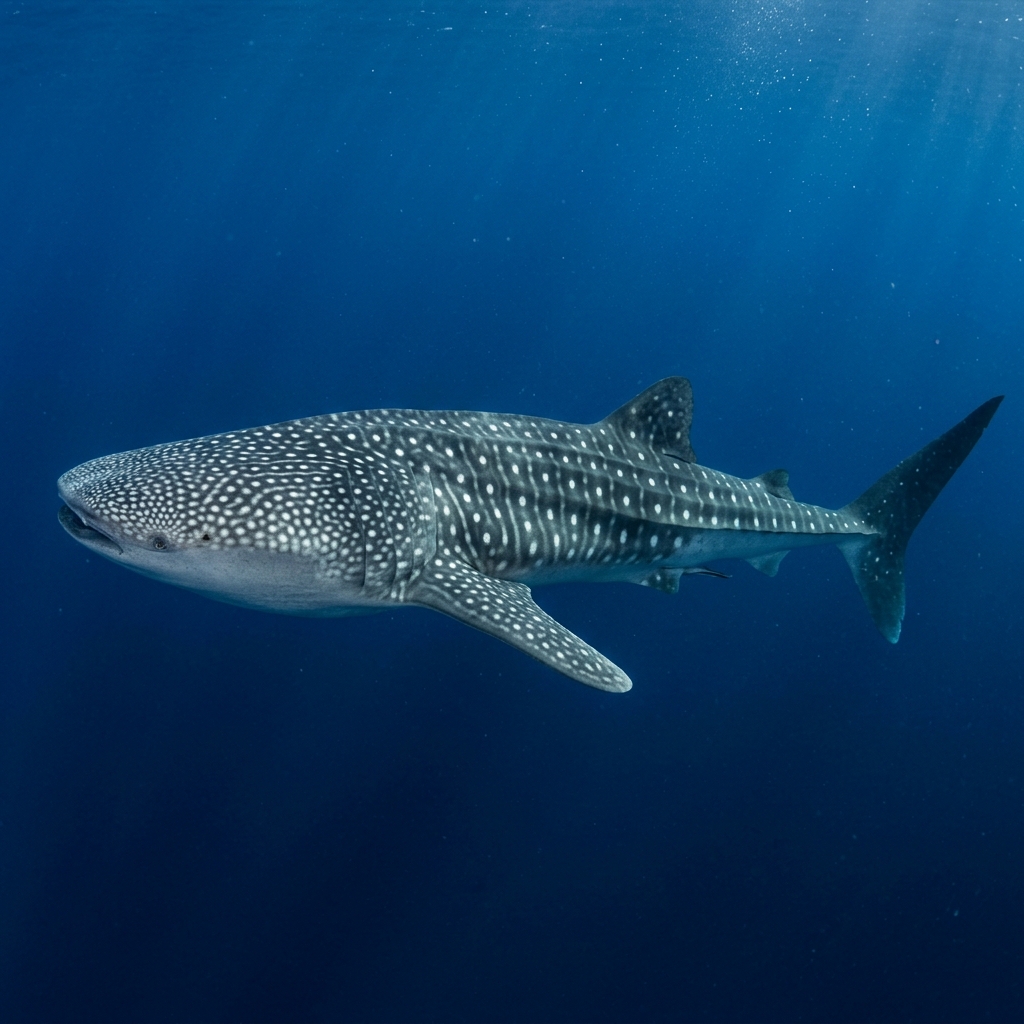
Nothing else in the ocean looks quite like this animal. At up to 12 metres or more, it is the largest fish alive, with a broad, flattened head and a cavernous terminal mouth. The skin is dark grey to blue-grey above, marked with a distinctive pattern of pale white spots and horizontal stripes that persist throughout life and are unique to each individual, much like a fingerprint. Males can be identified by the pair of claspers visible just behind the pelvic fins.
When you find one, it is almost always doing the same thing: moving slowly near the surface with its mouth agape, filtering plankton and small fish through its gill rakers. They are generally relaxed around divers and will often allow you to swim alongside them for extended periods, occasionally veering towards you out of what seems like curiosity. Encounters are best in daylight when they are actively feeding, and keeping pace with a cruising whale shark is itself a workout.
Each whale shark's spot pattern is unique, and researchers use photogrammetry software originally developed for star-mapping to identify individuals from diver photographs. Submitting your photos to citizen-science databases directly contributes to population studies for this endangered species.
In Northern Hemisphere sites, sightings concentrate in July and August. The species tolerates water temperatures from around 20 °C to 29 °C, which broadly tracks warm tropical and subtropical seas across the year, so Southern Hemisphere and equatorial destinations like the Maldives and Indonesia can offer encounters outside those northern-summer months.
Most commonly logged in the Maldives and the Philippines, with strong populations also recorded across Indonesia, Australia, Mexico, and Brazil. In the Americas, the Yucatán Peninsula in Mexico and Florida and the Southeast in the United States produce the most sightings, while the North and Central Atolls of the Maldives stand out as one of the most reliable regions globally. Despite a wide geographic spread, sightings are typically uncommon at any given site, so choosing a destination with a known aggregation or feeding event gives you the best chance.
Mapping where Whale Shark is logged…
Whale sharks are found across tropical and warm-temperate oceans. The strongest concentrations of logged sightings come from the Maldives, the Philippines, Indonesia, Australia, and Mexico, particularly the Yucatán Peninsula. Aggregation sites tied to seasonal feeding events give you the best odds.
In Northern Hemisphere destinations, sightings peak in July and August. Equatorial hotspots like the Maldives and Indonesia can produce encounters across more of the year, as water temperatures stay within the species' preferred range. Matching your trip to a known local feeding aggregation is more reliable than timing alone.
No. Whale sharks are filter feeders with no interest in divers as prey, and they are not territorial or aggressive. The only real risk is accidental contact with their tail during a close approach, so maintain a respectful distance and avoid positioning yourself directly in front of or behind the animal.
Size alone is usually enough: no other fish comes close. Look for the vast flat head, cavernous forward-facing mouth, and the unmistakable grey skin covered in white spots and pale stripes. No other species shares that combination.
Whale sharks are the largest fish on the planet, regularly reaching 8 to 10 metres and occasionally exceeding 12 metres. Females grow significantly larger than males. At depth or in open water it can be hard to appreciate the scale until one turns and the sheer width of the head fills your field of view.
Yes. Whale sharks are listed as Endangered on the IUCN Red List. Population pressures include vessel strikes, entanglement in fishing gear, and habitat degradation in key feeding areas. Responsible dive practices and photo-ID citizen science both play a meaningful role in their conservation.
The Whale Shark is listed as endangered by the IUCN. Observe from a distance, avoid touching or feeding it, and report sightings to local marine research organisations.
Whale sharks are listed as Endangered on the IUCN Red List, threatened by boat strikes, entanglement, and the gradual loss of productive feeding areas. When diving with them, keep a respectful distance, never touch or ride them, and follow local codes of conduct; many aggregation sites have strict rules to reduce disturbance.
Site and sighting data is aggregated from diver logs, iNaturalist and GBIF. For taxonomy and conservation status:
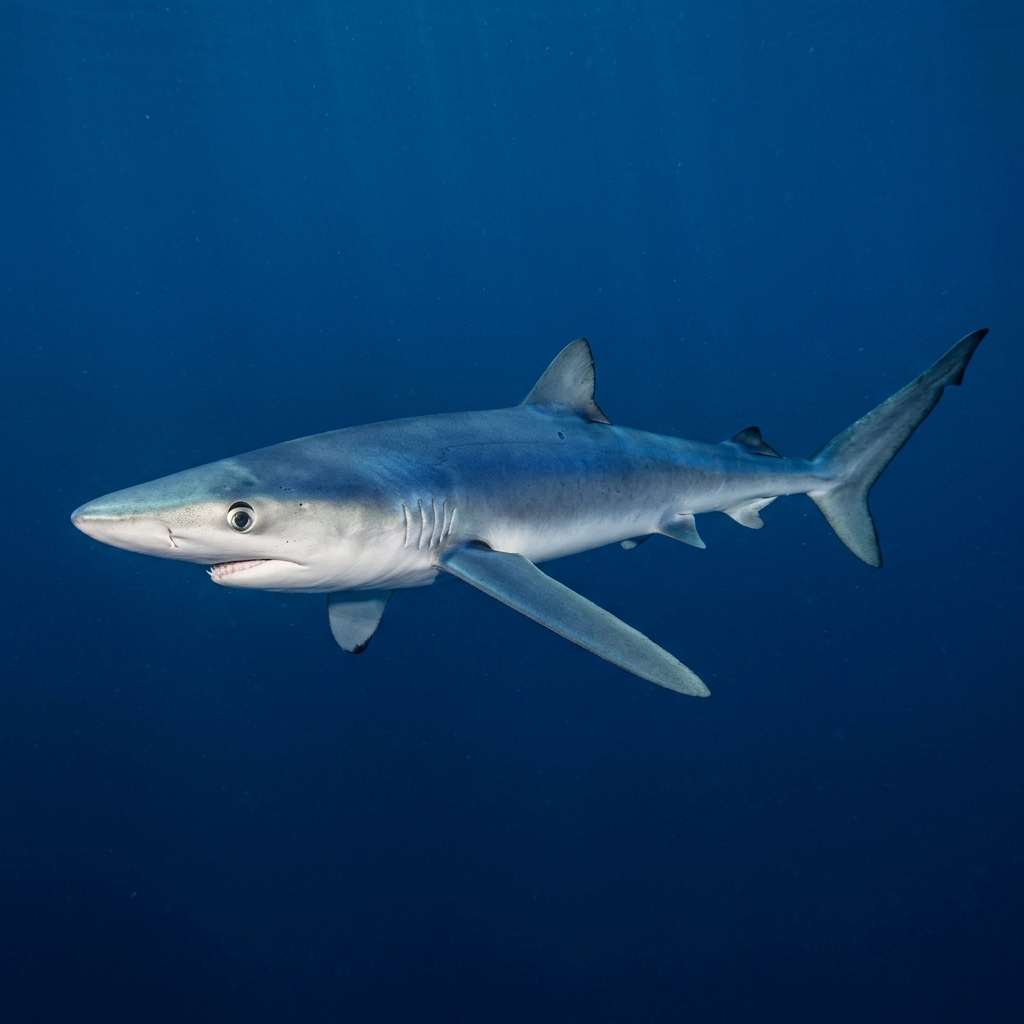
Blue Shark
1,527 sites