Safety warning
This species is flagged as dangerous to divers, and the risk is proportional to its size. A large adult can exceed 200 cm and weigh over 400 kg; an alarmed fish can charge or bite with serious force. Keep a respectful distance, never corner one near its shelter, and do not attempt to hand-feed or touch it. Incidents are rare but have been documented.
If you're bitten
BiteGeneral first-aid guidance, not a substitute for professional medical care. In an emergency, call your local emergency number.
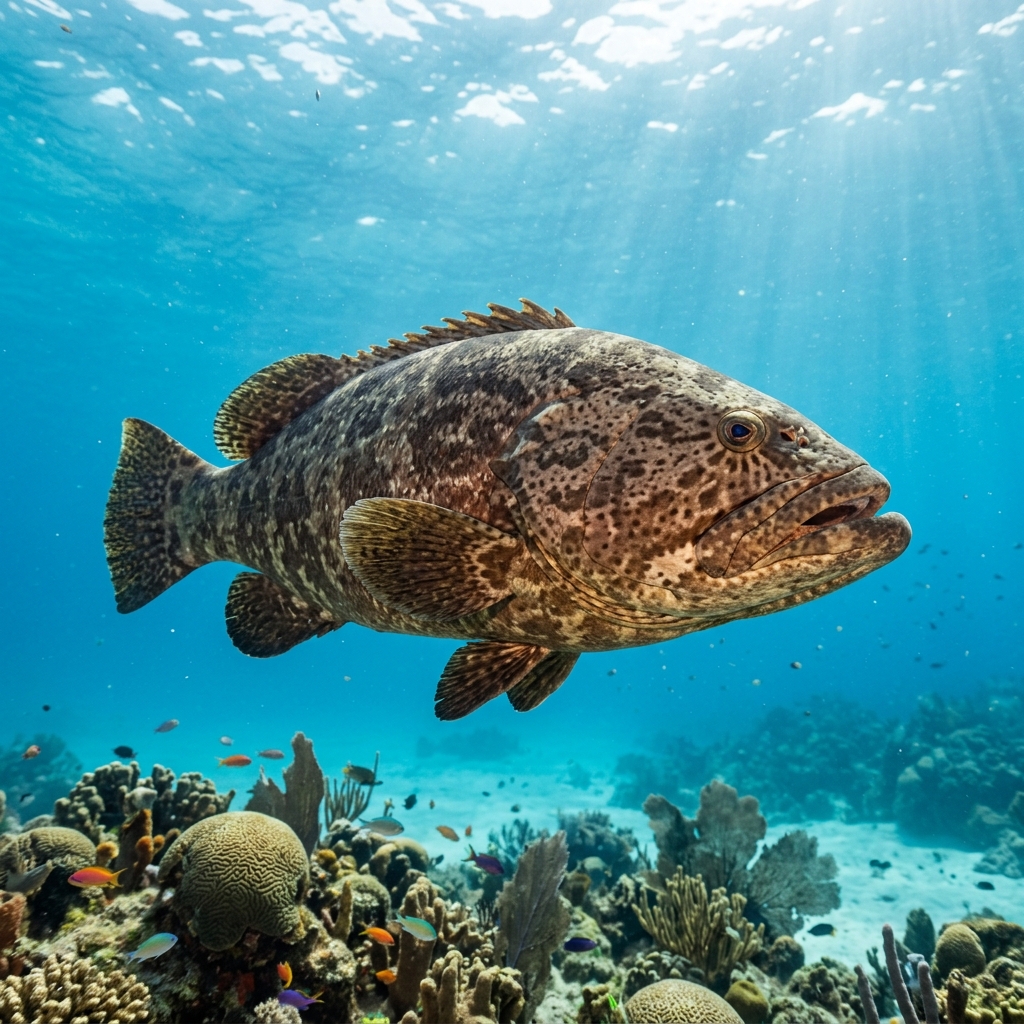
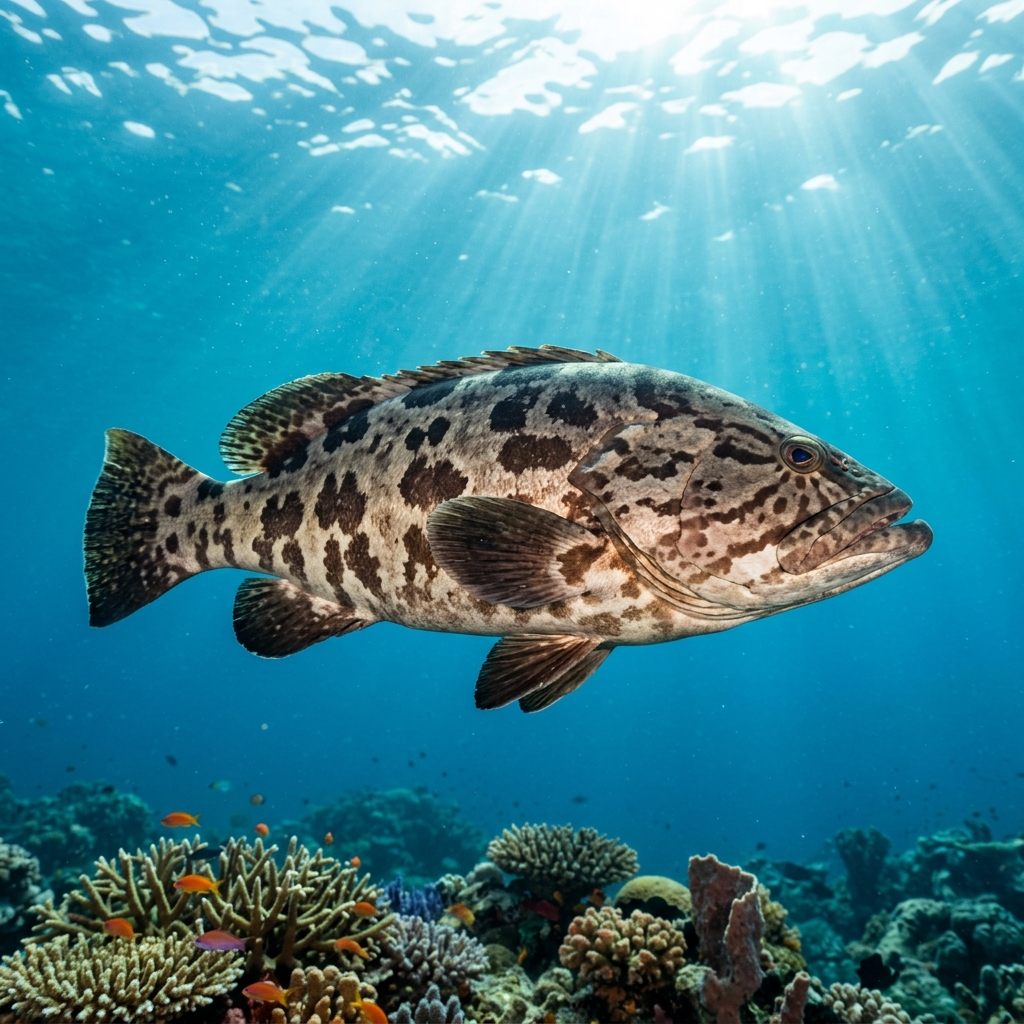
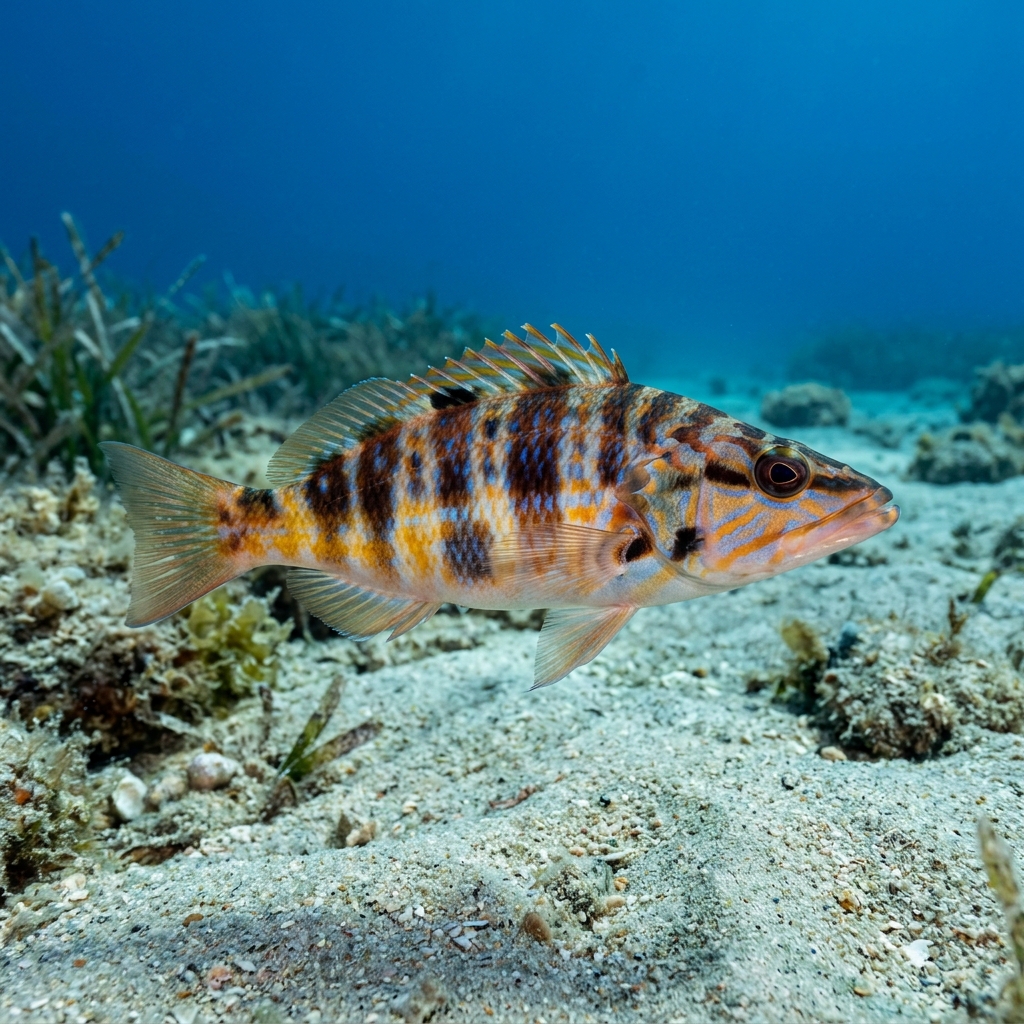
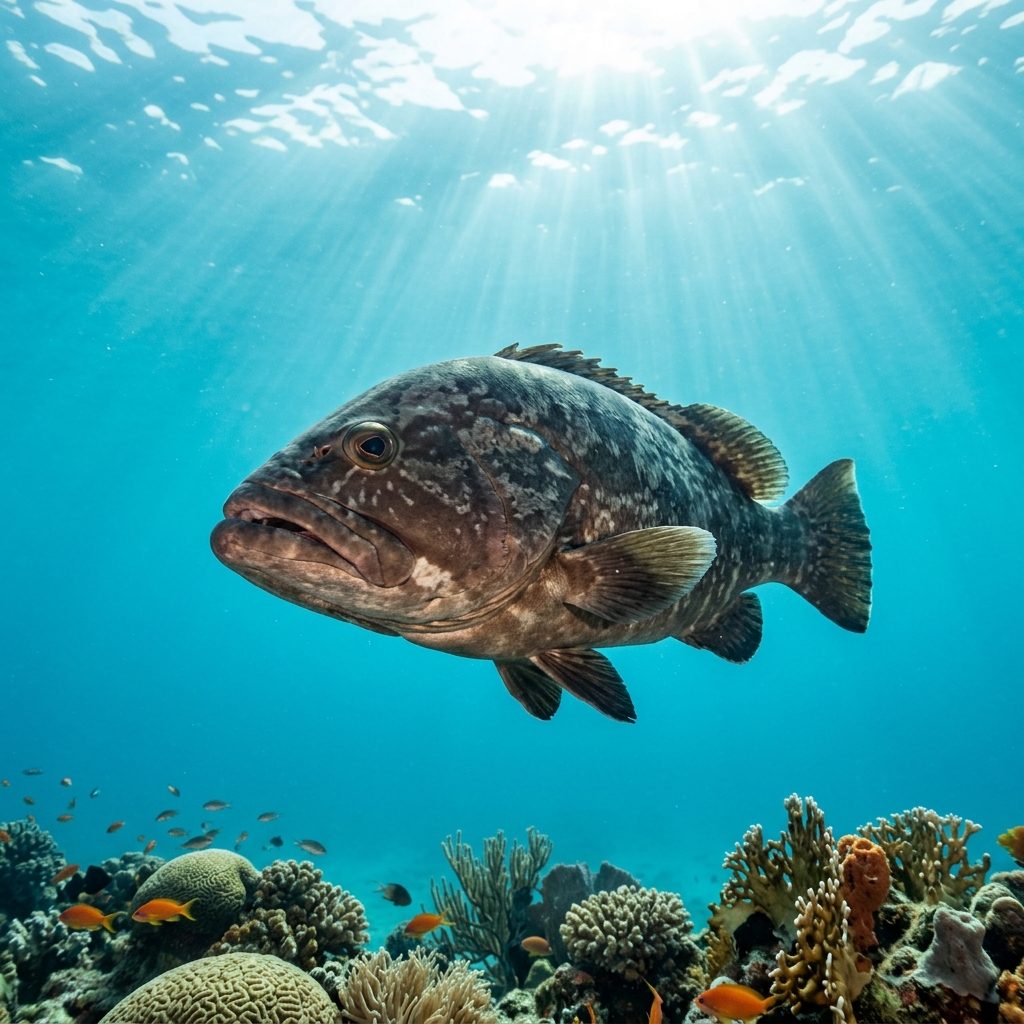
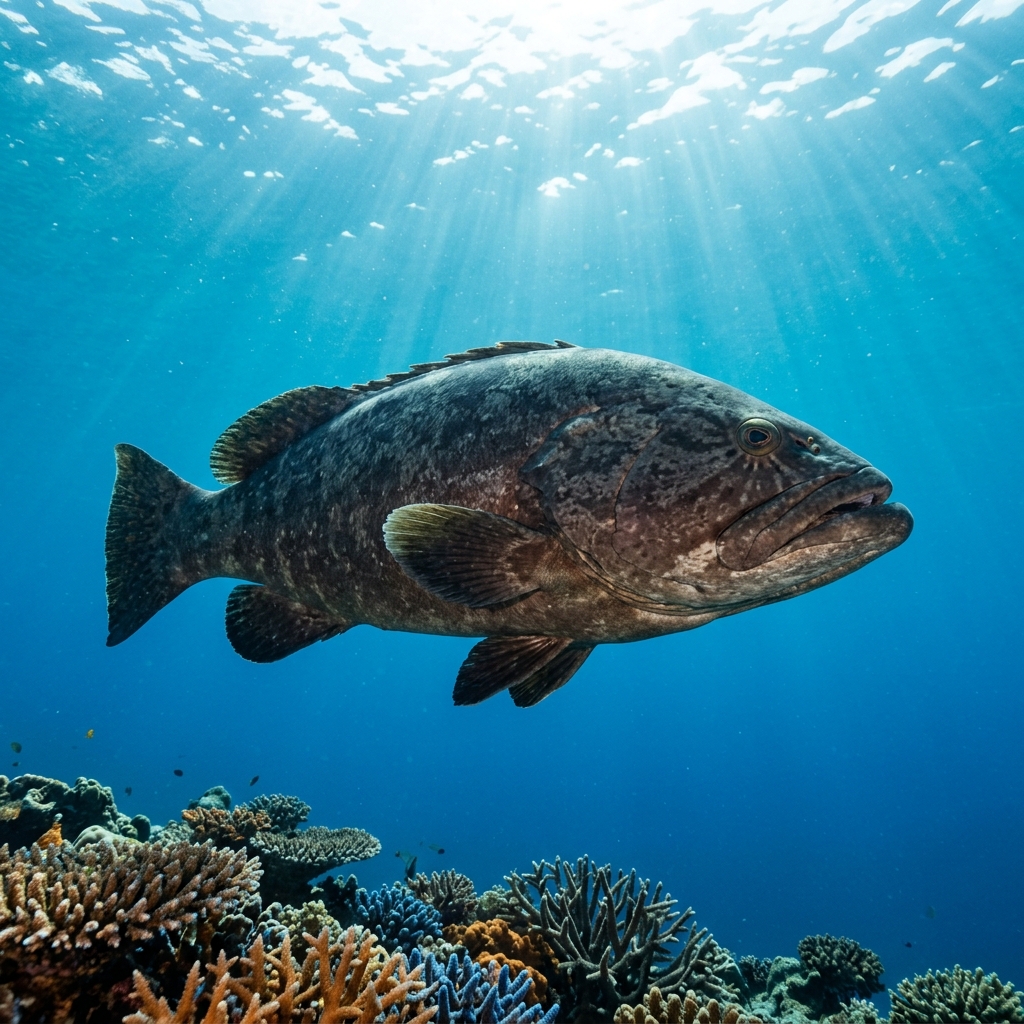
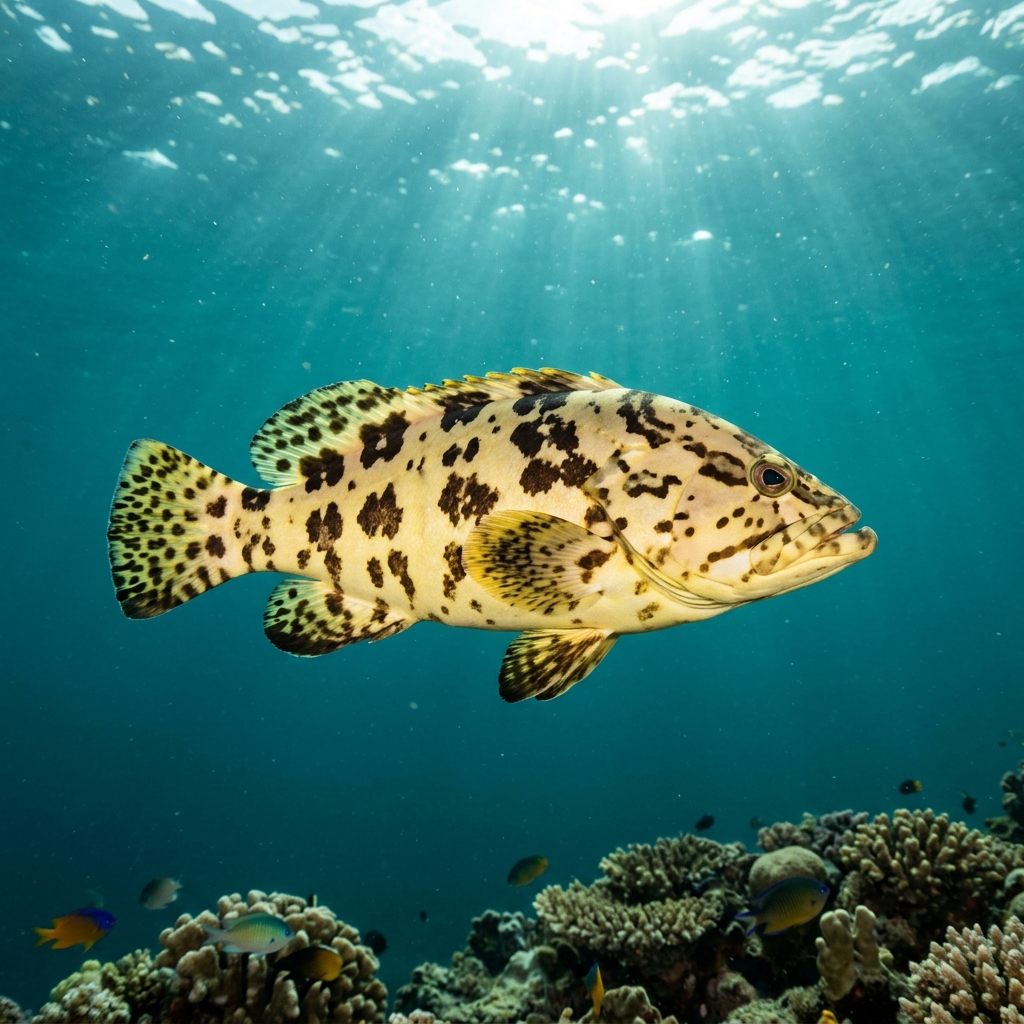
Size alone does most of the work: adults regularly exceed 150 cm and carry a bulk that dwarfs almost everything else on the reef, with a wide, rounded tail and a cavernous, underslung mouth. Colouration is mottled grey-brown with faint darker blotching, giving the fish a textured, almost camouflaged look against rocky or coral substrate. Juveniles look nothing like their parents: pale yellow with bold, irregular dark brown-to-black patches that gradually fade and break up with age.
Adults are typically solitary and unhurried, often parked in a cave, under a ledge, or at the base of a coral bommie where they have a clear sightline over open ground. They tend to hold their position and watch divers with calm, almost indifferent confidence rather than fleeing, which is what makes close-up encounters possible. Approach slowly and avoid blocking the entrance to whatever shelter they are using, as a startled fish of this size moves fast.
Queensland Grouper are protogynous hermaphrodites: they begin life as females and the largest, oldest individuals transition to male. This means the true giants you encounter on a dive are almost certainly male.
No clear seasonal pattern emerges from the available sighting data, so this is treated as a year-round species. Its observed temperature range of 24 to 29 °C fits warm Indo-Pacific reefs throughout the year, meaning your best strategy is simply to be in the water at a known site.
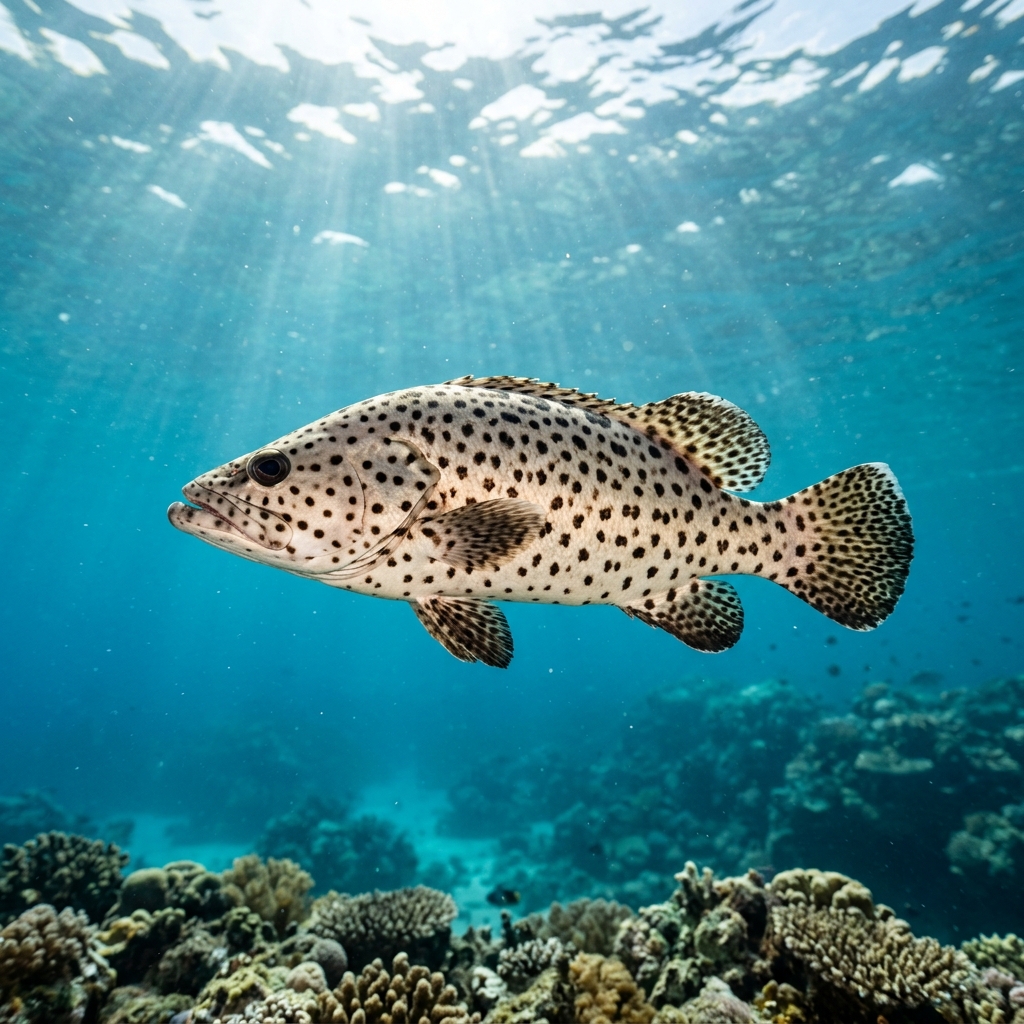
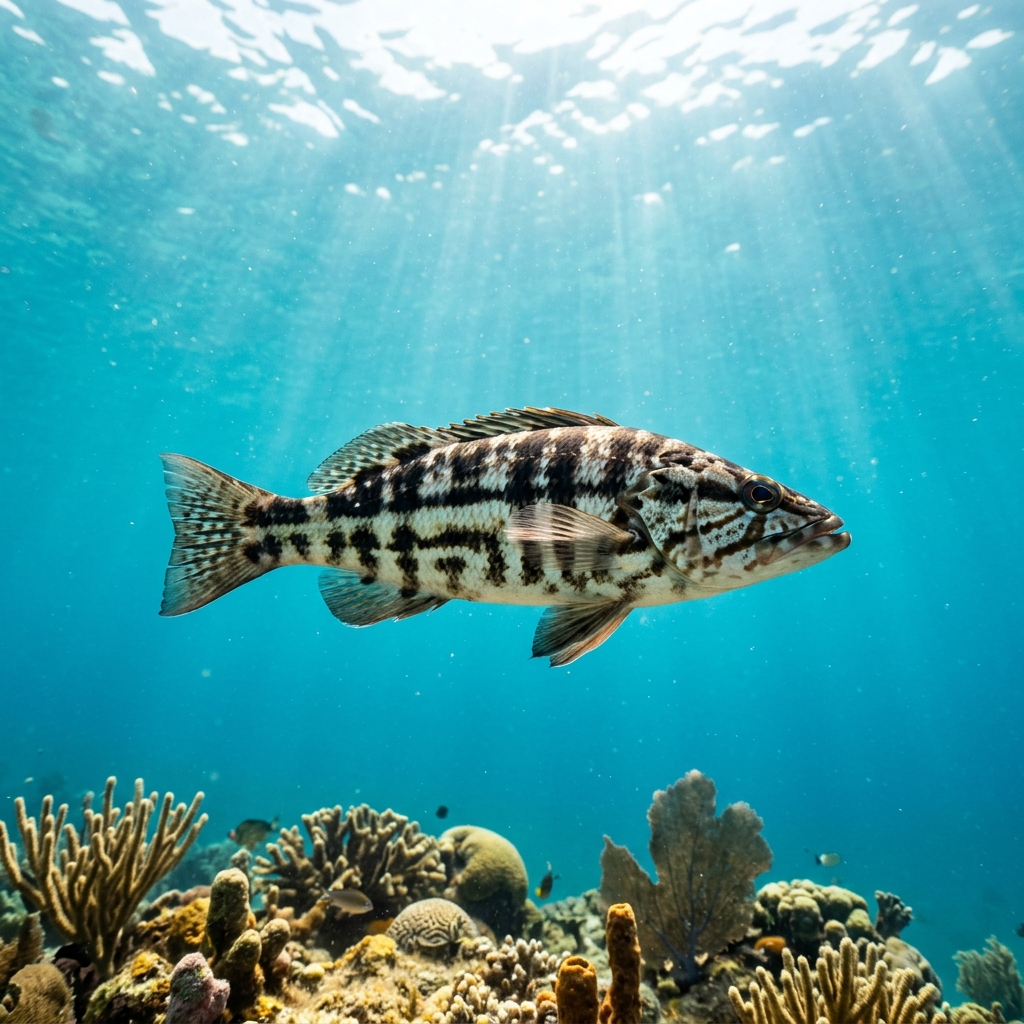
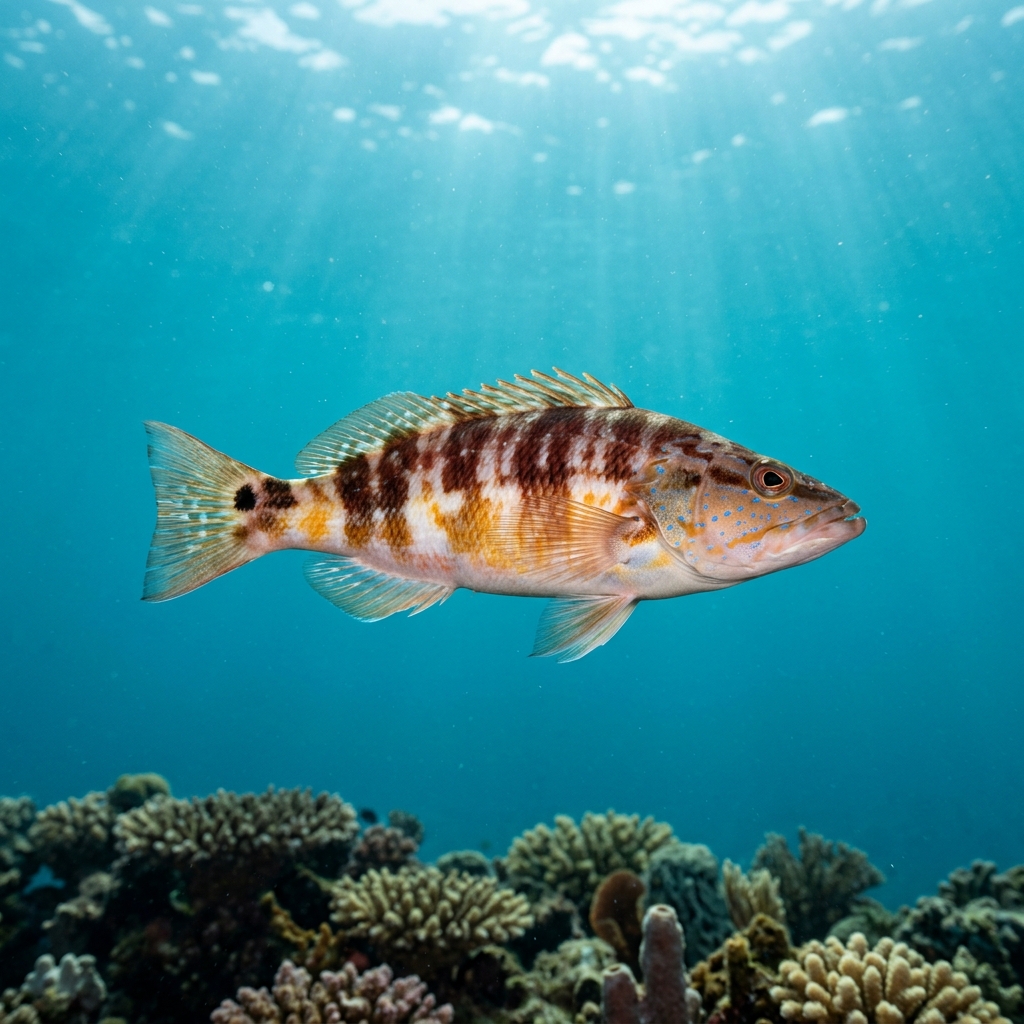
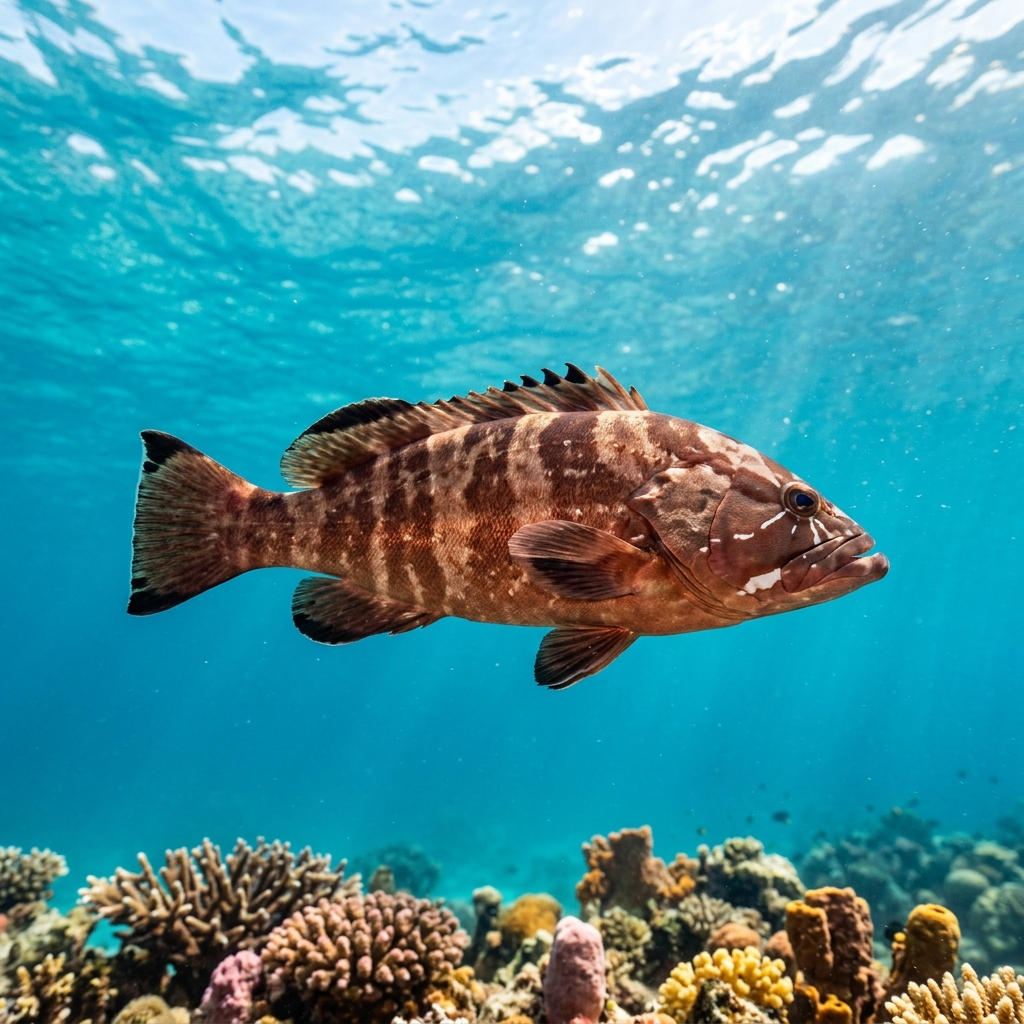
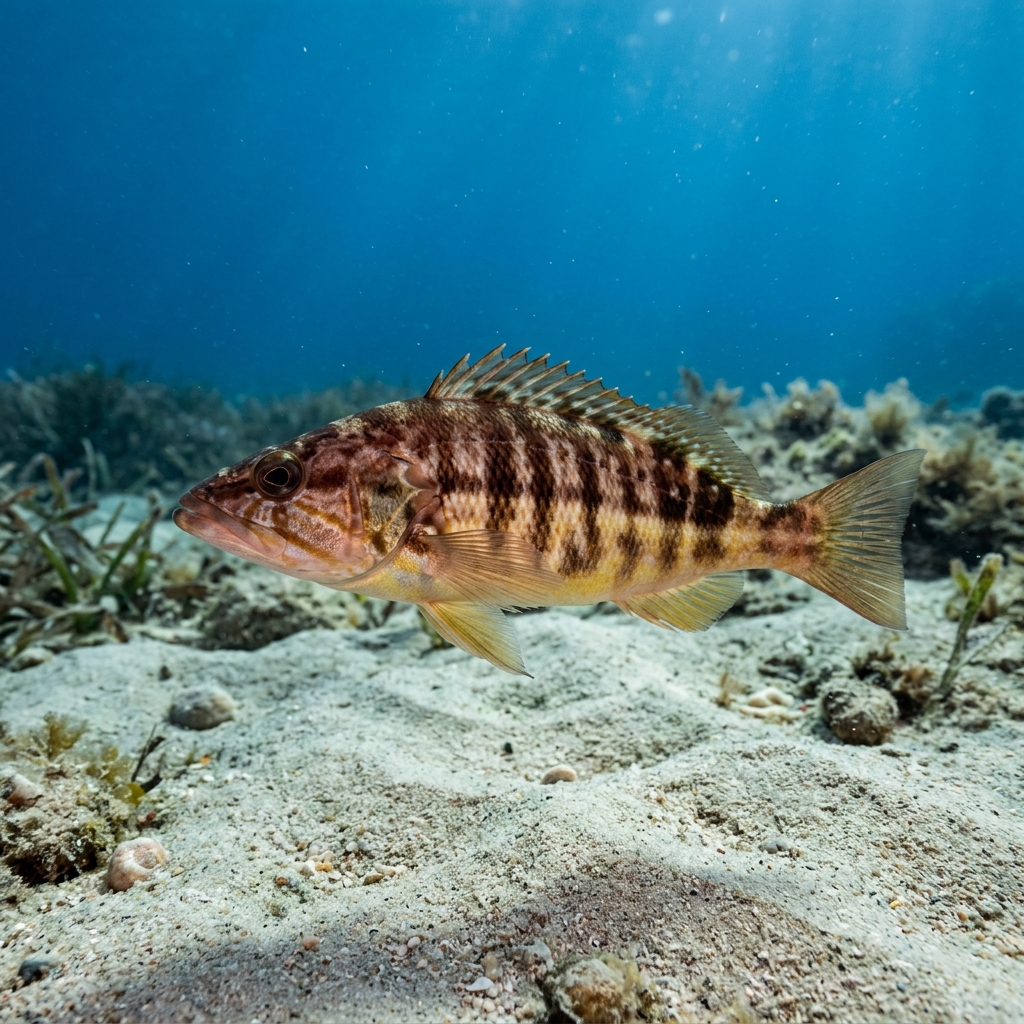
Reef neighbours a diver could mistake it for. Use the identification notes above to tell them apart.
Australia accounts for the largest spread of logged sites, with Queensland and the Northern Territory representing the strongest concentrations, followed by Western Australia. Outside Australia, the Gulf of Thailand (both north and south) and Pulau Tioman in Malaysia are the regions where divers most often report encounters, with additional sightings across Indonesia, Vietnam, Mozambique, and Sri Lanka.
Mapping where Queensland Grouper is logged…
The strongest concentration of logged sightings is in Queensland and the Northern Territory of Australia, where the species is most reliably reported. The Gulf of Thailand and Pulau Tioman in Malaysia are the leading sites outside Australia, with further records from Indonesia, Vietnam, Mozambique, and Sri Lanka.
There is no detected seasonal peak in the sighting data, so encounters are possible year-round on suitable reefs. Water temperatures between 24 and 29 °C suit the species, which covers most of the tropical Indo-Pacific throughout the year.
They are among the largest bony fish in the ocean. Typical adults reach around 150 to 200 cm in length, and very large individuals can exceed 400 kg. On a dive, sheer bulk and a massively wide mouth are the immediate giveaways.
Yes, though unprovoked attacks are uncommon. The danger scales with size: a startled or cornered adult can charge and bite with considerable force. Give the fish space, never block its retreat route, and avoid feeding or touching it.
Adults are unmistakable at size: mottled grey-brown, enormously broad-bodied, with a wide rounded tail and a cavernous mouth. Juveniles are pale yellow with bold dark patches and look quite different. The only fish likely to cause confusion are the Atlantic Goliath Grouper (a different ocean), the Potato Bass, and the Barramundi Cod, both of which are significantly smaller at typical encountered sizes.
Yes. Like many groupers they are protogynous hermaphrodites, starting life as females and transitioning to male as they grow older and larger. The very largest individuals you see on a reef are almost certainly male.
Site and sighting data is aggregated from diver logs, iNaturalist and GBIF. For taxonomy and conservation status:
Epinephelus lanceolatus
One of the largest bony fish on the reef, the Queensland Grouper is most logged in Queensland and across the Gulf of Thailand. Here's where and how to find one.
Blacktip Grouper
2,726 sites