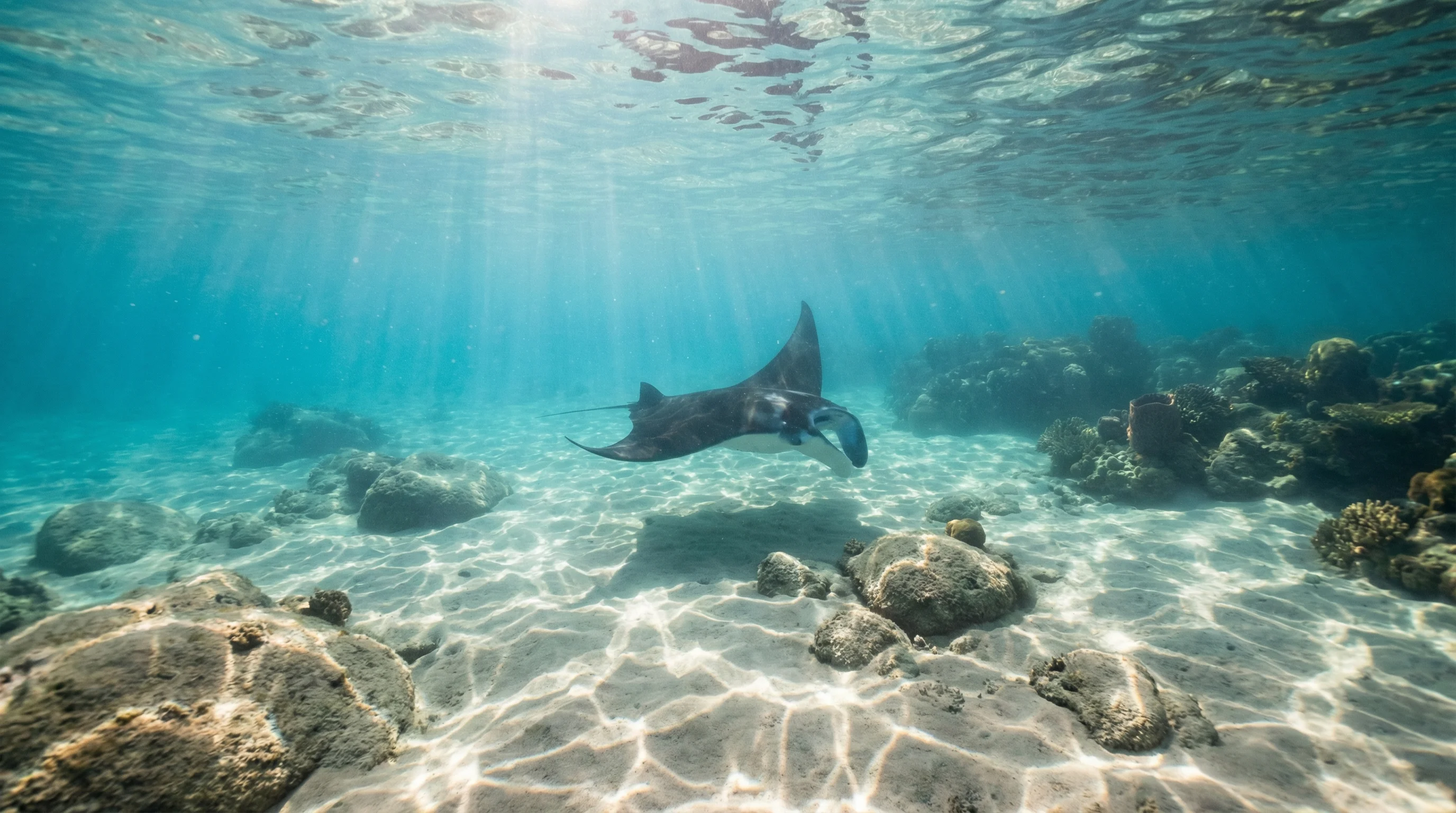
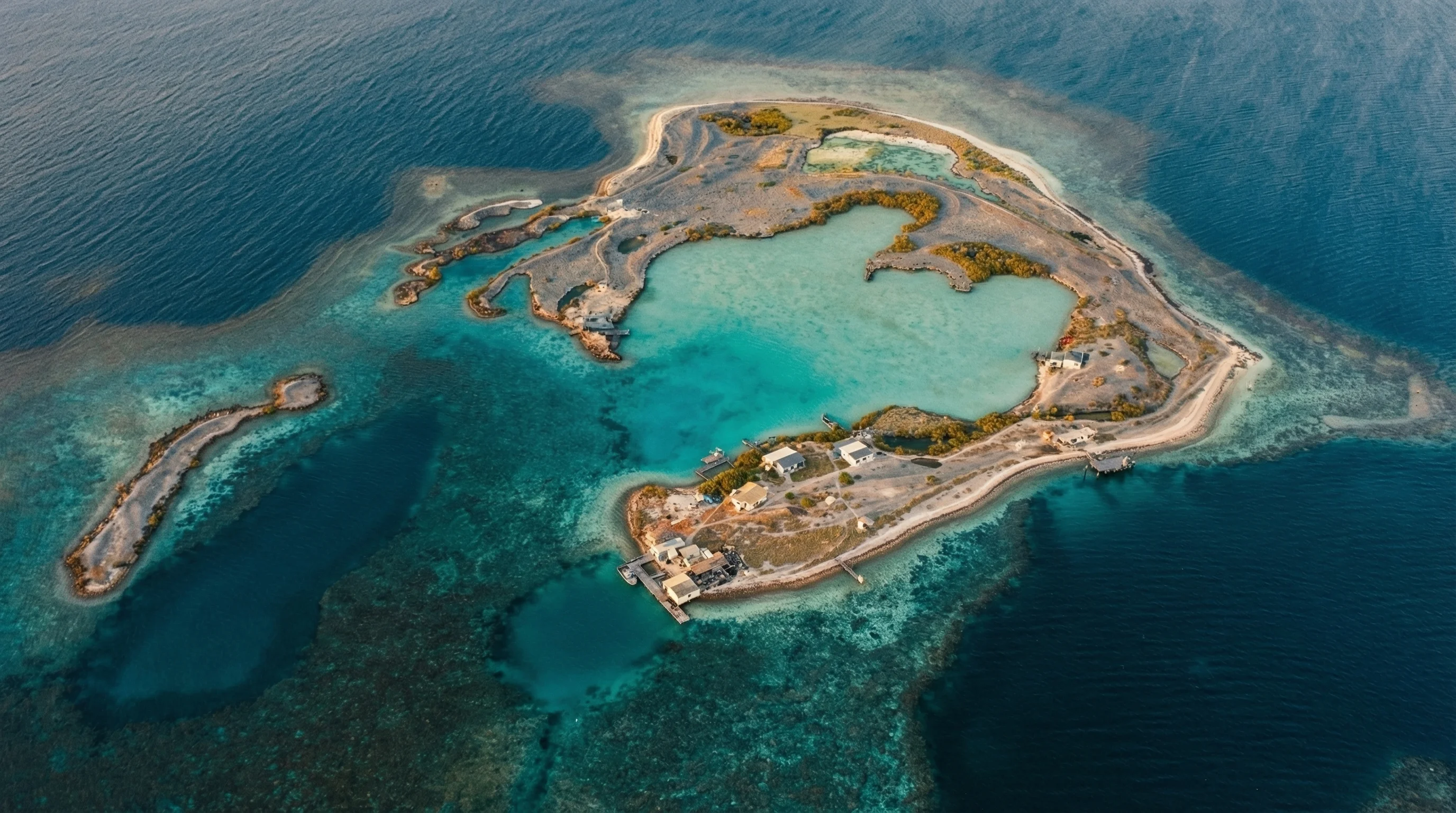
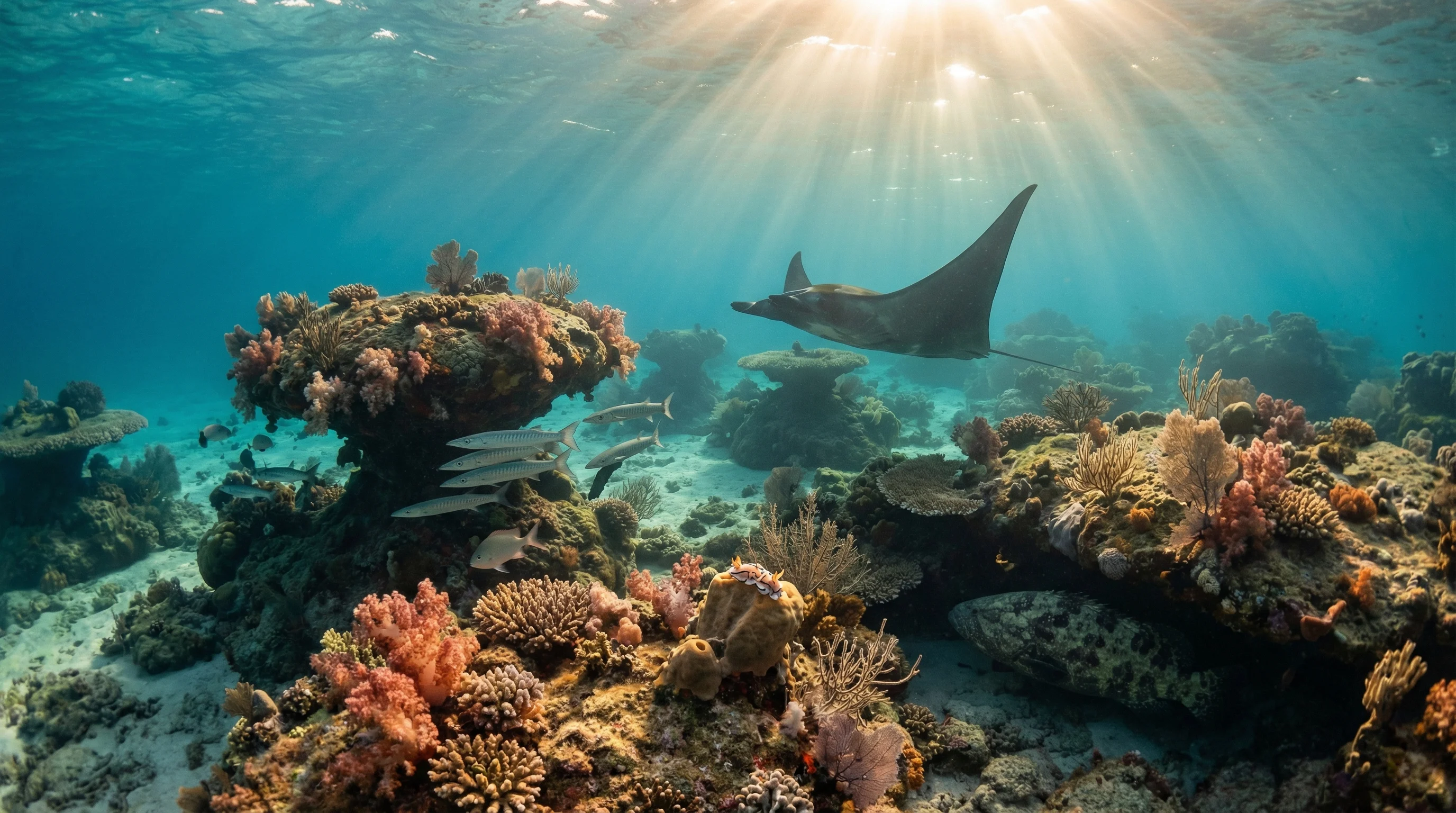
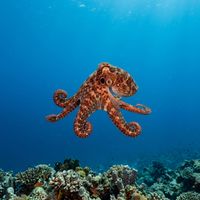
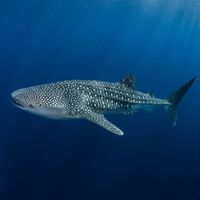
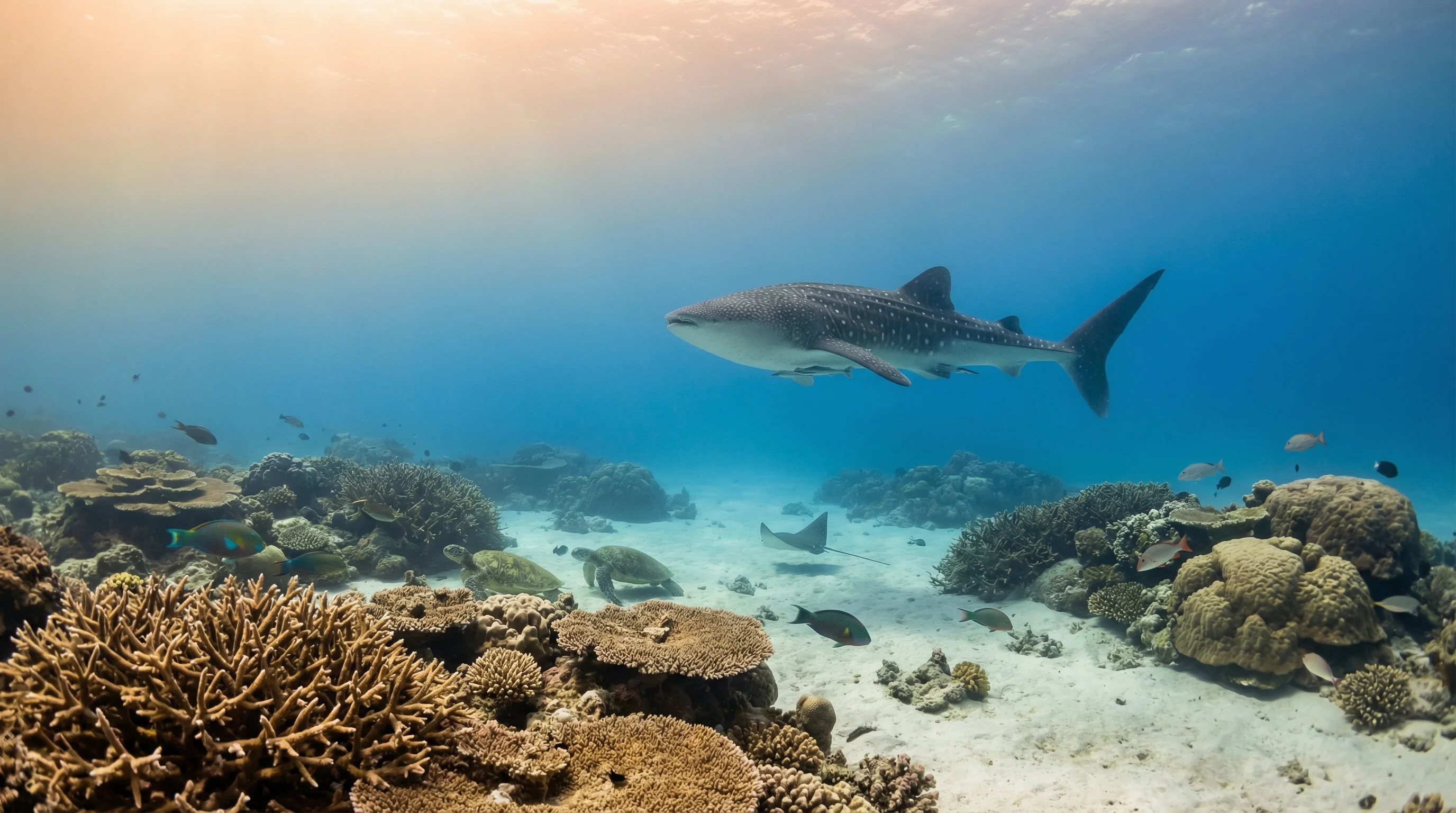
Exmouth sits within Ningaloo Reef and divides into three distinct sub-areas: Navy Pier, the Muiron Islands, and Lighthouse Bay. Navy Pier offers an unusual shore dive among industrial pylons colonised by sponges and soft corals. The Muiron Islands suit both beginners and intermediate divers across reef and drift sites. Lighthouse Bay holds sanctuary reef, wall drop-offs, and drift snorkel at Turquoise Bay. The Whale Shark is a signature encounter, alongside Whitetip Reef Shark, Day Octopus, and a rich nudibranch community.
3 areas
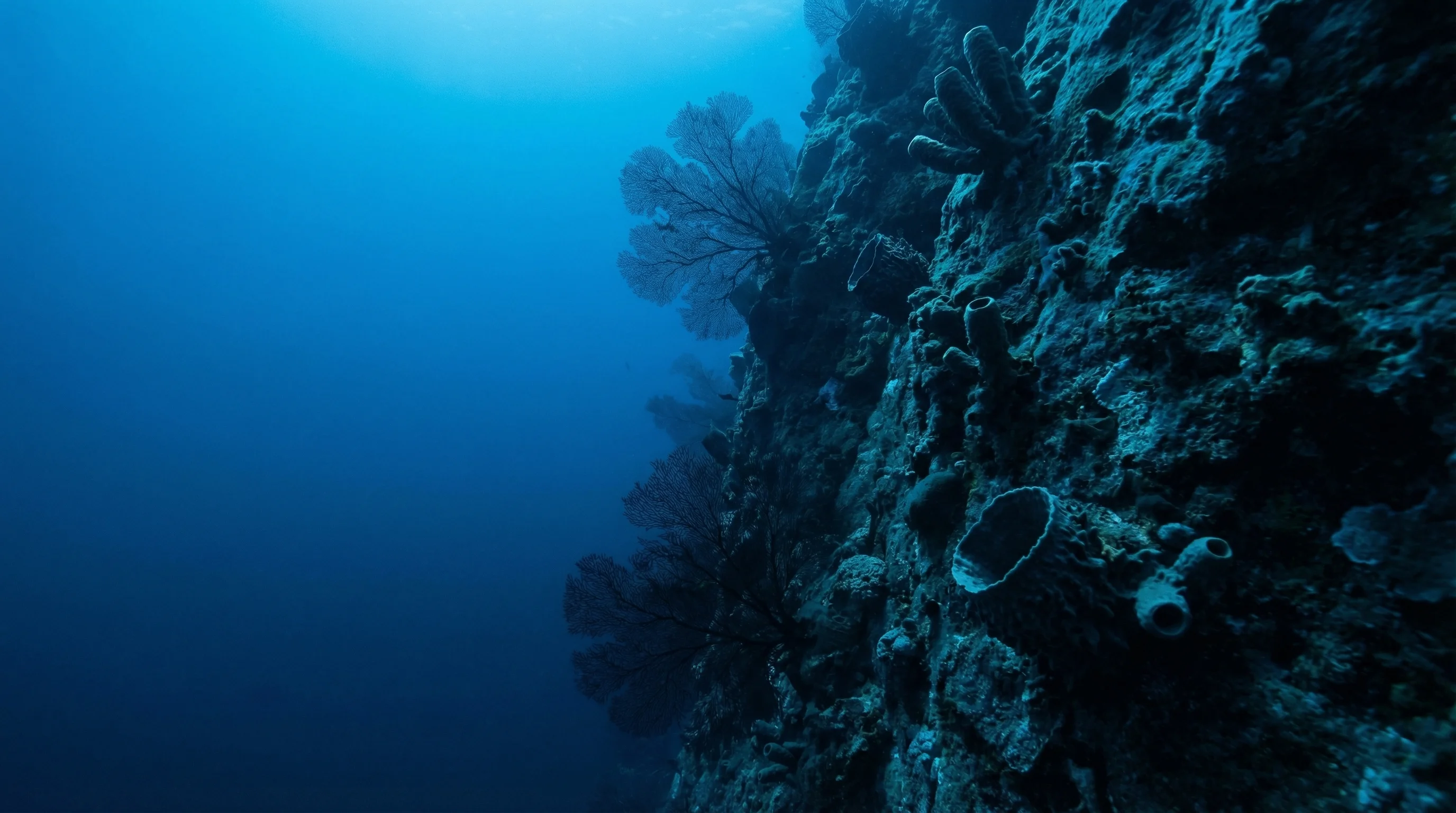
Monthly water temperature across Exmouth's sites, from satellite sea-surface data corrected for depth. The band shows the site-to-site spread.
Water is at its warmest from late summer through autumn, cooling noticeably into the middle of the year before climbing again in spring. The peak diving months span March through May and return again in October and November, aligning with calmer conditions and good visibility. Drift sites such as Jaws and Mandu are best approached when currents are running predictably, making operator guidance valuable for timing.
12 operators
Dampier, Australia
Australia
Australia
18 more sites to explore
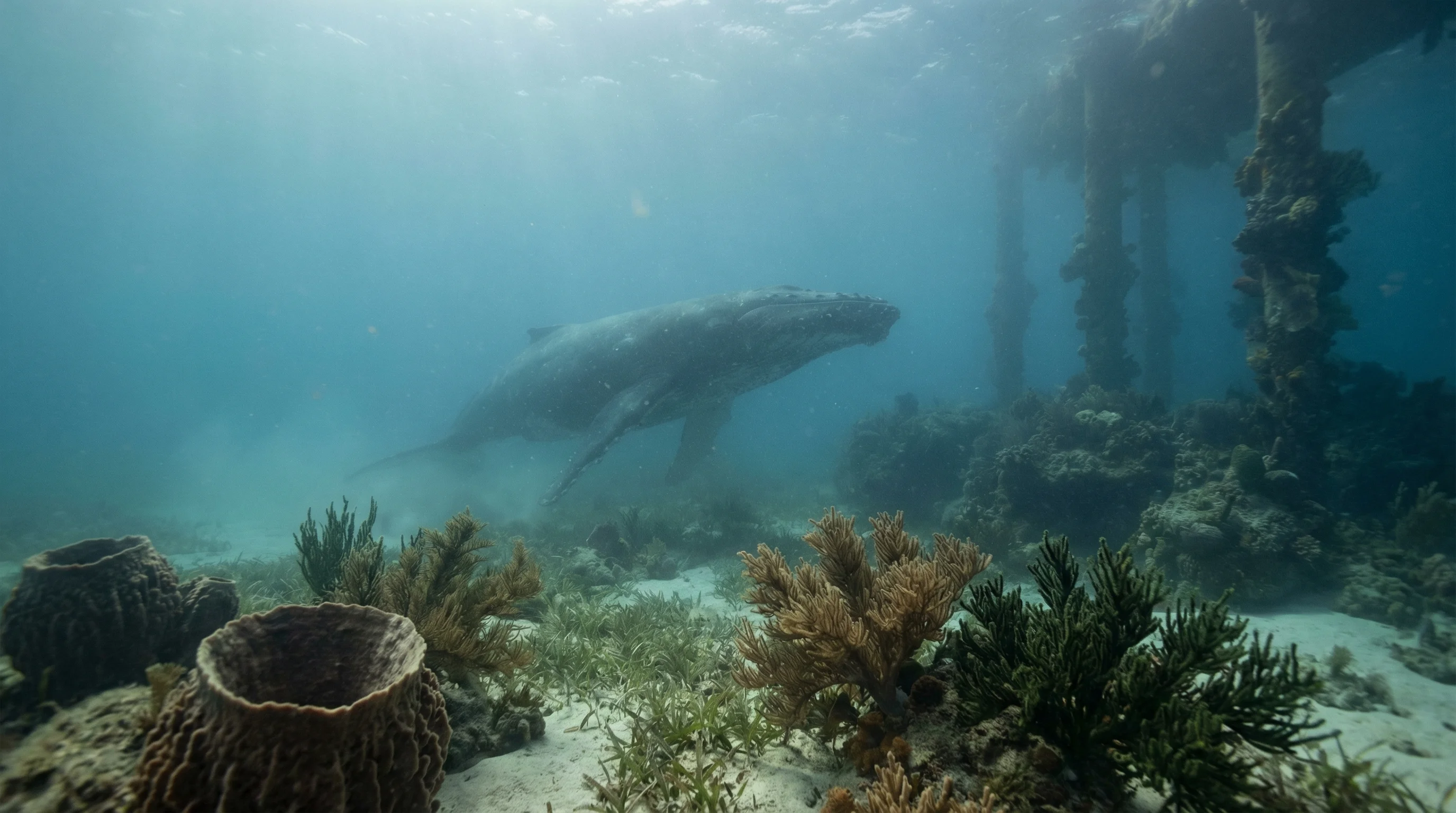
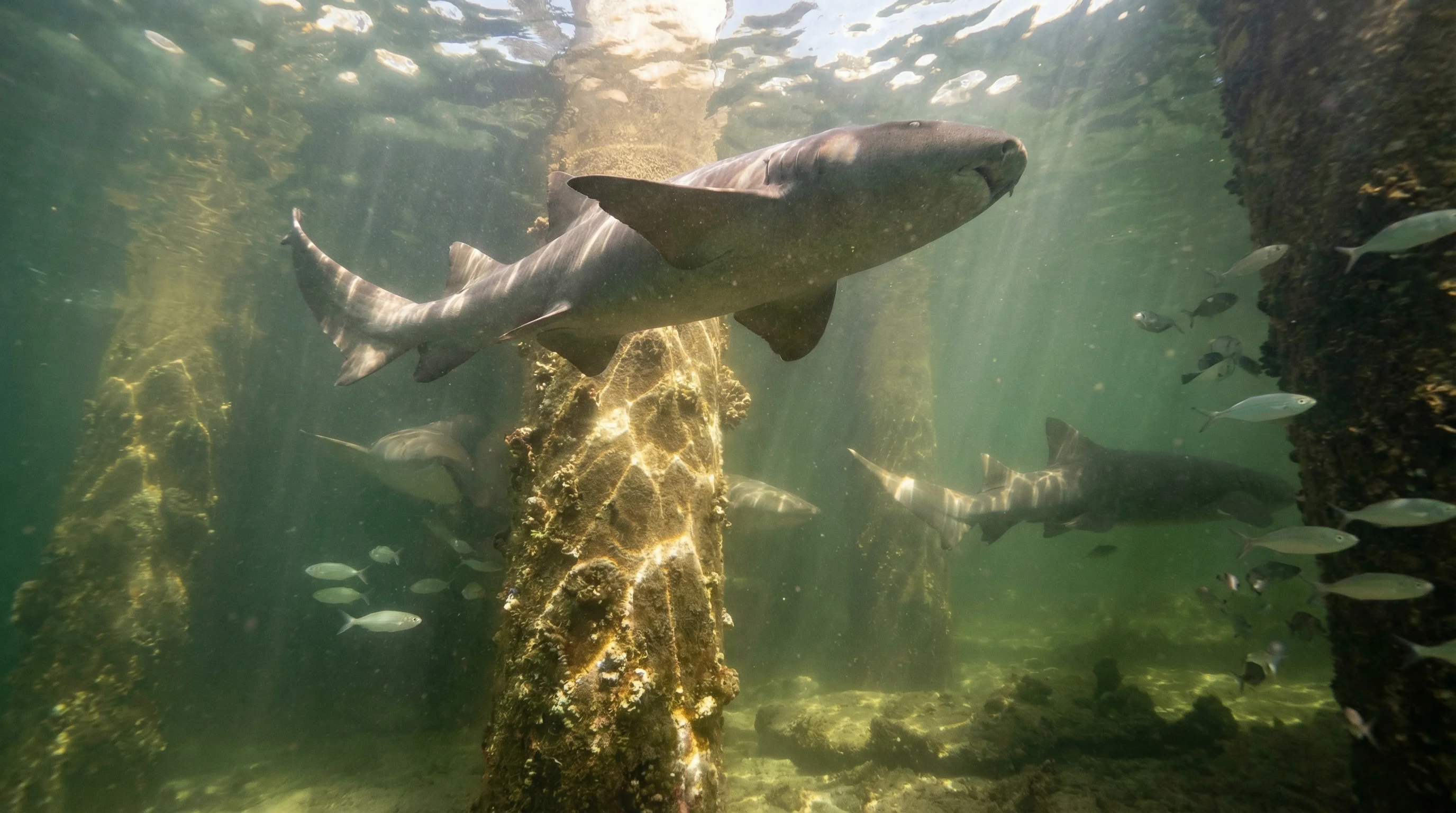
A pier structure acting as a rich artificial reef, paired with boat dives on surrounding reef and walls, with exceptional nudibranch diversity.
Water temperature around Exmouth ranges from about 23°C in August to 28°C in February, based on satellite sea-temperature data for its dive sites.
In the warm season (about 28°C) a rash guard or 3mm shorty is comfortable in Exmouth; in the coldest months (about 23°C) step up to a 3mm full suit.
Fin maps 30 sites in Exmouth (29 scuba diving sites and 11 snorkelling spots, with some suited to both), organised into 3 areas.
Across Exmouth's dive sites, March, April, May, October and November are most often reported as the best months to visit.
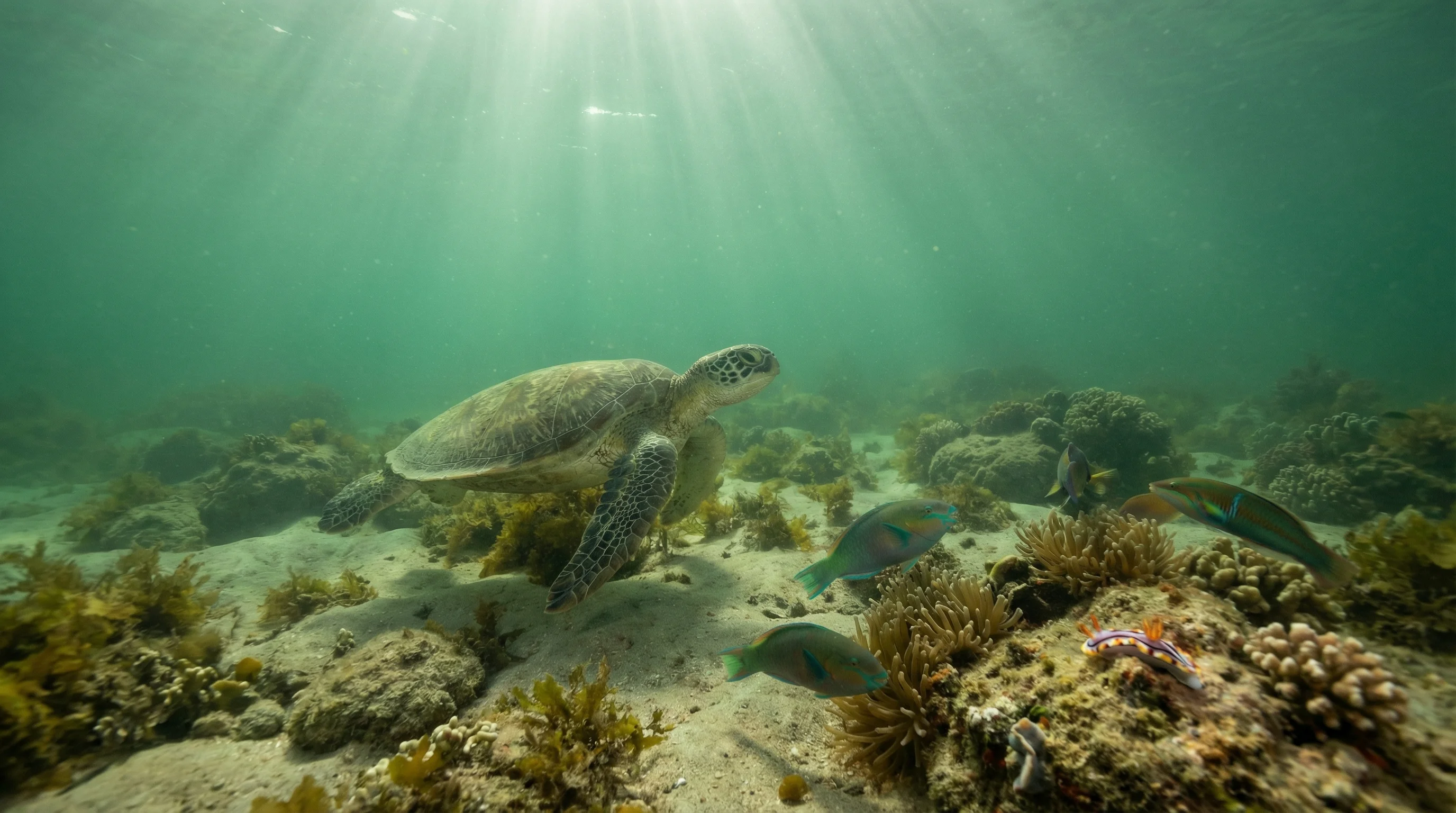
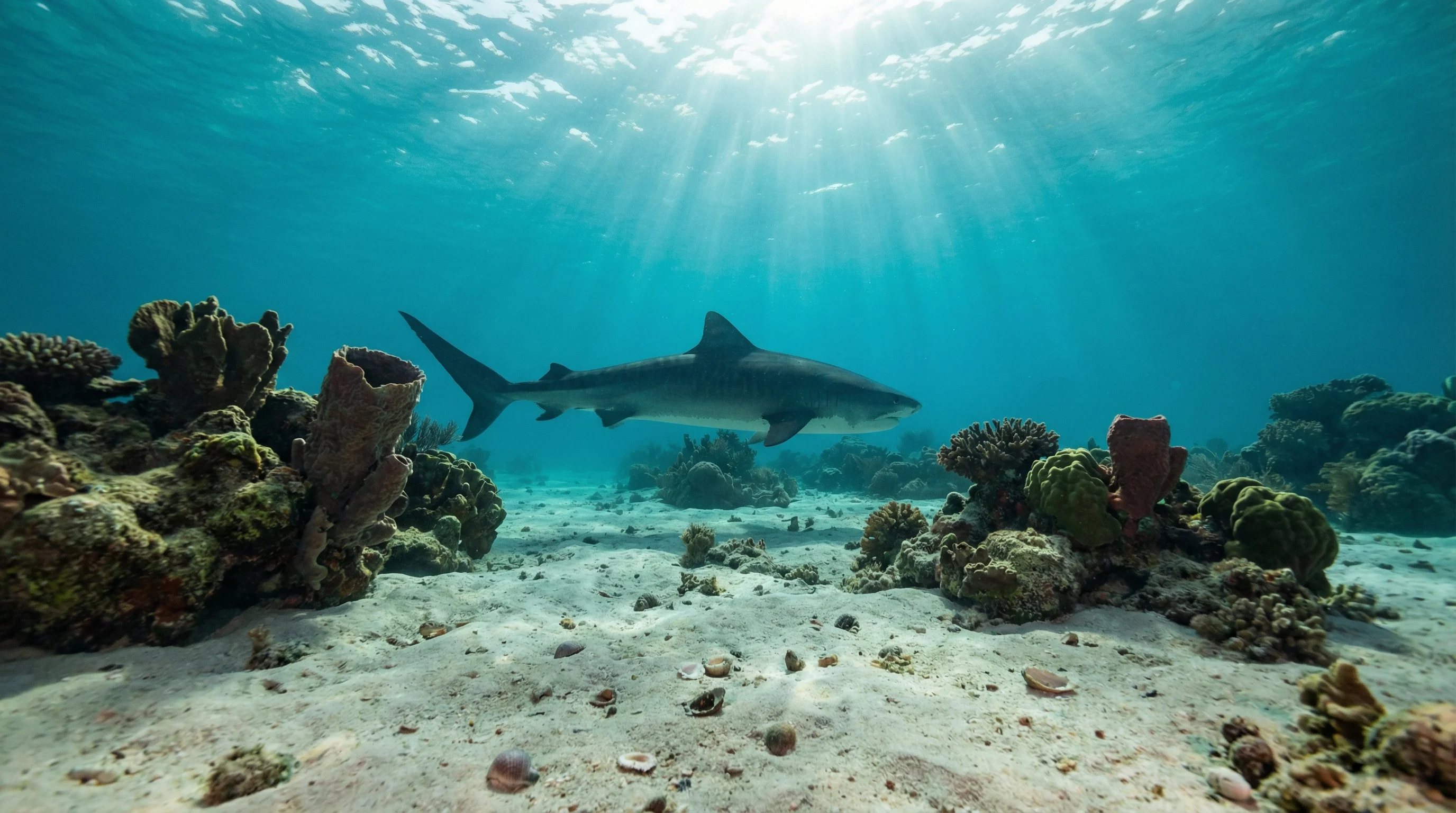
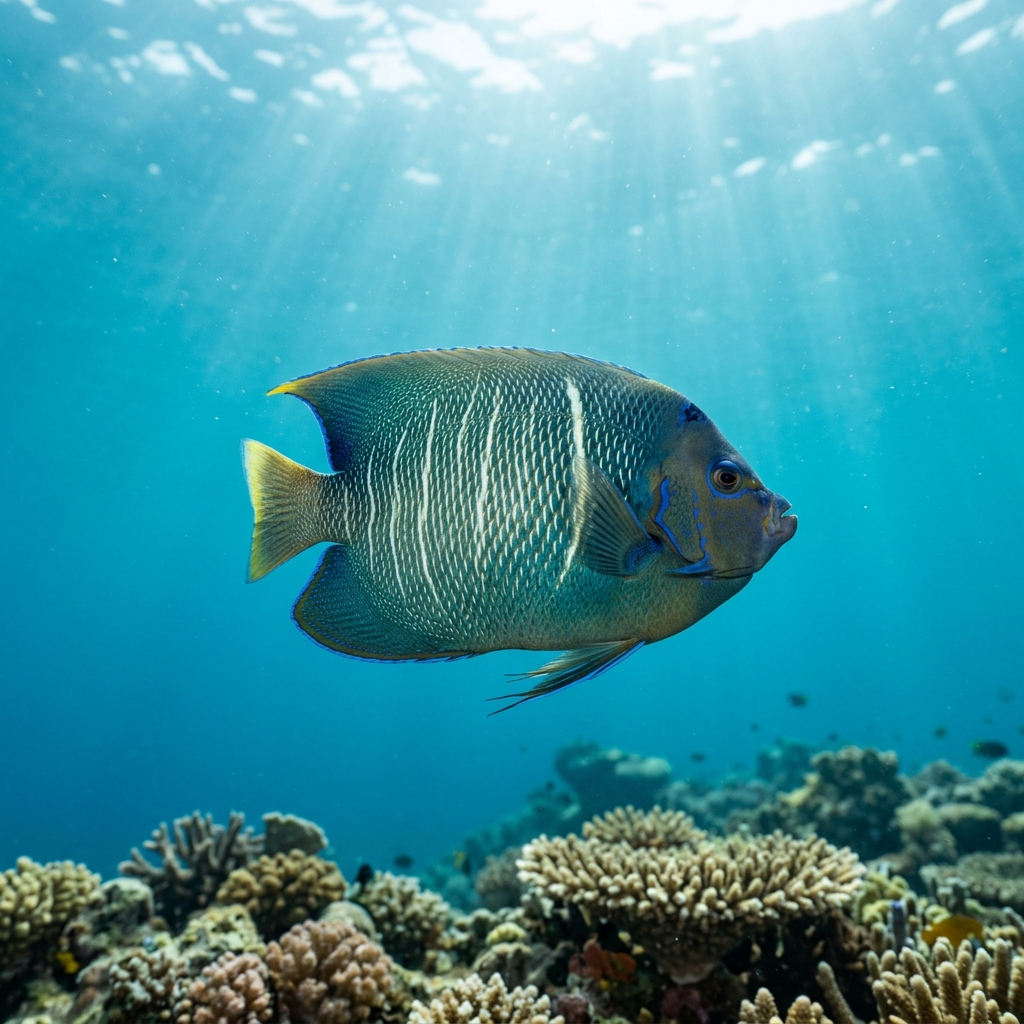
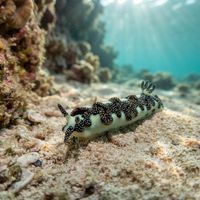
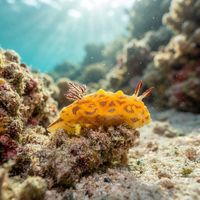
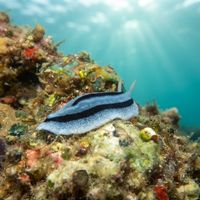
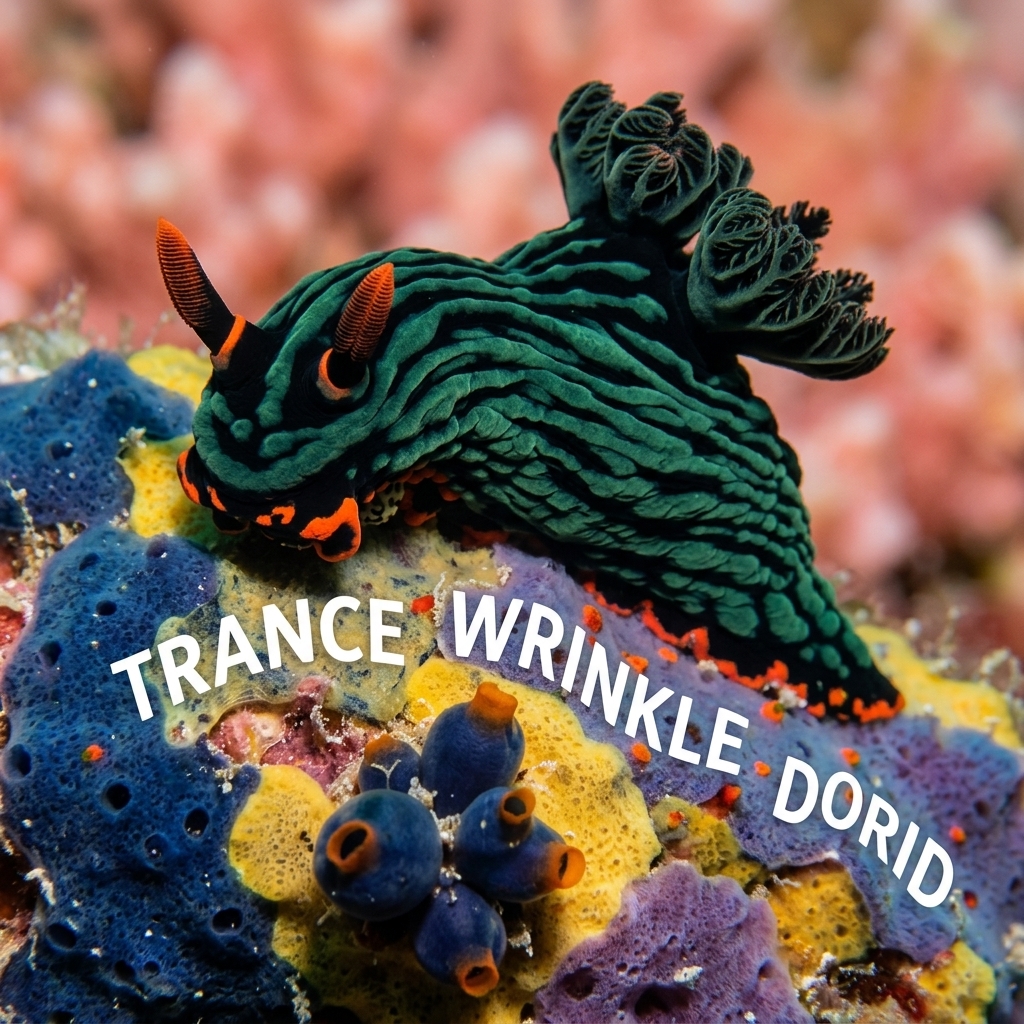
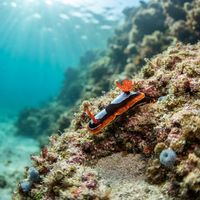
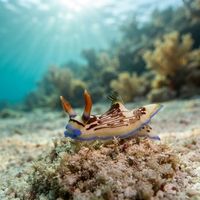
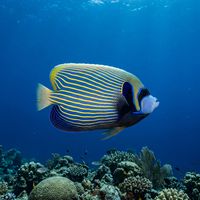
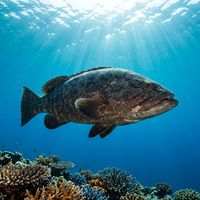
Exmouth has a broad species list built on observation records. Whitetip Reef Shark and Grey Reef Shark are commonly seen across reef sites, while the Whale Shark is an occasional but much-anticipated sighting. Nudibranchs are a particular highlight, with species including Chromodoris westraliensis, Varicose Wart Slug, Lined Nembrotha, and the Starry Waffle Dorid recorded across multiple sites. Queensland Grouper and Emperor Angelfish round out the larger species.
Yes, the sub-areas cater to a range of experience. The Muiron Islands include beginner-friendly sites such as East Side Bommies and Morries Maze alongside the stronger-current drift dive at Jaws, which is better suited to intermediate divers. Lighthouse Bay offers both beginner reef sites and more demanding drift and wall dives. Navy Pier, while rated intermediate, is a shore dive with a contained environment beneath the pier structure.
The majority of dive sites across Exmouth are boat-access only, including all sites at the Muiron Islands and most in Lighthouse Bay. Shore diving is possible at Navy Pier and Turquoise Bay, giving those without a liveaboard or day-boat booking at least two quality options. Operators such as Exmouth Dive and Whalesharks Ningaloo, Dive Ningaloo, and Exmouth Diving Centre all run guided boat trips covering the wider site network.
Navy Pier is a shore dive built around an industrial structure rather than natural reef, making it distinct from every other site in the region. The concrete pylons are heavily encrusted with sponges and soft corals, creating a muck and artificial reef environment. The site also sits within a broader sub-area of ten sites, including Sponge Gardens, which extends into wall and cave topography reaching considerable depth.