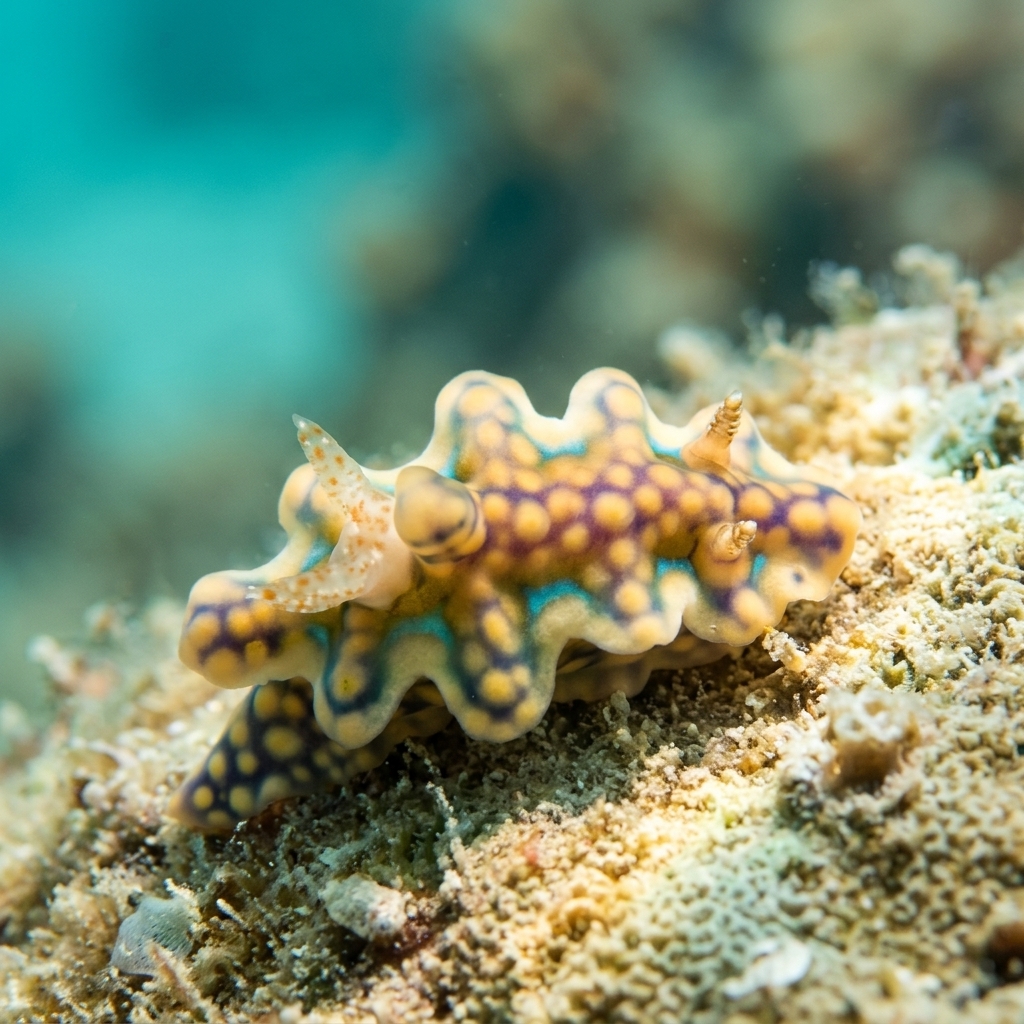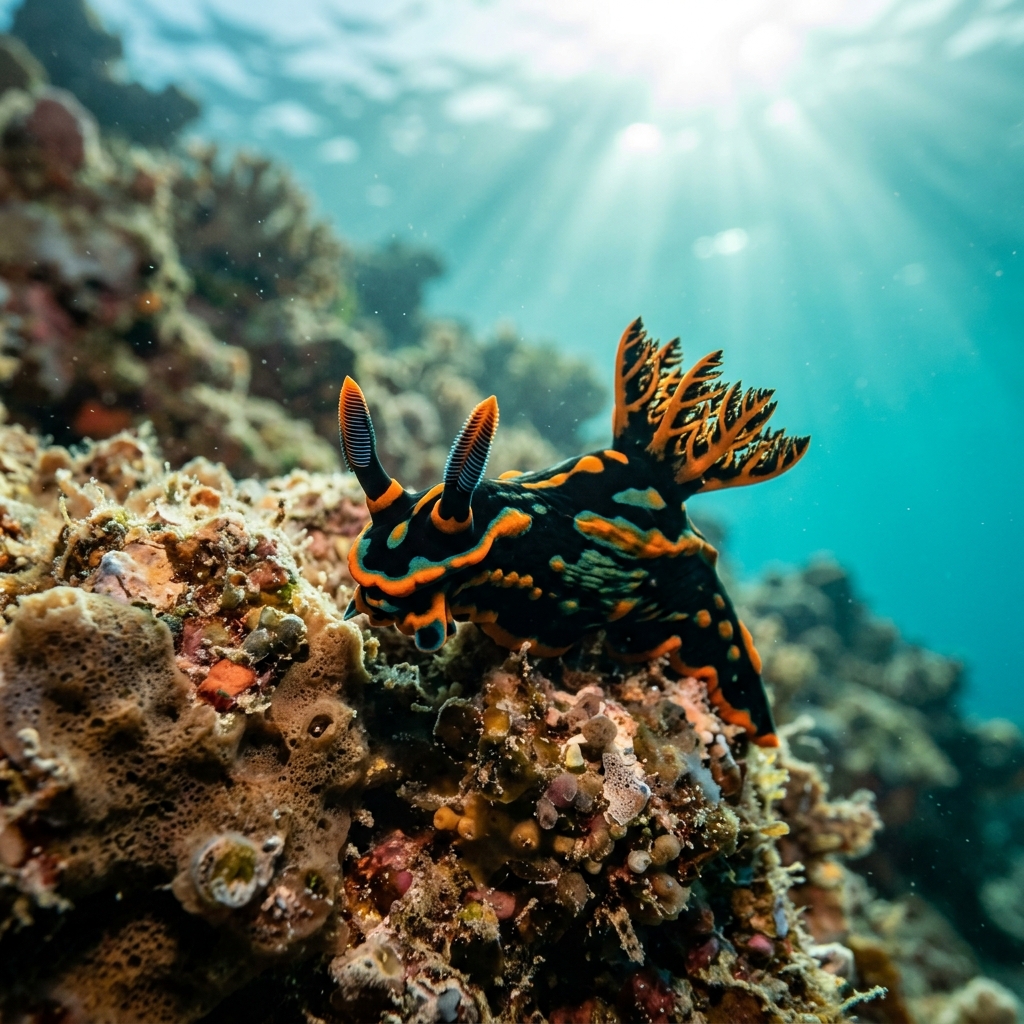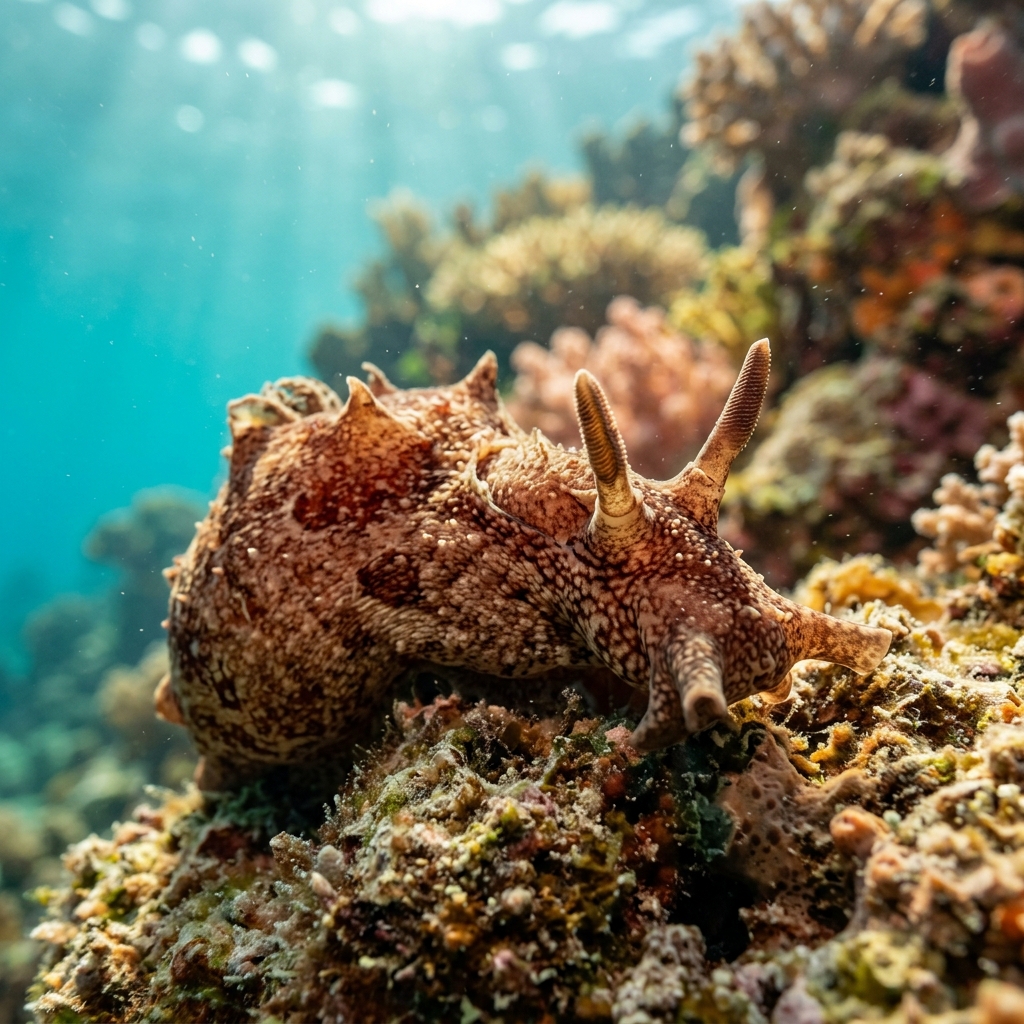
Nembrotha kubaryana
Find Trance Wrinkle Dorid in the Philippines, Malaysia and Indonesia. Warm-water nudibranch with bold green and orange markings. Best sites in the Visayas and Sipadan.
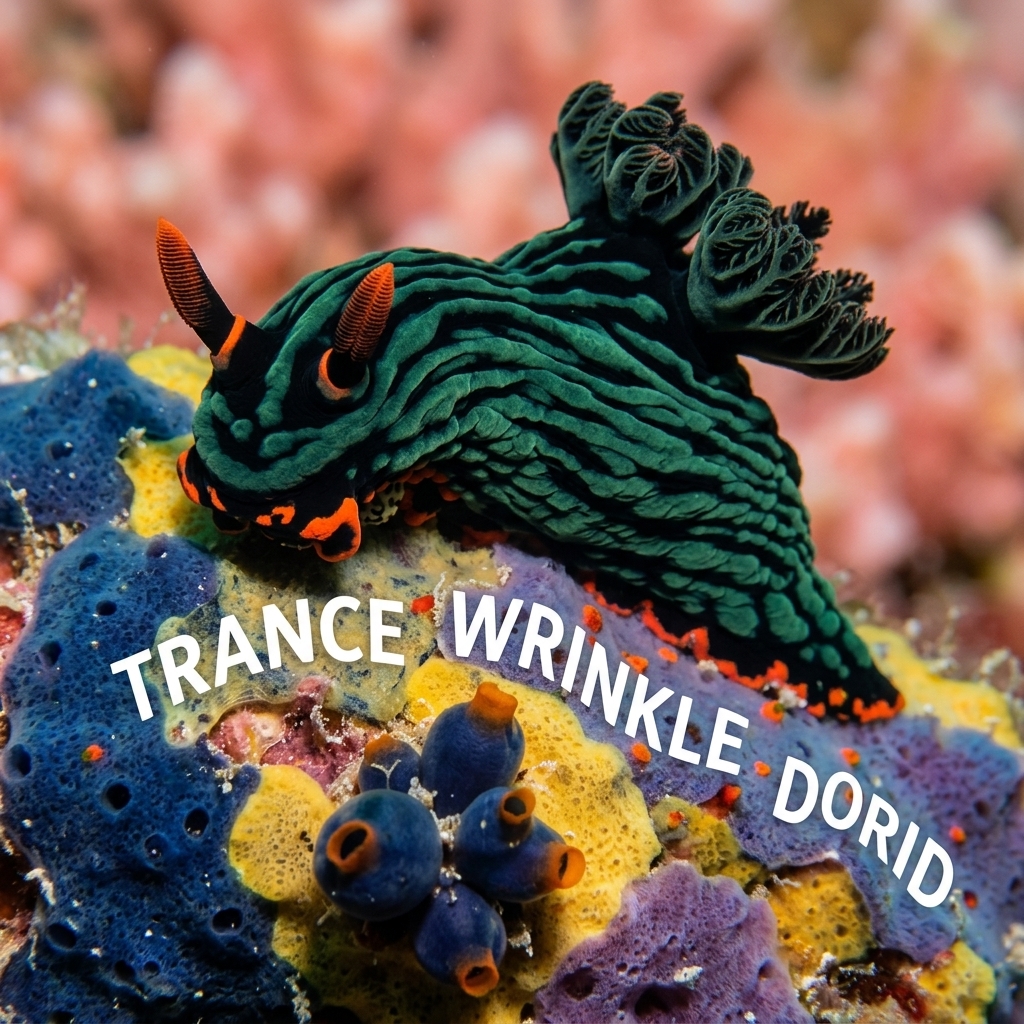
Bold contrast makes this one of the more distinctive nudibranchs in the Indo-Pacific: a dark, near-black body is overlaid with raised green or yellow-green longitudinal ridges and scattered orange to red spots or blotches. The cerata (the gill plumes on the back) are tipped in orange or red, providing another quick reference at depth. Body shape is elongated and flattened compared to many dorids, and the animal moves with a characteristic slow, deliberate crawl.
You will most often find this nudibranch moving steadily across hard or mixed coral reef, apparently grazing on colonial ascidians (sea squirts), which feature heavily in its diet. It tends to ignore divers and continues its slow patrol across the substrate, making patient macro photography straightforward. Look on reef walls and rubble slopes rather than in the water column.
Like other Nembrotha species, the Trance Wrinkle Dorid sequesters chemical compounds from the ascidians it feeds on and incorporates them into its own tissues as a chemical defence, which is thought to make it unpalatable to predators. The vivid colouration is likely a direct signal of this toxicity.
Sightings span February through December in Northern Hemisphere sites, suggesting a broad season with only a limited quiet period around January. The species favours water between roughly 27 and 29 °C, which aligns with year-round tropical conditions across its main Philippines and Malaysian sites.
Reef neighbours a diver could mistake it for. Use the identification notes above to tell them apart.
Most commonly logged in the Philippines, particularly across the Visayas Central region and the Luzon dive sites further north. Malaysia's Sipadan and East Sabah sites, along with Pulau Tioman, form a second strong cluster. Indonesia accounts for further sightings spread across Bali, Lombok and Sulawesi, with smaller numbers recorded in Mauritius and Australia.
Mapping where Trance Wrinkle Dorid is logged…
The strongest populations are in the Philippines, especially the Visayas Central and Luzon regions. Malaysia's Sipadan and East Sabah, plus Pulau Tioman, are also reliable. Indonesia's Bali and Sulawesi sites round out the top options.
Sightings across Northern Hemisphere sites run from February through to December, so there is a wide window. The animal favours warm water around 27 to 29 °C, meaning tropical destinations hold it reliably for most of the year.
Look for a dark or black elongated body with bright green or yellow-green raised ridges running lengthways, combined with orange to red spots and orange-tipped gill plumes. The high contrast between the dark base and vivid markings is the key field character at reef depth.
It feeds primarily on colonial ascidians (sea squirts) encrusting the reef. It stores chemical compounds from these prey in its own body, which is believed to deter predators and contributes to the bold warning colouration.
Site and sighting data is aggregated from diver logs, iNaturalist and GBIF. For taxonomy and conservation status:
Light-spotted Aegires
3,168 sites