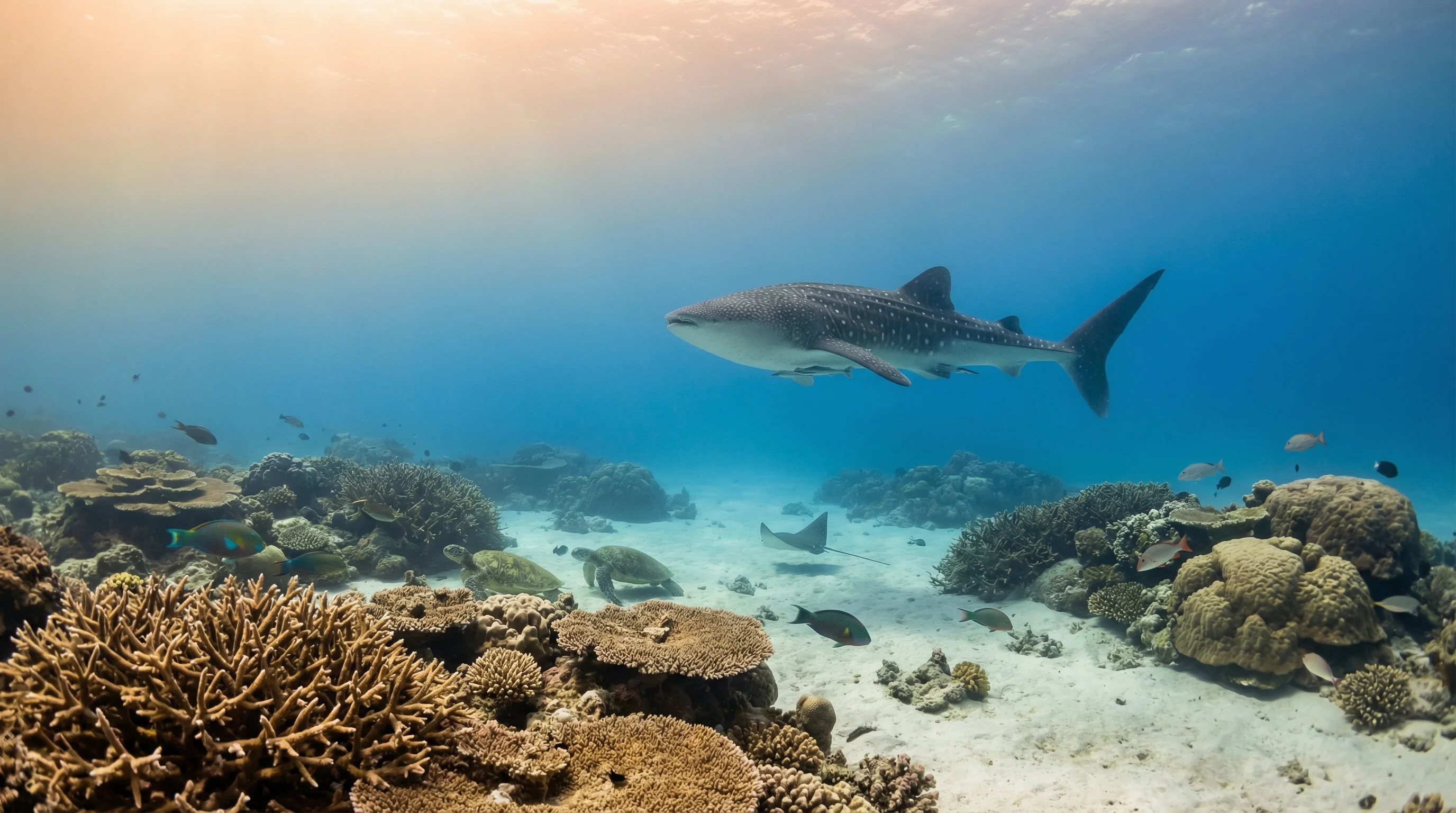
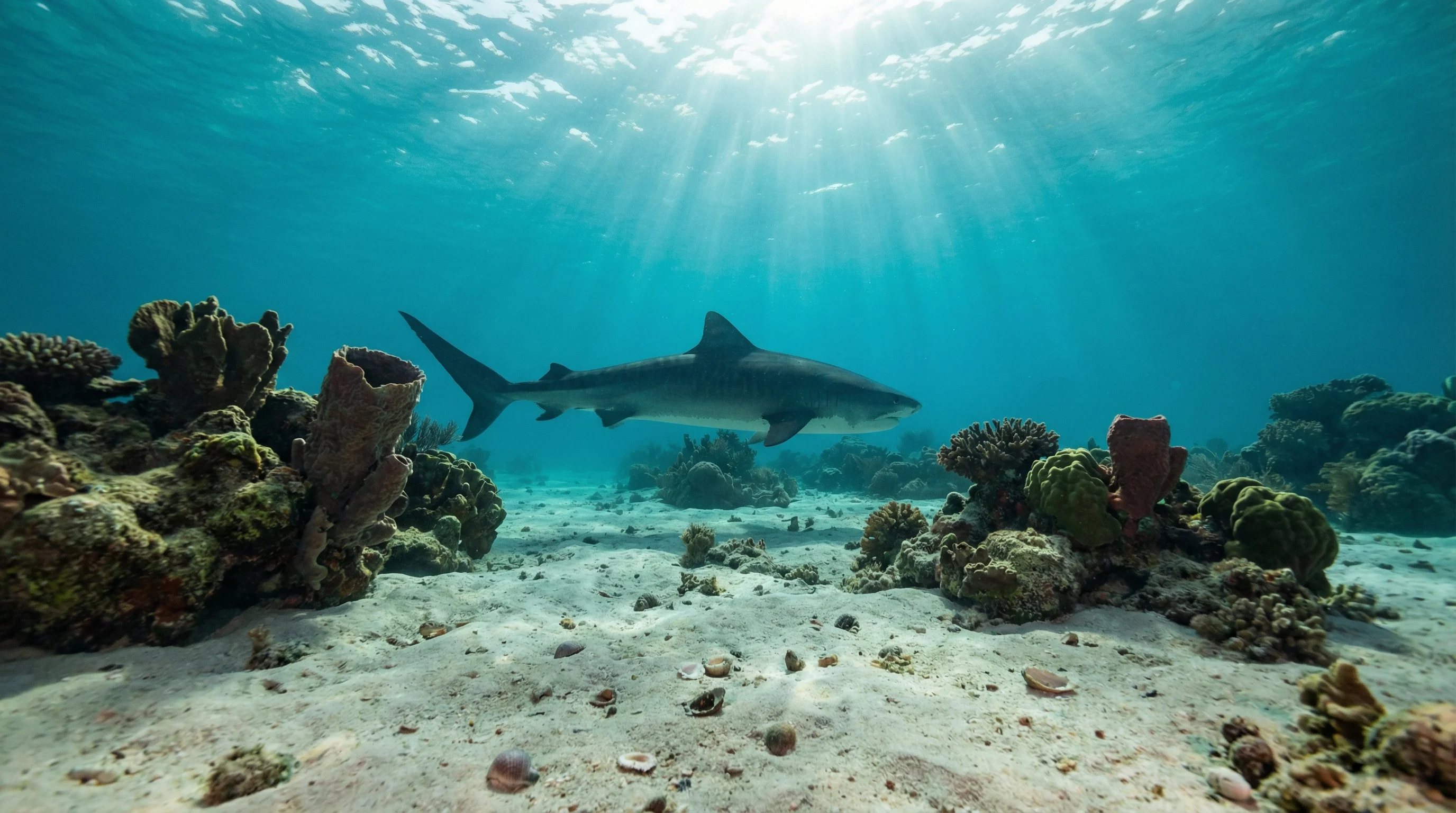
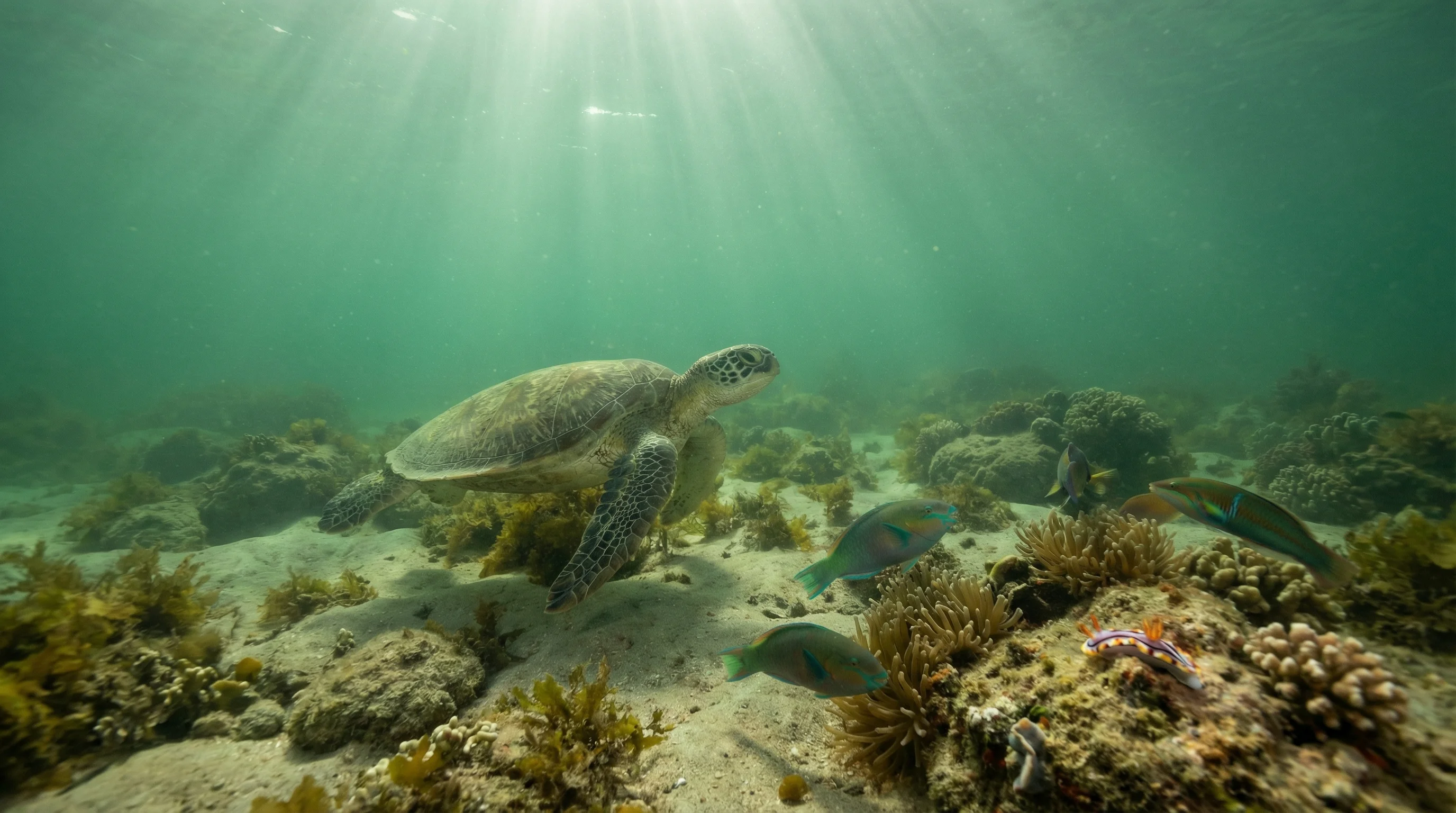
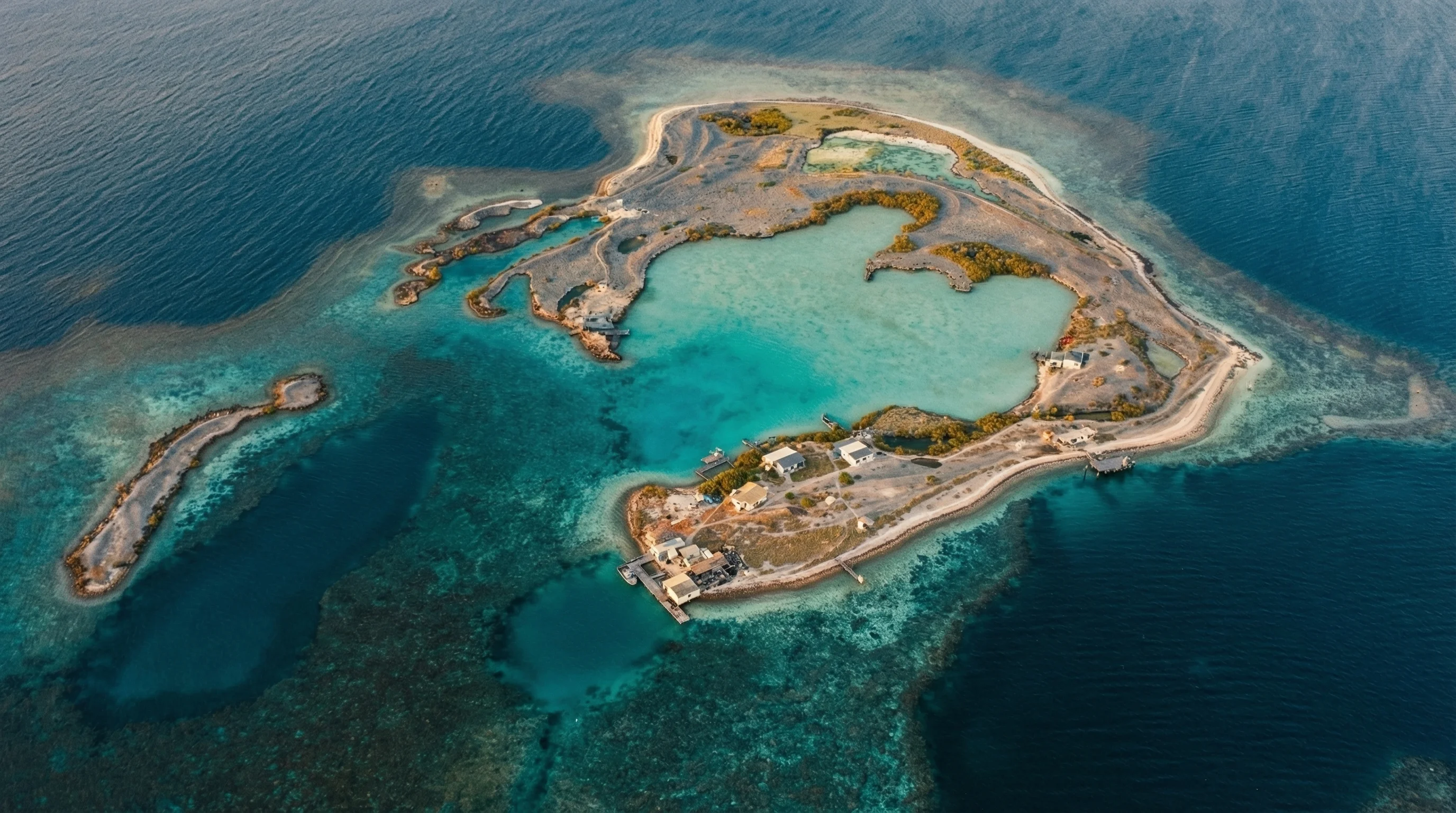
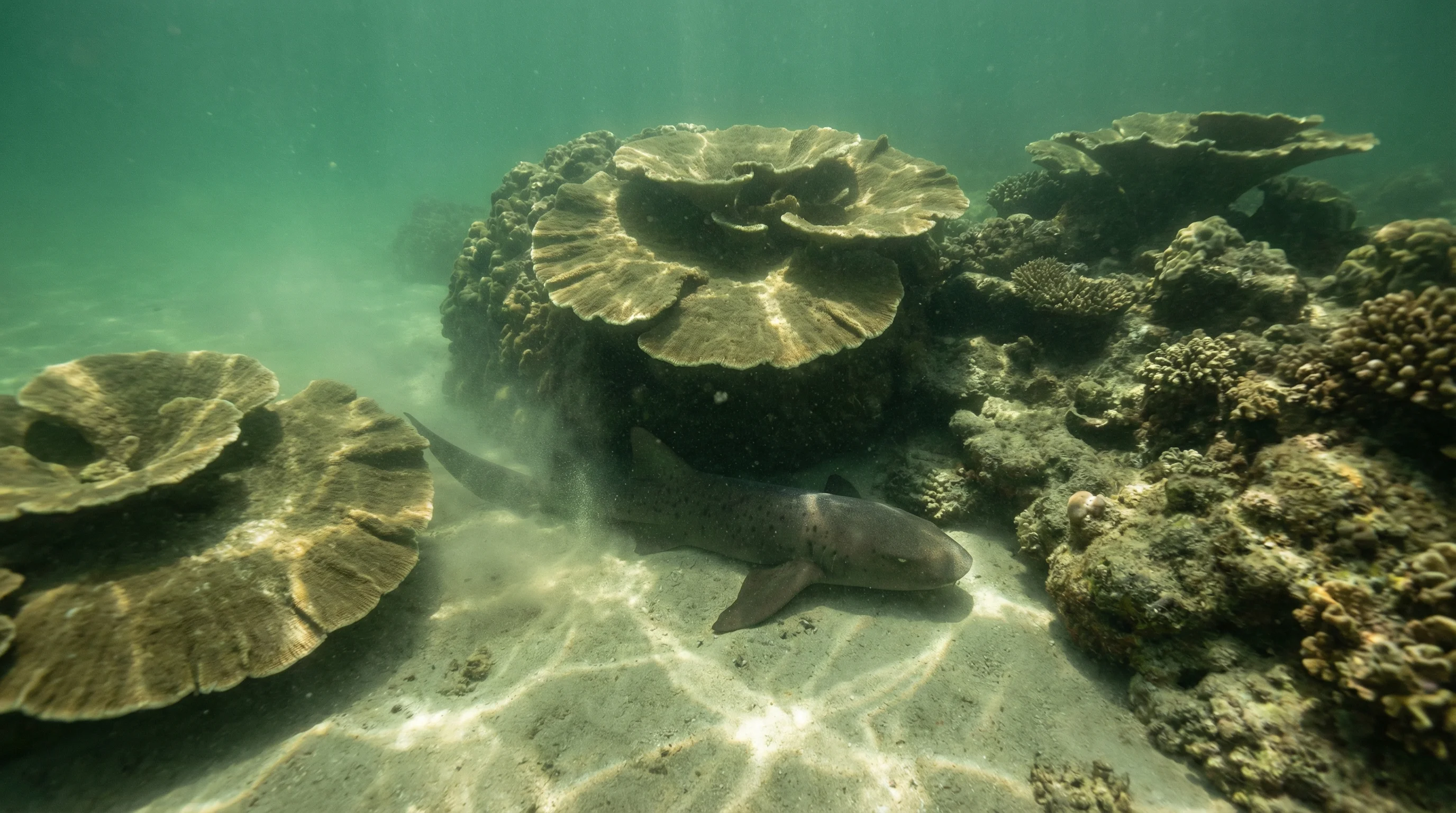
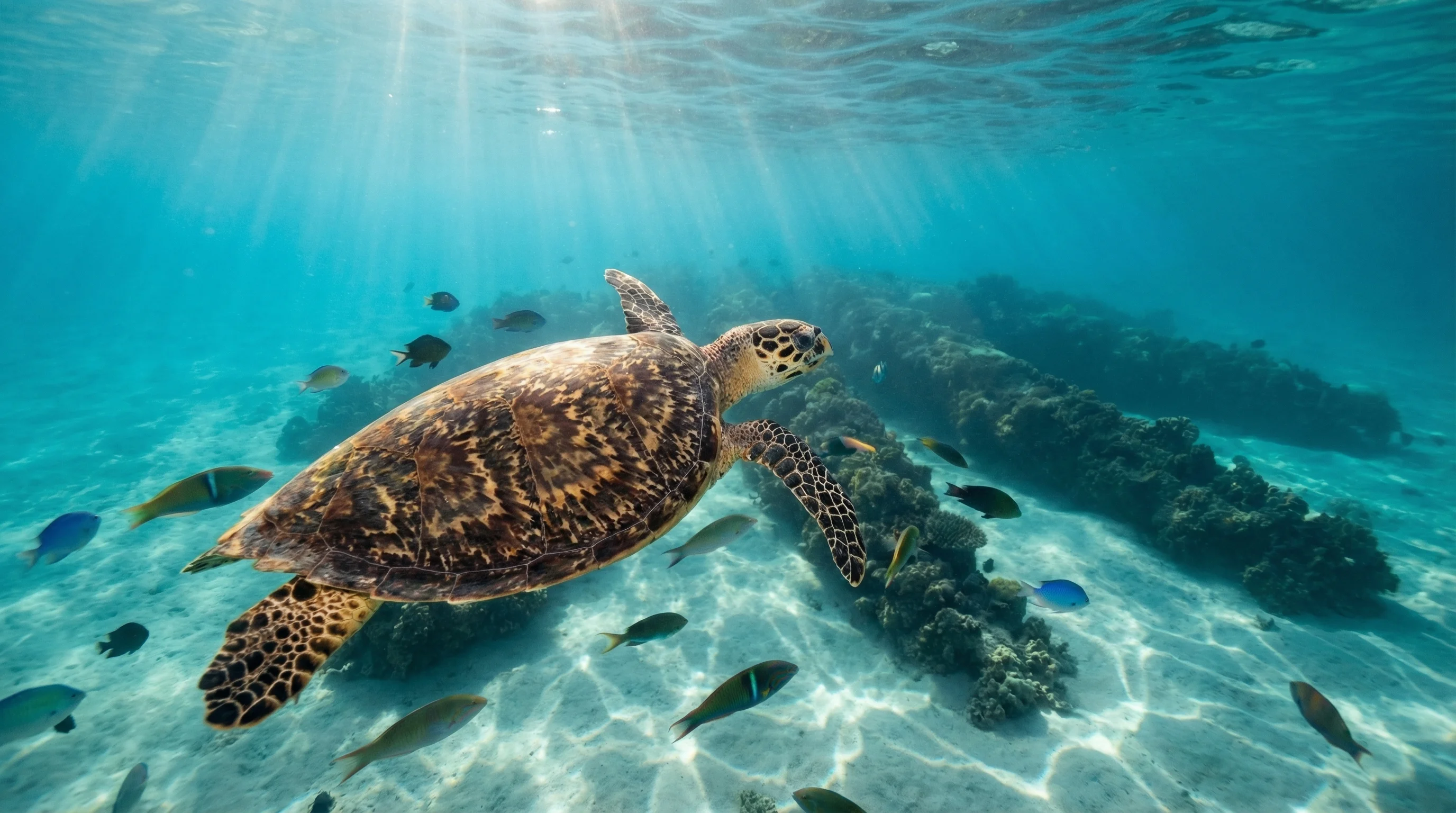
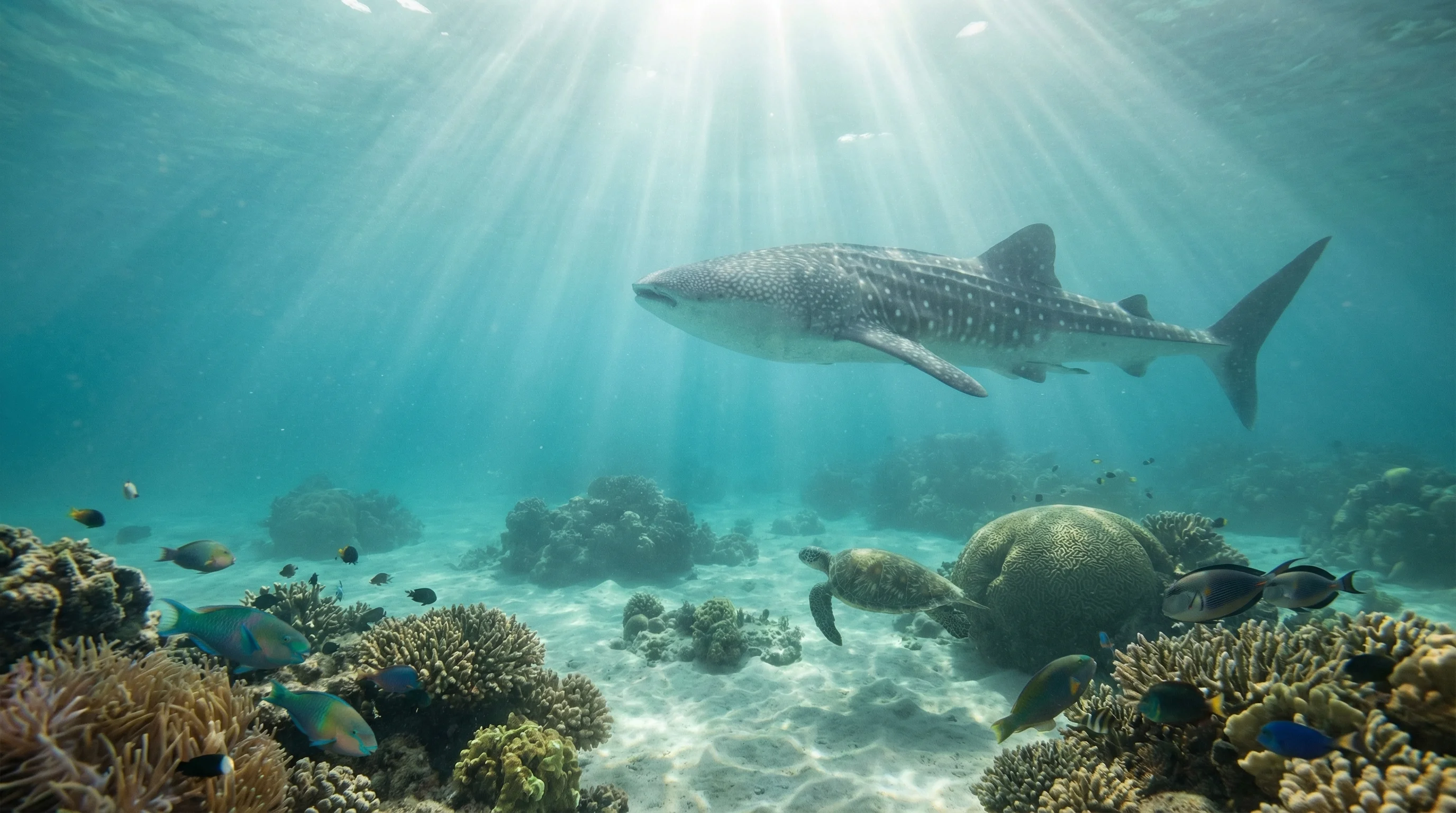
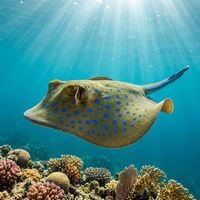
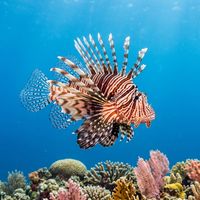
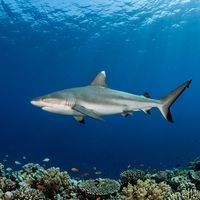
Coral Bay sits on the Indian Ocean coast of Western Australia at the southern end of Ningaloo Reef, one of the world's largest fringing reefs. Its defining characteristic is accessibility: several sites can be entered directly from the beach into shallow reef, and the outer reef bommies are reachable by a short boat trip. Sites range from very shallow lagoon and seagrass habitats to mid-range reef and drift dives, with the deepest sites reaching into the low twenties of metres. Whale shark encounters are a seasonal draw from March to July. Water temperatures are warmest in autumn and coolest in late winter and spring, though the range is moderate year-round. Whitetip and blacktip reef sharks, bluespotted fantail ray, green sea turtle, and a variety of parrotfish and wrasse are regularly recorded across the region's eight sites.
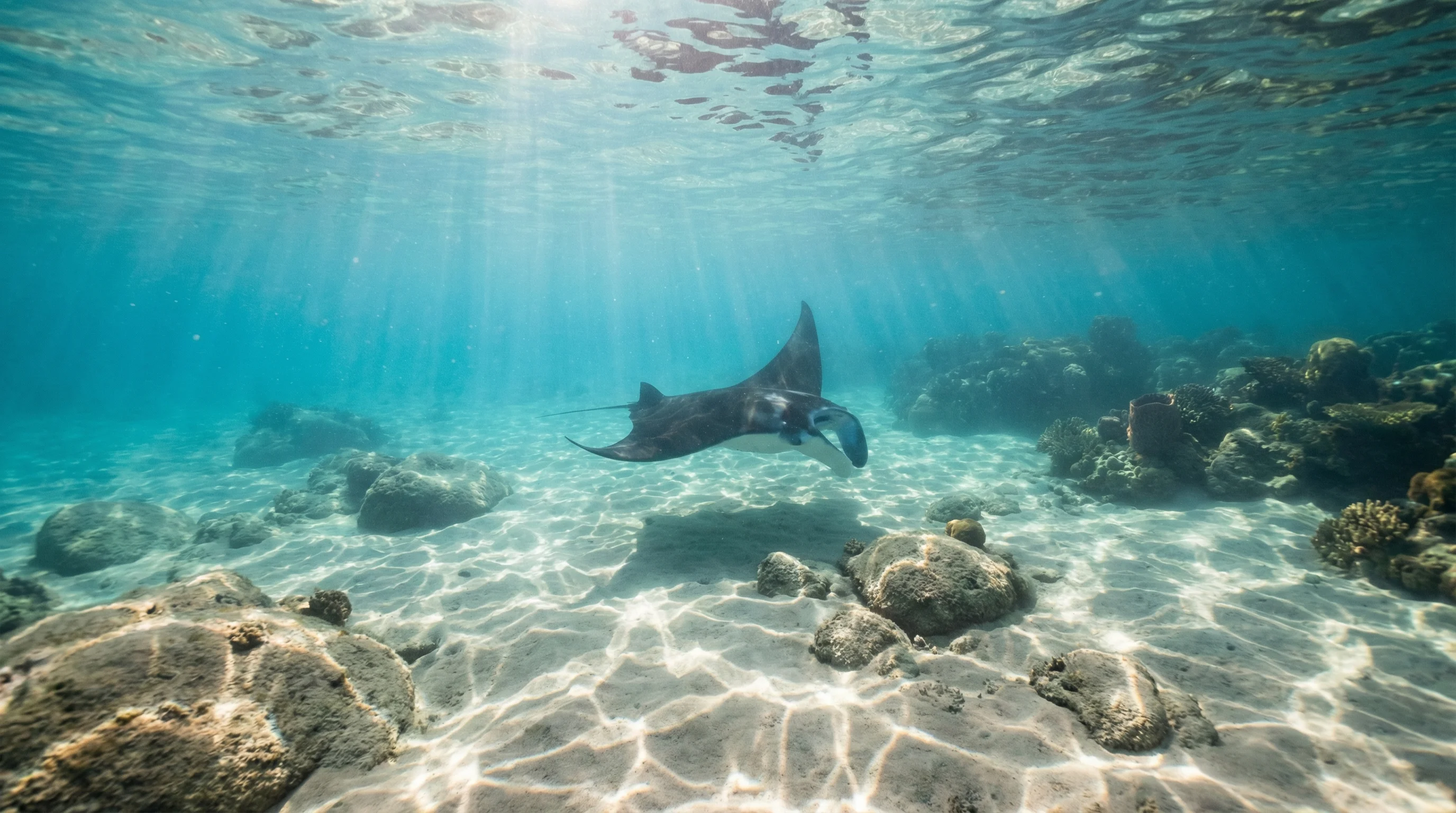
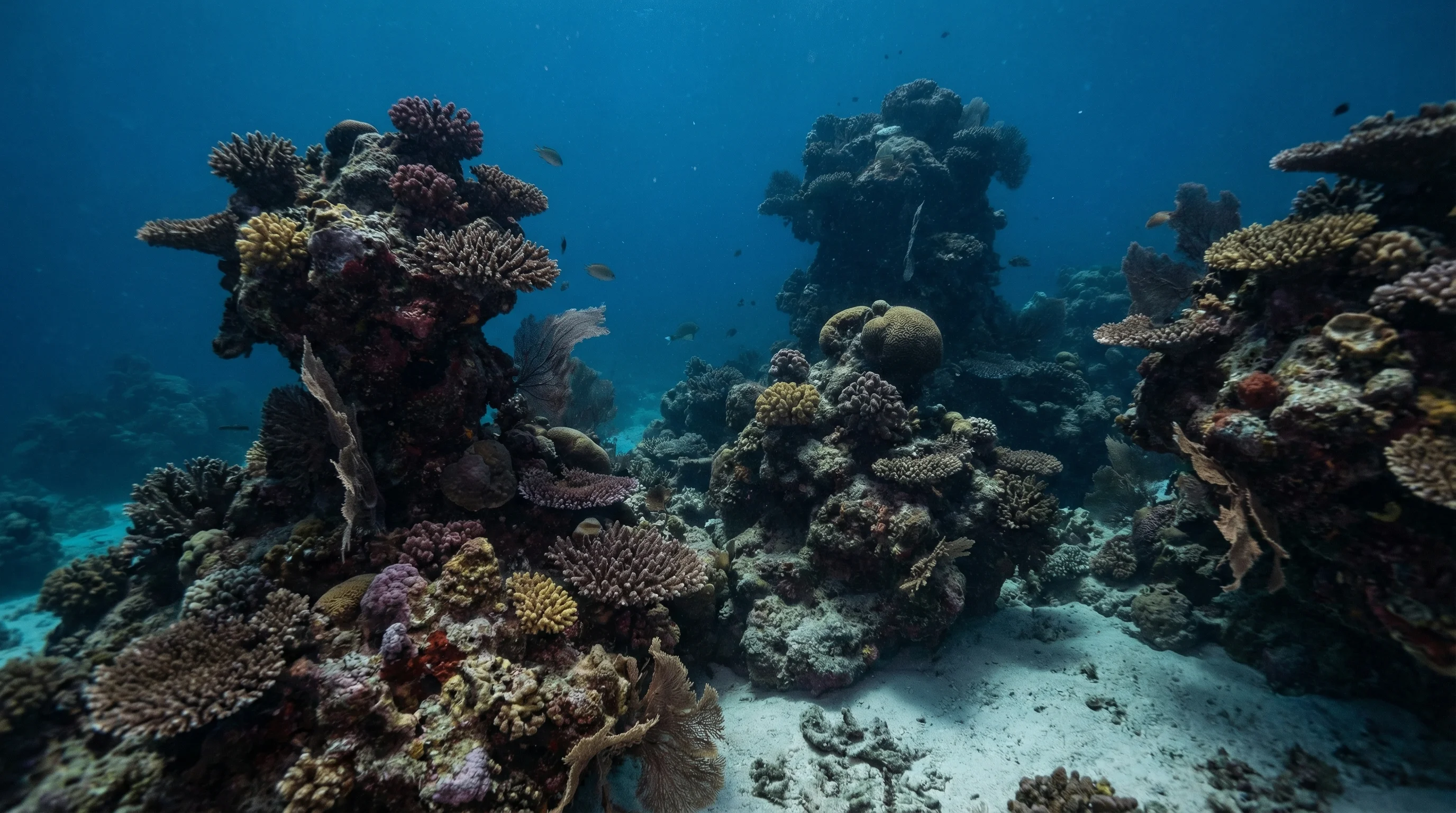
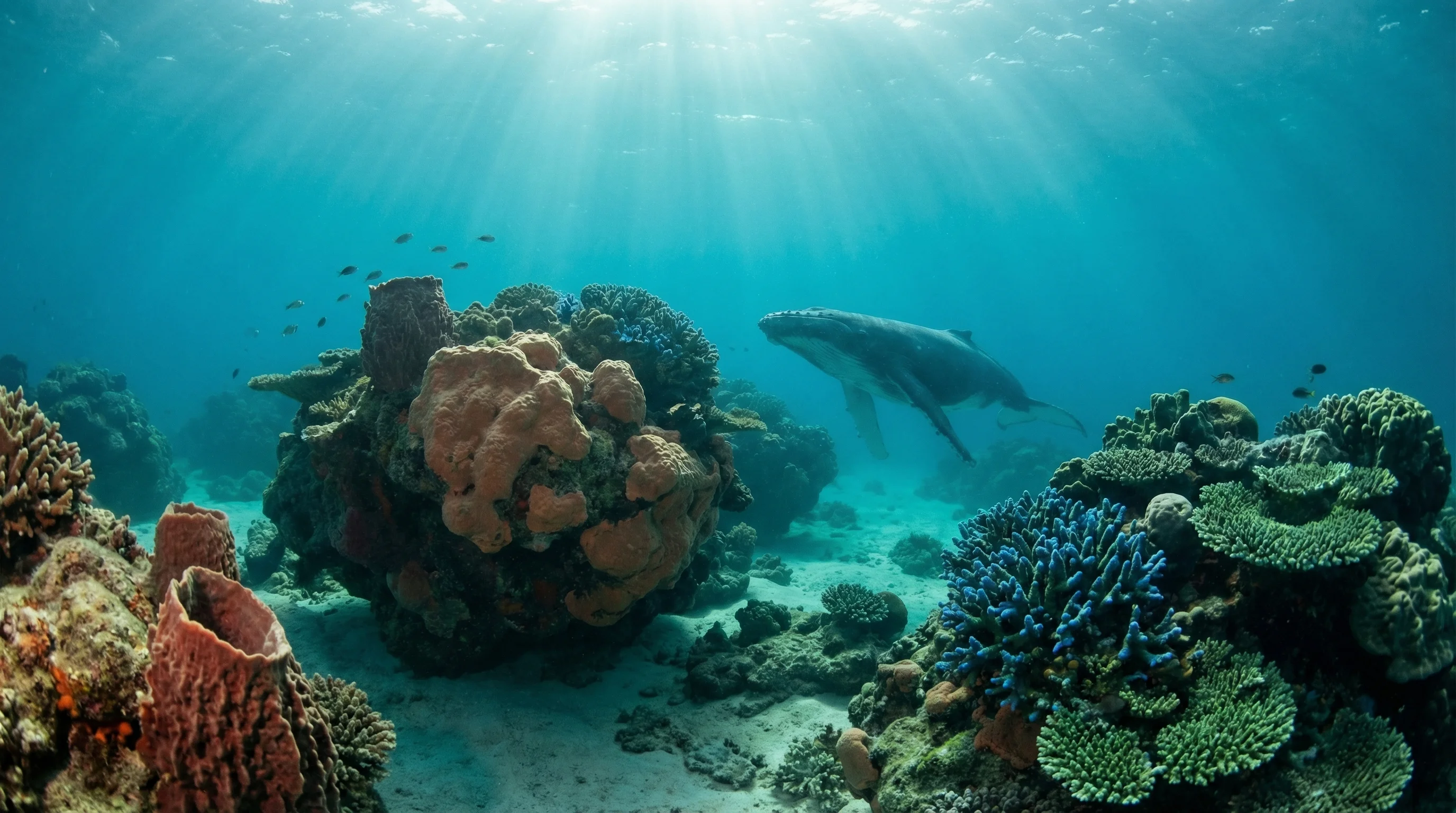
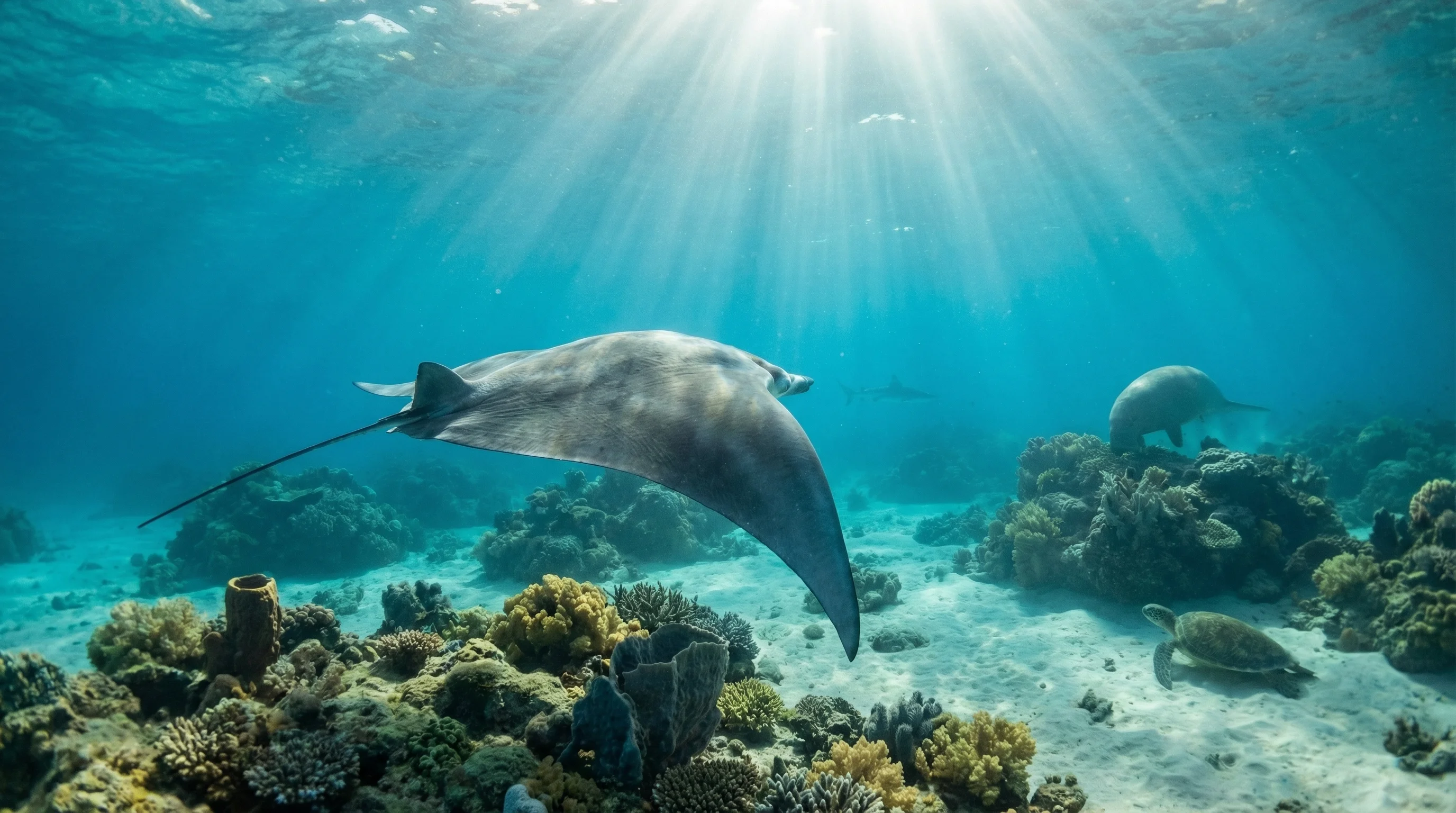
Monthly water temperature across Coral Bay's sites, from satellite sea-surface data corrected for depth. The band shows the site-to-site spread.
Water temperatures peak in late summer and autumn before falling to their coolest around late winter and spring. The whale shark season from March to July coincides with warmer to transitional water, drawing most visitor attention during that window.
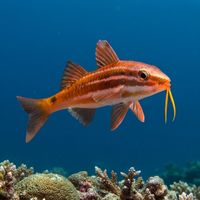
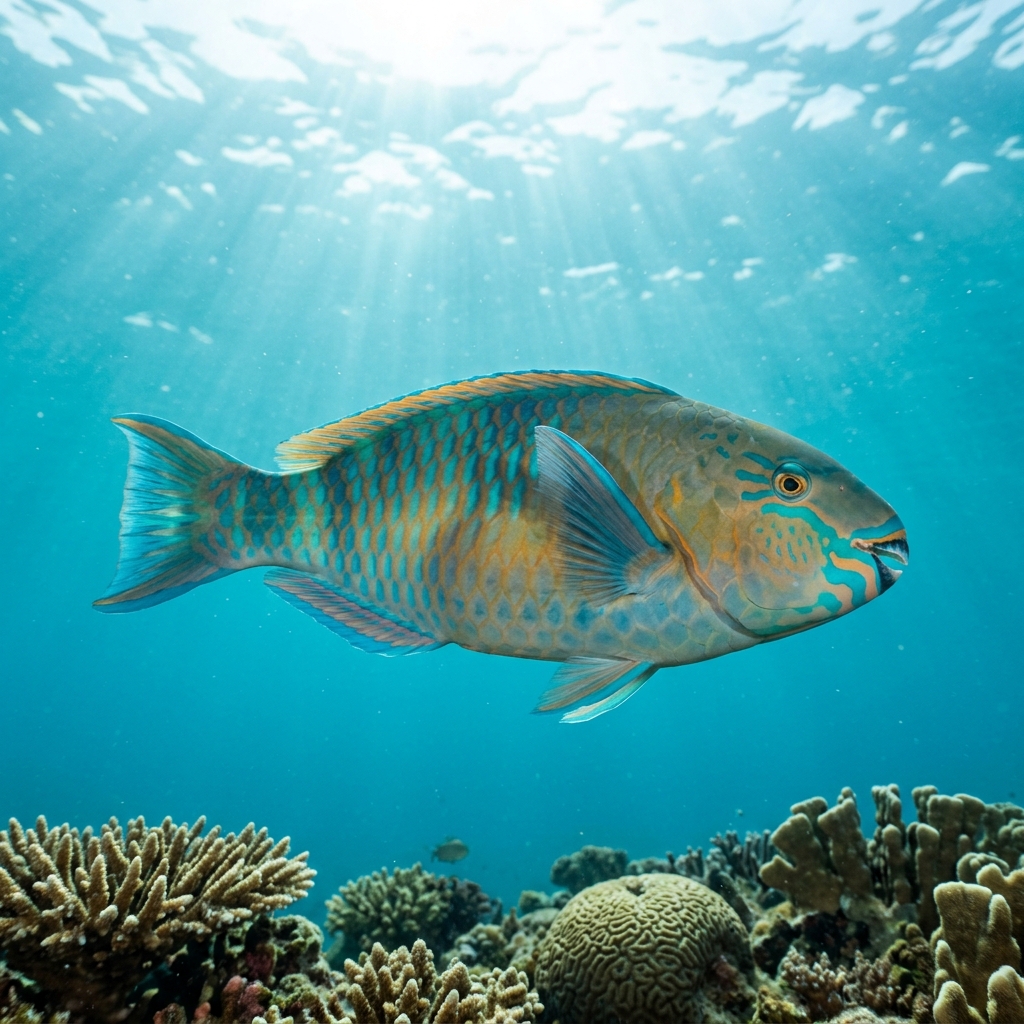
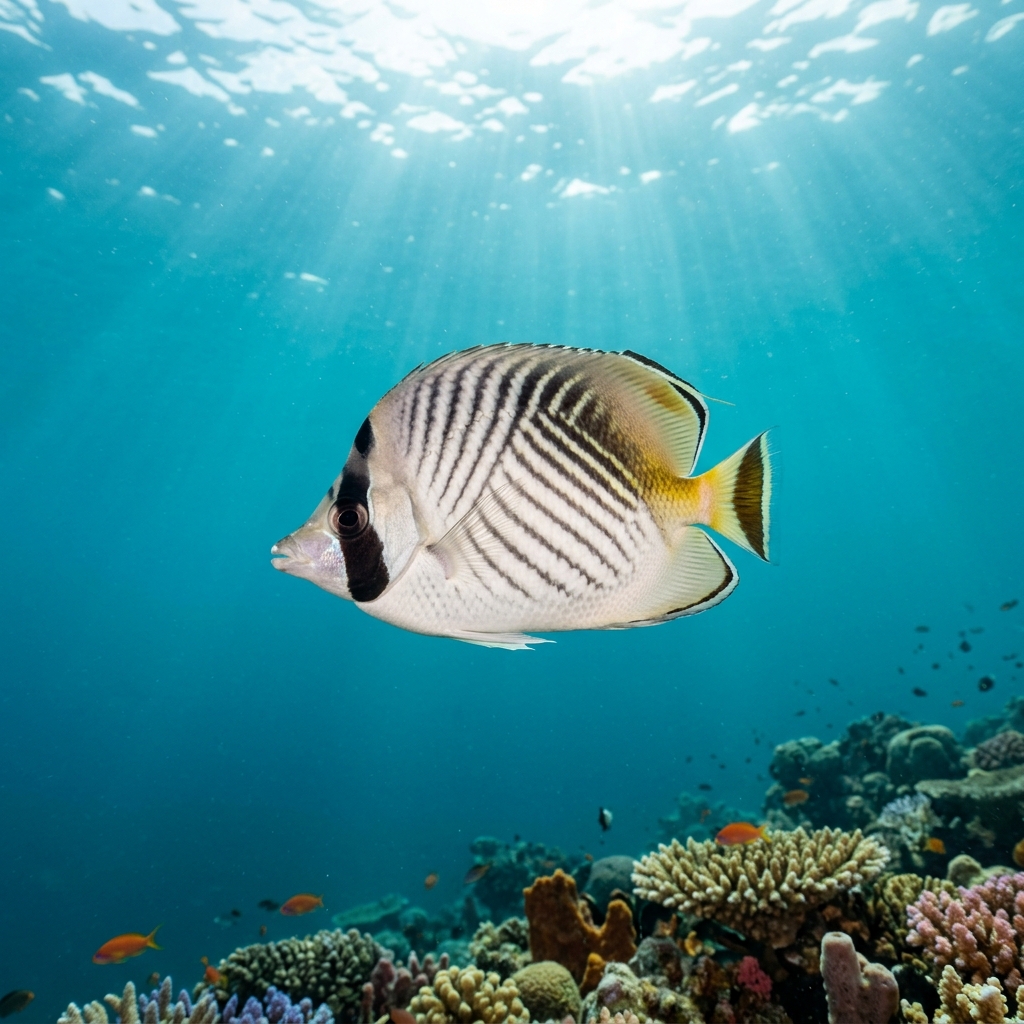
8 operators

Australia
Australia
Australia
Australia
Water temperature around Coral Bay ranges from about 23°C in August to 27°C in March, based on satellite sea-temperature data for its dive sites.
In the warm season (about 27°C) a rash guard or 3mm shorty is comfortable in Coral Bay; in the coldest months (about 23°C) step up to a 3mm full suit.
Fin maps 8 sites in Coral Bay (7 scuba diving sites and 6 snorkelling spots, with some suited to both).
Across Coral Bay's dive sites, March, April, May, June, July and October are most often reported as the best months to visit.
1 more site to explore