Nembrotha lineolata
A small green-and-orange nudibranch logged across the Visayas and Luzon, comfortable in warm reef water year-round.
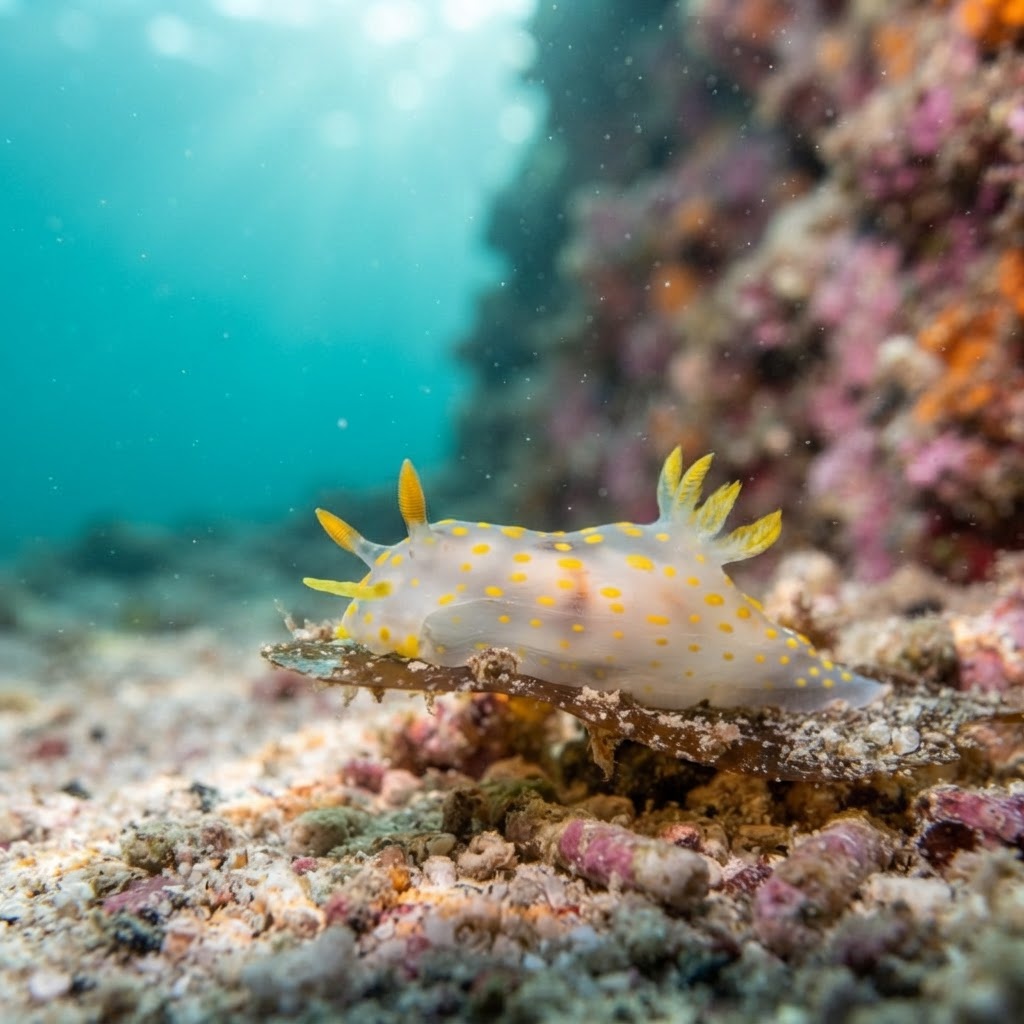
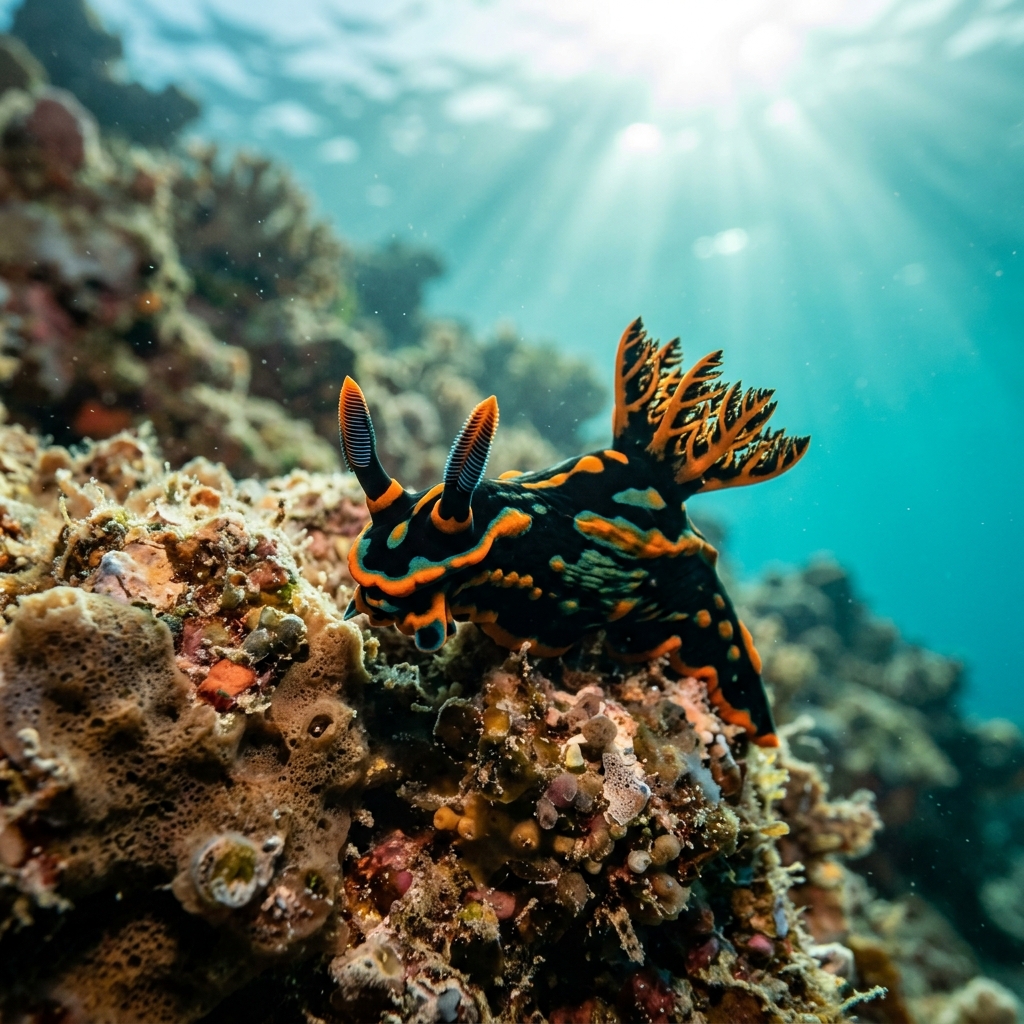
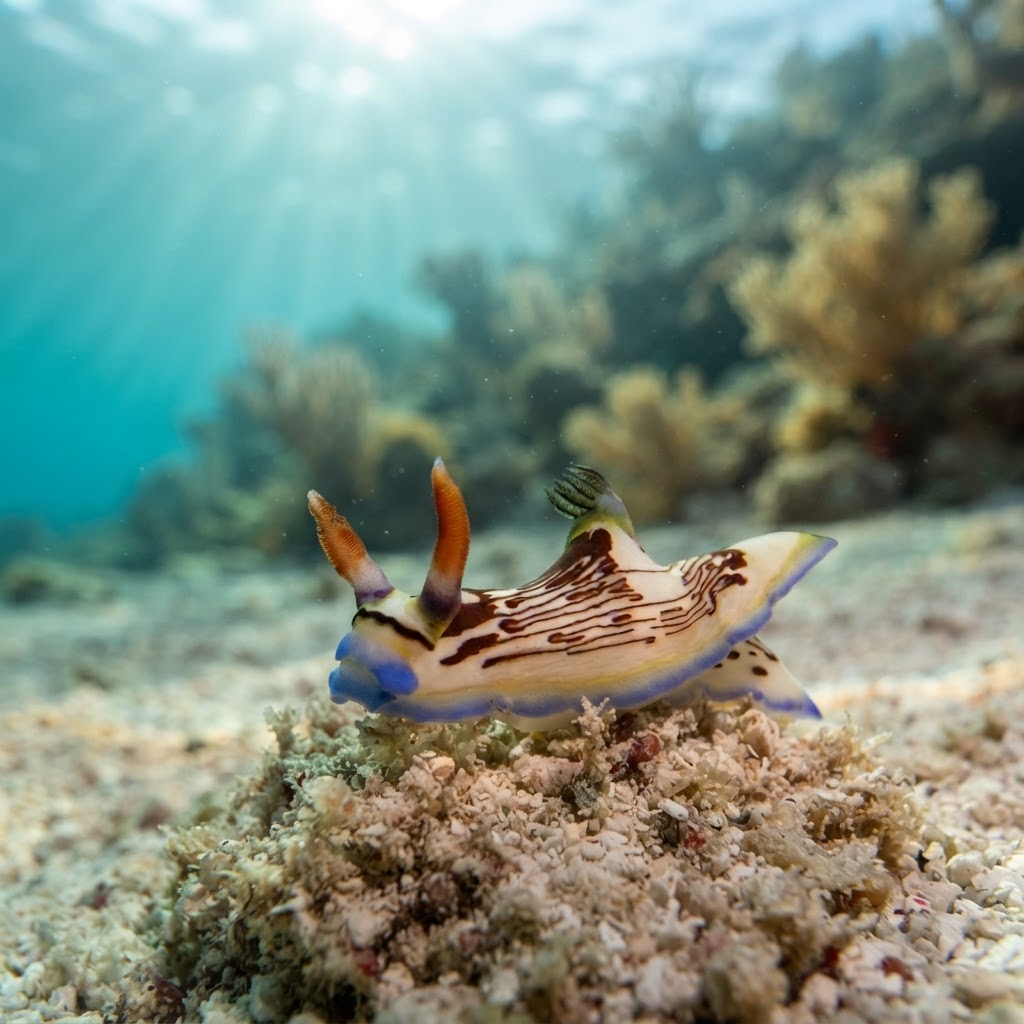
A slug barely 2cm long, but the colours do the work: an olive-to-green body lined with darker streaks, topped with a pair of rhinophores (the sensory horns on its head) tipped in bright orange or yellow, and a feathery gill cluster at the tail end in the same warm colour. The orange tips against the green body are the giveaway, especially under a torch beam where the colour really pops. It moves slowly across rubble and dead coral, so once you spot one it is not going anywhere fast.
Look for it grazing slowly across rubble patches and dead coral rather than out in the open reef, usually on a macro-focused dive rather than a drift or wall dive. It pays no attention to divers and will simply keep browsing whatever it is feeding on, which makes it an easy, patient subject for a macro lens. Most logs describe it as uncommon rather than common, so expect a bit of searching on any given dive rather than a guaranteed find.
Like other Nembrotha species, it feeds on sea squirts (tunicates) and is thought to recycle some of their chemical defences into its own tissue, which is likely why its bright colours go unbothered by would-be predators.
No clear seasonal pattern shows up in the data, and with a comfortable range of roughly 25.6 to 31.6C this is a warm-water tropical reef species you can reasonably expect on any dive, any month.
Reef neighbours a diver could mistake it for. Use the identification notes above to tell them apart.
This is very much a Philippines animal on the data, most commonly logged across Luzon and the Visayas, with a smaller but reliable presence in Sabah and Peninsular Malaysia's East Coast. Outside Southeast Asia it turns up in Western Australia and on Tanzania's Mafia Island, with occasional sightings in Japan's Ryukyu Islands, Taiwan and Timor-Leste.
Mapping where Lined Nembrotha is logged…
Most reliably found across the Philippines, especially in Luzon and the Visayas. It also turns up in Sabah and Peninsular Malaysia's East Coast, Western Australia, and Tanzania's Mafia Island.
There is no strong seasonal pattern in the sighting data. With a warm-water niche of roughly 25.6 to 31.6C, it is present on tropical reefs year-round.
Look for a small green-bodied nudibranch with orange-tipped rhinophores and a matching orange gill cluster at the tail. It crawls slowly over rubble and dead coral rather than swimming.
They stay small, typically around 2cm long, which makes them a macro-photography subject rather than something you spot from a distance.
They feed on tunicates (sea squirts), and like other members of the Nembrotha genus, likely absorb some of the tunicate's chemical defences to deter predators.
Site and sighting data is aggregated from diver logs, iNaturalist and GBIF. For taxonomy and conservation status:
Light-spotted Aegires
3,168 sites