Halgerda indotessellata
White reticulated nudibranch logged across Zanzibar and Mafia Island, Tanzania, thriving in warm 23.5-29.5C reef water year-round.
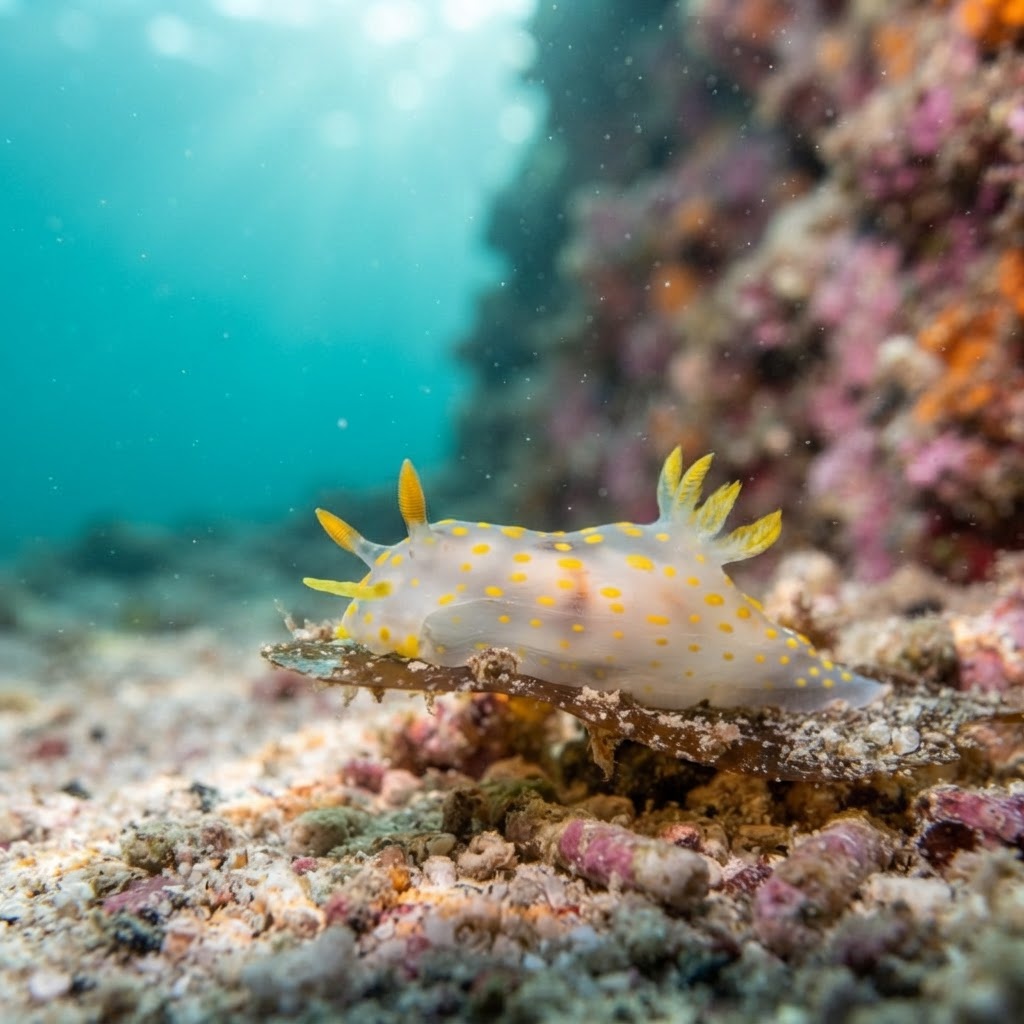
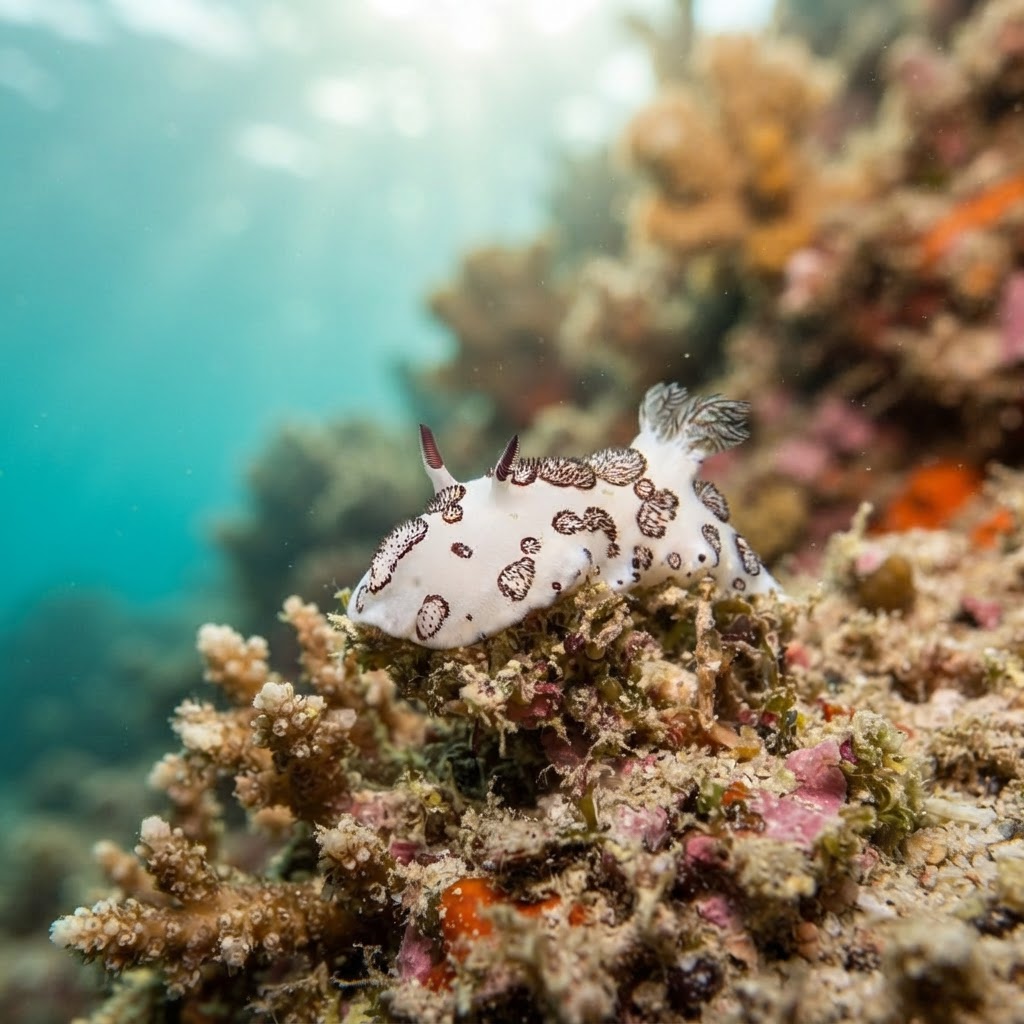
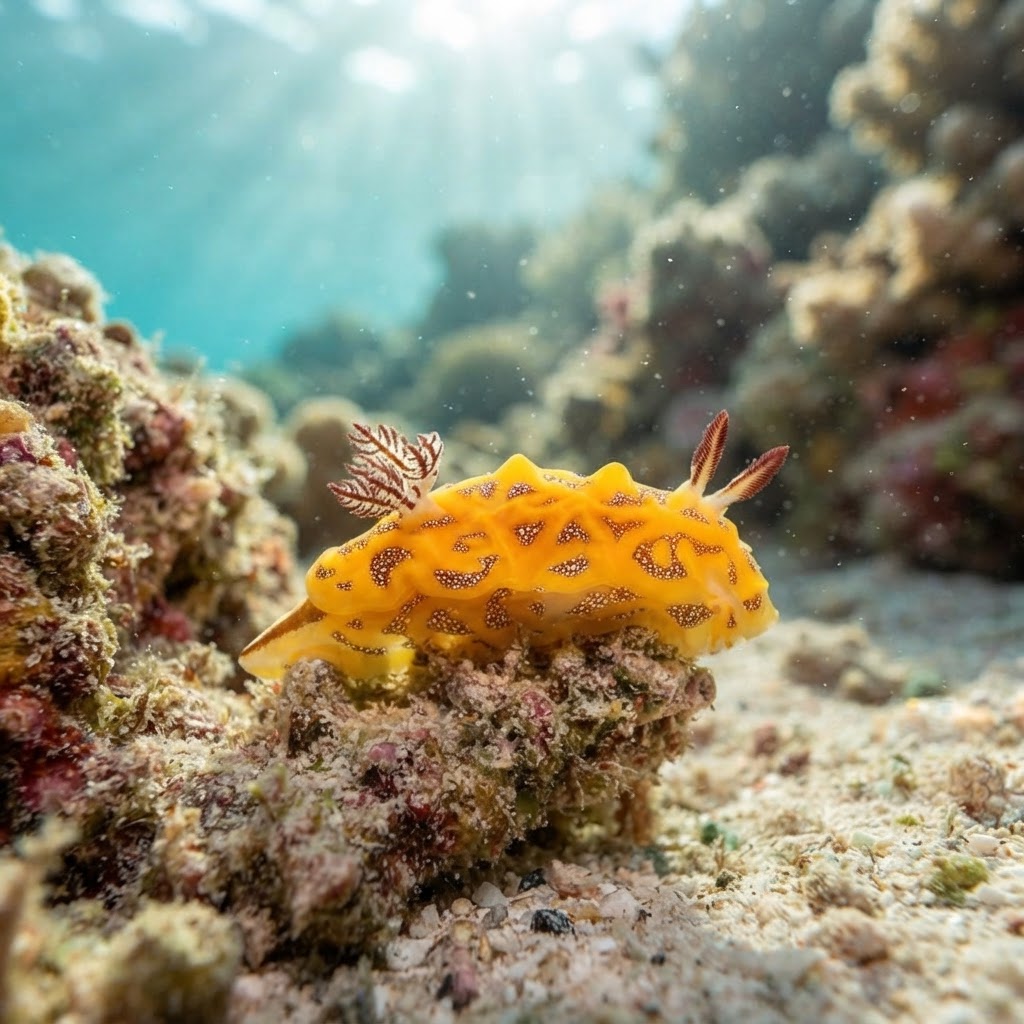
Small, oval-bodied nudibranch with a white to cream body covered in a raised, waffle-like ridge pattern, giving it a quilted texture rather than smooth skin. Scattered dark spots or rings sit within the ridges, and a cluster of feathery gills sits near the rear alongside two upright sensory tentacles (rhinophores) toward the front. It moves slowly across hard substrate and sponges, so divers usually spot it by the texture and pattern rather than any motion.
Found grazing slowly over rock, rubble and encrusting sponge on the reef floor, usually on daytime dives rather than night dives. It pays no attention to divers and will simply keep crawling and feeding when a torch or camera gets close, making it an easy macro subject once spotted. Most logs describe it as uncommon at a given site, so it takes a patient, close look at the substrate rather than a swim past.
Like other discodorid nudibranchs, it feeds on sponges and can absorb their chemical compounds into its own tissue, which is thought to help make it unpalatable to predators.
No clear seasonal pattern shows up in the data, and with a comfort range of 23.5 to 29.5C it stays active on warm tropical reefs throughout the year. Plan around good visibility and calm conditions at your chosen site rather than a particular month.
Reef neighbours a diver could mistake it for. Use the identification notes above to tell them apart.
Most reliably logged around Zanzibar and Mafia Island in Tanzania, which together account for the bulk of sightings, with additional populations in Ponta do Ouro, Mozambique and Western Australia. Phuket and Khao Lak in Thailand also produce regular records, making the Indian Ocean the strongest region overall for this species.
Mapping where Starry Waffle Dorid is logged…
Zanzibar and Mafia Island in Tanzania are the strongest spots, with further sightings in Ponta do Ouro, Mozambique, Western Australia, and around Phuket, Thailand.
There is no strong seasonal signal in sightings, and it tolerates a wide 23.5 to 29.5C range, so it can turn up on any dive throughout the year on the reefs where it occurs.
Look for a small white to cream nudibranch with a raised, waffle-textured surface and dark ring-like spots scattered across the body. Feathery gills near the tail and two upright rhinophores near the head confirm it as a nudibranch rather than a flatworm.
No, it poses no threat to divers. It has no stinging cells accessible to humans and simply crawls slowly over the reef when approached.
It feeds on sponges and can take up the sponge's chemical defences into its own body, which likely helps deter predators from eating it.
Site and sighting data is aggregated from diver logs, iNaturalist and GBIF. For taxonomy and conservation status:
Light-spotted Aegires
3,168 sites