Octopus cyanea
Spot day octopus on tropical reefs in the Maldives, Philippines and Red Sea. Active hunters in warm 23-29 °C water, logged year-round across the Indo-Pacific.
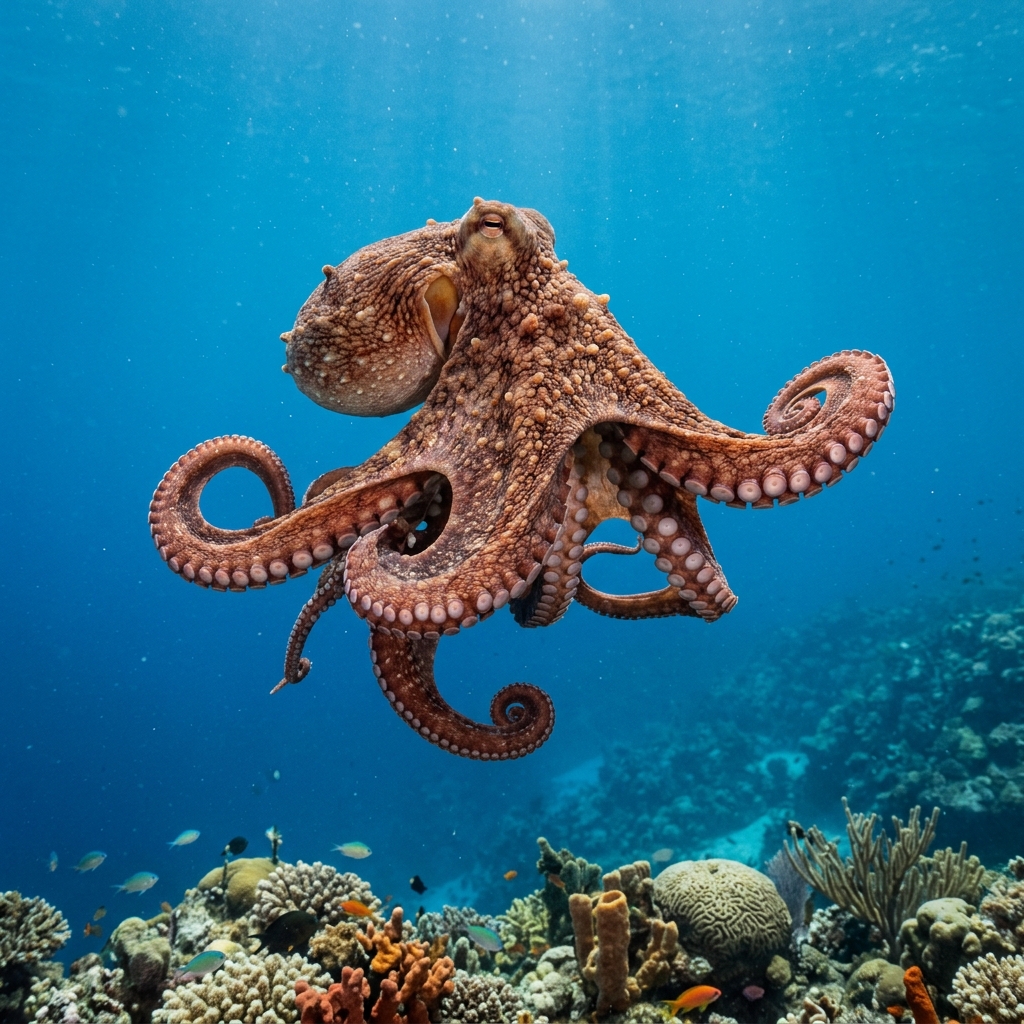
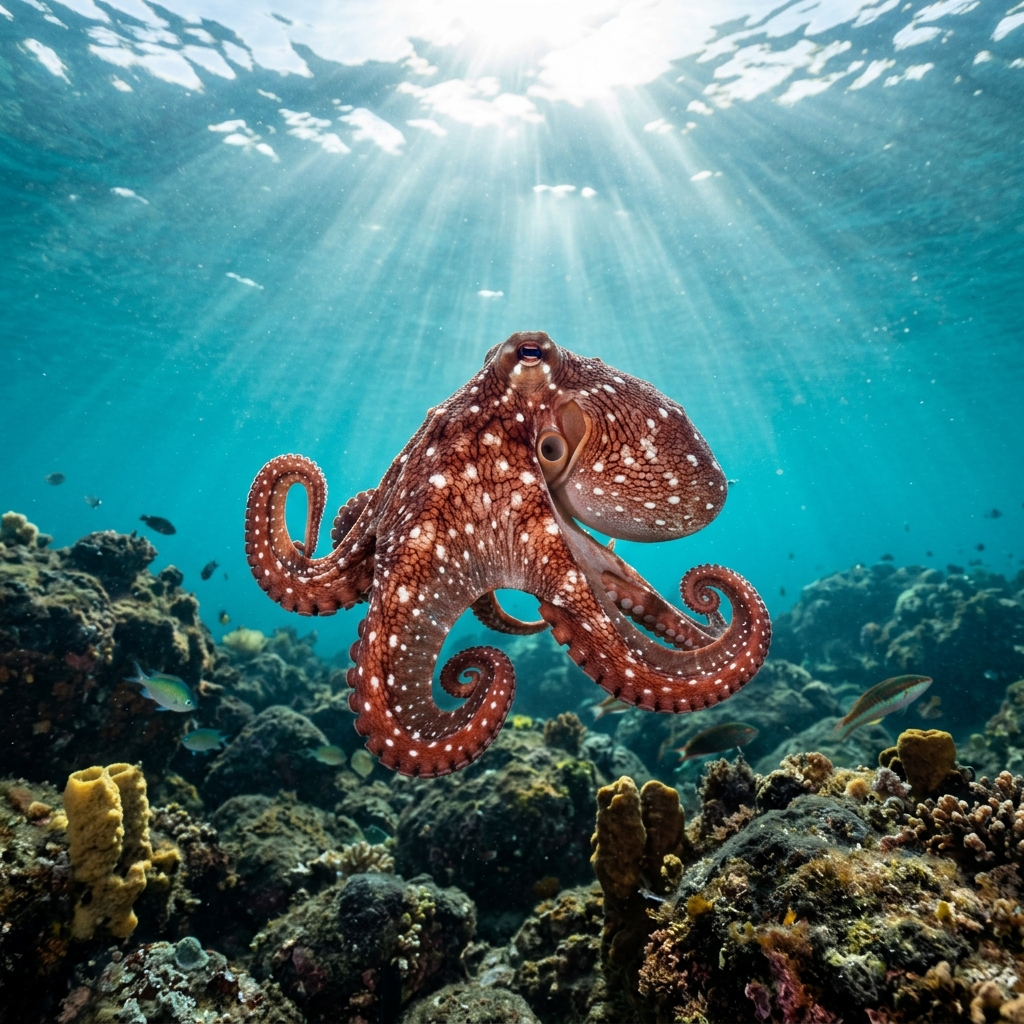
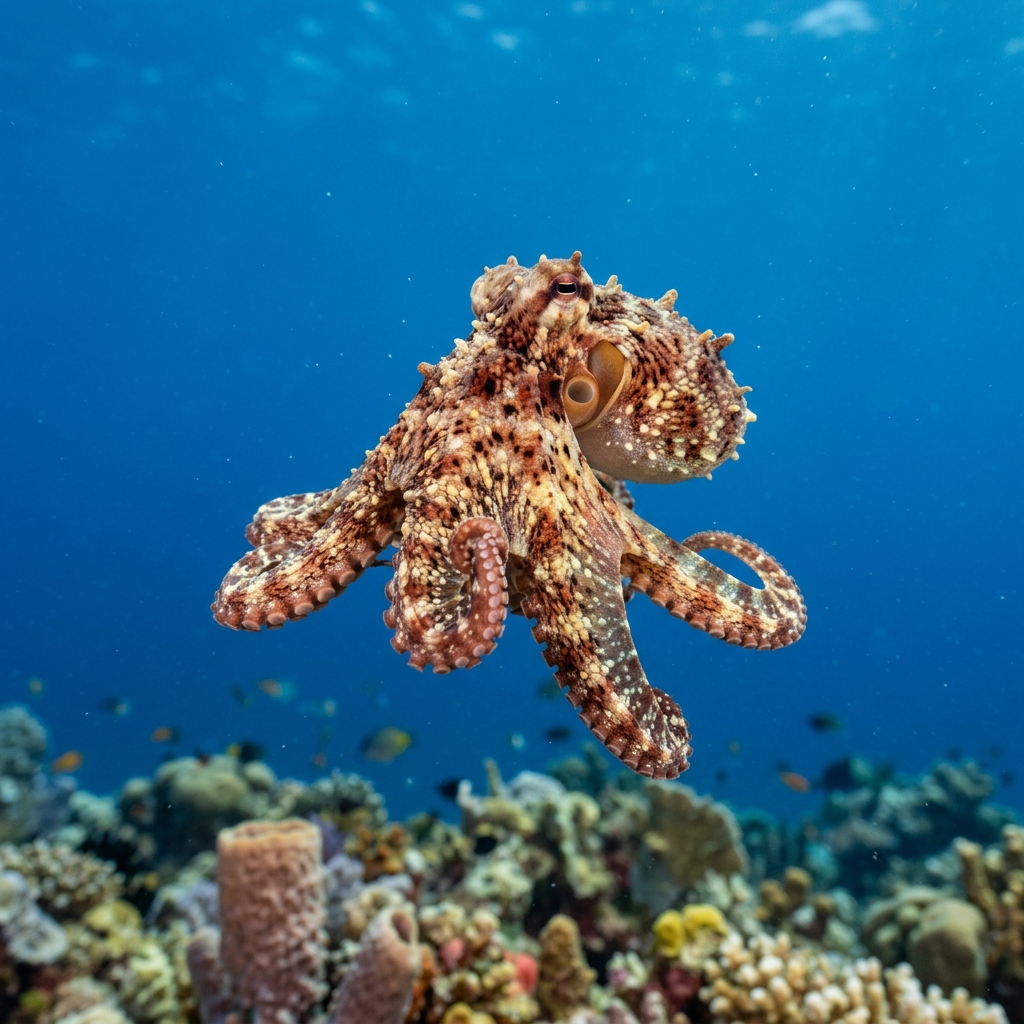
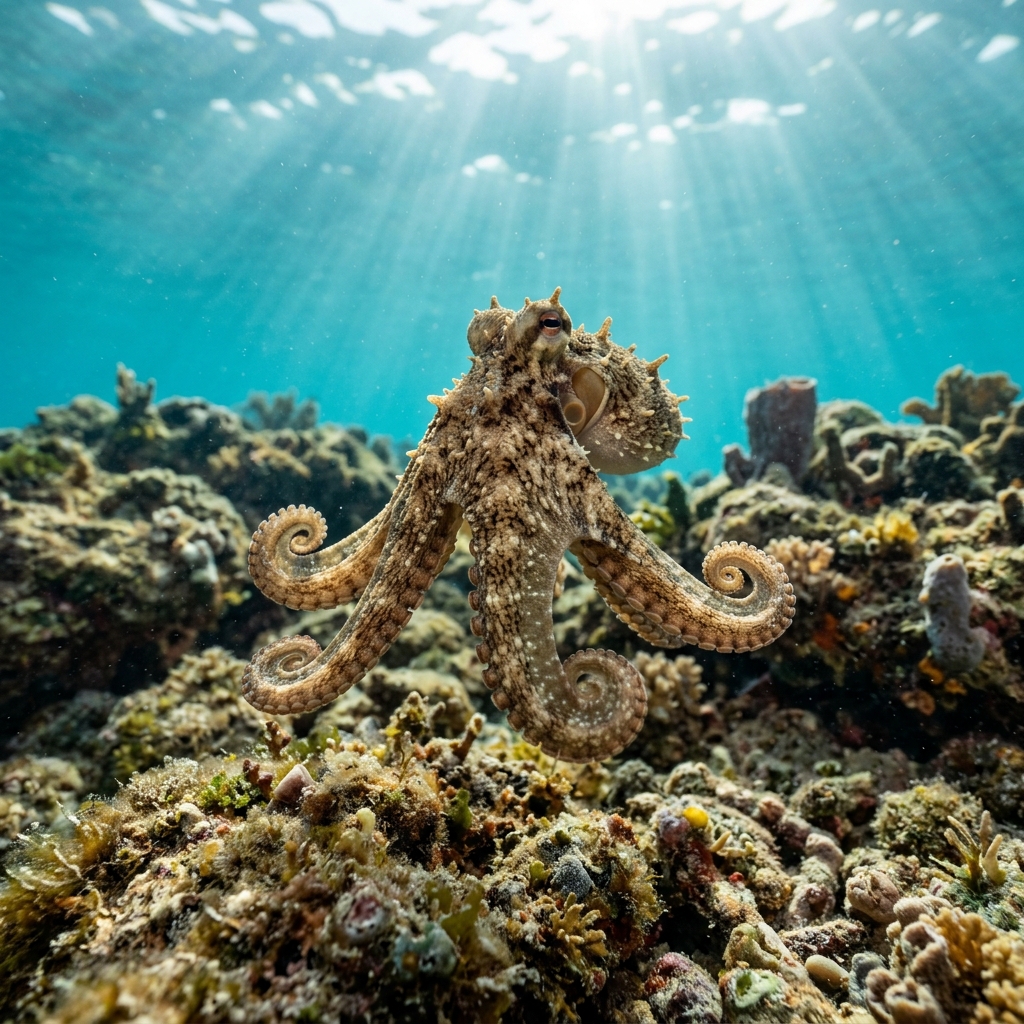
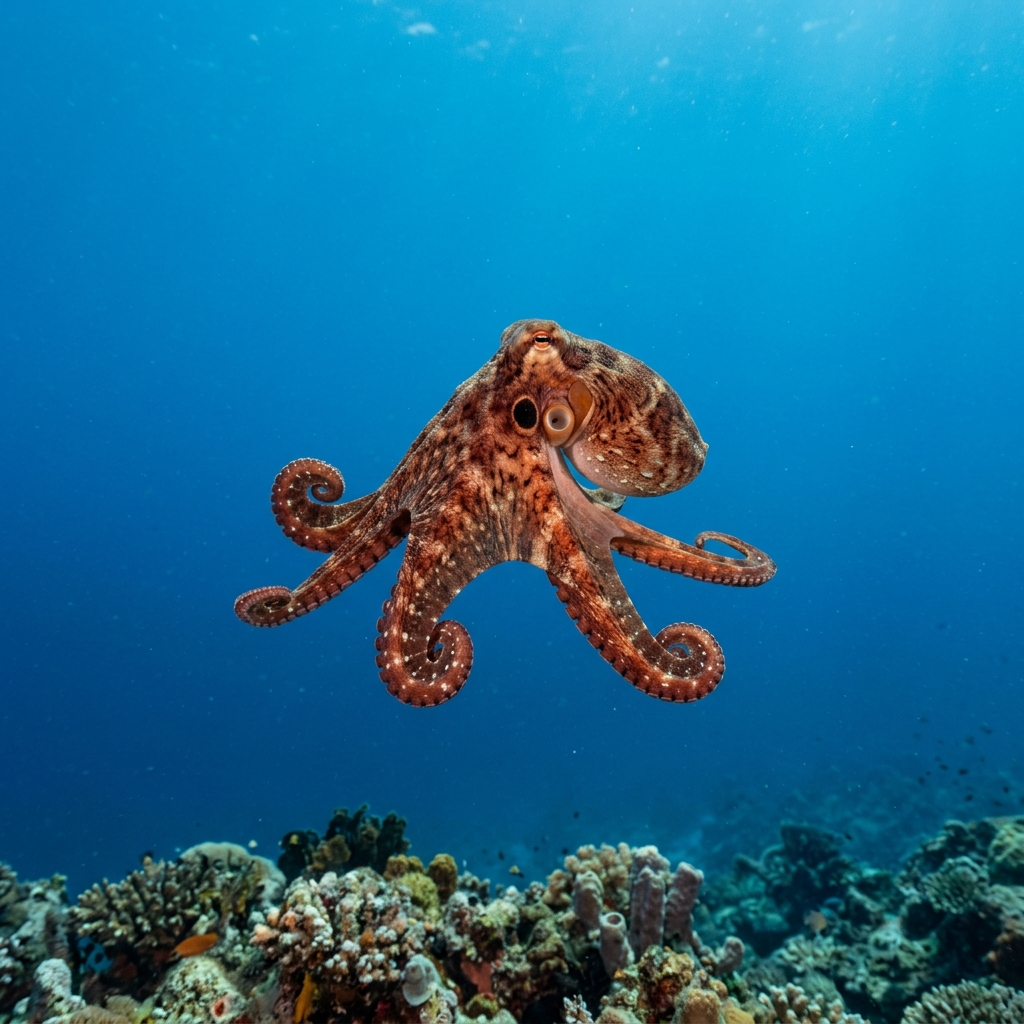
Roughly 15 cm across the mantle (body), though arms can span considerably wider, making it look deceptively large in the water. Skin colour and texture shift constantly, but look for a dark, roughly circular spot ringed in a lighter halo just below each eye, this ocellus (eye-spot) is the single most reliable field mark. On the reef it tends to look like a lumpy, tan-to-brown patch of rubble until it moves. The arms are long and slender relative to the mantle, often probing crevices even while the body stays still.
Unlike most octopuses, this one hunts in full daylight, moving purposefully over the reef and pushing its arms deep into holes to flush out crabs and other small invertebrates, exactly the kind of active foraging that makes it relatively straightforward to spot once you know what to look for. When a diver approaches calmly and keeps a respectful distance, it will often pause and watch back, occasionally holding its ground. Startle it, though, and it jets away in a cloud of ink before disappearing into the rubble.
The ocellus, that false eye-spot beneath the real eye, is thought to startle or confuse predators by mimicking a much larger animal's eye. It is one of the most consistent markings across the species and the best single character to lock onto when you are trying to confirm an ID at depth.
In the Northern Hemisphere, sightings are spread evenly across all months with no concentrated peak, reflecting the species' preference for consistently warm tropical water between 23 and 29 °C. In Southern Hemisphere locations, sightings concentrate from June through February, so that window is the better bet for places like Queensland.
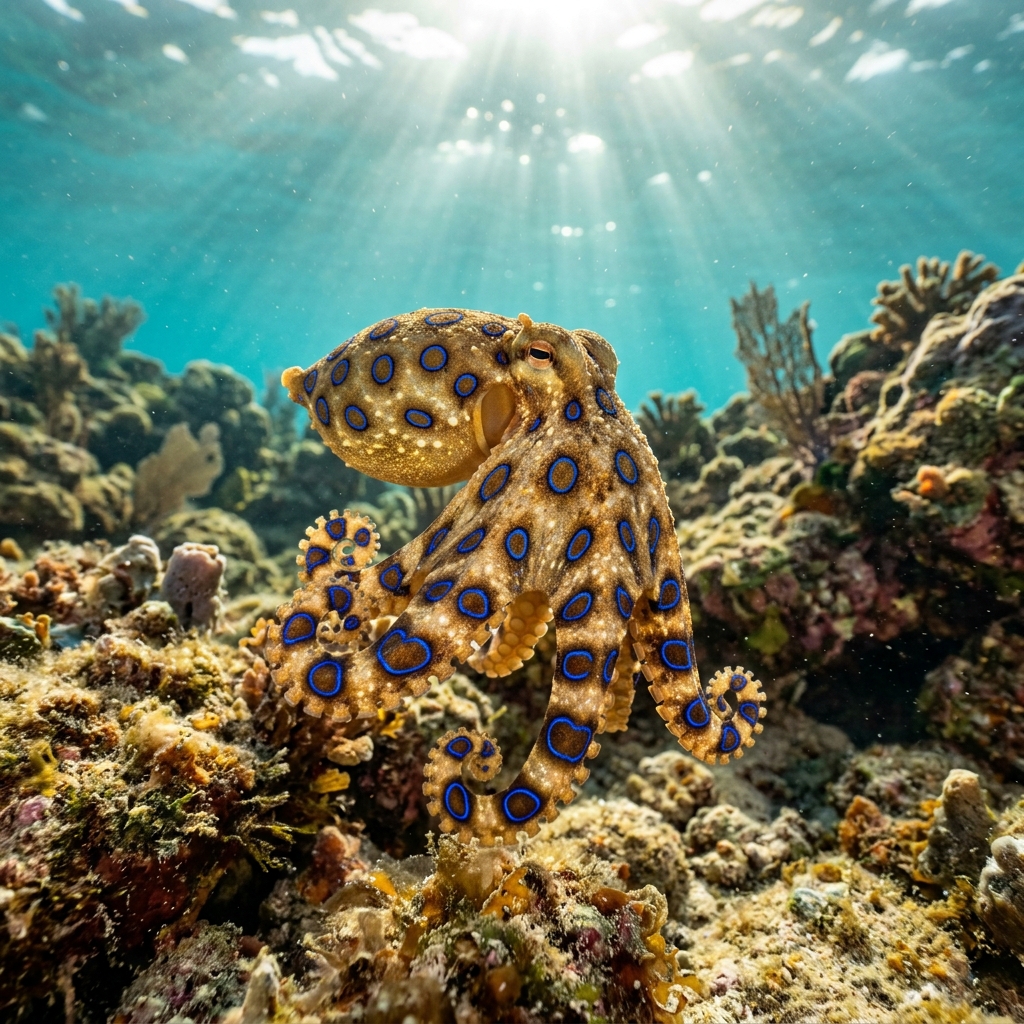
Reef neighbours a diver could mistake it for. Use the identification notes above to tell them apart.
Most commonly logged across the Maldives, particularly the Male and Ari Atolls and the North and Central Atolls, making it the single strongest region in the data. Indonesia, the Philippines, Egypt's Sharm el Sheikh reefs, and Hawaii are all reliable destinations, with Queensland, Bali, and Okinawa also showing strong records. Outside those hotspots it turns up across a wide Indo-Pacific and Red Sea range, so it is worth looking on virtually any warm shallow reef in those regions.
Mapping where Day Octopus is logged…
The Maldives leads all regions by a wide margin, especially the Male, Ari, and North and Central Atolls. Indonesia, the Philippines, Hawaii, Egypt's Sharm el Sheikh, Queensland, Bali, and Okinawa all have strong sighting records. Broadly speaking, any warm, shallow Indo-Pacific or Red Sea reef is worth checking.
In the Northern Hemisphere it is present year-round with no clear peak season. For Southern Hemisphere destinations such as Queensland, sightings concentrate between June and February, so that stretch gives you the best odds.
Look for the ocellus, a dark spot ringed by a pale halo sitting just below each eye. No other commonly encountered Indo-Pacific octopus has this mark as consistently. It is active in daylight and moves openly across the reef, which helps separate it from more nocturnal species. Colour alone is unreliable because it changes constantly.
The mantle (body) typically reaches around 15 cm, but the arms add considerably to the overall spread. In the water a relaxed individual with arms extended can look surprisingly large, though it quickly folds itself into a very small shape when hiding.
No. They pose no threat to divers. The most likely reaction to an approach that feels too close is a burst of ink and a rapid retreat. Give them space and move slowly and they will usually stay calm.
Site and sighting data is aggregated from diver logs, iNaturalist and GBIF. For taxonomy and conservation status:
Blue-ringed Octopus
923 sites