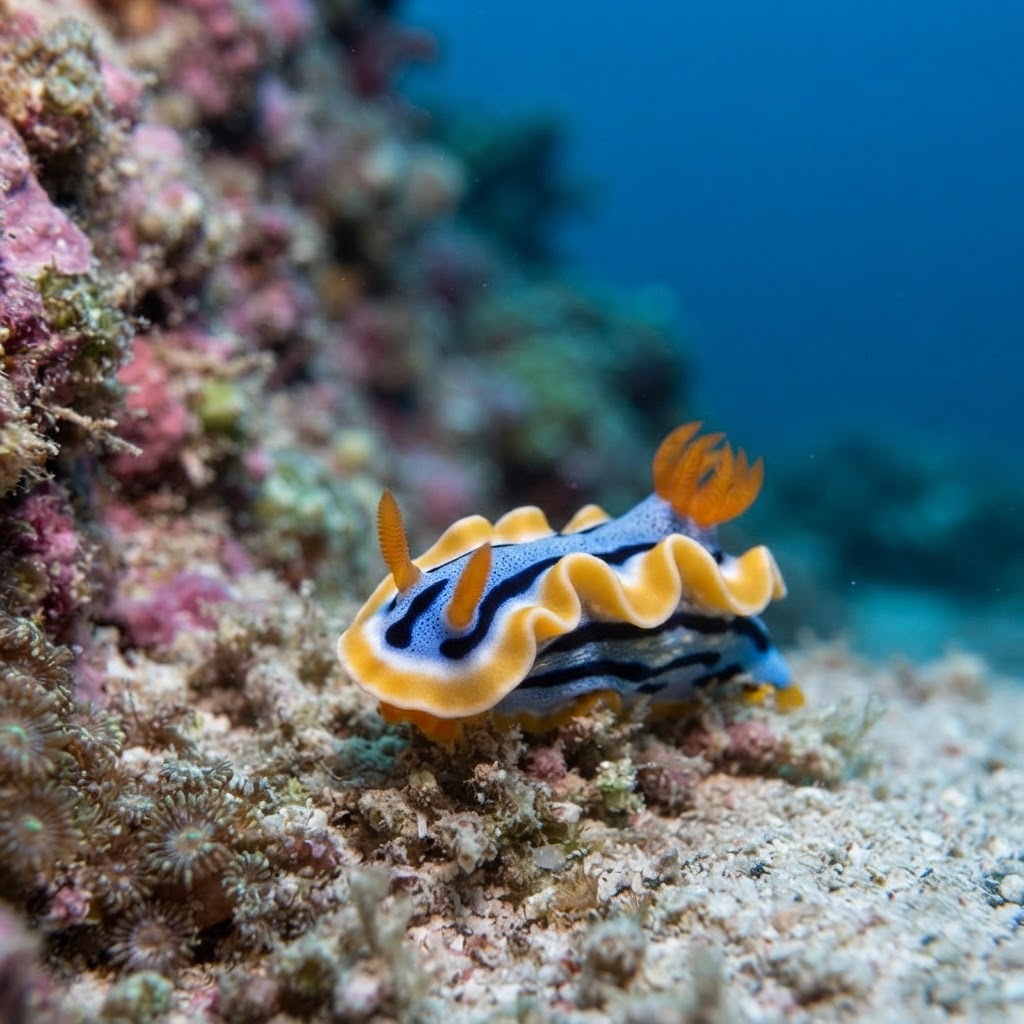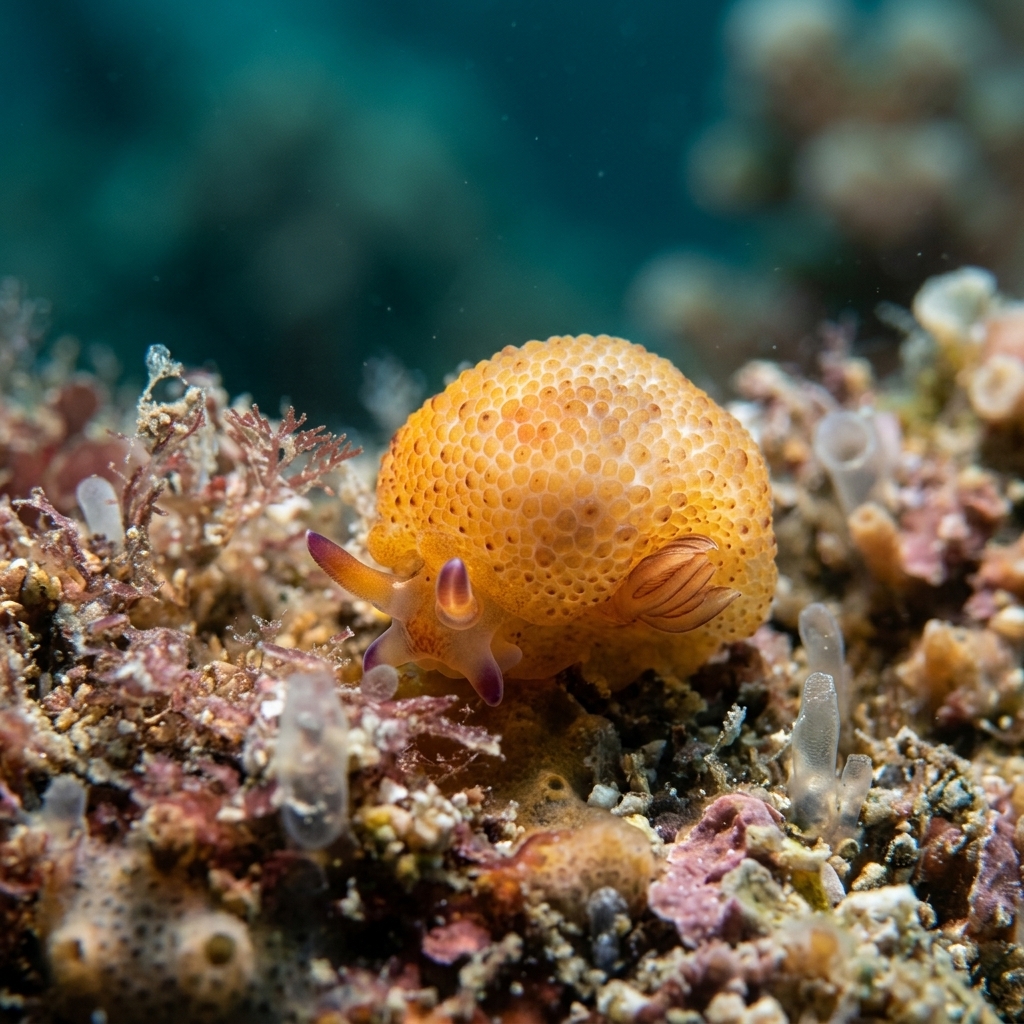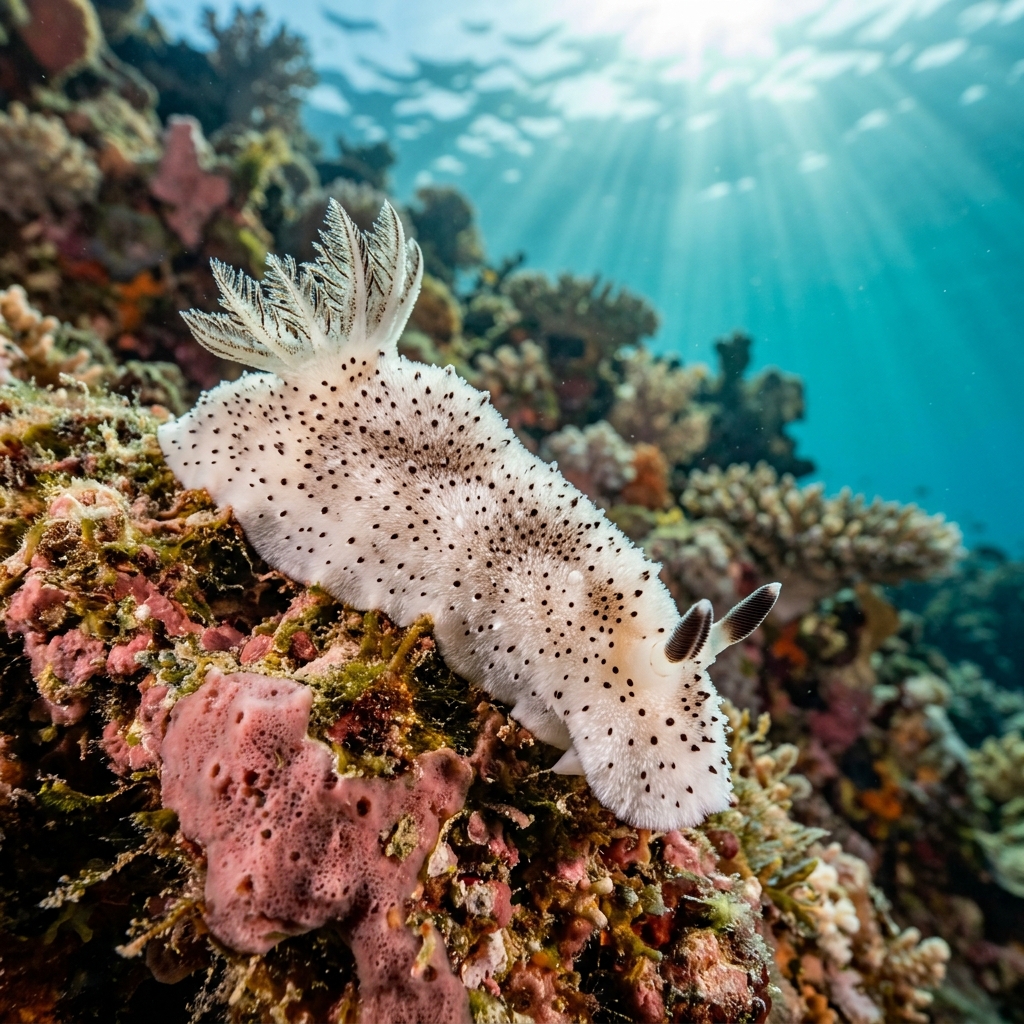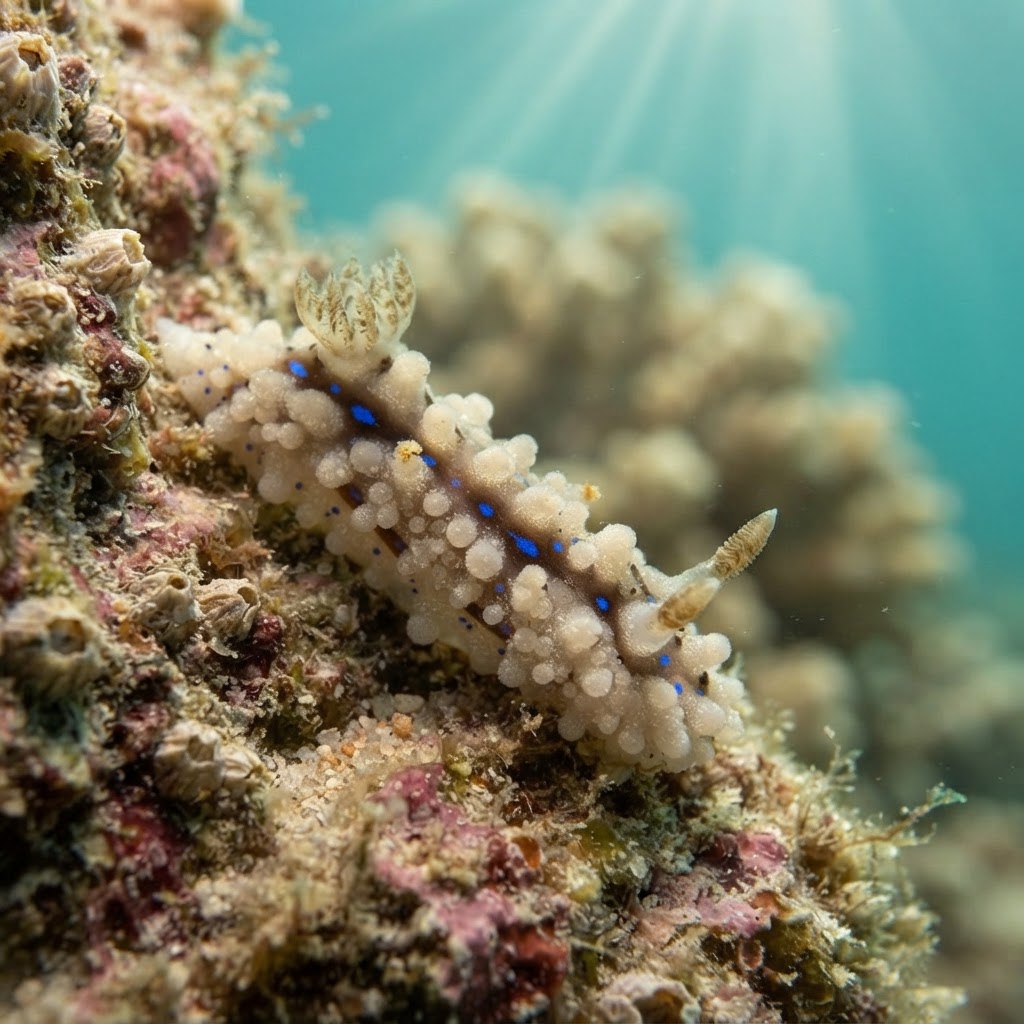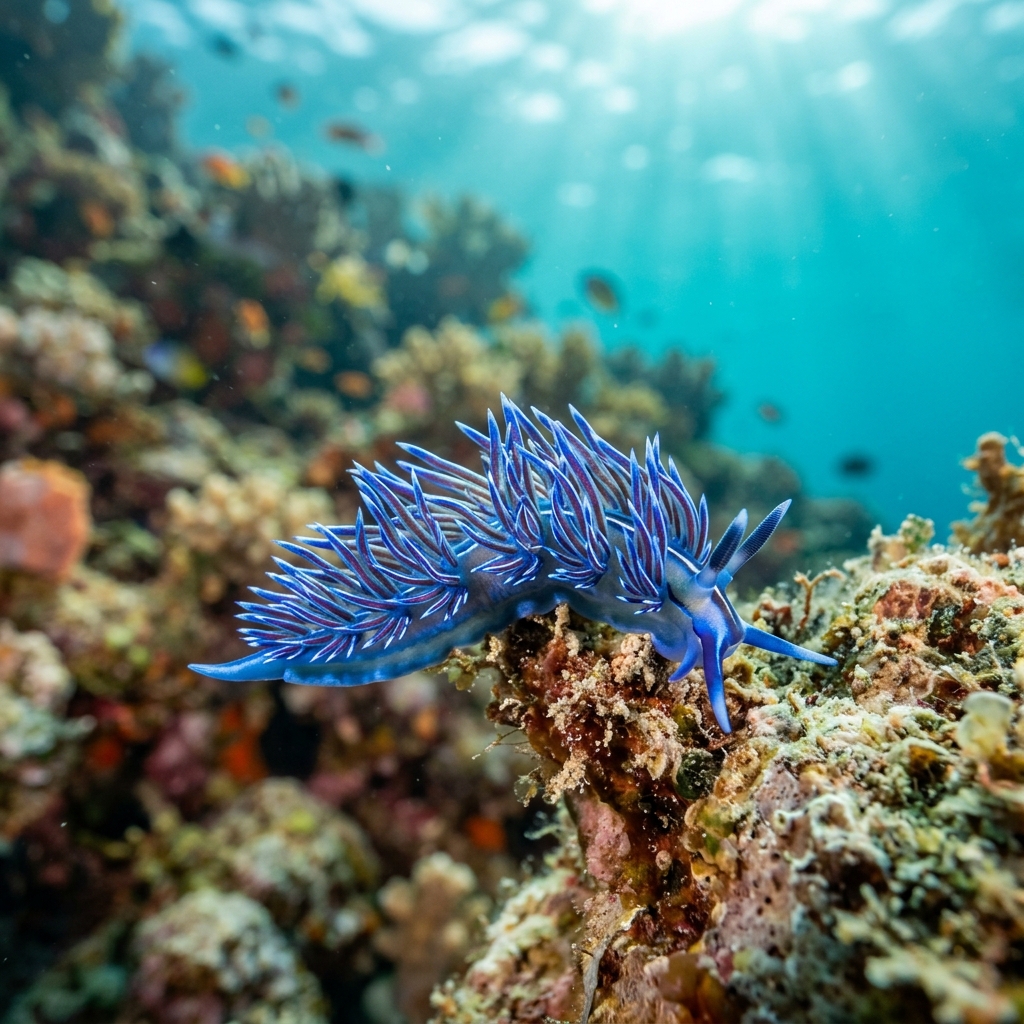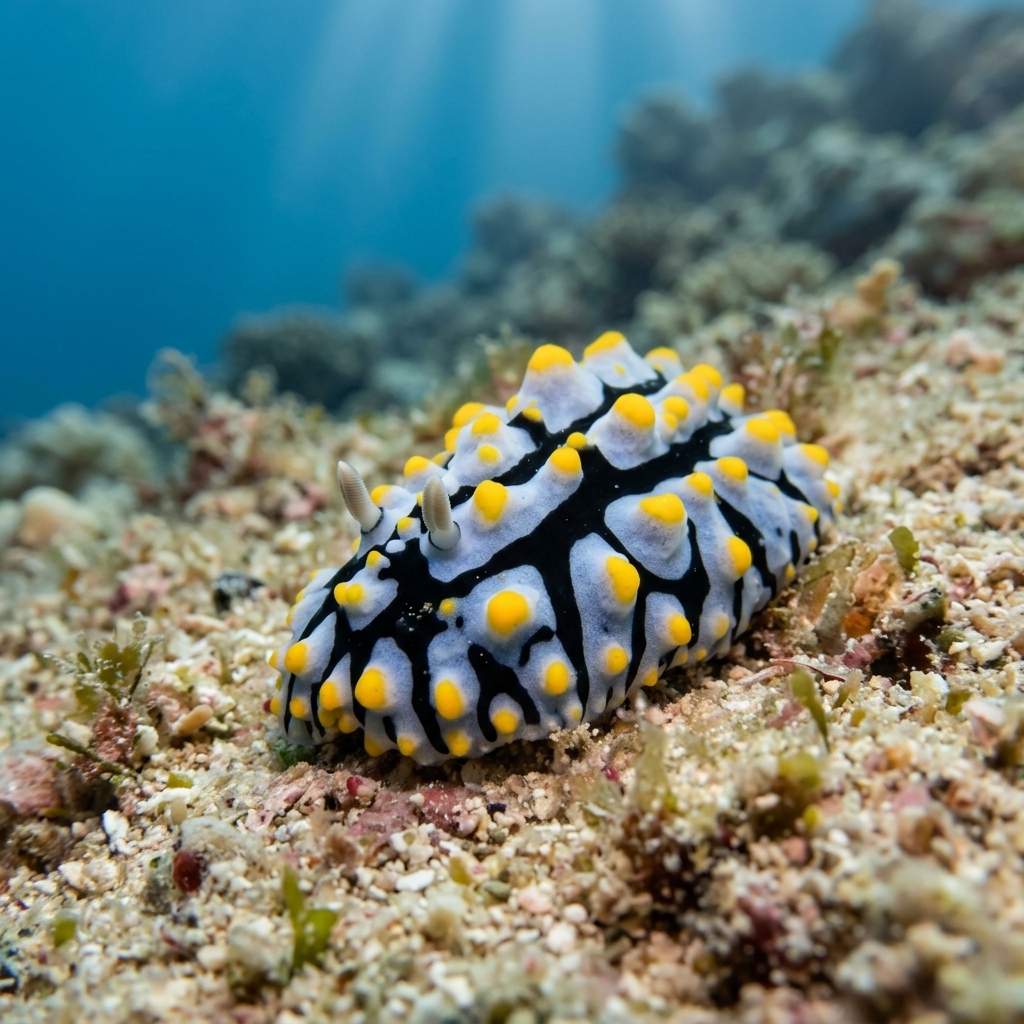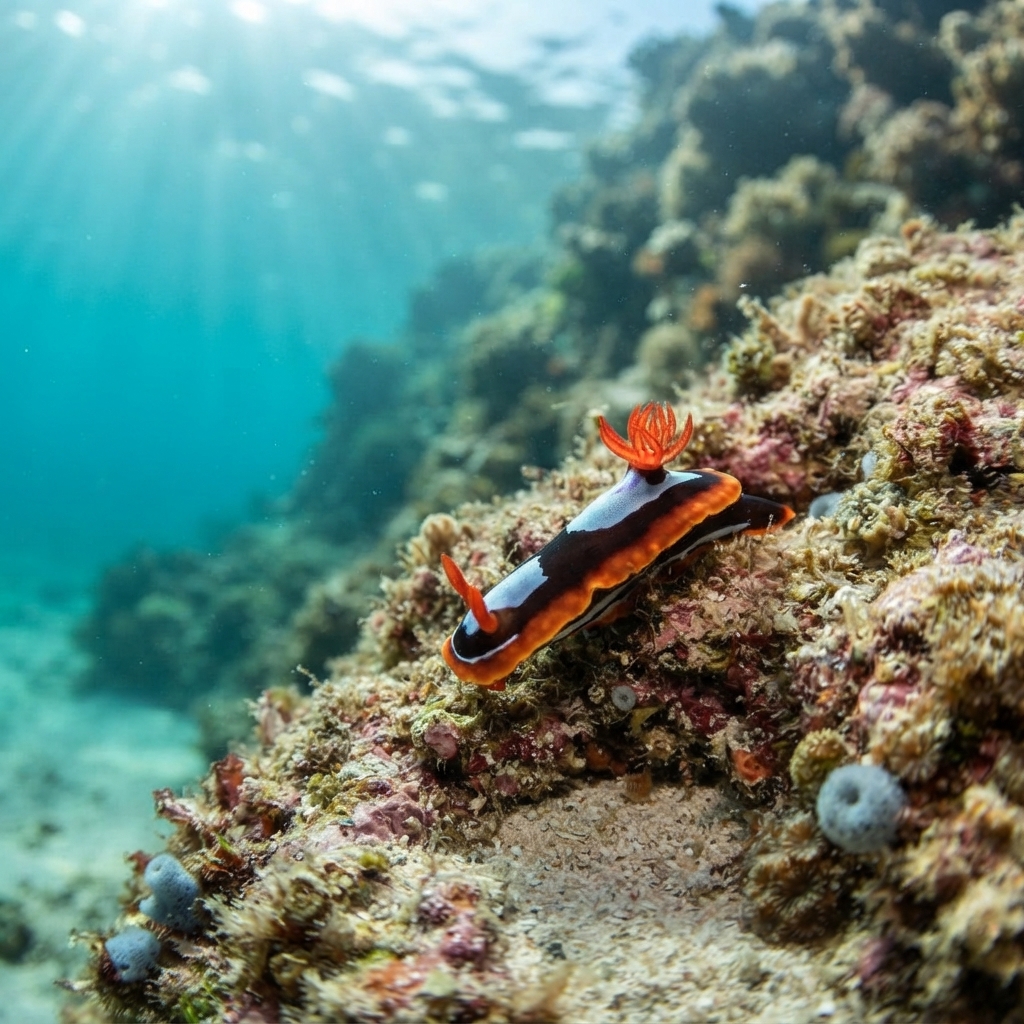
Chromodoris westraliensis
A Western Australia speciality nudibranch, logged year-round in waters from 18.8 to 26.5 C across dozens of WA dive sites.
A small, slow-moving sea slug with a smooth, oval body typically marked with bold longitudinal blue or purple lines running along a pale to yellow background, edged with an orange or yellow border. Look for the pair of feathery gill plumes (the tuft of tissue used for breathing) at the rear and the two rhinophores (sensory tentacles) up front, both often tipped in a contrasting colour. It moves at a crawl across rock, rubble and sponge-covered reef, so it is easy to overlook unless you are scanning close to the substrate.
Divers most often find it parked on rubble, rock or sponge-encrusted reef, grazing slowly and paying little attention to anything nearby. It has no means of fast escape and will simply continue crawling or hold still when a torch or camera gets close, which makes it a reliable subject for close-focus photography. Most logs come from slow, methodical reef and rubble dives where divers are actively searching the substrate rather than swimming past.
Like other Chromodoris nudibranchs, its bright colouring is a warning rather than decoration: these slugs absorb toxic compounds from the sponges they feed on and advertise them to predators instead of hiding.
Sightings show no clear seasonal pattern, and with a comfortable range of 18.8 to 26.5 C it turns up on Western Australian reefs across the year. Treat it as a year-round find rather than something tied to a particular month.
Reef neighbours a diver could mistake it for. Use the identification notes above to tell them apart.
This one is very much a Western Australia speciality, with sightings concentrated almost entirely in that region and logged across a wide spread of local dive sites. Divers looking for it should focus their search on the Western Australian coast rather than further afield, as the data shows essentially no reports outside Australia.
Mapping where Western Chromodoris is logged…
It is essentially a Western Australia find, logged at a wide range of dive sites along that coast with no meaningful records reported elsewhere.
There is no strong seasonal pattern in the data, and it tolerates a wide temperature range, so it can be found on Western Australian reefs at any time of year.
Look for a smooth-bodied nudibranch with bold blue or purple stripes running along a pale or yellow body, an orange-toned edge, and a small gill tuft at the rear. It moves slowly over rubble and reef, so a close, careful look at the substrate is usually needed to spot one.
Exact size data is not confirmed, but like most Chromodoris species it stays small, typically only a few centimetres long, so divers need to look closely to find one on the reef.
No. It poses no threat to divers and can be safely photographed at close range without disturbing it.
Its vivid stripes are a defence signal, not camouflage. It feeds on sponges and stores their chemical toxins in its own tissue, using the bright pattern to warn predators it is not worth eating.
Site and sighting data is aggregated from diver logs, iNaturalist and GBIF. For taxonomy and conservation status:
Light-spotted Aegires
3,168 sites