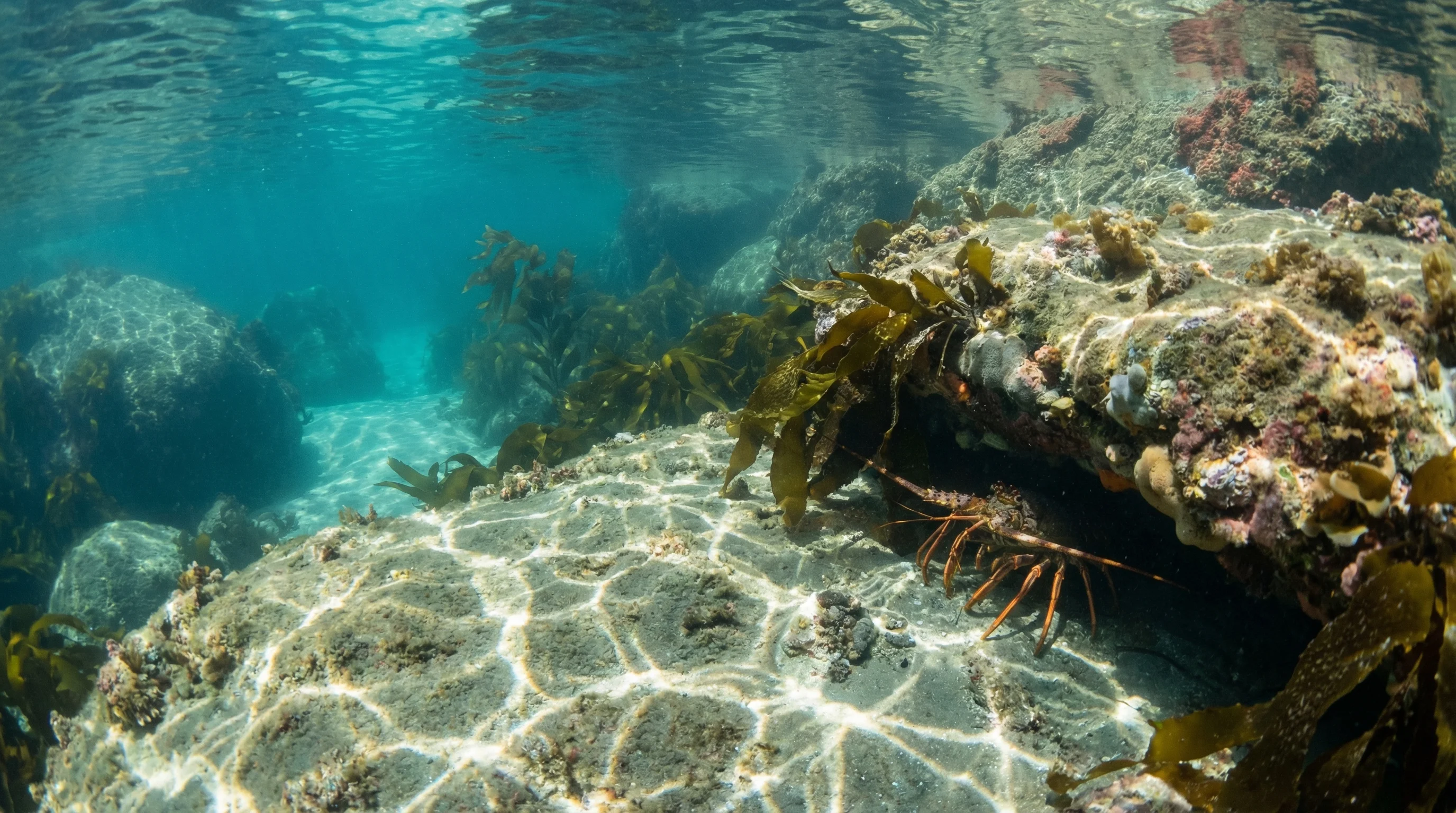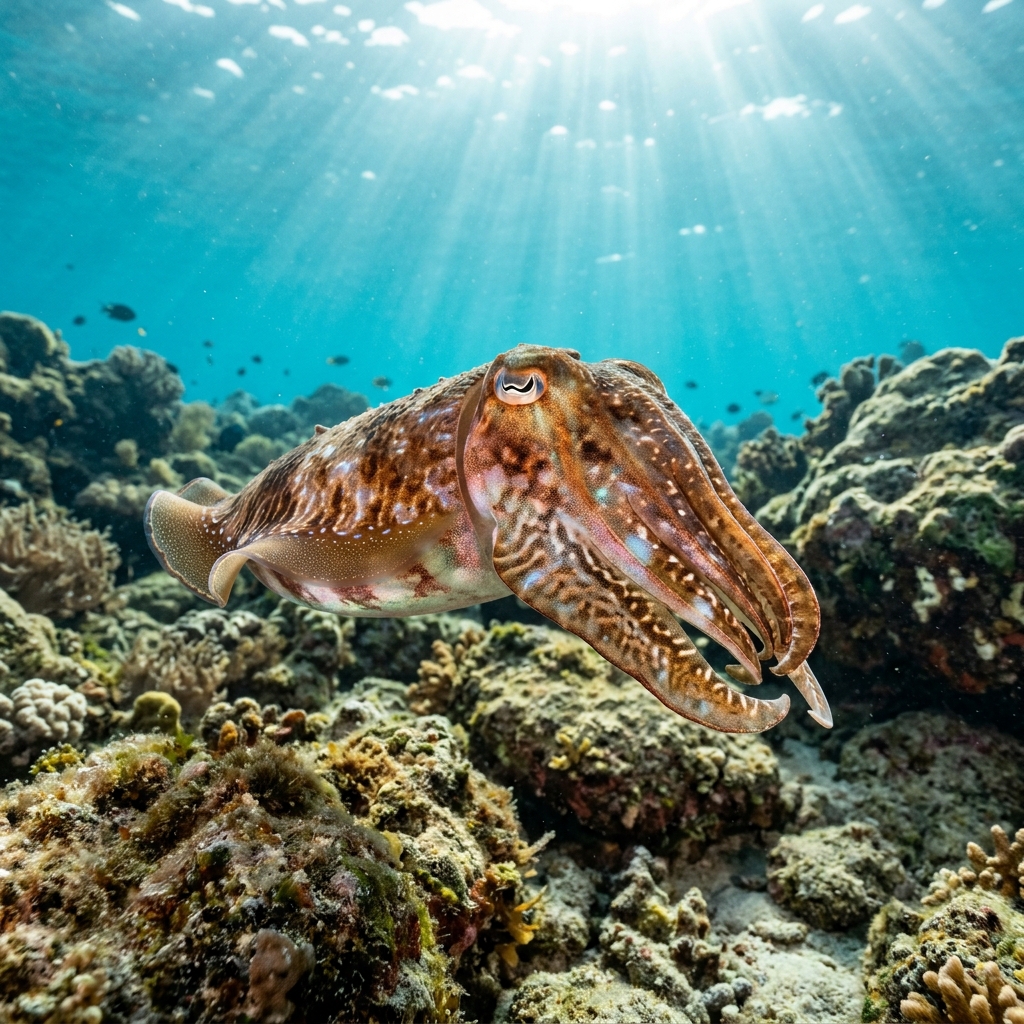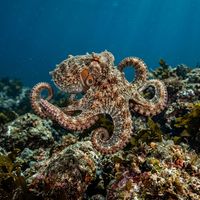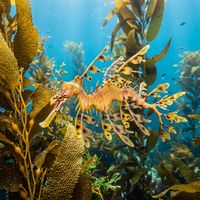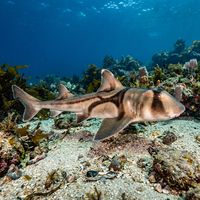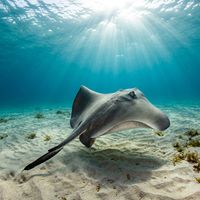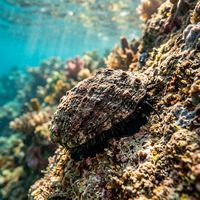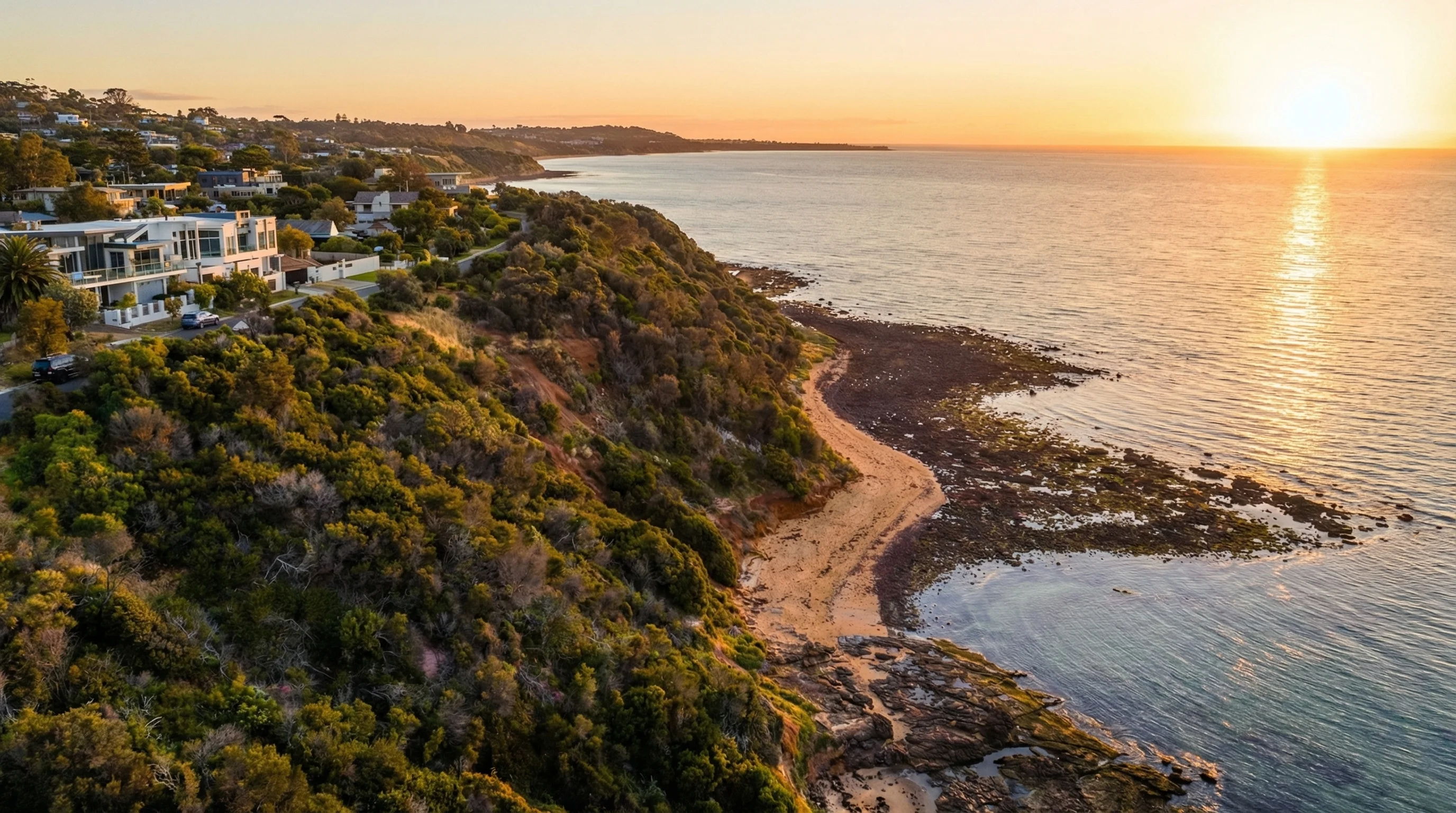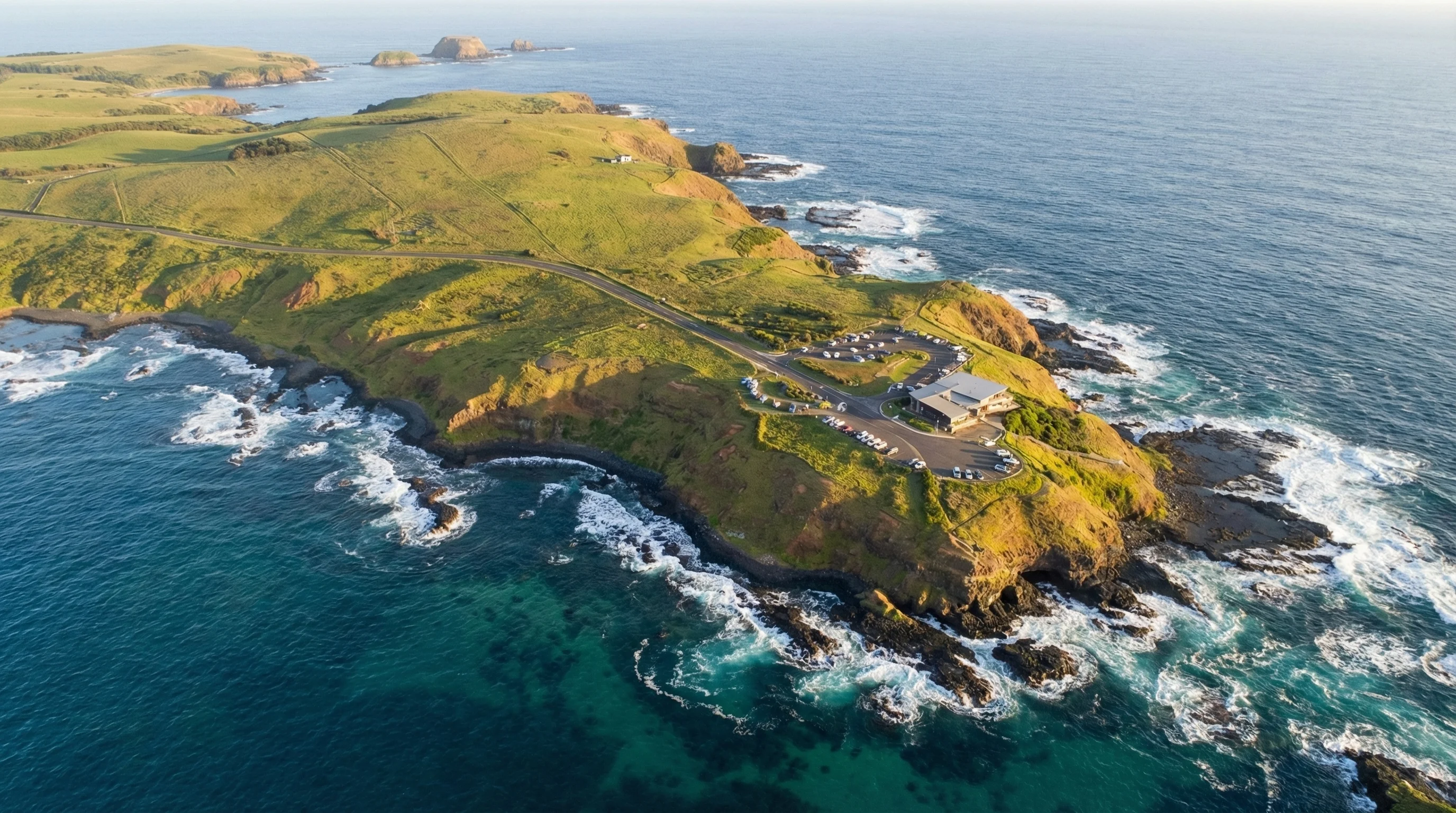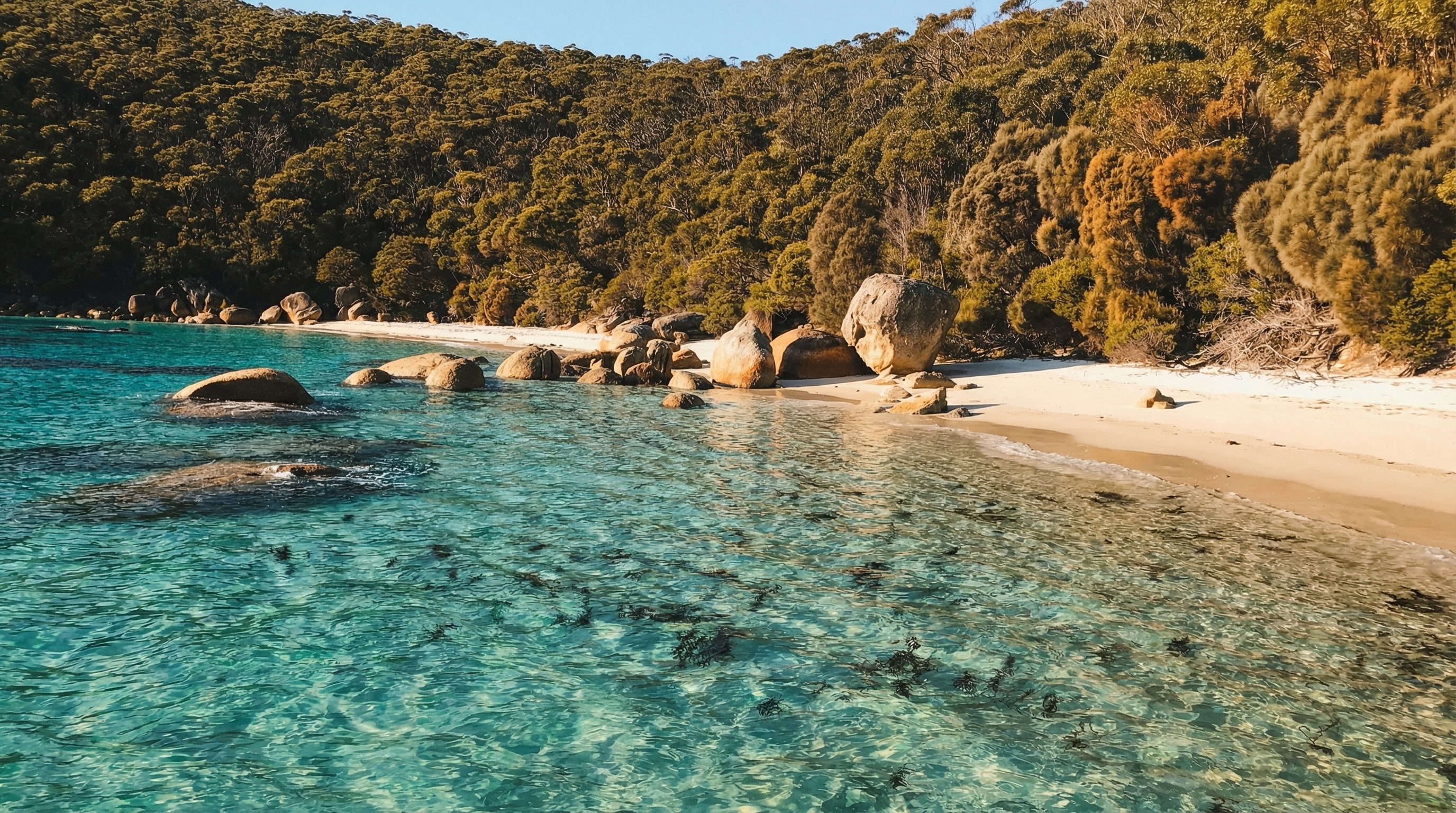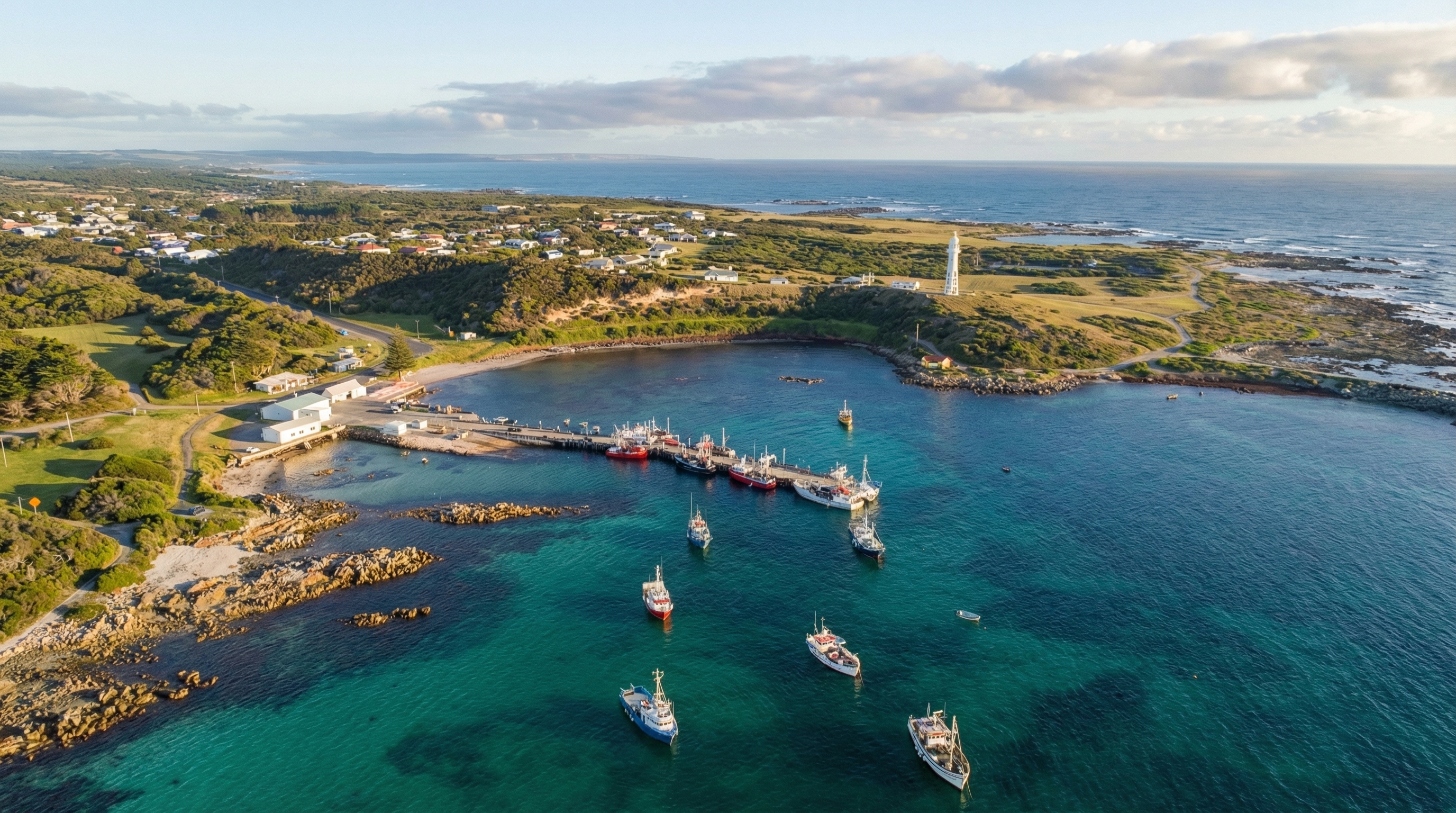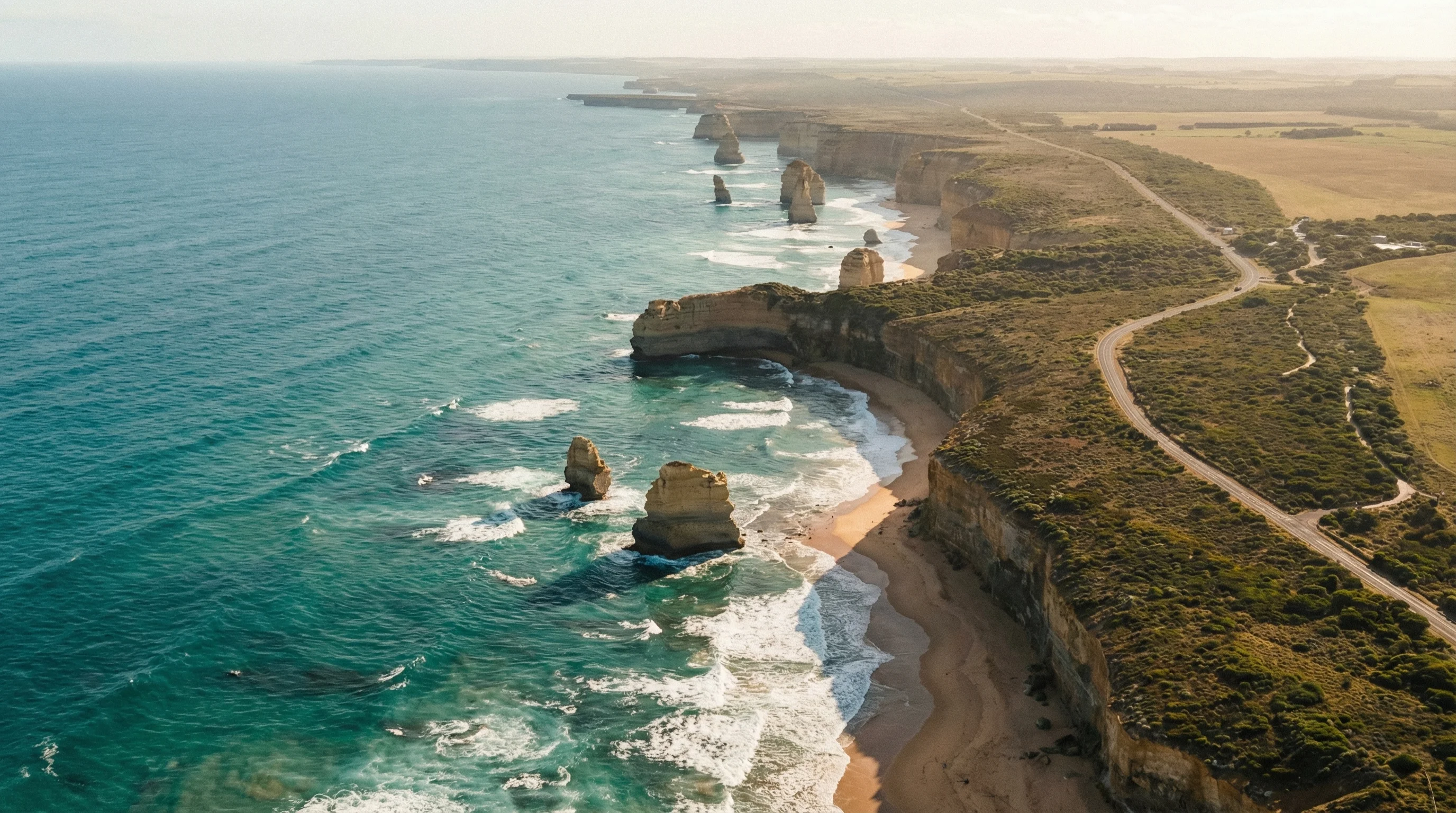
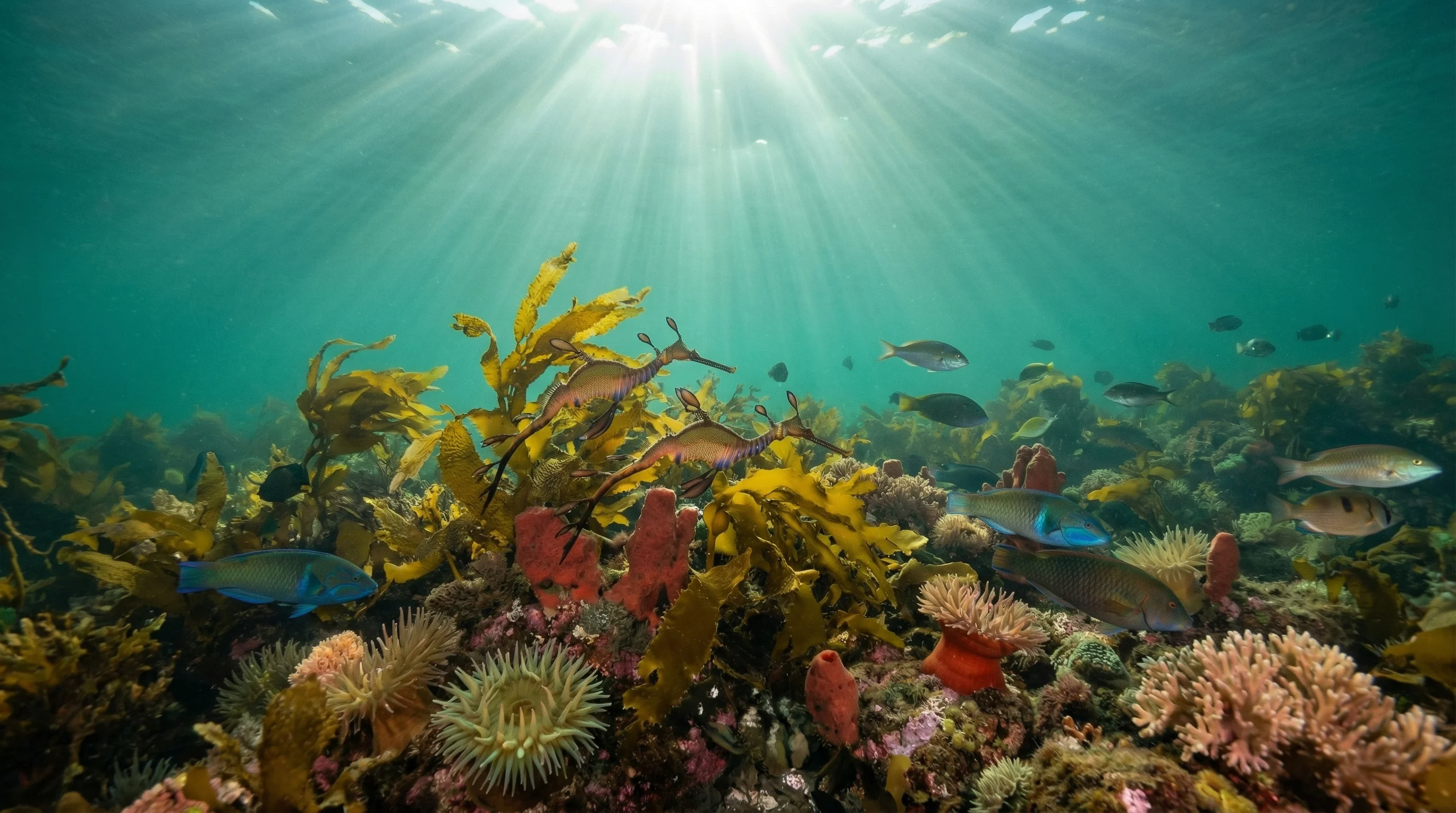
The Great Ocean Road spans four distinct sub-areas: Apollo Bay, Portland, Port Campbell, and Warrnambool. Kelp forests, rocky reefs, walls, and a pair of volcanic crater lakes give the region an unusually varied site mix for a temperate coastline. Fur seals, Giant Cuttlefish, and Weedy Seadragon appear alongside Spotted Wobbegong and Port Jackson Shark. Conditions range from sheltered breakwater entries to surge-affected open reef, suiting beginners through advanced divers.
4 areas
Monthly water temperature across Great Ocean Road's sites, from satellite sea-surface data corrected for depth. The band shows the site-to-site spread.
Water is warmest from summer into early autumn, making those months the most comfortable for extended bottom time. Cooler water through the middle of the year brings reduced visibility on exposed sites, though sheltered Portland and Warrnambool entries remain accessible year-round. The crater lakes at Bullen Merri and Purrumbete are less affected by coastal swell and offer consistent conditions regardless of season.
5 operators
Australia
Australia
15 more sites to explore
Rocky reefs and resident fur seals define this temperate Victorian destination, with rich invertebrate life at nearly every site.
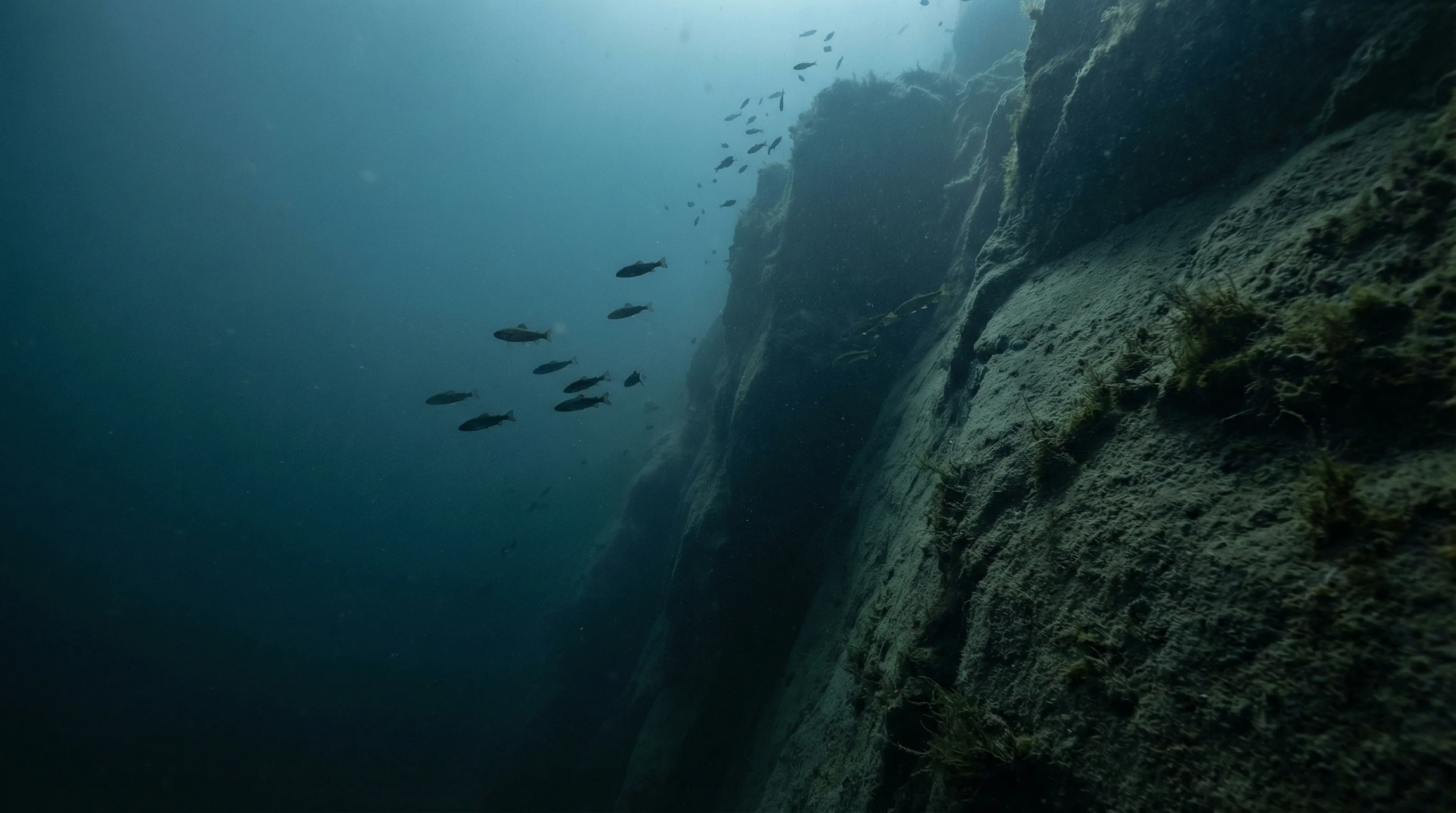
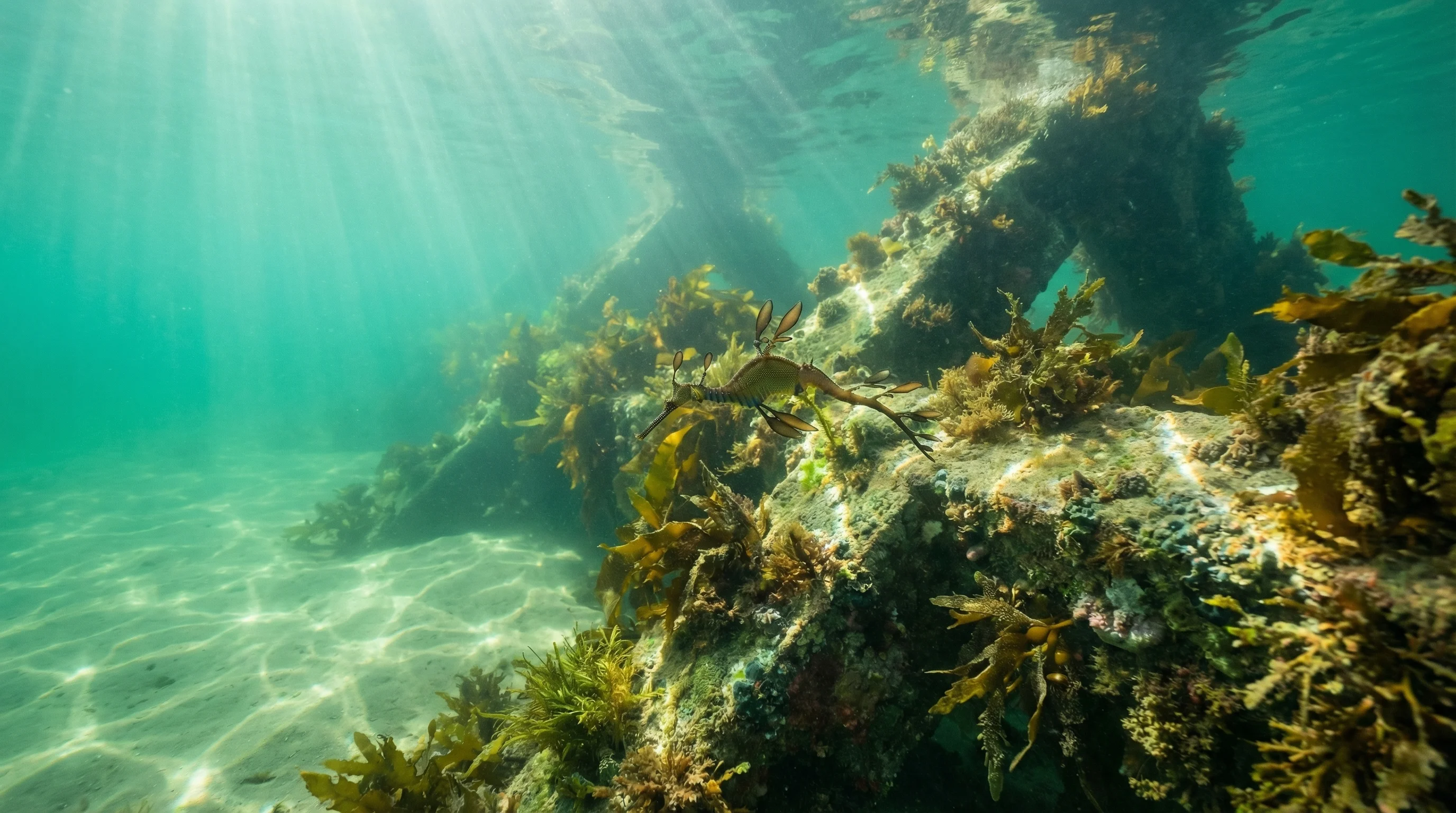
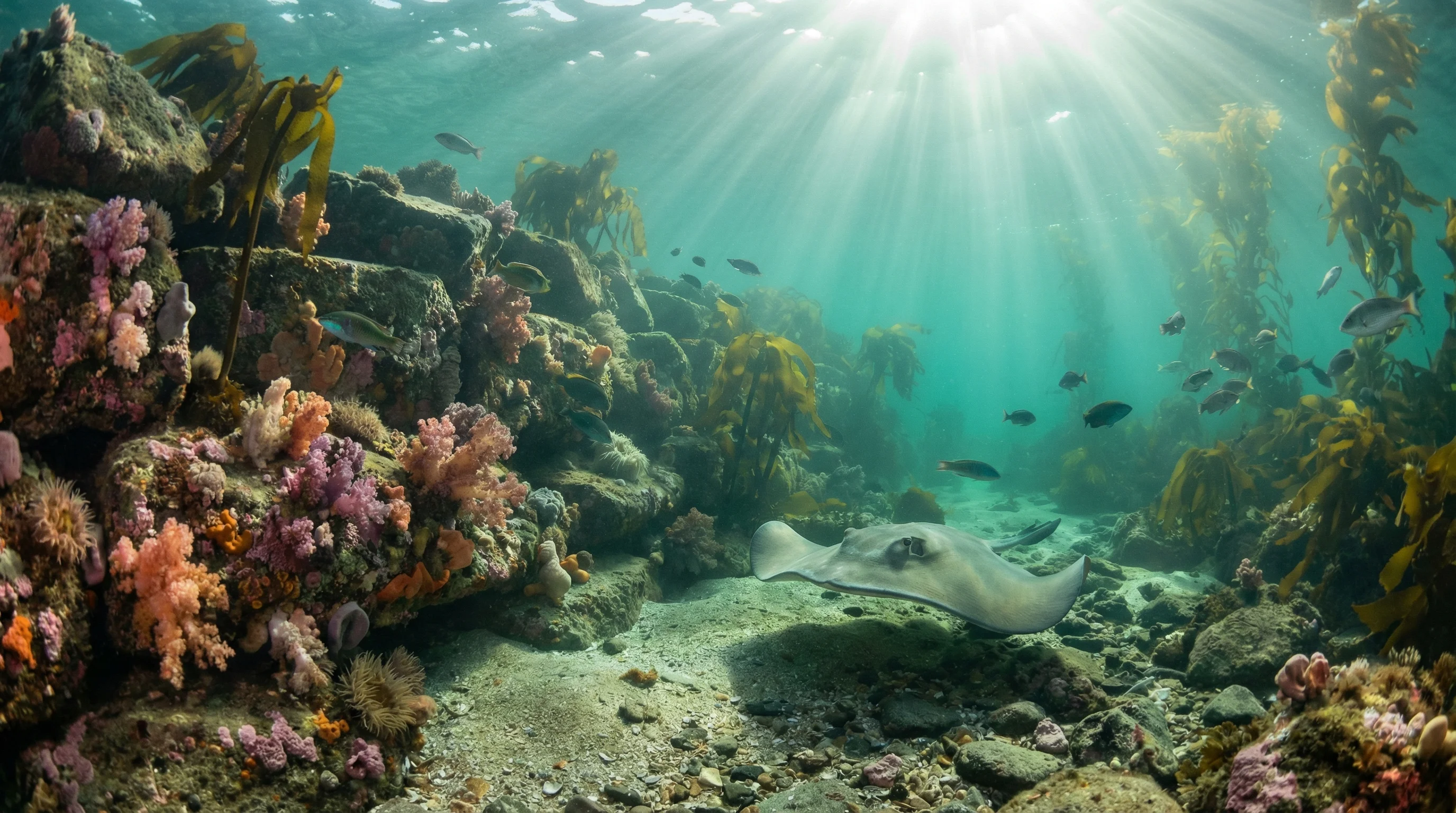
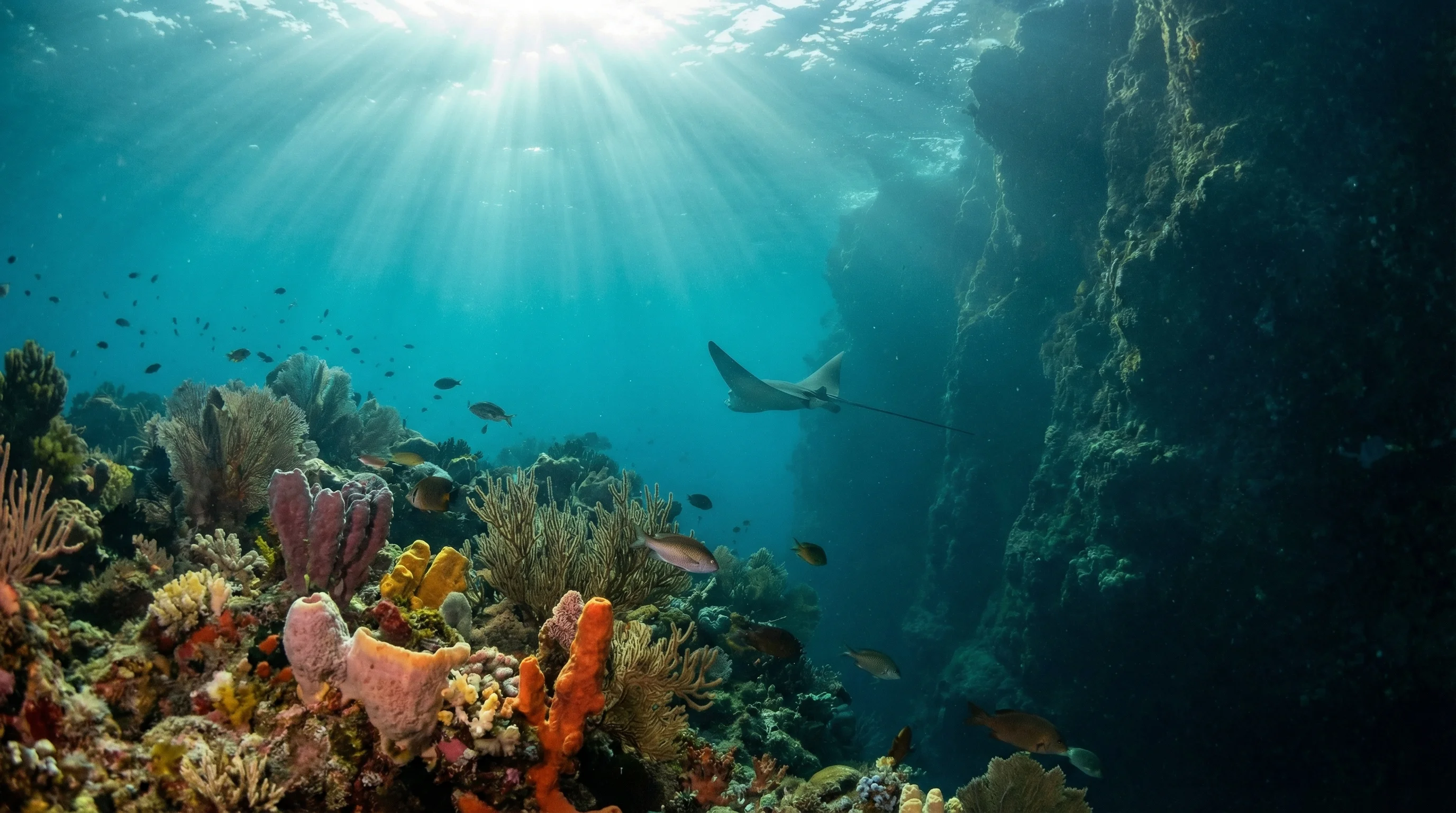
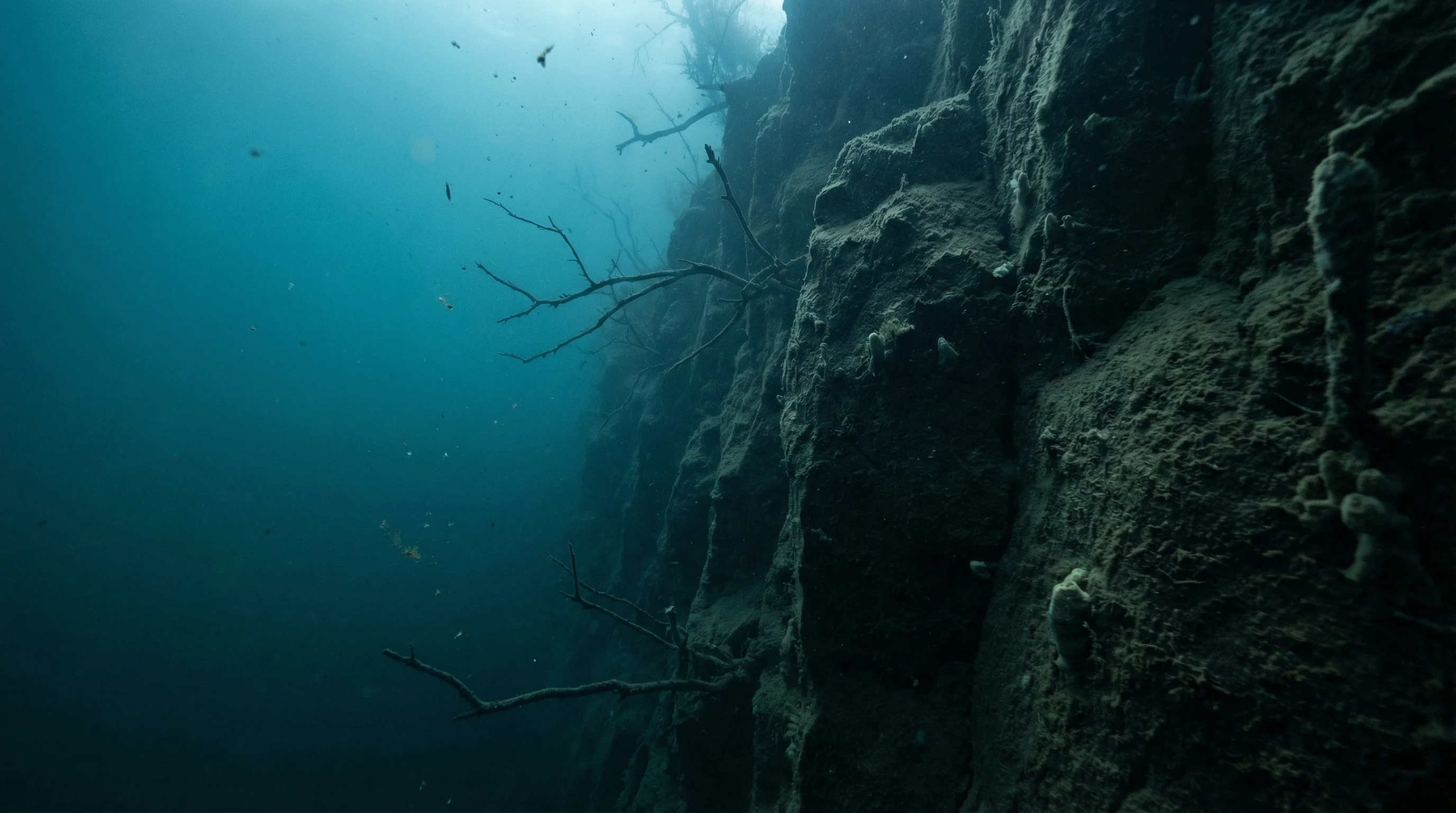
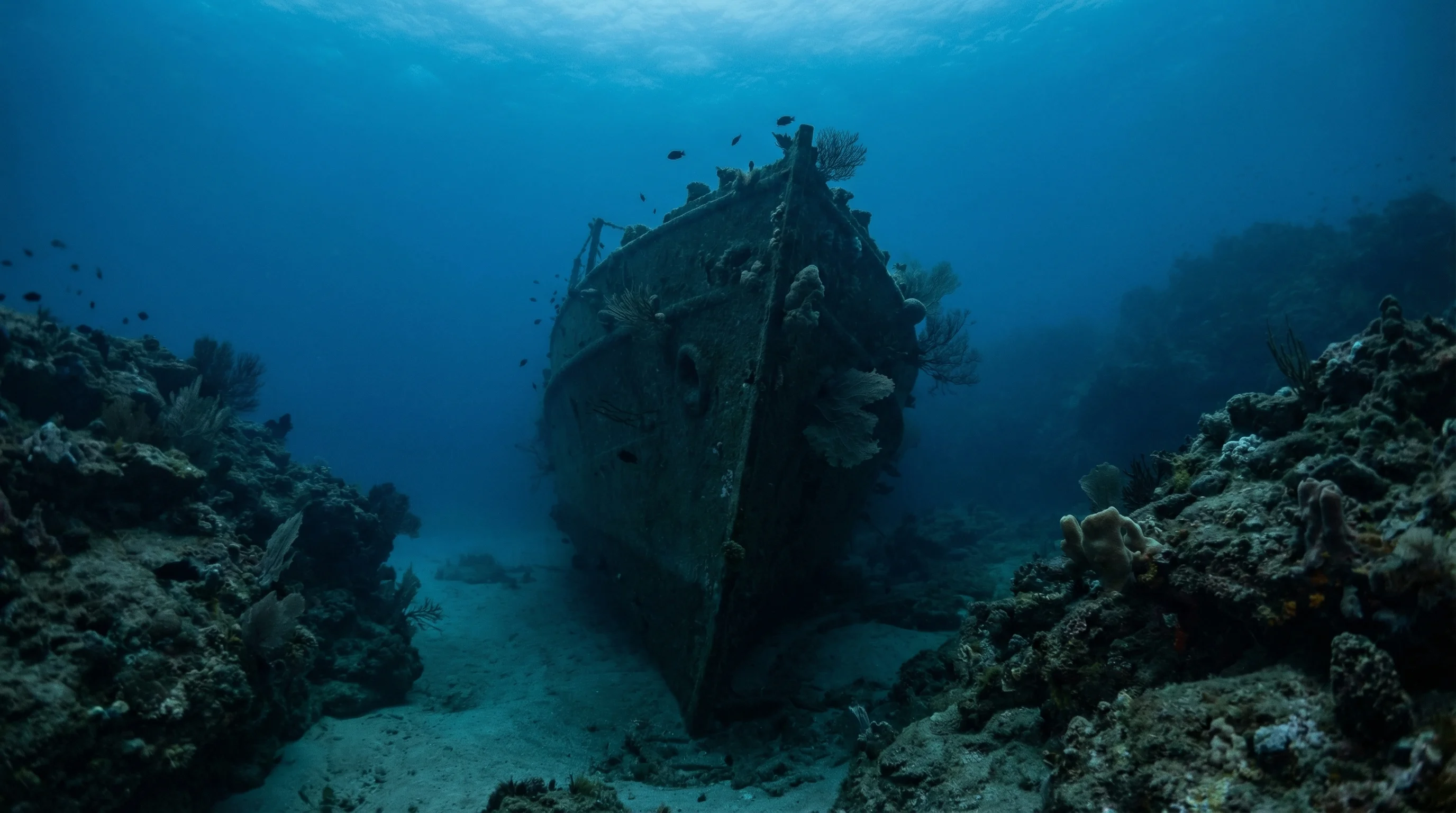
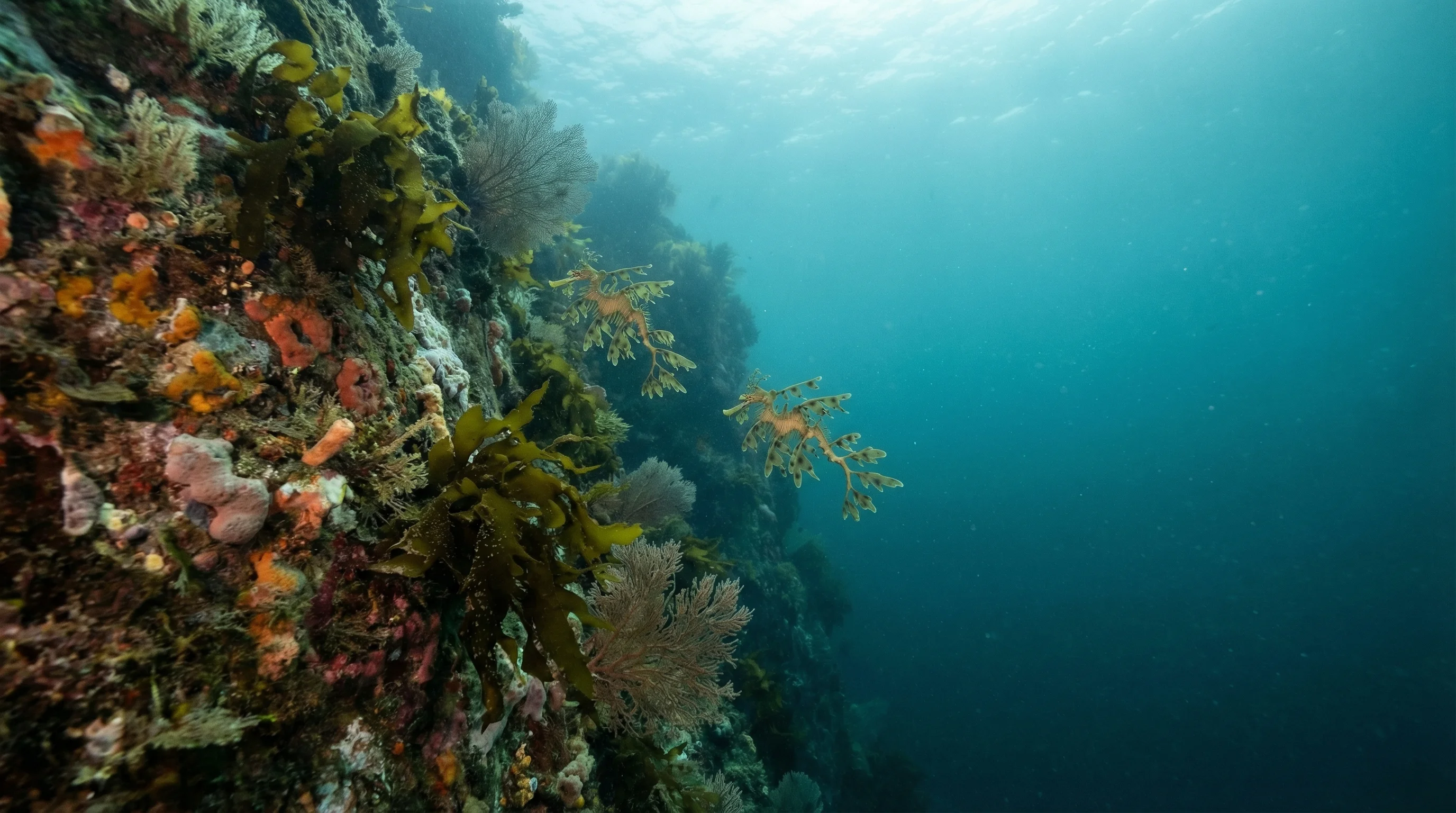
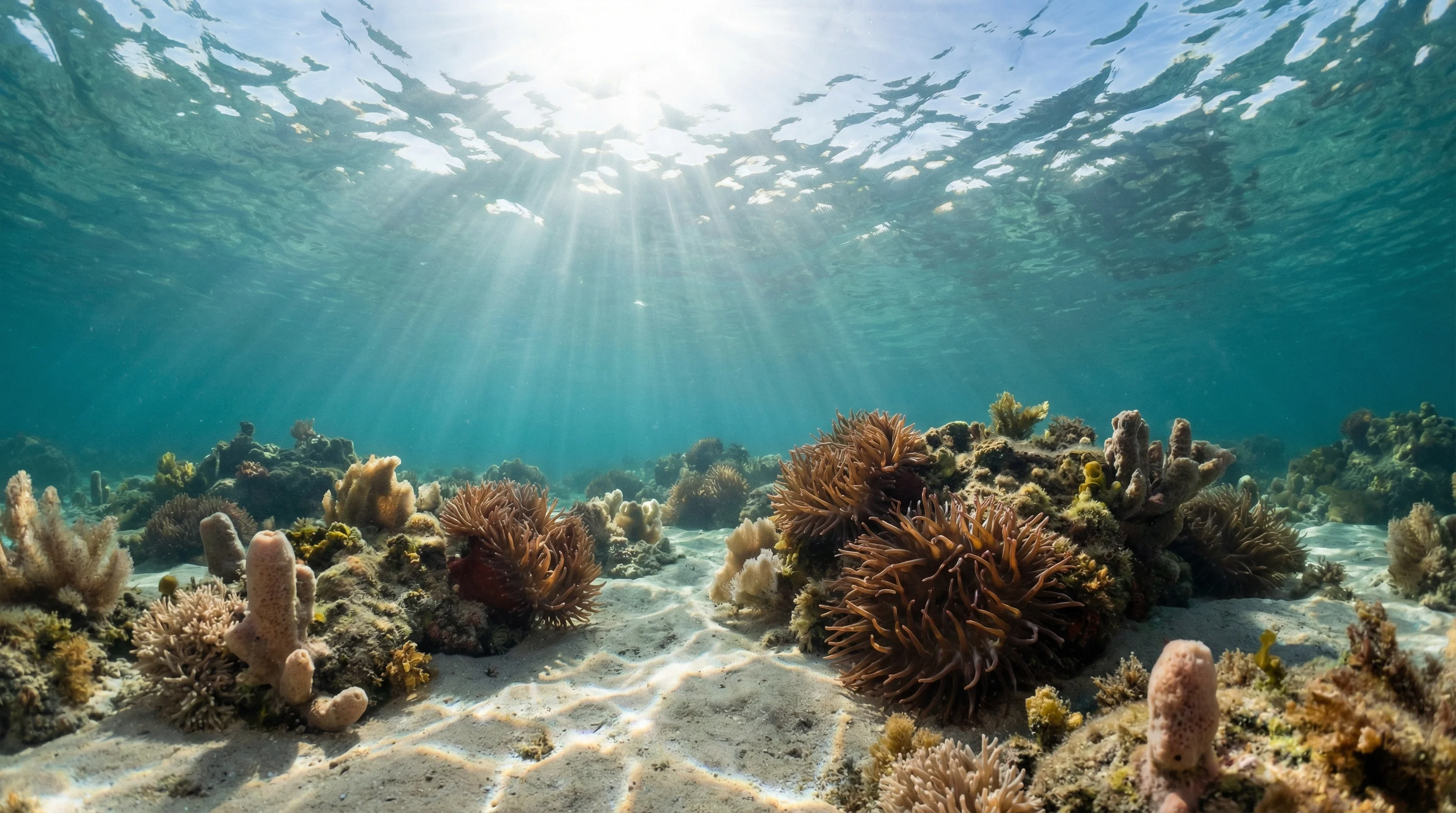
Water temperature around Great Ocean Road ranges from about 14°C in July to 18°C in January, based on satellite sea-temperature data for its dive sites.
In the warm season (about 18°C) a 5mm suit is comfortable in Great Ocean Road; in the coldest months (about 14°C) step up to a 7mm or semi-dry suit.
Fin maps 24 sites in Great Ocean Road (18 scuba diving sites and 14 snorkelling spots, with some suited to both), organised into 4 areas.
Across Great Ocean Road's dive sites, January, February, March, April, May and December are most often reported as the best months to visit.
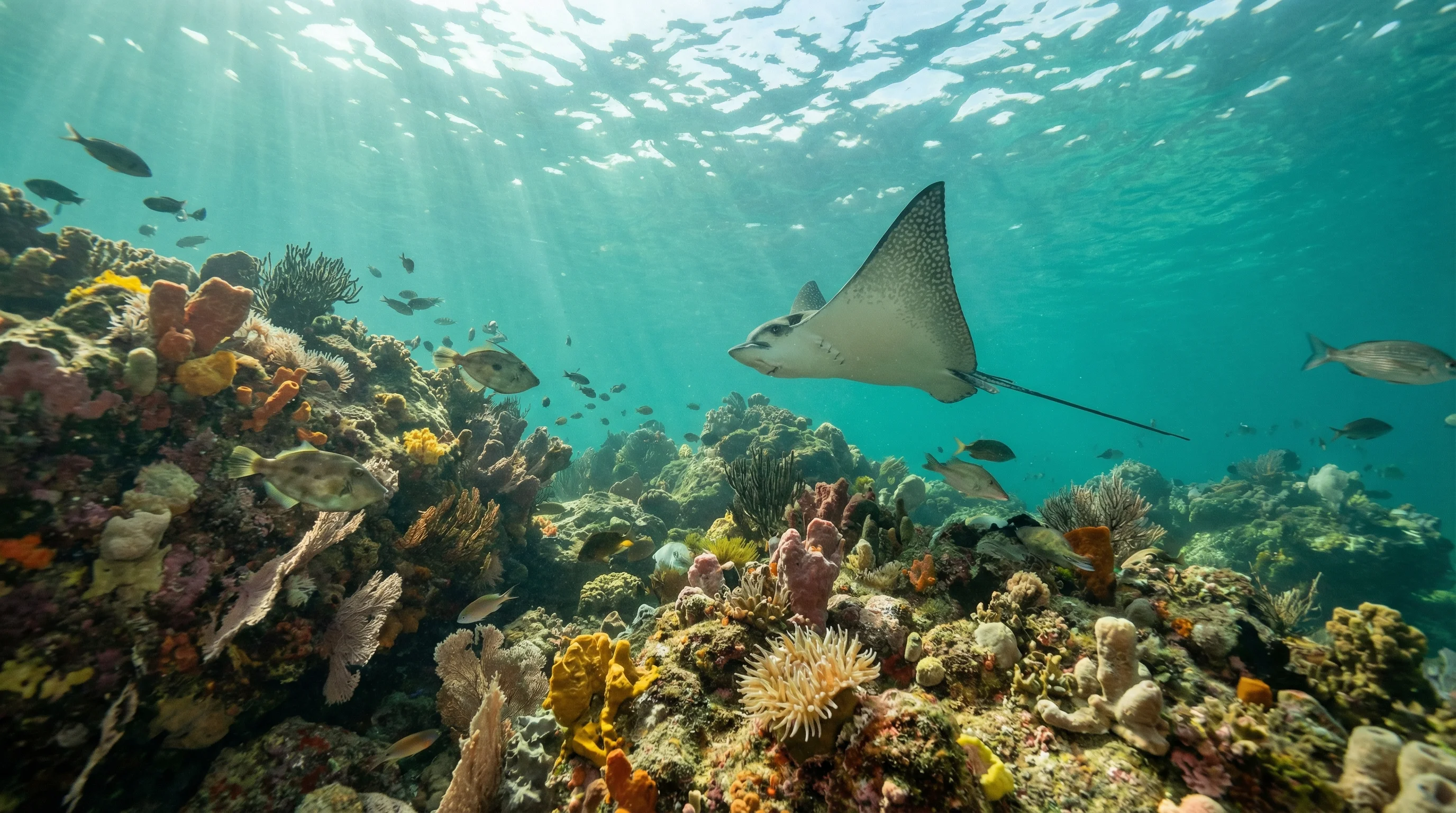
The region has a strong showing of invertebrate life, with Sea Star and Crab observed very commonly across sites. Signature species include Long-nosed Fur Seal, Giant Cuttlefish, New Zealand Octopus, Port Jackson Shark, and Smooth Ray. Weedy Seadragon and Spotted Wobbegong have also been recorded, and the occasional Northern Elephant Seal turns up at Portland sites.
A good number of sites are rated for beginners, including Nunn's Beach and Lee Breakwater in Portland and the Warrnambool Breakwater inside. These are shore-entry sites sheltered by breakwaters, with shallow, calm conditions. Port Campbell's The Arches is also beginner-rated, though surge can be a factor there. Intermediate and advanced divers have deeper options, including the volcanic crater lakes and the Emily S wreck.
Apollo Bay has the largest concentration of sites and forms the heart of the region. Portland offers a mix of sheltered breakwater dives, a boat-accessible wreck in the Emily S, and reef sites at Lawrence Rocks Bay. Port Campbell has fewer sites but includes the wall and reef system at The Arches. Warrnambool rounds out the region with sheltered breakwater and kelp-forest reef diving at Stingray Bay.
The majority of sites across the region are shore-accessible, making independent diving straightforward at many locations. Nunn's Beach, Lee Breakwater, Stingray Bay, and the Warrnambool Breakwater inside are all shore entries. The Emily S wreck and Lawrence Rocks Bay in Portland require boat access, and Lake Purrumbete offers both shore and boat entry options.