Ascarosepion apama
Australia's giant cuttlefish is most reliably logged in New South Wales and Western Australia. Here's where to find them and when to go.
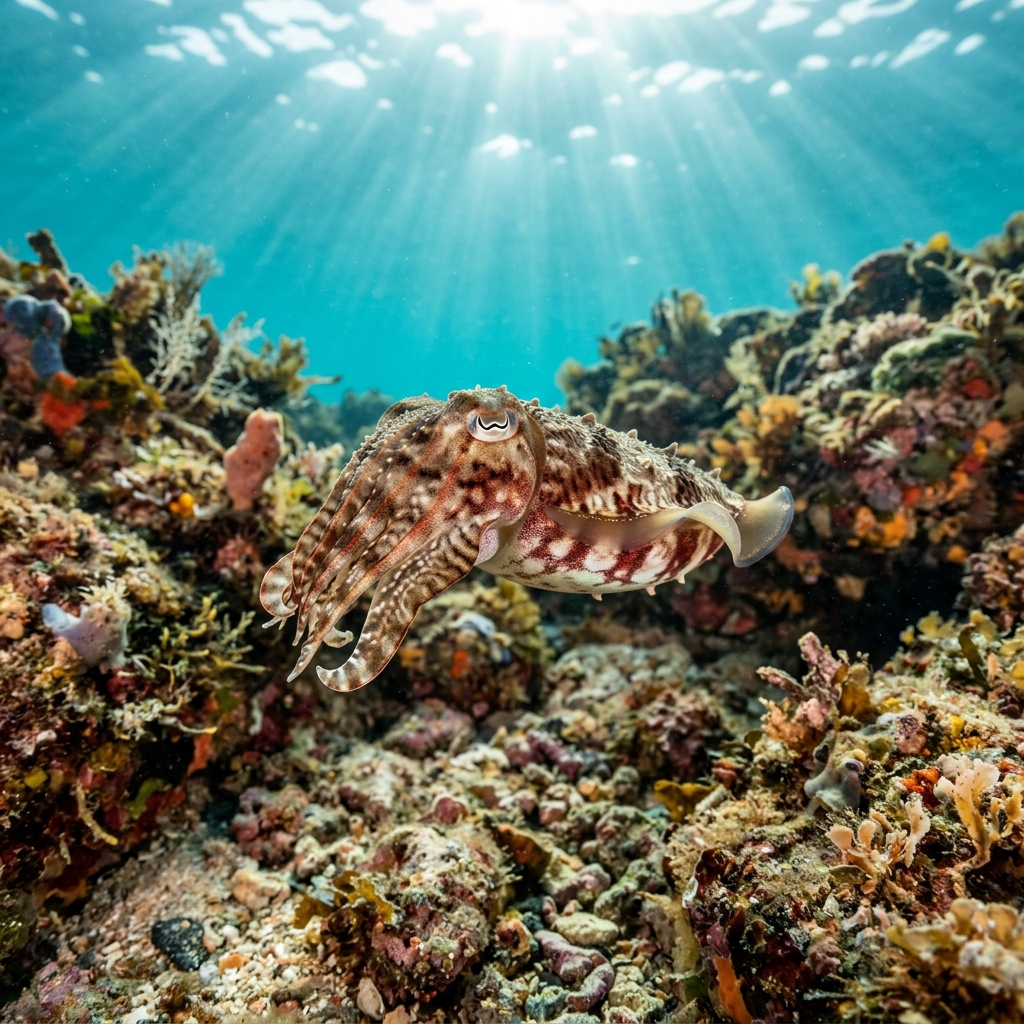
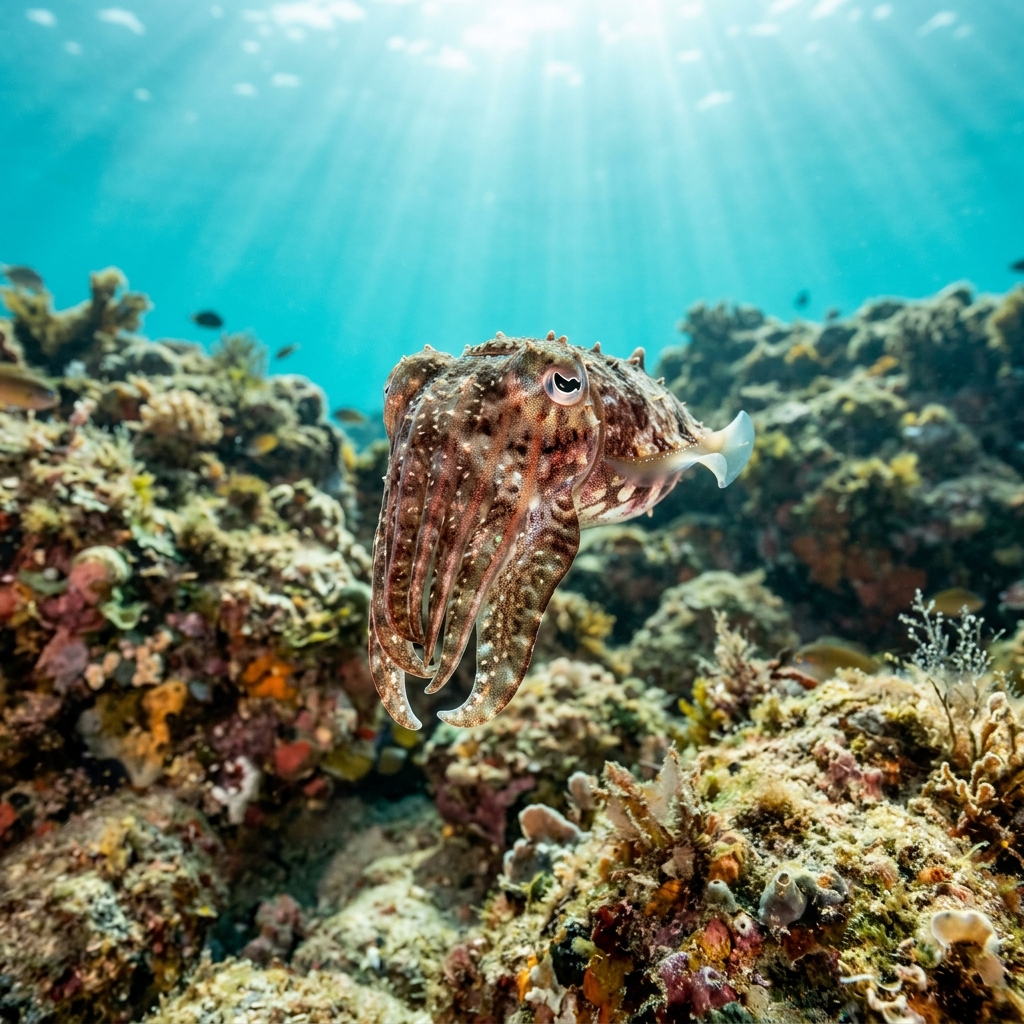
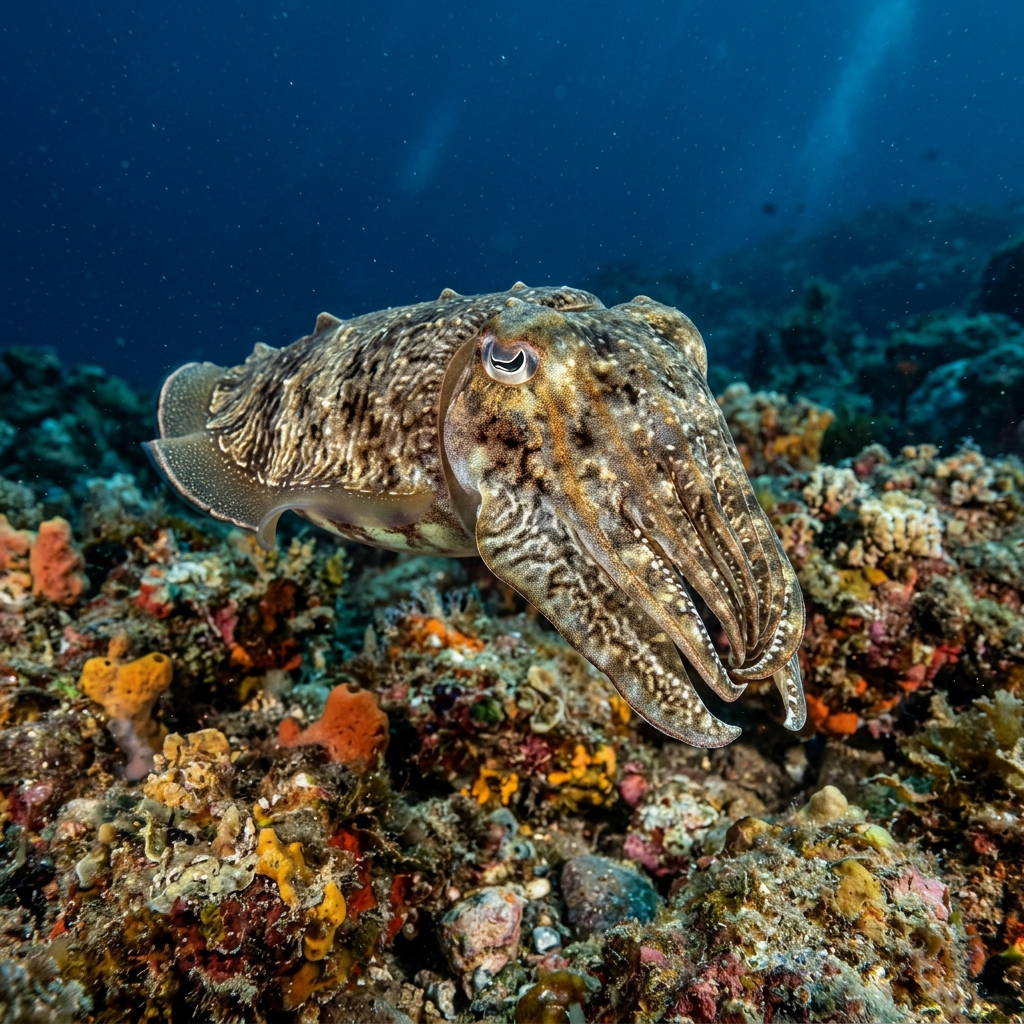
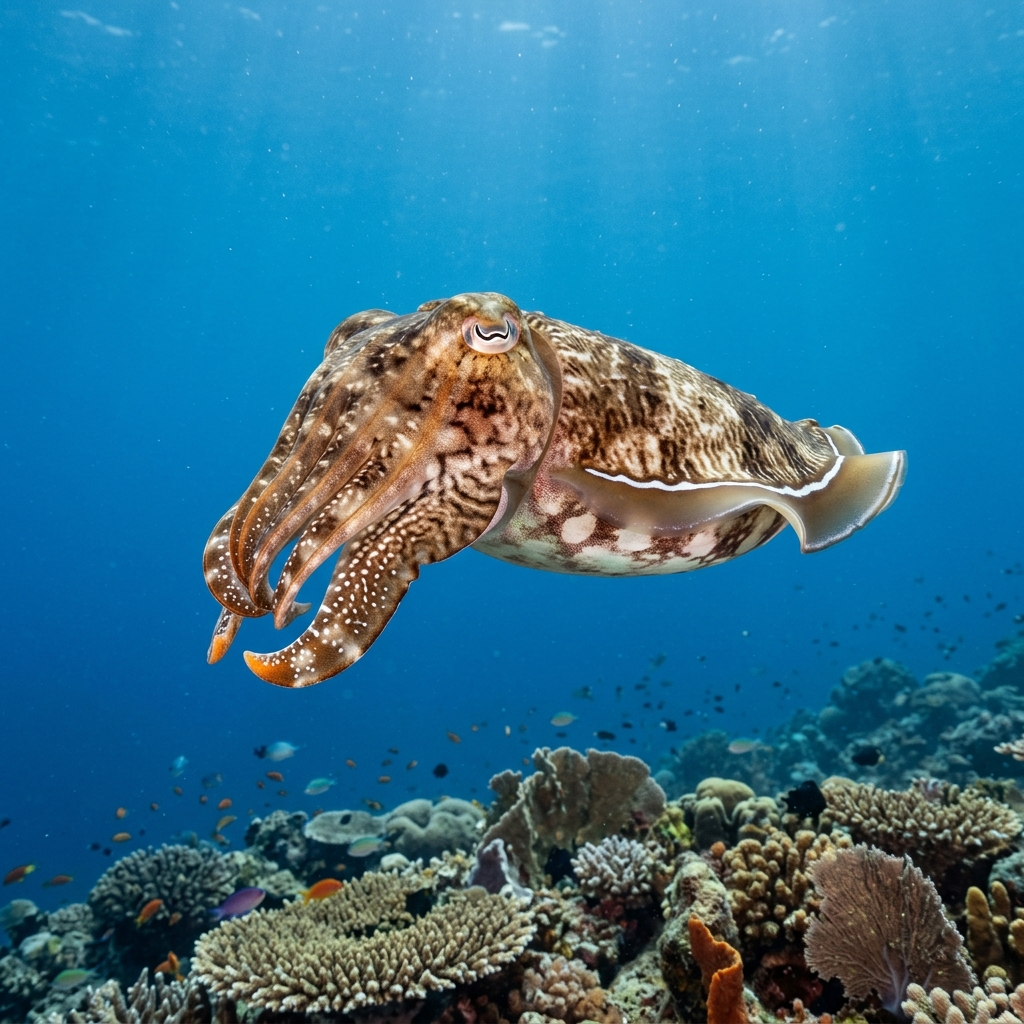
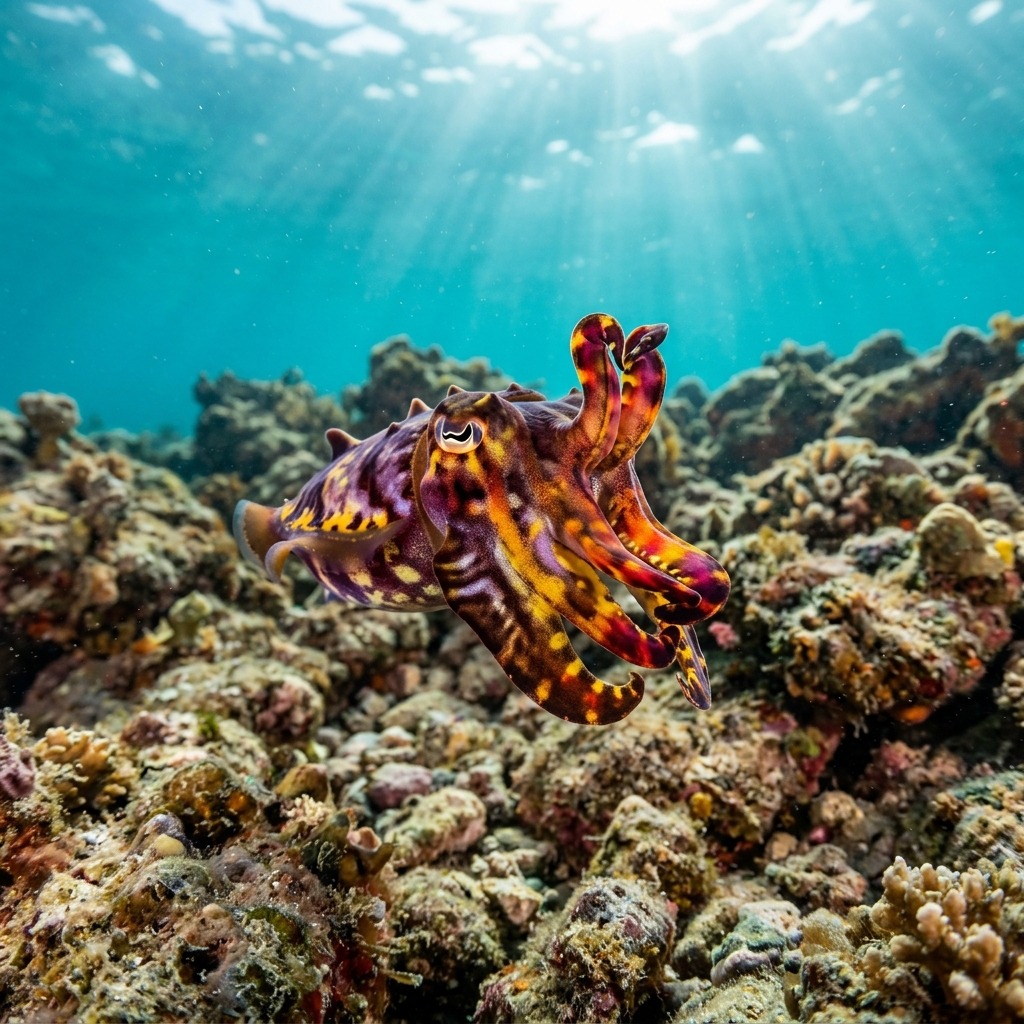
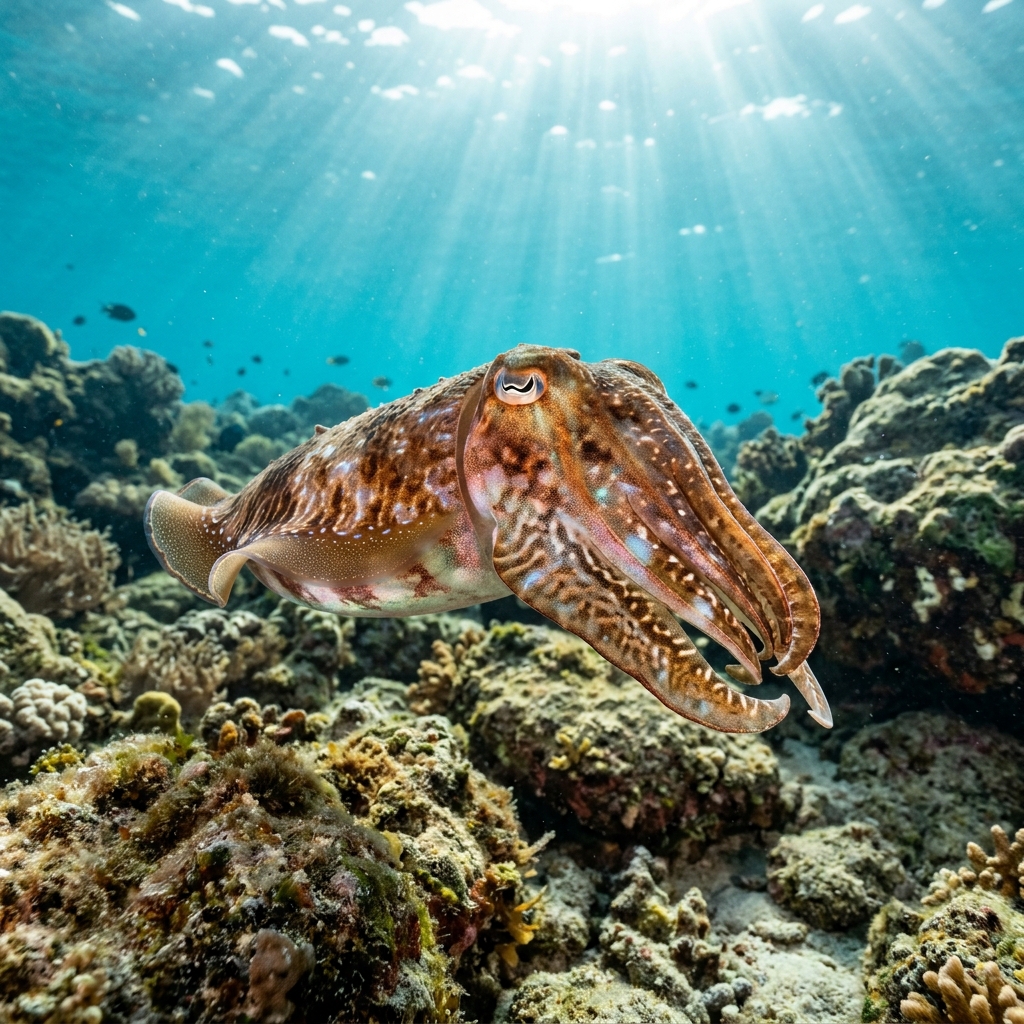
Size is the first giveaway: this is the world's largest cuttlefish, and even a modest adult dwarfs anything else on a temperate Australian reef. The body is broad and flattened, with a frilled fin running the full length of the mantle and eight short arms flanking two longer feeding tentacles. Skin colour shifts constantly through browns, creams, oranges and greens, but look for the characteristically large, W-shaped pupils and the lumpy, textured mantle skin that can raise papillae (small skin projections) into elaborate ridges and bumps. Males courting females often flash rapid, rippling colour waves across their mantle that are hard to miss.
Giant cuttlefish spend a lot of time hovering just above rocky reefs, using their undulating fin to hold position almost perfectly still while they stalk crustaceans and fish. Approach slowly and they will often hold their ground, sometimes tilting slightly to watch you with one large eye; sudden movements tend to trigger a rapid jet-powered retreat. During the mating season, males compete intensely in plain sight, flashing colour signals and physically grappling, which makes for extended, close-range observation opportunities.
During the annual South Australian aggregation, one of the largest gatherings of cephalopods anywhere on earth, smaller 'sneaker' males mimic the colour and body shape of females to slip past dominant males and mate directly with females under guard. It is one of the more elaborate examples of sexual deception in the animal kingdom.
Sightings across the Southern Hemisphere concentrate between January and August, covering the southern autumn and winter months when water temperatures sit in the cooler part of the species' 11 to 23 °C range. This window coincides with the famous annual aggregation events when large numbers gather to mate and lay eggs.
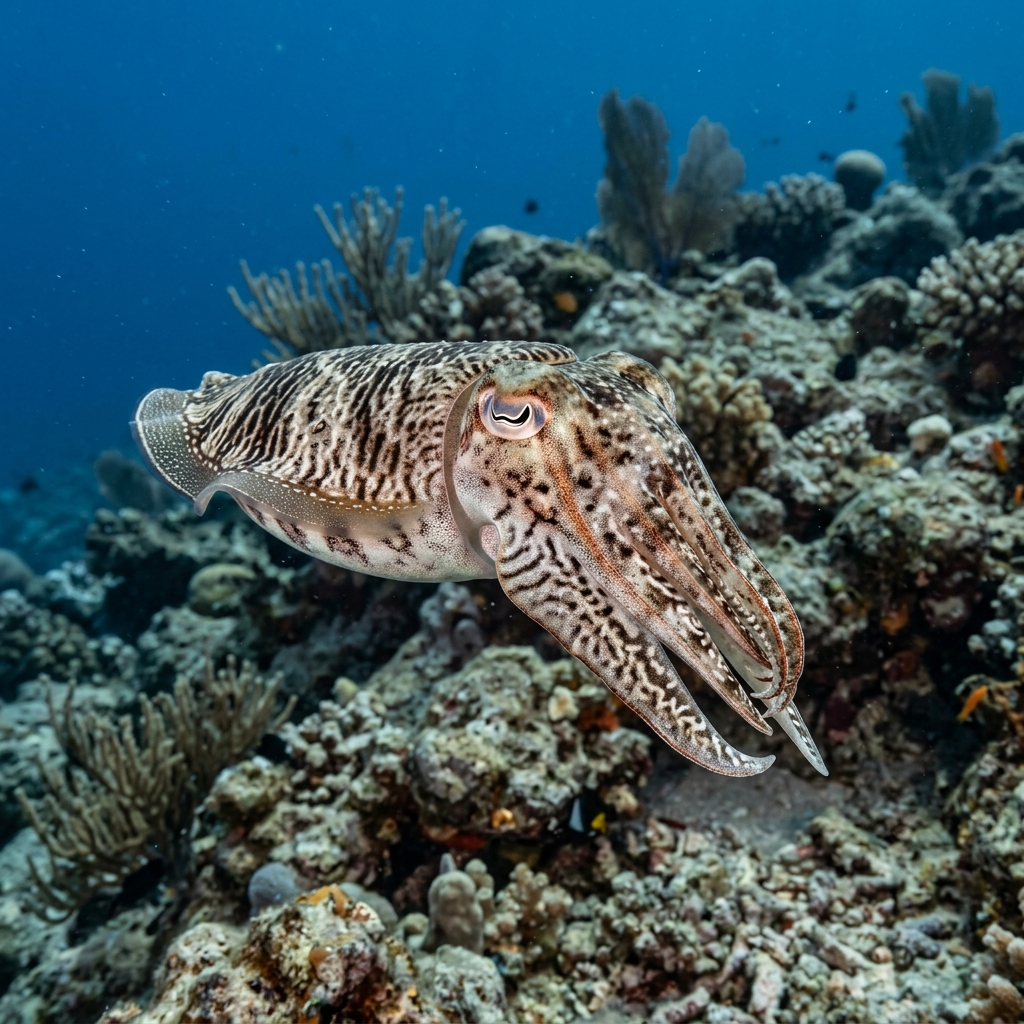
Reef neighbours a diver could mistake it for. Use the identification notes above to tell them apart.
All logged sightings come from Australia, with New South Wales leading the count by a wide margin, followed by Western Australia and Victoria. South Australia and Tasmania round out the spread, with the animal present across the full southern and eastern coastlines. If you are after your best odds, target the reef systems of New South Wales and the rocky reefs of south-west Western Australia.
Mapping where Giant Cuttlefish is logged…
They are found exclusively in Australian waters based on diver observations, with the strongest sighting records coming from New South Wales, Western Australia, and Victoria. Rocky reef systems along the southern and eastern coasts are your best bet.
Sightings peak between January and August in the Southern Hemisphere. The winter aggregation events, when large numbers gather to breed on rocky reefs, offer the most reliable and spectacular encounters.
They are the largest cuttlefish species in the world. Adults regularly reach 50 cm in mantle length and can weigh over 10 kg, though underwater the broad, flattened body often makes them look even larger than measurements suggest.
Scale alone is usually enough: no other cuttlefish on Australian temperate reefs comes close in size. Look for the wide, flat mantle with a continuous frilled fin, lumpy textured skin, and large W-shaped pupils. Rapidly rippling colour waves across the mantle are a classic display you will not see on smaller species.
No. Like all cuttlefish they can bite if handled, and they do carry venom used to subdue prey, but unprovoked attacks on divers are not recorded. Observe without touching and they pose no risk.
They are currently listed as Near Threatened. Populations at key aggregation sites can be vulnerable to habitat disturbance and pollution. Divers can help by staying off the substrate, not interfering with mating animals, and reporting sightings to citizen-science platforms.
Site and sighting data is aggregated from diver logs, iNaturalist and GBIF. For taxonomy and conservation status:
Pharaoh Cuttlefish
925 sites