Asteroidea spp.
Sea stars are logged year-round from the French Riviera to the Philippines. Find out where to spot them and how to tell species apart underwater.
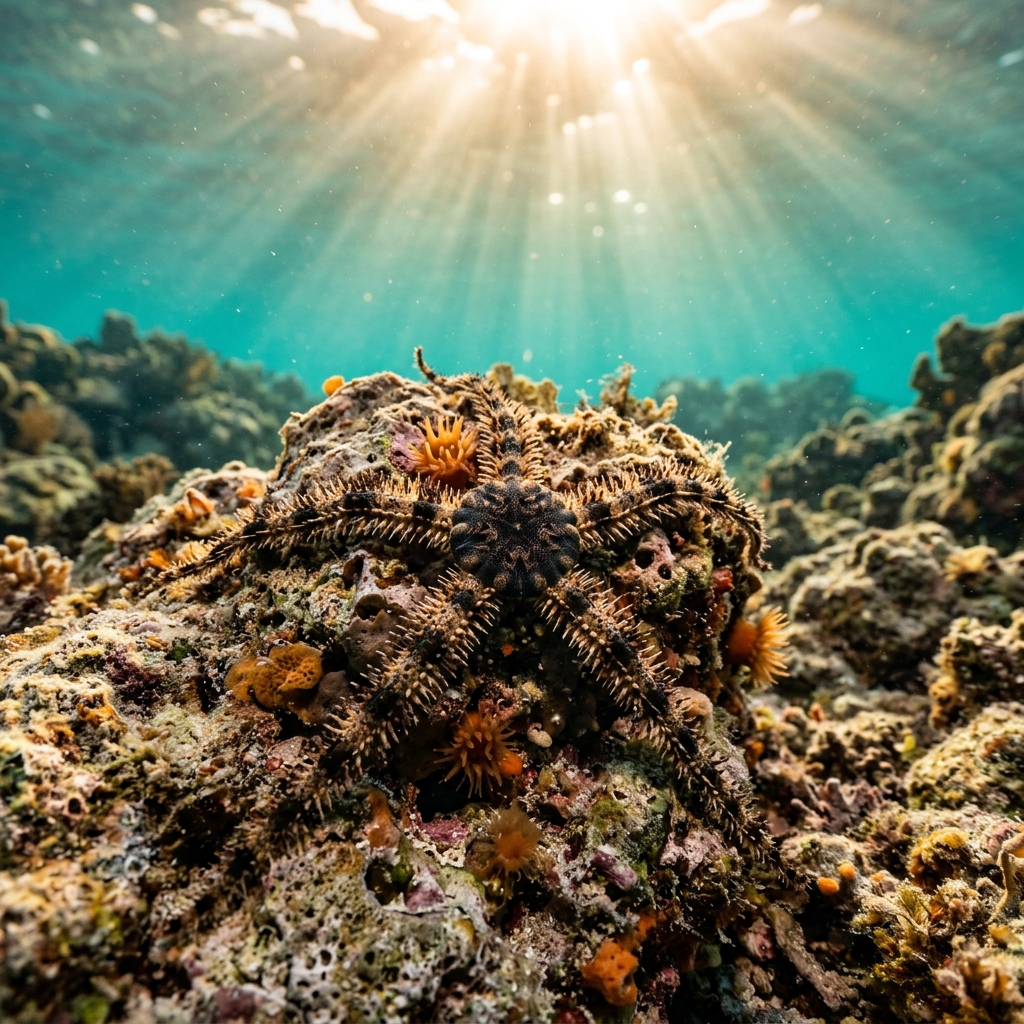
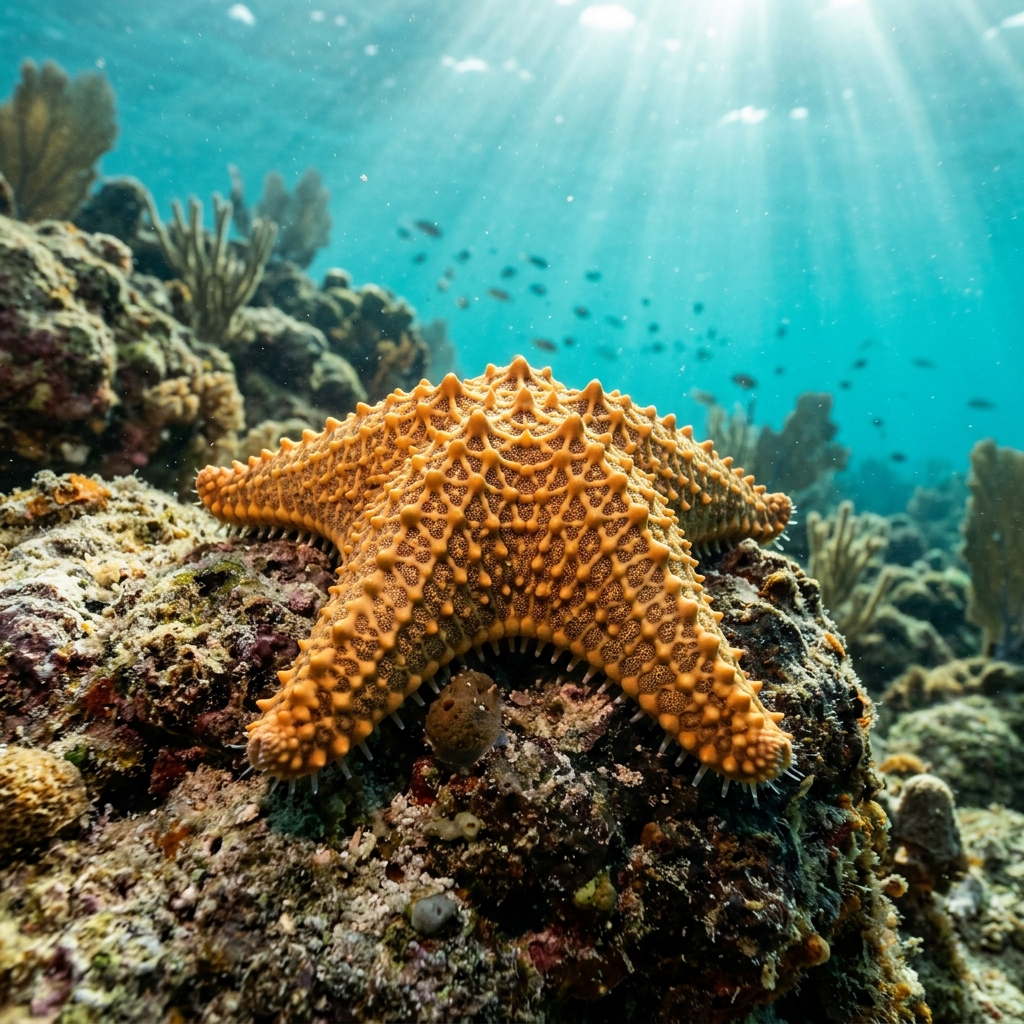
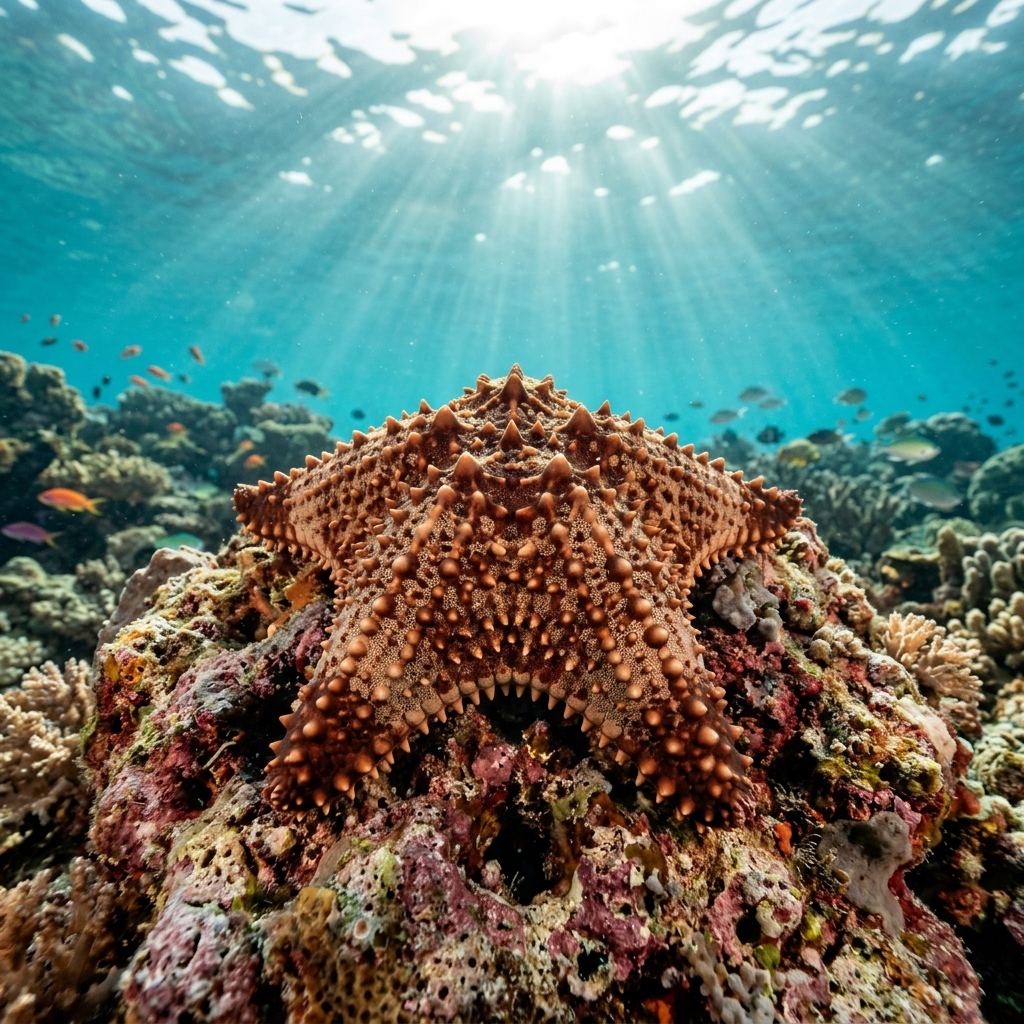
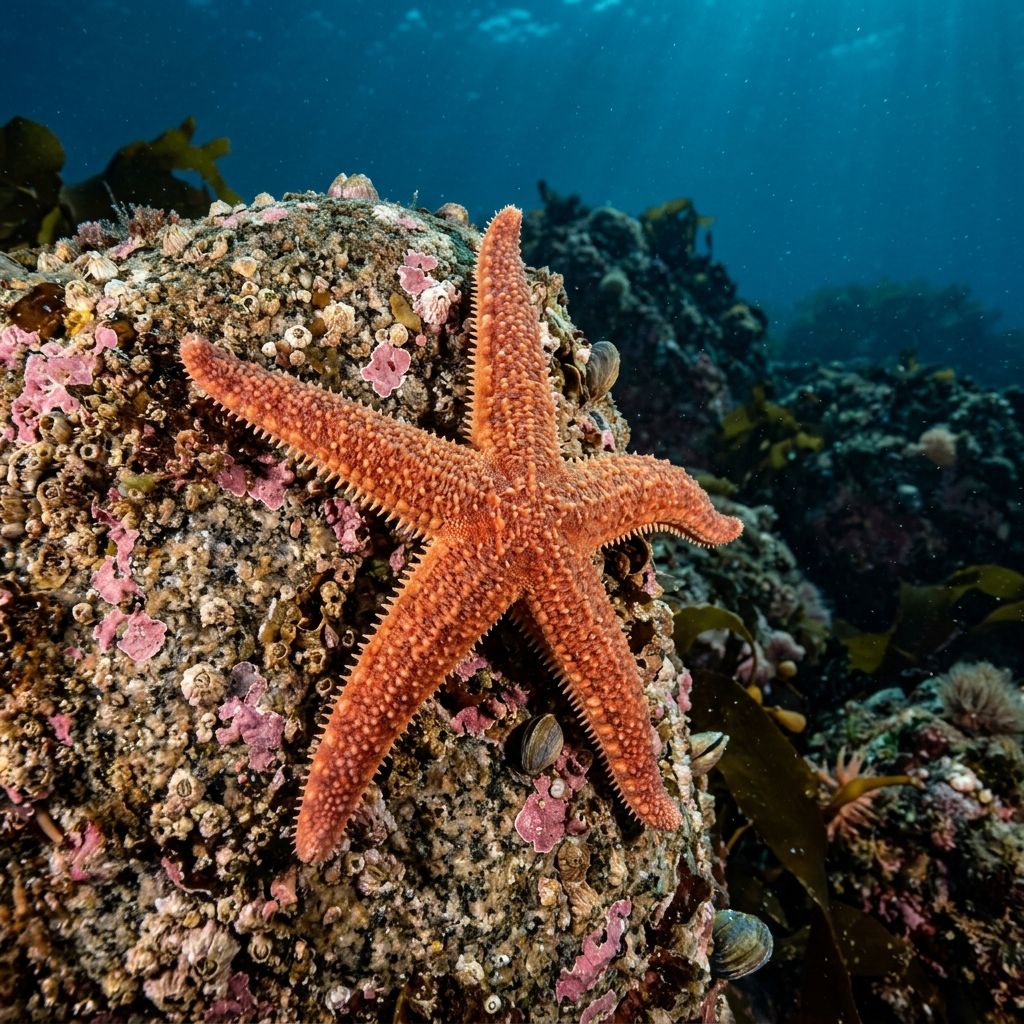
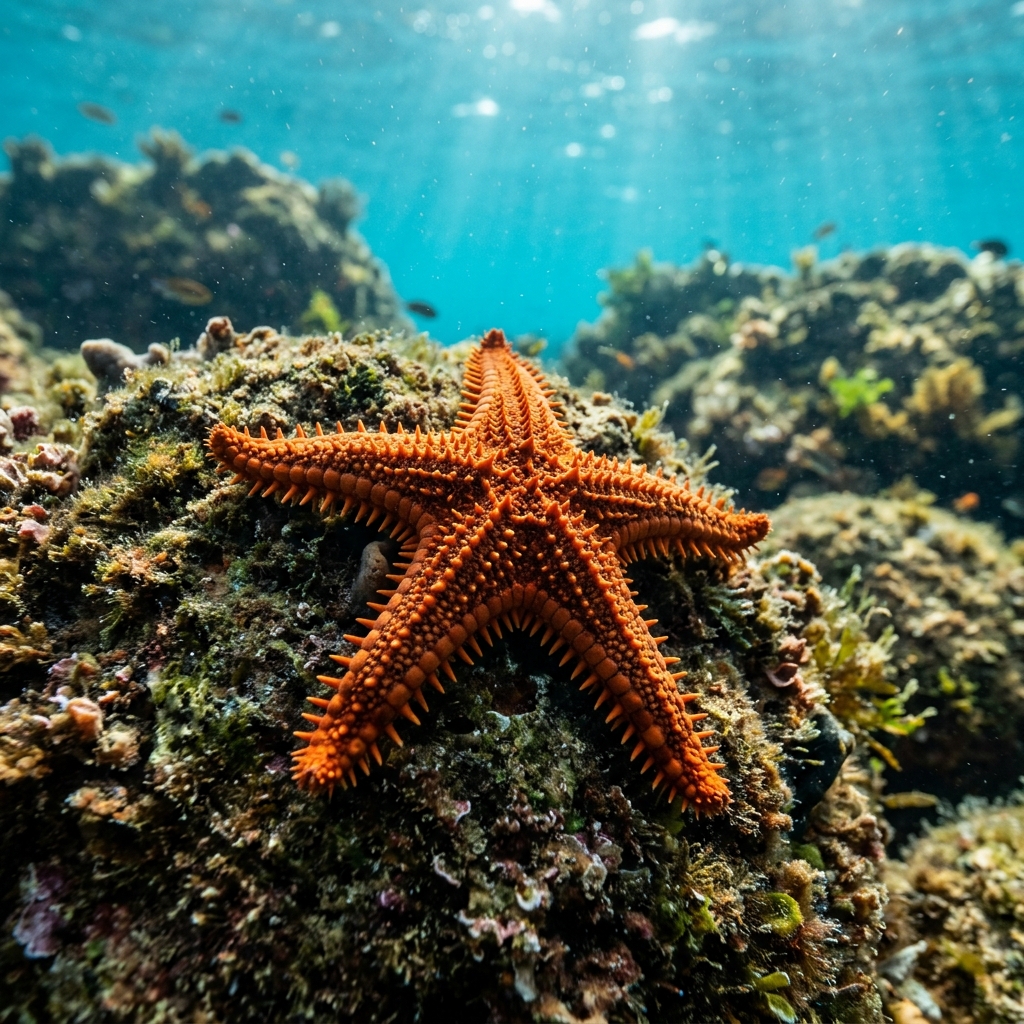
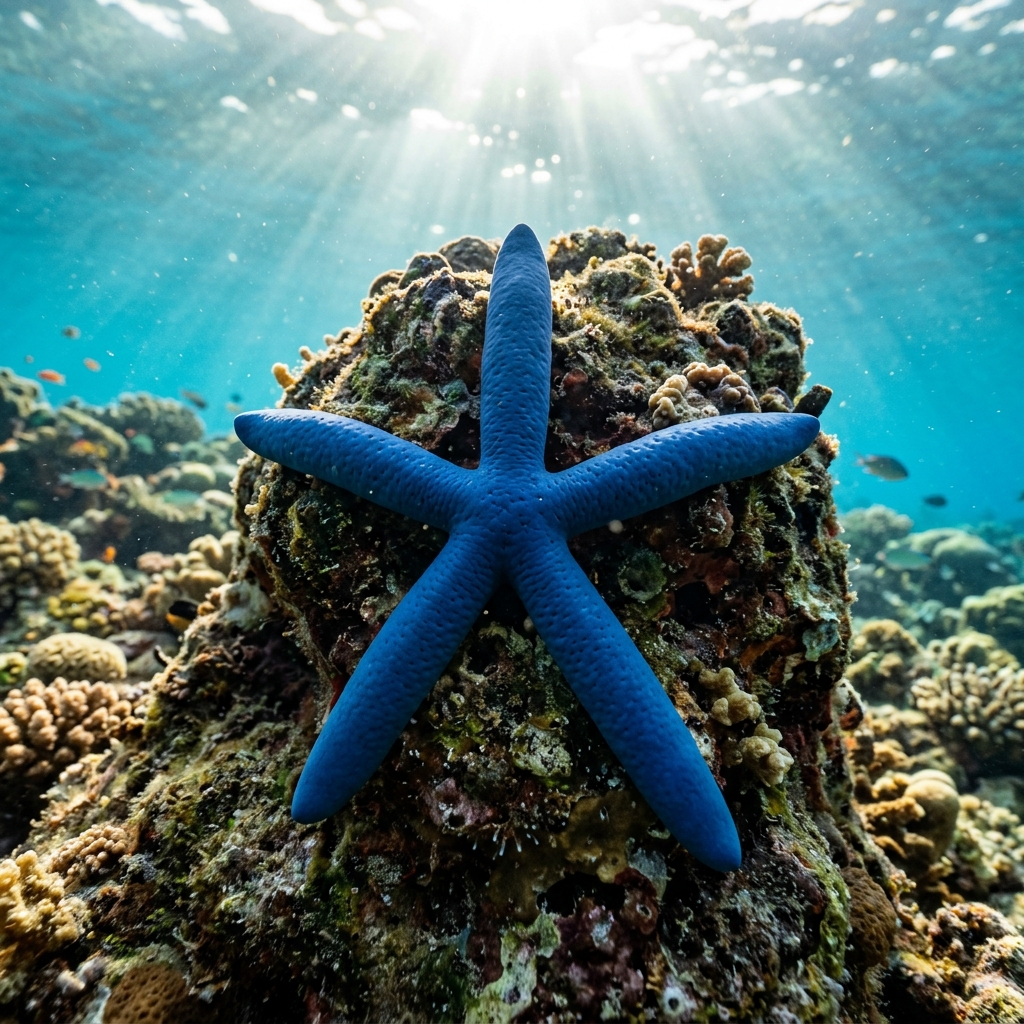
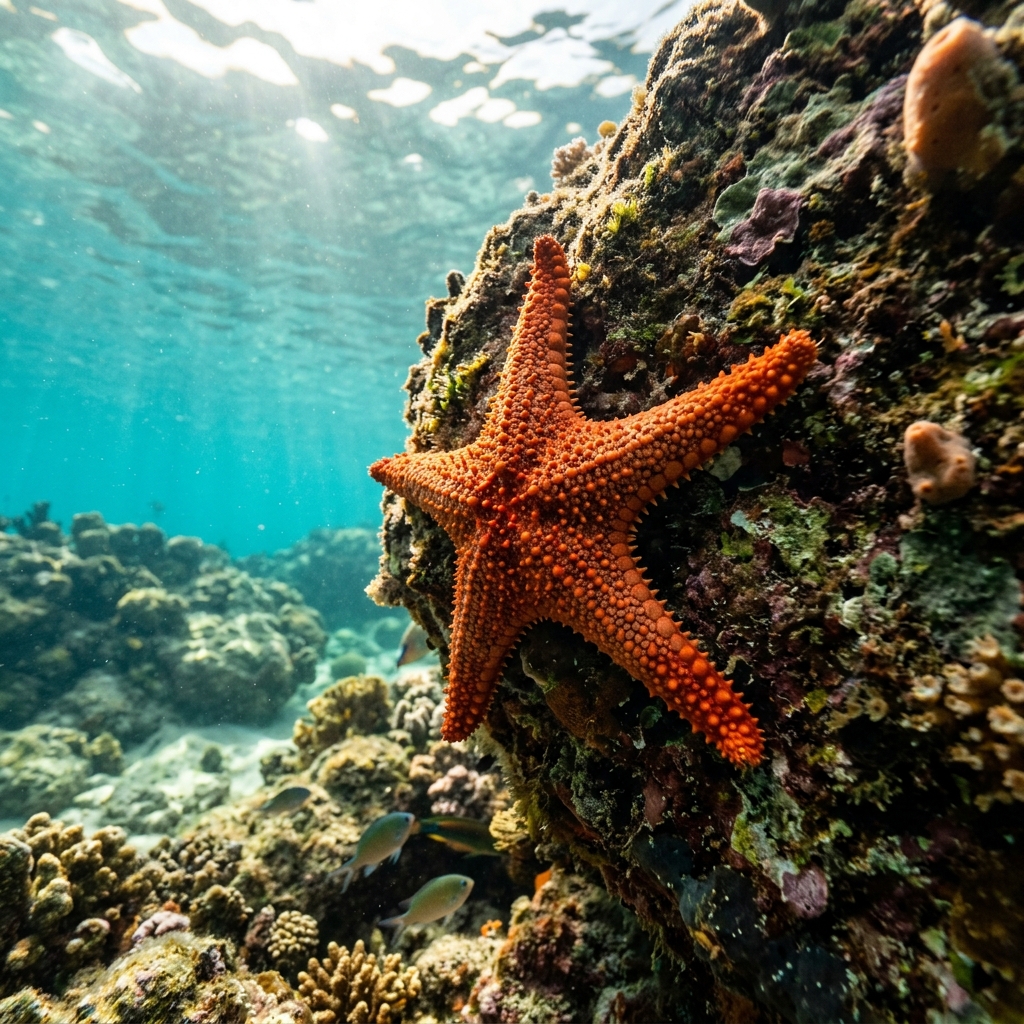
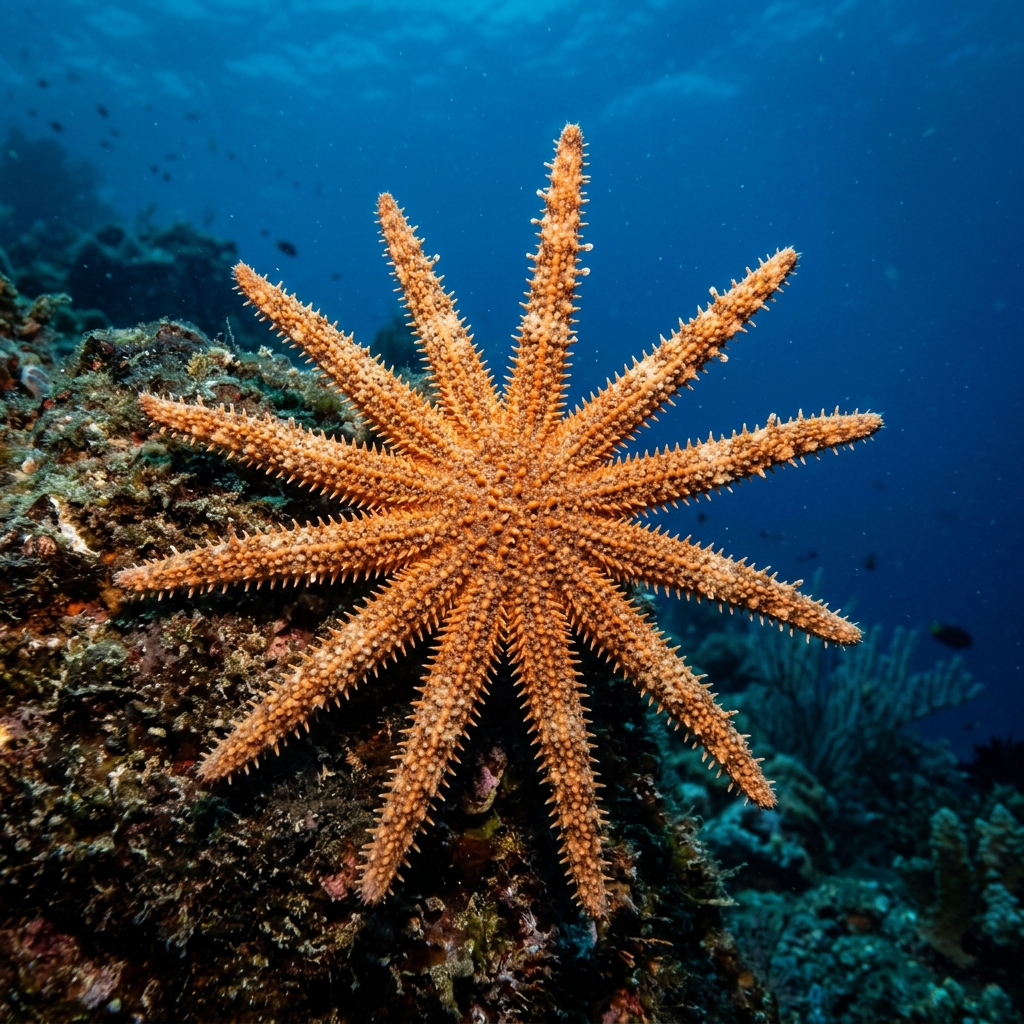
Five-armed radial symmetry is the instant tell underwater, though some species carry more arms. Colours run from vivid orange, purple, and red to mottled brown and grey depending on species and depth. Most sit directly on rock, rubble, or sand with the underside flush against the substrate. Size varies enormously across the group, from a few centimetres to well over half a metre across.
Most sea stars are slow, deliberate animals; when you find one it is usually doing exactly what it looks like it is doing, moving at a crawl across rock or sand in search of prey such as mussels, urchins, or organic detritus. They rarely react to diver presence at all, making them easy to observe at close range. Look along rocky reef walls, on rubble slopes, and on sandy patches between coral or kelp, often in shallow to mid-water depths.
Sea stars can regenerate lost arms, and some species can regrow an entire body from a single severed limb given enough time. This remarkable ability makes them one of the most studied groups in invertebrate biology, and it means a 'damaged' animal you spot on a dive is often actively recovering rather than dying.
Present year-round in both hemispheres with no concentrated season, so timing your dive around other conditions is more useful than chasing a peak month. The observed water temperature range of 7.5 to 17.4 °C points to a bias toward cool and temperate seas, so cold-water destinations tend to produce the most reliable sightings.
Reef neighbours a diver could mistake it for. Use the identification notes above to tell them apart.
Sea stars are most consistently logged across temperate and cold-water regions, with particularly strong records across France (especially the French Riviera and Brittany), Spain's Costa Brava and Costa Blanca, and the Pacific Coast of the United States. Tropical hotspots include the Philippines' Visayas, Indonesia, and Australia's New South Wales, making this one of the most broadly encountered invertebrate groups in recreational diving.
Mapping where Sea Star is logged…
Sea stars are logged across a wide spread of countries, with particularly reliable sightings in France, Spain, and along the US Pacific Coast for temperate species, and in the Philippines, Indonesia, and Australia for tropical ones. The French Riviera, Costa Brava, and New South Wales are among the standout regions in the data.
Sea stars are present year-round in both the Northern and Southern hemispheres with no defined peak season. Because the group favours cooler water, temperate dive destinations offer reliable sightings regardless of month, so there is no need to plan your trip around seasonality.
The five-armed radial body plan is the primary clue, though multi-armed species exist. Look at arm count, surface texture (smooth, spiny, or granular), and overall colour. Brittle stars share the five-arm layout but have slender, whip-like arms that move in a wriggling motion, while sea stars move their arms very little.
Size varies significantly across the group. Many common reef species measure roughly 10 to 30 cm across, but some, like the sunflower sea star, can exceed 60 cm. Underwater, most encounters involve animals in the 10 to 25 cm range.
Yes. Most sea stars can regrow a severed arm over weeks to months, and some species can regenerate a complete body from a single arm. An animal you spot missing a limb on a dive is typically in the process of regrowing it rather than fatally injured.
Sea stars pose no meaningful risk to divers. They move slowly and have no ability to bite, sting, or harm a person. The main exception is handling: a few species have sharp spines or mild surface toxins, so looking without touching is the safest and most respectful approach.
Site and sighting data is aggregated from diver logs, iNaturalist and GBIF. For taxonomy and conservation status:
Coscinasterias muricata
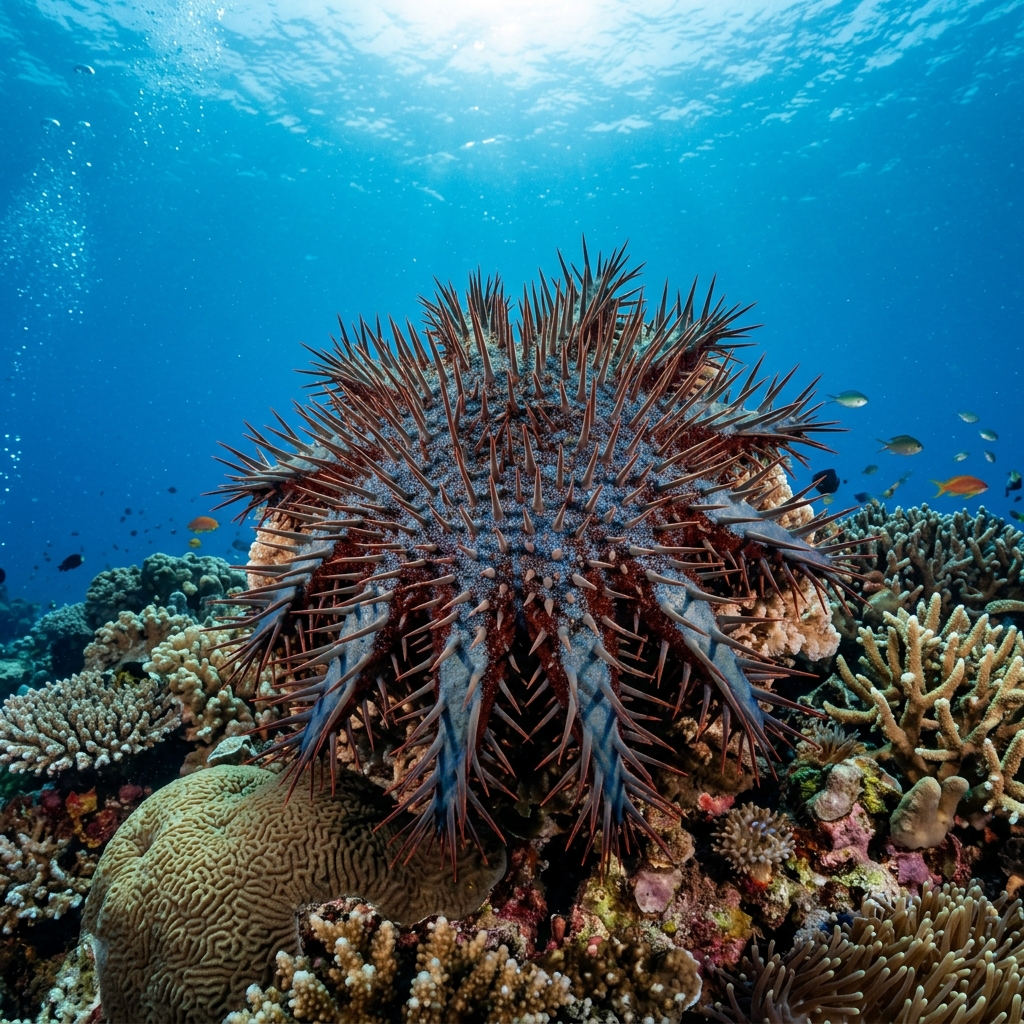
Crown of Thorns Sea Star
2,168 sites