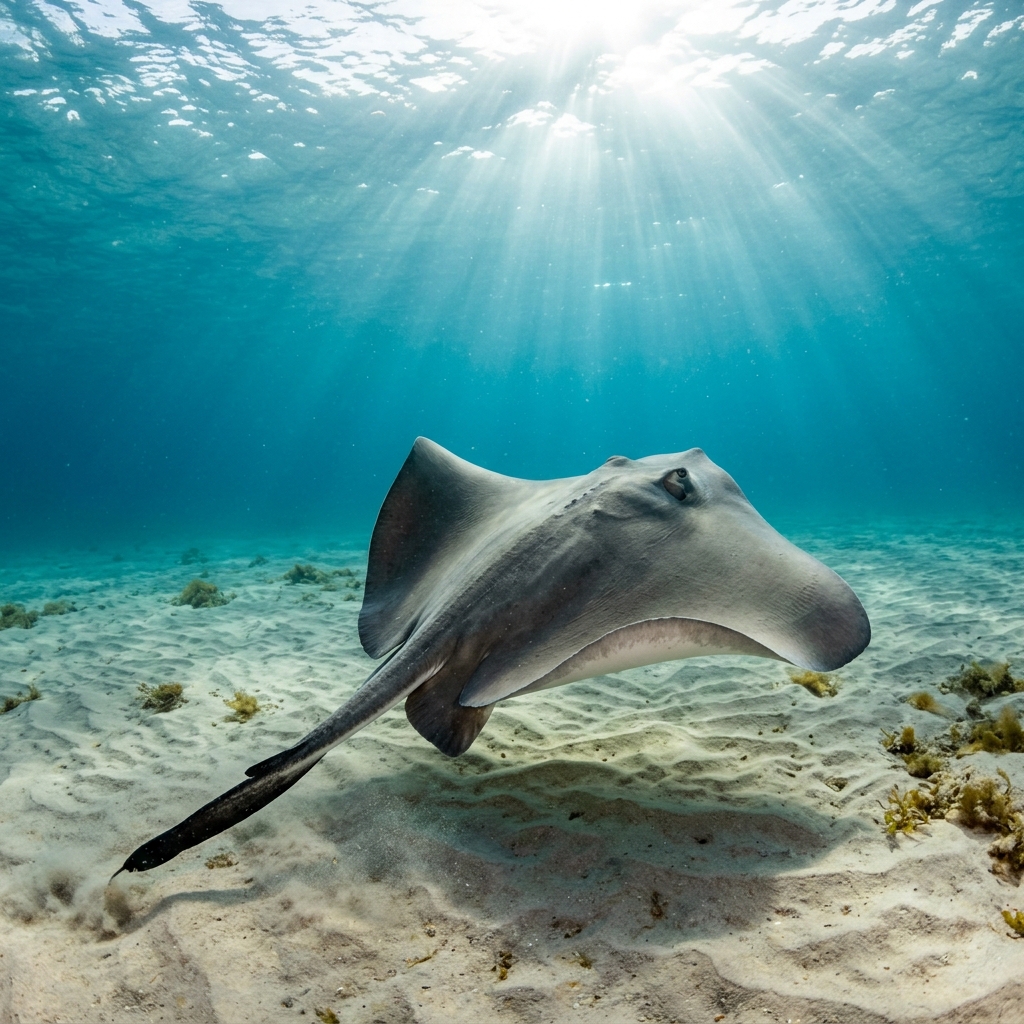
Bathytoshia brevicaudata
One of the world's largest stingrays, the Smooth Ray is most reliably seen off Western Australia and New South Wales. Here's where and when to find one.
Safety warning
Like all stingrays, the smooth ray carries one or more venomous tail spines and should be treated with respect. The risk is not aggression, it is an accidental strike if the ray is startled or pinned. Give it clear space, never approach from the tail end, and do not attempt to touch or ride it. If you encounter one resting on the bottom, keep a lateral distance and descend slowly to observe rather than hovering directly above.
If you're stung
Venomous tail barbGeneral first-aid guidance, not a substitute for professional medical care. In an emergency, call your local emergency number.
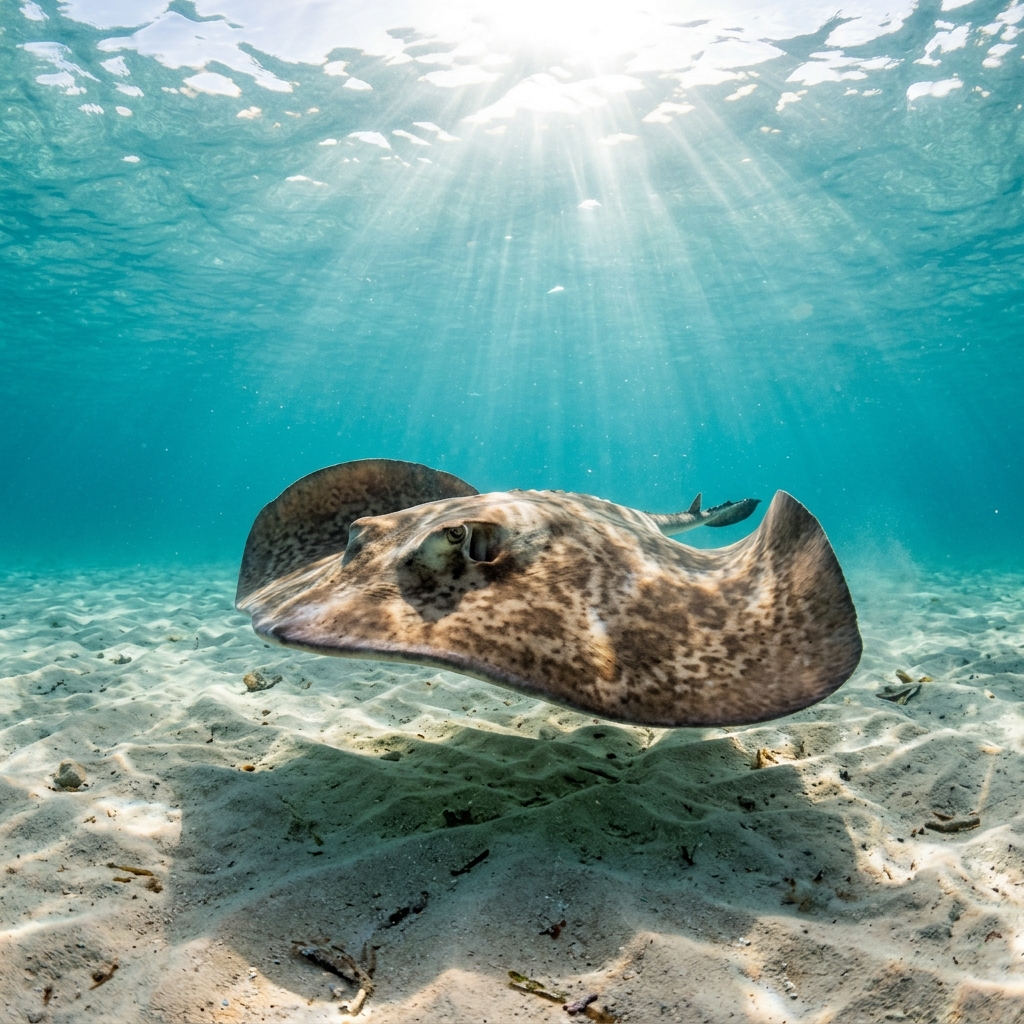
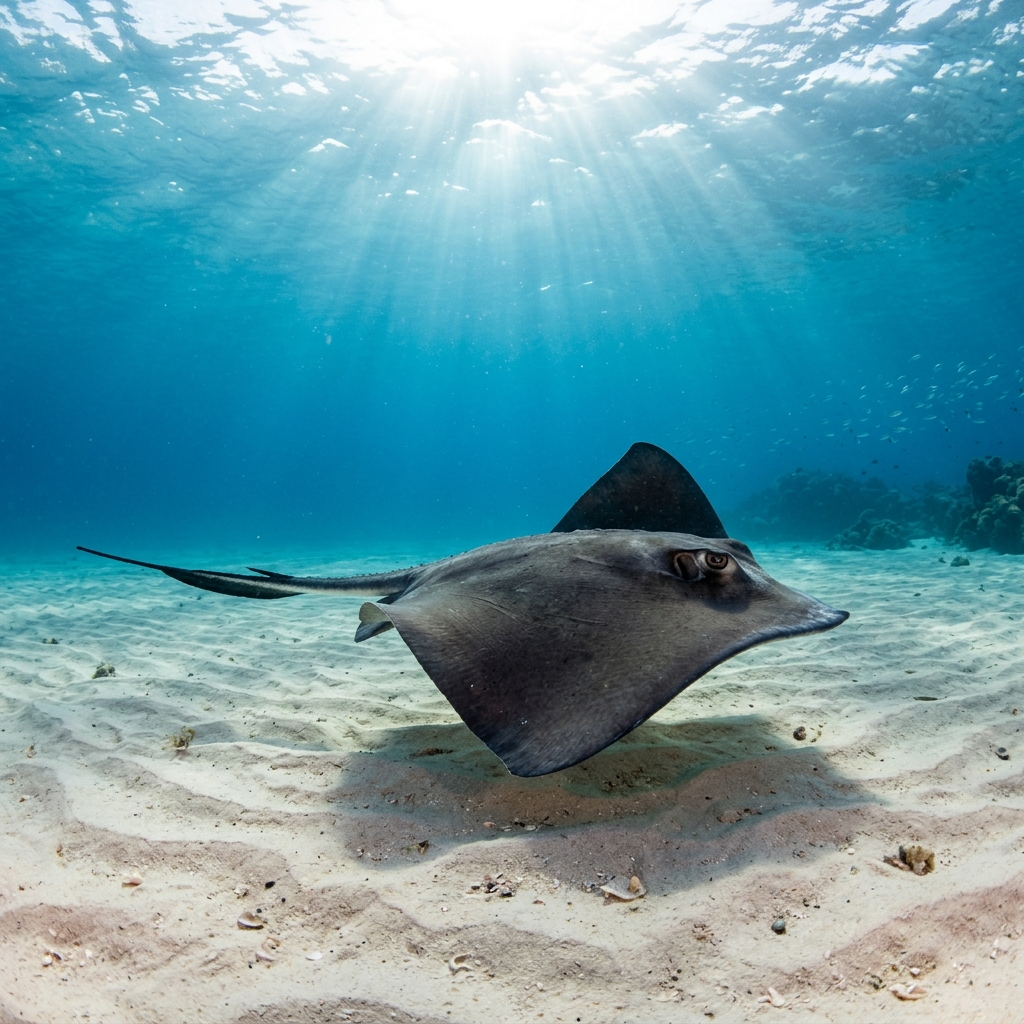
Sheer size is the first giveaway, females can exceed 3 metres in disc width, making this one of the largest stingrays on the planet. The disc is broadly rounded and almost uniformly pale grey to greyish-brown on top, with a white underside, and the skin has a notably smooth texture compared to other large rays. The tail is relatively short for a stingray of this size, which is where the species name comes from. Males are noticeably smaller than females and carry a pair of claspers (paired reproductive organs) clearly visible at the base of the tail.
Smooth rays are most often encountered resting motionless on sandy or rubble substrate, sometimes partially buried, which is why divers can almost stumble across them before spotting them. When approached calmly they often hold their position, giving a good look, but any sudden movement or crowding will prompt them to lift off and glide away with little apparent effort. Encounters tend to be solitary; aggregations are occasionally reported at specific sites but are not the norm.
As one of the largest elasmobranchs (cartilaginous fish) in temperate Australasian waters, females can carry very few pups per litter, a slow reproductive rate that makes populations sensitive to disturbance, even though the species is currently assessed as Least Concern.
In the Southern Hemisphere, sightings concentrate across two windows: November to April and again June to September, suggesting activity tied to coastal movement rather than a single summer peak. The species tolerates a wide temperature range (roughly 15 to 28 °C), so it can be present in temperate Australian and New Zealand waters during both warmer and cooler months.
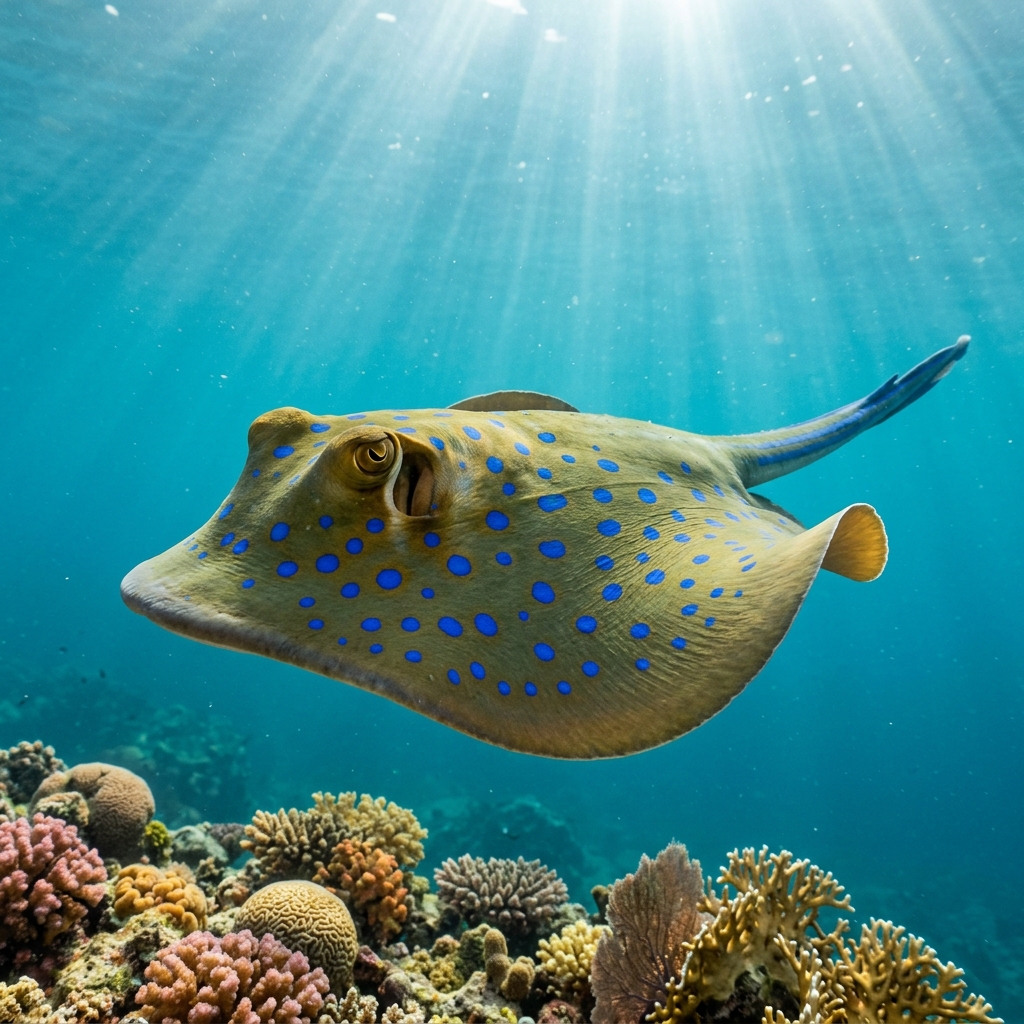
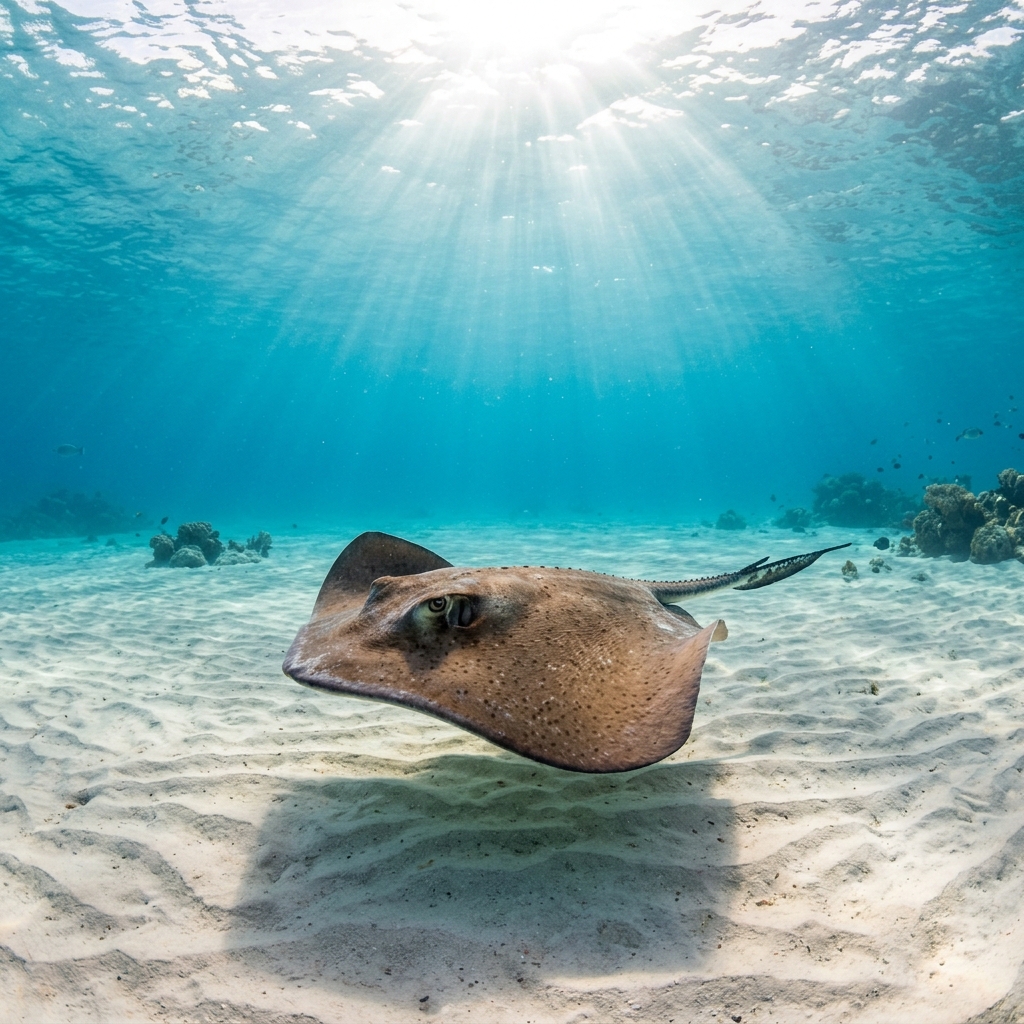
Reef neighbours a diver could mistake it for. Use the identification notes above to tell them apart.
Australia dominates sightings by a wide margin, with Western Australia and New South Wales the top regions, followed by Victoria and South Australia. New Zealand, particularly the Northland and Auckland coastline, is the next most reliable option. Beyond Australasia, the Canary Islands, South Africa's Western Cape, and Fiji round out the main places where divers log encounters.
Mapping where Smooth Ray is logged…
The species is most commonly logged in Australia, especially off Western Australia, New South Wales, Victoria, and South Australia. New Zealand's Northland and Auckland coast is the next most productive area, with further sightings reported from the Canary Islands, South Africa's Western Cape, and Fiji.
In Australasian waters, sightings peak during two seasonal windows: November to April and June to September. The species tolerates water temperatures from around 15 °C to 28 °C, so it can appear in both warm-summer and cooler-winter conditions depending on the site.
This is one of the largest stingrays in the world. Females are substantially bigger than males and can reach over 3 metres in disc width. That size alone usually makes identification straightforward, very few other rays in its range come close.
They are not aggressive but they do carry venomous tail spines. The risk arises if a ray is startled or cornered. Stay well clear of the tail, approach slowly from the side, and never attempt to touch one. Giving them an obvious escape route usually results in a calm, extended encounter.
Look for the combination of very large size (females especially), a broadly rounded disc in uniform pale grey-brown, a white underside, and a proportionally short tail. The smooth skin texture distinguishes it from similarly sized rays. Males are noticeably smaller and show paired claspers at the tail base.
Most sites where divers log this species rate it as uncommon, meaning you may need several dives to get lucky. A smaller number of sites report it as common, particularly within its Australian strongholds. Patience and local knowledge about sandy-bottom habitats improve your odds considerably.
Site and sighting data is aggregated from diver logs, iNaturalist and GBIF. For taxonomy and conservation status:
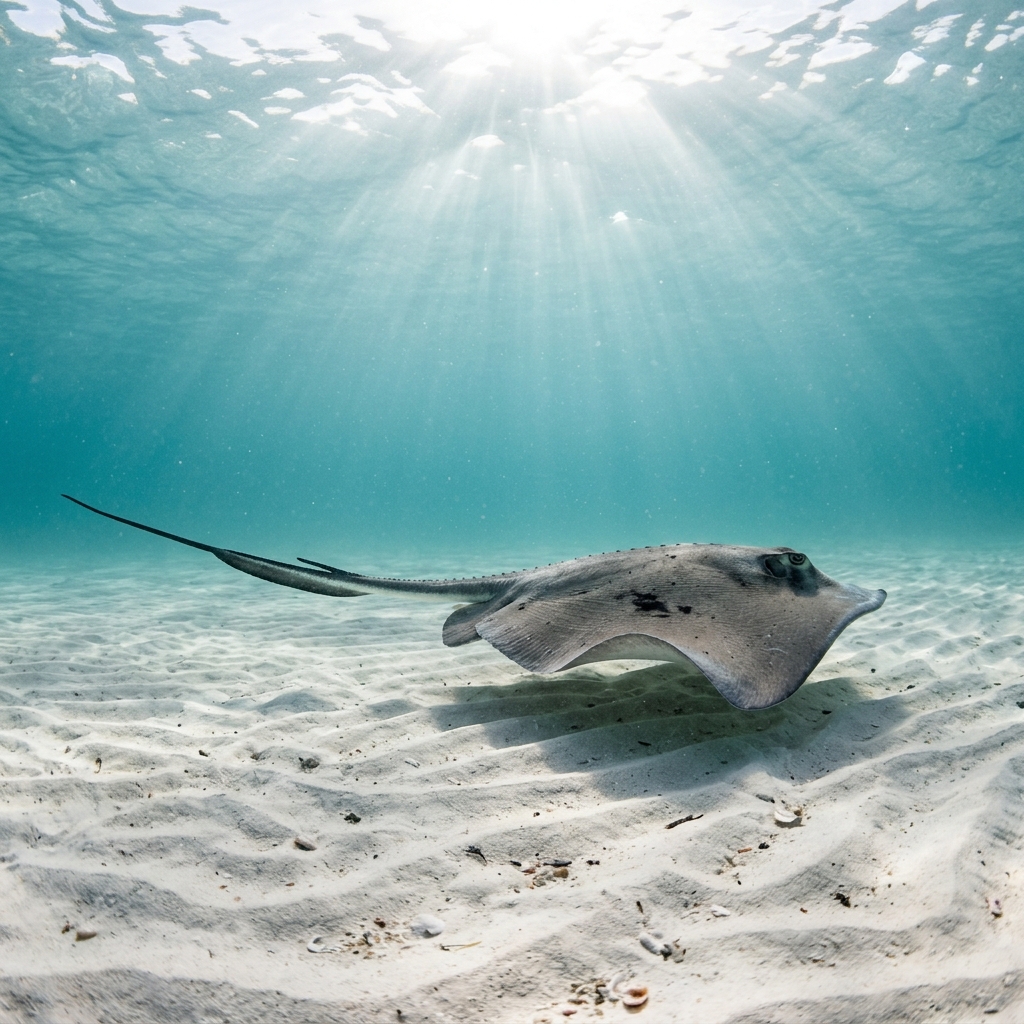
Whiptail Stingray
1,747 sites