Haliotidae spp.
Spot abalone on dives along the French Riviera, Costa Brava, and Pacific Coast. Cold-water shells logged Jul, Feb in the Northern Hemisphere.
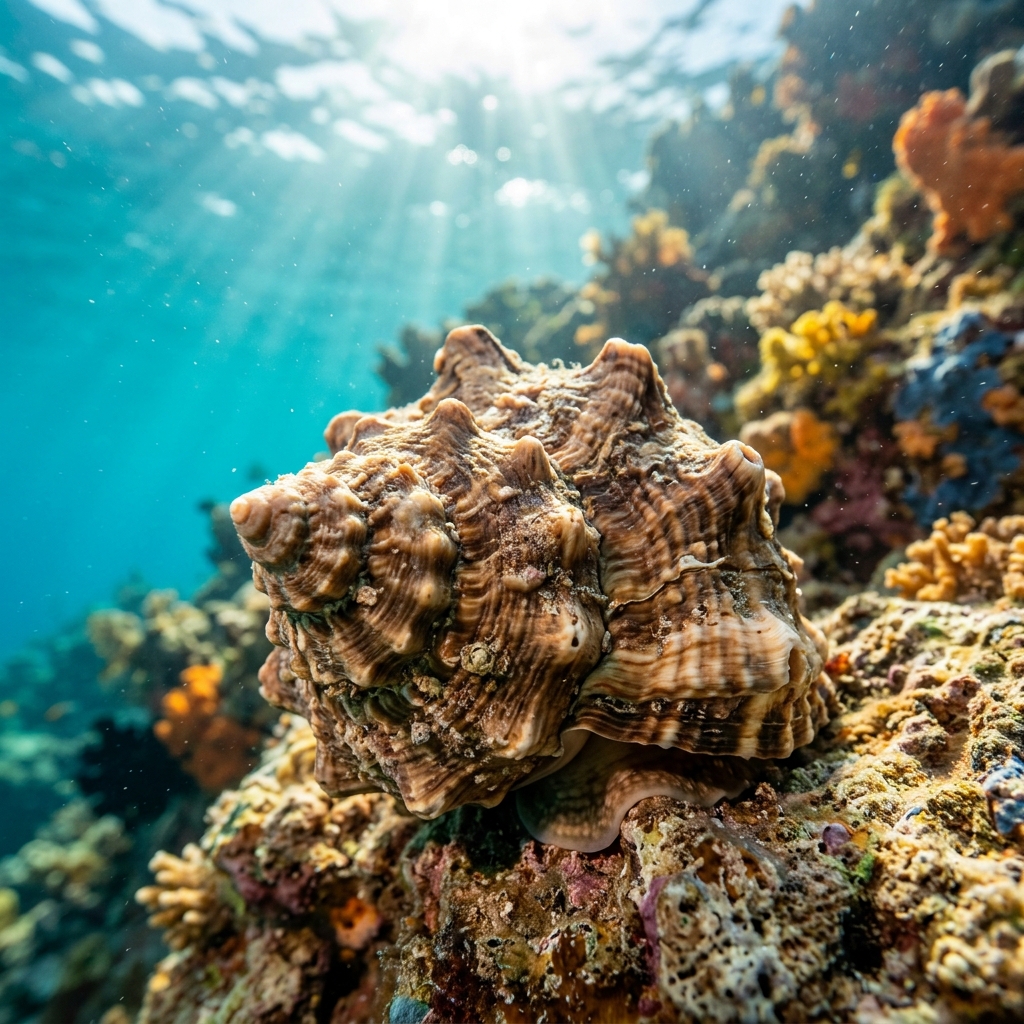
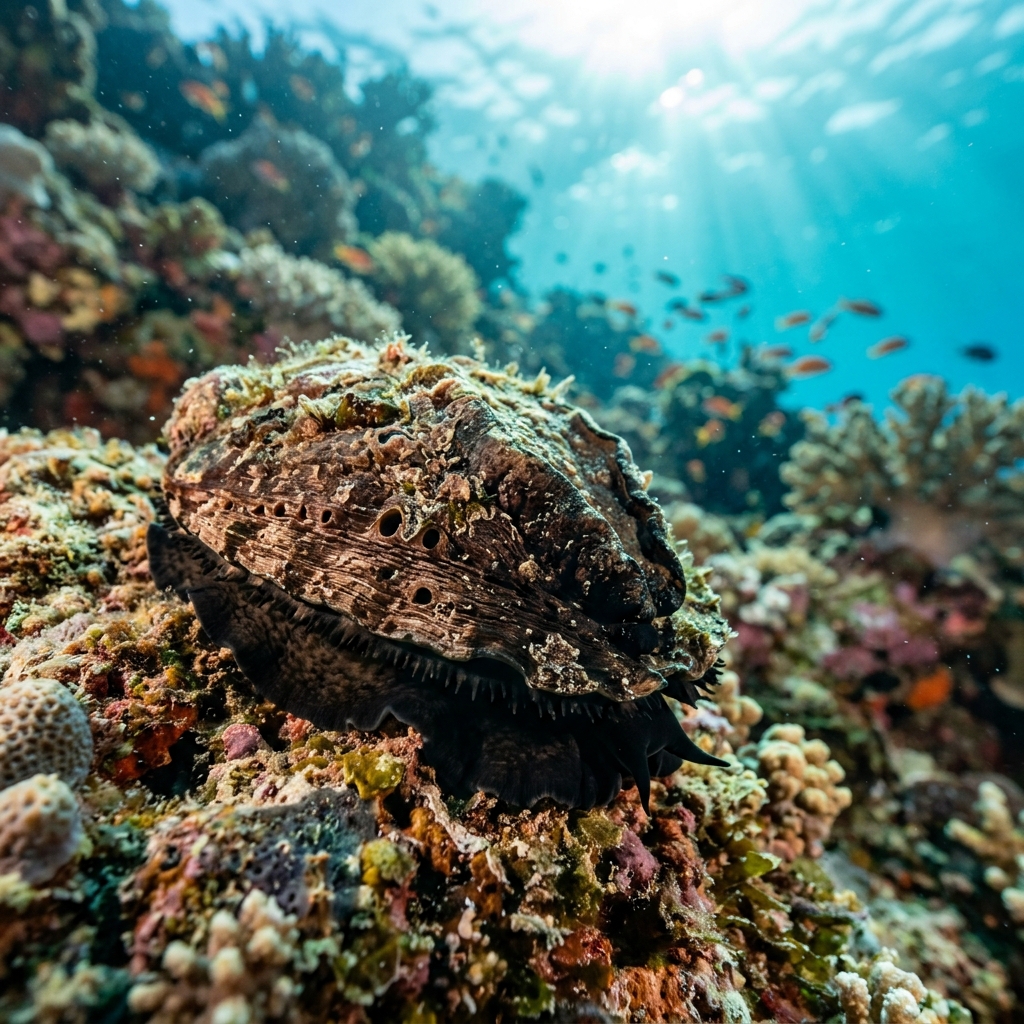
Look for a low, ear-shaped shell pressed flat against rock, with a distinctive row of small holes (called tremata) running along one side, this is the single feature that separates abalone from any other large gastropod on the reef. The shell's exterior is typically encrusted with coralline algae, sponge, or sediment, making it blend remarkably well with the substrate; the giveaway is often the fleshy, ruffled mantle (the soft tissue) spilling out around the shell's edge. Colour varies by species from greenish-brown to reddish or mottled grey. Most species encountered by divers are palm-sized to dinner-plate-sized, though exact dimensions differ across the family.
Abalone are grazers, rasping algae and encrusting growth from rock surfaces using a tongue-like radula, and they tend to be inactive during the day, pressing tightly against the substrate or tucked into crevices. When you do spot one, it will likely be motionless, the muscle holding it to the rock is extraordinarily powerful, so it rarely reacts to diver presence by moving. Night dives on shallow rocky reefs give you the best chance of catching one actively feeding, with the fleshy mantle fully extended.
The row of holes along the shell is not decorative, abalone breathe, reproduce, and expel waste through these openings. As the animal grows, the oldest holes seal over from the inside while new ones open at the front, so the number of open holes stays relatively constant across the animal's life.
In Northern Hemisphere locations, sightings concentrate from July through February, suggesting year-round potential with a slight dip in late spring. Southern Hemisphere sites such as New South Wales show sightings peaking August through March, aligning with their autumn-to-autumn window. The observed water temperature of 11-17 °C points firmly at cool temperate reefs, so plan accordingly.
Reef neighbours a diver could mistake it for. Use the identification notes above to tell them apart.
Abalone are most commonly logged along European coastlines, with the French Riviera and Provence and the Costa Brava standing out as the strongest regions in the data. Australia's New South Wales coast and the Pacific Coast of the United States also see regular sightings, as do Croatia's Kvarner Gulf and Istria, plus Portugal's Algarve. They favour rocky, wave-washed reefs in cooler temperate waters, so these regions' character suits them well.
Mapping where Abalone is logged…
Abalone are most reliably logged across temperate rocky reefs. In Europe, the French Riviera, Costa Brava, Kvarner Gulf, and the Algarve see the most sightings. Australia's New South Wales coast and the Pacific Coast of the United States are the strongest non-European options. Croatia's Istria also features regularly in diver reports.
Northern Hemisphere divers have the best window from July through February. In the Southern Hemisphere, particularly New South Wales, Australia, sightings peak August through March. Abalone favour cold water around 11-17 °C, so they are present on suitable reefs throughout their cooler seasons rather than tied to a narrow window.
The key feature is the row of small holes running along one side of an oval, flattened shell. No other large shell-bearing mollusc you'll encounter on a temperate reef shares this trait. The shell is usually heavily encrusted, so focus on the shape and those holes rather than colour. The frilly soft mantle visible around the shell edge also helps confirm the ID.
Size varies considerably across the family. Smaller species fit in the palm of your hand, while some larger species can reach 30 cm or more across the shell. Most diver encounters are with mid-sized individuals closer to 10-20 cm.
Those holes, called tremata, are respiratory openings. Abalone draw water in under the shell edge, pass it over the gills, and exhaust it, along with waste and reproductive material, through the holes. The shell grows new holes at the front as the animal grows, while older holes seal over, keeping the total number of open holes roughly constant.
Site and sighting data is aggregated from diver logs, iNaturalist and GBIF. For taxonomy and conservation status:
Triton Shell
2,297 sites