Arctocephalus pusillus
Playful Cape Fur Seals turn up at 15-22C dive sites across the Western Cape and Victoria, often barrelling straight at your mask out of curiosity.
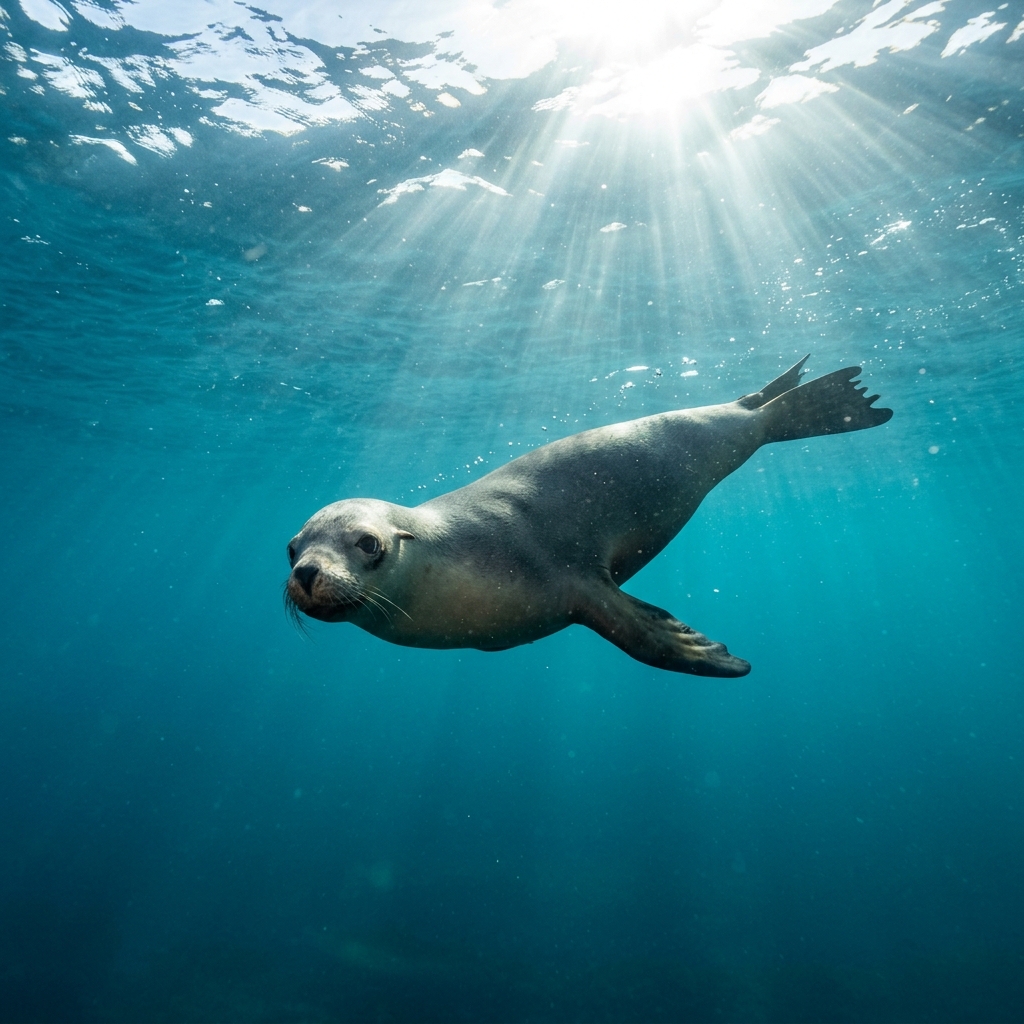
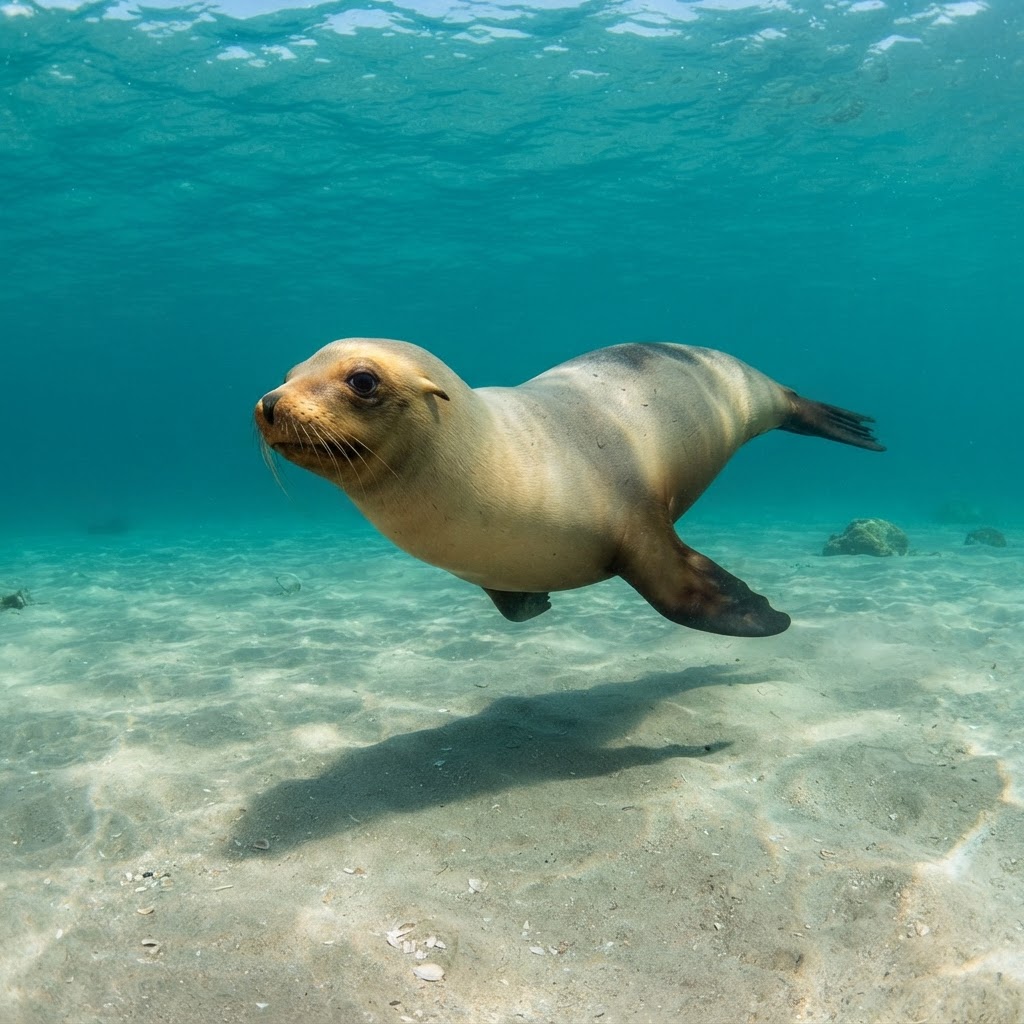
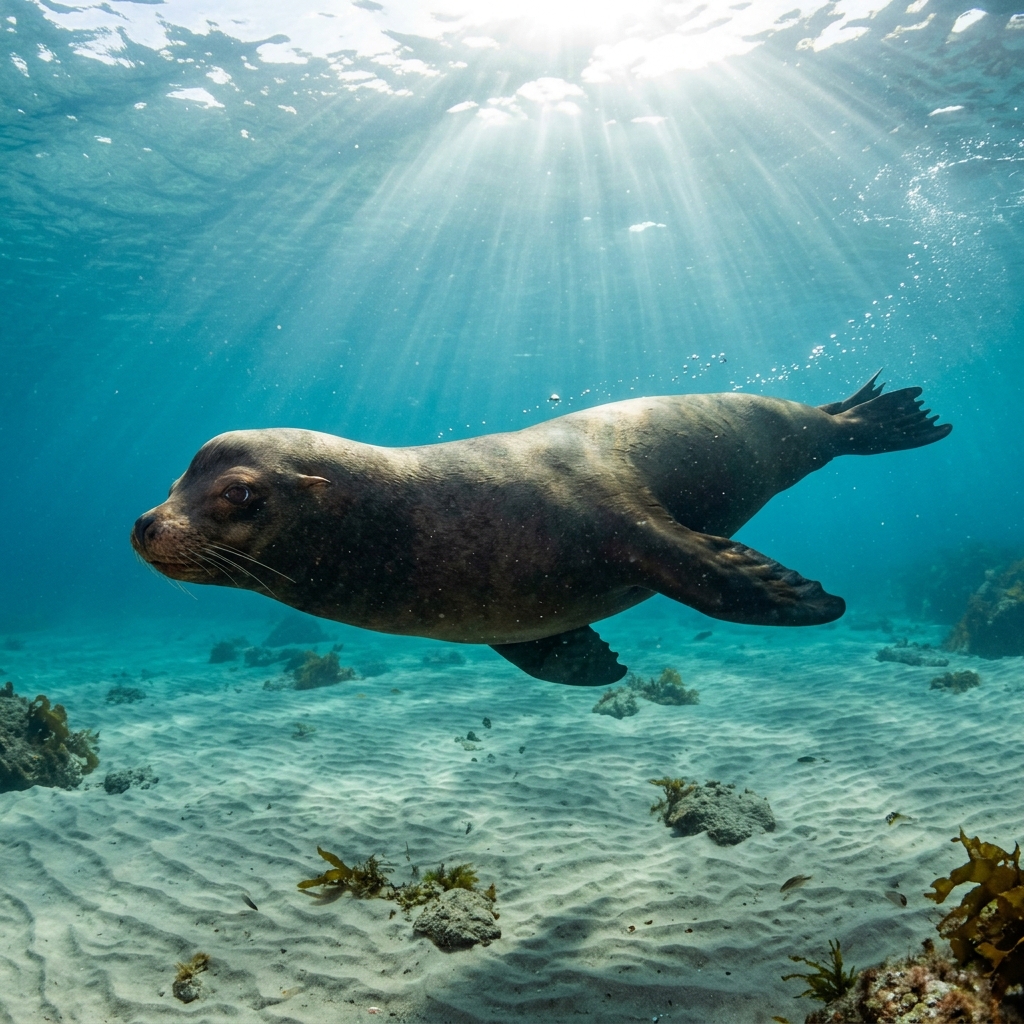
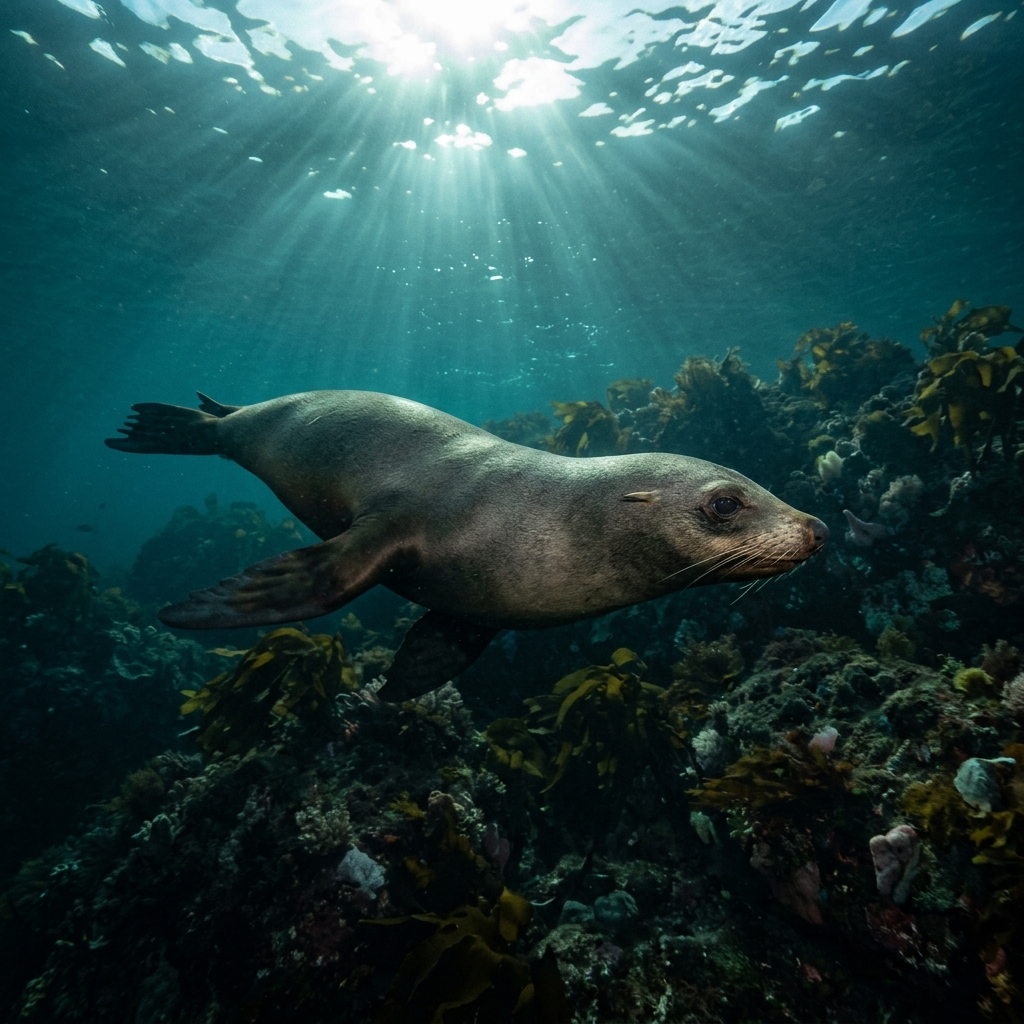
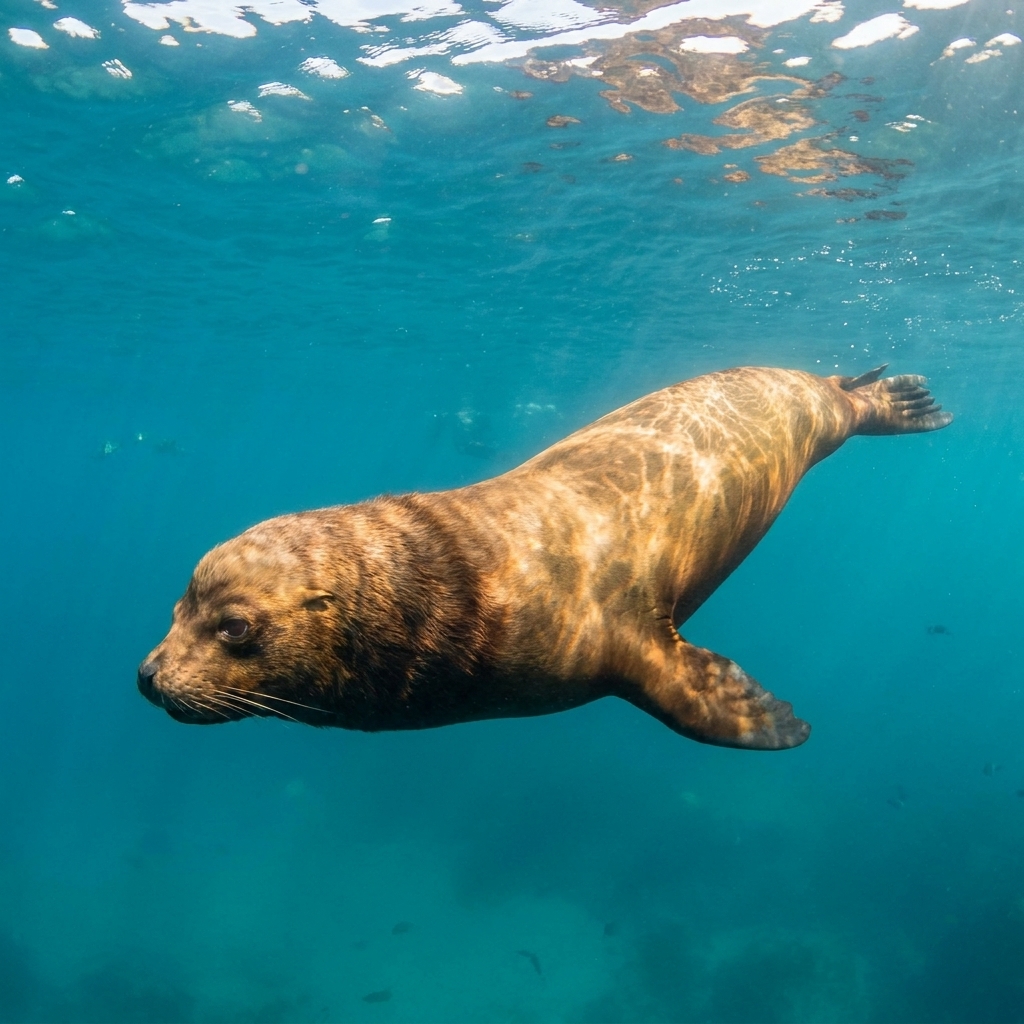
Streamlined brown to grey-brown body around 1.6 metres long, with a pointed, whiskered face and small external ear flaps that separate it from true seals. Bulls are noticeably bulkier and darker around the neck and shoulders than the slimmer females and juveniles. Underwater it moves with quick, twisting turns rather than the slow glide of a fish, often rolling to look directly at divers.
Expect fast, curious passes rather than a stationary photo subject: seals often shoot in close, circle divers, and peel away before you can react. They're commonly seen around rocky reef and kelp edges close to colonies, sometimes in small groups mid-water, and tend to be more interactive with bubble-blowing divers than with silent snorkellers.
Cape Fur Seals dive to deep depths for a pinniped, with recorded descents to around 200 metres while hunting, well beyond what most divers will ever see them do in person.
Sighting logs show no strong seasonal pattern, and the 15.2 to 22.3C temperature range it tolerates covers most of the year at these sites, so it's a fair year-round encounter rather than a seasonal event.
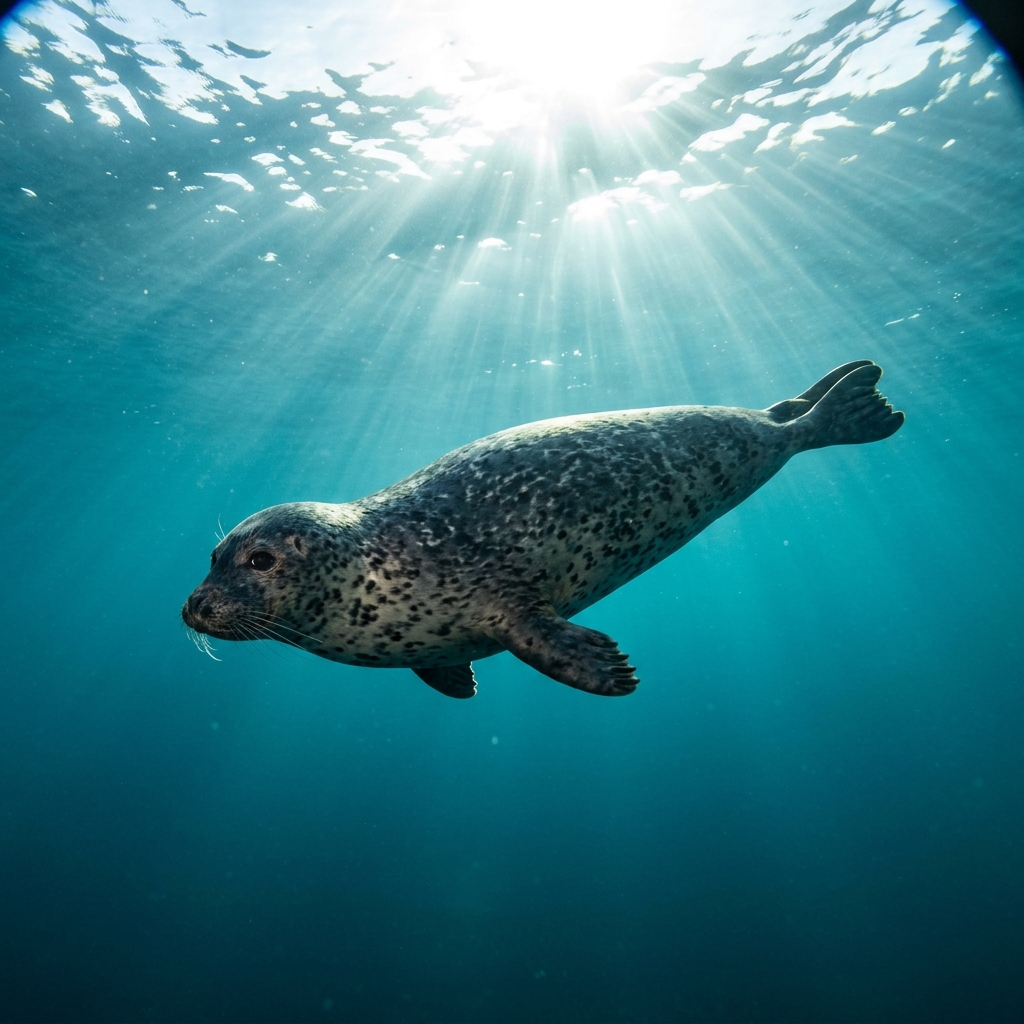
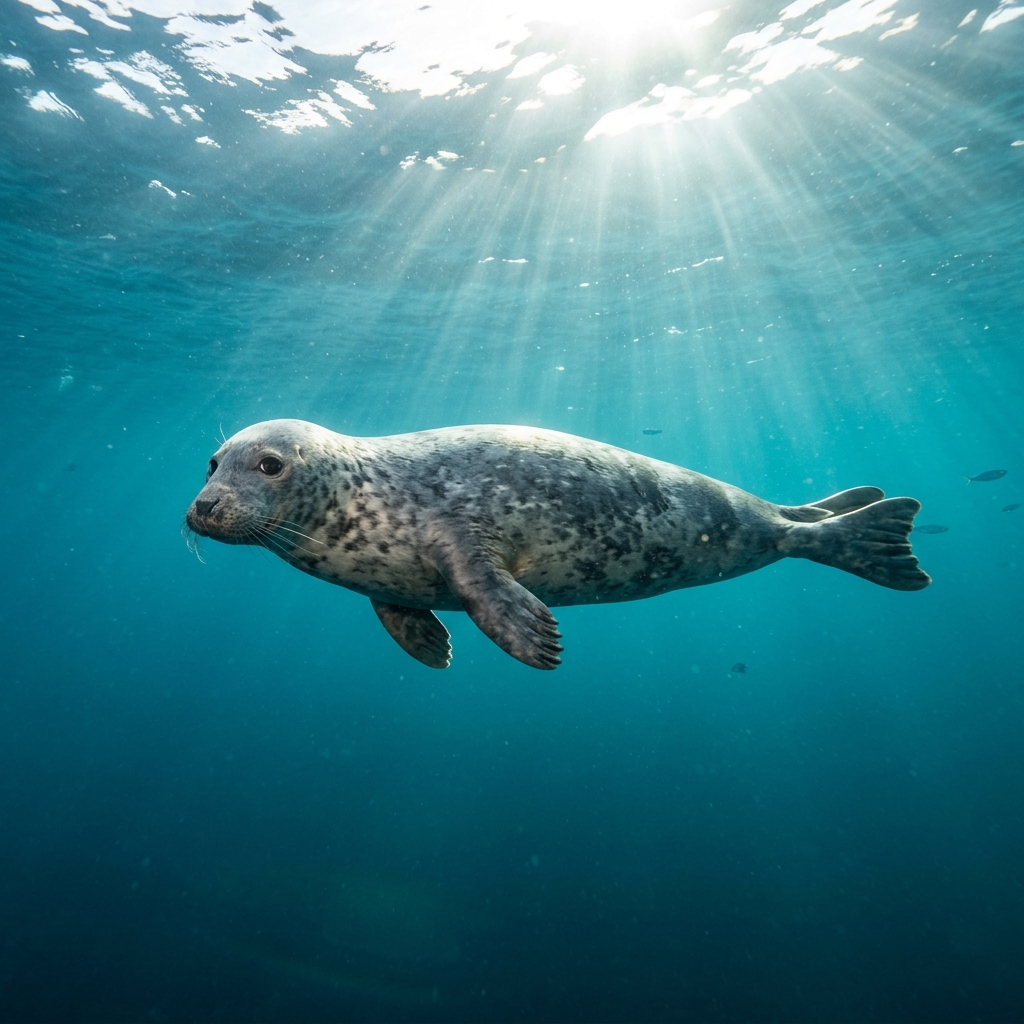
Reef neighbours a diver could mistake it for. Use the identification notes above to tell them apart.
Most reliably logged in South Africa's Western Cape, with further sightings in the Eastern Cape, and a small presence in Namibia. Australia turns up in the data too, with a strong spread through Victoria, South Australia, Western Australia, Tasmania and New South Wales, so this is really a two-country species for divers.
Mapping where Cape Fur Seal is logged…
South Africa's Western Cape is the standout region, with further sites in the Eastern Cape and a single spot in Namibia. Australia also delivers regular sightings across Victoria, South Australia, Western Australia, Tasmania and New South Wales.
There's no clear seasonal peak in the sighting data, and the water temperature range they're found in spans most of the year at these sites, so they're considered a year-round encounter.
Look for a streamlined brown-grey body around 1.6 metres long, a pointed whiskered face, and small visible ear flaps. Bulls look bulkier and darker around the neck than females and younger animals.
Adults typically reach around 161cm in length, with males running noticeably larger and heavier than females.
No, they're not considered dangerous to divers. They're fast and curious and may buzz close for a look, but encounters are generally playful rather than aggressive.
Despite being air-breathing mammals built for surface life, they're recorded diving to depths around 200 metres in search of prey, a serious depth for a seal species.
Site and sighting data is aggregated from diver logs, iNaturalist and GBIF. For taxonomy and conservation status:
Long-nosed Fur Seal
347 sites