Phyllopteryx taeniolatus
Spot weedy seadragons in New South Wales and Victoria, Australia, where sightings peak Oct, Feb in cool 14-20 °C waters. Tips to find and recognise them.
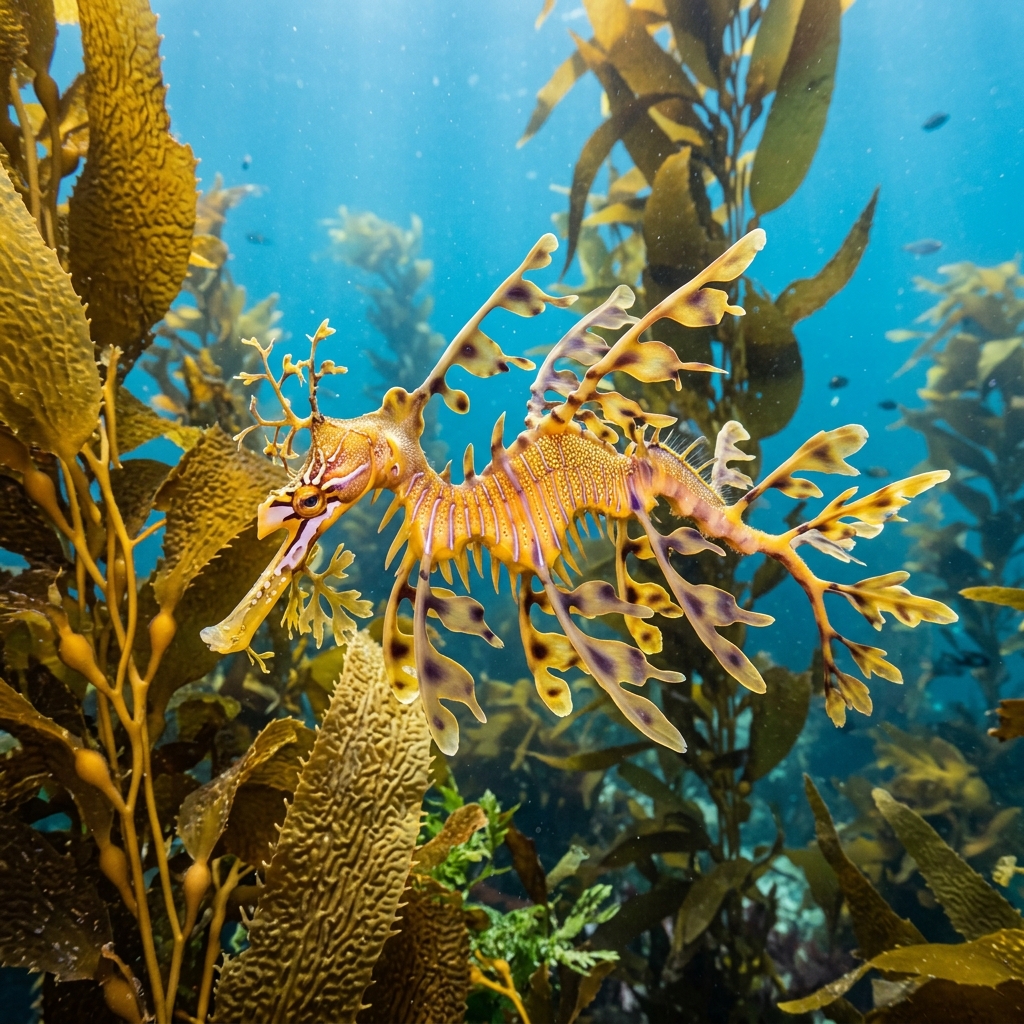
At around 32 cm long, weedy seadragons are slender, pipe-bodied fish adorned with a series of leaf-like skin appendages that break up their outline against kelp and seagrass. The base colour is typically reddish to brownish-orange, overlaid with bright blue and yellow stripes and spots that are clearly visible once you have your eye in. Unlike a seahorse, the tail is rigid and non-prehensile (not used to grip) and the animal drifts freely, propelled only by tiny rippling fins. Breeding males are immediately distinguishable by a vivid cluster of pink eggs embedded along the underside of the tail.
When you find one, it will almost certainly be drifting slowly through kelp or seagrass, tilted at a slight angle as it scans for small crustaceans. Approach calmly and it will typically carry on regardless, but any sudden movement or loud equalisation can send it gliding away into cover. During the day, watch for the lightning-fast, almost imperceptible snout strike it uses to slurp up mysid shrimp and other tiny prey.
Like all syngnathids, it is the male that carries the eggs. In weedy seadragons those eggs are not tucked into a pouch but pressed directly into spongy brood tissue along the tail, and the male alone incubates them until they hatch.
Sightings concentrate between October and February, coinciding with the Southern Hemisphere spring and summer, which also aligns with the breeding season when egg-carrying males are at their most conspicuous.
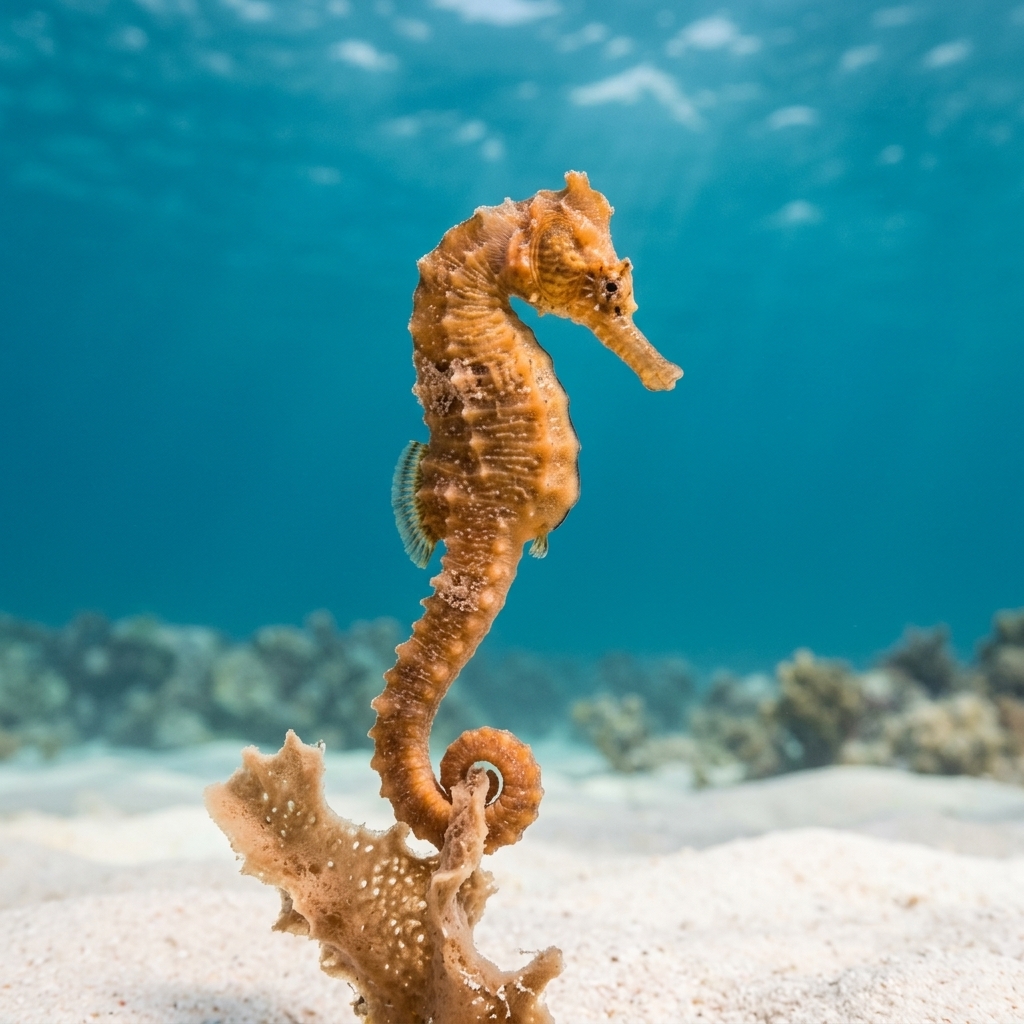
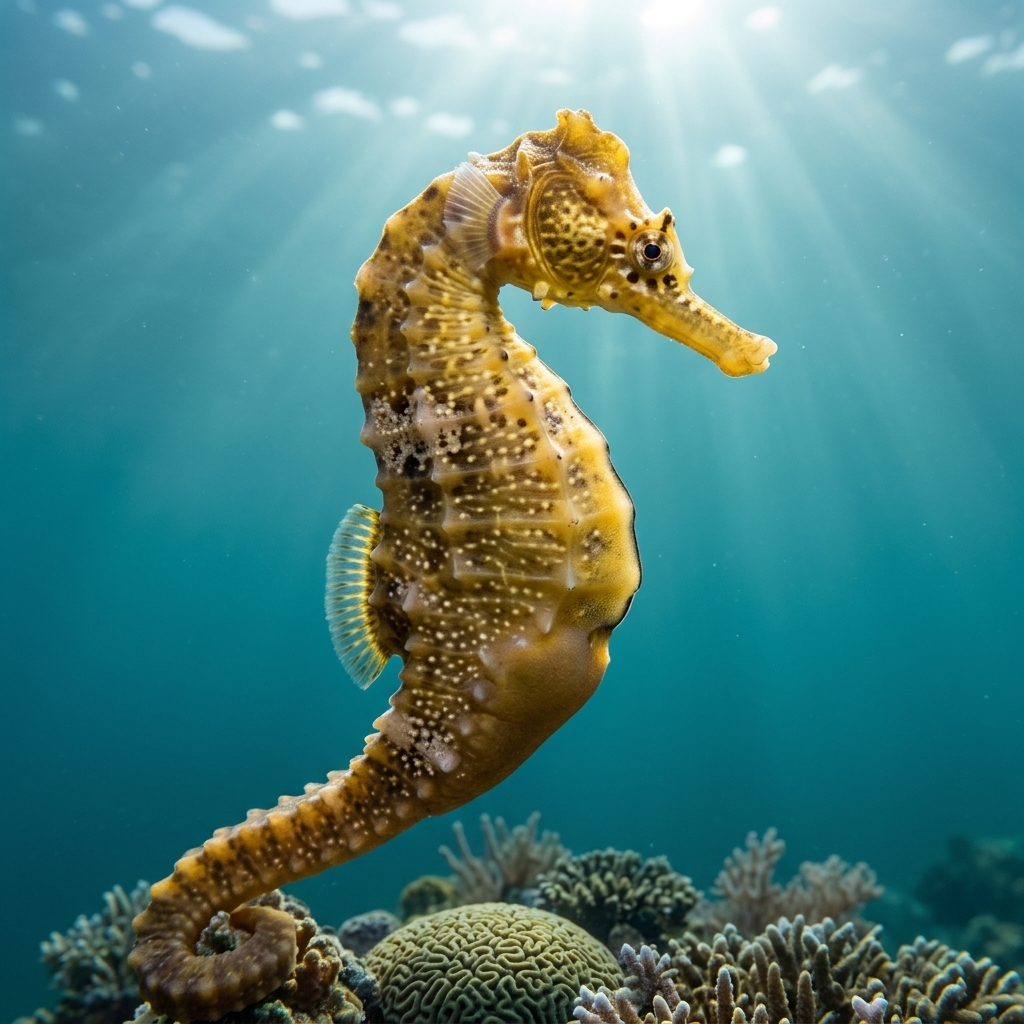
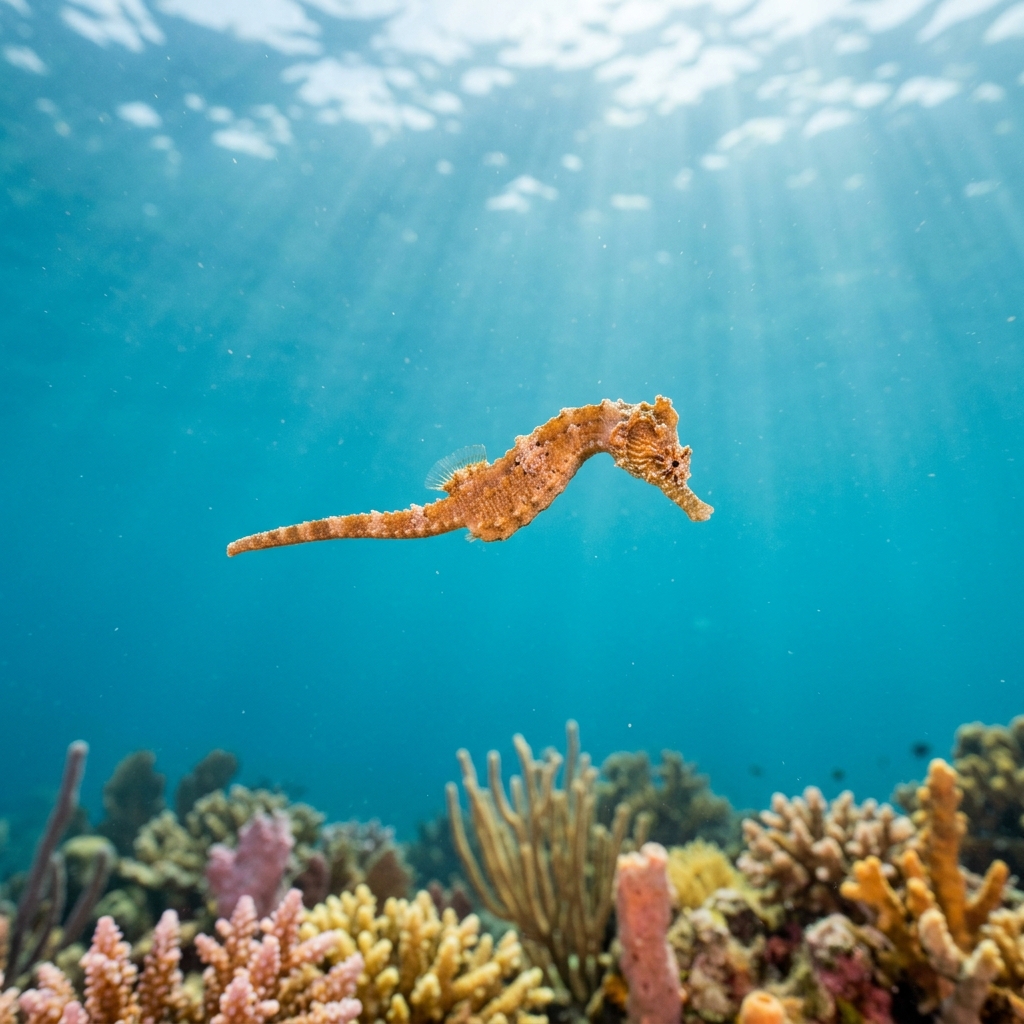
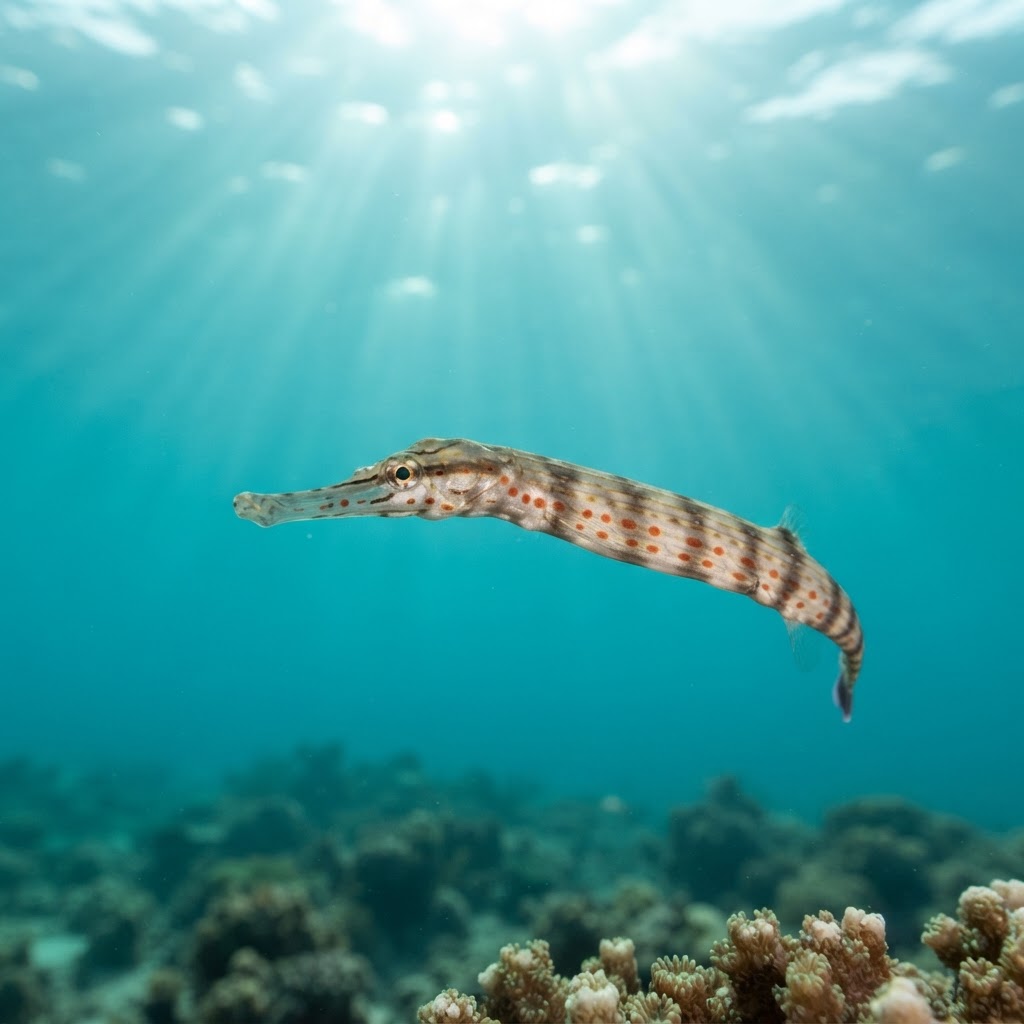
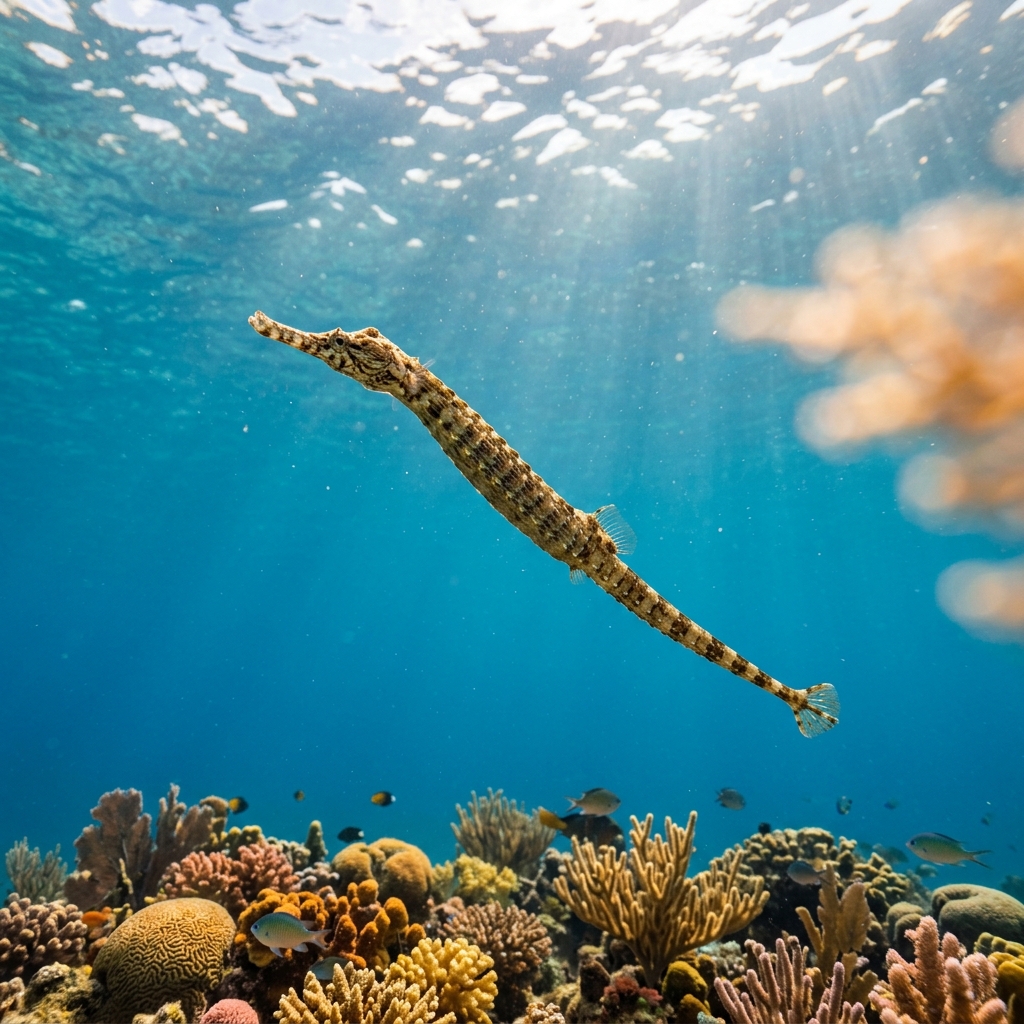
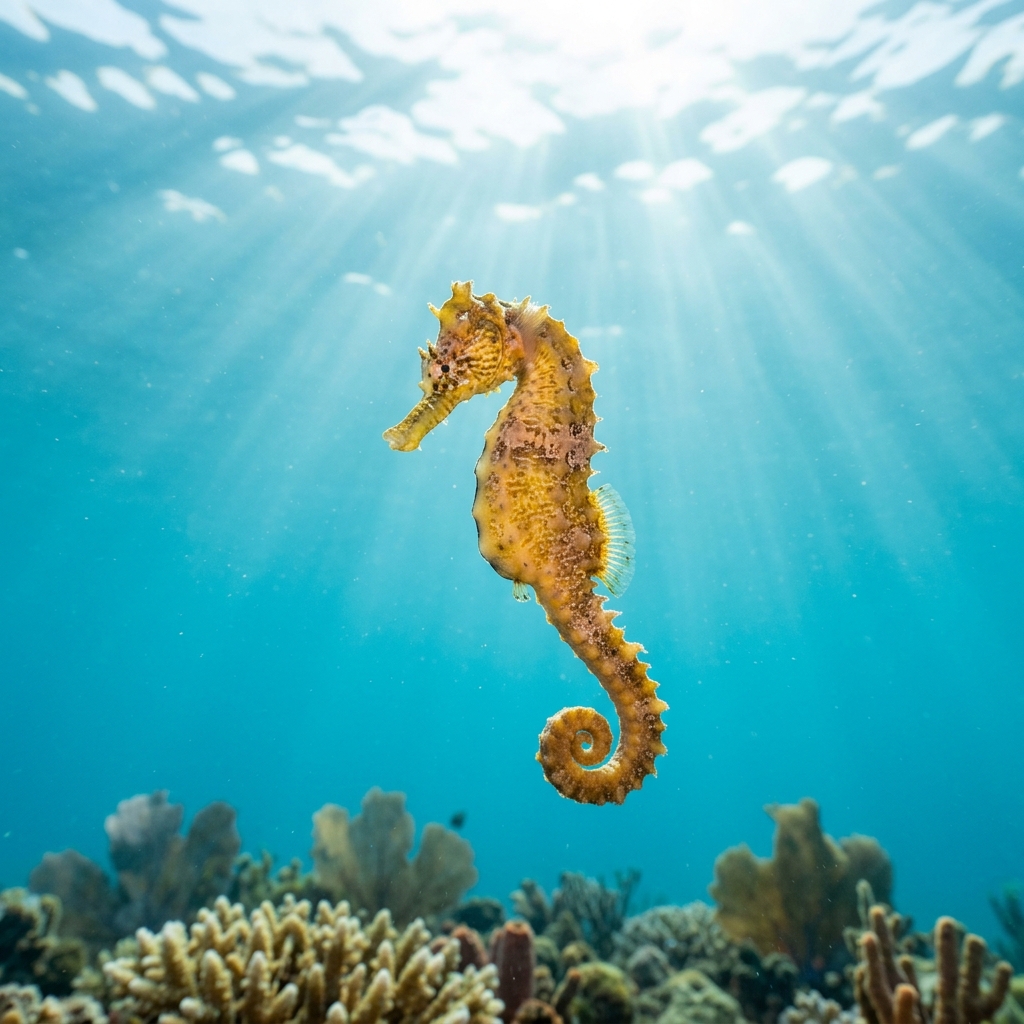
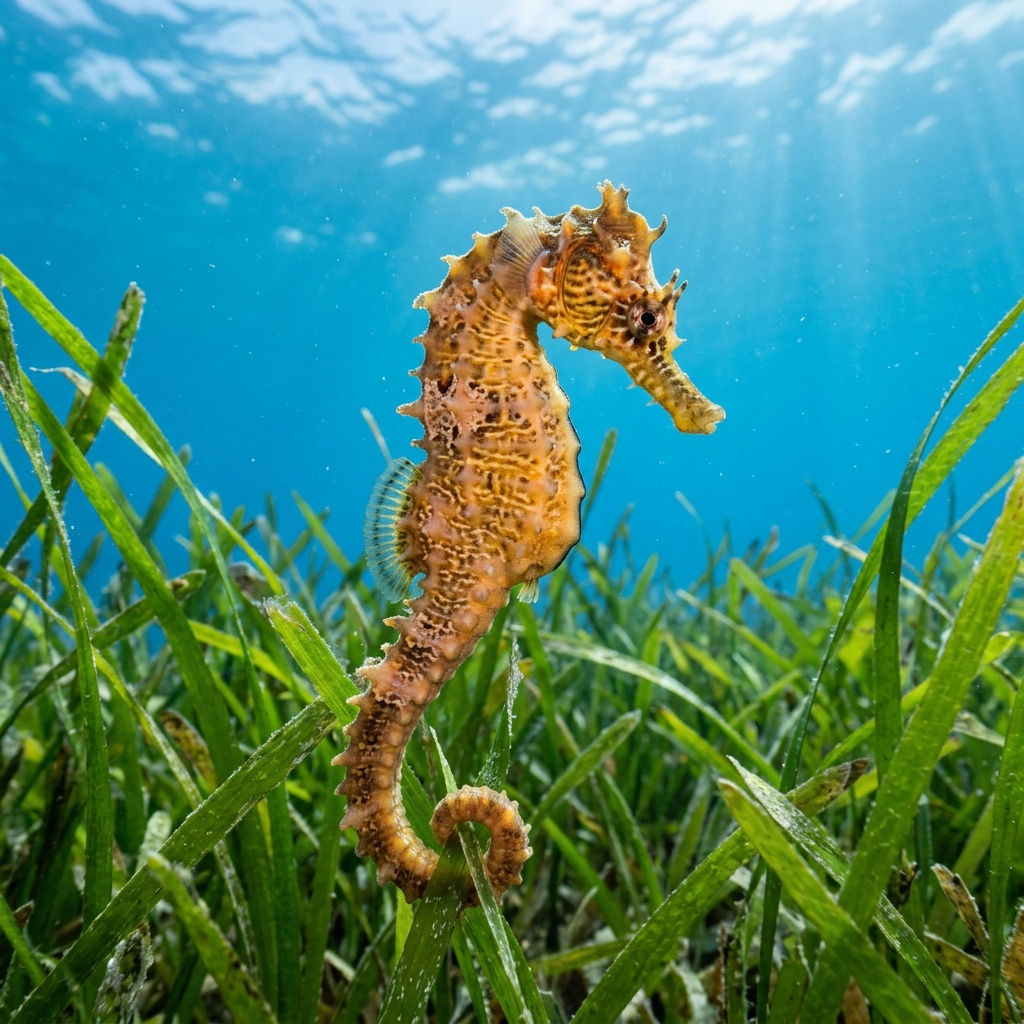
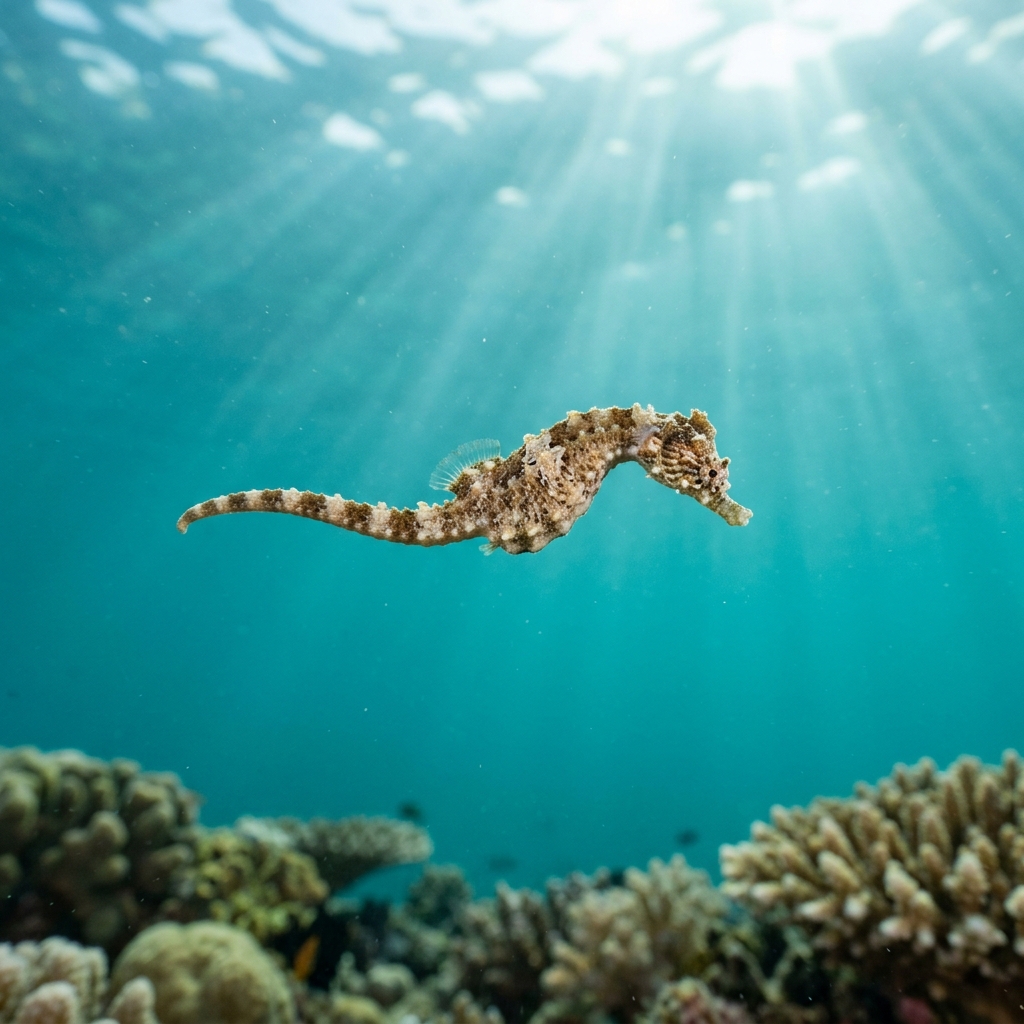
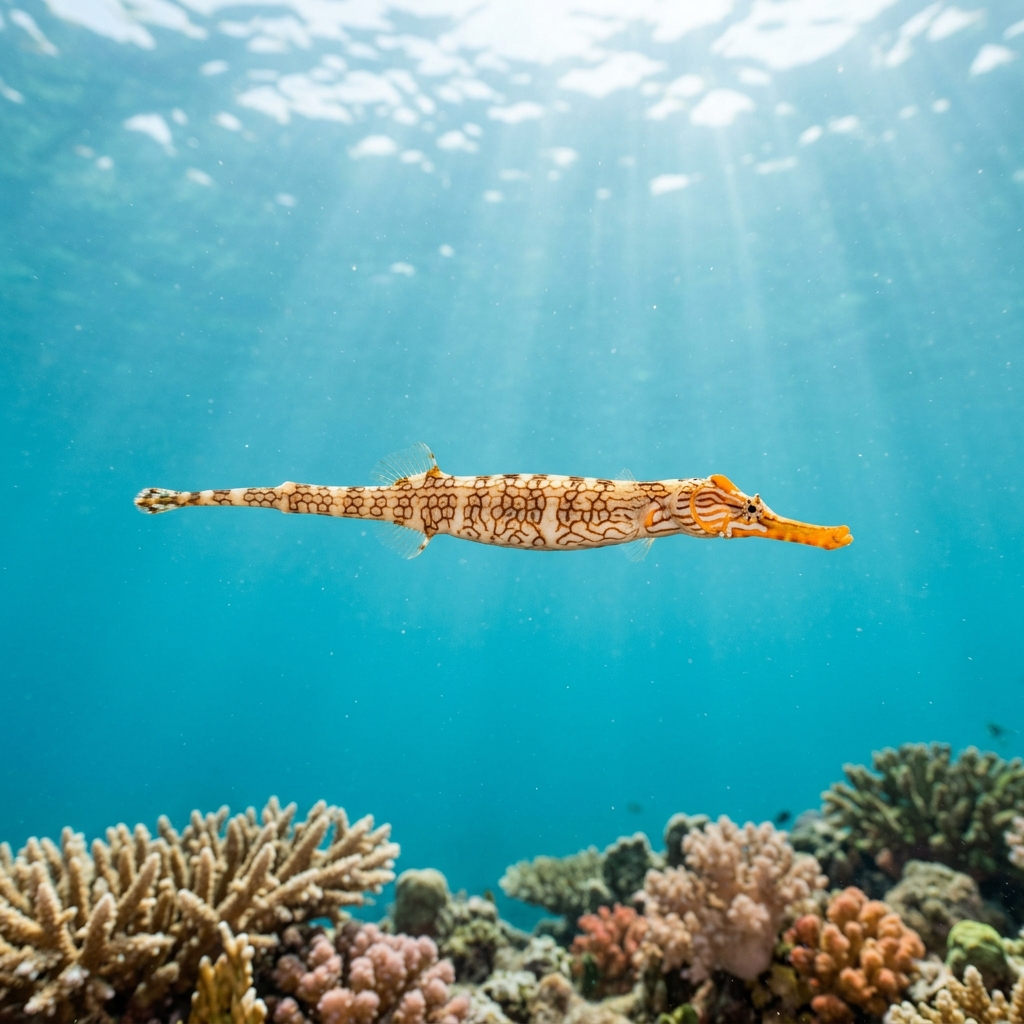
Reef neighbours a diver could mistake it for. Use the identification notes above to tell them apart.
Weedy seadragons are an almost exclusively Australian animal, logged across New South Wales, Western Australia, Victoria, South Australia, and Tasmania. New South Wales holds the strongest concentration of sighting sites, followed closely by Western Australia and Victoria, where temperate reefs and kelp gardens provide ideal habitat. South Australia and Tasmania are also productive areas worth planning a dive around if you are travelling that way.
Mapping where Weedy Seadragon is logged…
Weedy seadragons are found almost exclusively in Australia. New South Wales has the highest concentration of sighting sites, but they are also well logged across Western Australia, Victoria, South Australia, and Tasmania. Look for them on temperate reefs with kelp and seagrass, typically in water between 14 and 20 °C.
Sightings peak from October through to February, the Southern Hemisphere spring and summer. This is also breeding season, so there is a good chance of encountering males carrying vivid pink eggs along their tails.
Look for a long, rigid-tailed, pipe-bodied fish around 30 cm in length with reddish-orange colouring, blue and yellow markings, and multiple leaf-like skin appendages along the body. The lack of a curling, gripping tail immediately separates it from seahorses, and it is considerably larger than any pipehorse you might encounter on the same reef.
Adults typically reach around 32 cm in length, making them noticeably larger than most Australian seahorses and pipefish. That size, combined with their bold markings, makes them one of the more recognisable finds on temperate southern reefs.
The male carries the eggs, but unlike seahorses he has no pouch. The female deposits bright pink eggs directly onto spongy brood tissue on the underside of his tail, where he incubates them until they hatch. A male with a full clutch is one of the more remarkable sights on an Australian temperate reef.
They are currently listed as Vulnerable on the IUCN Red List. Key threats include habitat loss, pollution, and collection for the aquarium trade. Divers can help by avoiding any contact, not chasing individuals, and logging sightings through citizen-science platforms.
The Weedy Seadragon is listed as vulnerable by the IUCN. Observe from a distance, avoid touching or feeding it, and report sightings to local marine research organisations.
Weedy seadragons are listed as Vulnerable, making responsible interaction especially important. Stay well clear of individuals, never attempt to touch or herd them for a photo, and report sightings to citizen-science programmes such as iNaturalist to help researchers track population health.
Site and sighting data is aggregated from diver logs, iNaturalist and GBIF. For taxonomy and conservation status:
Seahorse
1,346 sites