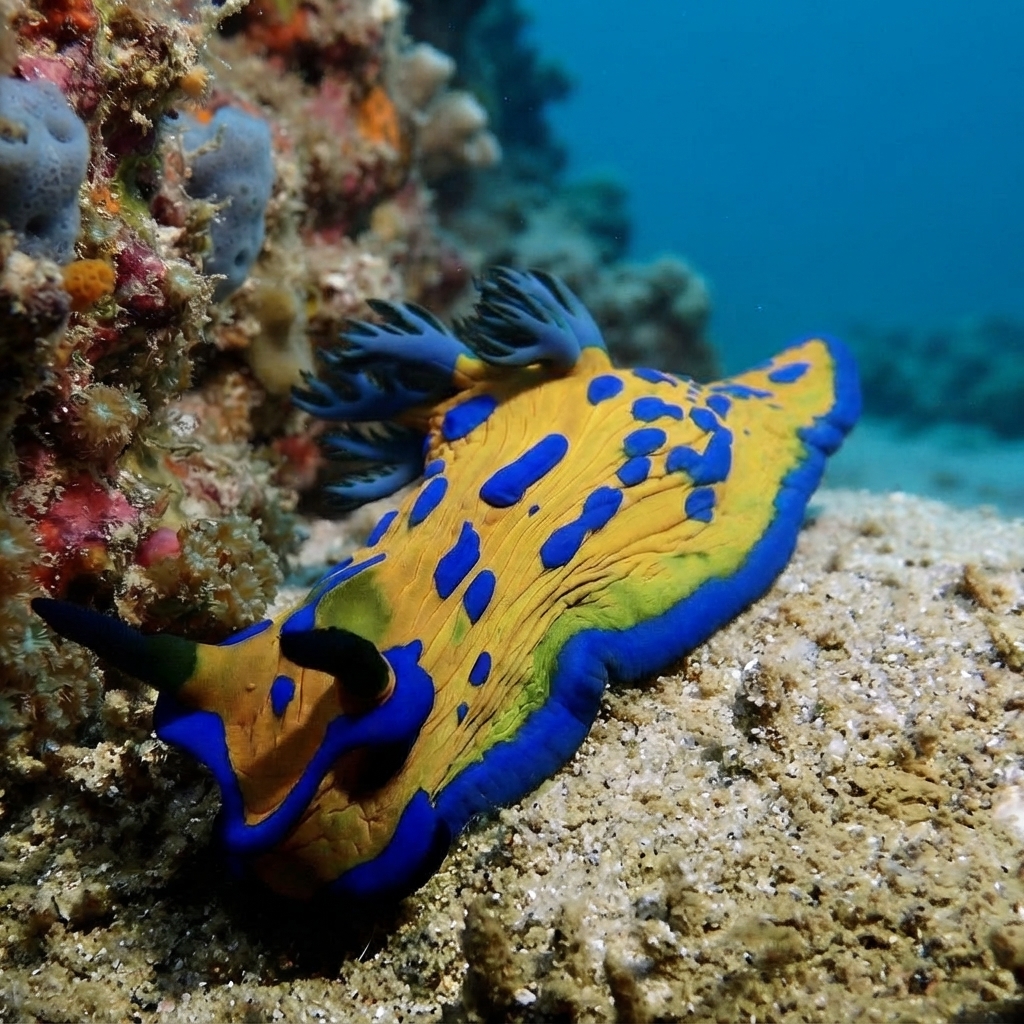
Tambja verconis
Look for Verco's Nudibranch on rocky reefs in Victoria and New Zealand's North Island, year-round in 14.6 to 21.6 C water.
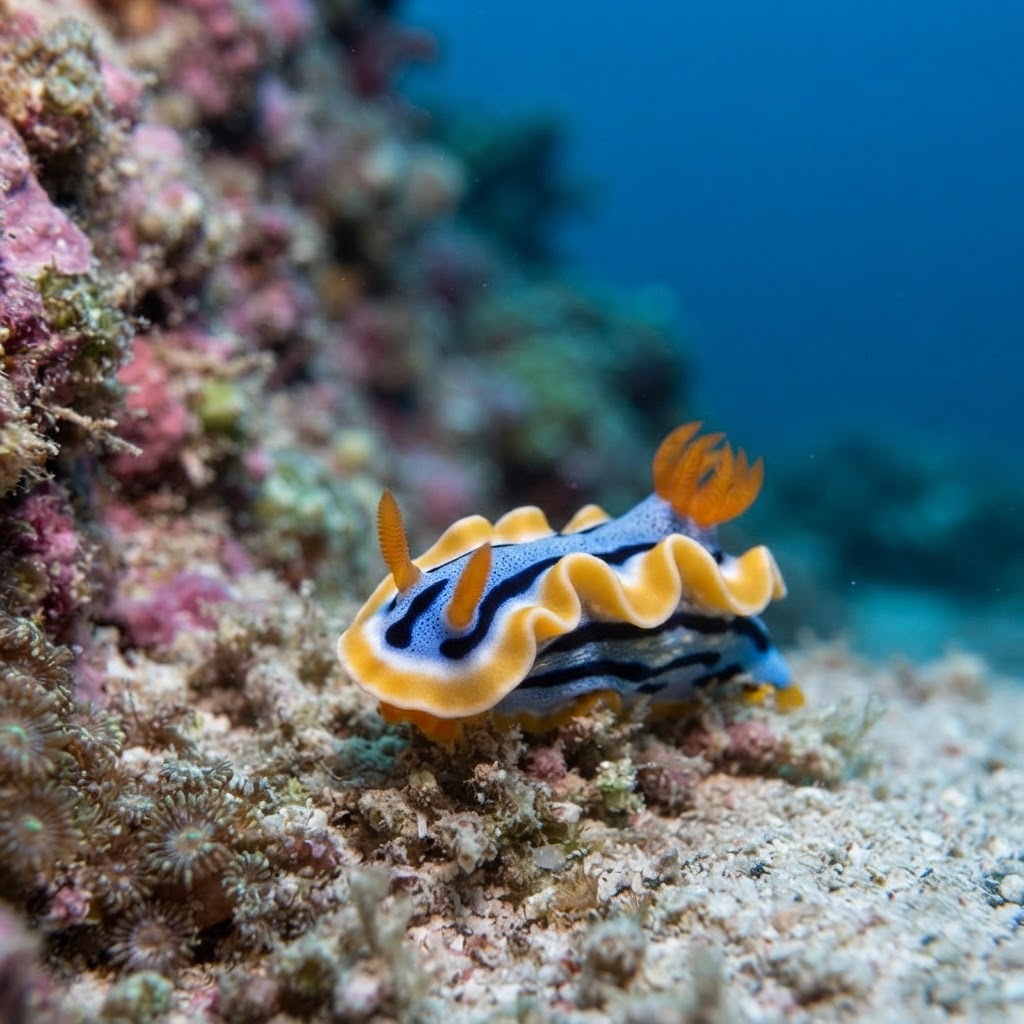
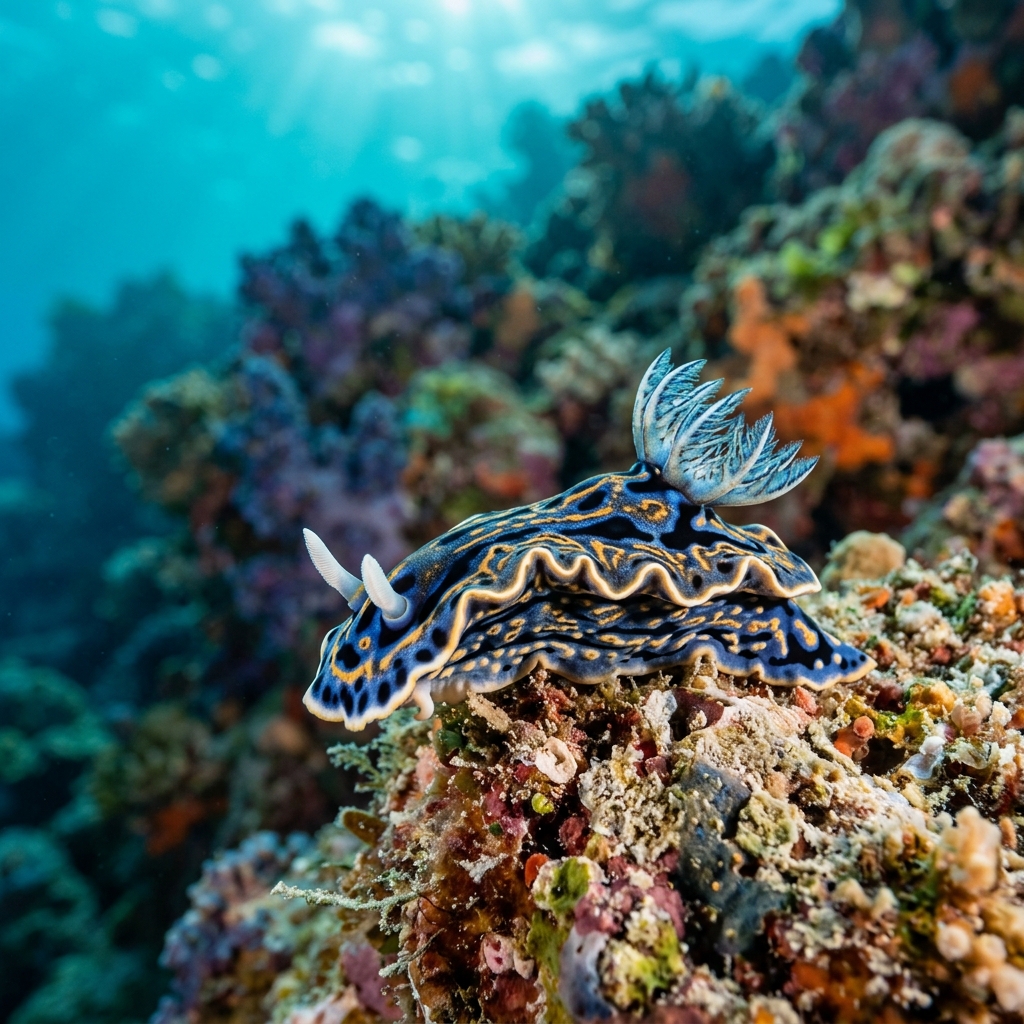
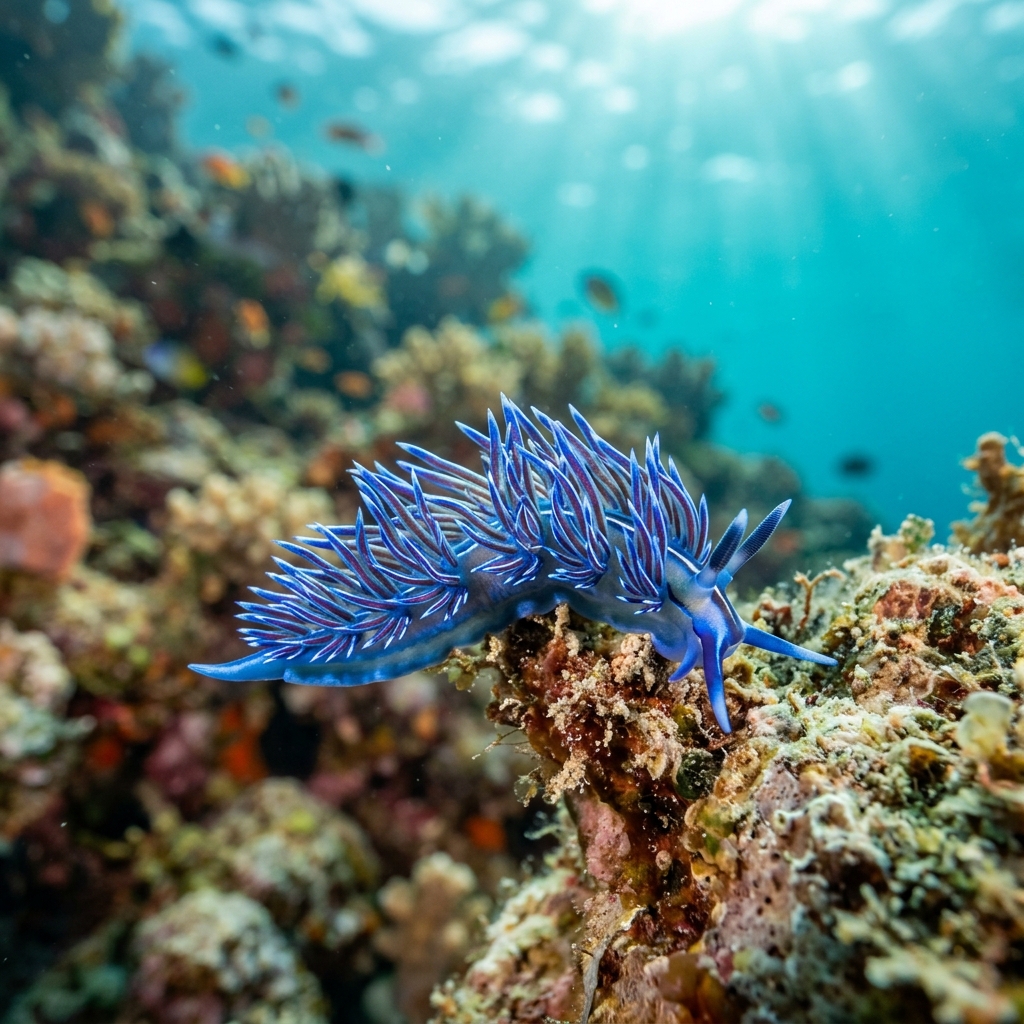
A slender, elongated body in deep blue-green with a scattering of small dark spots, growing to around 9 cm. The gill cluster (the feathery breathing organ on its back) and the rhinophores (the pair of sensory horns on its head) are tipped in bright orange, which is the quickest giveaway against the rock or sponge it's crawling over. It moves slowly across hard substrate, so once spotted it's easy to get a steady look at those orange tips.
Divers find it grazing slowly across rock walls and reef ledges, often in the same low-light crevices where its prey (colonial ascidians and bryozoans, the encrusting invertebrates it feeds on) grows thick. It shows no real reaction to divers beyond continuing its slow crawl, making it an easy subject for a macro shot once you've spotted the orange tips against the rock. Most logs describe it as uncommon rather than abundant, so a sighting usually means a bit of deliberate searching along likely rocky ledges rather than a chance encounter in open water.
Like other members of the Polyceridae family, it likely gets its blue-green colouring and toxicity from compounds absorbed through its ascidian diet, turning what it eats into its own chemical defence.
Sightings show no detectable seasonal pattern, so treat it as a year-round find. Its observed range of 14.6 to 21.6 C covers most of the annual temperature swing on southern Australian and New Zealand temperate reefs, so it doesn't need to wait for a warm-water window to be out and active.
Reef neighbours a diver could mistake it for. Use the identification notes above to tell them apart.
This is a temperate-water species, most reliably logged on rocky reefs in Victoria, Australia, and on New Zealand's North Island, with smaller but real populations turning up in Tasmania and New South Wales. Victoria in particular carries the bulk of sightings, making its bay and coastal reef sites a strong bet for divers specifically hunting this one.
Mapping where Verco's Nudibranch is logged…
It's most consistently found on rocky reefs in Victoria, Australia, and on New Zealand's North Island, with additional records from Tasmania and New South Wales. Victoria holds the largest concentration of logged sightings.
There's no strong seasonal pattern in the sightings, so it can turn up any month. Its comfort range of roughly 14.6 to 21.6 C spans most of the year on the temperate reefs where it lives, so timing your dive around a season isn't necessary.
Look for a slim blue-green body around 9 cm long with small dark spots, and orange-tipped gills and rhinophores standing out against the darker body colour. It moves slowly over rock and sponge, which makes those orange tips easy to spot up close.
They typically reach around 9 cm in length, a modest size that fits easily into a macro lens frame against the rock they're crawling on.
No, they pose no danger to divers. They have no means of stinging or biting people and simply continue grazing when approached.
Its blue-green colour and chemical defences are thought to come directly from the ascidians it eats, a common trick among Polyceridae nudibranchs that turns diet into camouflage and toxicity at once.
Site and sighting data is aggregated from diver logs, iNaturalist and GBIF. For taxonomy and conservation status:
Light-spotted Aegires
3,168 sites