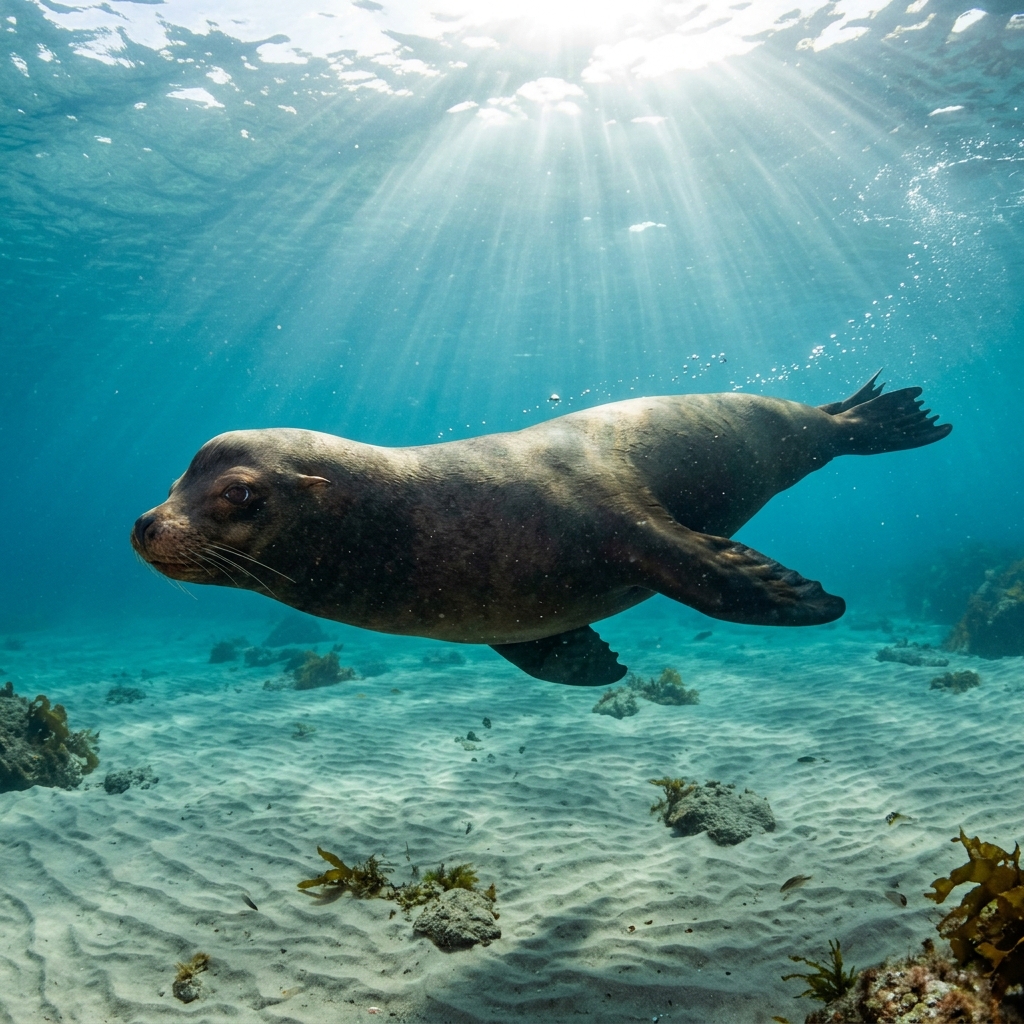
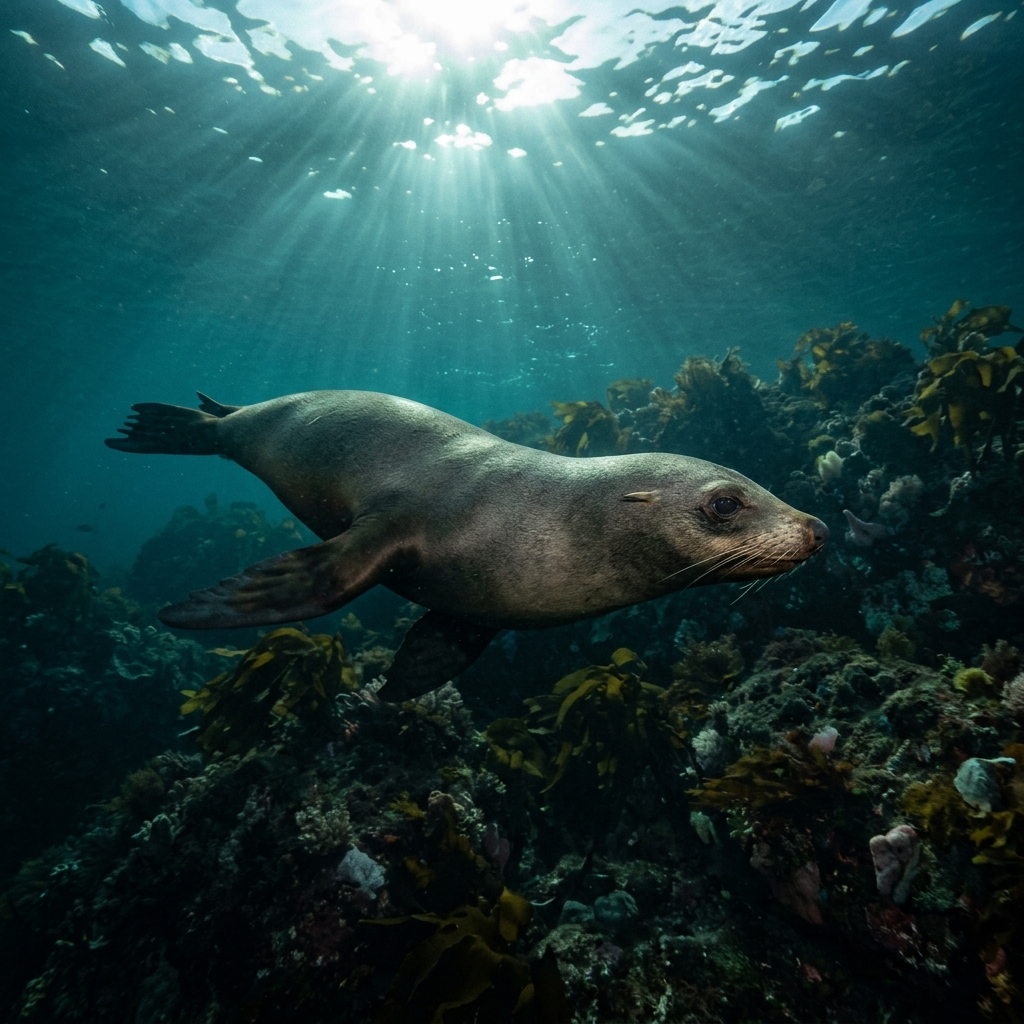
Mirounga leonina
Rare but real: divers log this giant seal off Puerto Madryn, Argentina and South Africa's Western Cape in near-freezing water.
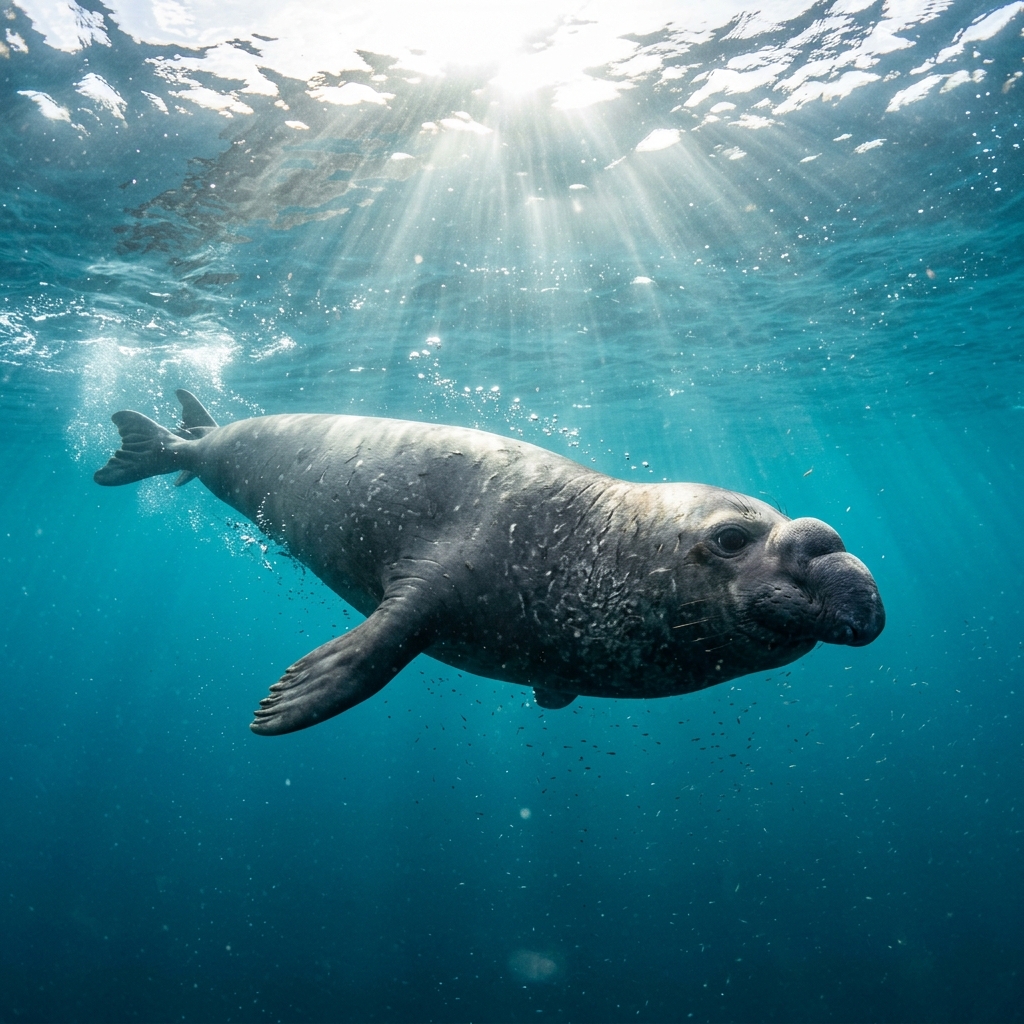
Bulk alone gives it away: adults stretch close to 5 metres and look like a boulder with flippers, dwarfing any seal or sea lion sharing the same water. Skin is mottled grey-brown, often scarred, with no coat pattern to speak of. Males carry an inflatable trunk-like snout that females and juveniles lack, so a proboscis on a seal this size means you have found a bull.
Most encounters are logged as rare, so seeing one at all is the event, usually a single animal hauled out on a beach or rock shelf near the dive site rather than cruising past you mid-water. In the water they are slow and deliberate compared to their bulk on land, and divers report them as calm and generally indifferent to a diver at a respectful distance. A handful of sites, mostly in Argentina and South Africa, report them as common or uncommon rather than rare, which is where a sighting becomes more than a hopeful maybe.
Southern elephant seals dive deeper and longer than almost any other seal, with the depth range logged here running the full water column from the surface to as deep as 8000 metres of ocean beneath their foraging range, chasing squid and fish on breath holds that can run past an hour.
Sightings don't cluster into a clear season in the data, so treat this as a year-round possibility at the sites where it occurs, tied more to that site's cold water than to a month on the calendar. Water in its niche runs from -1.6 to 6.9C, which explains why sightings stay concentrated in the far south of Argentina, South Africa and Australia rather than following a seasonal migration pattern divers can plan around.
Reef neighbours a diver could mistake it for. Use the identification notes above to tell them apart.
Argentina is the strongest bet, especially around Puerto Madryn and Ushuaia, with South Africa's Western Cape close behind as the other reliable stronghold. Smaller but real numbers turn up in Western Australia and Victoria in Australia, and scattered sightings reach New Zealand's South Island, Brazil's Capitólio, Uruguay, Namibia and the southwest United States.
Mapping where Southern Elephant Seal is logged…
Puerto Madryn and Ushuaia in Argentina and the Western Cape in South Africa are the most reliable regions. Western Australia and Victoria in Australia also produce sightings, with occasional records in New Zealand, Brazil, Uruguay and Namibia.
There isn't a clear seasonal pattern in the sighting data, so treat it as a year-round possibility at the right sites. Its comfort range of -1.6 to 6.9C keeps it tied to cold southern waters all year rather than a specific migration window.
No, they're not considered dangerous to divers. Keep a respectful distance, particularly from bulls, since their sheer size and unpredictable movement on land or in shallow water can still knock a diver over by accident.
Adults reach around 479 cm, making them the largest seal species divers are likely to encounter anywhere. That bulk, combined with the male's inflatable snout, is usually all the identification you need.
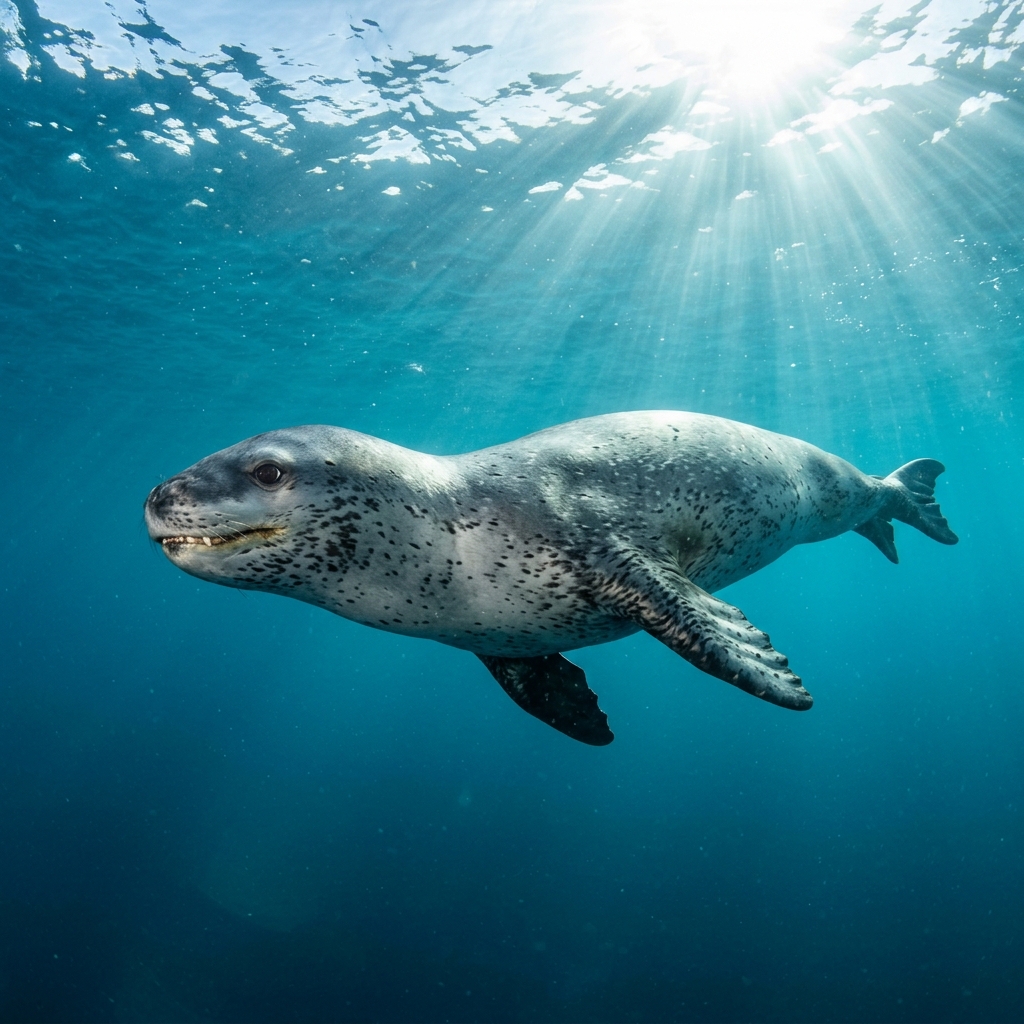
Size settles it fast: a southern elephant seal is a much bigger, heavier-bodied animal with a blunt or trunk-like snout, while a leopard seal is slimmer, spotted, and has a distinctly reptilian, elongated head. Leopard seals are also active predators of other seals, a behaviour elephant seals don't show.
They are among the deepest-diving seals known, with foraging dives that can extend thousands of metres down as they hunt squid and fish. Most of that diving happens far from any dive site, which is part of why in-water sightings stay rare.
Site and sighting data is aggregated from diver logs, iNaturalist and GBIF. For taxonomy and conservation status:
Long-nosed Fur Seal
347 sites