Sepiidae spp.
From Western Australia's reefs to Central Japan, cuttlefish turn up year-round as an uncommon but rewarding sighting on tropical and temperate dives.
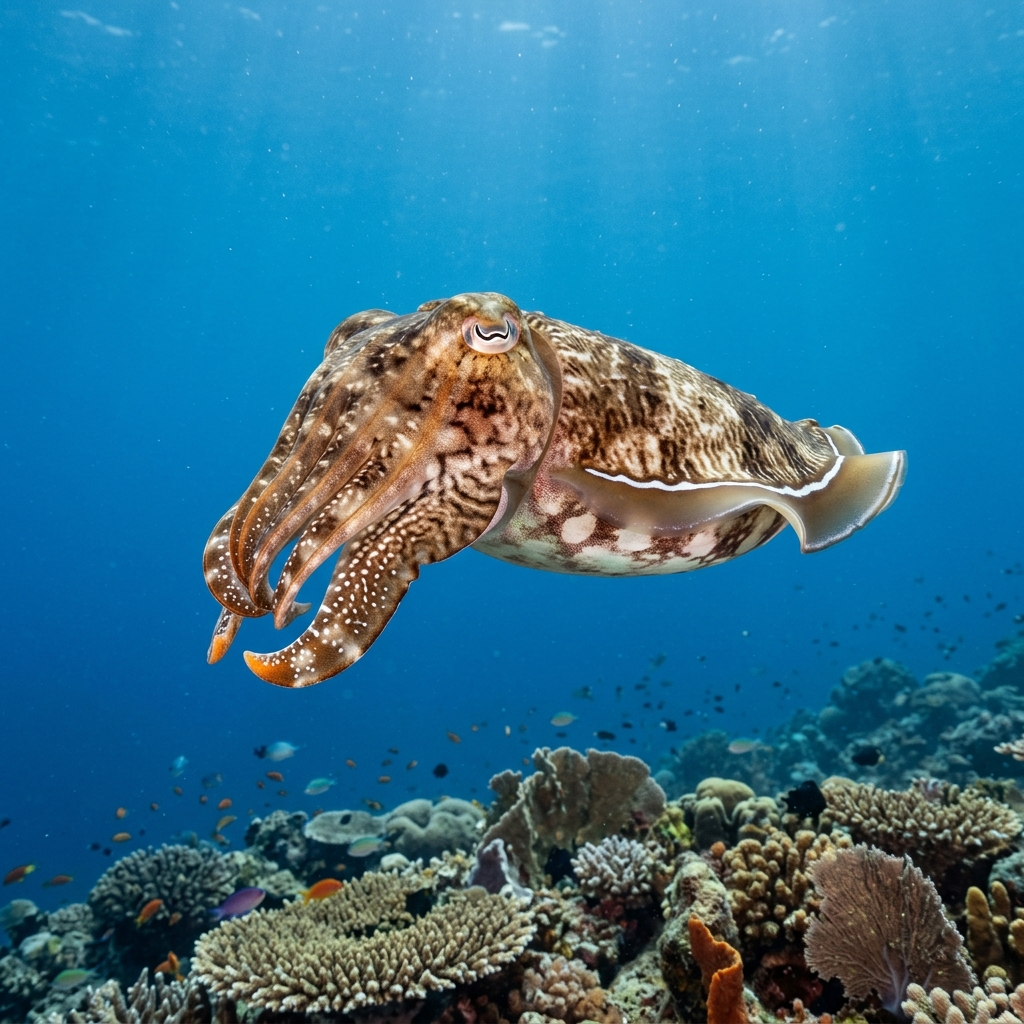
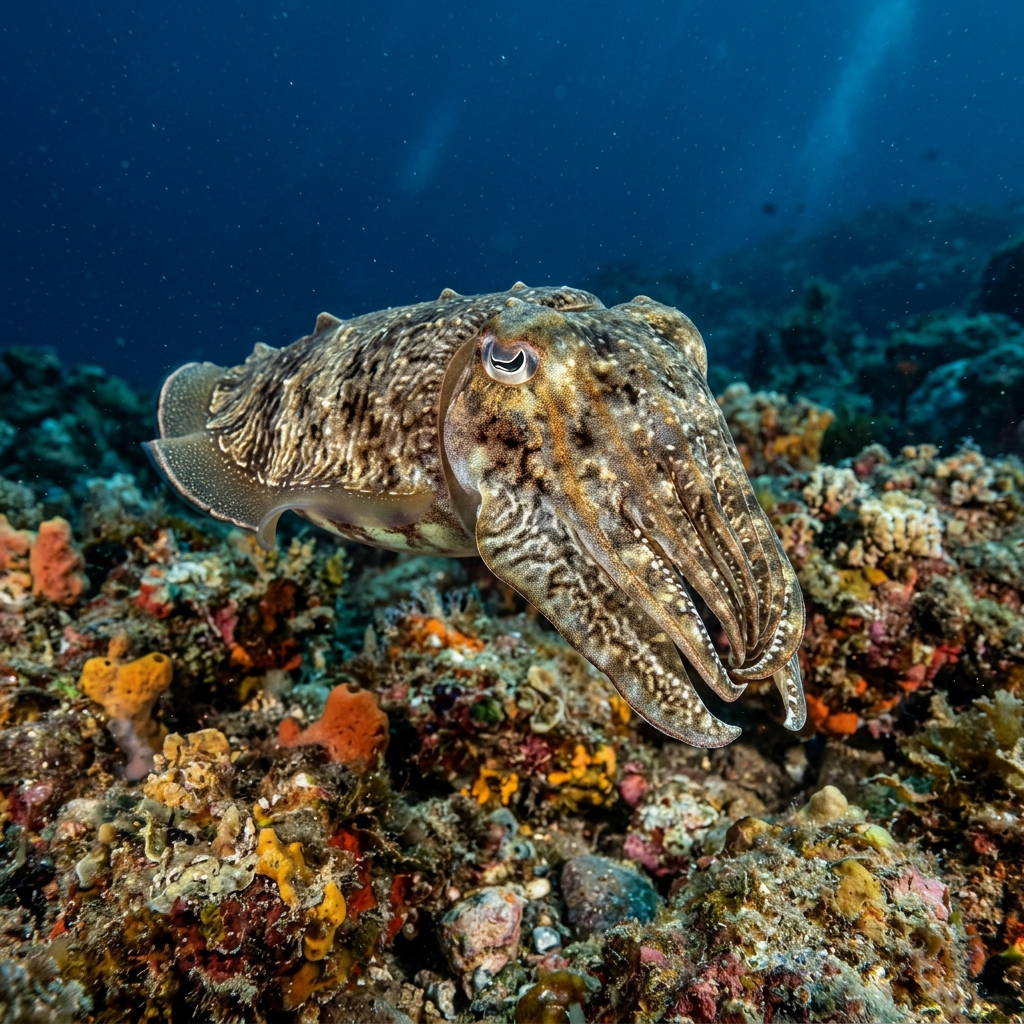
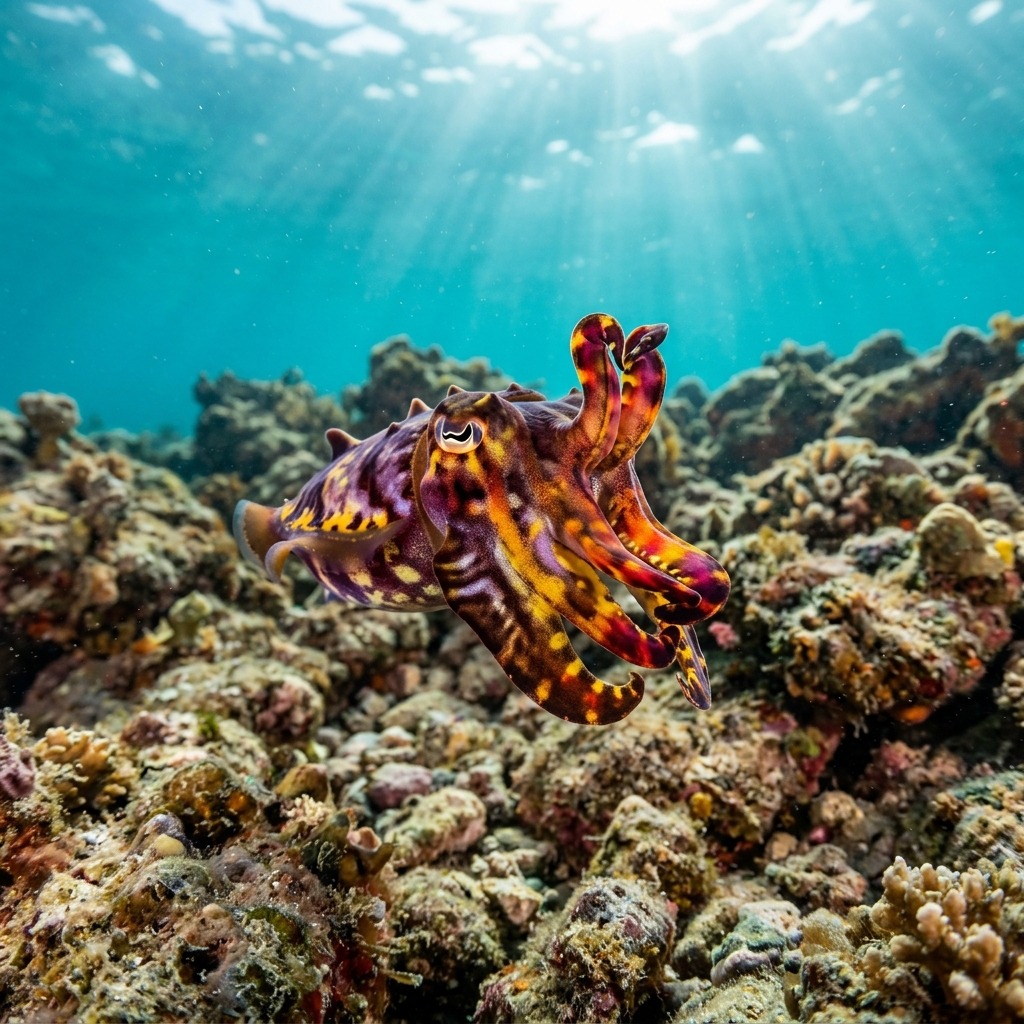
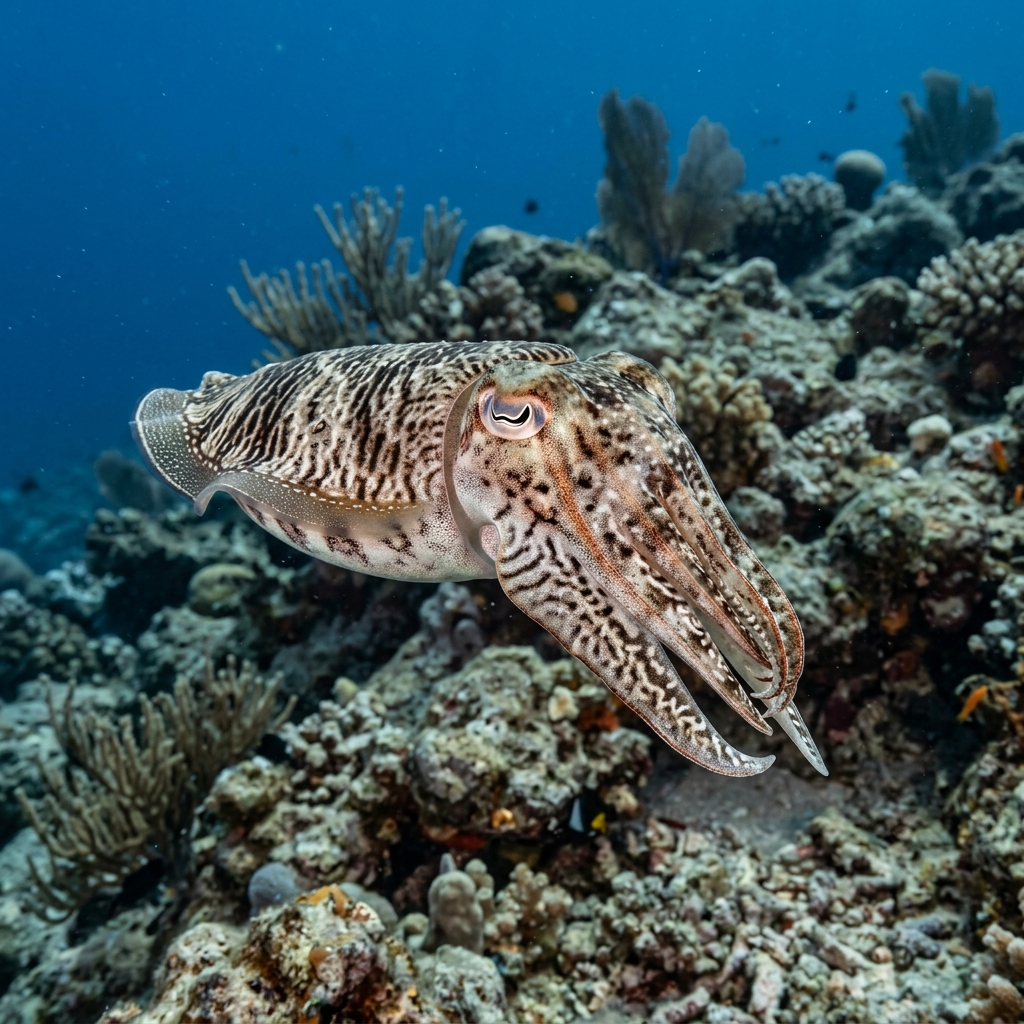
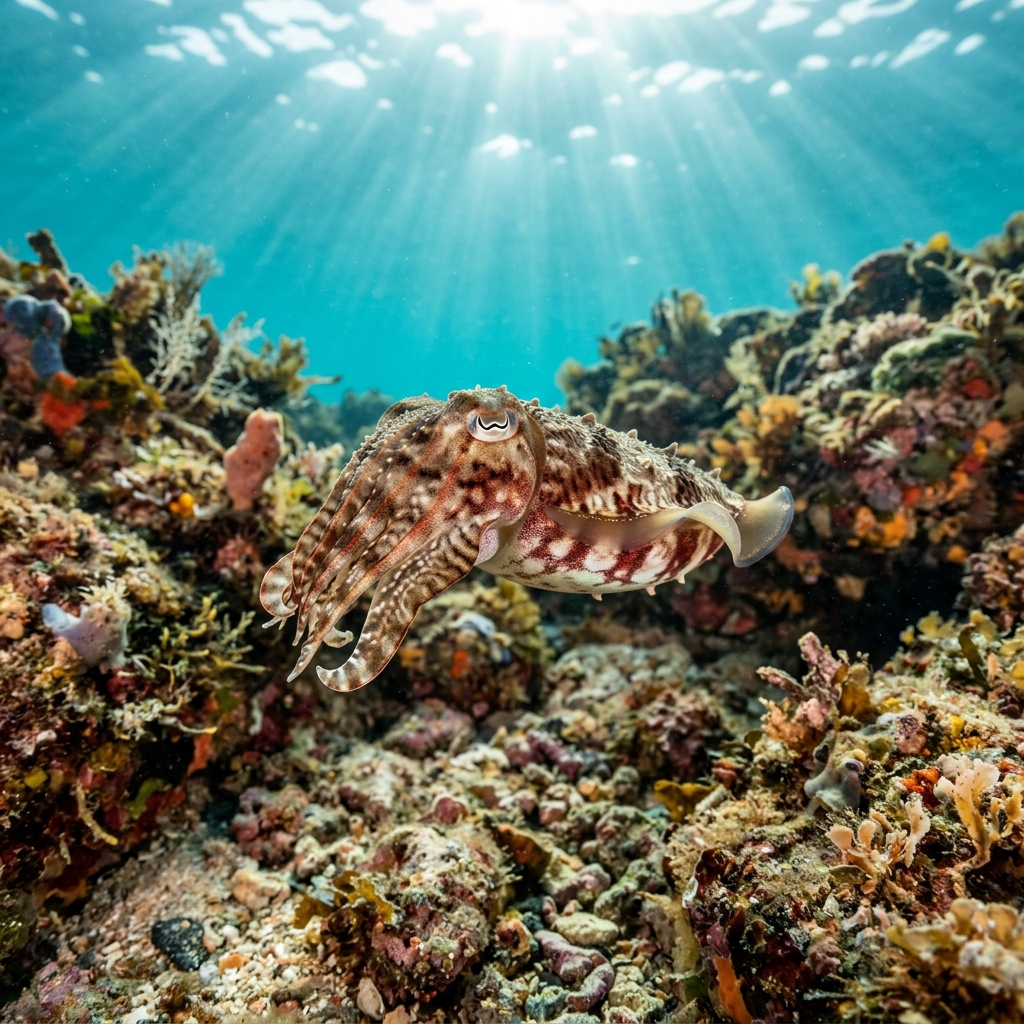
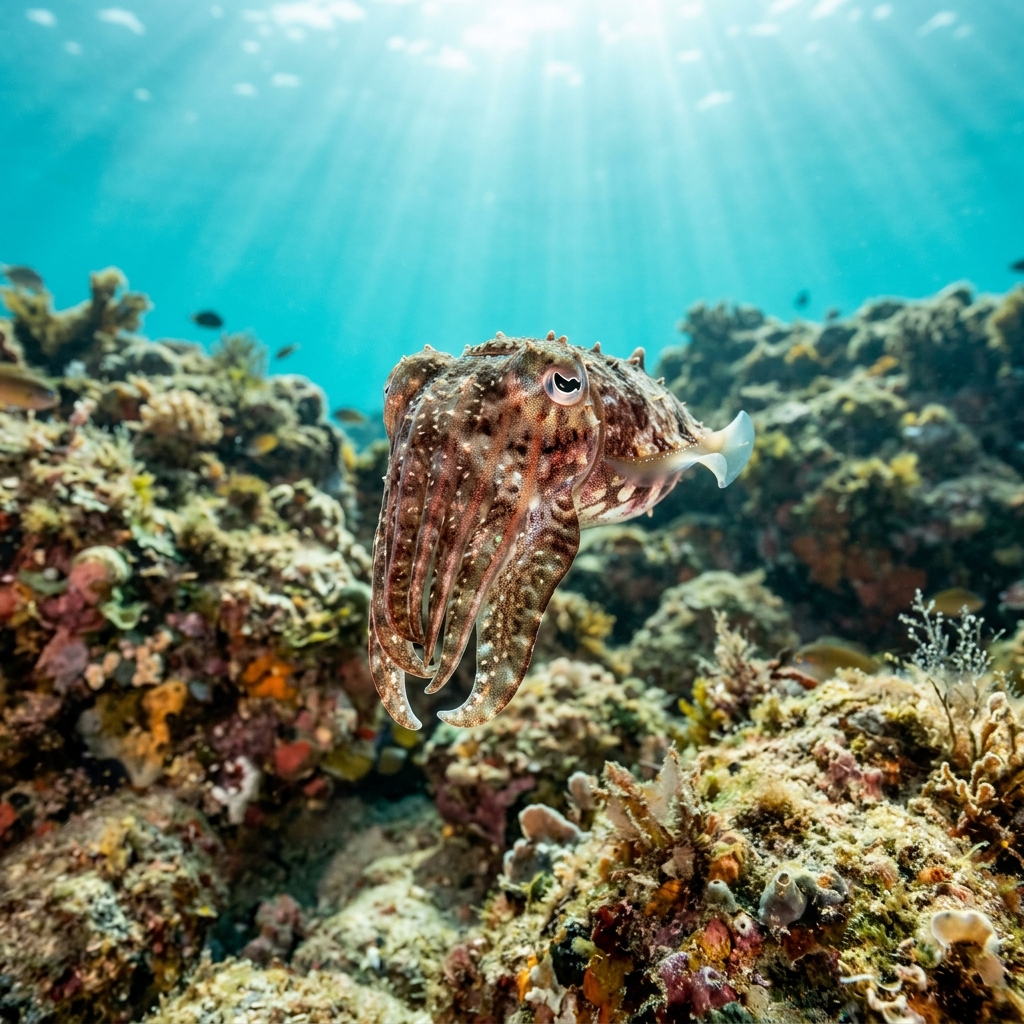
Look for a flattened, oval body with a fringe of fins running its full length and two long tentacles tucked among eight shorter arms. Cuttlefish shift colour and texture constantly, flashing stripes, spots or solid tones in seconds as they hover just above the reef or sand. The W-shaped pupils and the way they hang almost motionless in the water, adjusting with small fin ripples rather than swimming hard, are the giveaway over squid or octopus.
Most sightings are of a single animal hovering low over reef or sand, holding still and changing colour and pattern as divers approach rather than bolting. They're generally logged as uncommon rather than rare, so patient reef scanning at typical daylight dive times is usually what turns one up. When pressed they'll often flatten, blush darker, or jet off in a puff of ink rather than let a diver get close.
Cuttlefish have no bones at all; that flattened body houses an internal cuttlebone made of aragonite, which is what washes up on beaches after they die.
No clear seasonal pattern shows up in the data, and with a comfortable range from around 13 to 29 C, cuttlefish turn up on dives across the year rather than during a single window. Treat any dive in their range as a fair chance, not a seasonal bet.
Reef neighbours a diver could mistake it for. Use the identification notes above to tell them apart.
Cuttlefish are most widely logged in Australia and the Philippines, with strong numbers also out of Indonesia and Japan. Within those countries, Western Australia and Queensland, the Visayas, Luzon and Palawan in the Philippines, and Central Japan carry the bulk of sightings, with a smaller but steady presence around South Africa's Western Cape and Portugal.
Mapping where Cuttlefish is logged…
Australia and the Philippines have the most logged sites, particularly Western Australia, Queensland, the Visayas, Luzon and Palawan. Indonesia, Japan (especially Central Japan) and South Africa's Western Cape also produce reliable sightings.
There's no strong seasonal pattern in the data, and they tolerate a wide temperature range from roughly 13 to 29 C, so they're logged year-round rather than in one particular season.
Look for a flattened oval body with a fin fringing its whole edge, W-shaped pupils, and skin that ripples through colours and patterns in real time. It tends to hover in place using small fin movements rather than swimming actively.
No, they pose no danger to divers. They're a soft-bodied, non-aggressive cephalopod that will usually just change colour, retreat, or ink if a diver gets too close.
Size varies a lot across the Sepiidae family, from small hand-sized species up to giants that can reach over half a metre, so exact size depends on which species you're looking at.
They're boneless but carry an internal cuttlebone for buoyancy control, and their skin holds thousands of colour and light-reflecting cells that let them change appearance almost instantly, used for camouflage, communication and startling predators.
Site and sighting data is aggregated from diver logs, iNaturalist and GBIF. For taxonomy and conservation status:
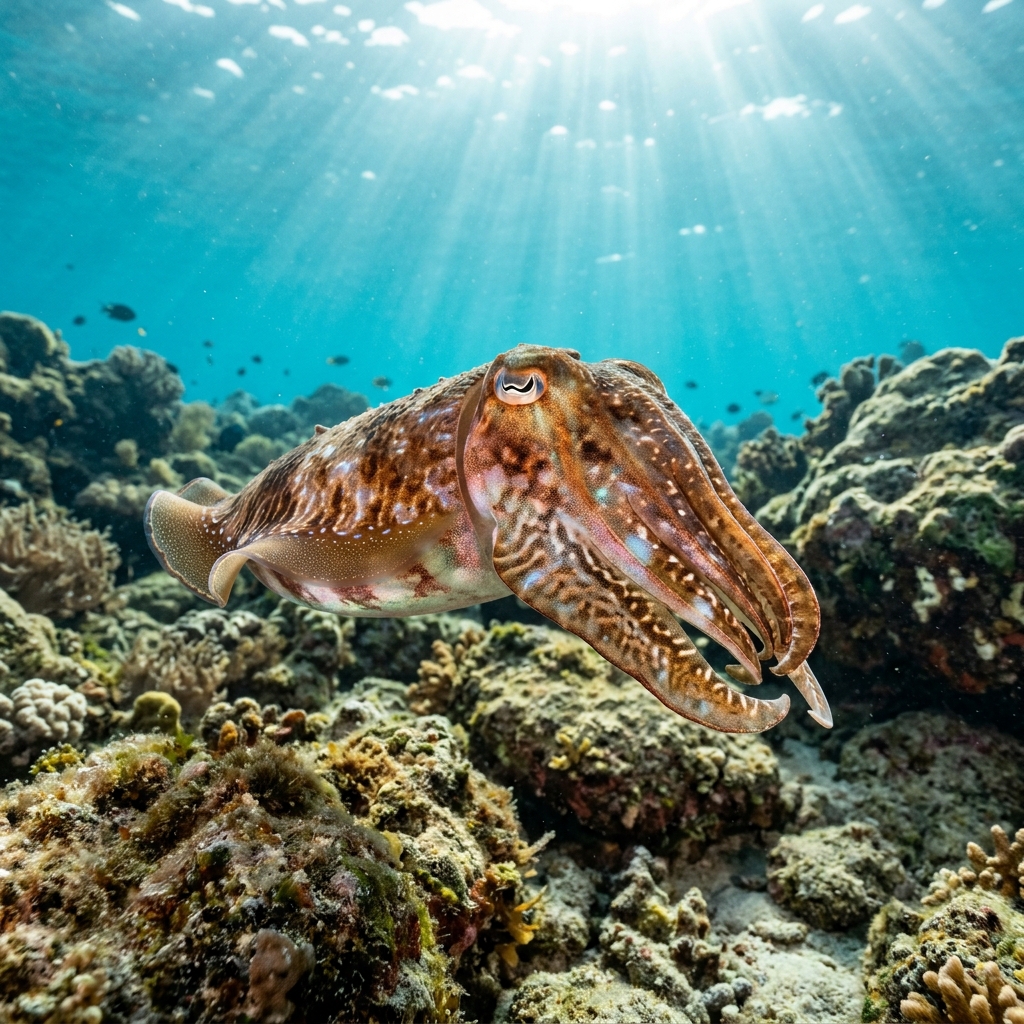
Ascarosepion apama
Flamboyant Cuttlefish
377 sites