Dasyatidae spp.
Flattened rays cruising sandy bottoms from the Carolinas to the Maldives, spotted year-round in water 18 to 28°C.
If you're stung
Venomous tail barbGeneral first-aid guidance, not a substitute for professional medical care. In an emergency, call your local emergency number.
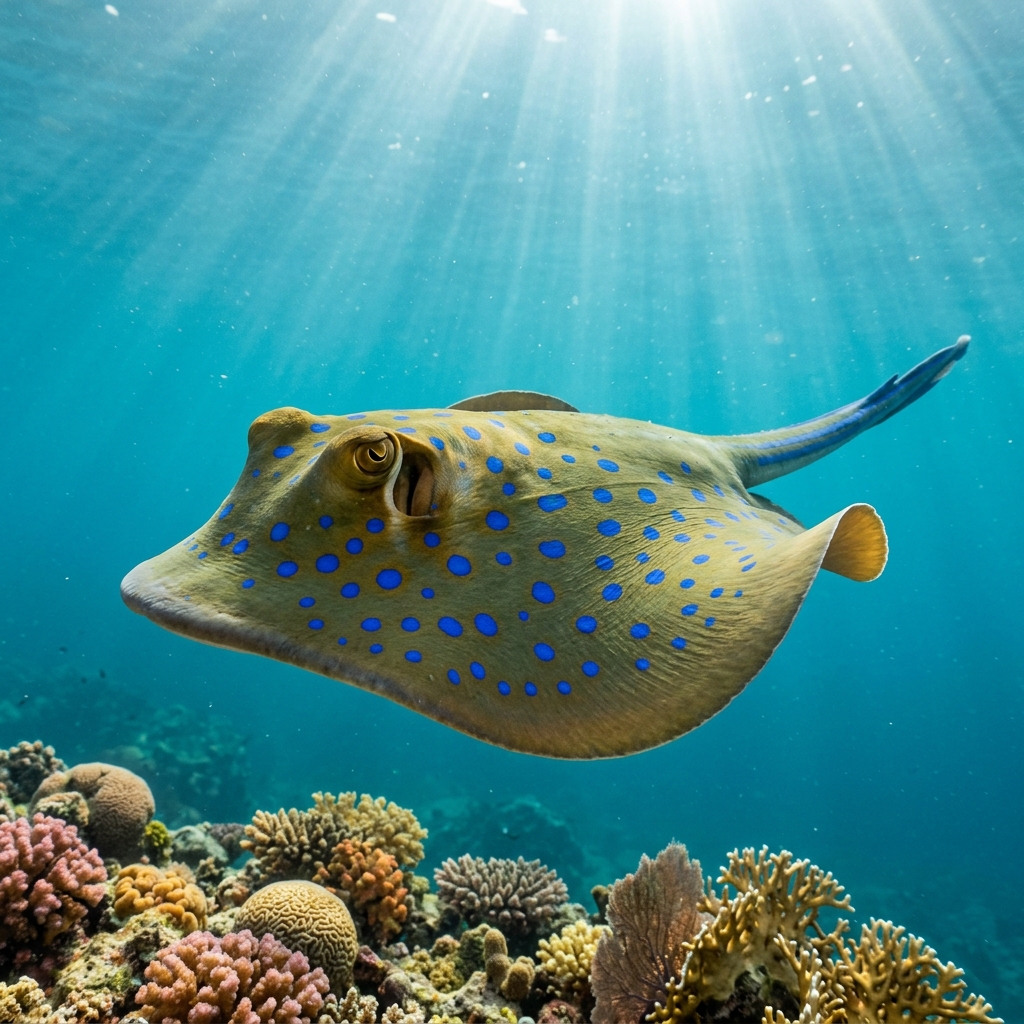
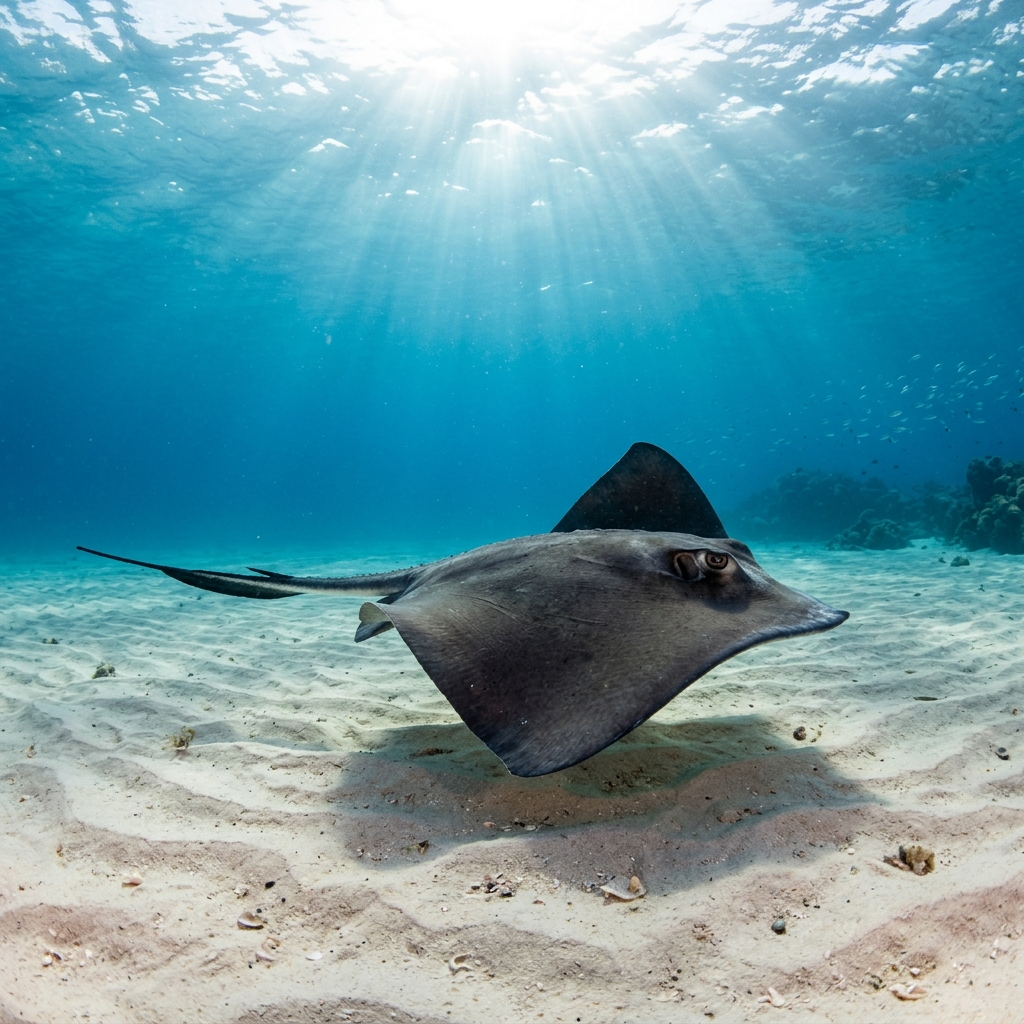
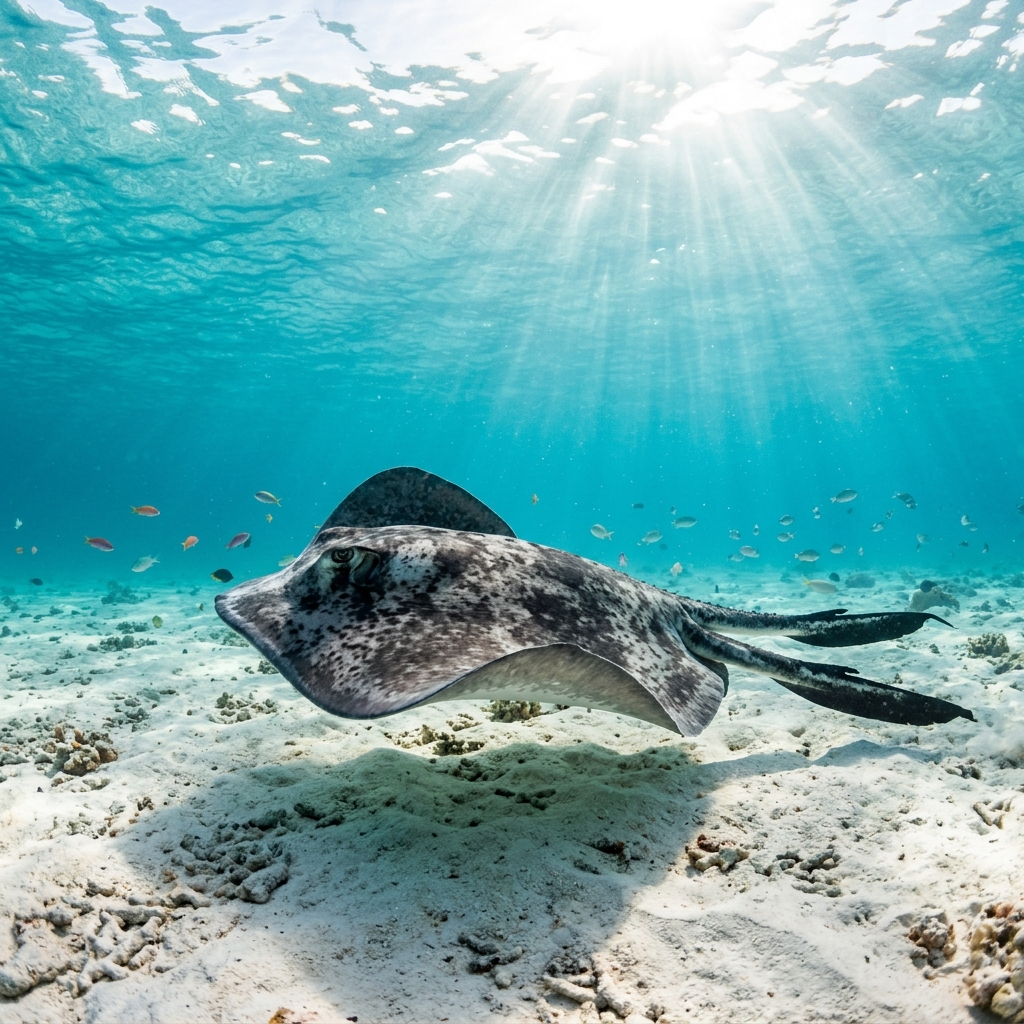
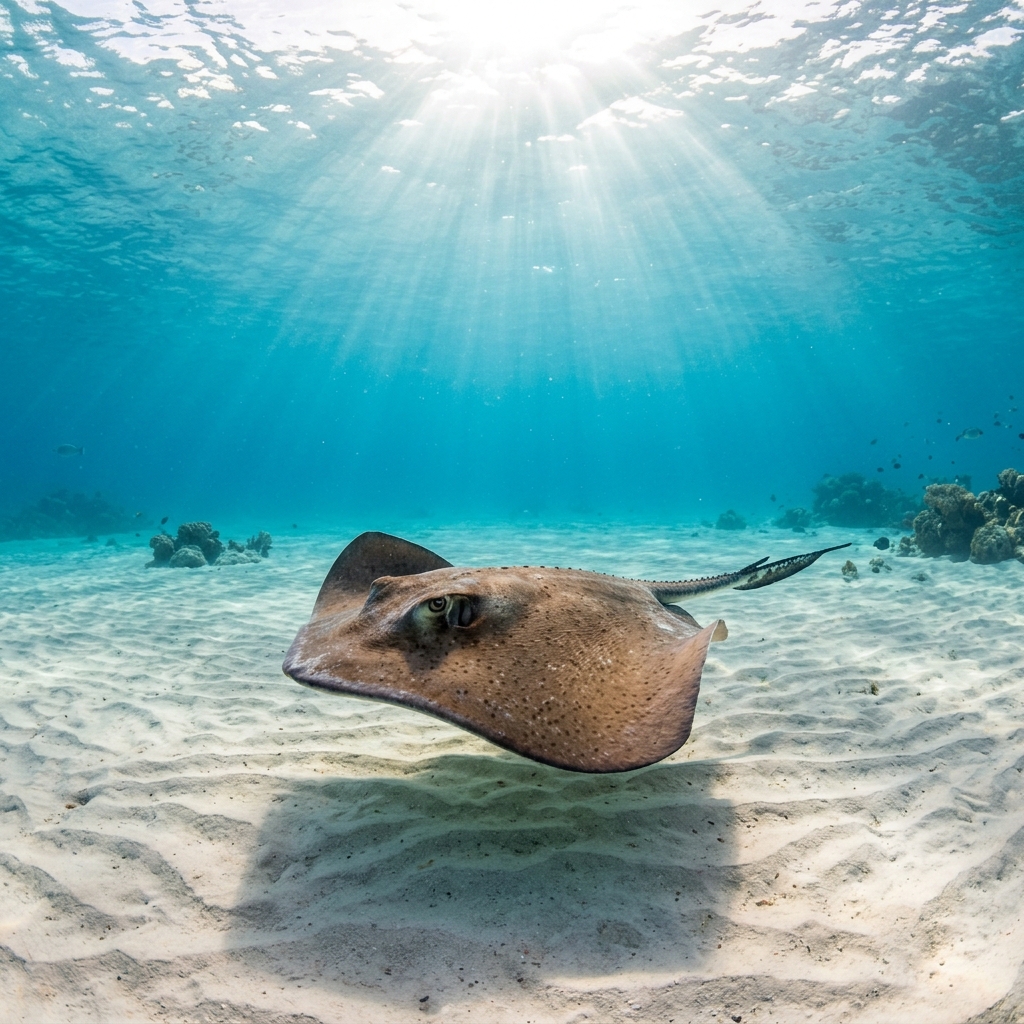
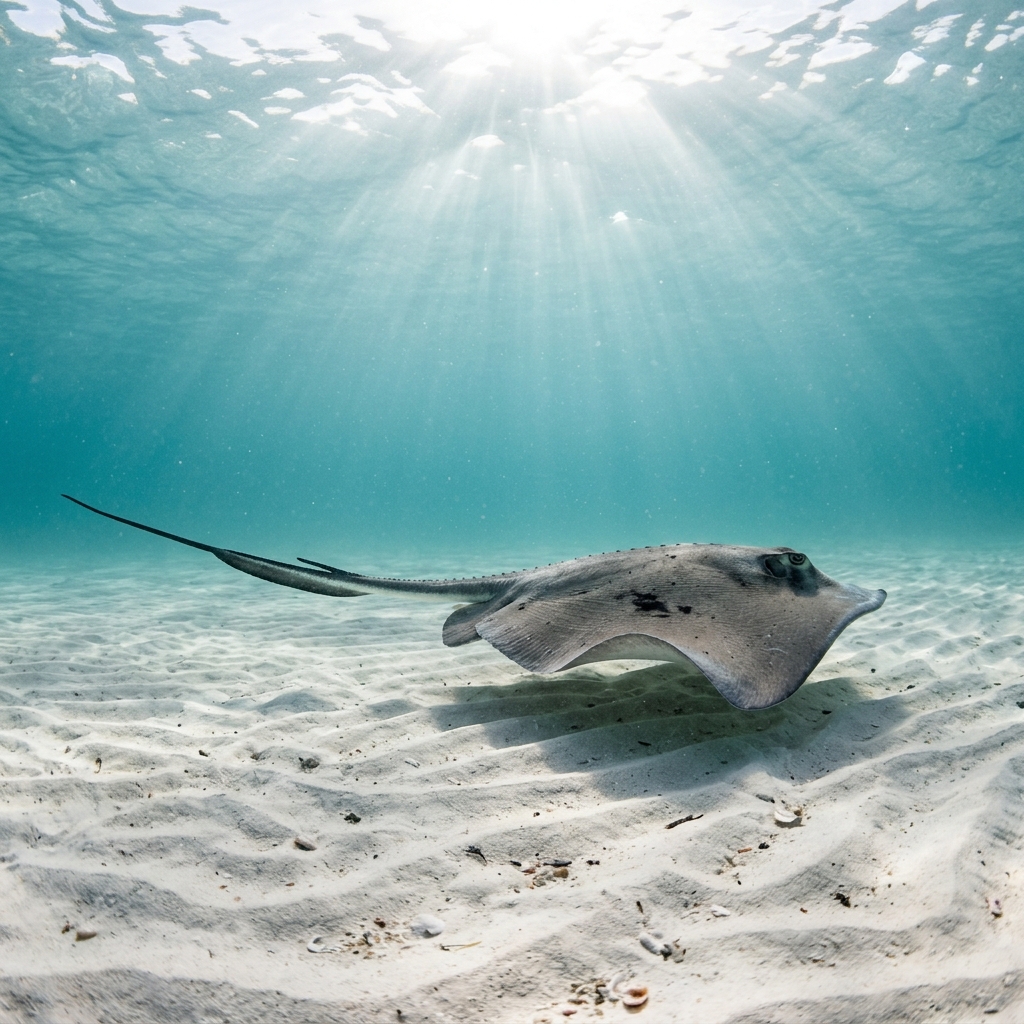
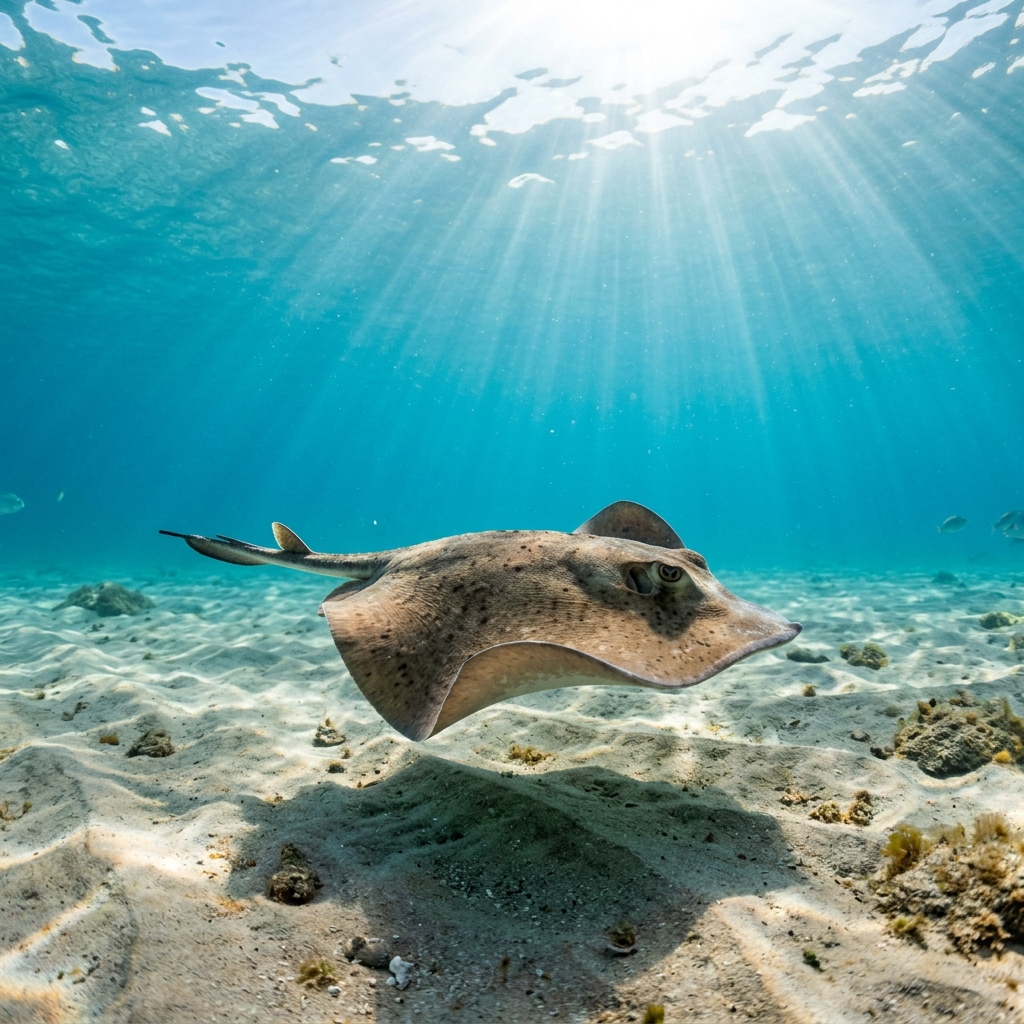
Look for a flattened, diamond- or oval-shaped body lying on or gliding just above sand, with a long whip-like tail trailing behind. Colour and pattern vary widely across the family, from plain grey-brown to spotted or marbled skin, so pattern alone won't nail the species. The giveaway is the shape and posture: pectoral fins fused into a disc, eyes on top of the head, and a habit of half-burying itself with only the outline visible.
Most sightings are of an animal resting on sand or lightly buried with just the tail and eyes showing, often near reef edges, seagrass, or lagoon flats. They tend to sit still and let divers approach at a respectful distance, but will glide off with a few unhurried wing-beats if crowded. Sightings lean towards uncommon rather than guaranteed, so patient sand-scanning on a dive pays off more than chasing.
That trailing tail carries one or more venomous spines used purely in self-defence, which is why a resting ray barely bothers to move unless it's stepped on or grabbed.
No clear seasonal pattern shows up in the sightings, and they're comfortable across a wide range from about 18 to 28.5°C, so this is a year-round encounter on sandy patches and reef edges wherever they're found.
Reef neighbours a diver could mistake it for. Use the identification notes above to tell them apart.
Most reliably logged in the United States (especially the Carolinas and Florida), and a strong presence across Australia's Western Australia and Queensland coasts. Also a regular find in the Maldives' Northern Atolls, Greece's Saronic and Athens region, Central Japan, and Luzon in the Philippines.
Mapping where Stingray is logged…
Sandy sites in the Carolinas and Florida in the US, Western Australia and Queensland in Australia, the Maldives' Northern Atolls, and coastal Greece and Central Japan all turn up regular sightings.
There's no strong season in the data, so they're a year-round sighting on sand flats and reef edges wherever water stays in the 18 to 28°C range they tolerate.
Not typically. They're not aggressive and will usually swim off if approached, but the tail spine is a defensive weapon, so avoid stepping on one buried in sand and give it space to move away.
Look for a flat diamond-shaped disc lying on or hovering over sand with a long whip-like tail behind it. Body pattern varies a lot between species, so the flattened shape and sandy resting posture are the reliable clues.
It's a mix of camouflage and rest, letting them hide from predators and ambush passing prey while staying still for long stretches, which is exactly why divers often spot only an outline or a pair of eyes poking up.
Site and sighting data is aggregated from diver logs, iNaturalist and GBIF. For taxonomy and conservation status:
Porcupine Ray
1,536 sites