Macroctopus maorum
Spot New Zealand Octopus in South Australia, Tasmania and Central New Zealand. Cool-water specialist living in 11-19 °C, active year-round but rarely seen.
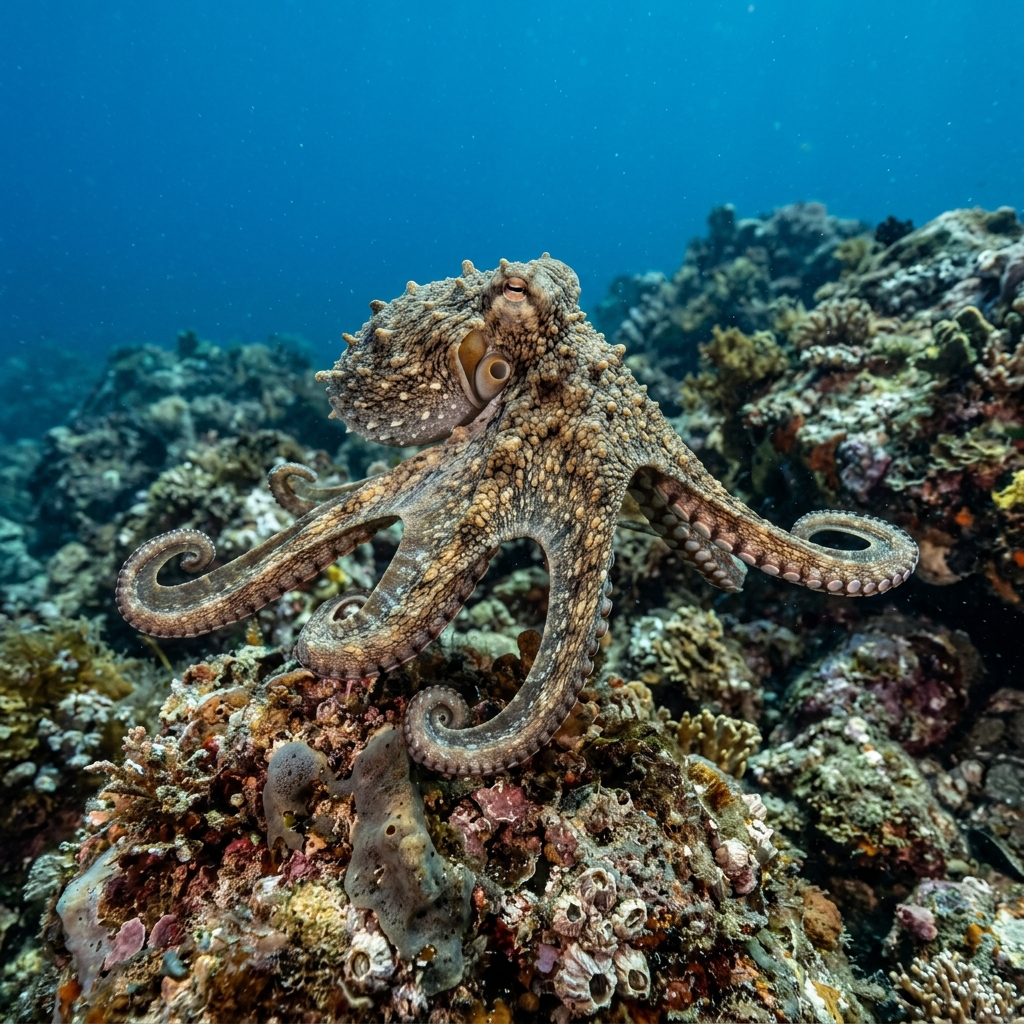
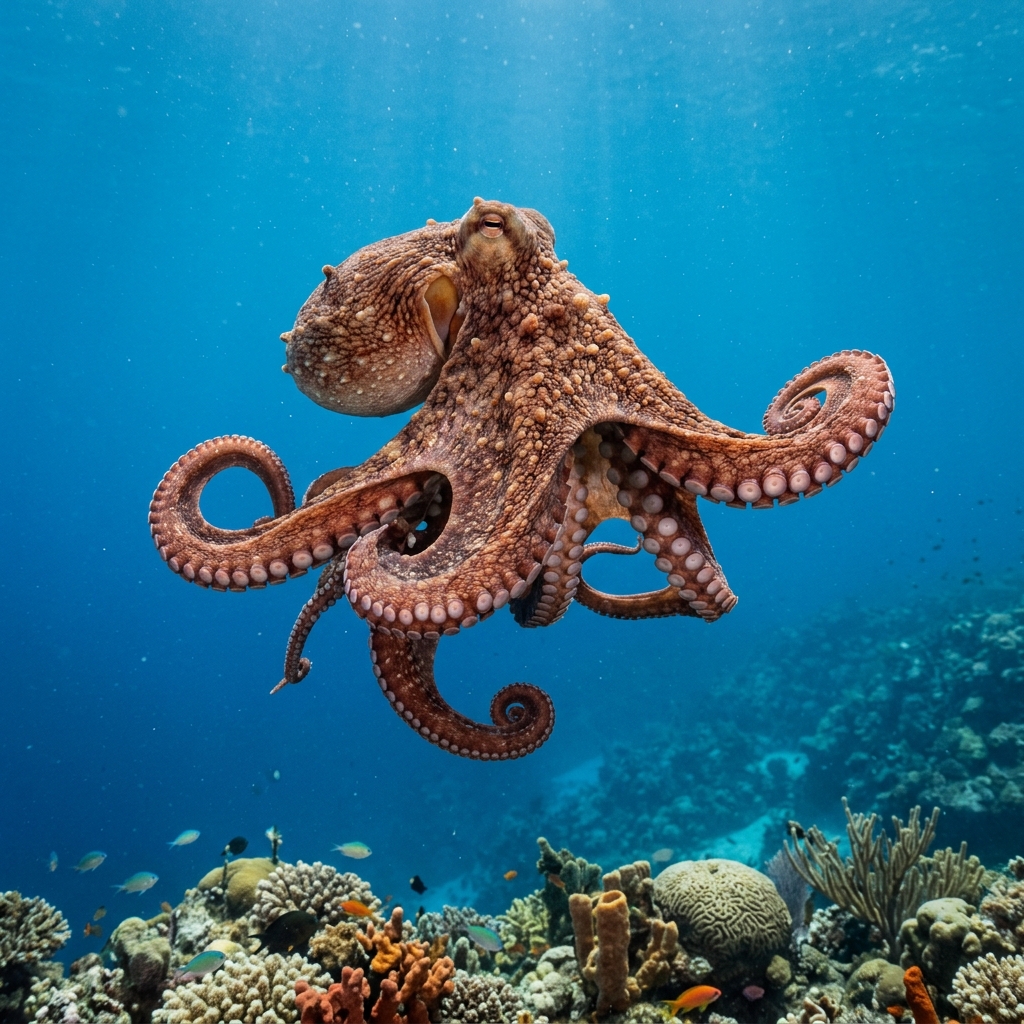
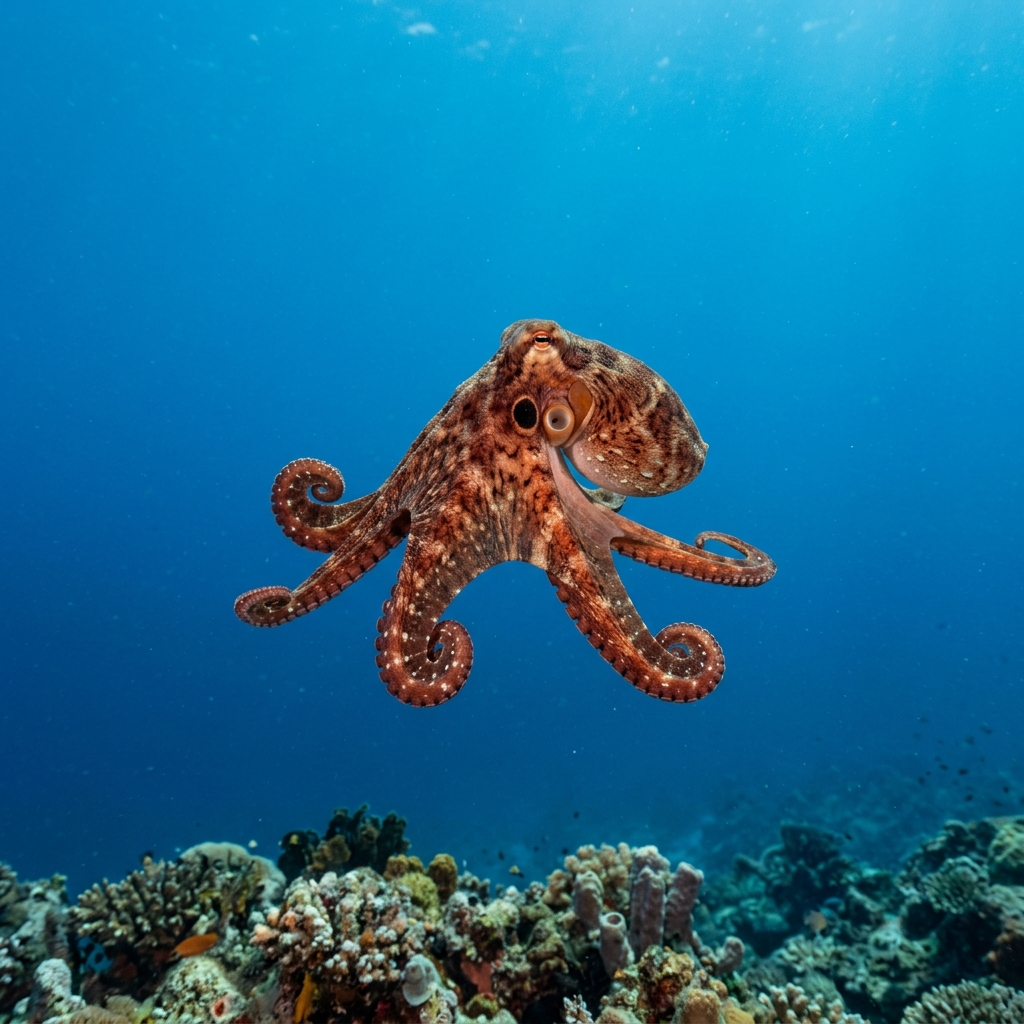
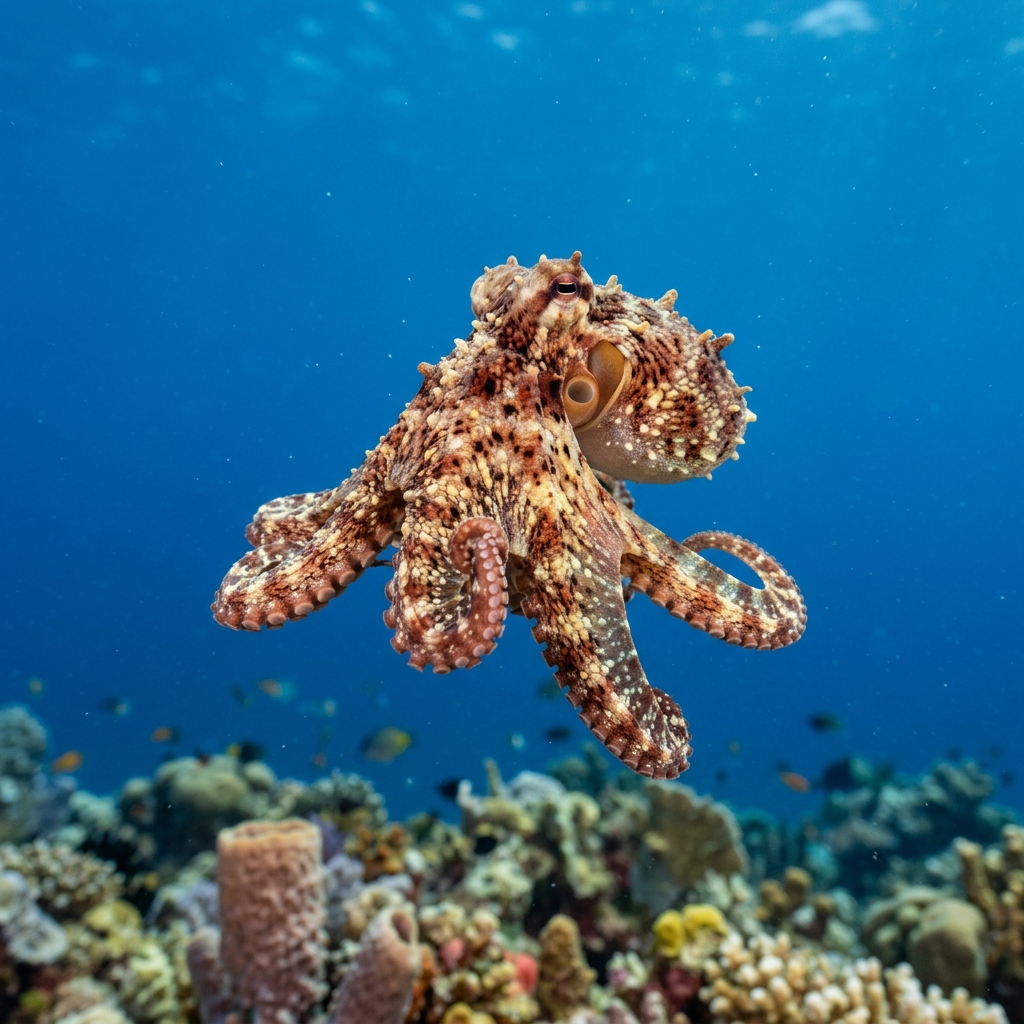
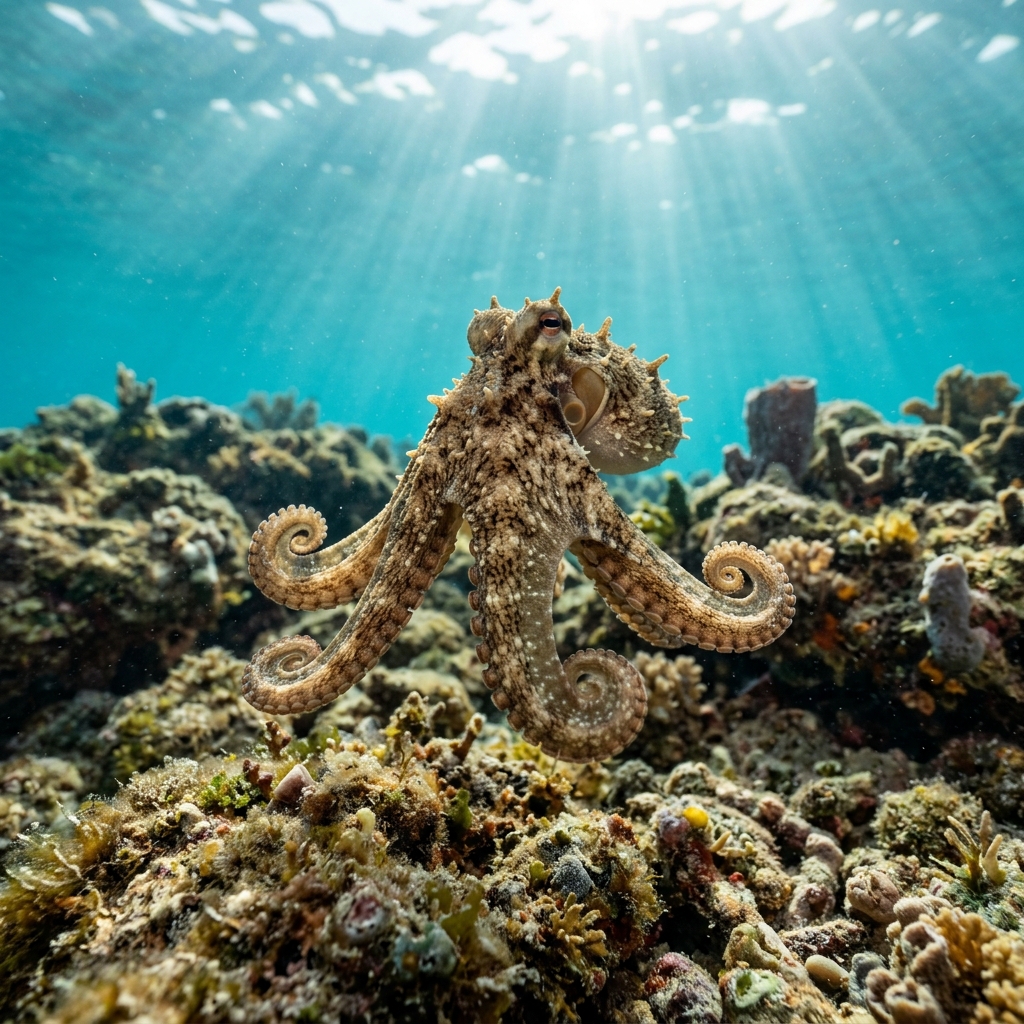
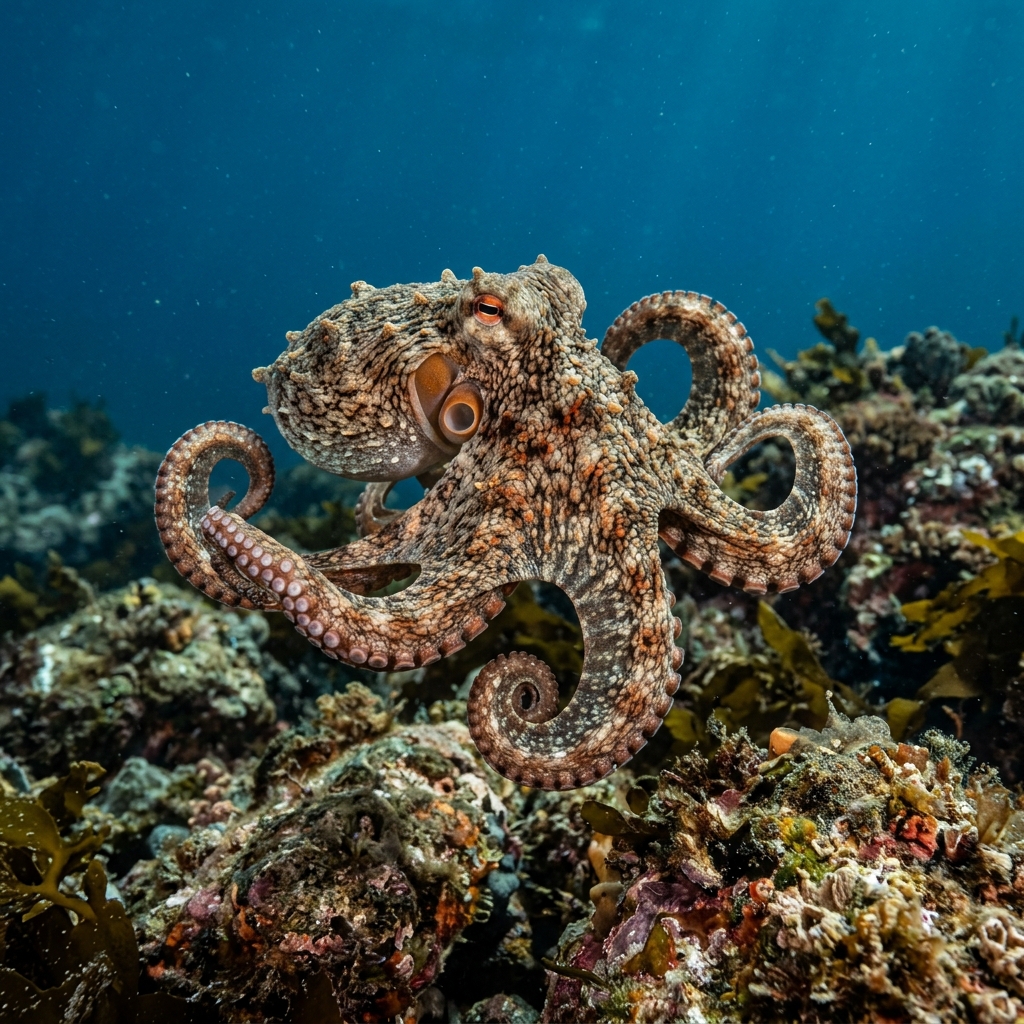
One of the largest octopuses in the Southern Hemisphere, this species can reach a considerable arm span, though its exact typical size underwater varies. Its skin shifts rapidly between mottled browns, reds, and pale creams, and it can raise textured skin papillae (small bumpy projections) to break up its outline against rocky reef. Like most octopuses, the key underwater cue is the body posture: a rounded mantle held low with arms fanned across rock or sand. Look for the characteristic pale underside of the arms, which can flash briefly when it moves.
Encounters are uncommon and often brief, as this octopus tends to retreat into rock crevices or pull arms inward when it detects a diver. If you find one in the open, it may be actively hunting, probing rubble and reef gaps with its arms to flush out crabs or other invertebrates before using its beak to break them open. Move slowly, stay low, and avoid sudden gestures; a patient approach from a respectful distance gives the best chance of watching it behave naturally.
This is one of the largest octopus species in the Southern Hemisphere, and females are known to guard their egg clutches without feeding for the entire brooding period, a significant physiological commitment that ends with the female dying shortly after the eggs hatch.
No clear seasonal peak has emerged from the data, so this species is best treated as a year-round target. Its observed water-temperature range of roughly 12 to 19 °C matches the cool temperate conditions found in southern Australia and New Zealand throughout the year.
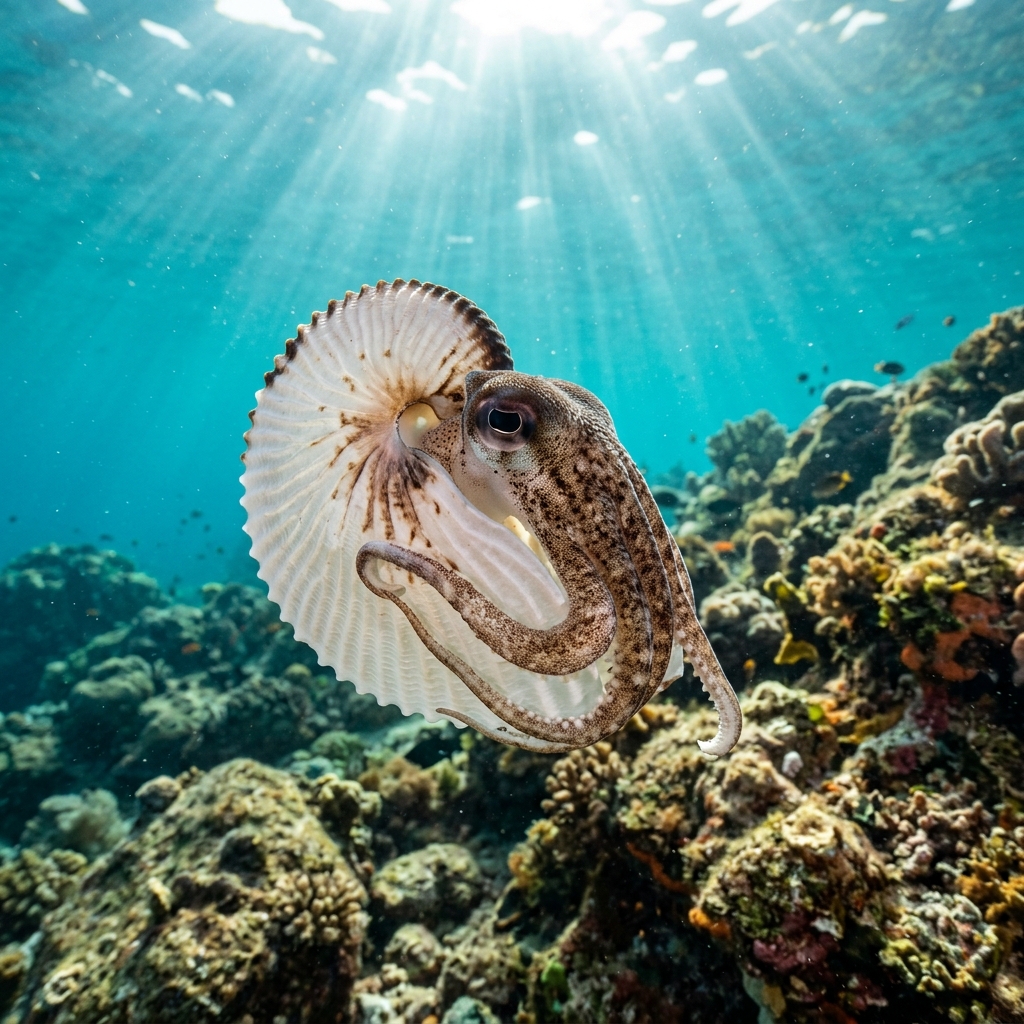
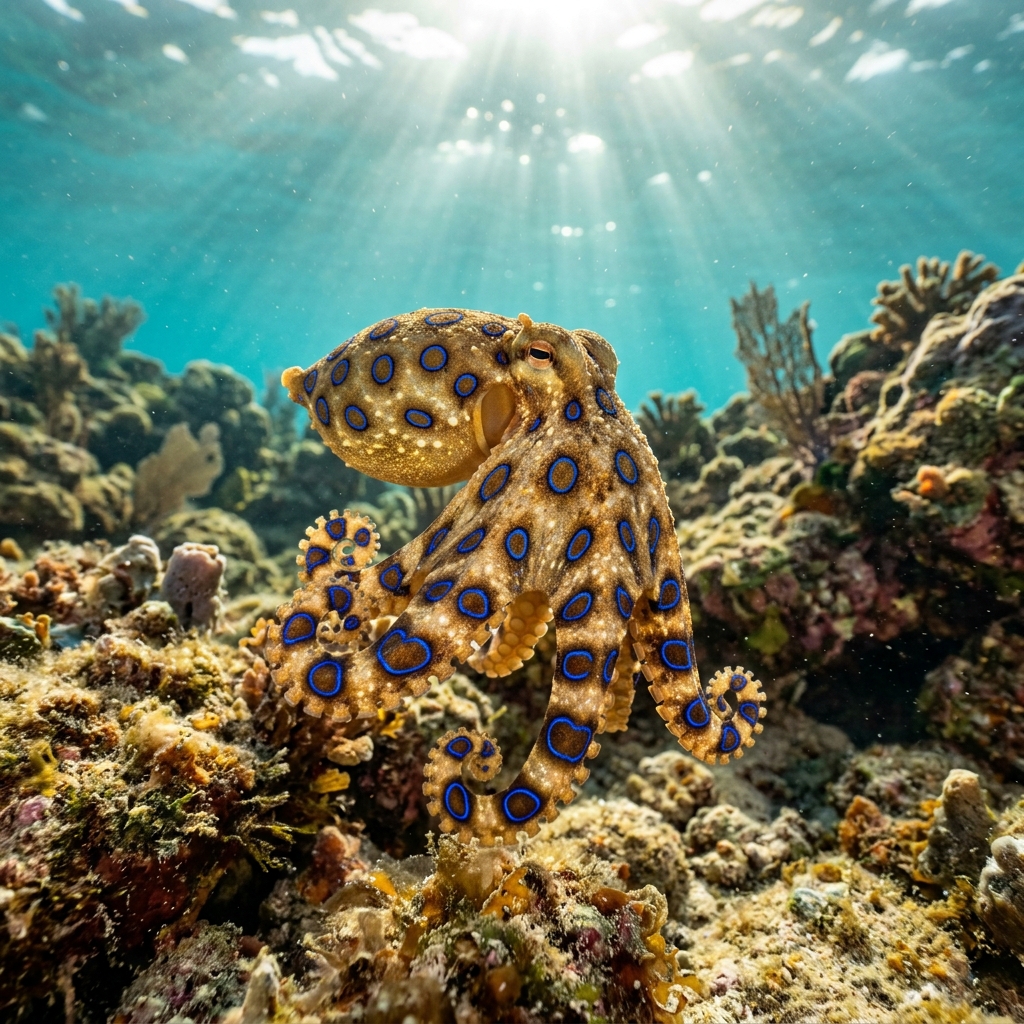
Reef neighbours a diver could mistake it for. Use the identification notes above to tell them apart.
Sightings are spread across Australia and New Zealand, with the strongest concentration of known sites in South Australia, Tasmania, and Victoria on the Australian side, and Central New Zealand and Coromandel and Bay of Plenty on the New Zealand side. Fiordland and Stewart Island in New Zealand also feature as a cooler-water outpost worth checking. Most logged sightings come from shallow to mid-range rocky reef dives in these temperate regions.
Mapping where New Zealand Octopus is logged…
The best chances are on cool temperate rocky reefs in South Australia, Tasmania, Victoria, and Central New Zealand. Coromandel and Bay of Plenty and Fiordland in New Zealand are also noted sites. Most encounters happen on benthic (seafloor) dives at relatively accessible depths.
There is no confirmed seasonal peak based on current sighting data, so diving for this species is a year-round pursuit. It lives in water between about 12 and 19 °C, which is the normal temperature range for southern Australian and New Zealand coastal sites across all seasons.
Look for a large octopus on rocky or mixed reef in cool temperate water, with rapidly shifting mottled brown and red colouration and the ability to raise textured skin bumps for camouflage. Size is a useful cue: this is a notably large species. The pale underside of the arms can flash briefly as it moves across the reef.
This is one of the largest octopus species in the Southern Hemisphere, with arm spans reported to exceed one metre in large adults. Precise typical size underwater is hard to judge due to their ability to contract or spread dramatically, but encountering a large specimen on a southern reef is a good indication you are looking at this species.
Yes, based on diver reports they are most often rated as rare at sites where they have been recorded, with only a smaller number of sites rating them as uncommon. Their benthic, cryptic lifestyle and strong camouflage mean they are easy to overlook even where present. A slow, methodical search of rocky crevices and rubble gives the best odds.
Site and sighting data is aggregated from diver logs, iNaturalist and GBIF. For taxonomy and conservation status:
Brazilian Reef Octopus
1,142 sites