Zebrasoma velifer
Spot Pacific Sailfin Tang in the Maldives, Indonesia and Hawaii. Recognised by towering dorsal fins and zebra-stripe flanks. Present year-round in warm tropical water.
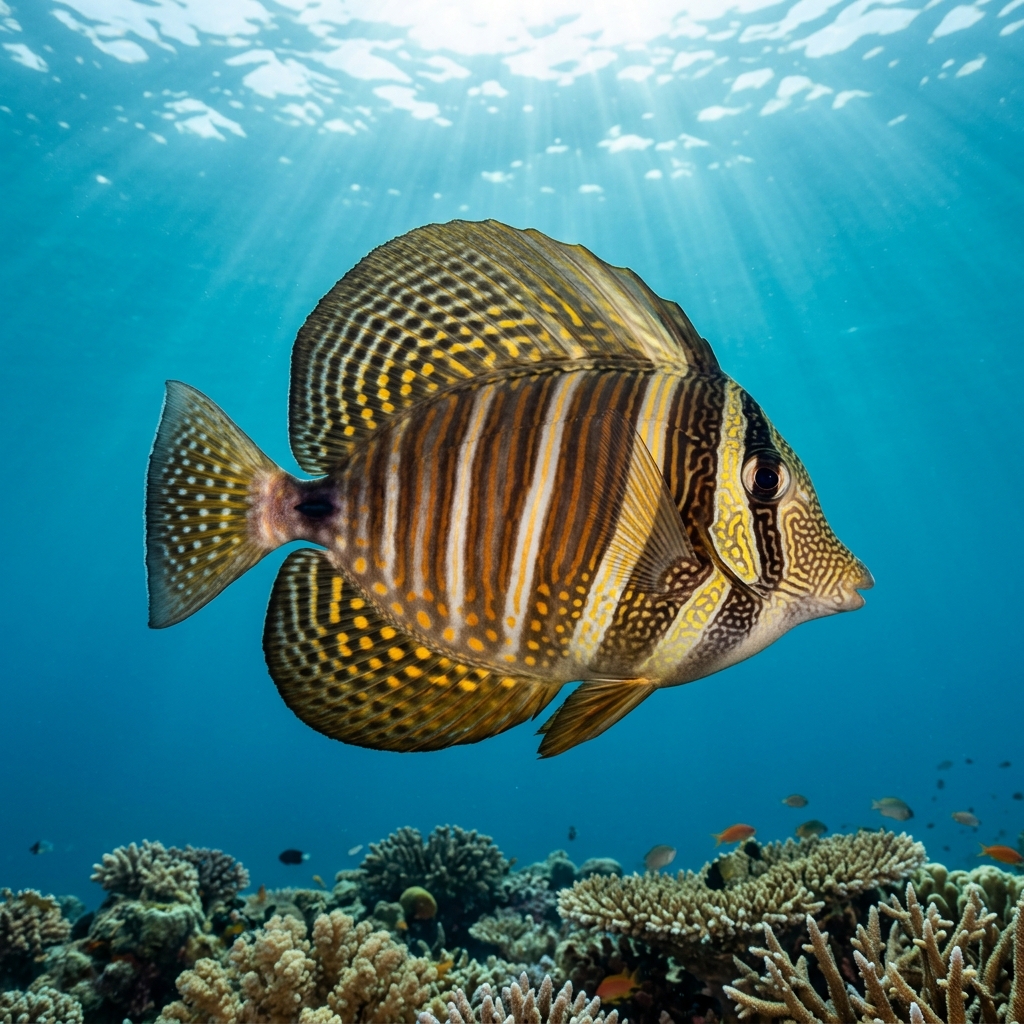
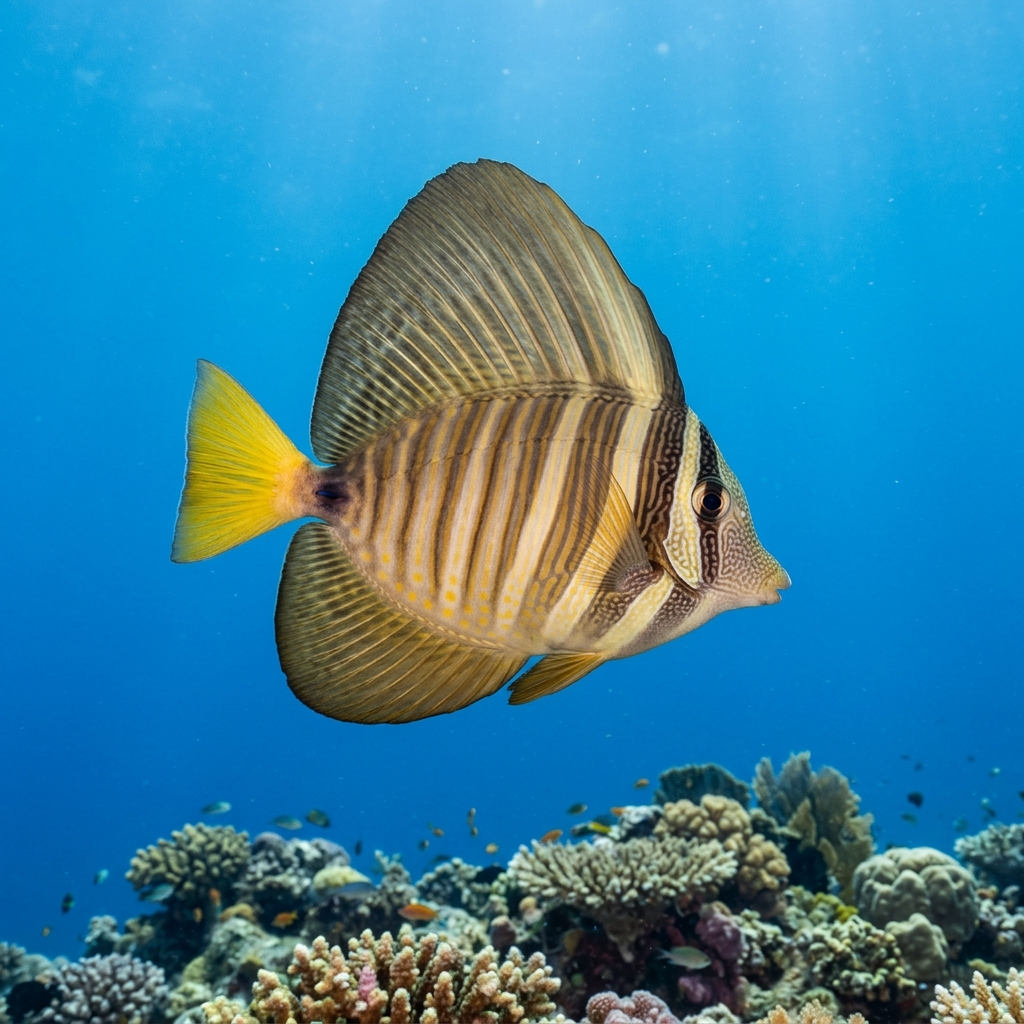
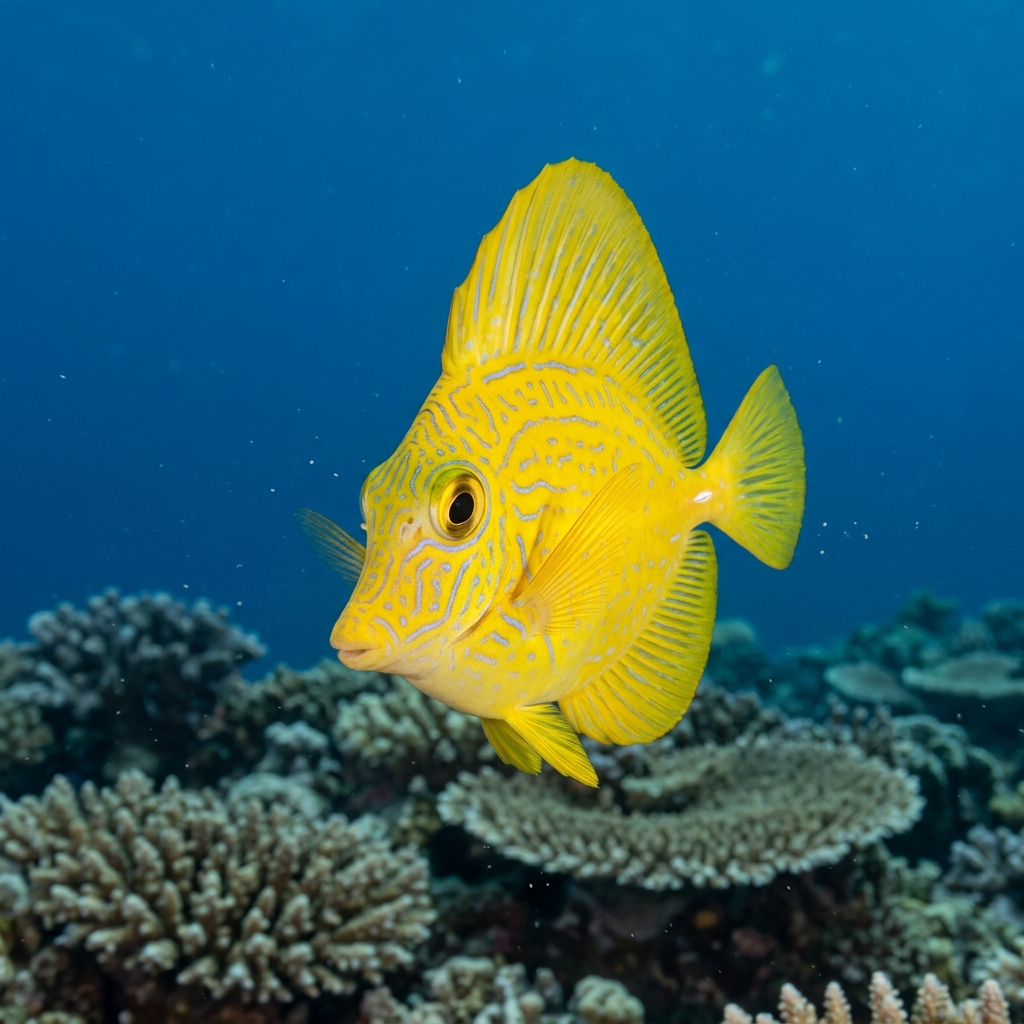
Those enormous, sail-like dorsal and anal fins are the giveaway, when fully extended they can make the fish look nearly as tall as it is long, giving it an almost circular profile. The body is grey-brown to olive with bold vertical yellow and white stripes, and the face is covered in fine yellow spots and lines. At around 28 cm it is a medium-sized reef fish, noticeably larger than most other tangs you will encounter. Juveniles look strikingly different: bright yellow with a round disc-shaped body and intricately blue-edged markings, though they share the same tall fins.
You will usually come across one alone or in a loose group, head-down and working steadily across the reef surface grazing algae, a feeding rhythm it keeps up even with divers watching from a metre or two away. Early morning and late afternoon tend to be the most active feeding windows, so these are your best bets for unhurried encounters. At night, individuals wedge themselves into crevices to sleep, so torch dives can occasionally turn one up tucked into the reef.
The towering sail fins are not just for show, they are raised as a threat display towards rival tangs and can make the fish appear significantly larger to a competitor sizing it up.
Comfortable in water between about 25 and 29 °C, it is present on tropical reefs year-round in the Northern Hemisphere. Southern Hemisphere sightings concentrate from May through March, with a quieter period around April.
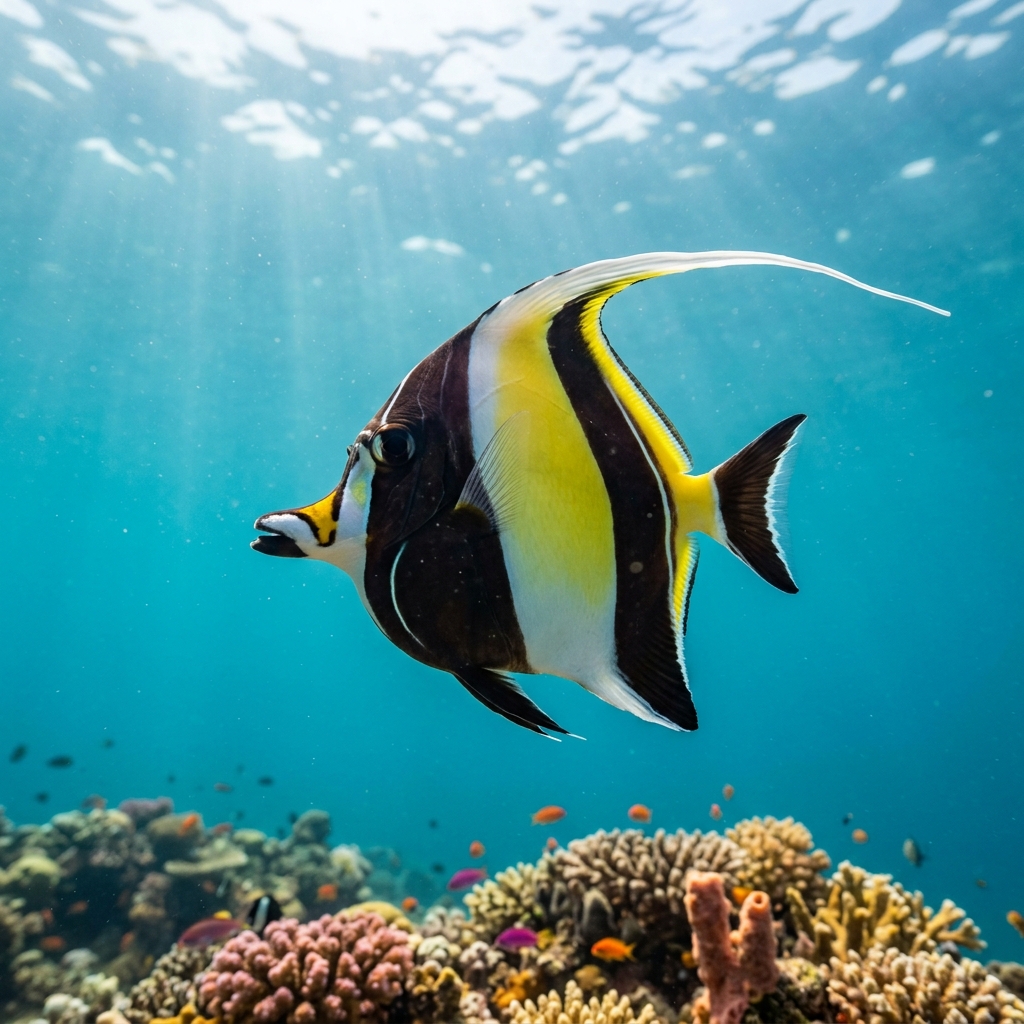
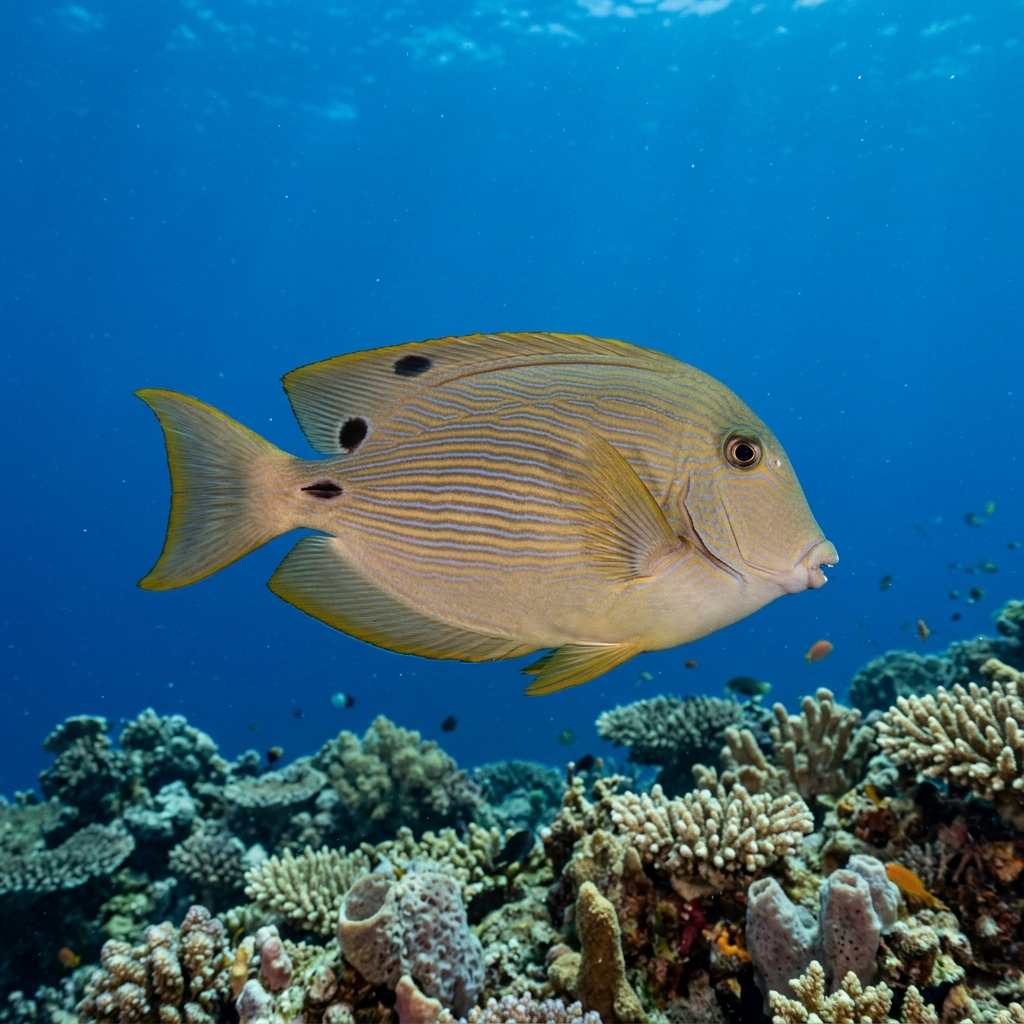
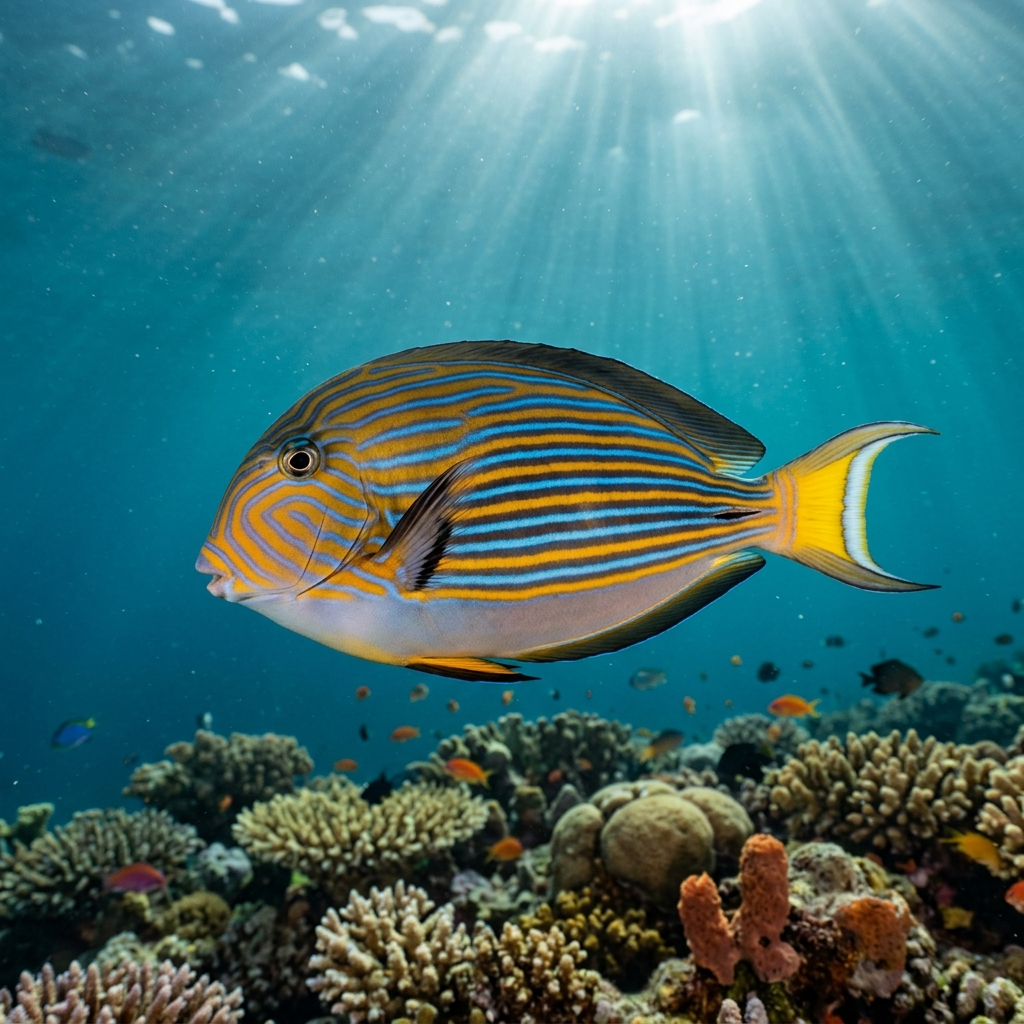
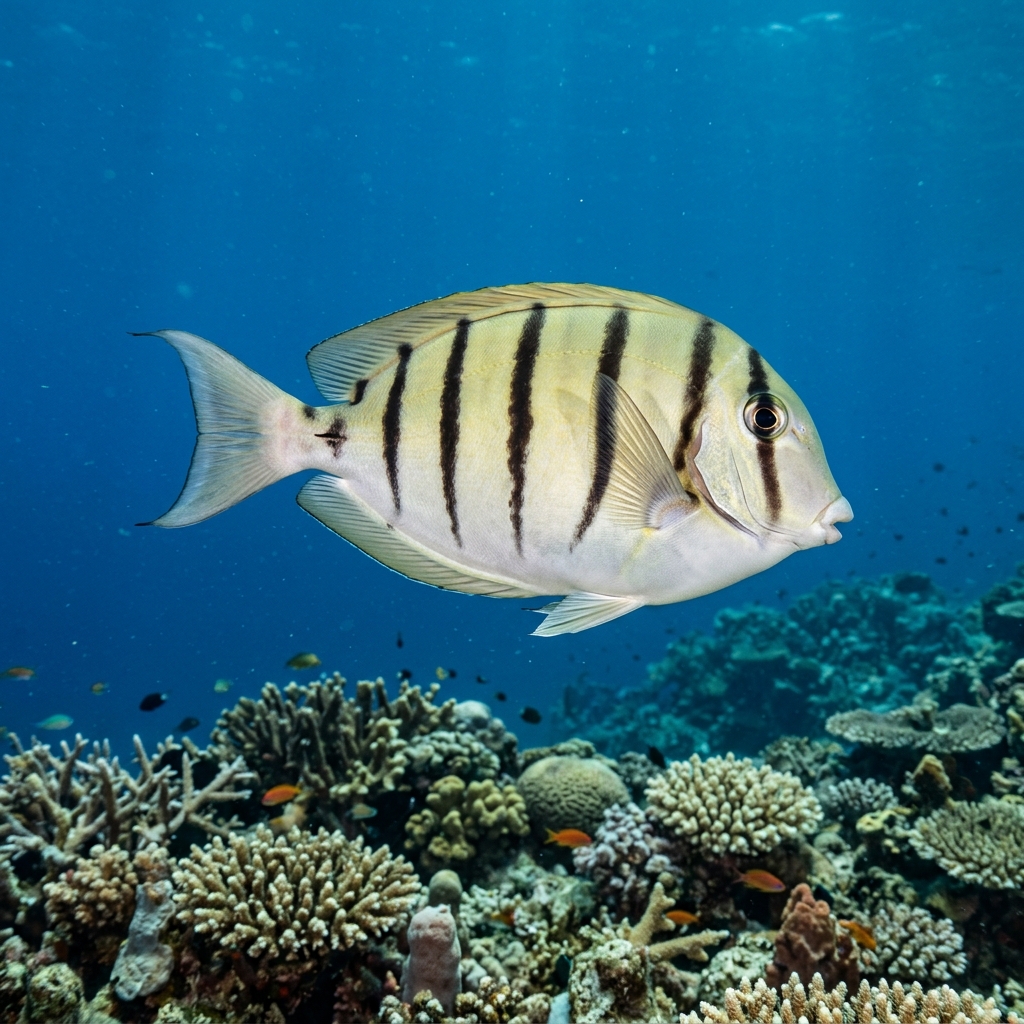
Reef neighbours a diver could mistake it for. Use the identification notes above to tell them apart.
Most commonly logged across the Indo-Pacific, with strong populations in Indonesia, the Philippines, and the Maldives leading the count. Australia's Queensland coast and Okinawa, Japan are also reliable regions. Hawaii rounds out the key spots for divers heading to the central Pacific.
Mapping where Pacific Sailfin Tang is logged…
The species is spread widely across the Indo-Pacific. Indonesia, the Philippines, and the Maldives have the greatest number of logged sites, followed by Queensland in Australia, Okinawa in Japan, and Hawaii. French Polynesia and Malaysia are also worth noting for divers already in those regions.
In the Northern Hemisphere, covering Hawaii, Okinawa, and the Philippines, sightings are distributed year-round with no pronounced peak season. In the Southern Hemisphere, such as Queensland and parts of Indonesia, sightings are most concentrated between May and March, suggesting a quieter window around April.
Focus on the fins first: the dorsal and anal fins are so tall that the fish looks almost circular in profile when they are raised. The body carries bold vertical stripes in grey, white, and yellow, and the face is spotted with fine yellow lines. No other tang in the Pacific shares that combination of extreme fin height and striped flanks.
Adults typically reach around 28 cm in length, but because the dorsal and anal fins extend so dramatically, the fish appears considerably larger in the water. That tall profile is often what catches a diver's eye from a distance before the stripe pattern registers.
They are herbivores, spending most of their active hours grazing algae from reef surfaces. This constant cropping helps keep algae in check and prevents it from smothering corals, making them a useful part of a healthy reef ecosystem. Early morning and late afternoon are the peak feeding windows you are most likely to observe.
Site and sighting data is aggregated from diver logs, iNaturalist and GBIF. For taxonomy and conservation status:
Convict Surgeonfish
3,112 sites