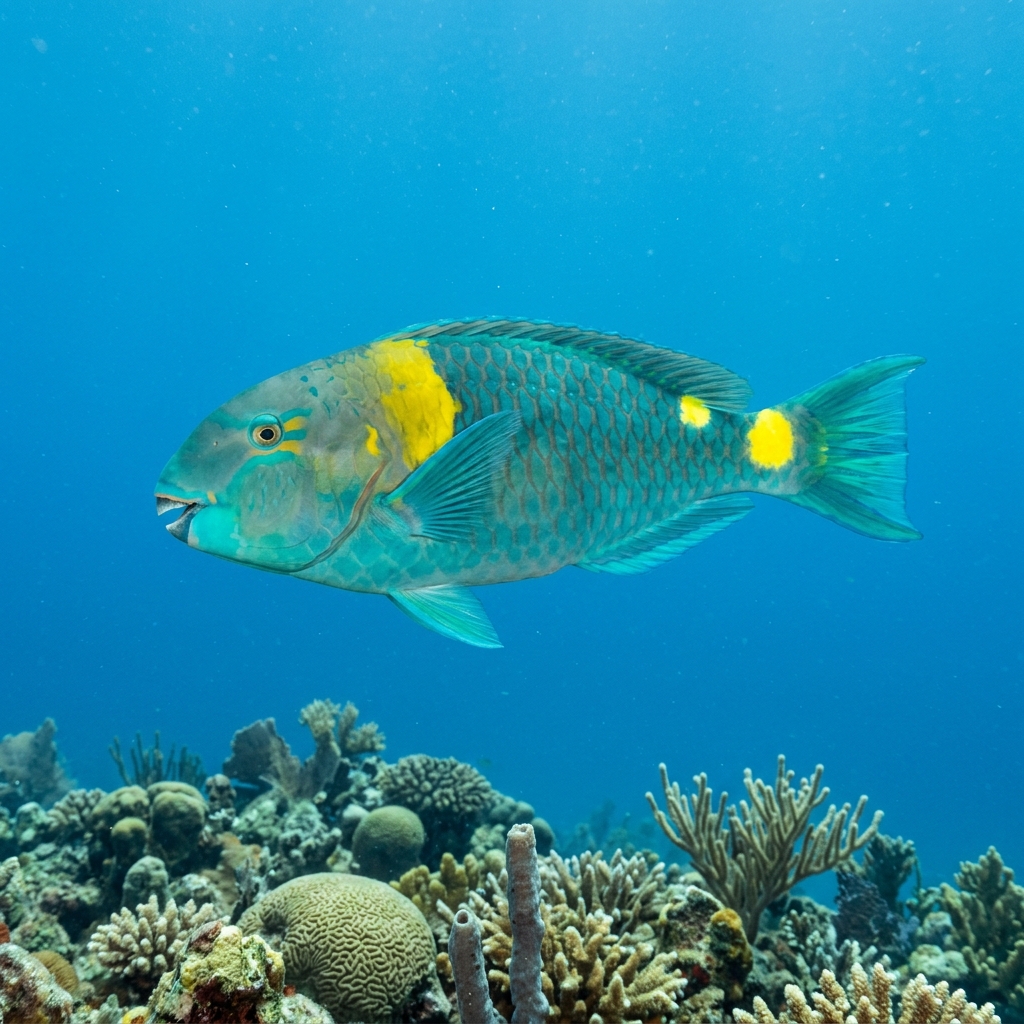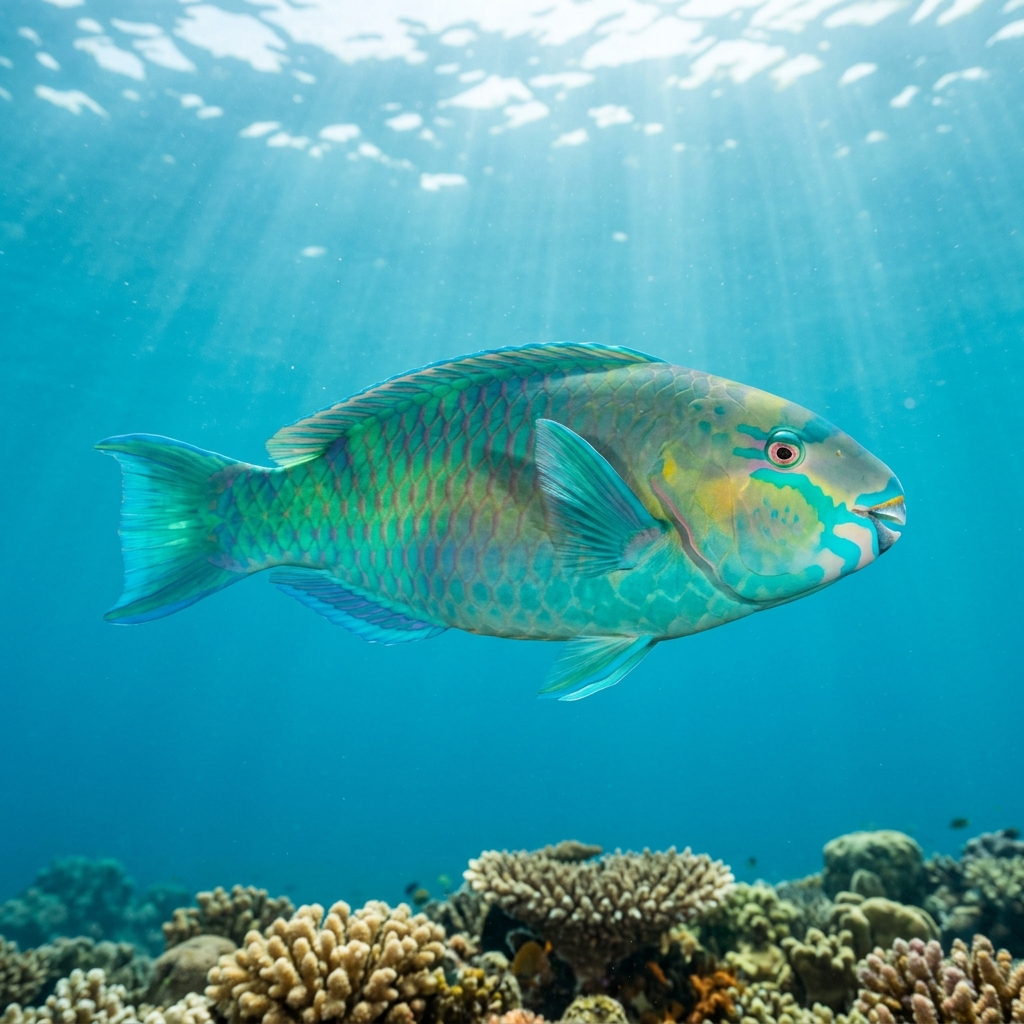
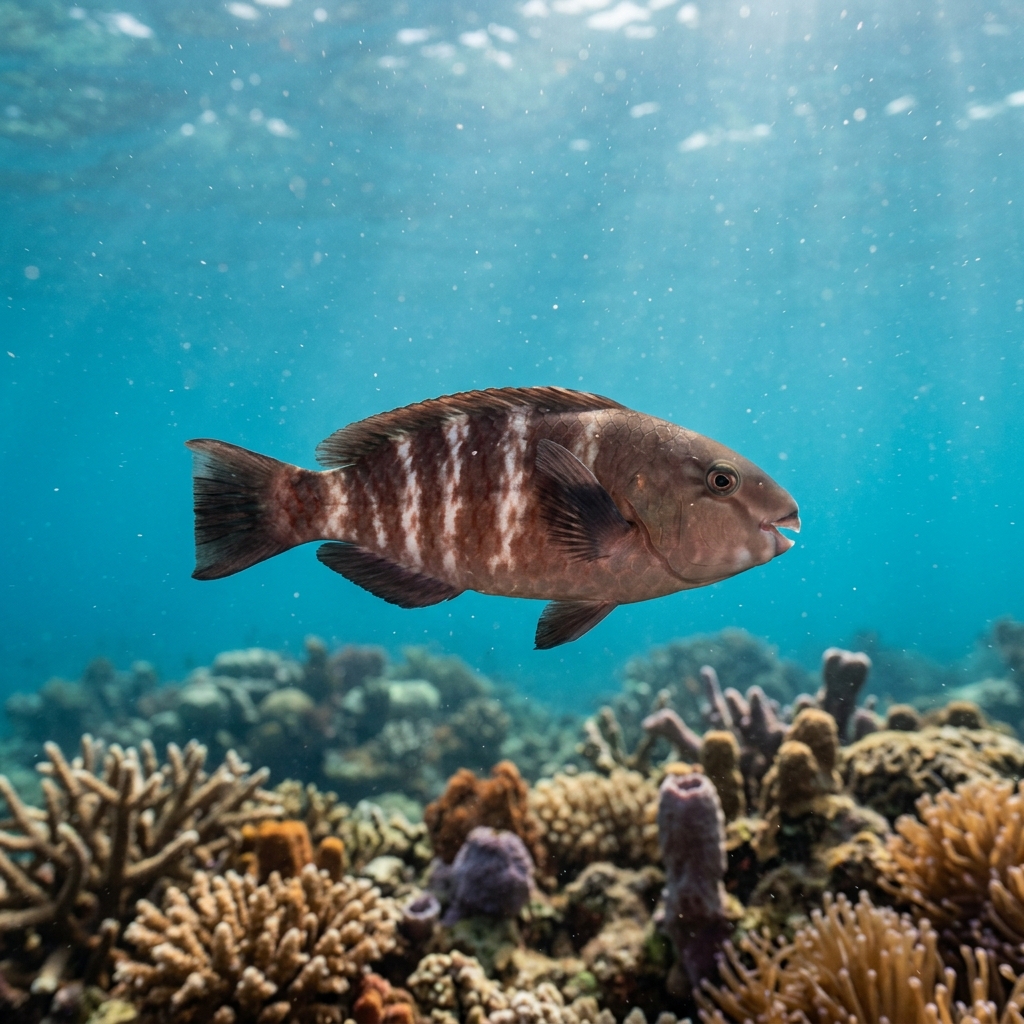
Chlorurus spilurus
Spot Pacific Bullethead Parrotfish across Indo-Pacific reefs from Egypt to French Polynesia. Year-round in warm water, with vivid green terminal males to look for.
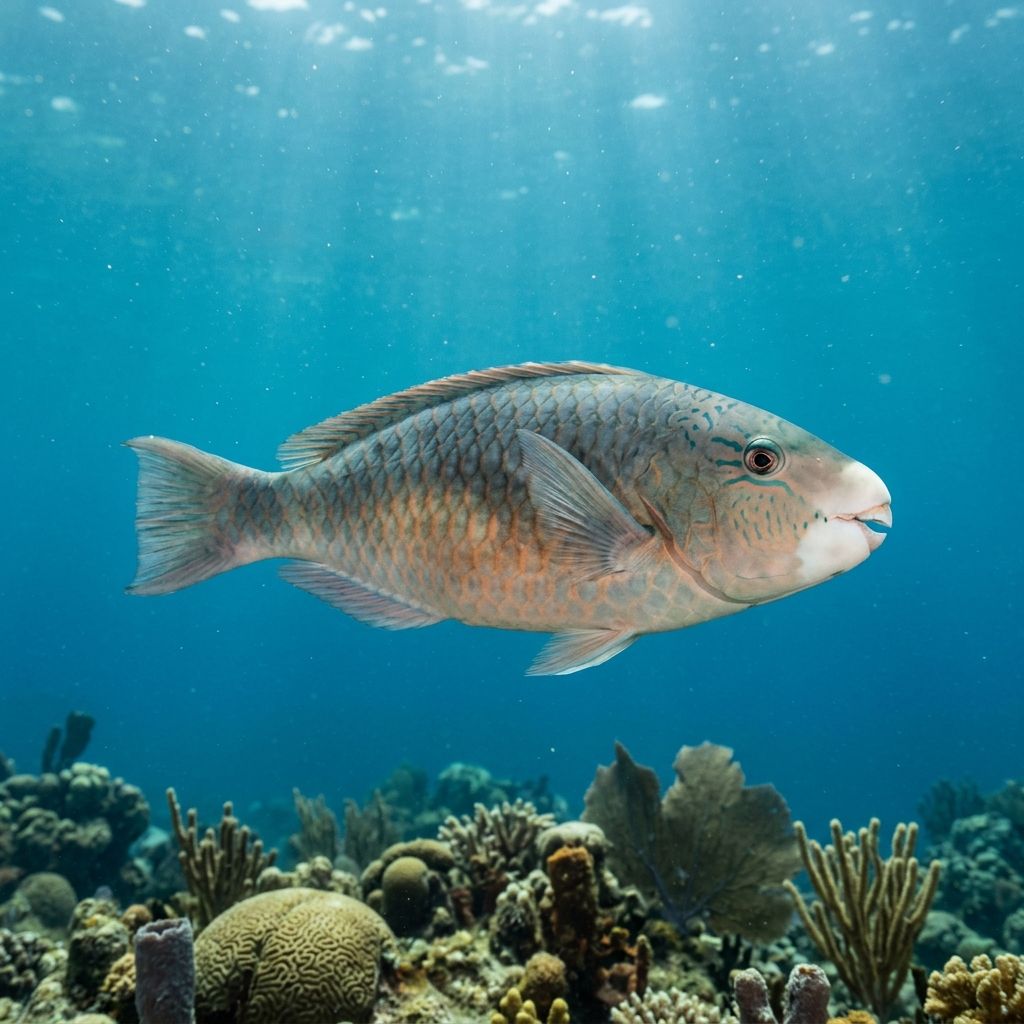
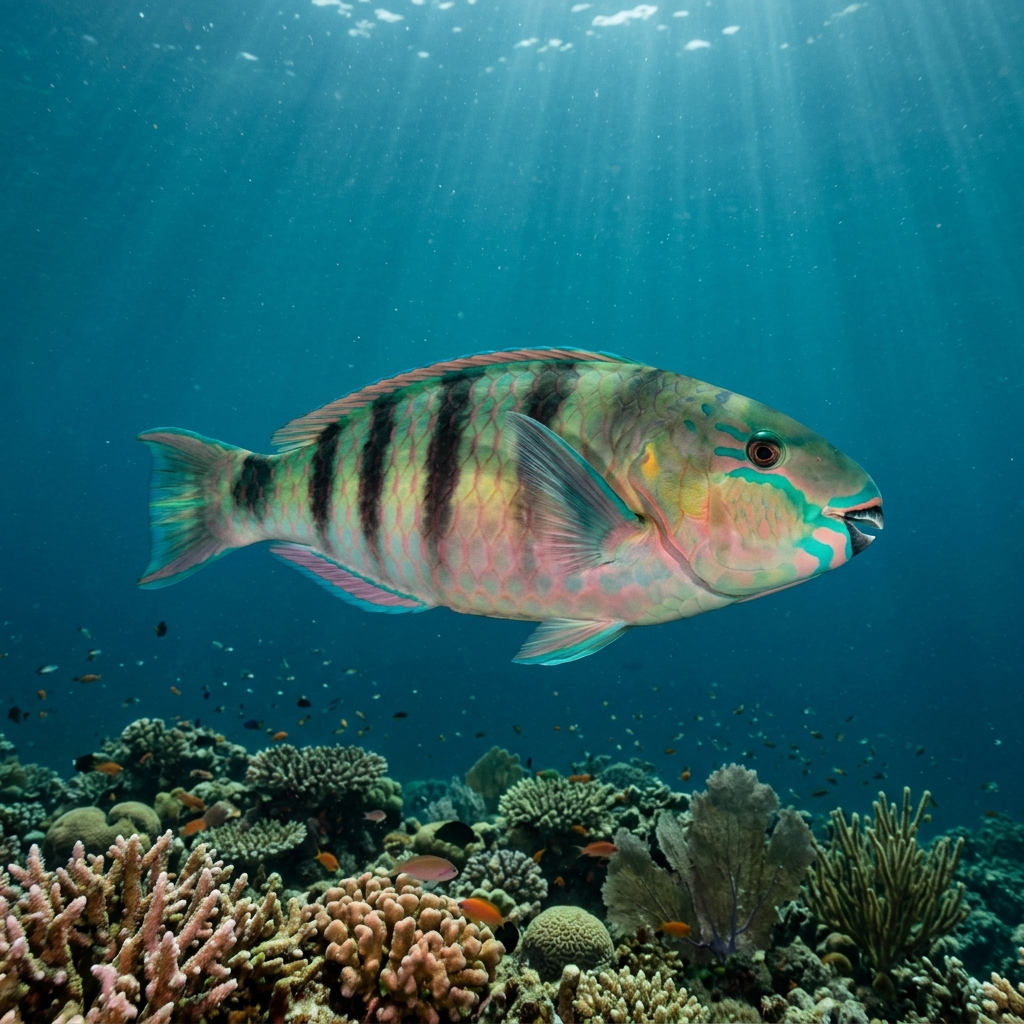
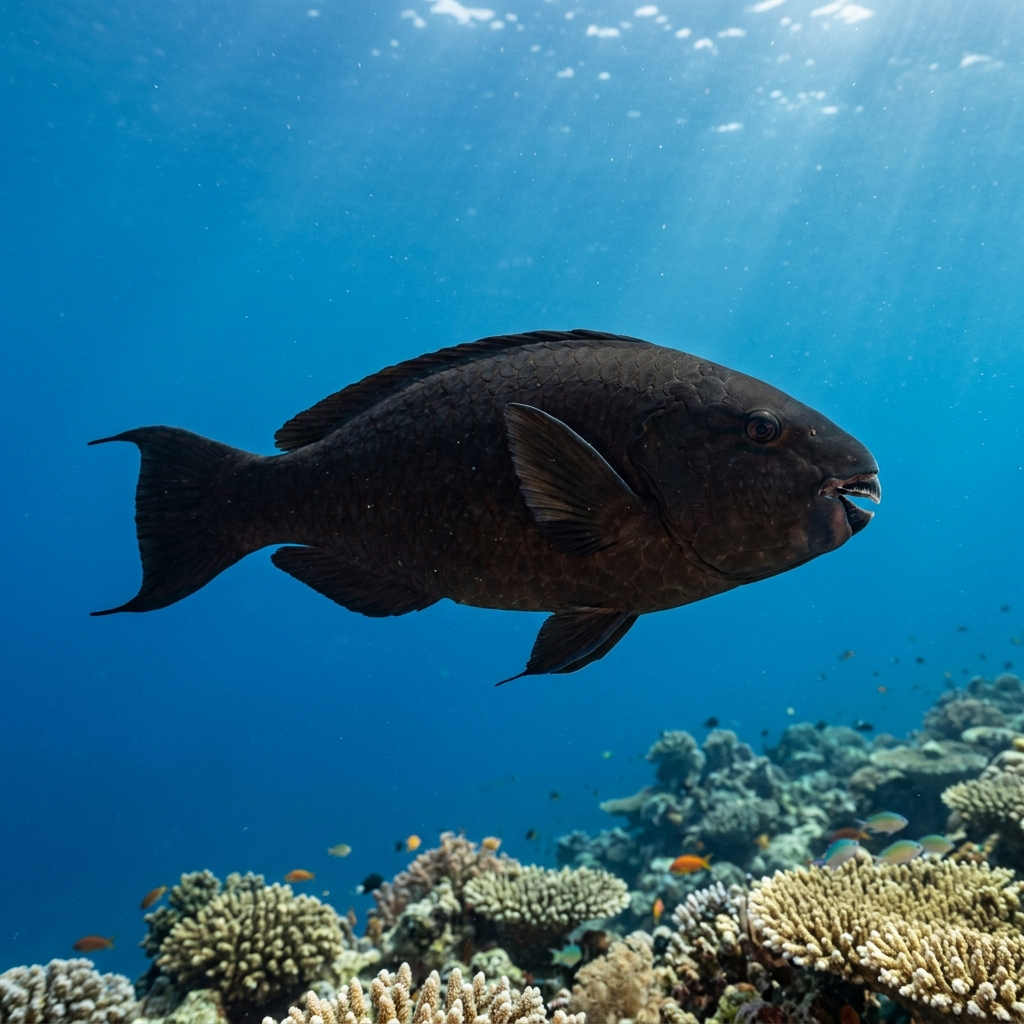
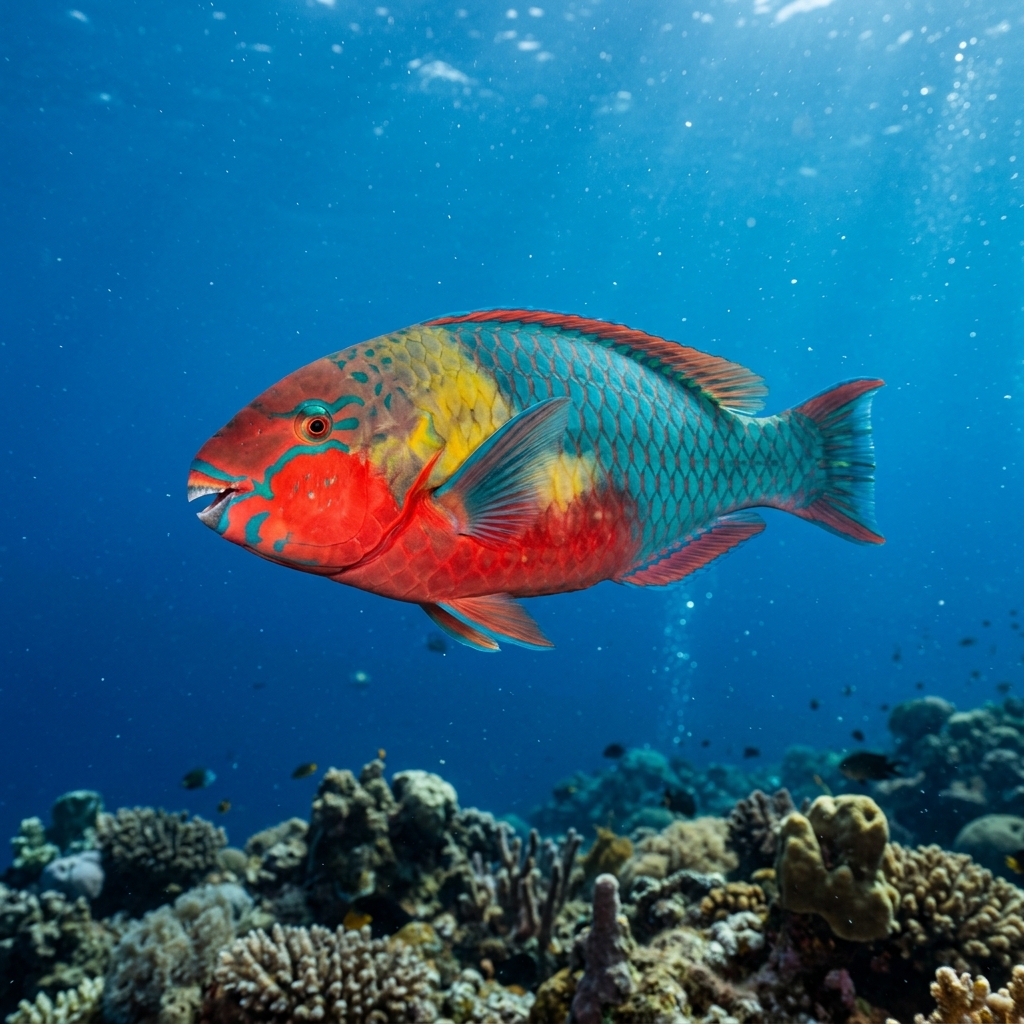
Terminal-phase (dominant) males are hard to miss: vivid green and blue across the body with intricate patterning around the face and a fused beak-like mouth typical of parrotfish. At roughly 30 cm, they are mid-sized on the reef. Initial-phase fish, females and non-dominant males, are considerably duller, running to brown, reddish, or mottled tones without the striking facial detail, and are easy to overlook among other reef fish. The rounded, bullet-shaped head gives this species its name and is a useful shape cue at any phase.
Expect to find it working actively over the reef in daylight hours, rasping algae and occasionally biting directly at coral with its fused beak, a behaviour that produces the characteristic crunching sound parrotfish are known for. It is not particularly wary of divers and will often continue feeding as you approach, though sudden movements will push it away. Watch for mild territorial behaviour around favoured feeding patches, particularly among dominant terminal-phase males.
All that beak-work has a reef-wide consequence: parrotfish grind coral and rock as they feed, then excrete the material as fine white sand. A single active individual contributes meaningfully to the sandy substrate you see on tropical reef flats.
Present year-round in both hemispheres, with no concentrated season detected from diver sightings. Its observed temperature niche of roughly 23 to 29 °C aligns with tropical reef conditions throughout the year, so timing a dive specifically for this species is not necessary.
Reef neighbours a diver could mistake it for. Use the identification notes above to tell them apart.
Most commonly logged across the Indo-Pacific, with particularly strong records in Egypt (especially Sharm el Sheikh and Marsa Alam), Indonesia, and the Philippines. The Maldives, particularly the Male and Ari Atolls, and Queensland, Australia also show reliable sightings, and it turns up regularly as far afield as French Polynesia and Hawaii. Essentially wherever warm Indo-Pacific reef diving is on offer, there is a reasonable chance of an encounter.
Mapping where Pacific Bullethead Parrotfish is logged…
They are logged across a wide sweep of the Indo-Pacific. Egypt's Red Sea sites, Sharm el Sheikh and Marsa Alam, consistently top the records, followed by Indonesia, the Philippines, and the Maldives. Australia's Queensland coast, Malaysia, French Polynesia, and Hawaii also feature strong sighting records.
Sightings are spread evenly through the year in both hemispheres, with no peak season. The species suits warm tropical reefs in the 23 to 29 °C range, which those reefs maintain year-round, so any time you visit their range is a reasonable time to look.
Look for the rounded, bullet-shaped head and fused beak-like teeth. Terminal-phase males are vivid green and blue with detailed facial markings and are straightforward to identify. Initial-phase fish are brown to reddish and mottled, so focus on the distinctive head shape and beak to separate them from similar reef fish.
Most adults are around 30 to 33 cm, a mid-sized parrotfish, roughly the length of a school ruler. Terminal-phase males tend to be the most visible at this size due to their bold colouring.
No. They pose no threat to divers. Like other parrotfish they are focused on feeding and pay little attention to people in the water, making calm observation easy.
They feed primarily by rasping algae from reef surfaces and biting at coral with their fused beak. The ingested coral and rock is ground in the gut and excreted as fine sand, making parrotfish significant contributors to sandy reef substrates. You can often hear the crunching sound while they feed.
Site and sighting data is aggregated from diver logs, iNaturalist and GBIF. For taxonomy and conservation status:
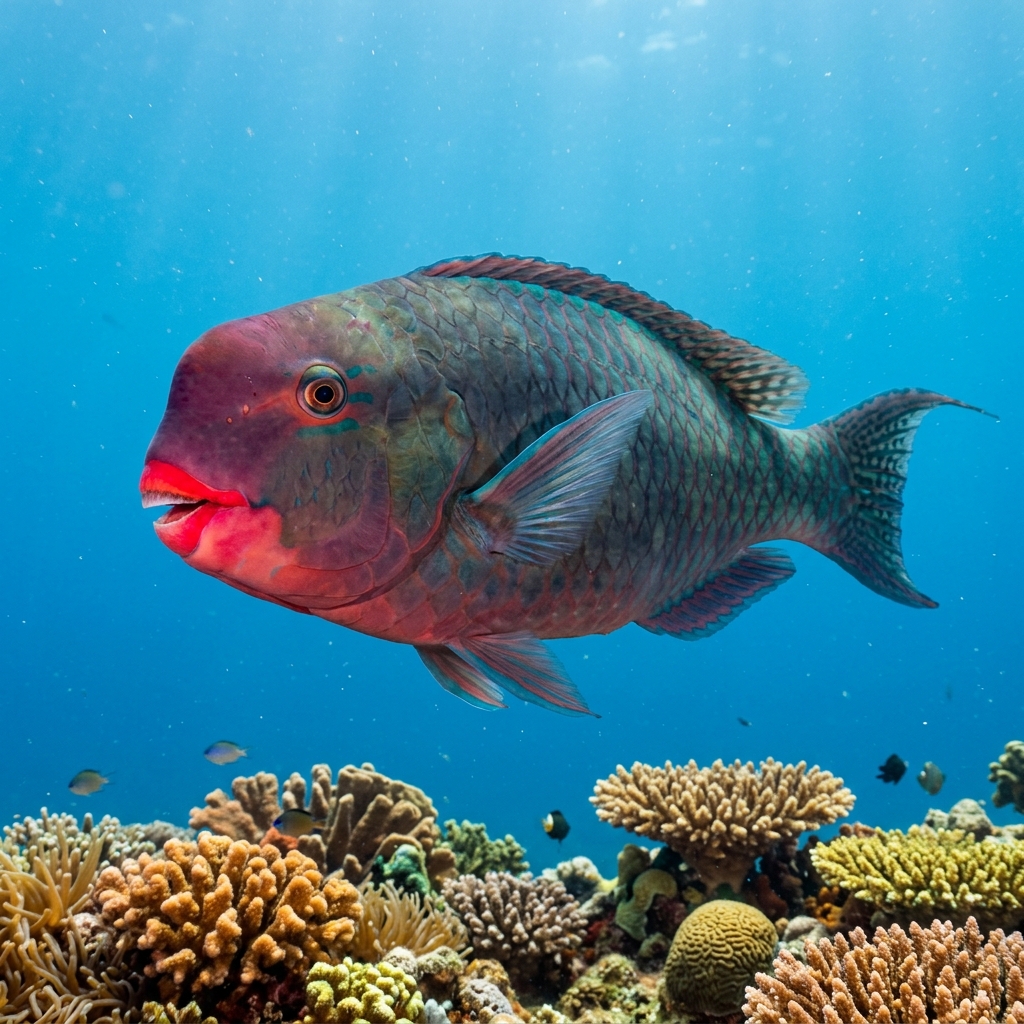
Redlip Parrotfish
2,789 sites