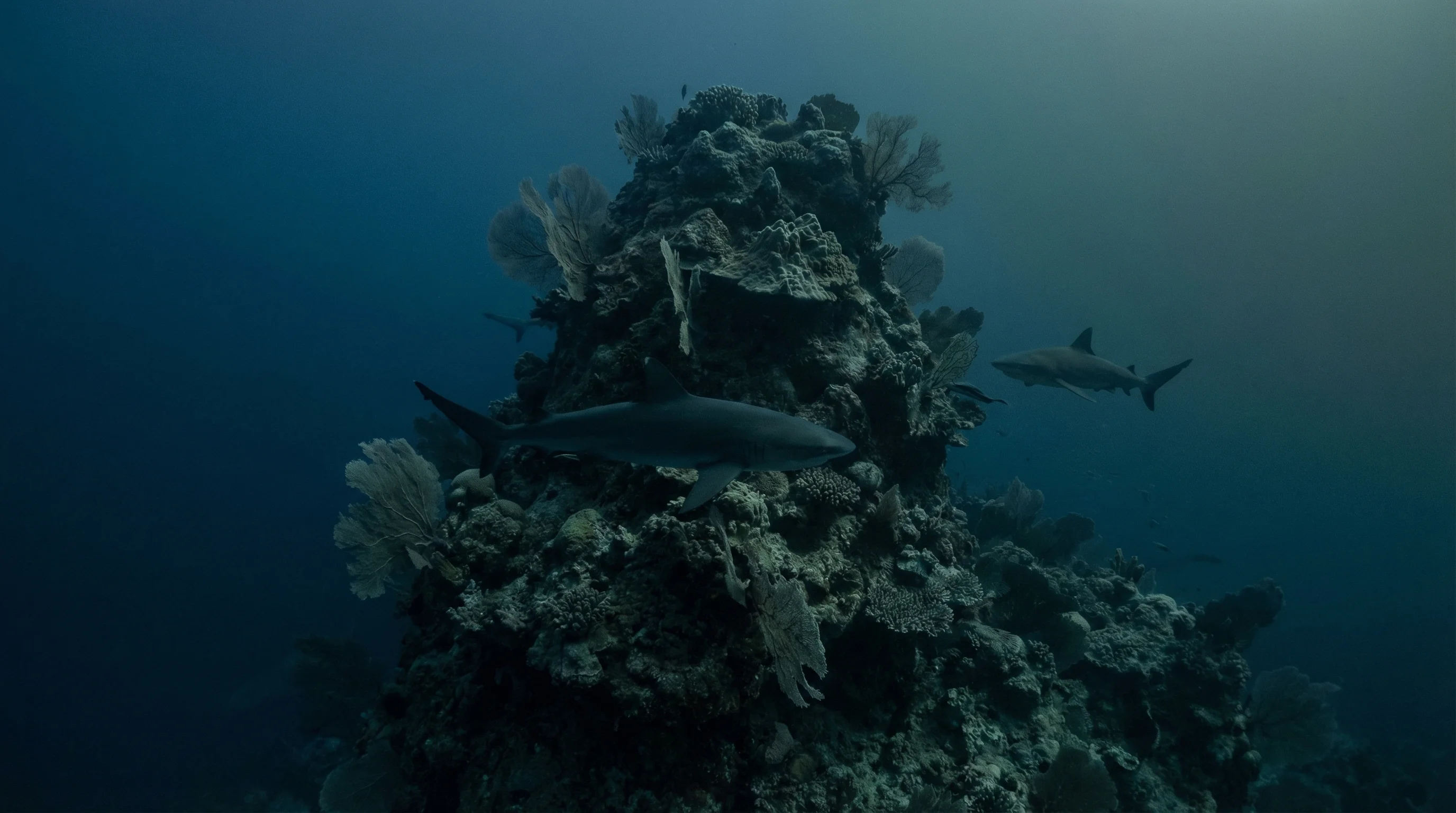
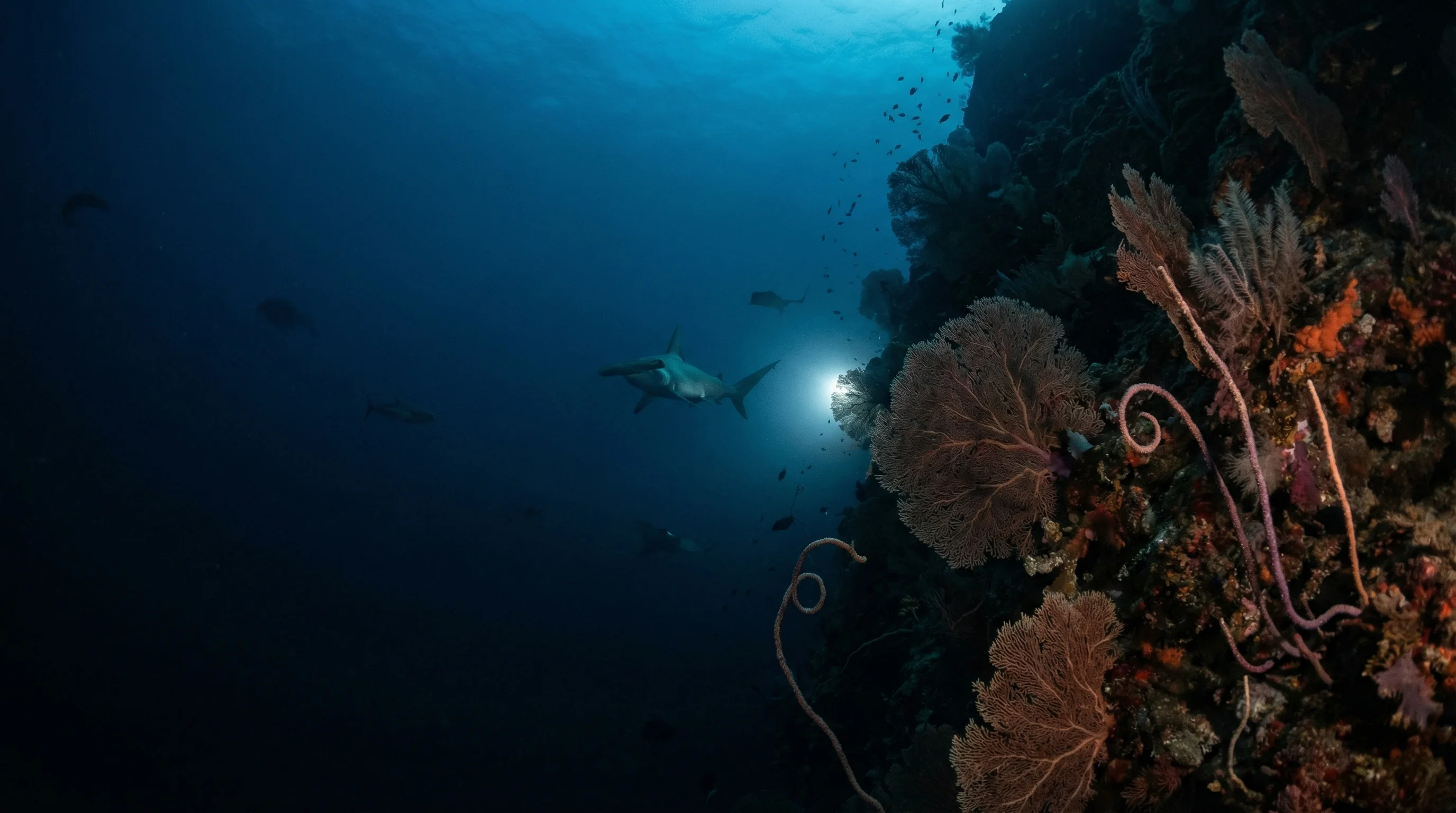
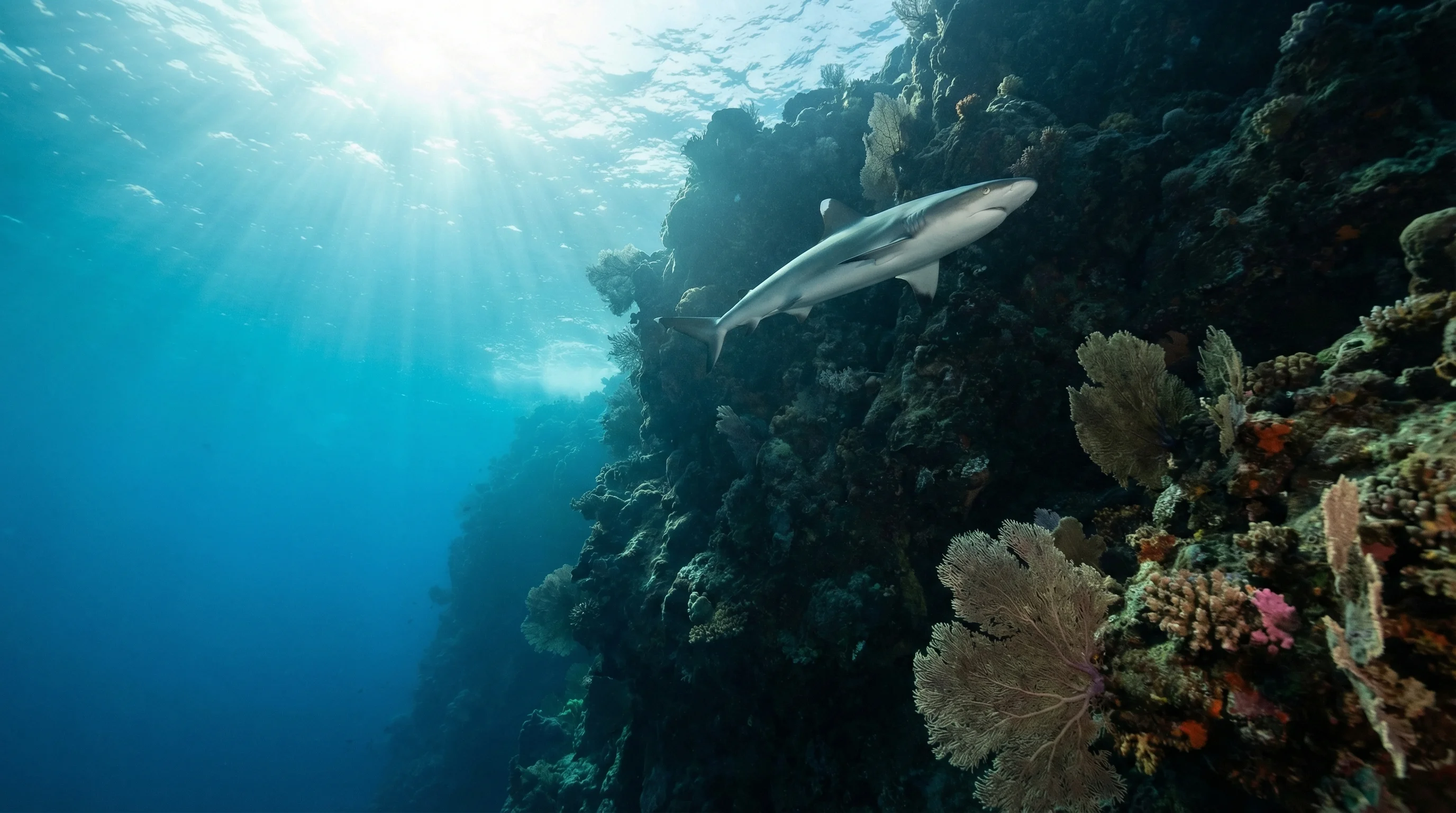
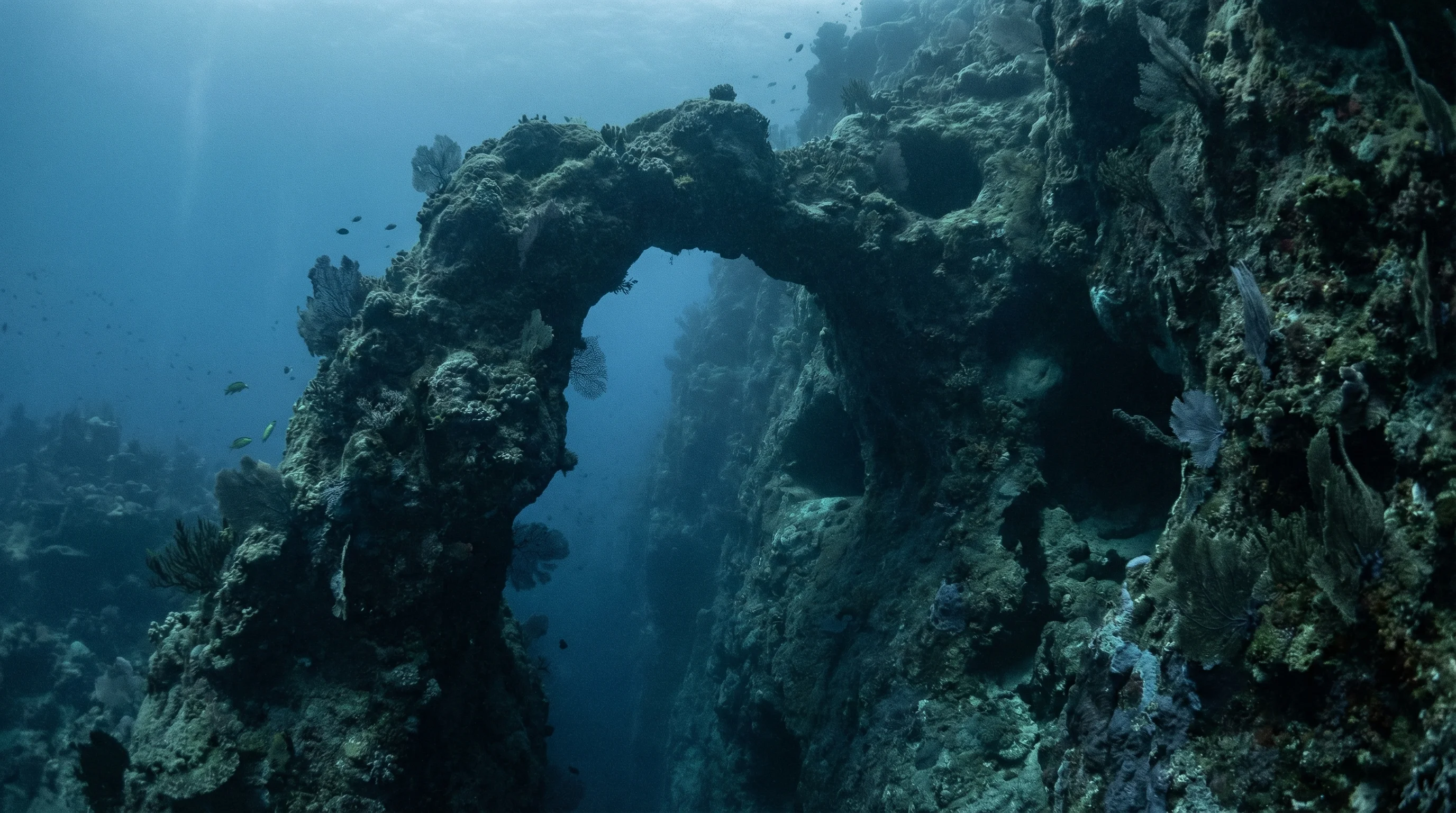
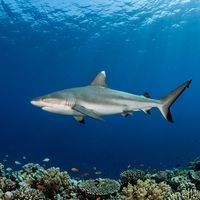
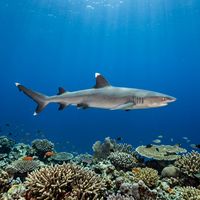
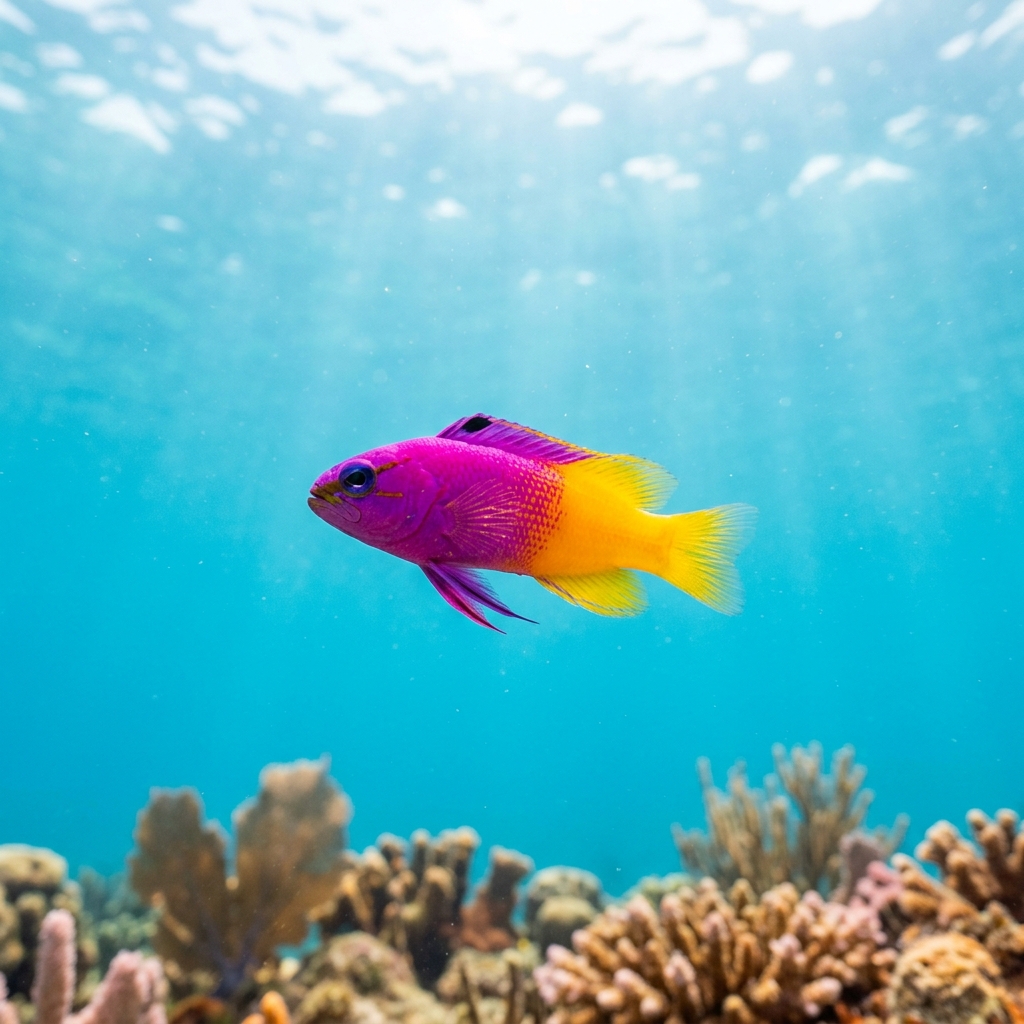
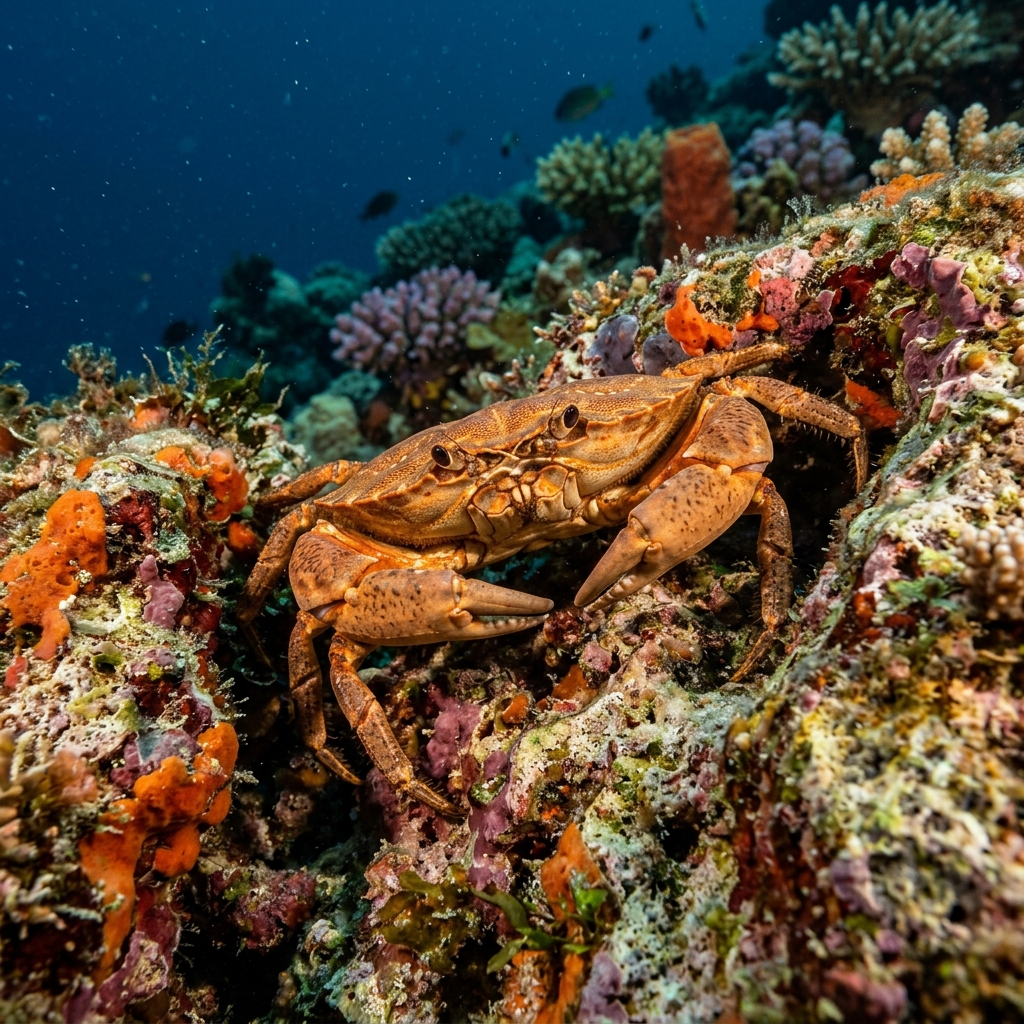
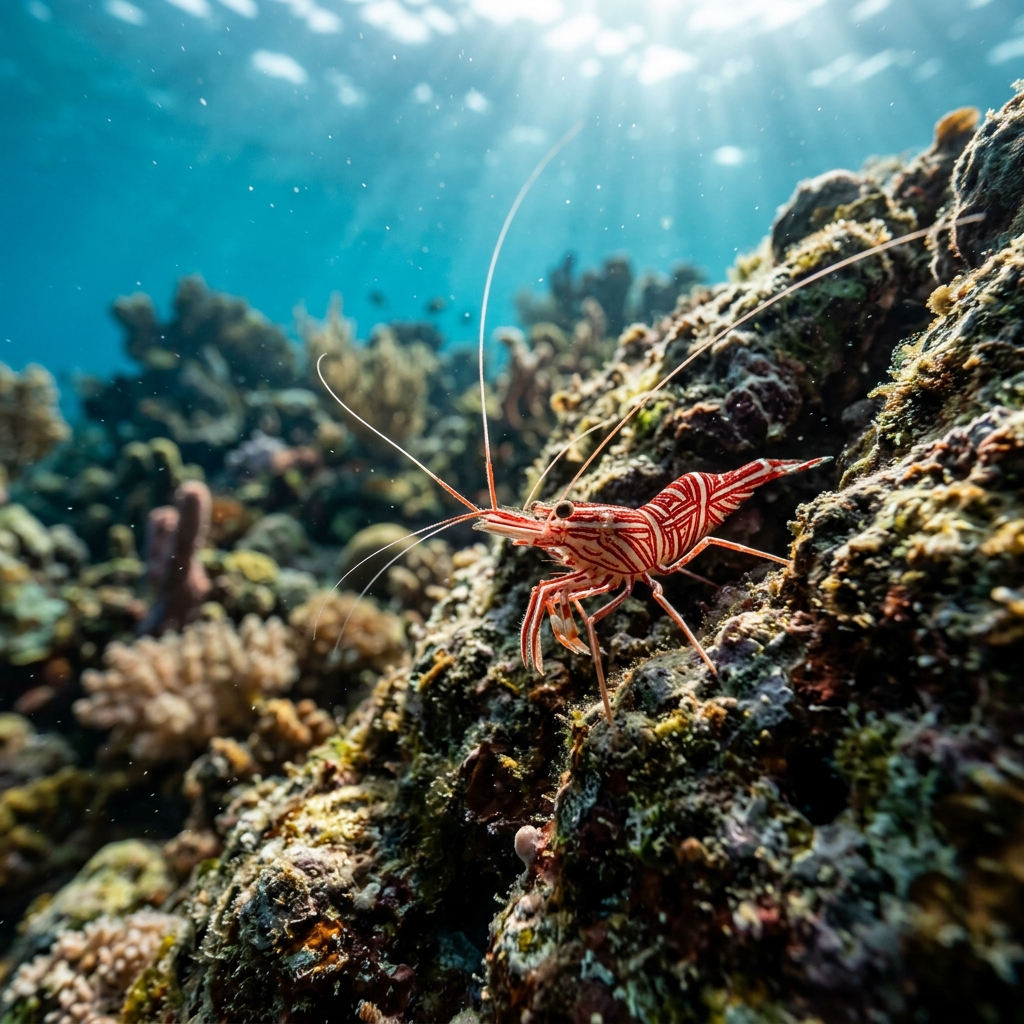
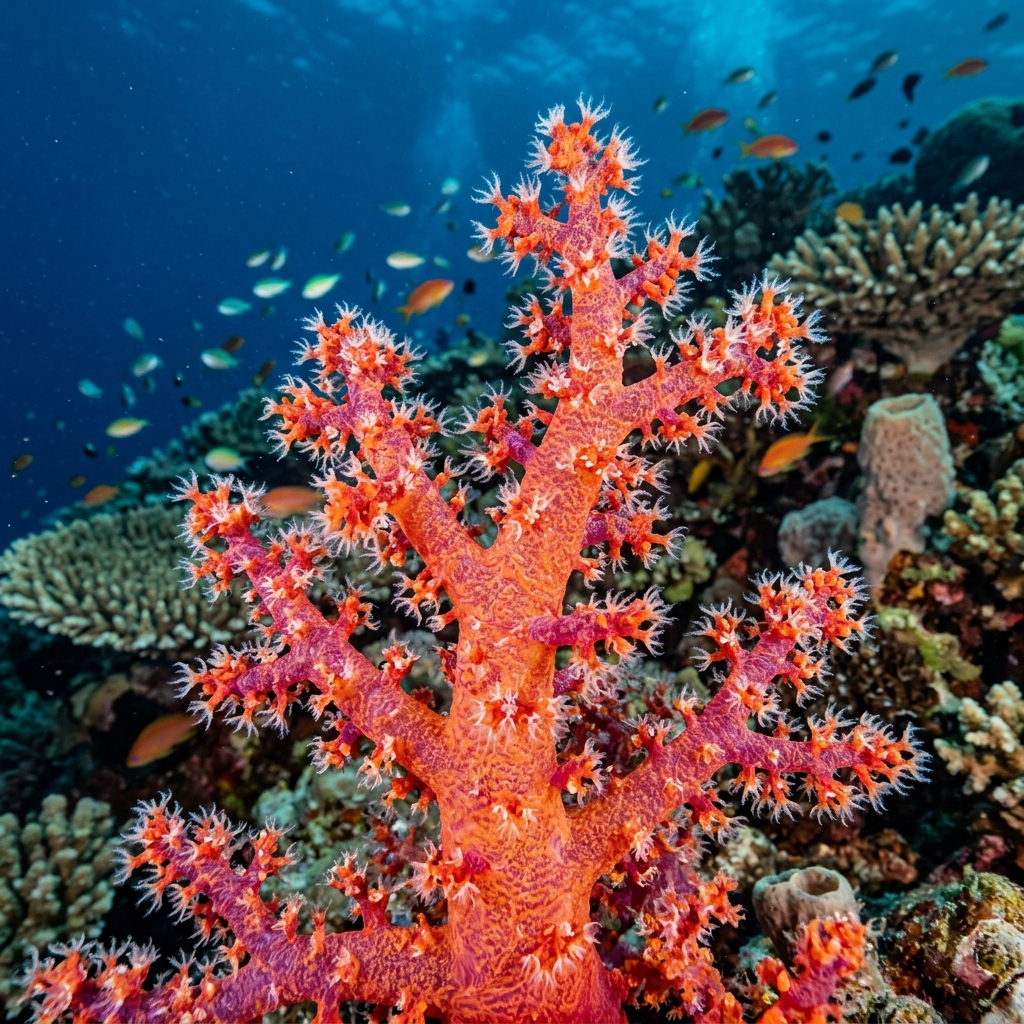
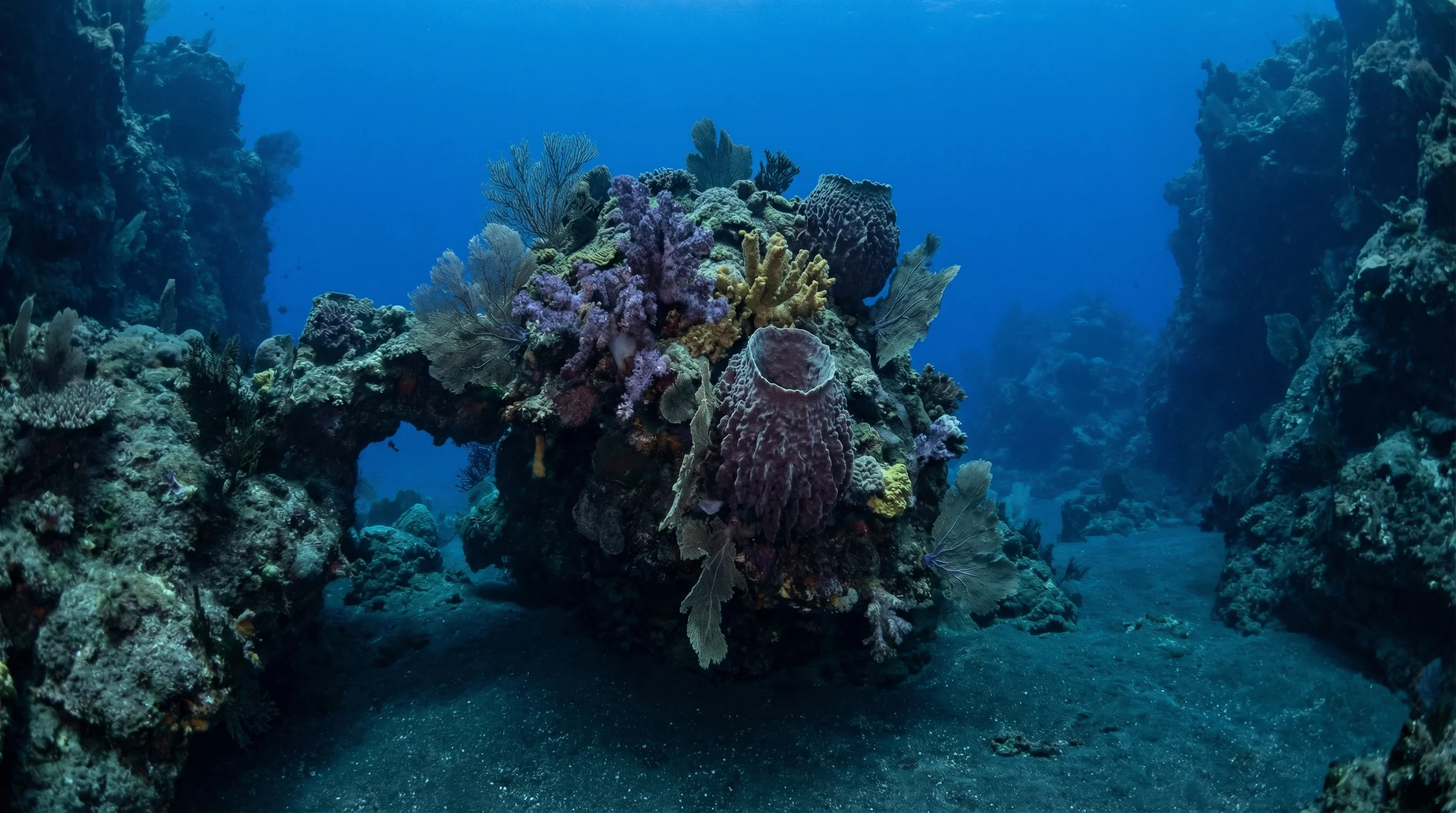
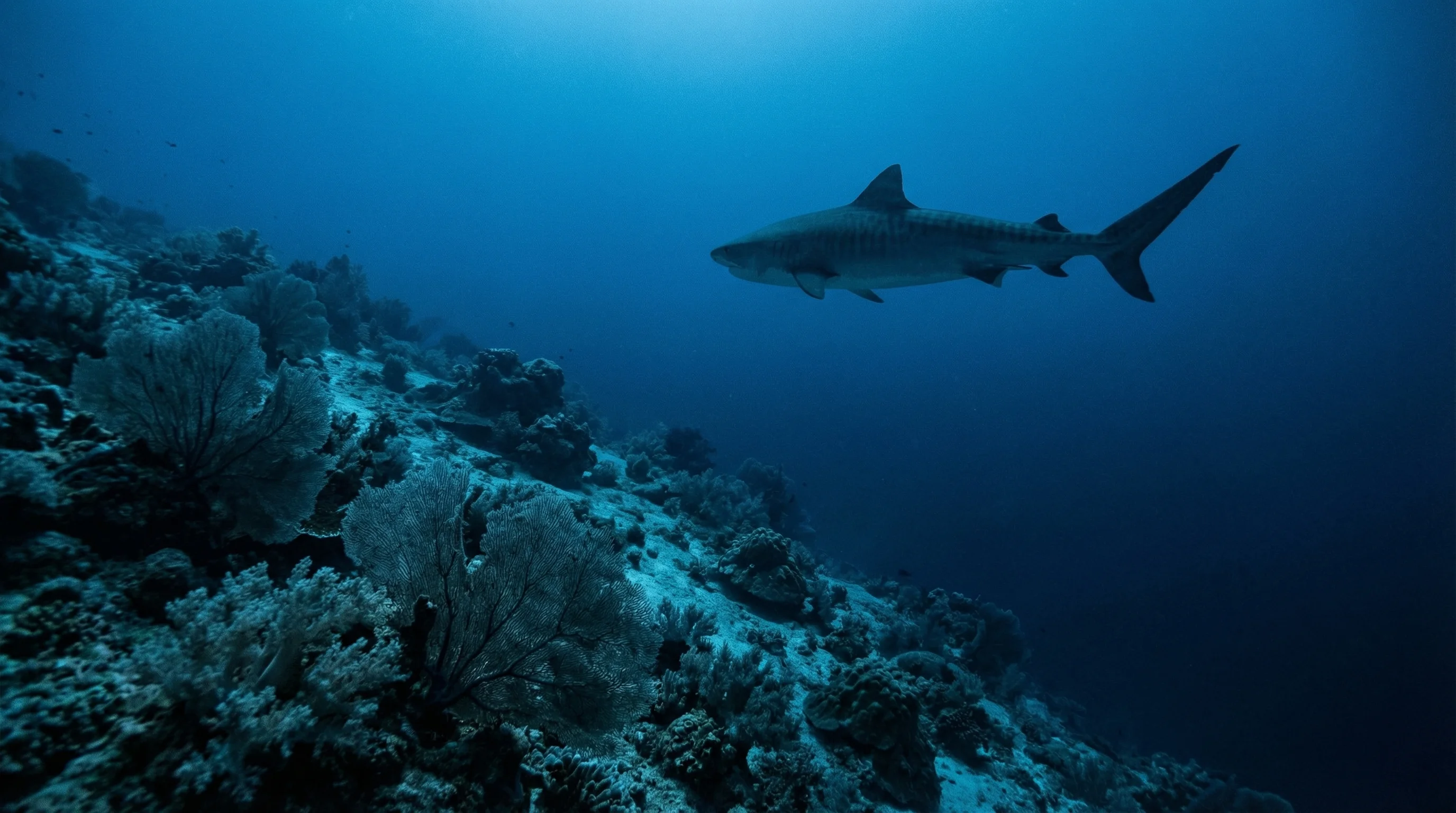
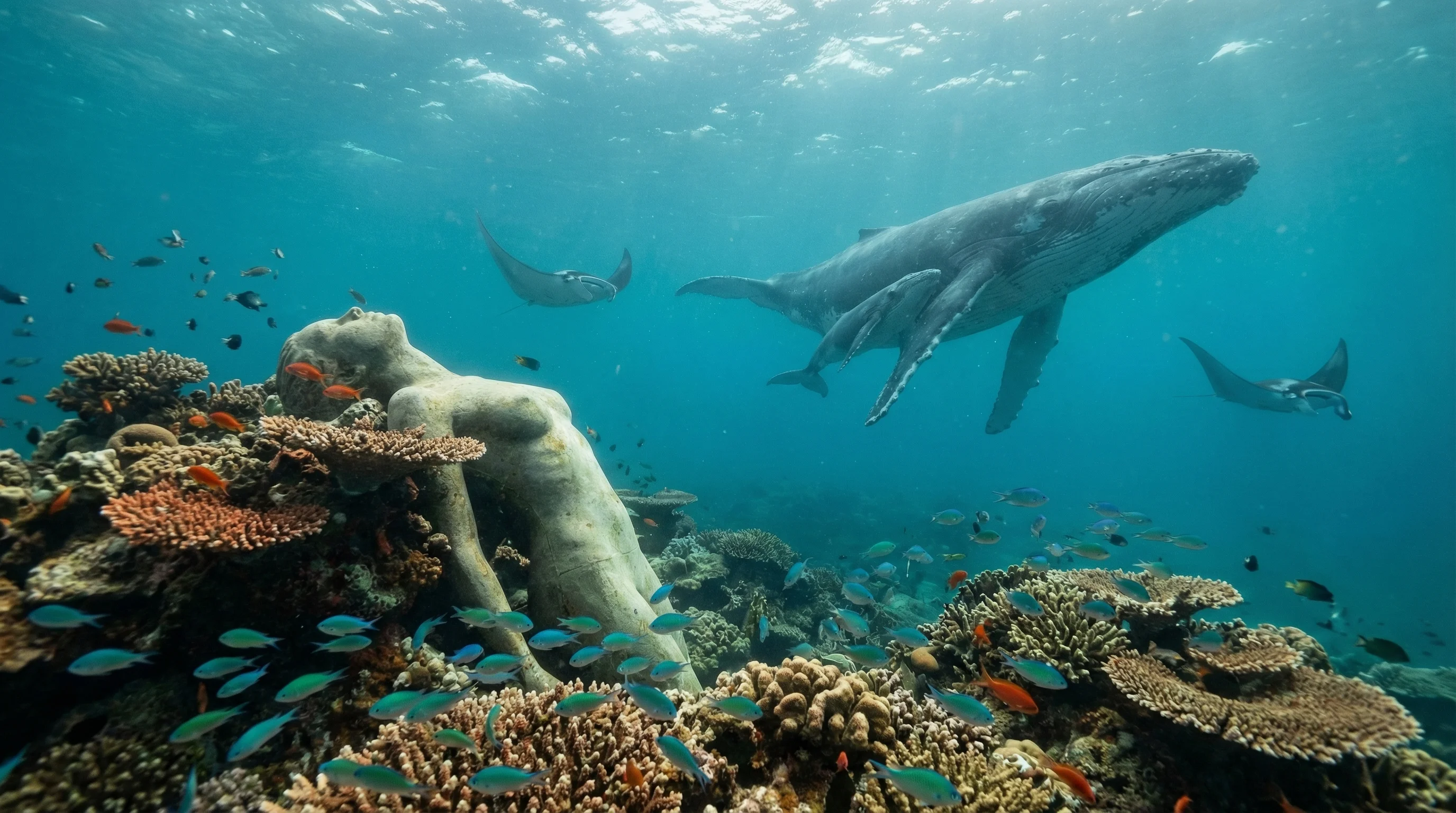
Flinders Reef lies in the Coral Sea and is reached only by boat from the Queensland coast. Its four sites cover walls, pinnacles, caves, and reef structures, with depths ranging from a few metres down to well beyond recreational limits at some drop-offs. Visibility is consistently high, with site descriptions noting thirty to one hundred metres depending on the site. All sites are rated advanced, reflecting strong potential currents, decompression obligations at depth, and the overhead environment at Rock Arch. Recorded species include Napoleon wrasse, whale sharks, whitetip and blacktip reef sharks, dogtooth tuna, green sea turtles, pygmy seahorses, and peacock mantis shrimps. Temperatures are warmest in summer and slightly cooler in the mid-winter months.
Monthly water temperature across Flinders Reef's sites, from satellite sea-surface data corrected for depth. The band shows the site-to-site spread.
Water temperatures are at their highest in late summer and drop to their lowest in mid-winter, though the range is moderate. Visibility is the chief draw, running exceptionally high at most sites and peaking in the clearer months. Currents are generally mild but can shift unpredictably at these exposed oceanic locations, so conditions should be assessed on arrival.
Water temperature around Flinders Reef ranges from about 25°C in July to 28°C in January, based on satellite sea-temperature data for its dive sites.
In the warm season (about 28°C) a rash guard or 3mm shorty is comfortable in Flinders Reef; in the coldest months (about 25°C) step up to a 3mm full suit.
Fin maps 4 sites in Flinders Reef (4 scuba diving sites).