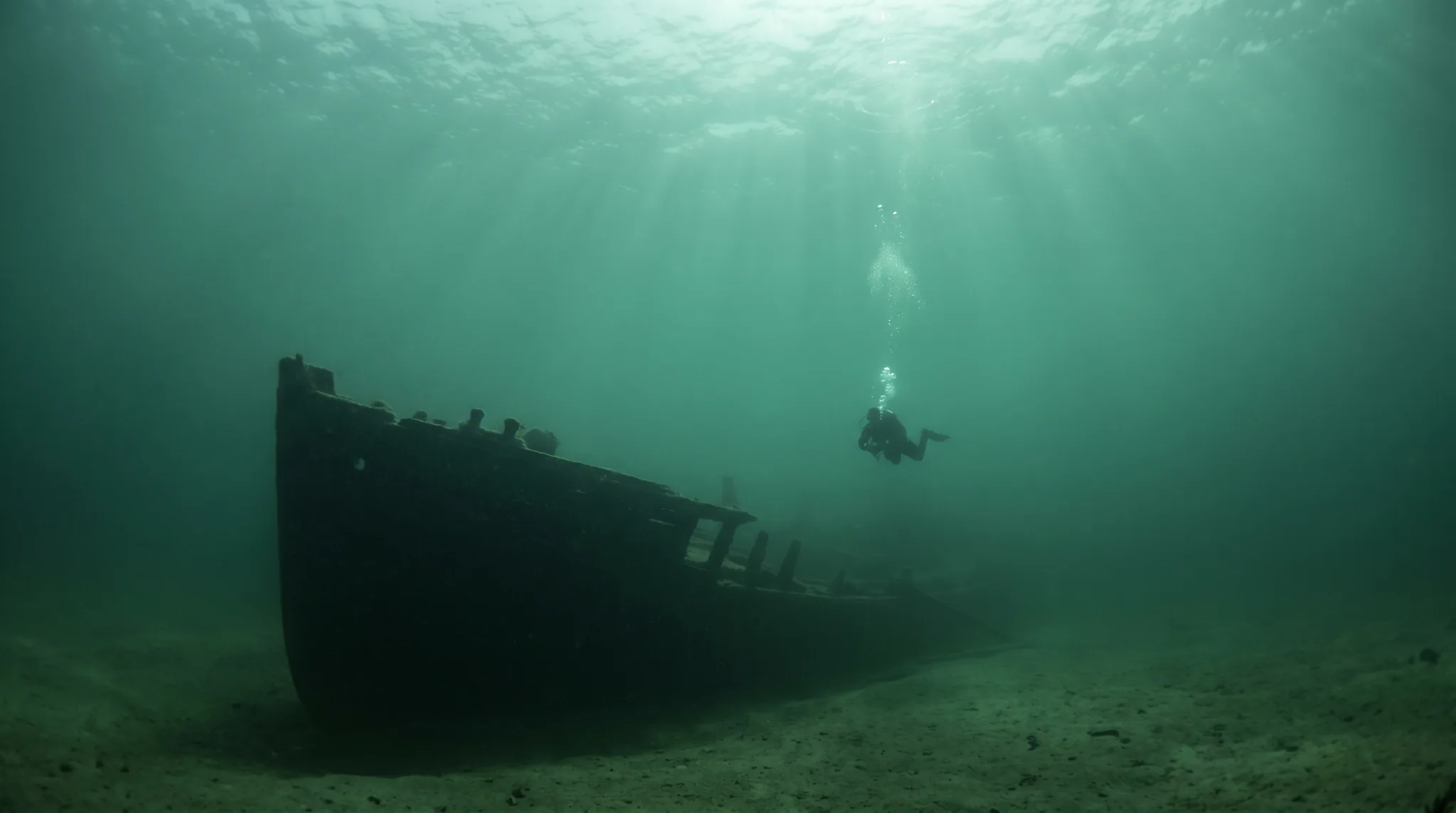
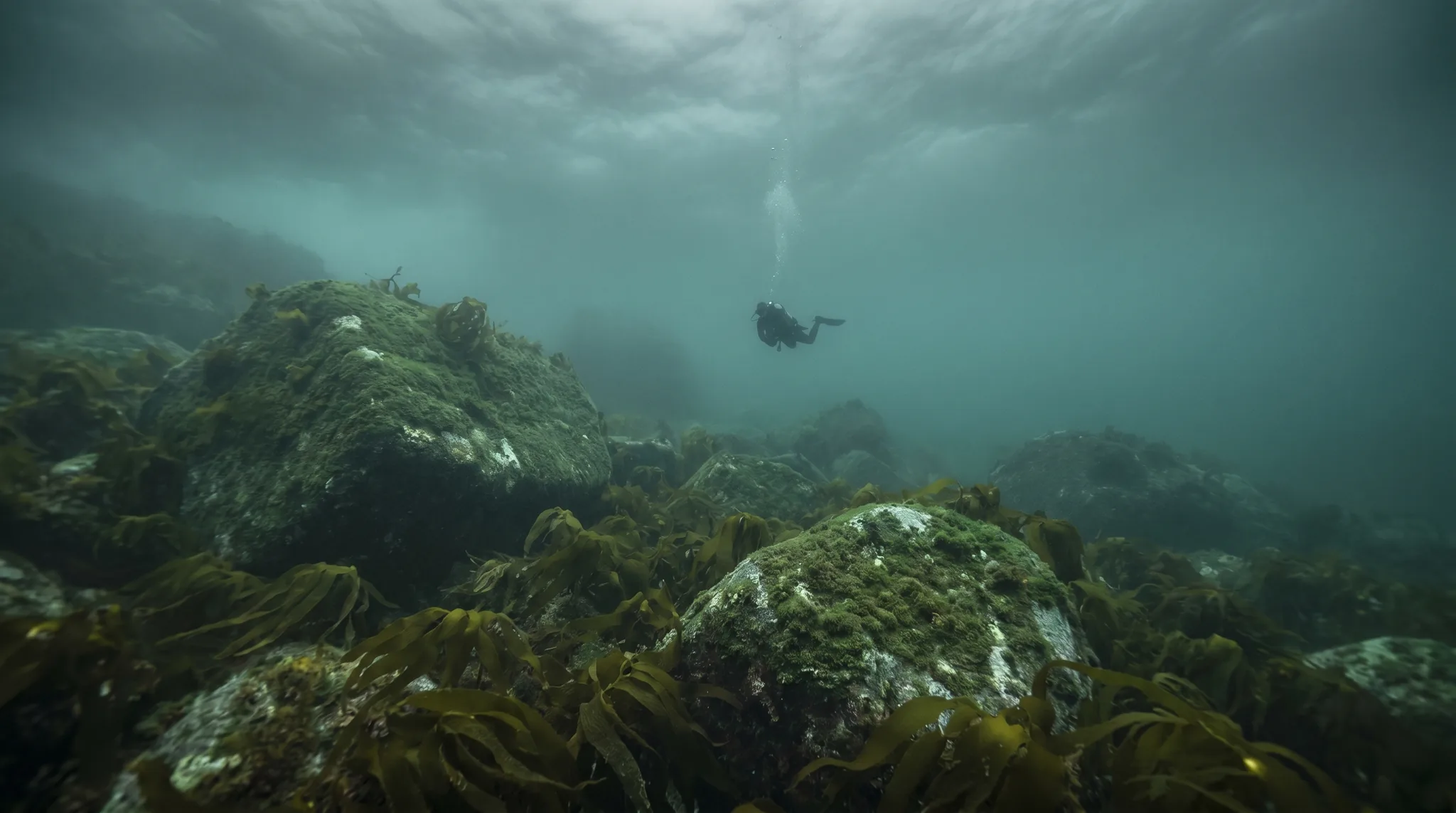
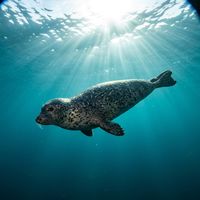
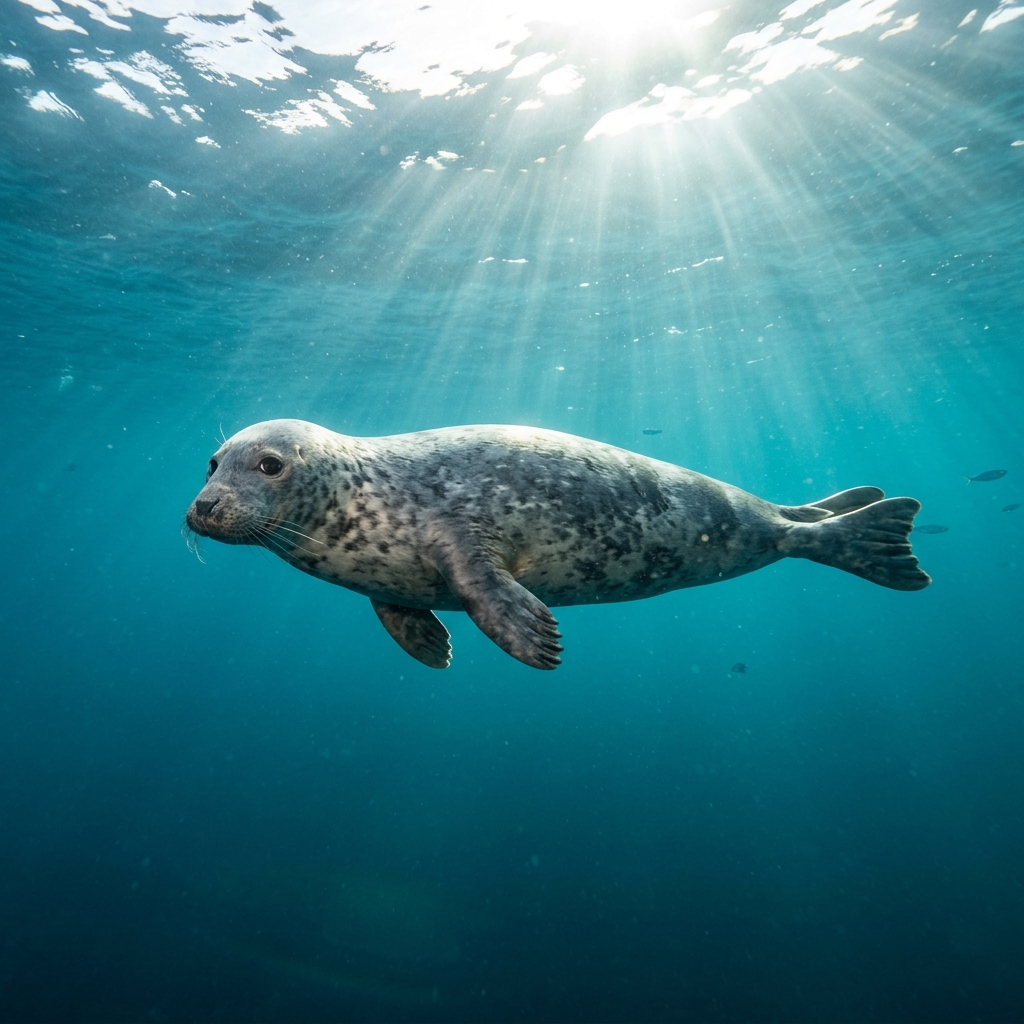
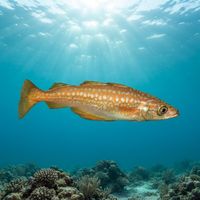
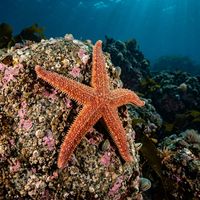
Scapa Flow is a natural harbour in Orkney whose floor holds one of the most significant collections of shipwrecks accessible to recreational divers anywhere in the world. The German High Seas Fleet was scuttled here in nineteen nineteen, leaving battleships, light cruisers, and destroyers spread across the seabed alongside Second World War blockships. Sites in our database range from very shallow shore dives to advanced boat dives beyond forty metres, covering all skill levels. Water temperatures are cold year-round, and most diving is conducted via boat charter from Stromness. Visibility typically runs from five to twenty metres. The wrecks carry dense growth of plumose anemones, and the surrounding area also holds reef, seagrass, and a variety of temperate species including ballan wrasse, pollack, saithe, and grey seal.
Monthly water temperature across Scapa Flow's sites, from satellite sea-surface data corrected for depth. The band shows the site-to-site spread.
Temperatures remain cold throughout the year, typically between eight and thirteen degrees Celsius, making a drysuit essential for almost all visitors. The main diving season runs from April to October, when conditions are most stable and daylight hours longest. Winter diving is possible but rarely undertaken given the temperature and limited light.
Water temperature around Scapa Flow ranges from about 8°C in February to 13°C in September, based on satellite sea-temperature data for its dive sites.
In the warm season (about 13°C) a 7mm or semi-dry suit is comfortable in Scapa Flow; in the coldest months (about 8°C) step up to a drysuit.
Fin maps 9 sites in Scapa Flow (9 scuba diving sites).
Across Scapa Flow's dive sites, May, June, July, August, September and October are most often reported as the best months to visit.
6 more sites to explore