Antiopella cristata
A frilly cerata-covered nudibranch turning up across Zeeland, the French Riviera and the Balearics in cool Atlantic and Mediterranean water.
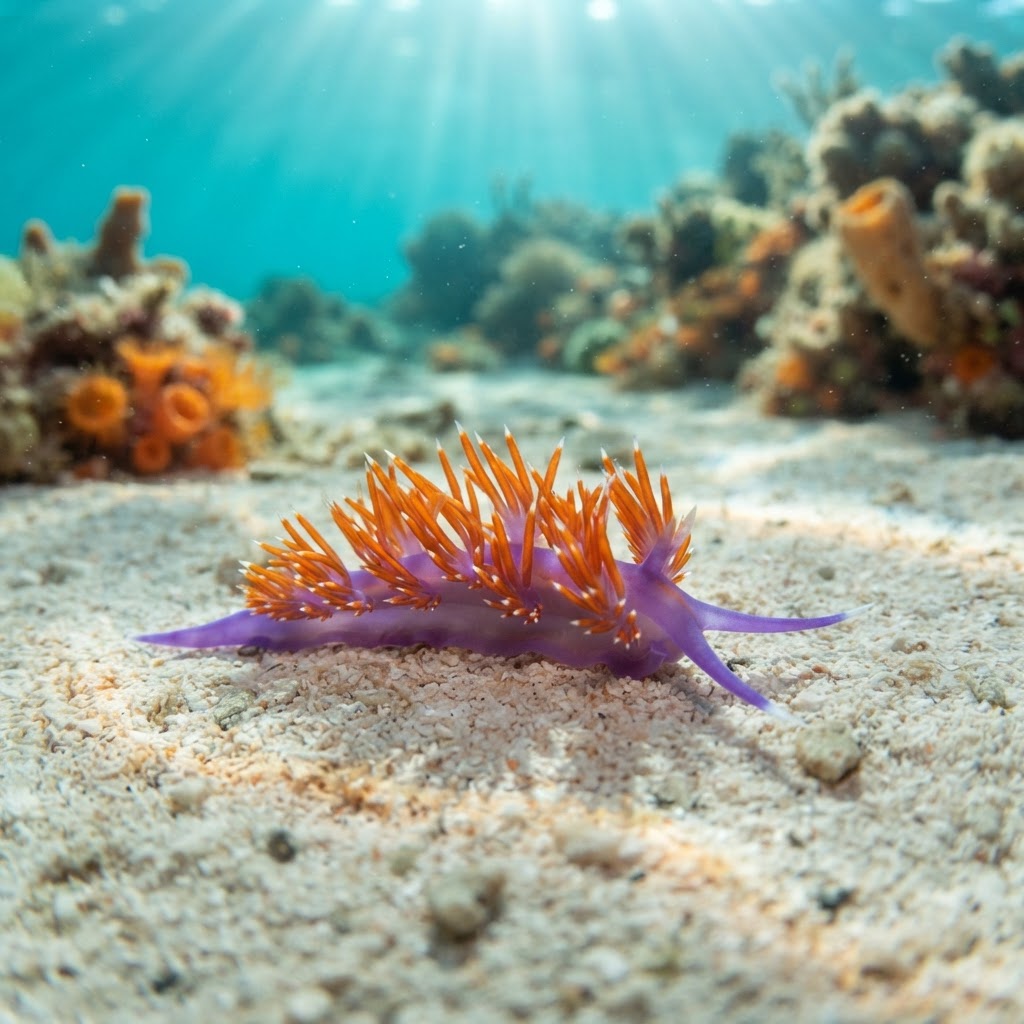
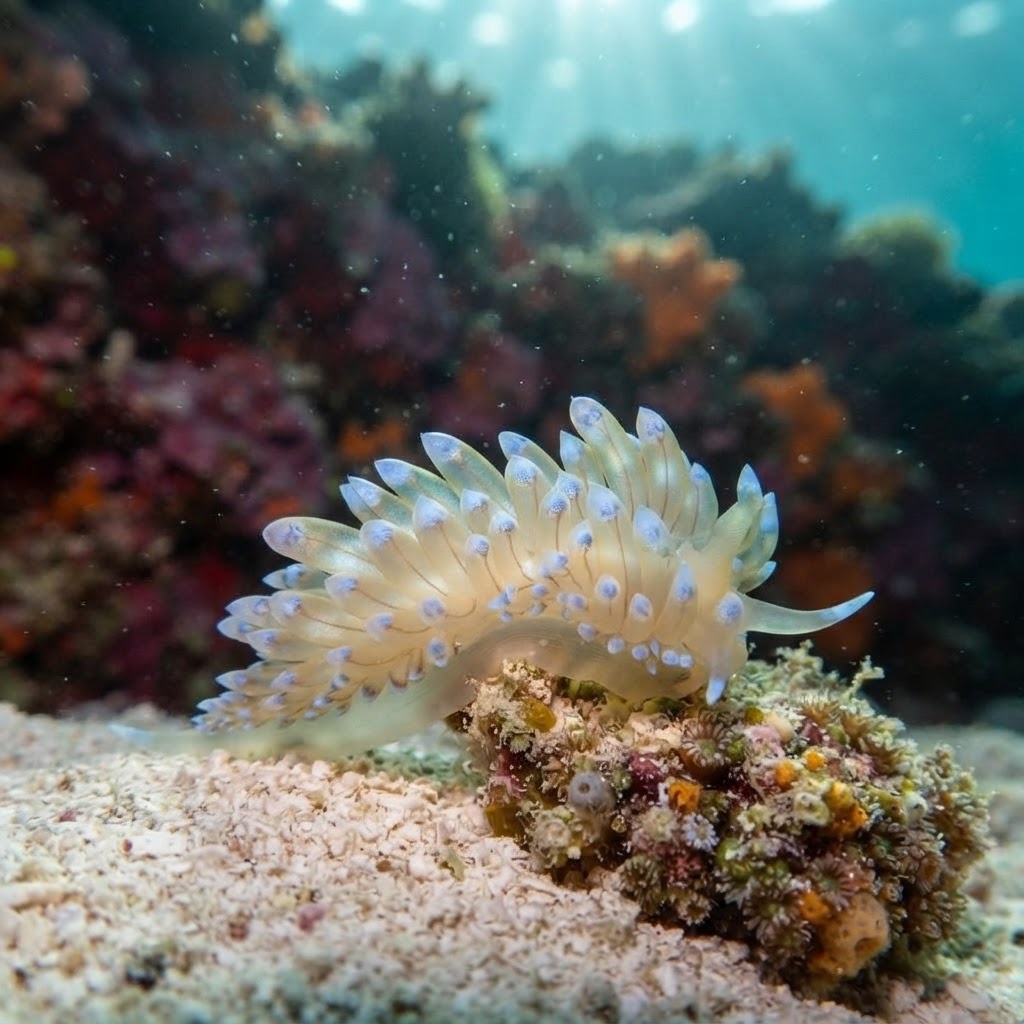
Look for a slender, translucent white to pale body covered in branching, feather-like projections (cerata) tipped in violet or purple. The cerata give it a frilly, almost fern-like silhouette that sets it apart from smooth-backed dorid nudibranchs. It moves slowly over rock and algae, usually small enough that you need to get close to pick out the violet tips.
Divers usually find it grazing slowly across rock faces, kelp holdfasts and hydroid-covered structure, often tucked into crevices where its food source grows thick. It shows no reaction to divers beyond retracting slightly if touched, and is most often picked out on slow, close-focus macro dives rather than mid-water swims. Most logs describe it as uncommon at a given site, so it rewards a careful look rather than a quick pass.
Like other aeolid nudibranchs, it likely feeds on hydroids and can store stinging cells from its prey in the tips of its cerata as a passive defence.
Sightings show no clear seasonal spike, so treat it as a year-round find within its 10.8 to 19.4C comfort range, which covers cooler Atlantic sites and the Mediterranean for most of the year.
Reef neighbours a diver could mistake it for. Use the identification notes above to tell them apart.
Most reliably logged in Zeeland in the Netherlands and along the French Riviera and Provence coast, with strong numbers also in the Balearic Islands, England and Northern Ireland. Further sightings come from the Lisbon Coast in Portugal, the Bay of Biscay, Corsica, and sites in Croatia and Greece, making it a species spread right across European Atlantic and Mediterranean diving.
Mapping where Antiopella Cristata is logged…
It turns up widely across Europe, most often in Zeeland in the Netherlands and along the French Riviera, with reliable numbers in the Balearic Islands, England, Northern Ireland and Portugal's Lisbon Coast.
There is no strong seasonal pattern in the sightings, so it can be found year-round anywhere within its 10.8 to 19.4C temperature range.
Look for a slim, pale translucent body covered in branching, feathery cerata tipped in violet, giving it a frilly outline distinct from smooth-bodied dorid nudibranchs.
No, it poses no threat to divers. It is a small, slow-moving grazer that has no way to harm a person and simply retracts if disturbed.
As an aeolid nudibranch it likely feeds on hydroids and can repurpose their stinging cells within its own cerata tips as a form of borrowed defence.
Site and sighting data is aggregated from diver logs, iNaturalist and GBIF. For taxonomy and conservation status:
Blue Dragon
3,163 sites