Pollachius pollachius
Common along Brittany's reefs and the UK coast, pollack cruise cool 7-12C water year-round in loose midwater shoals.
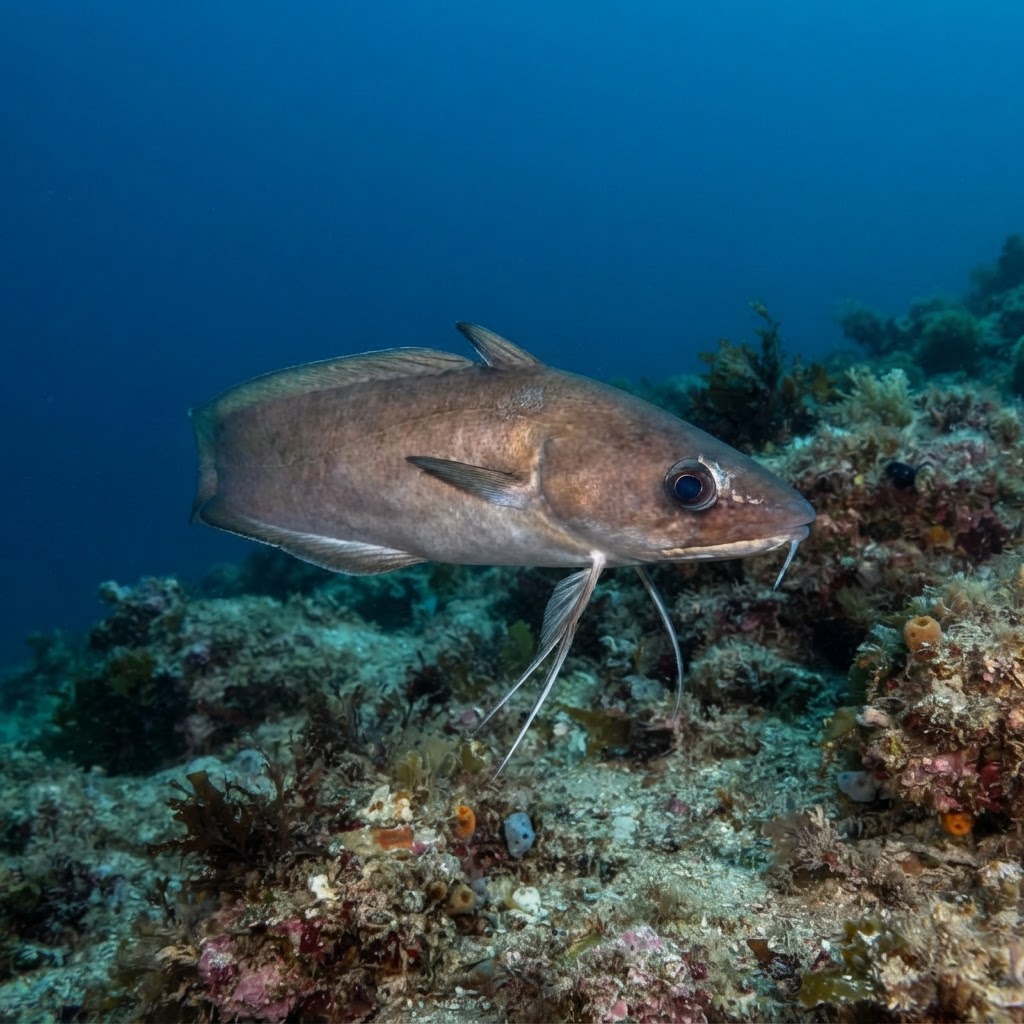
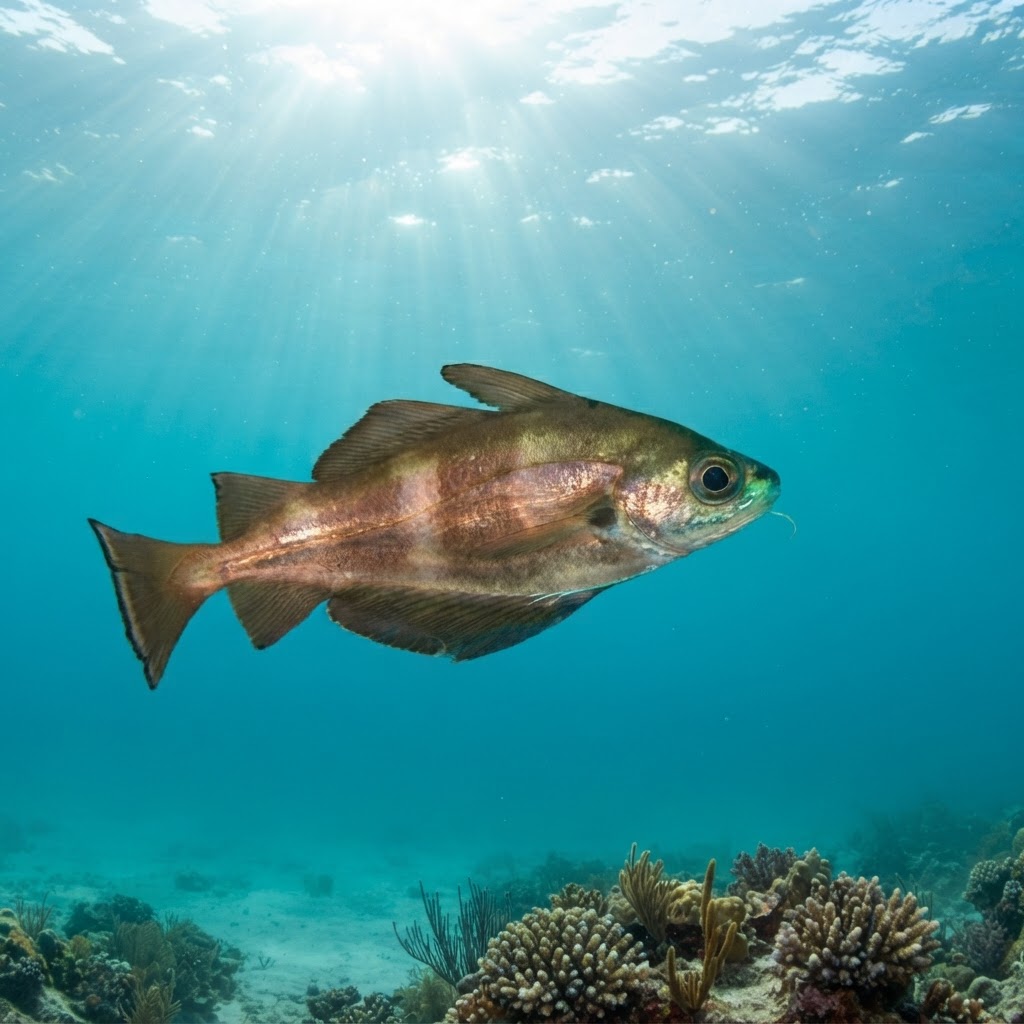
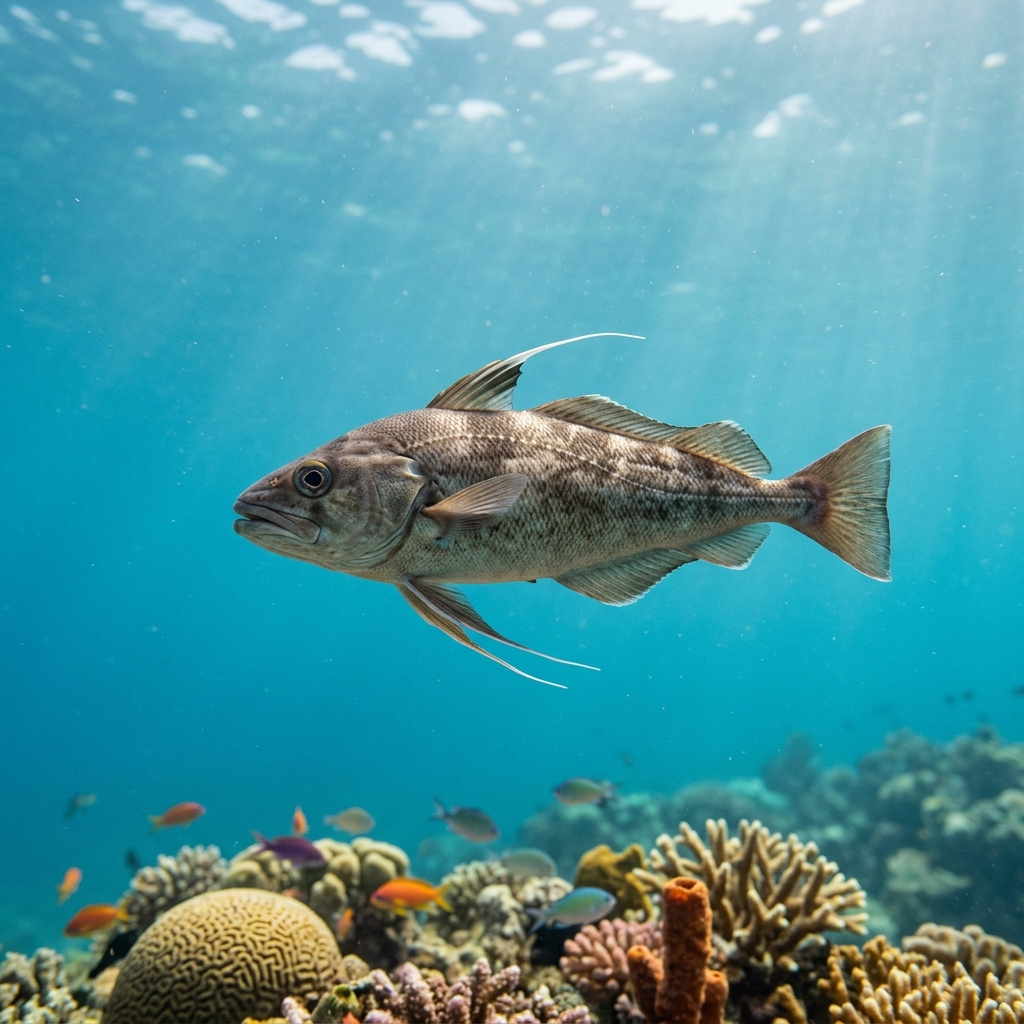
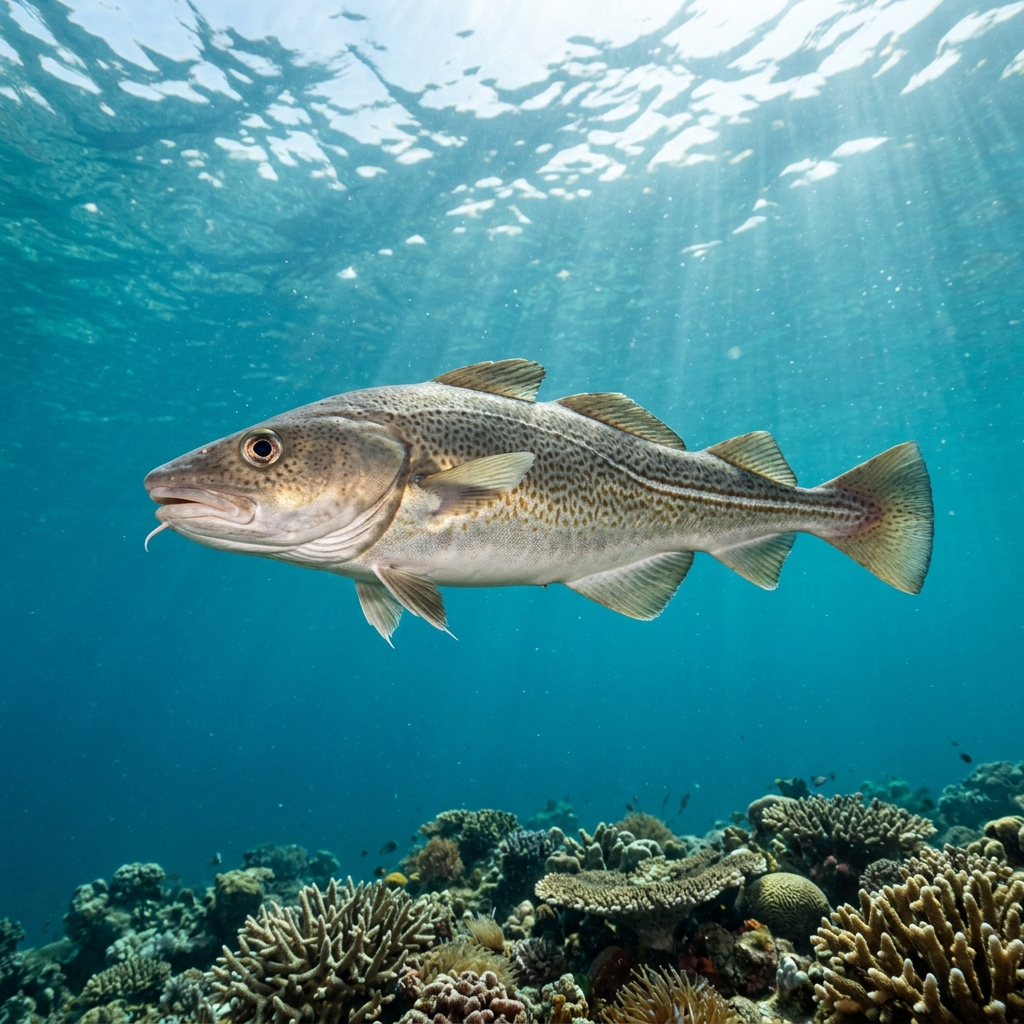
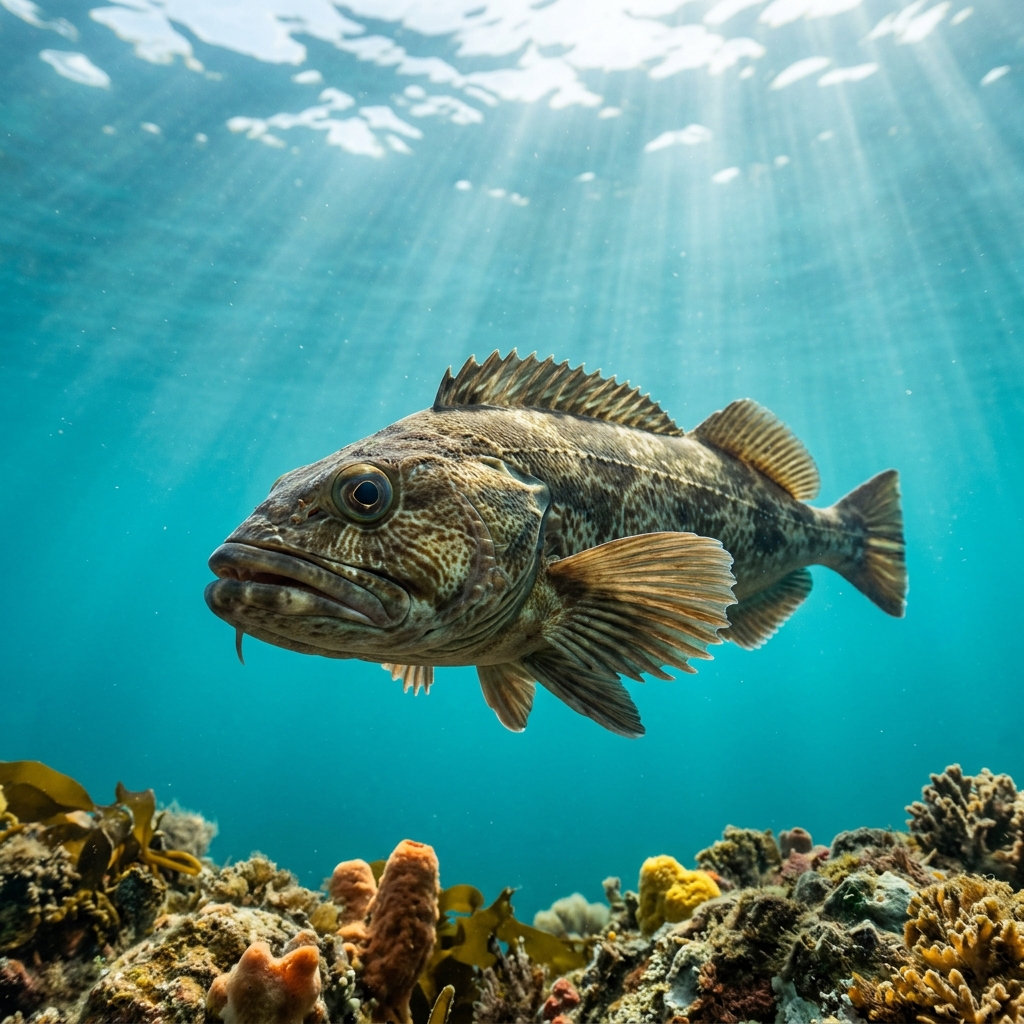
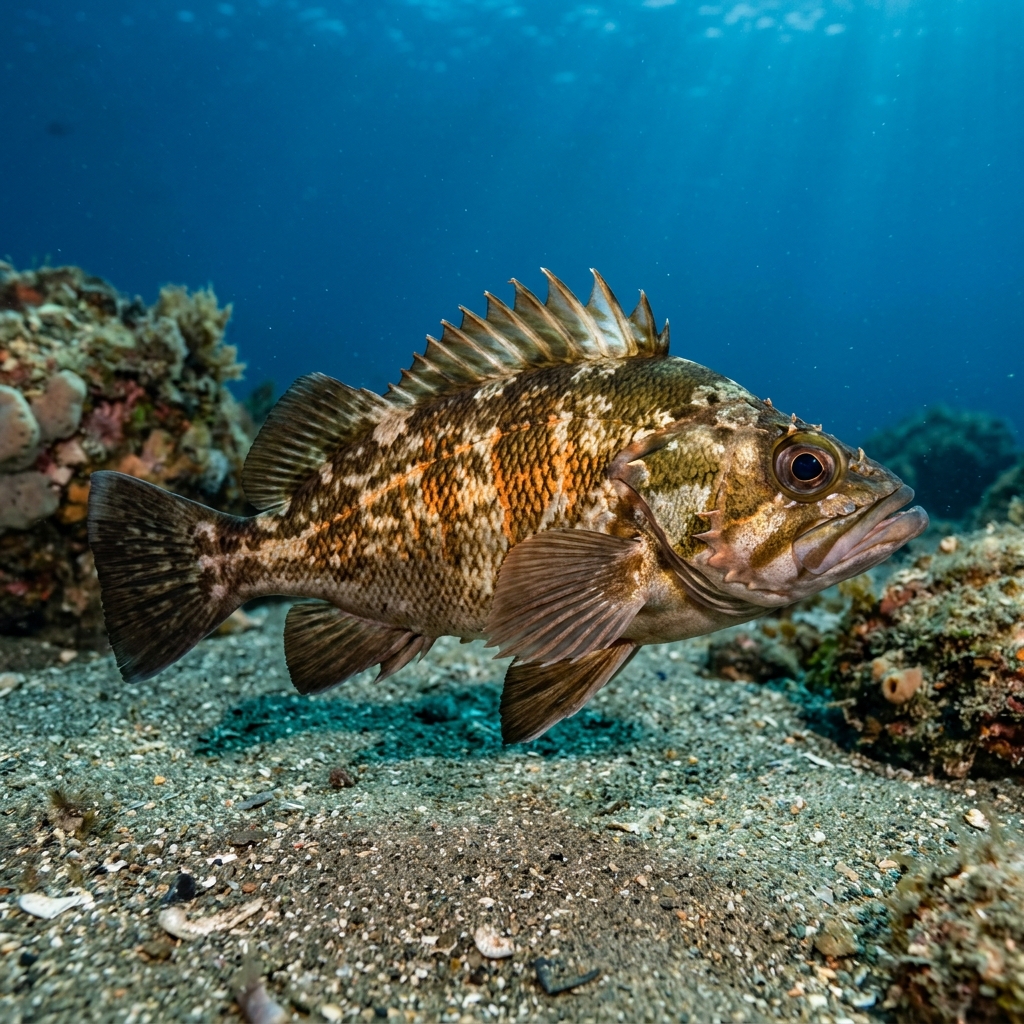
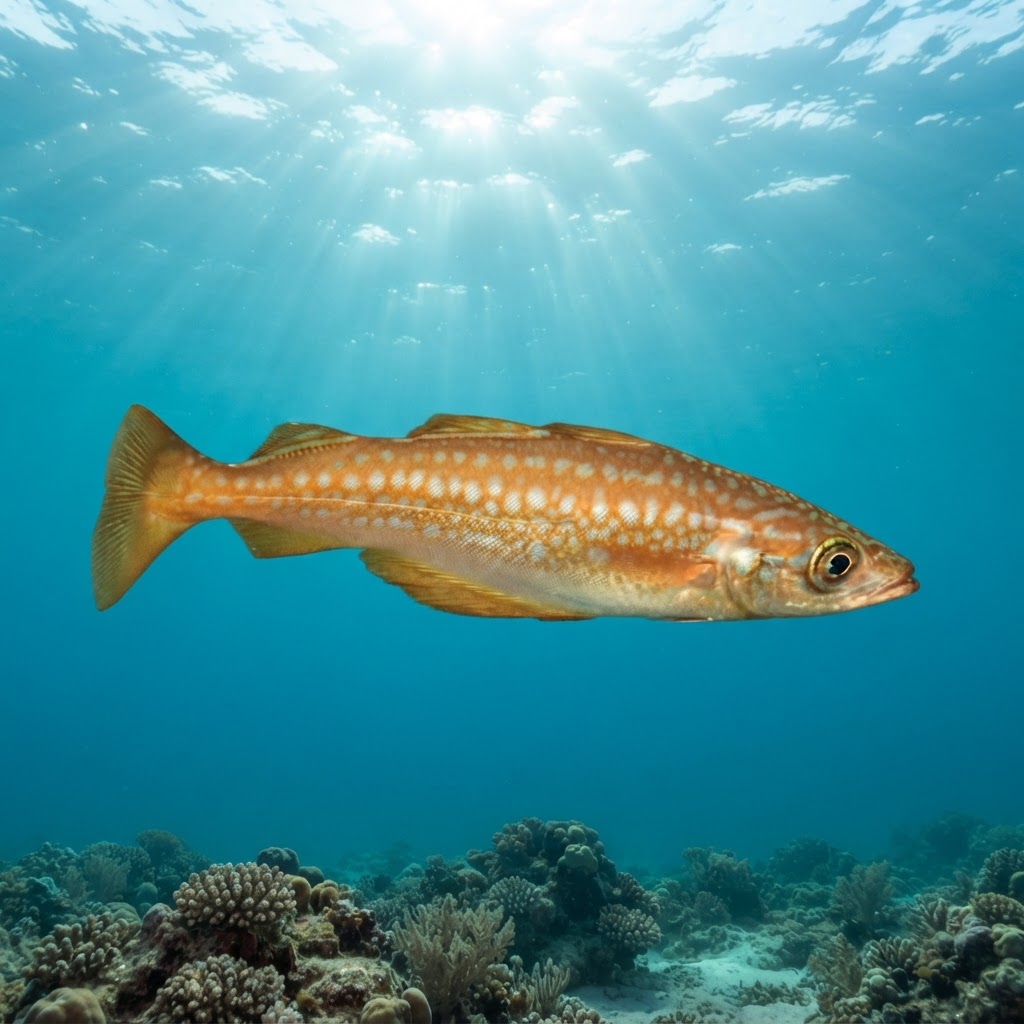
Look for a torpedo-shaped body in bronze to olive-green on the back, fading to a pale gold or silvery belly, with a slightly protruding lower jaw and no chin barbel. The lateral line curves in a distinct pale arch above the pectoral fin, which is the quickest field mark when one glides past in low light. Adults reach close to a metre, though most divers encounter smaller fish holding station over rock and kelp.
Expect to find pollack hanging in loose groups over reef pinnacles, wrecks and kelp edges, often facing into the current rather than actively swimming. They tend to hold a curious middle distance from divers, easing off rather than bolting, and will often reform their position again once you move past. Most sightings happen over rocky ground rather than sand or mud, where they use the structure to ambush smaller fish.
Pollack are visual predators that rely on sharp low-light eyesight to pick off small fish and crustaceans around reef structure, which is why they're often seen holding just off the rock face rather than in open water.
Sightings are logged year-round with no strong seasonal pattern, which fits a fish comfortable in the cool 7 to 12C range typical of Atlantic and Channel reefs through most of the year.
Reef neighbours a diver could mistake it for. Use the identification notes above to tell them apart.
Brittany in France is by far the most reliable spot, logged at far more sites than anywhere else, with strong follow-up numbers in Scotland, Wales and England around the UK. Ireland's Galway & Connemara and Clare coasts also turn up sightings, with occasional reports as far north as Nordland in Norway.
Mapping where Pollack is logged…
Brittany in France has the strongest numbers by far, with Scotland, Wales and England also regular spots around the UK. Ireland's Galway & Connemara and Clare coasts add further sightings, and they range as far as Nordland in Norway.
There's no strong season in the data, so pollack are seen year-round on the reefs and wrecks where they're found. They favour cool water between about 7 and 12C, which suits most of the year across their Atlantic and Channel range.
Check for a bronze-green back, pale gold belly and a curved pale arch in the lateral line above the pectoral fin. The lower jaw juts out slightly and there's no chin barbel, which helps separate it from similar-looking gadids.
Pollack can reach close to a metre in length, though most fish divers encounter on reefs and wrecks are noticeably smaller than that maximum.
No, pollack pose no threat to divers. They're a curious but cautious fish that will usually keep a comfortable distance rather than approach.
Site and sighting data is aggregated from diver logs, iNaturalist and GBIF. For taxonomy and conservation status:
Pouting
236 sites