Halichoerus grypus
Gray seals are logged year-round in UK, Dutch and Canadian waters from 6-16 °C. Find out where to spot them and how to tell them from harbour seals.
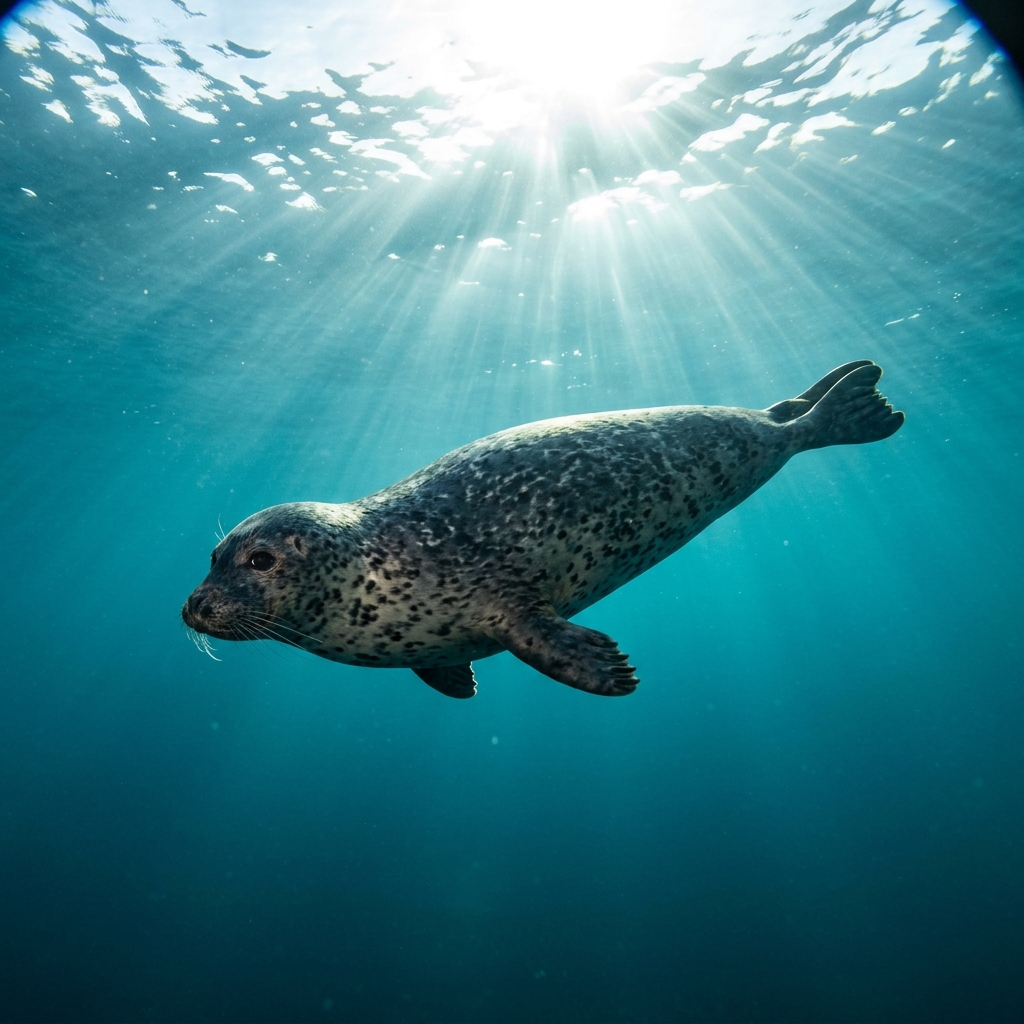
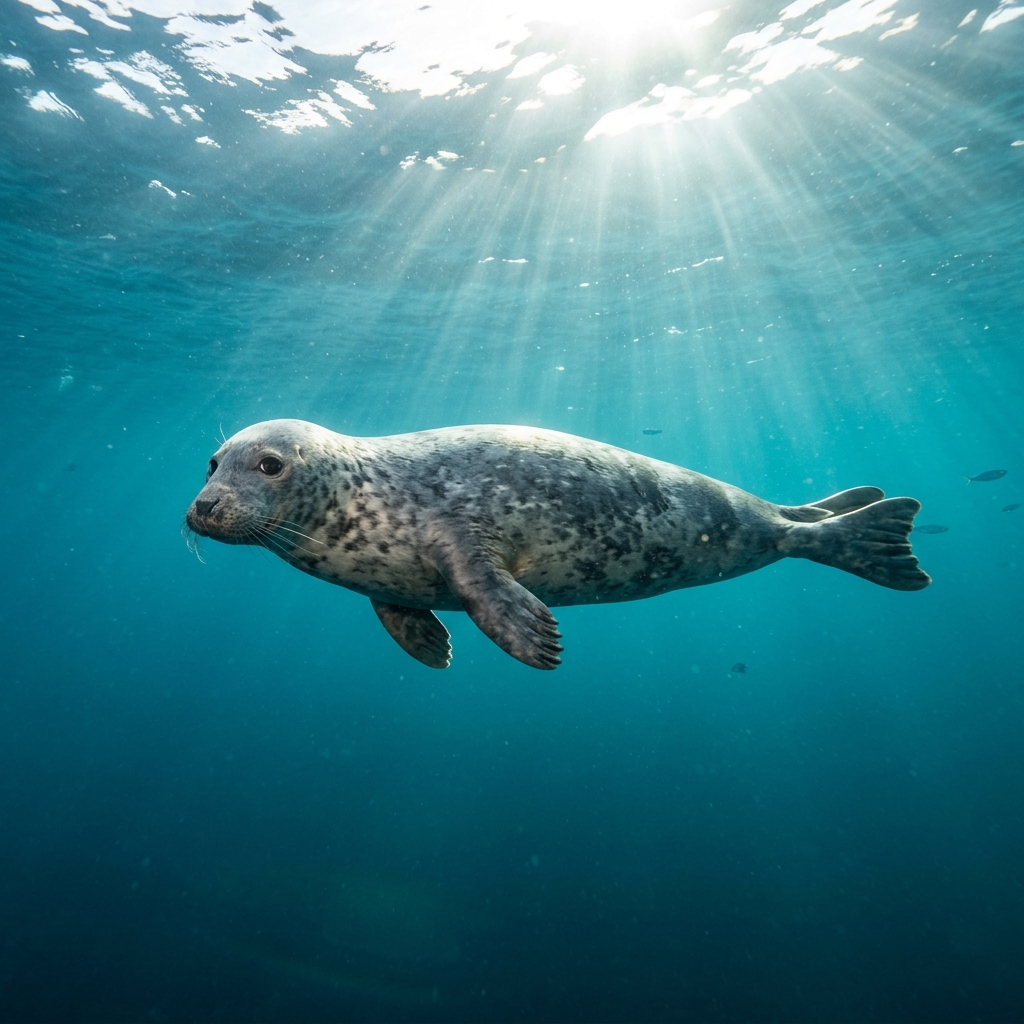
That long, flat-topped muzzle, often called a 'Roman nose', is the key field mark that separates gray seals from their relatives underwater. Adults are large and powerfully built, with pale grey to dark brown mottled skin; males are noticeably bigger and darker than females, with a thicker neck and more scarred flanks. In the water they move with an unhurried, fluid grace, often hanging motionless and watching you with large, dark eyes before rolling away.
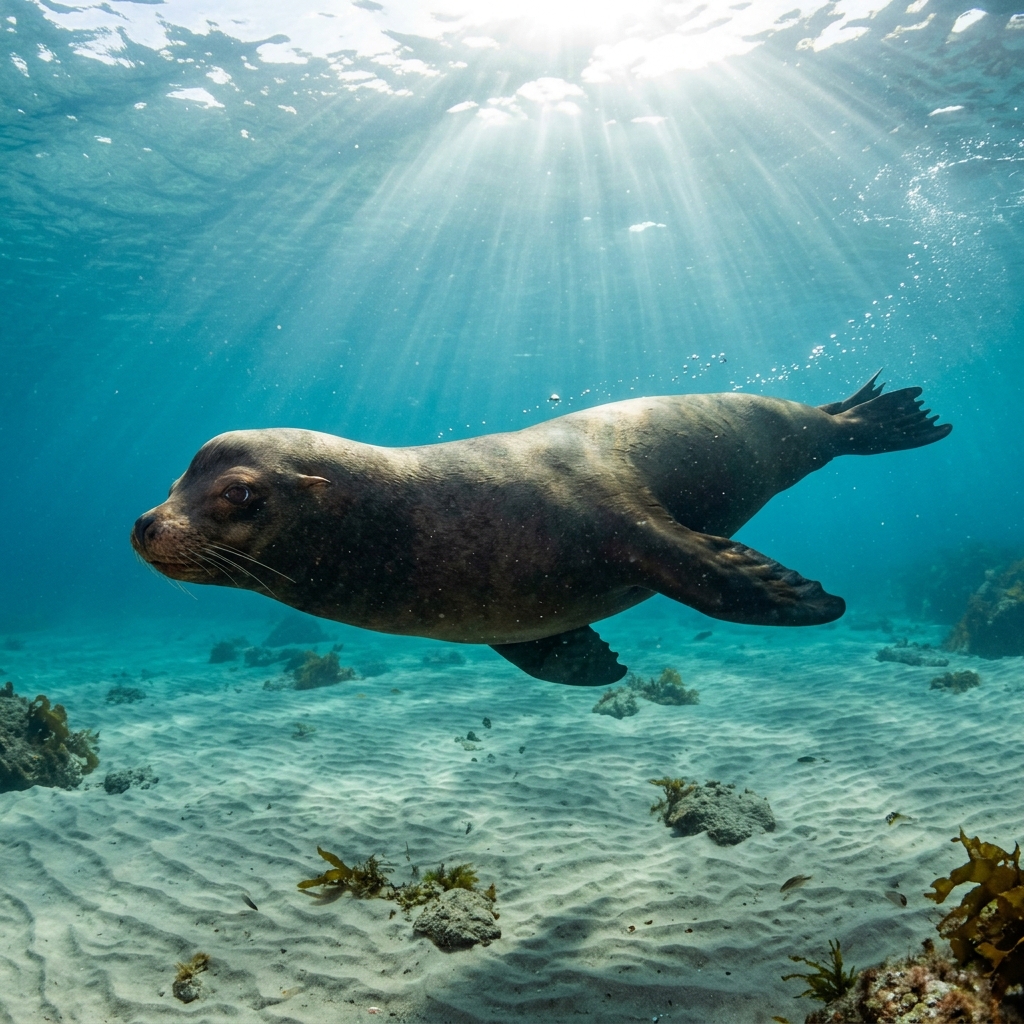
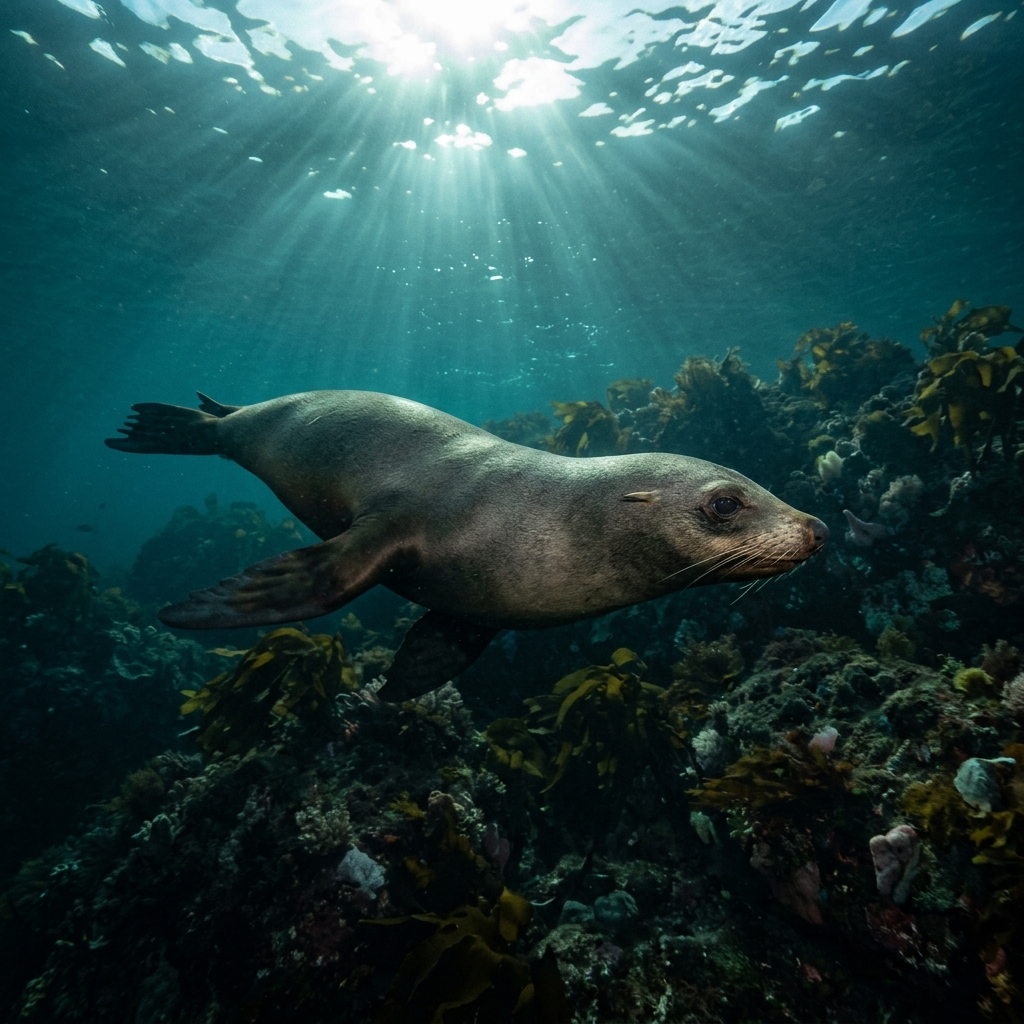
Underwater, gray seals are famously curious, they will often circle a diver repeatedly, coming close enough to inspect equipment or nip at fins before darting away. At haul-out sites they may be found resting just below the surface or cruising slowly along rocky reefs and kelp beds. Sightings tend to be brief encounters rather than prolonged company, so staying calm and moving slowly is the best way to extend the interaction.
Gray seals can dive to several hundred metres and hold their breath for well over twenty minutes, but most diver encounters happen in shallow coastal water where the seals forage and rest, they're regularly spotted in just a few metres at tidal sites.
Gray seals are logged year-round with no concentrated season, which fits their cold-water comfort range of roughly 6 to 16 °C across north Atlantic and North Sea sites. Any month is worth planning around if you're already diving in those regions.
Reef neighbours a diver could mistake it for. Use the identification notes above to tell them apart.
Most commonly logged across the United Kingdom, particularly around Northern Ireland, Scotland's west coast, and the South Coast and South West England and Wales. The Netherlands, especially Zeeland, and the Brittany and Normandy coasts of France are also strong spots. Canadian sightings cluster in the St. Lawrence and Quebec region, and there are regular encounters along the northeastern United States.
Mapping where Gray Seal is logged…
The best-documented diving is around the United Kingdom, Northern Ireland, western Scotland, the South Coast, and South West England and Wales, as well as Zeeland in the Netherlands and the Brittany and Normandy coasts of France. Canada's St. Lawrence region and the northeastern United States also have reliable sightings.
Sightings are spread across every month of the year with no single peak season. They're cold-water animals comfortable between about 6 and 16 °C, so they stay in north Atlantic and North Sea habitats year-round rather than moving with the seasons.
Look for the long, parallel-sided 'Roman nose', the muzzle has a flat top rather than the rounded, dog-like snout of a harbour seal. Gray seals are also considerably larger, with a mottled pale grey or brown skin pattern and distinctive dark, wide-set eyes.
Adult males can reach around 2.3 metres in length and weigh up to 300 kg. Females are significantly smaller, typically around 1.6 to 1.8 metres. Underwater, bulls look barrel-chested and imposing; females are more streamlined.
Gray seals are not considered dangerous to divers and are generally curious rather than threatening. They may nip playfully at fins or equipment, a behaviour driven by inquisitiveness rather than aggression. Keeping calm, moving slowly, and not cornering them is all the precaution needed.
Site and sighting data is aggregated from diver logs, iNaturalist and GBIF. For taxonomy and conservation status:
South American Fur Seal
305 sites