Labrus bergylta
Chunky, colour-shifting wrasse common in Brittany and along Portugal's Lisbon Coast, seen year-round in cool 9 to 13C water.
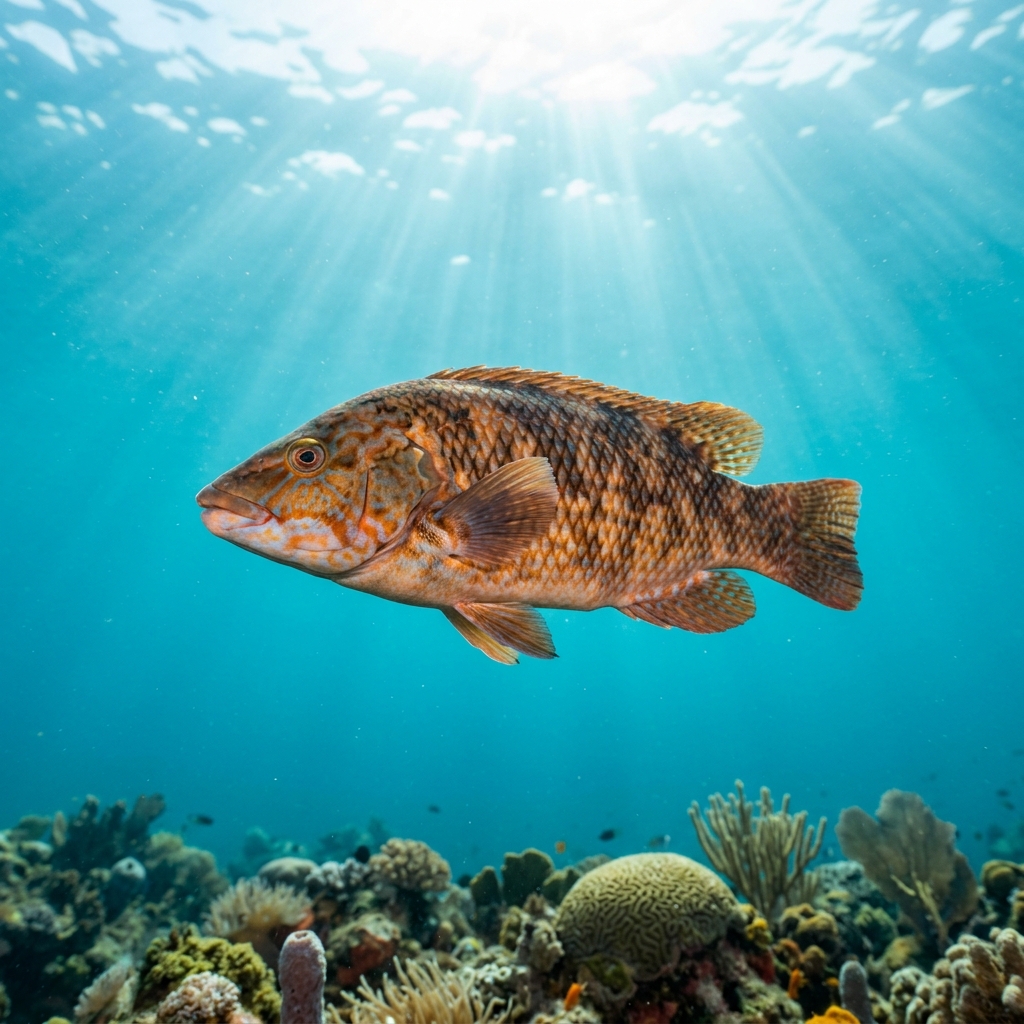
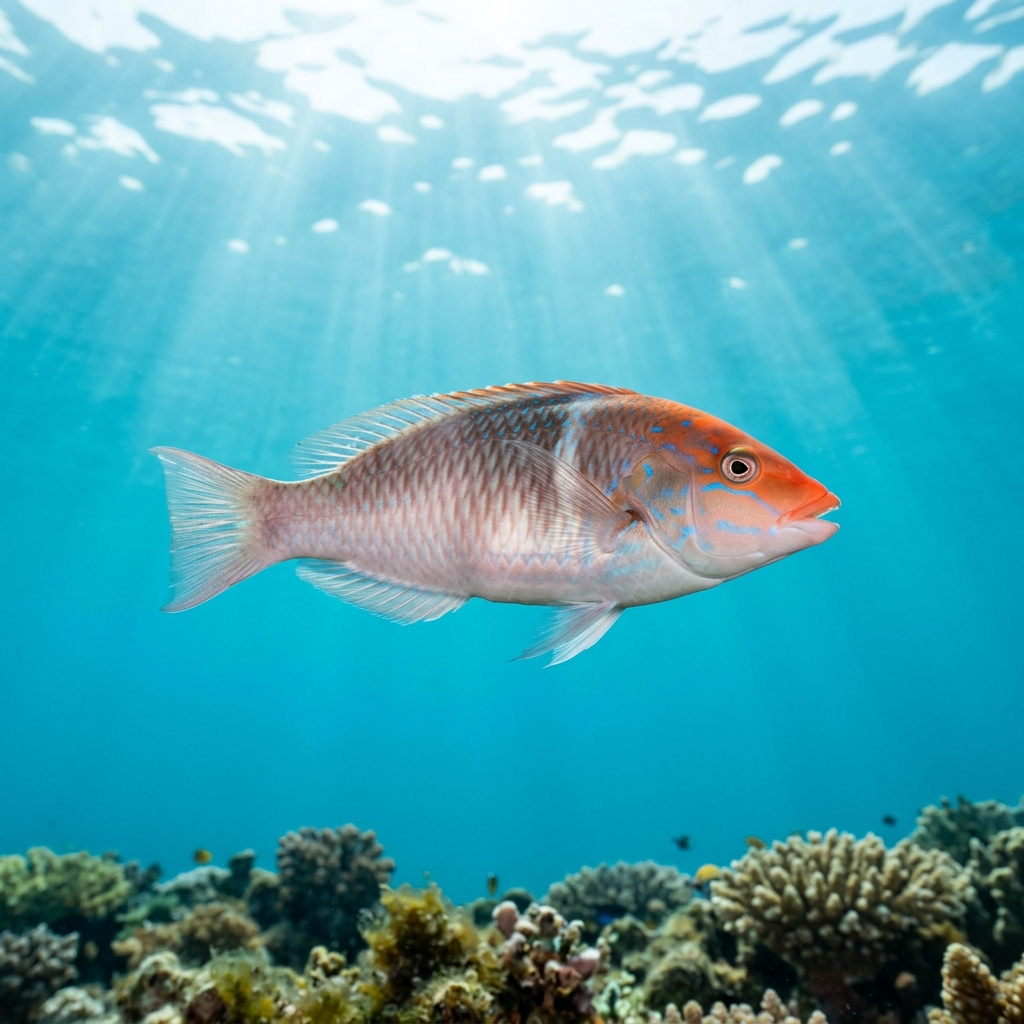
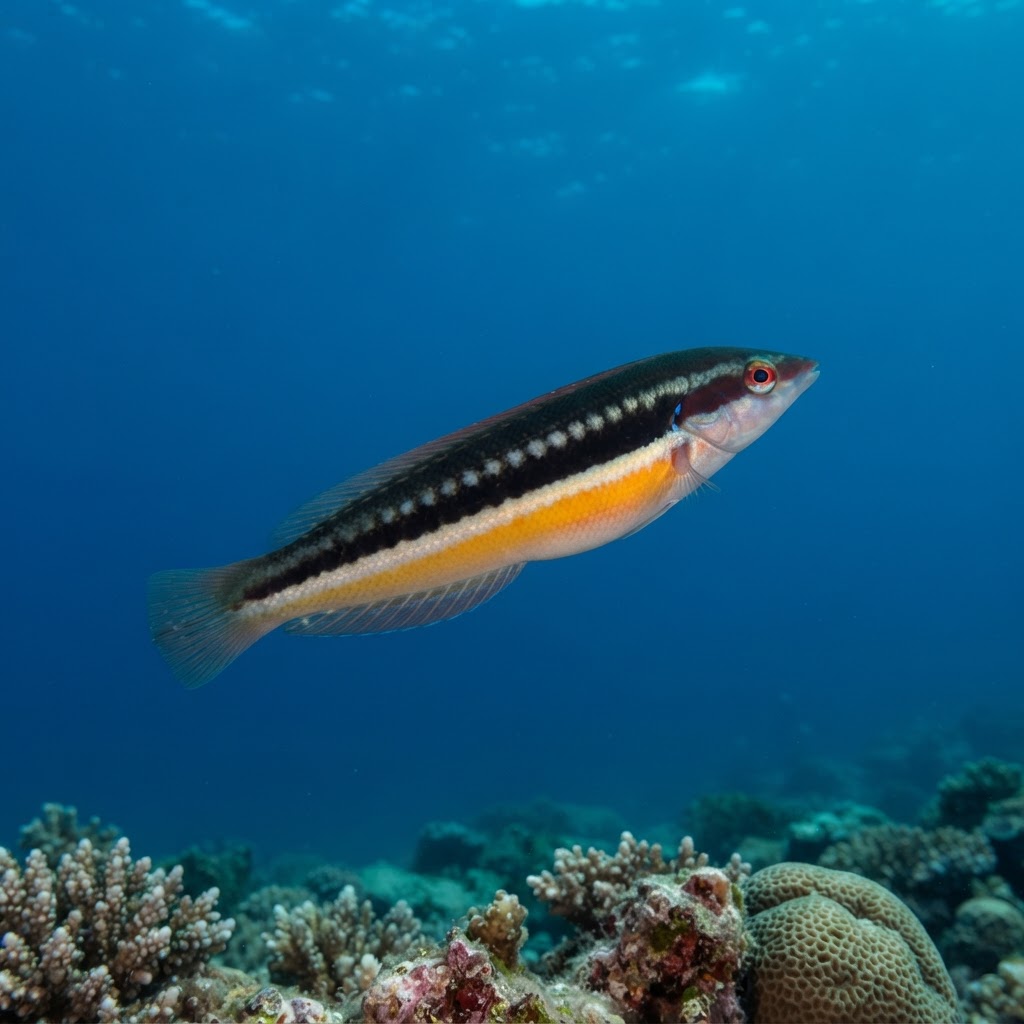
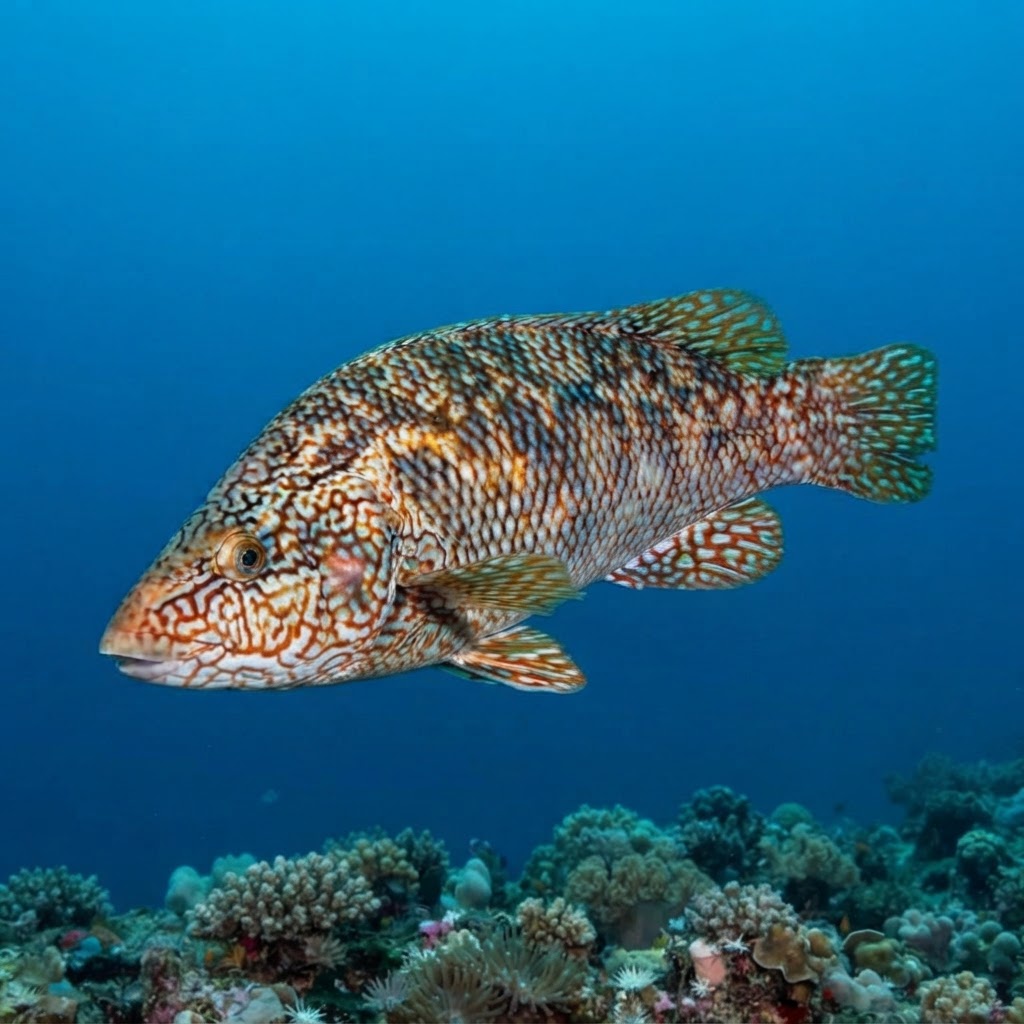
A thickset, heavy-bodied wrasse up to about 45cm, with a blunt head and a single long dorsal fin running most of its back. Colouring is highly variable and mottled, ranging from olive-green and brown to reddish, often with pale spots scattered across the flanks and fins. There is no sharp single marking to key on; instead look for the bulky shape, thick lips, and the patchy, almost camouflaged pattern that sets it apart from slimmer reef fish.
Usually found close to rocky reef structure, kelp edges, and gullies, poking around crevices and boulders for food rather than swimming in open water. It tends to be wary rather than bold, often holding near cover and watching divers before drifting off, though individuals at popular sites can become a bit more relaxed around regular traffic. Most sightings are solitary or loosely associated with the reef rather than in groups.
Ballan wrasse are protogynous hermaphrodites, meaning many individuals start life as females and later change sex to become males as they grow.
Sightings show no strong seasonal pattern, so it is logged year-round at these cool-water Atlantic sites. It favours cold water, typically 9 to 13C, so divers should not expect it to disappear in winter the way warm-water species do.
Most reliably logged along the Atlantic coasts of Europe, with strong numbers in Brittany and the Bay of Biscay in France, across England in the UK, and along Portugal's Lisbon Coast and the Algarve. Spain's Galicia and Cantabrian Coast are also solid bets, and the Azores (particularly Sao Miguel and Santa Maria) hold populations further out into the Atlantic.
Mapping where Ballan Wrasse is logged…
Best chances are along the Atlantic coasts of Europe, especially Brittany and the Bay of Biscay in France, England's rocky reefs, Portugal's Lisbon Coast and Algarve, Spain's Galicia and Cantabrian Coast, and the Azores.
There is no strong seasonal pattern in sightings, so they are logged year-round. They are comfortable in cool water from roughly 9 to 13C, so cold months do not push them away from typical Atlantic reef sites.
Look for a bulky, thick-bodied fish up to about 45cm with a long single dorsal fin and a mottled olive, brown, or reddish pattern with pale flecks. There is no bold single stripe or spot to key on, so shape and patchy colouring are the main clues.
They typically reach around 45cm, making them one of the larger wrasse species divers encounter in temperate Atlantic waters.
Yes, they are protogynous hermaphrodites, meaning individuals often begin life as females and can later transition to males as they mature.
Site and sighting data is aggregated from diver logs, iNaturalist and GBIF. For taxonomy and conservation status:
Bird Wrasse
3,632 sites