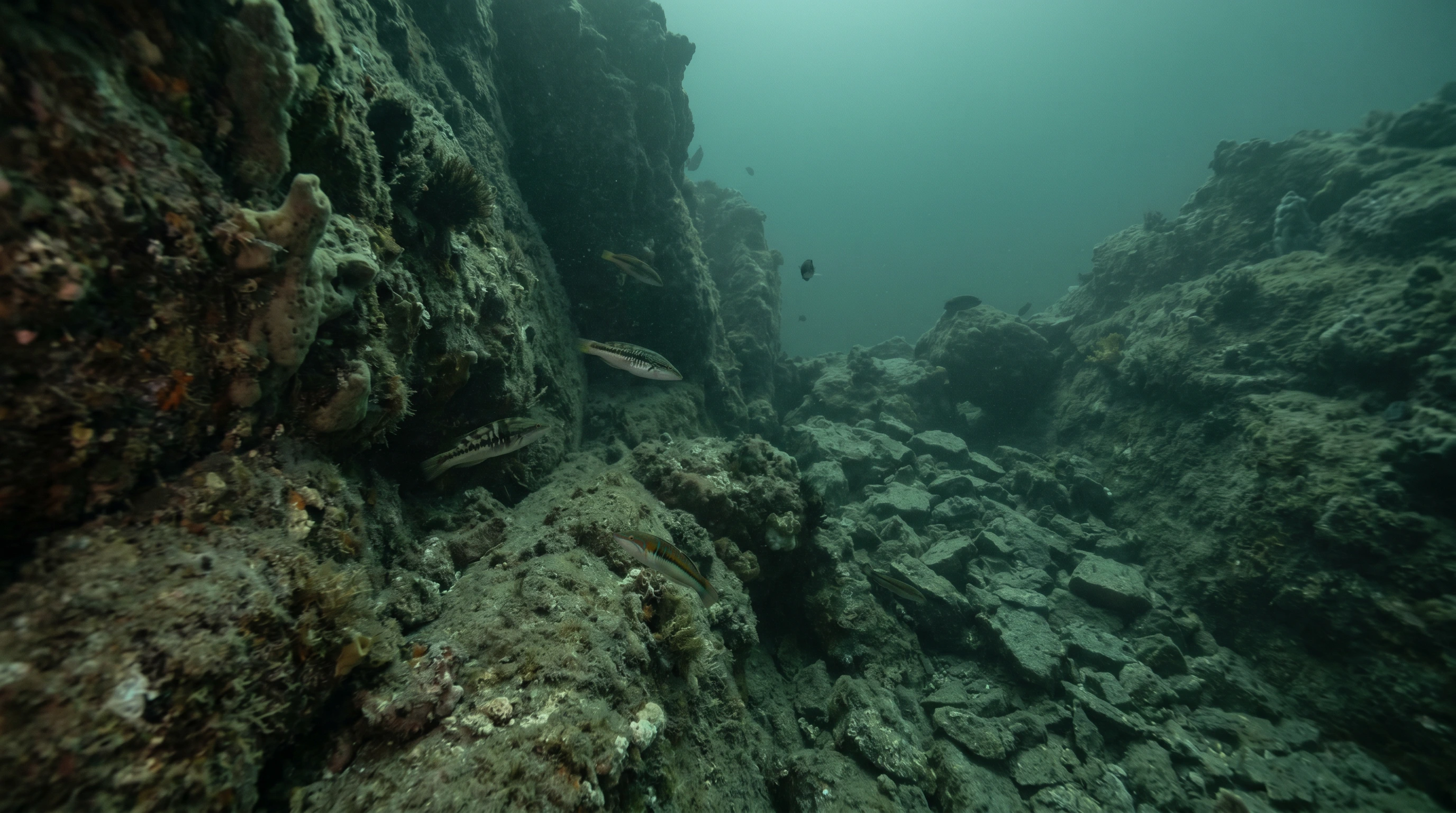
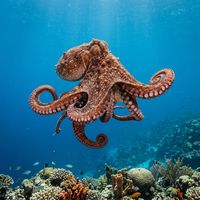
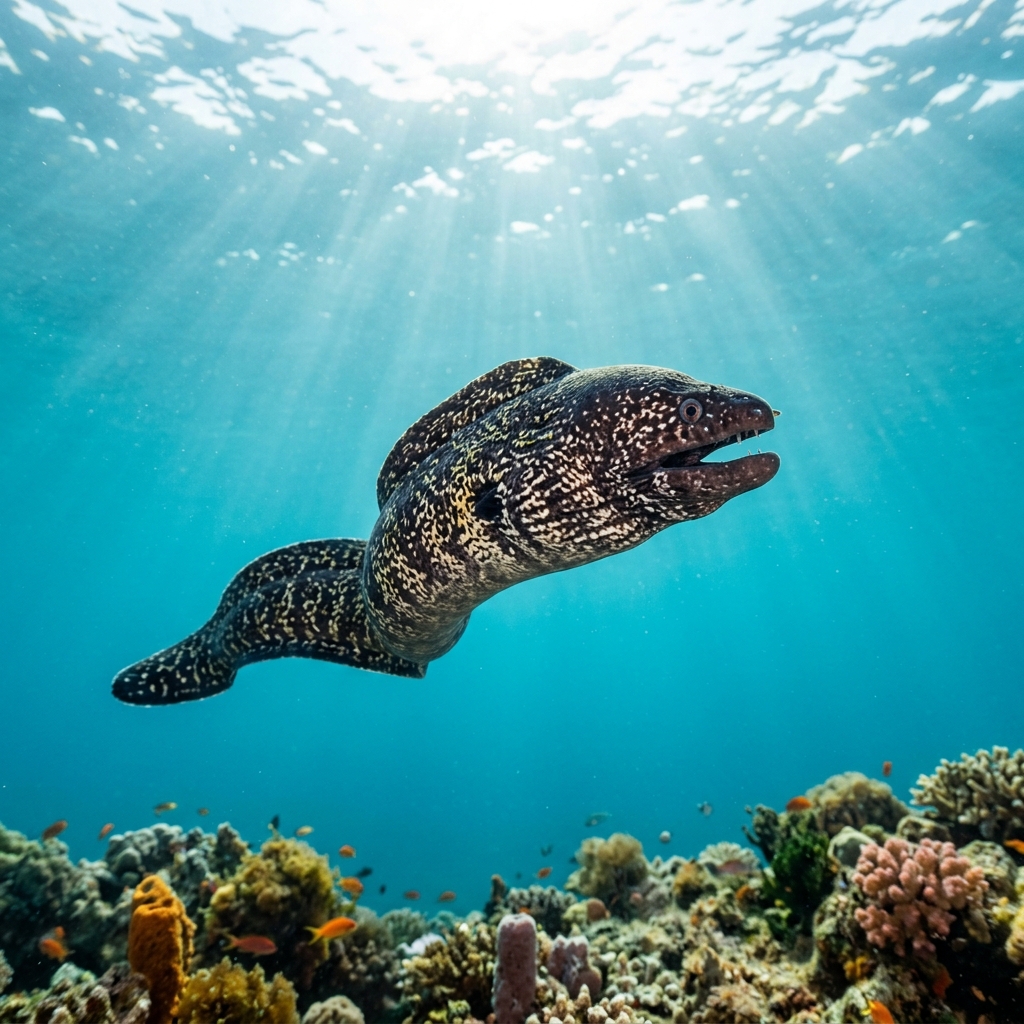
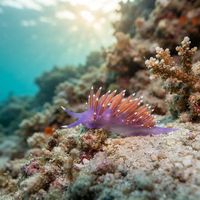
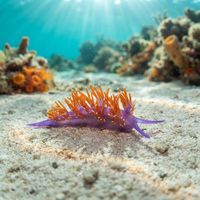
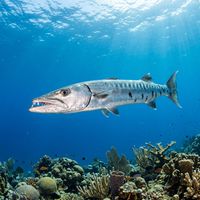
Île de Bagaud is built around boat-access reef diving, with submerged pinnacles, walls, caves and a collection of wrecks spanning beginner to advanced skill levels. Nudibranch diversity is a defining feature, with the Violet Sea Slug, Flabellina Ischitana and several other sea slugs recorded consistently across sites. Common Octopus and Mediterranean Moray are ubiquitous, while Great Barracuda adds an element of open-water drama. Conditions are warmest from summer into early autumn.
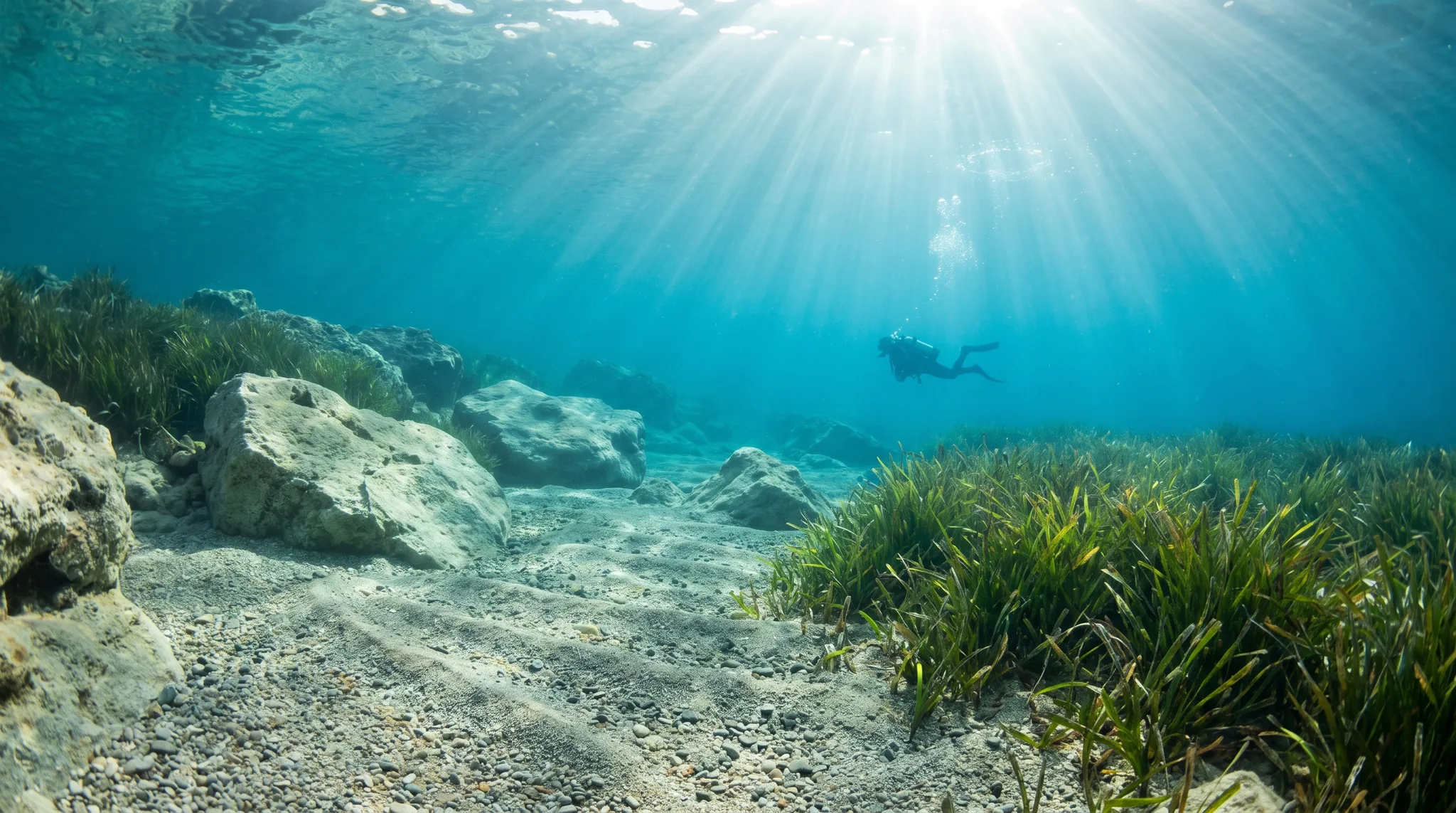
Monthly water temperature across Île de Bagaud's sites, from satellite sea-surface data corrected for depth. The band shows the site-to-site spread.
Water temperature rises steadily from cool late-winter conditions through to a warm summer peak, then holds well into autumn before dropping again by winter. The peak diving months cluster around late spring and again in September, when visibility and temperatures combine most favourably. Winter diving is possible but suited to those comfortable in cooler water.
17 operators

La Londe-les-Maures, France
La Londe-les-Maures, France
29 more sites to explore
Water temperature around Île de Bagaud ranges from about 14°C in January to 22°C in August, based on satellite sea-temperature data for its dive sites.
In the warm season (about 22°C) a 3mm full suit is comfortable in Île de Bagaud; in the coldest months (about 14°C) step up to a 7mm or semi-dry suit.
Fin maps 41 sites in Île de Bagaud (39 scuba diving sites and 9 snorkelling spots, with some suited to both).
Across Île de Bagaud's dive sites, May, June, August and September are most often reported as the best months to visit.
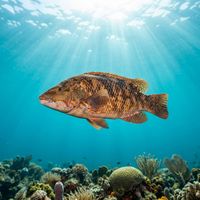
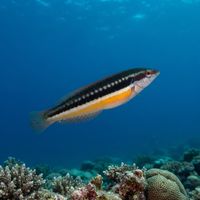
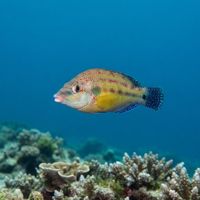
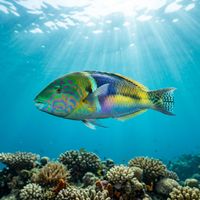
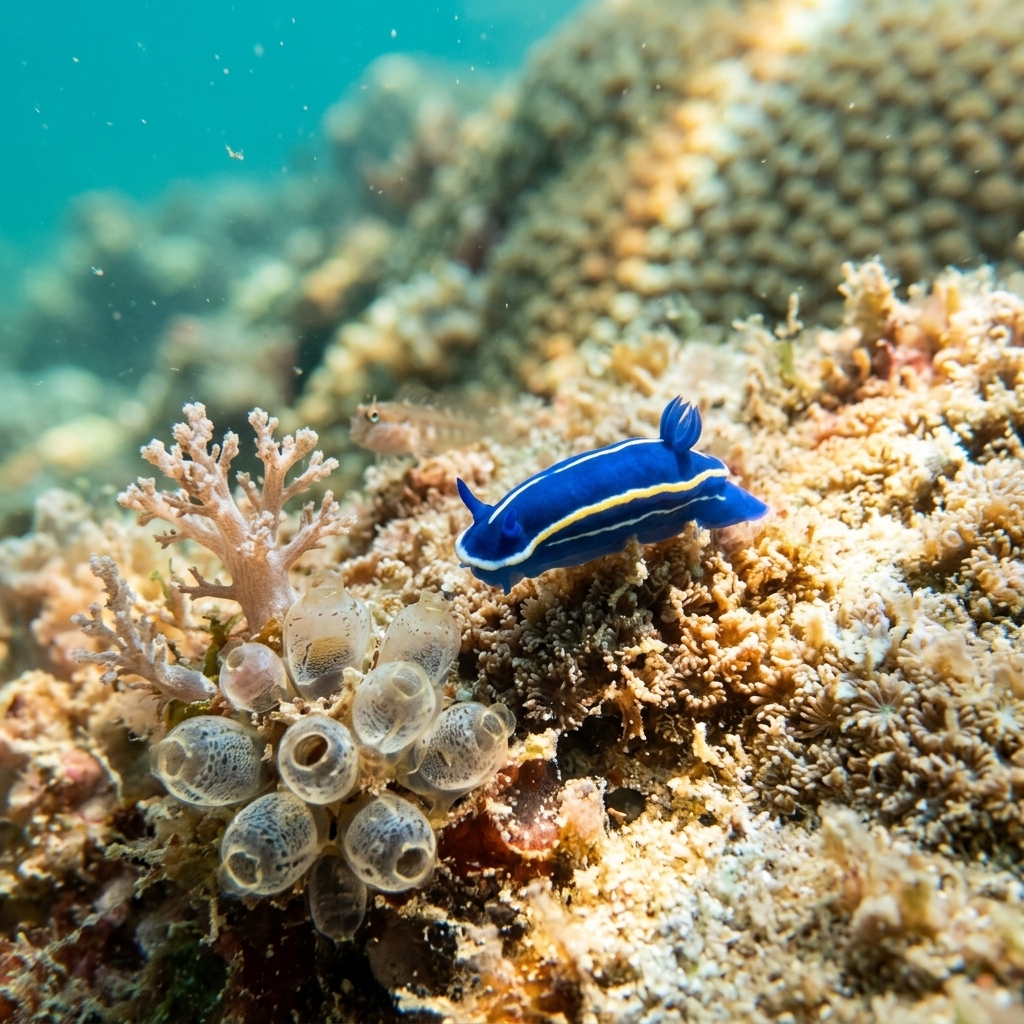
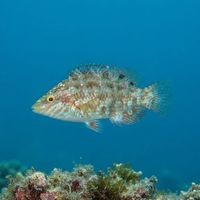
The site list shows a strong nudibranch community, with Violet Sea Slug, Flabellina Ischitana, Cratena Slug and Mediterranean Violet Aeolid all recorded consistently. Common Octopus and Mediterranean Moray appear at almost every site, and Great Barracuda is regularly sighted in open water. Wrasse species, including Mediterranean Rainbow Wrasse, Peacock Wrasse and Five-spotted Wrasse, are also very common across the reefs.
Yes, there are several sites rated for beginners, including Mise à l'eau de Maravenne and La Jeaume Garde, both accessible by boat with calm conditions. Port Du Niel offers a shore entry with a mix of reef, seagrass and a small cave, making it one of the more accessible sites on the island. However, the majority of the top sites here are intermediate or advanced, so beginners will find a handful of good options rather than a full programme.
Almost all sites are reached by boat, with operators including Porquerolles Plongée, Plongée Hyères, Ulysse Plongée and several others serving the area. Shore entry is available at Port Du Niel, which is the exception rather than the rule. The boat-only nature of most sites means planning your dives around an operator or a liveaboard is advisable.
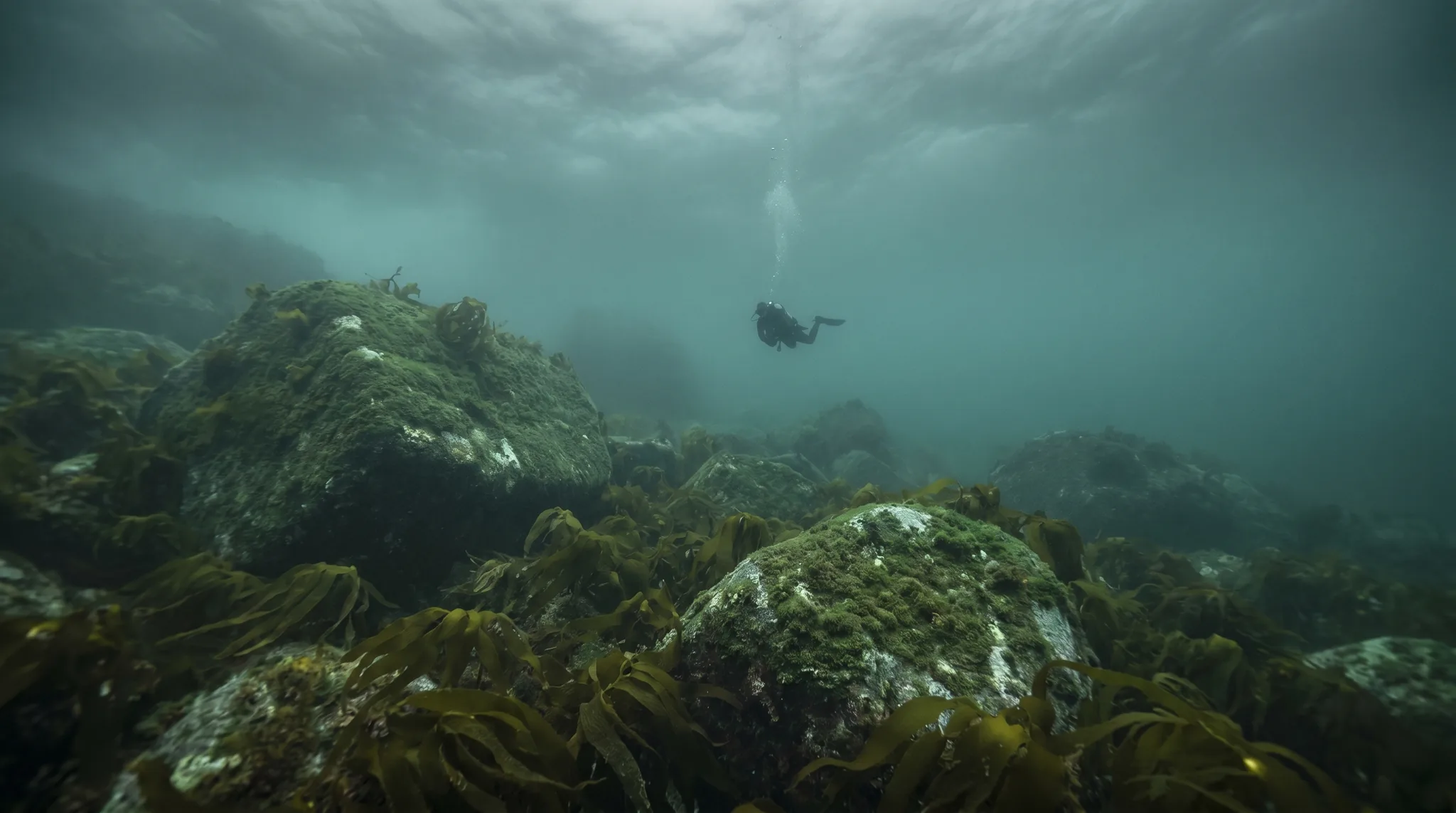
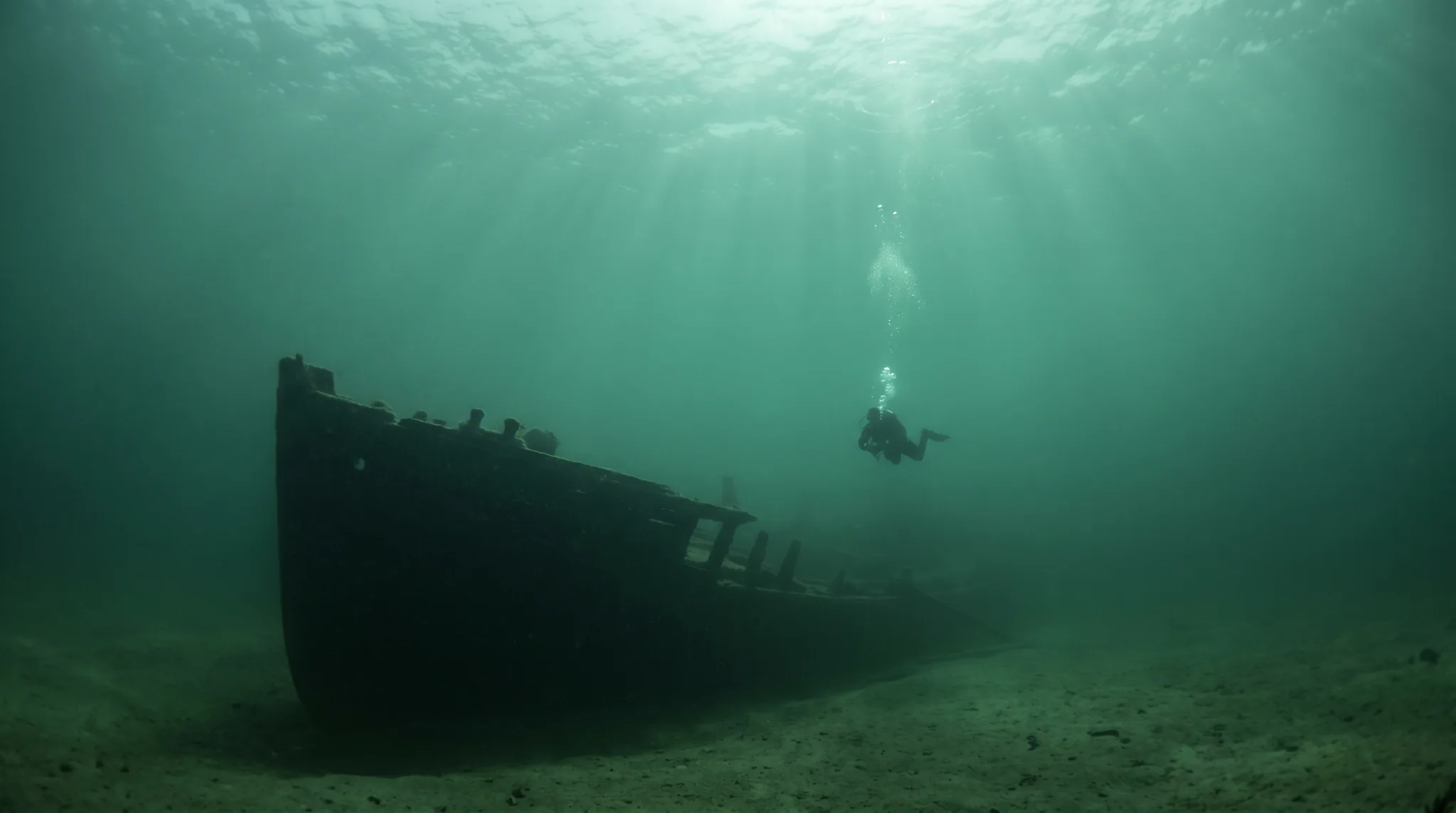
Submerged pinnacles, known locally as 'secs', form the backbone of the diving here, with Sec du Sarragnier, Sec du Gendarme and Sec du Langoustier each offering walls, caves and drift potential. Wrecks are also a key draw, ranging from the aircraft wreck at Hellcat (Grimman F6F) to cargo vessels such as Le Grec and Ville de Grasse, most resting at depth and requiring intermediate or advanced certification.