Coris julis
A common sight in Catalonia and the French Riviera, this darting, streak-marked wrasse turns up on reefs from 13 to 27 C, year-round.
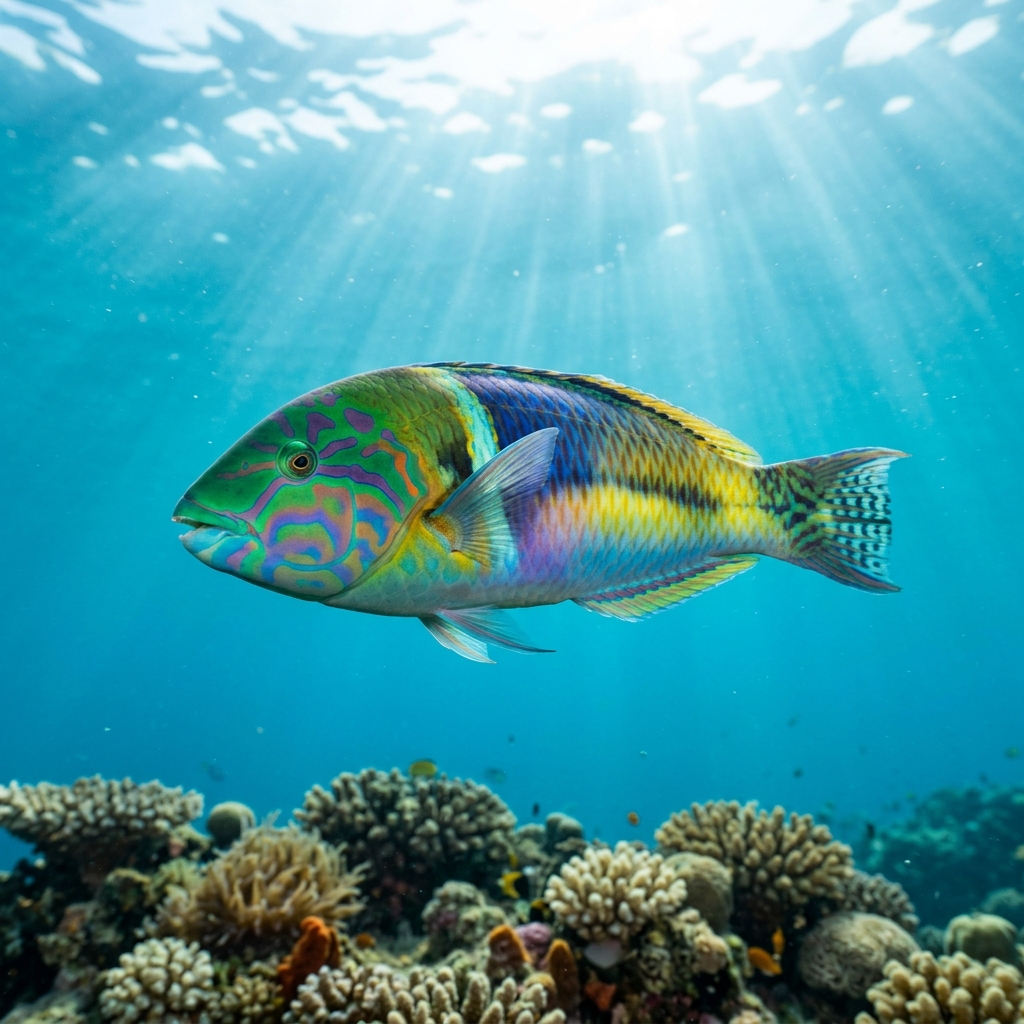
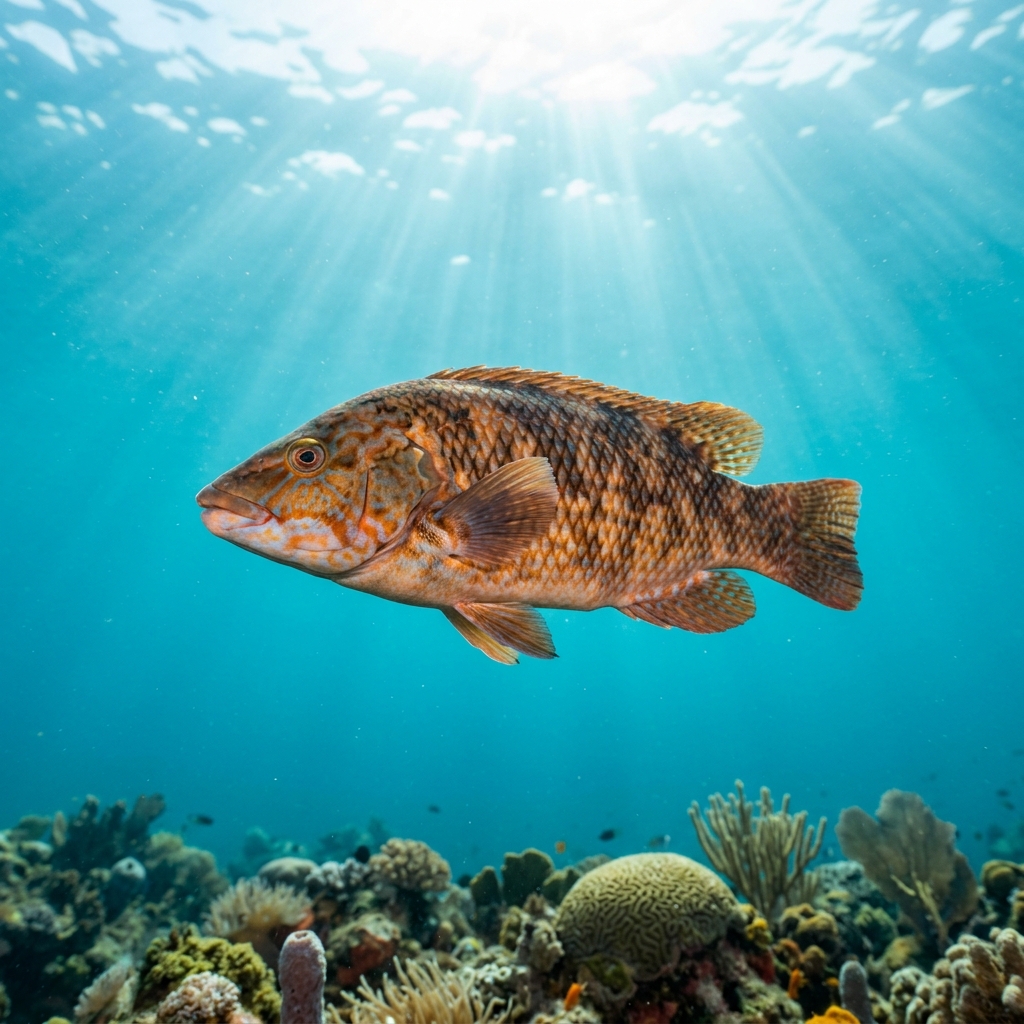
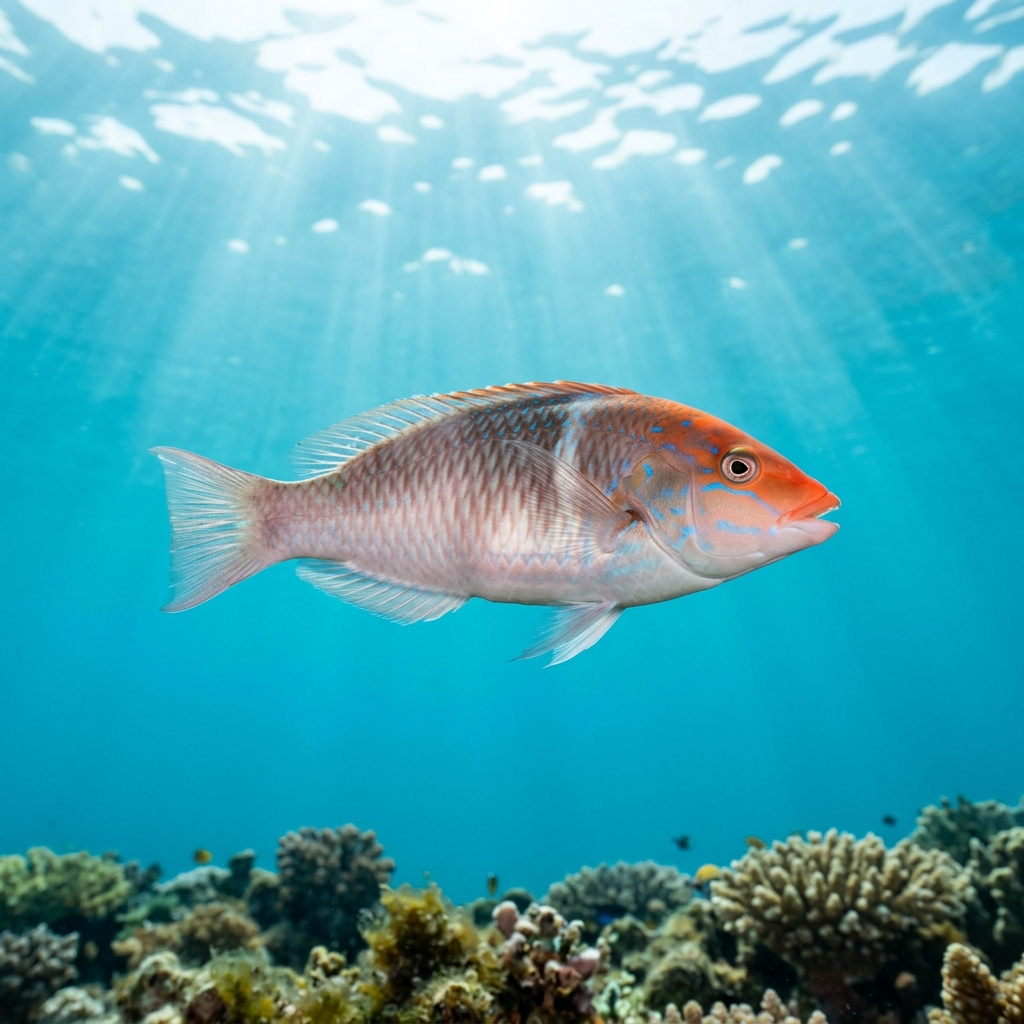
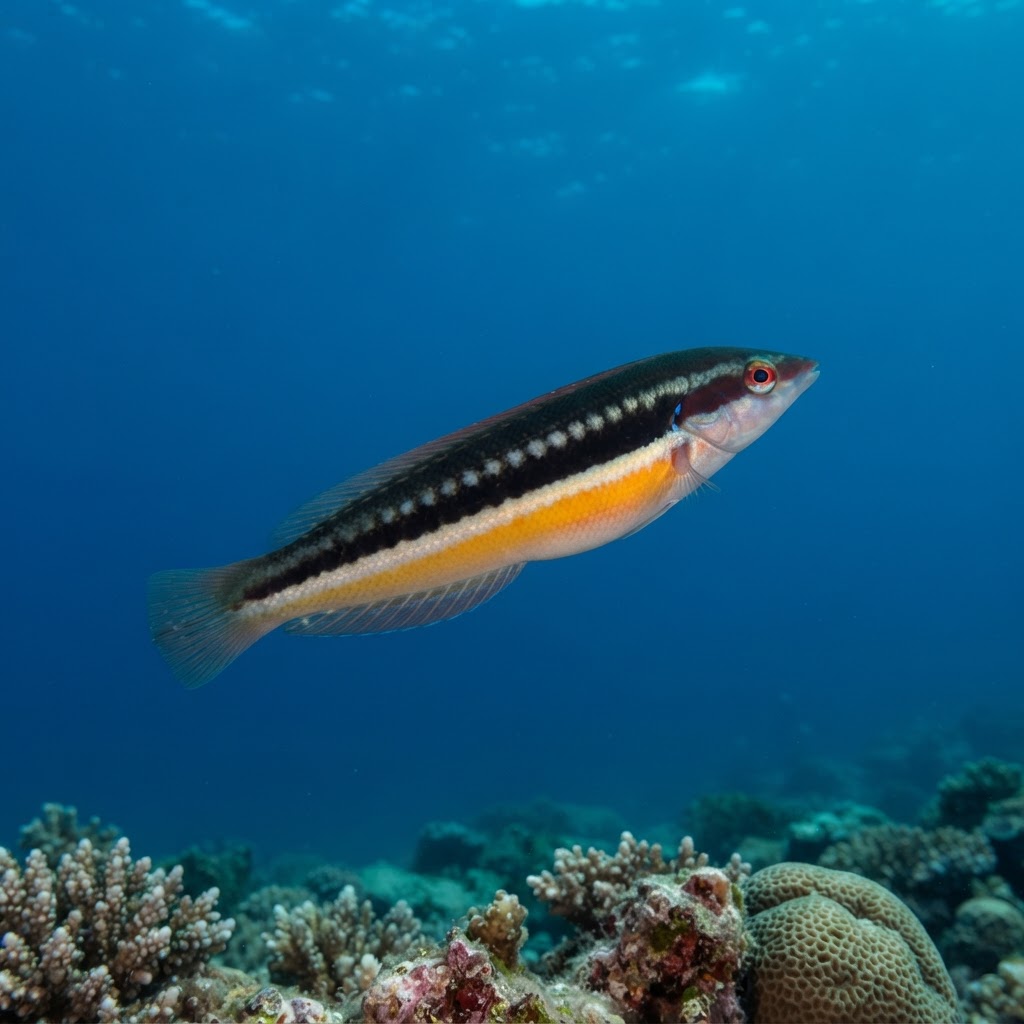
Slim, torpedo-shaped body around 21 cm, usually seen darting low over rock and weed rather than hovering. Colour varies by sex: males show a wavy orange and electric-blue stripe along an olive-brown flank, while females and juveniles are plainer, silvery-brown with a pale belly and a faint dark stripe. The constant fast, jinking swim close to the substrate is often the giveaway before the colours register.
Watch for quick, low darting runs over rock, sand patches and seagrass edges rather than steady mid-water swimming. It is a curious but nervy fish, often circling divers briefly before shooting off to cover, and it stays active through the day rather than favouring dawn or dusk. On many sites it is one of the first fish to appear once you drop below the surf zone.
Every individual starts life as a female and some later change sex and colour to become the bold orange-and-blue males, a switch typical of many wrasses.
No strong seasonal pattern shows up in the data, and it tolerates a wide range from 13.3 to 27.7 C, so it is logged on Mediterranean dives across the whole year.
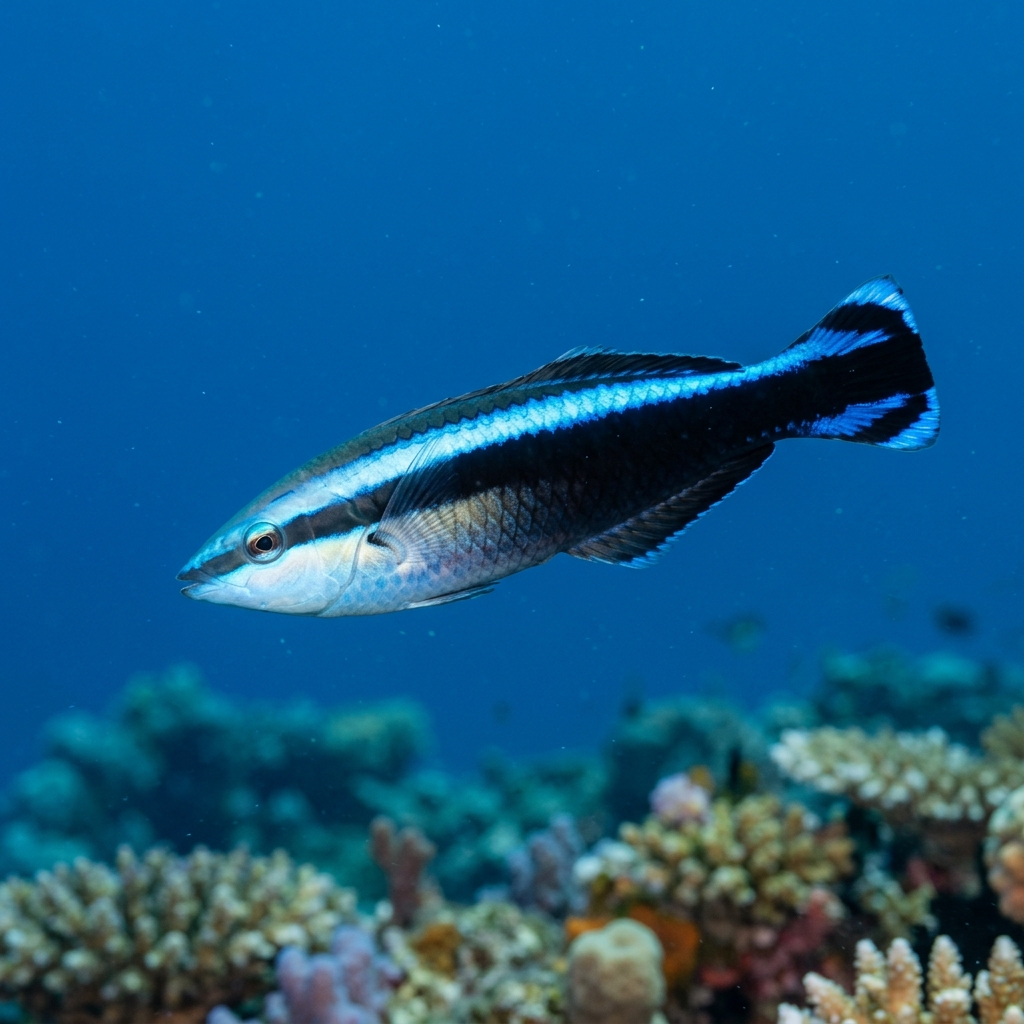
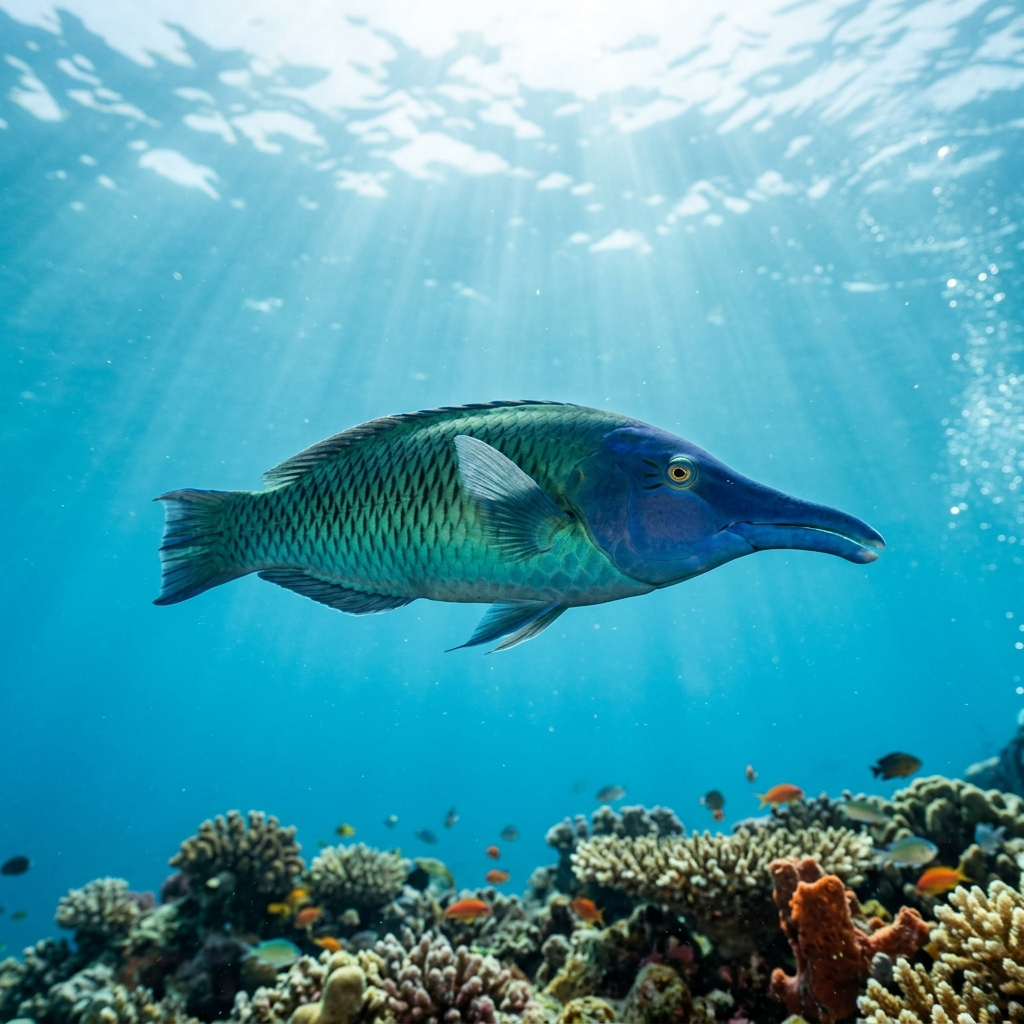
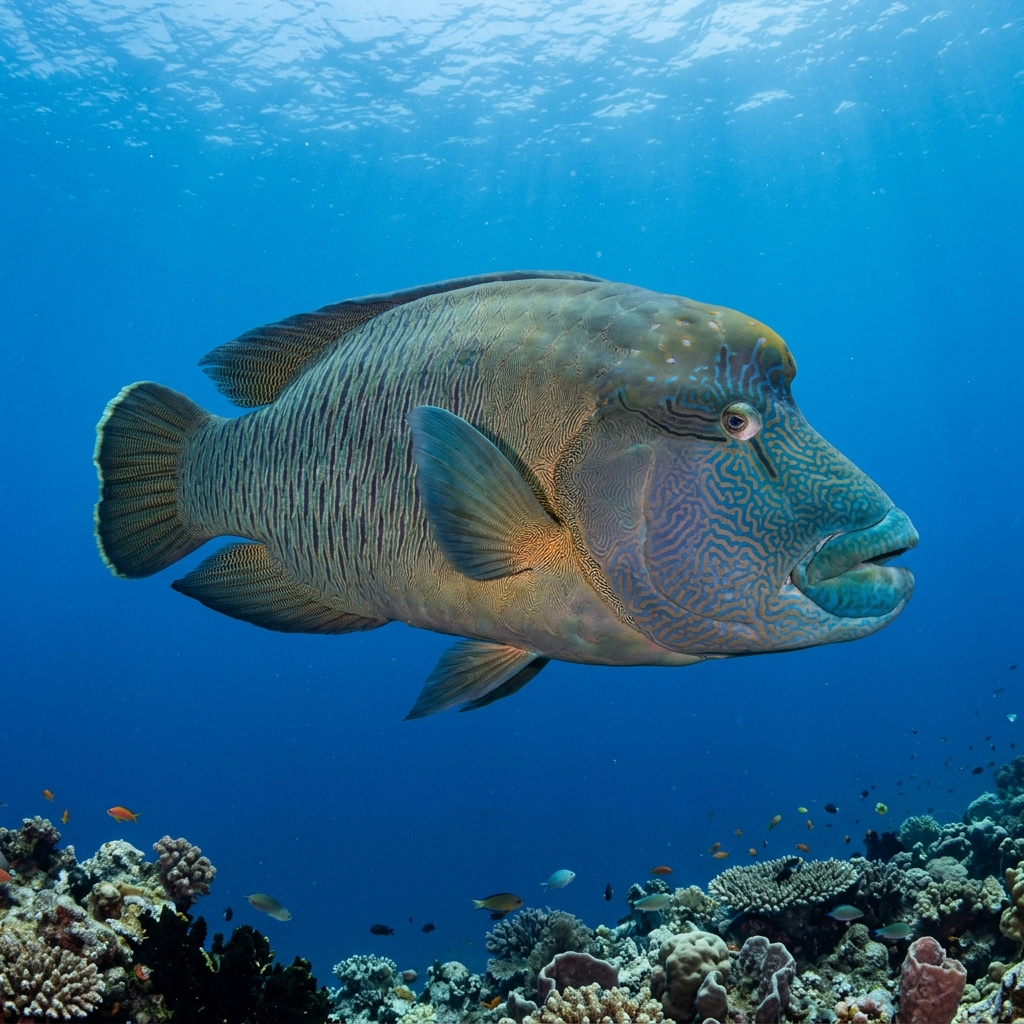
Reef neighbours a diver could mistake it for. Use the identification notes above to tell them apart.
This is one of the most reliably logged fish across the Mediterranean, with strong numbers in Spain, France, Italy and Croatia. Divers see it most often around the French Riviera and Provence, Catalonia, the Balearic Islands, Kvarner and Central Dalmatia, and the Ionian Islands of Greece, with further sightings in Malta, Cyprus and Turkey.
Mapping where Mediterranean Rainbow Wrasse is logged…
It shows up across the Mediterranean, with the strongest numbers reported from Catalonia and the Balearic Islands in Spain, the French Riviera and Provence, Kvarner and Central Dalmatia in Croatia, and the Ionian Islands in Greece.
There is no distinct season in the sighting data, and it copes with water from around 13 to 28 C, so it is seen on Mediterranean dives at any time of year.
Look for a slim fish around 21 cm darting fast and low over rock or weed. Males carry a wavy orange and blue stripe on an olive body, while females are plainer silvery-brown with a faint dark line.
They reach around 21 cm, making them one of the smaller, faster-moving wrasses divers encounter on Mediterranean reefs.
Yes. All individuals begin life as females, and some later transform into the more colourful orange-and-blue males, a common trait among wrasse species.
Site and sighting data is aggregated from diver logs, iNaturalist and GBIF. For taxonomy and conservation status:
Bird Wrasses
3,632 sites