Labridae spp.
Wrasses are logged year-round from the French Riviera to the Philippines. Find out where to spot them, how to tell species apart, and what to expect underwater.
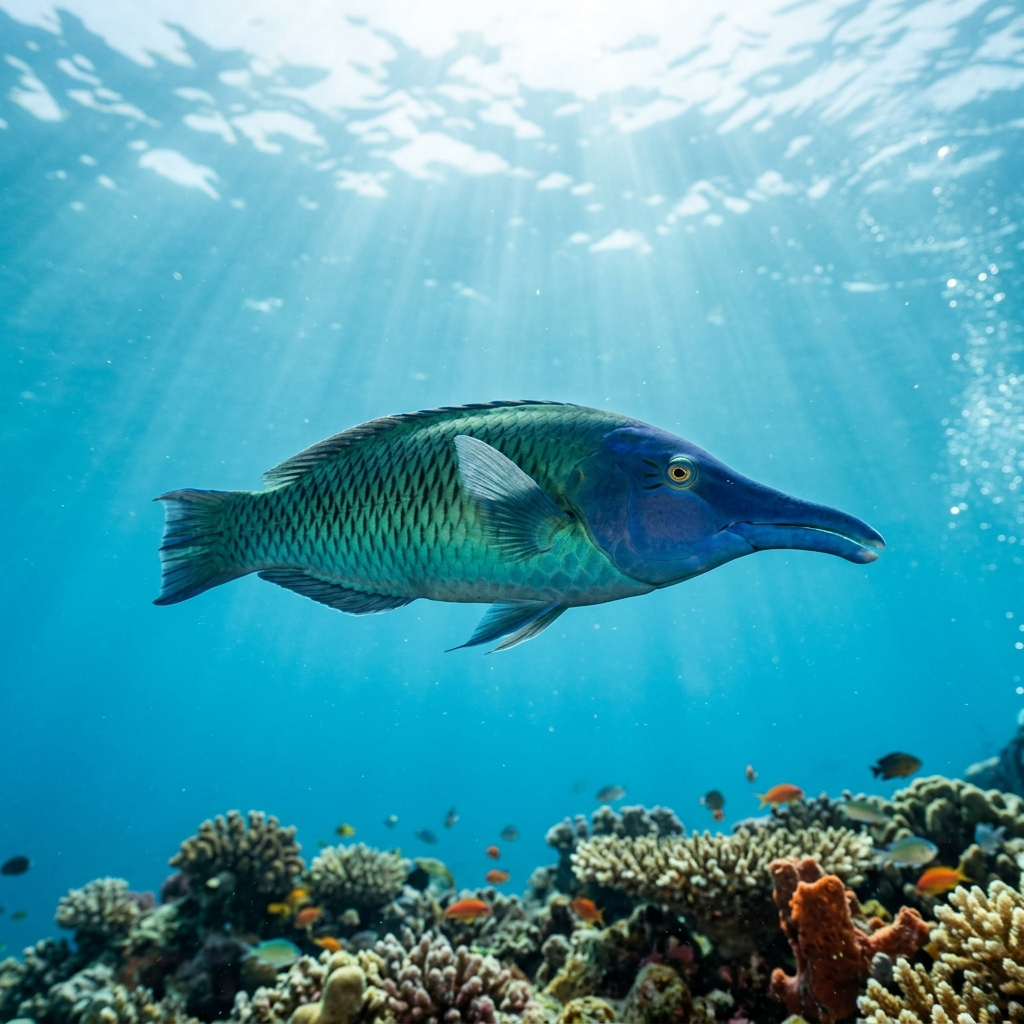
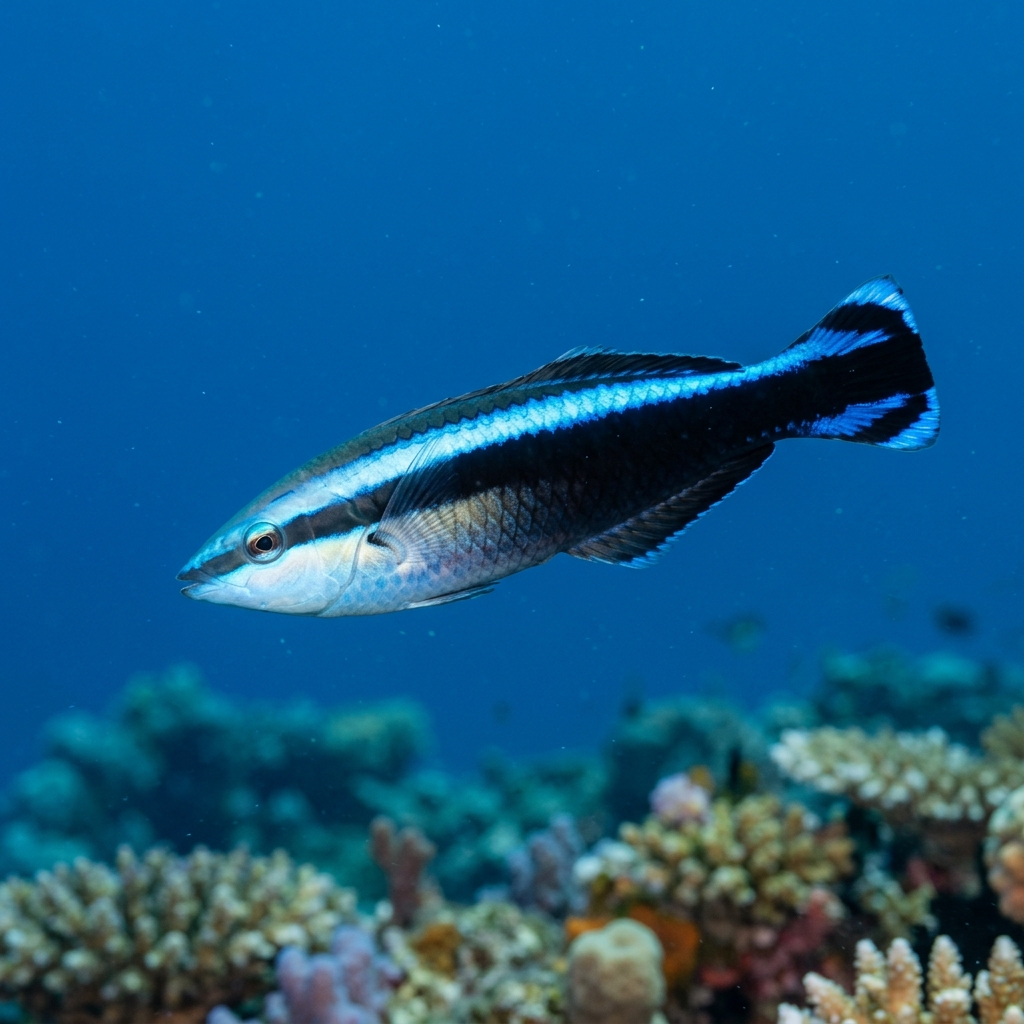
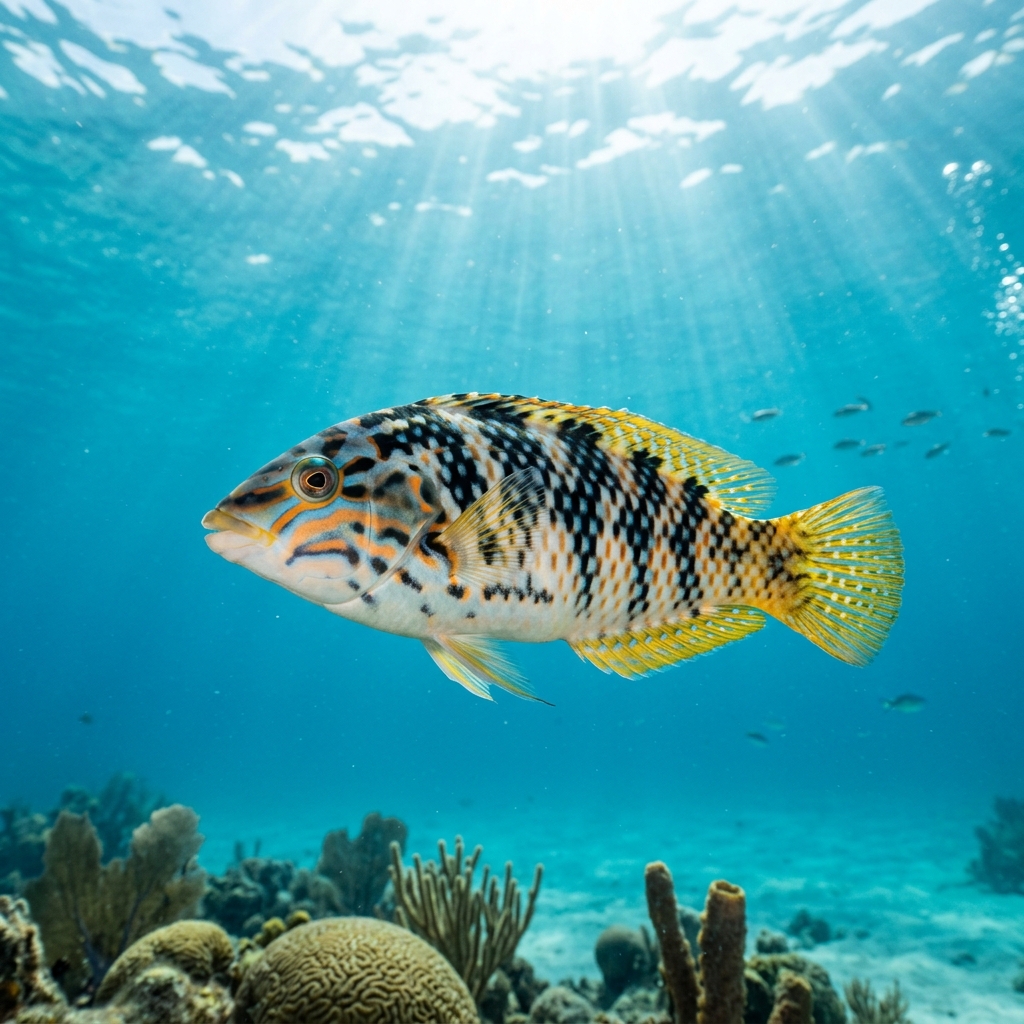
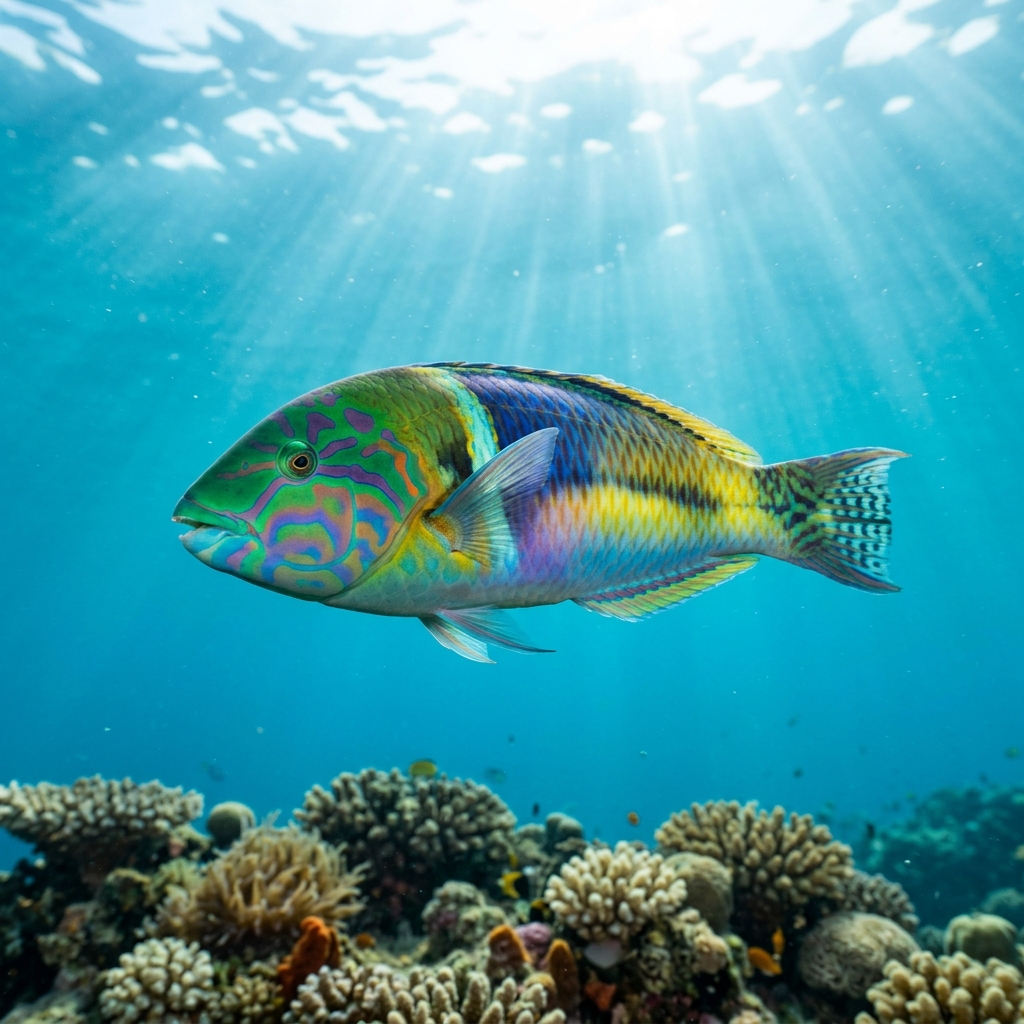
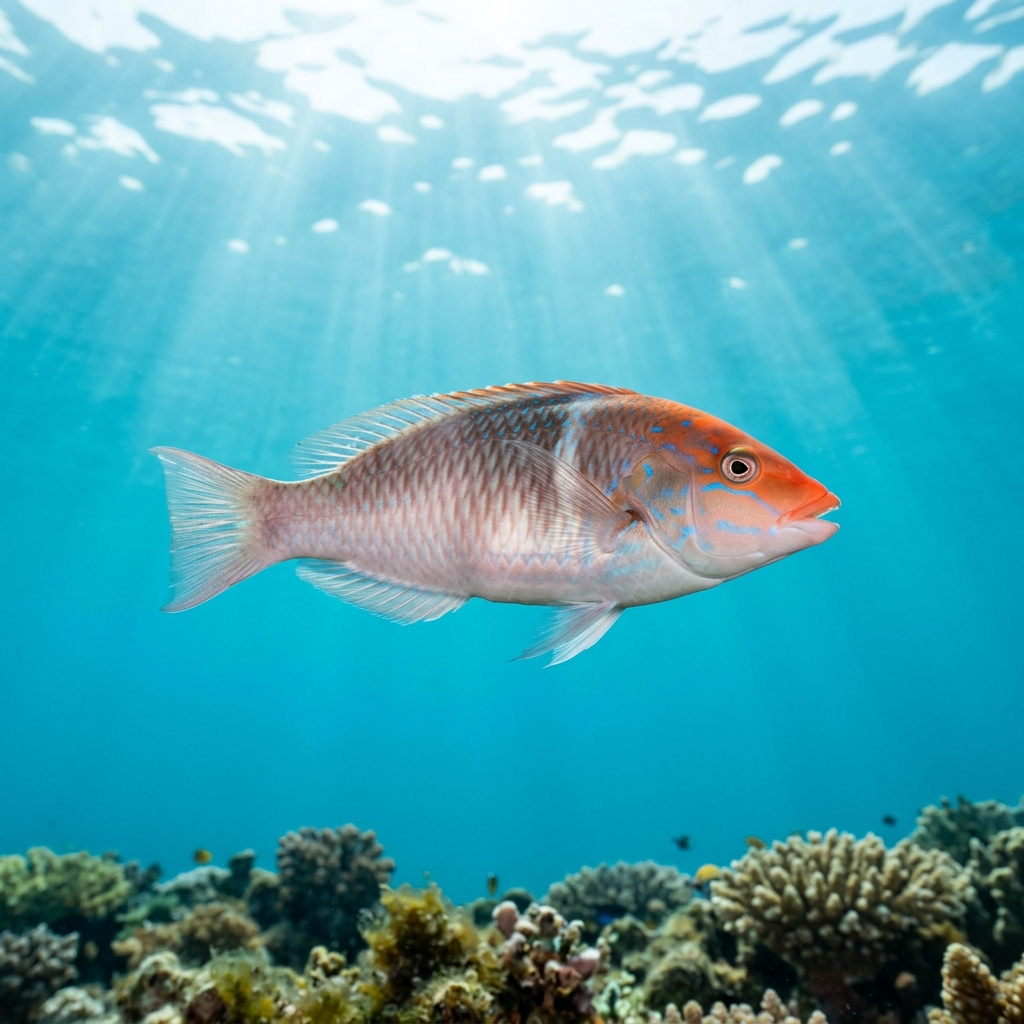
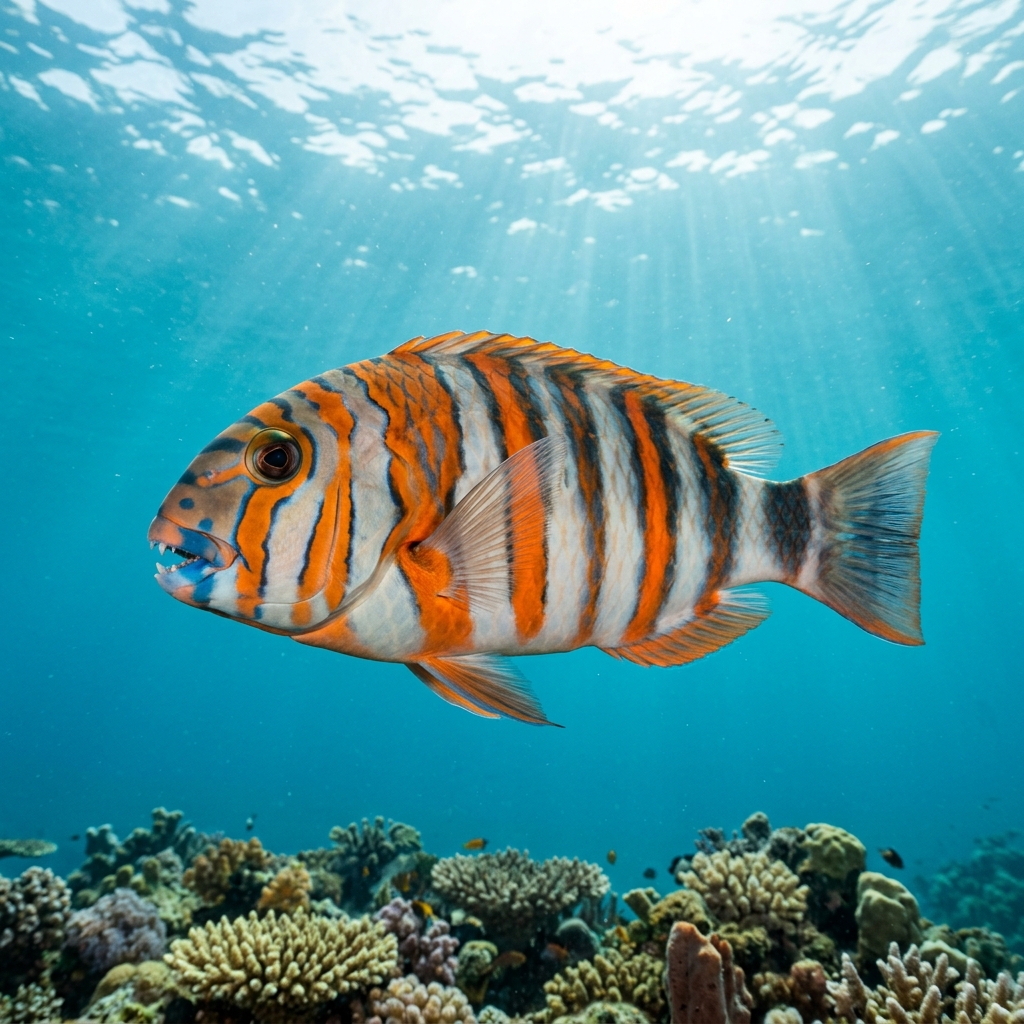
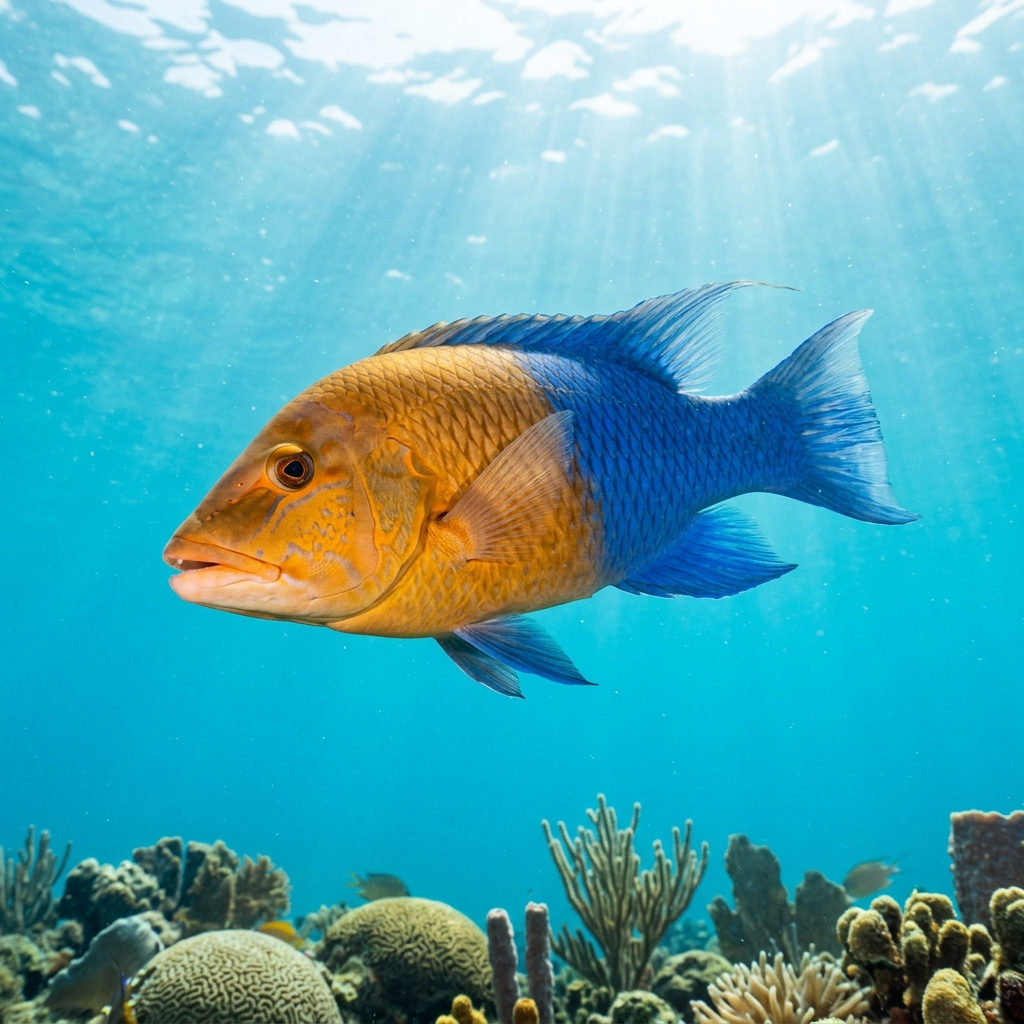
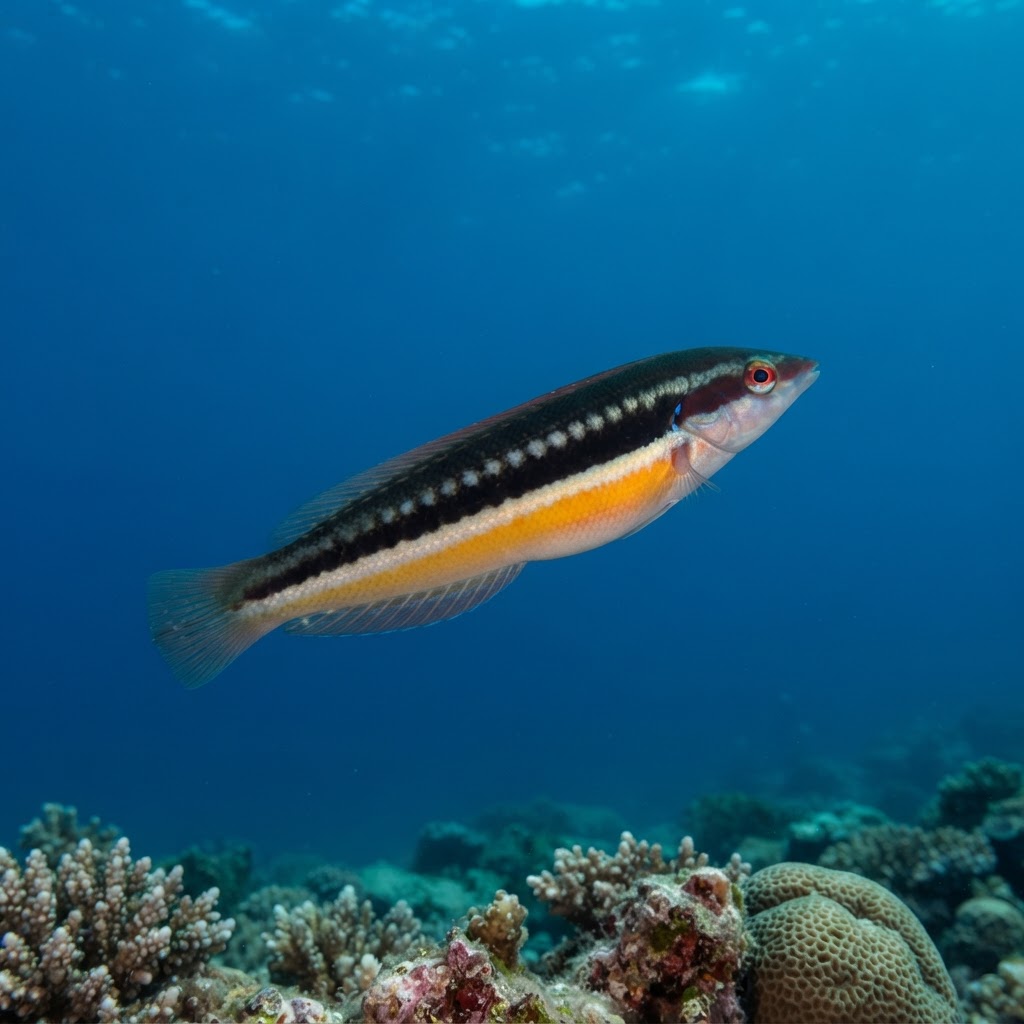
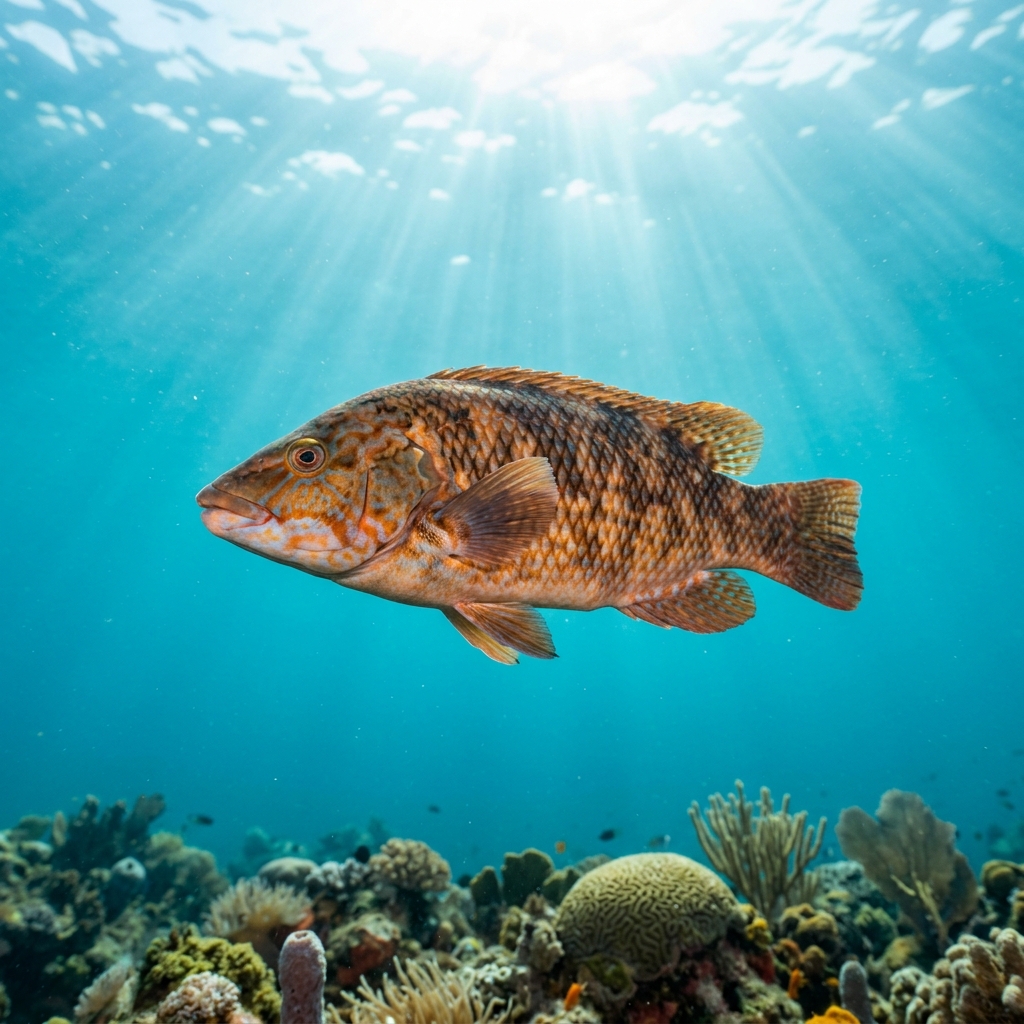
Wrasses are a large and varied family, but most share a torpedo-shaped body, thick lips, and a habit of picking at the reef rather than hovering in open water. Colouration spans everything from electric green and blue to drab brown, often with spotted or mottled patterning on the flanks. Juveniles are bright green with a pale white lateral stripe running from behind the eye to the tail, making them look strikingly different from the blotchy adults. Terminal-phase (dominant) males are typically larger and show more vivid green or reddish tones, while females tend to run plainer.
On the reef, wrasses are almost always on the move, picking at corals, rubble, and sand for invertebrates or parasites, which is why you spot them close to the substrate rather than out in the water column. Many species are bold around divers and will approach curiously or simply carry on feeding right in front of you. Cleaner wrasses work fixed 'cleaning stations' where fish queue to have parasites removed, and watching that interaction is one of the more rewarding things you can witness on a tropical reef.
Most wrasses are sequential hermaphrodites: they begin life as females and can transition into dominant terminal-phase males when a social opportunity arises, complete with a full colour change.
Wrasses are present year-round in both hemispheres with no concentrated season, which makes sense given how wide their thermal comfort is, from about 15 °C in the Mediterranean to nearly 30 °C on tropical reefs.
Reef neighbours a diver could mistake it for. Use the identification notes above to tell them apart.
Wrasses are one of the most widely logged reef families on earth, with strong sightings across Spain and France in the Mediterranean, the Philippines, Indonesia, and Australia in the Indo-Pacific, and Egypt's Red Sea sites around Sharm el Sheikh. The French Riviera, the Maldives atolls, and Mexico's Yucatán Peninsula each rank among the top regions for sightings, reflecting just how adaptable the family is across warm and cool-temperate seas alike.
Mapping where Wrasses is logged…
Wrasses are logged at dive sites across more than a hundred countries, making them one of the most widespread reef families you will encounter. Top spots include the French Riviera, the Maldives, Mexico's Yucatán Peninsula, the Visayas in the Philippines, Bali, and Sharm el Sheikh in Egypt. The Mediterranean and Indo-Pacific both have rich wrasse communities.
Wrasses are present year-round everywhere they occur, in both the Northern and Southern hemispheres. Because the family spans cool-temperate water around 15 °C right up to tropical reefs near 30 °C, there is no single peak season; just pick the region and dive.
Look for a torpedo-shaped body, thick fleshy lips, and active reef-picking behaviour close to the substrate. Colouration varies enormously between species and between life stages, but juveniles typically show bright green with a pale lateral stripe, while adult males display more vivid, strongly patterned colours than females. If in doubt, the thick lips and purposeful pecking motion are reliable giveaways.
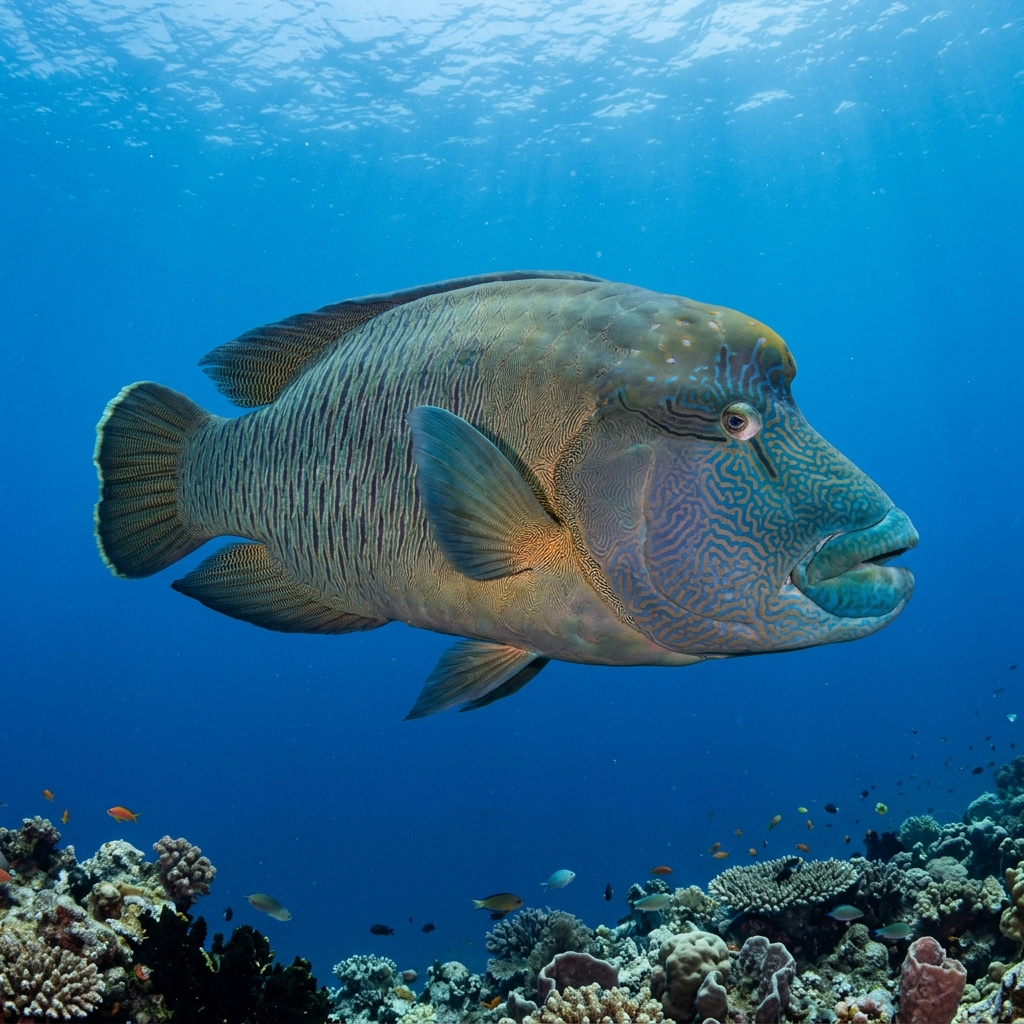
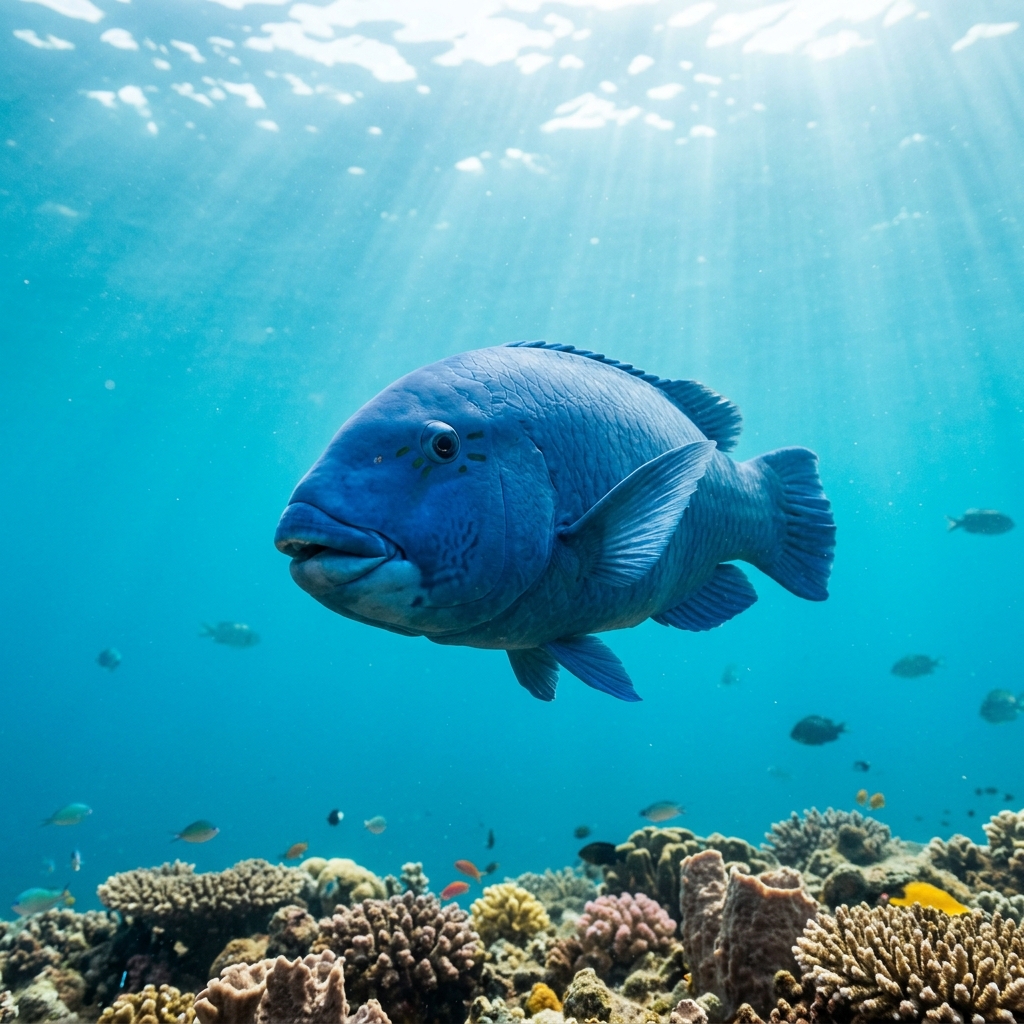
Size varies hugely across the family. Many common reef wrasses are 15 to 30 cm long, small enough to dart easily through coral. At the large end, the Napoleon Wrasse can exceed 2 m, while tiny cleaner wrasses sit under 10 cm. Most species you encounter on a typical dive are in the 10 to 40 cm range.
Yes. Most wrasses are sequential hermaphrodites, meaning individuals typically start as females and can later transition into males. The shift is triggered socially when a dominant male disappears, a female can change sex, colour, and behaviour within days to take his place.
No. Wrasses pose no meaningful risk to divers or snorkellers. They are curious and often approach closely, especially around cleaning stations, but they do not bite or behave aggressively toward people.
Site and sighting data is aggregated from diver logs, iNaturalist and GBIF. For taxonomy and conservation status:
Achoerodus viridis
Cleaver Wrasse
2,700 sites