Octopus vulgaris
Spot the common octopus across the French Riviera, Costa Brava and Florida's reefs. Here's when to go, what to look for, and how to tell it apart.
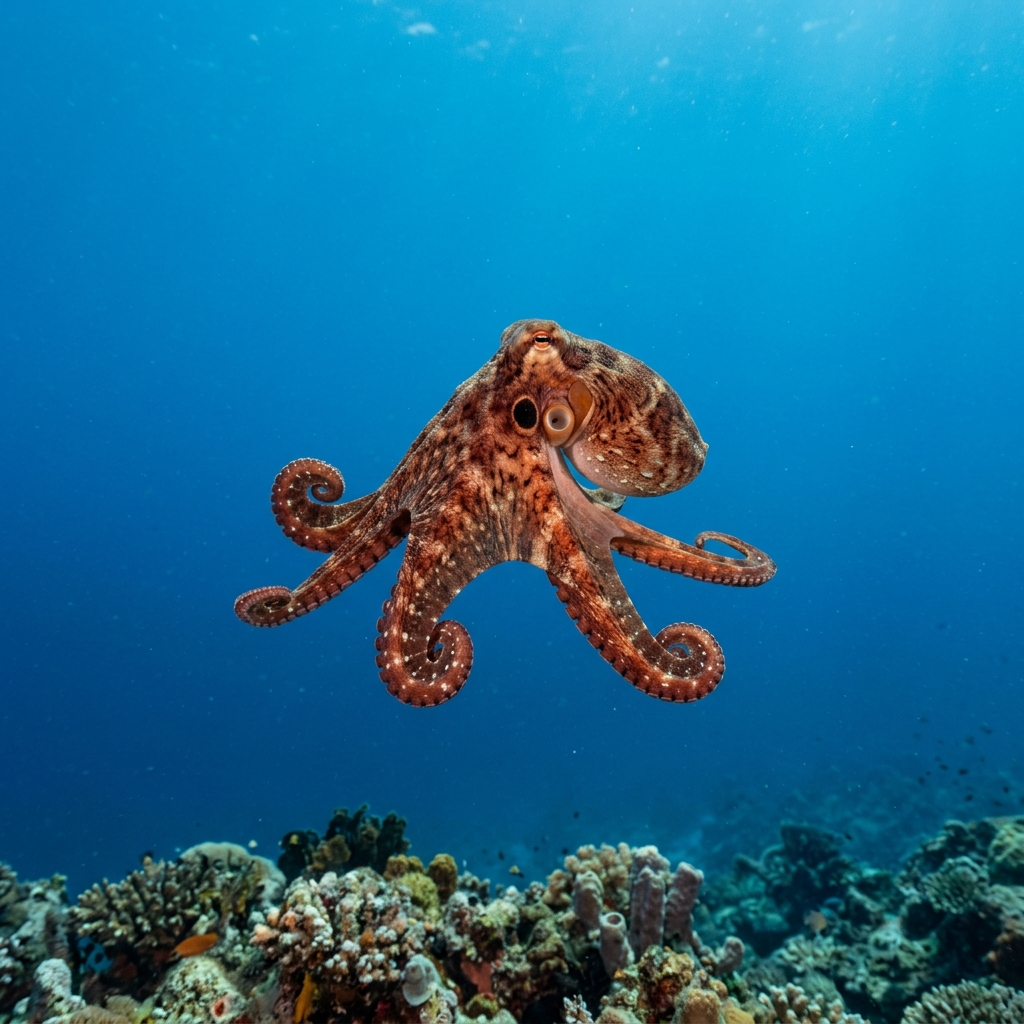
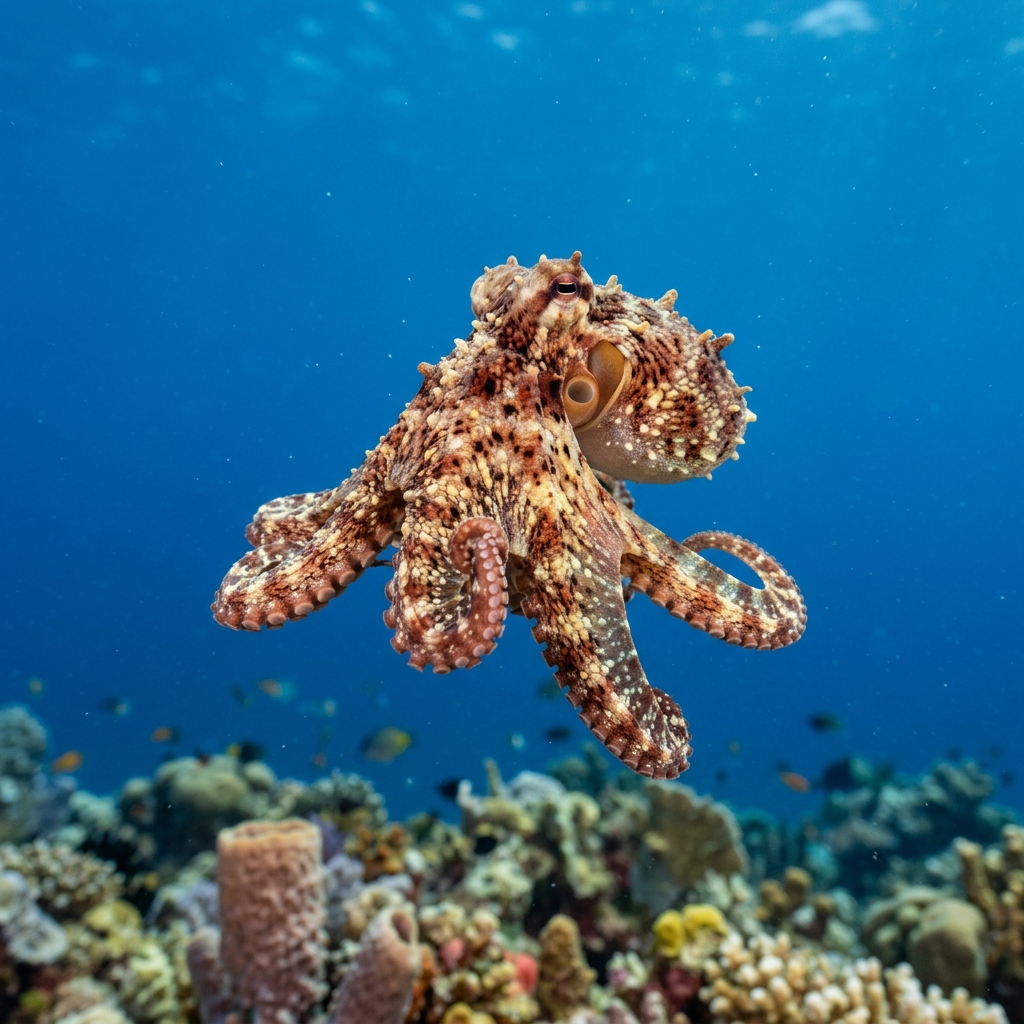
Size is a reliable starting point: arm-span can reach 125 cm, making this one of the larger octopuses you will encounter in temperate and warm-temperate seas. The skin texture is the real giveaway, it shifts from smooth to heavily warty (papillate) within seconds, and the colour can cycle through browns, reds, ochres and near-white just as quickly. Look for the two large, horizontally-pupilled eyes set high on the mantle, and a pair of prominent raised skin flaps above them that give the head a slightly horned silhouette. When settled at a den entrance you will often see only the eyes and the tips of the arms, with small stones or shells piled around the opening.
Most encounters begin with the octopus watching you from the mouth of its den, arms loosely coiled and skin shifting colour, it is sizing you up before deciding whether to retreat further inside or hold its ground. Move slowly and it will often stay visible; a sudden lunge or flash of torch will send it jetting backwards in a cloud of ink. Dawn and dusk are the best times to catch one actively hunting: it moves across open reef with deliberate, flowing arm-rolls, pressing suckers into every crevice in search of crabs and molluscs.
Each octopus maintains a dedicated den, which it actively housekeeps, clearing out shells, pebbles and debris to keep the entrance tidy. Finding a small midden (pile of empty shells and crab remains) on the reef floor is one of the most reliable signs that a den is nearby and in use.
Northern hemisphere sightings concentrate from March through to January, effectively meaning encounters are possible across most of the year with a quieter window in February. The species is comfortable in water from around 14 to 27 °C, which covers Mediterranean summers and mild Atlantic winters alike.
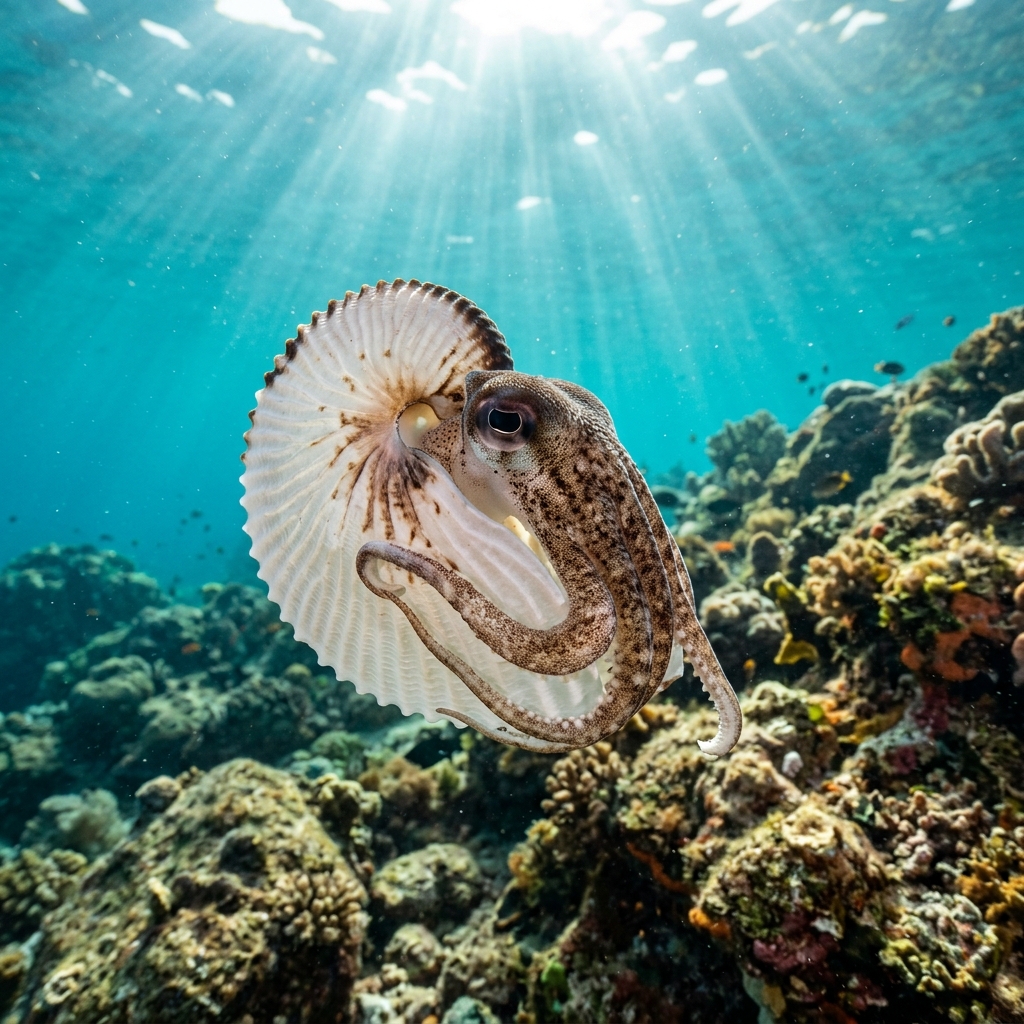
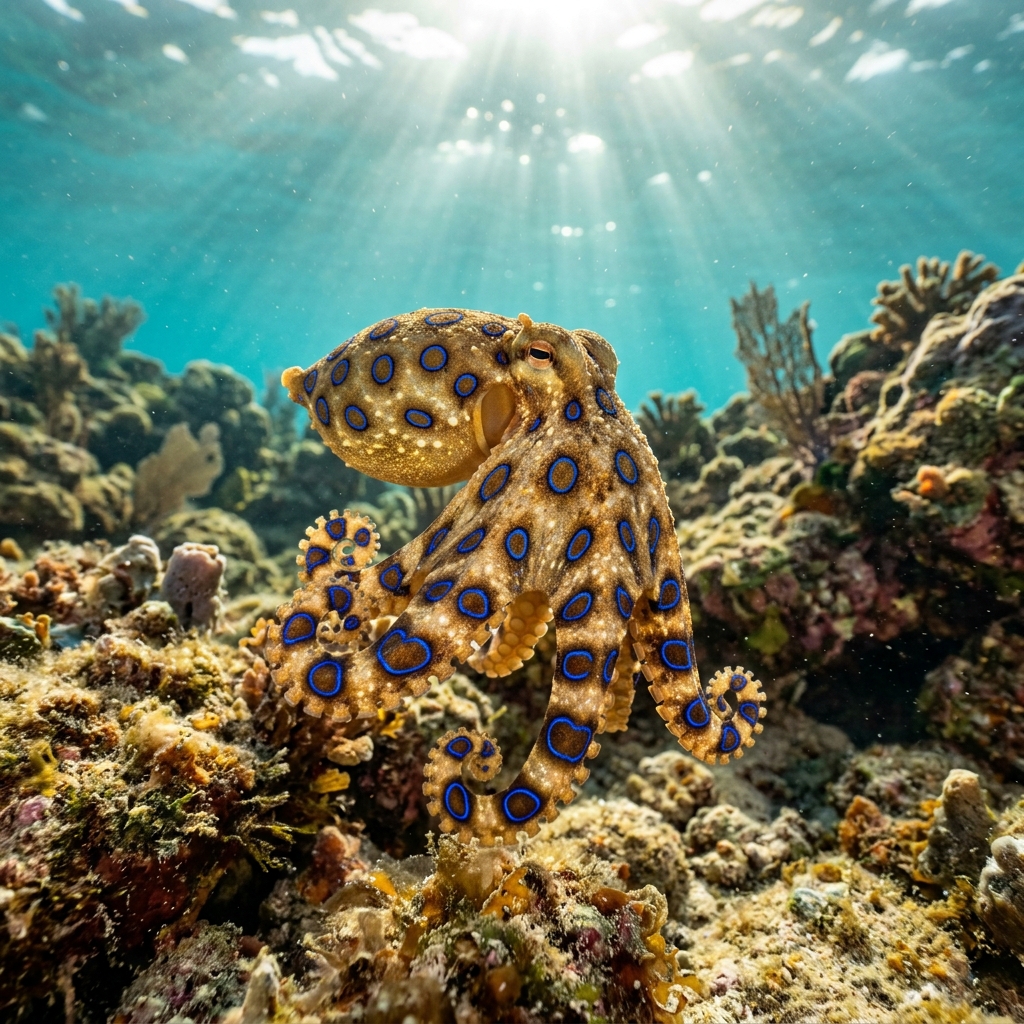
Reef neighbours a diver could mistake it for. Use the identification notes above to tell them apart.
Most commonly logged across the Mediterranean, with Spain leading the data, the Costa Brava, Costa Blanca, Balearic Islands and French Riviera are all strong sighting zones. Italy and Greece follow closely, and the Algarve coast of Portugal and the Canary Islands also produce regular encounters. Outside Europe, Florida and the US Southeast are the most reliable Atlantic sites outside the Med.
Mapping where Common Octopus is logged…
The Mediterranean is the heartland for encounters, with strong sighting records across the French Riviera, Costa Brava, Balearic Islands, Sardinia and the Greek islands. Portugal's Algarve and the Canary Islands are also reliable. In the Atlantic, Florida and the US Southeast offer good encounters as well.
In the northern hemisphere, sightings are recorded across most of the year, with a slight dip in February. The species tolerates a wide temperature range, roughly 14 to 27 °C, so it remains present through Mediterranean winters and into autumn. Dawn and dusk dives give the best chance of catching one away from its den.
Look for a large octopus with a highly textured, warty skin that changes colour rapidly between browns, reds and white. The horizontal pupil and the raised skin flaps above each eye are distinctive. If you see it settled, a ring of discarded shells around a rock crevice is a classic clue to the den beneath.
Total arm-span can reach around 125 cm, though most animals you encounter on a reef dive will be considerably smaller, mantle (body) length alone is typically 25 cm. Males and females are similar in size, though large individuals tend to be male.
Colour and texture changes are controlled by thousands of pigment cells called chromatophores, which expand or contract under direct muscular control, meaning the octopus can shift from pale to dark and smooth to warty in under a second. This is used for camouflage, communication and startling predators, not as an emotional response in the way we might think.
Site and sighting data is aggregated from diver logs, iNaturalist and GBIF. For taxonomy and conservation status:
Blue-ringed Octopus
923 sites