Symphodus tinca
Look for a stocky, colourful wrasse over rocky reefs in Catalonia, the French Riviera or Croatia's Kvarner, in water around 16-21C.
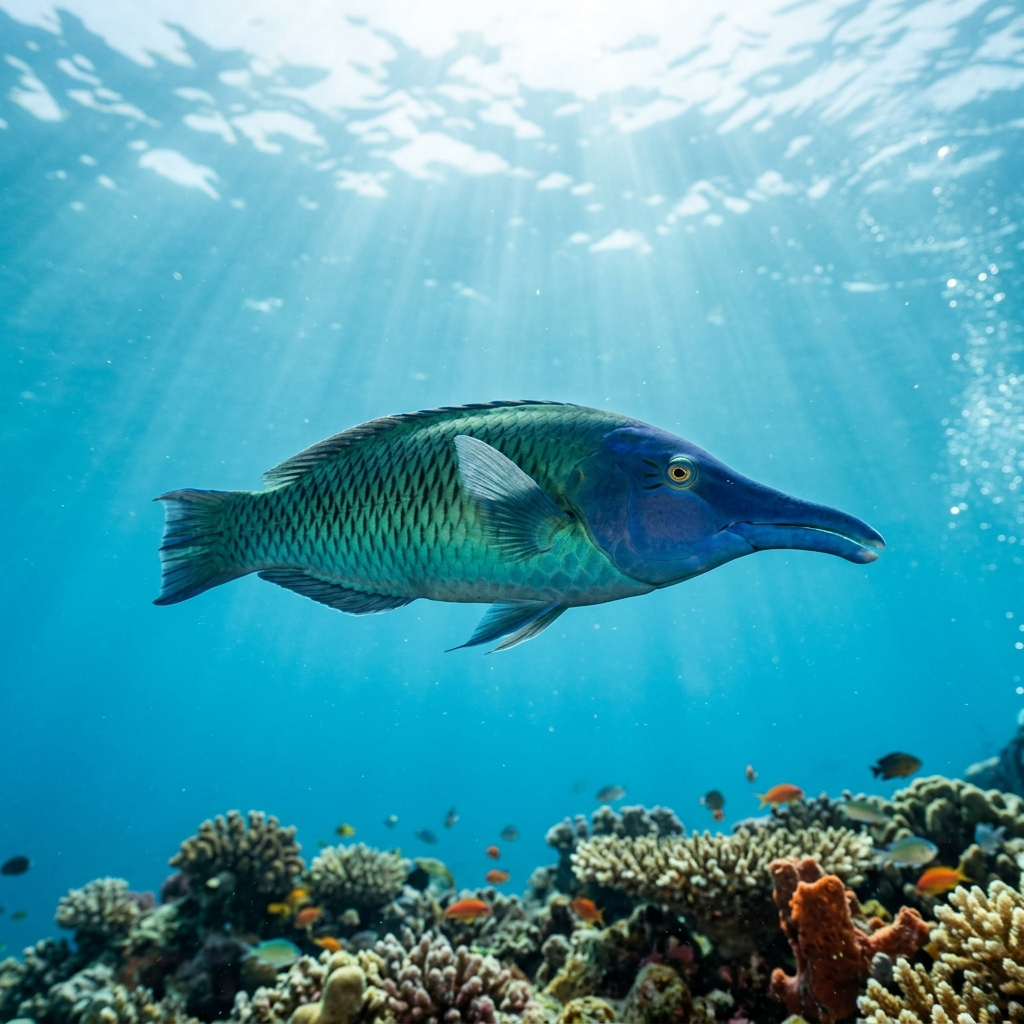
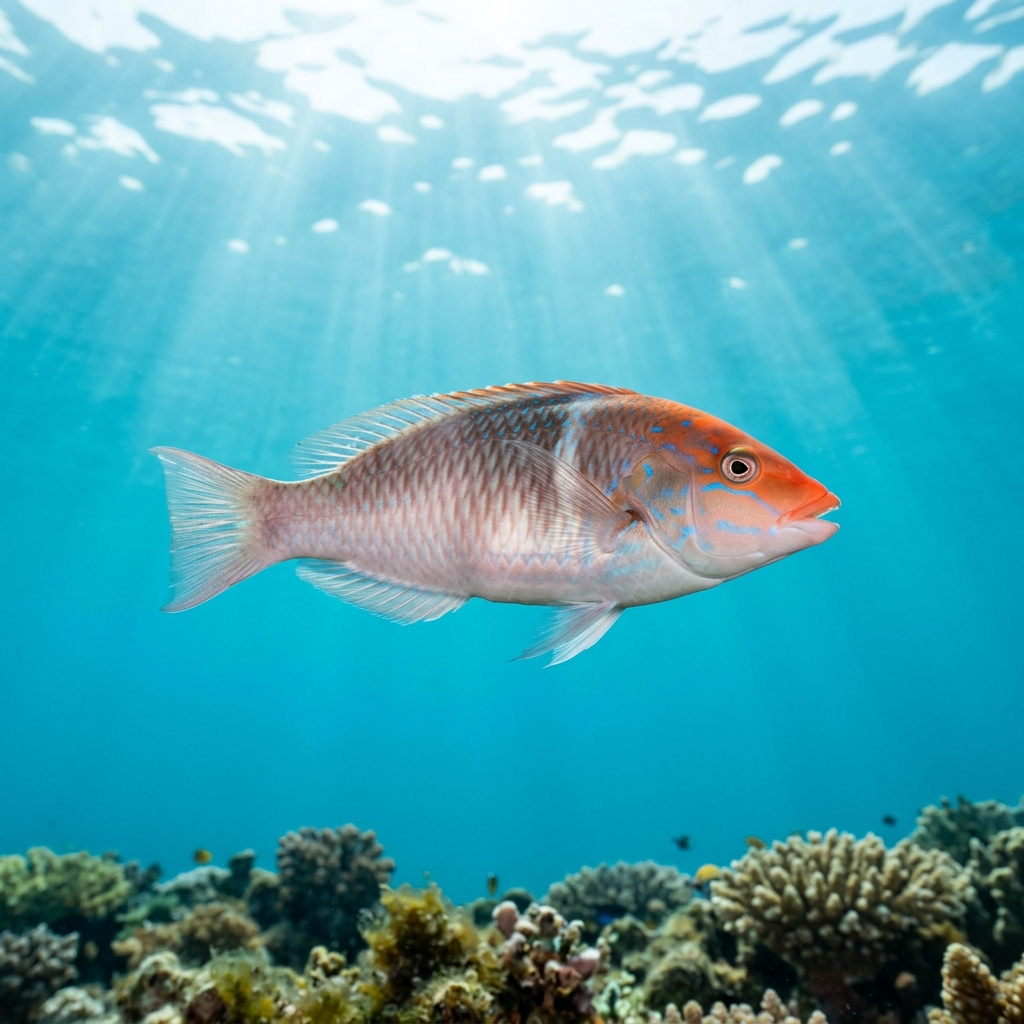
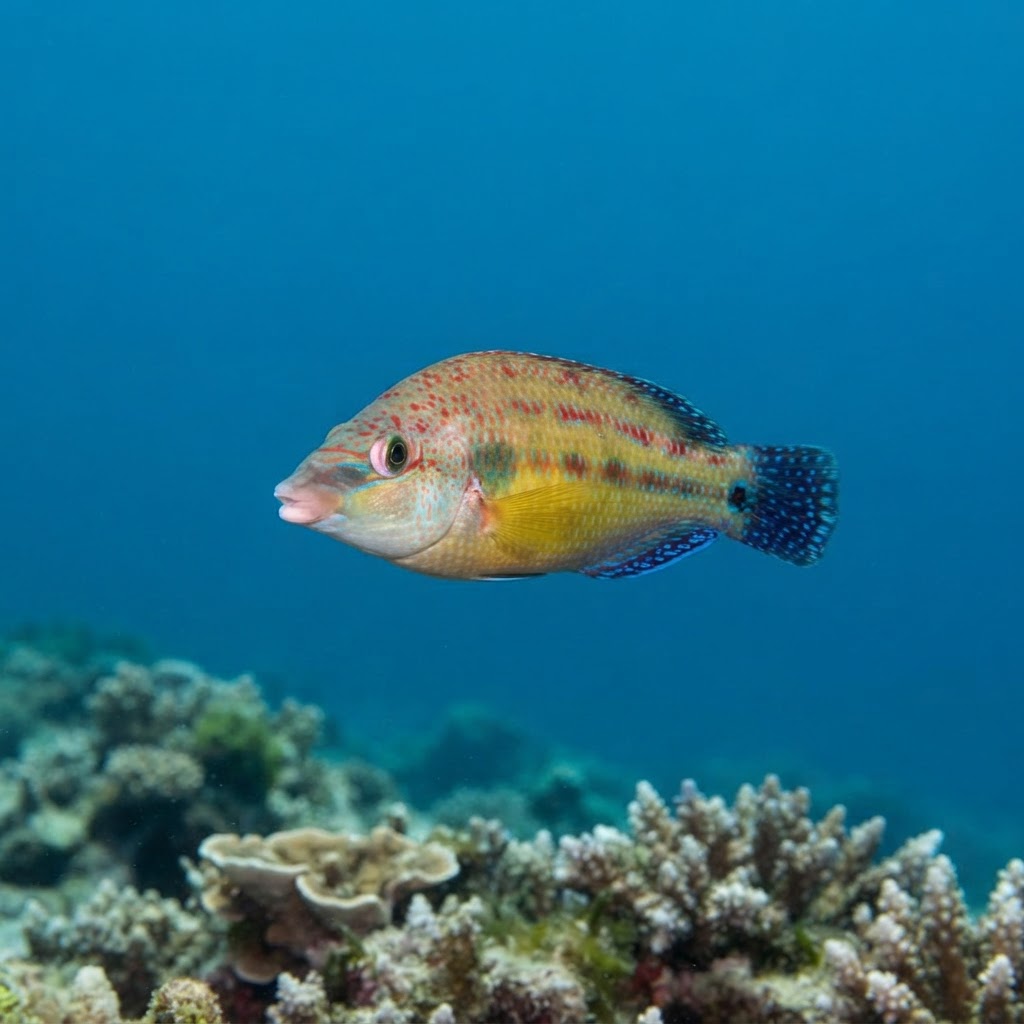
Look for a thickset, torpedo-shaped wrasse around 30 cm, greenish to blue-grey along the back with a mosaic of orange, yellow and blue markings along the flanks. The giveaway is a dark saddle-like blotch near the base of the tail, often ringed in a paler colour, plus a blue-streaked head pattern on breeding males. Females and non-breeding fish run plainer and more mottled brown-green, making the tail blotch the more reliable mark to check.
Expect to find it patrolling low over rock and weed-covered reef, poking into crevices and picking at the substrate for small invertebrates rather than schooling in open water. It's generally unbothered by divers, holding its ground or circling back for a closer look rather than bolting, which makes it an easy fish to watch and photograph at typical Mediterranean reef depths.
Males build and guard a nest of algae and weed on the seabed, fanning and defending the eggs until they hatch, which is why you'll sometimes see one fish stubbornly patrolling the same patch of reef across several dives.
Sightings are spread across the year with no strong seasonal pattern in the data, and the 16.3-21.4C range it's logged in covers most of the Mediterranean diving season, so it's a fair bet on any rocky-reef dive rather than a specific-month target.
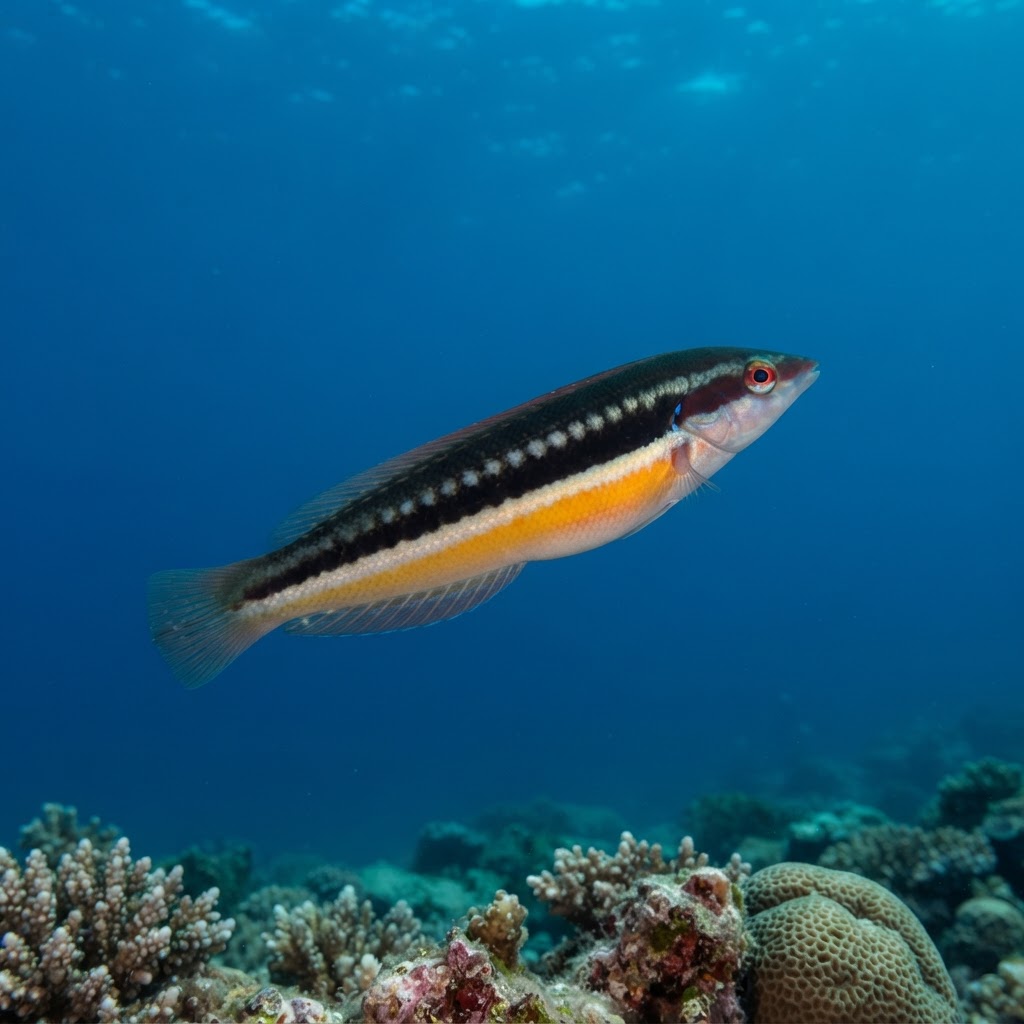
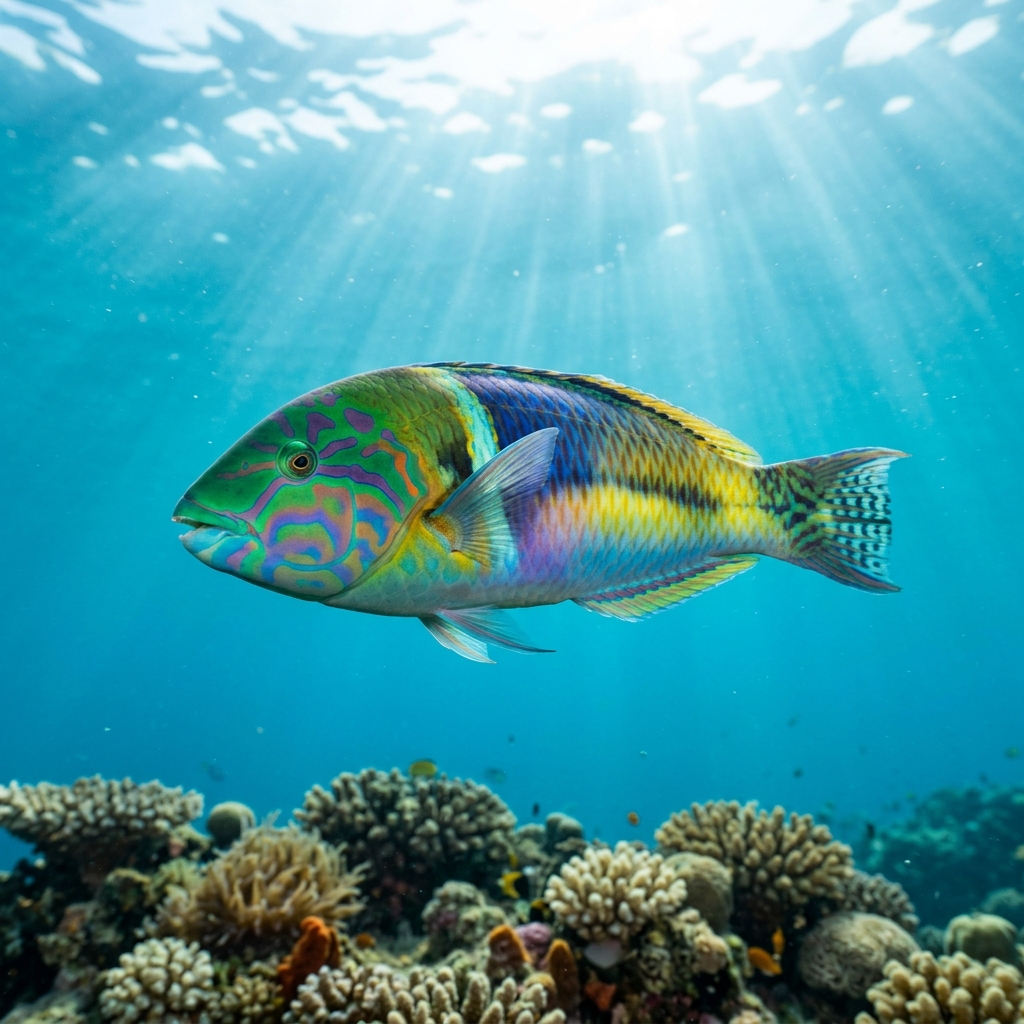
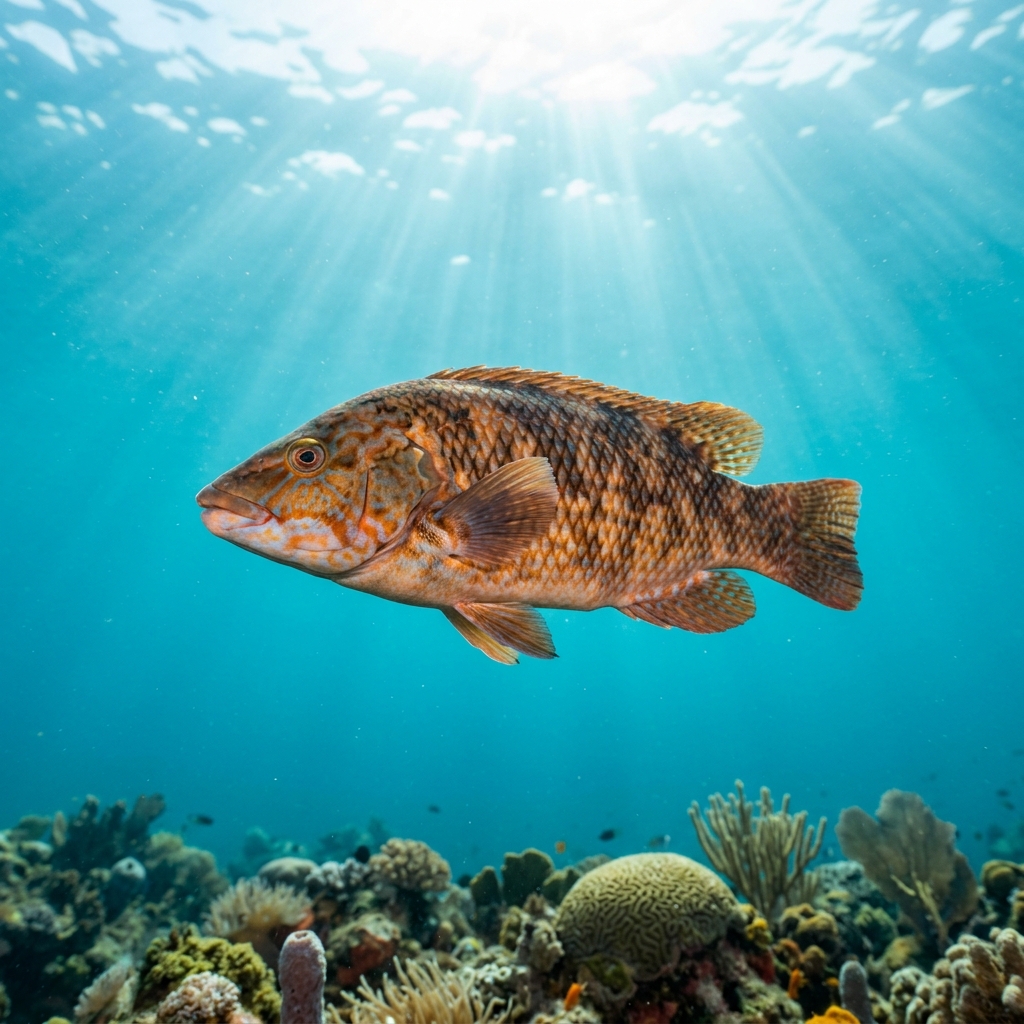
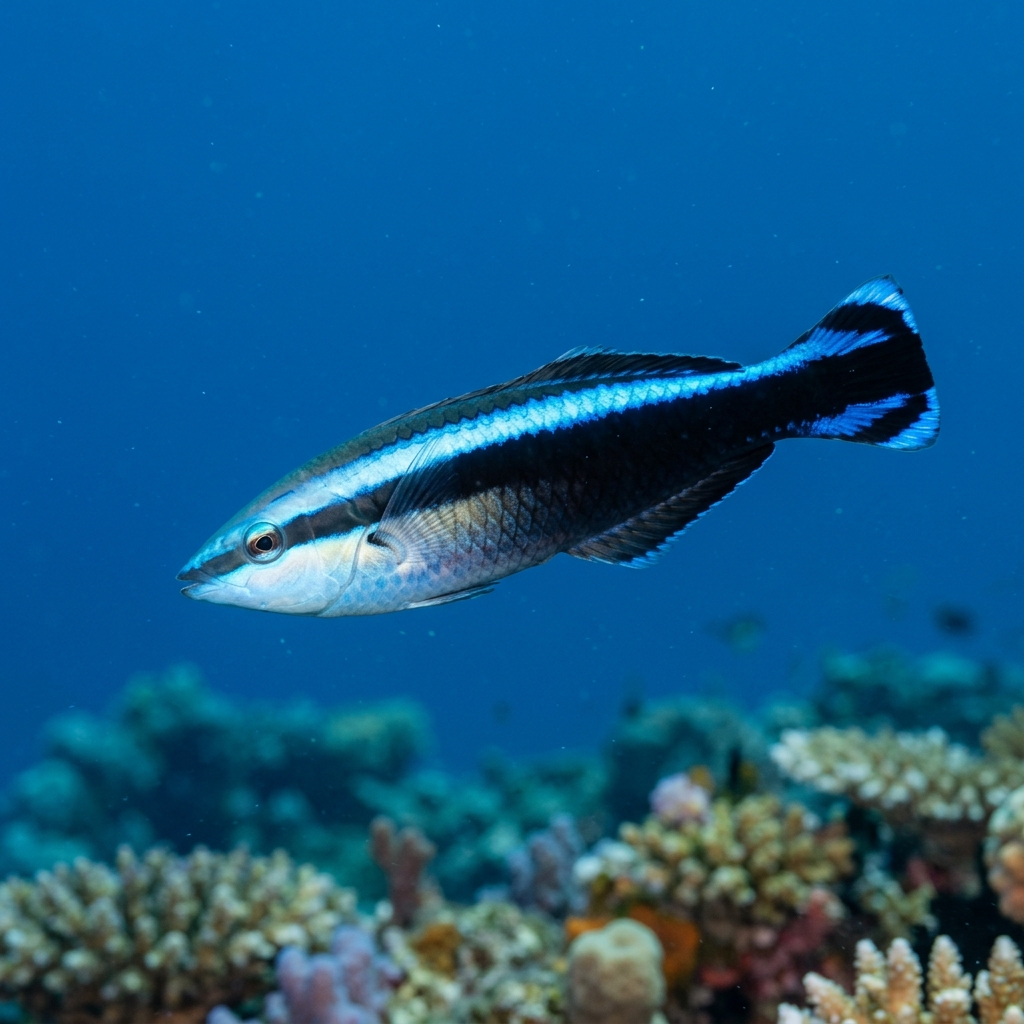
Reef neighbours a diver could mistake it for. Use the identification notes above to tell them apart.
This is a rocky-reef regular right across the Mediterranean, most consistently logged in Spain (Catalonia, the Balearic Islands and Murcia) and France, especially the French Riviera and Provence coast. It also turns up reliably in Italy (Liguria, Sardinia), Croatia (Kvarner, Istria), Greece and Malta, with occasional records from Gibraltar and Slovenia.
Mapping where Peacock Wrasse is logged…
Rocky reefs across the Mediterranean are the place to look, with strong records in Catalonia and the Balearic Islands in Spain, the French Riviera, Liguria and Sardinia in Italy, and Croatia's Kvarner and Istria coasts.
There's no strong seasonal pattern in the sightings, and the species tolerates a wide 16 to 21C range, so it's seen year-round on Mediterranean rocky reefs whenever conditions suit diving.
Check for a stocky 30 cm wrasse with a mosaic of orange, yellow and blue-green colouring and a dark blotch near the tail base. Breeding males show extra blue streaking on the head, while females look plainer and more mottled brown.
They typically reach around 30 cm, making them one of the larger wrasses you'll come across on a Mediterranean reef dive.
No, they pose no threat to divers and are usually curious rather than defensive, often approaching for a closer look instead of fleeing.
Males build a nest of algae on the seabed and guard the eggs alone, fanning them until they hatch, a rare bit of active parental care among reef fish.
Site and sighting data is aggregated from diver logs, iNaturalist and GBIF. For taxonomy and conservation status:
Bird Wrasses
3,632 sites