Thalassoma pavo
Spot Turkish Wrasse across the French Riviera, Costa Brava and Greek islands. Learn how to tell males from females and when sightings peak.
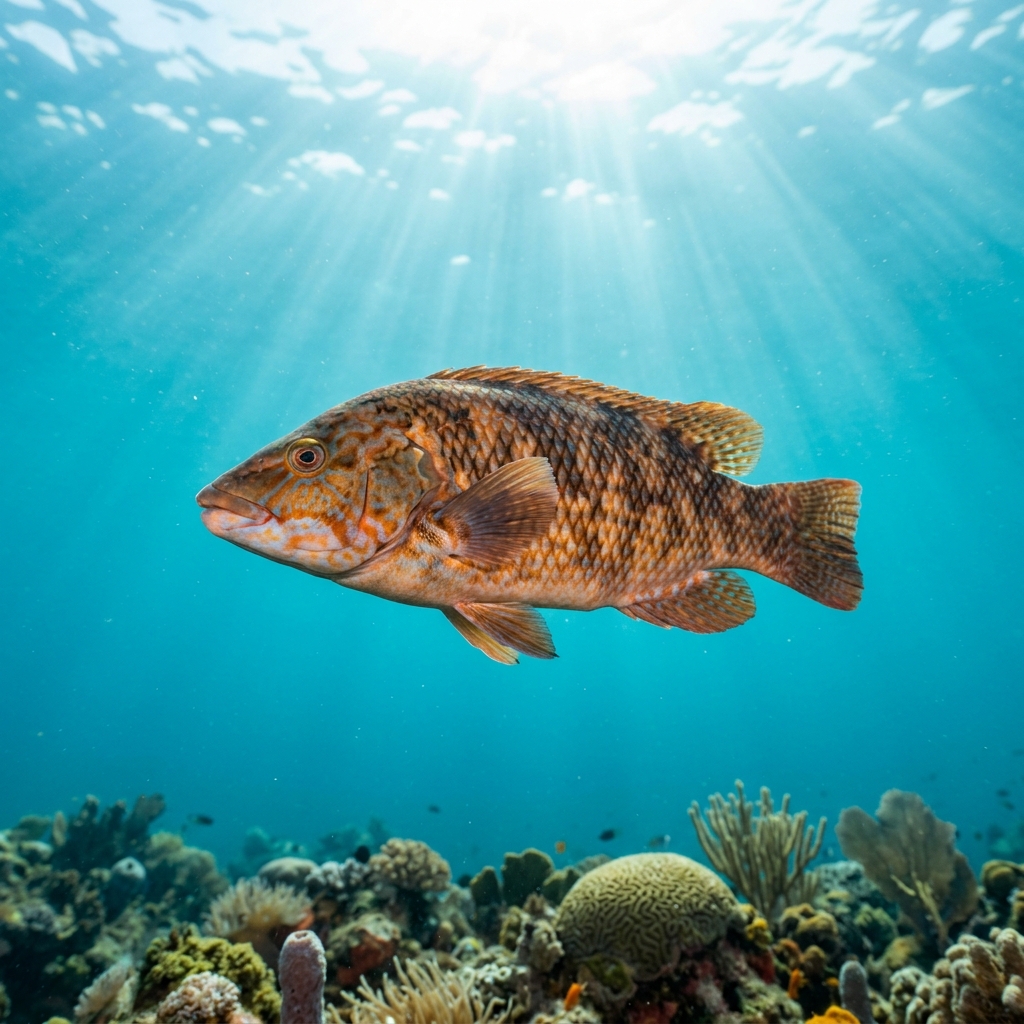
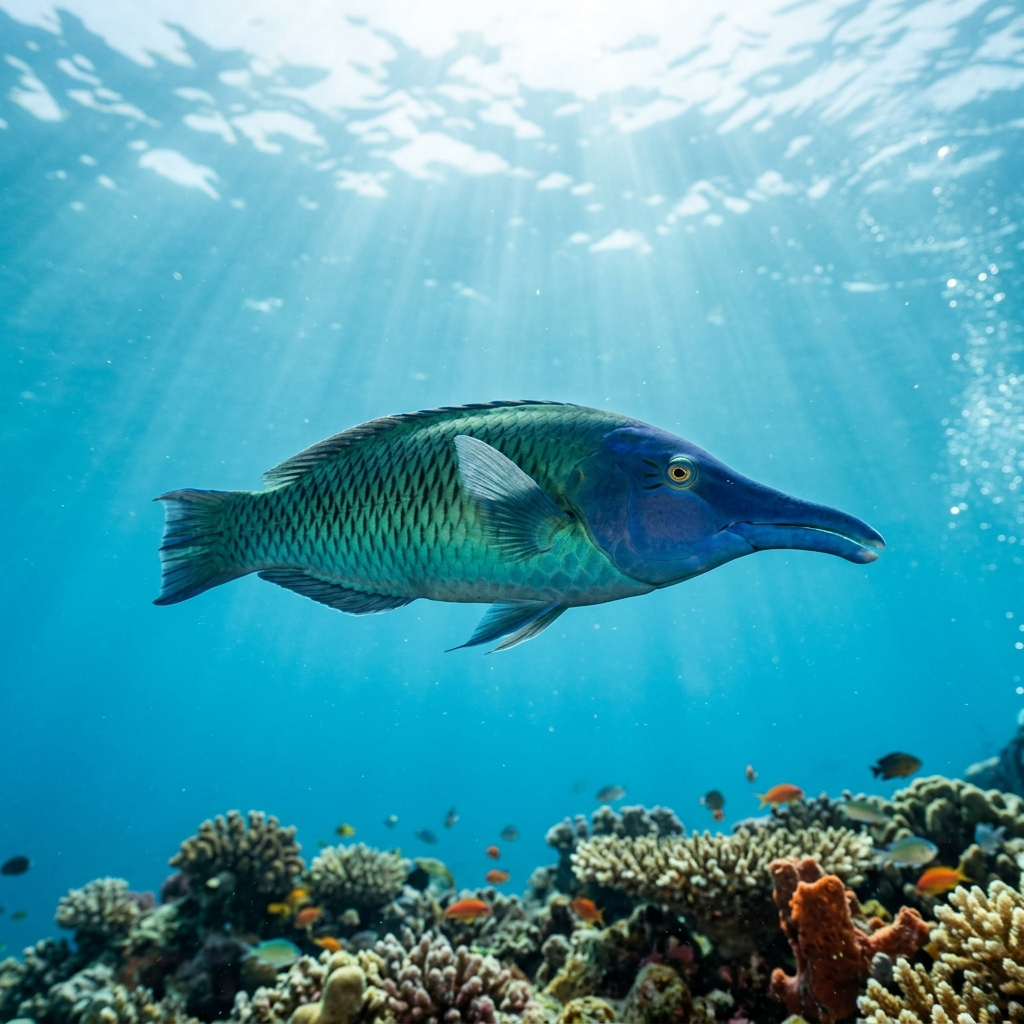
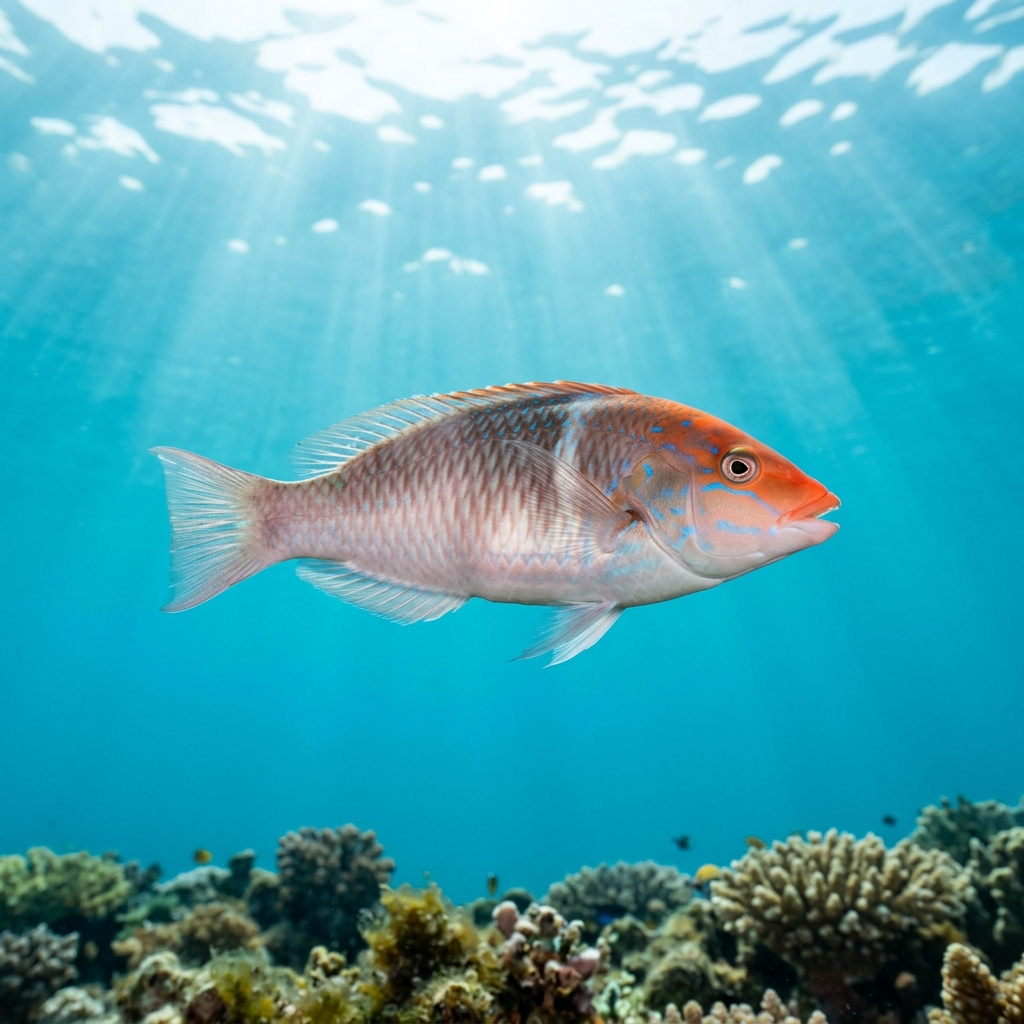
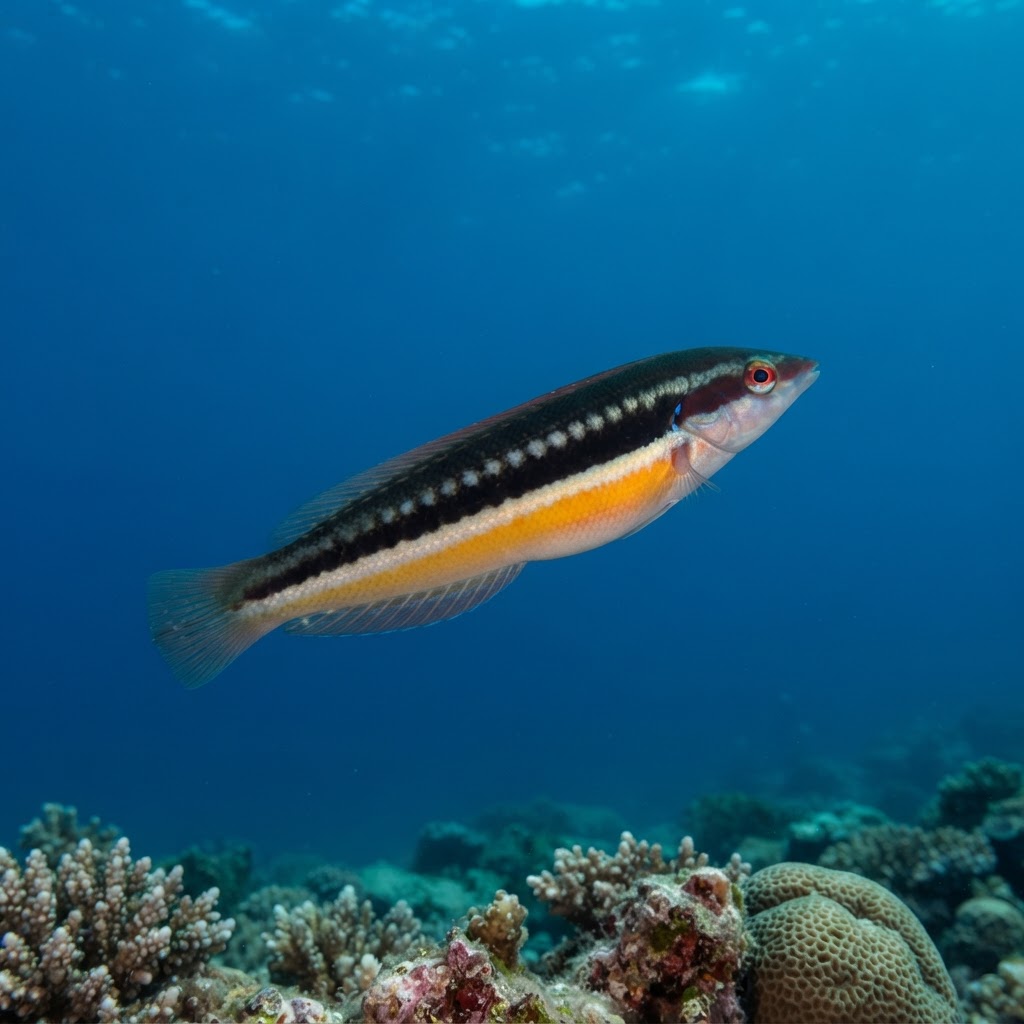
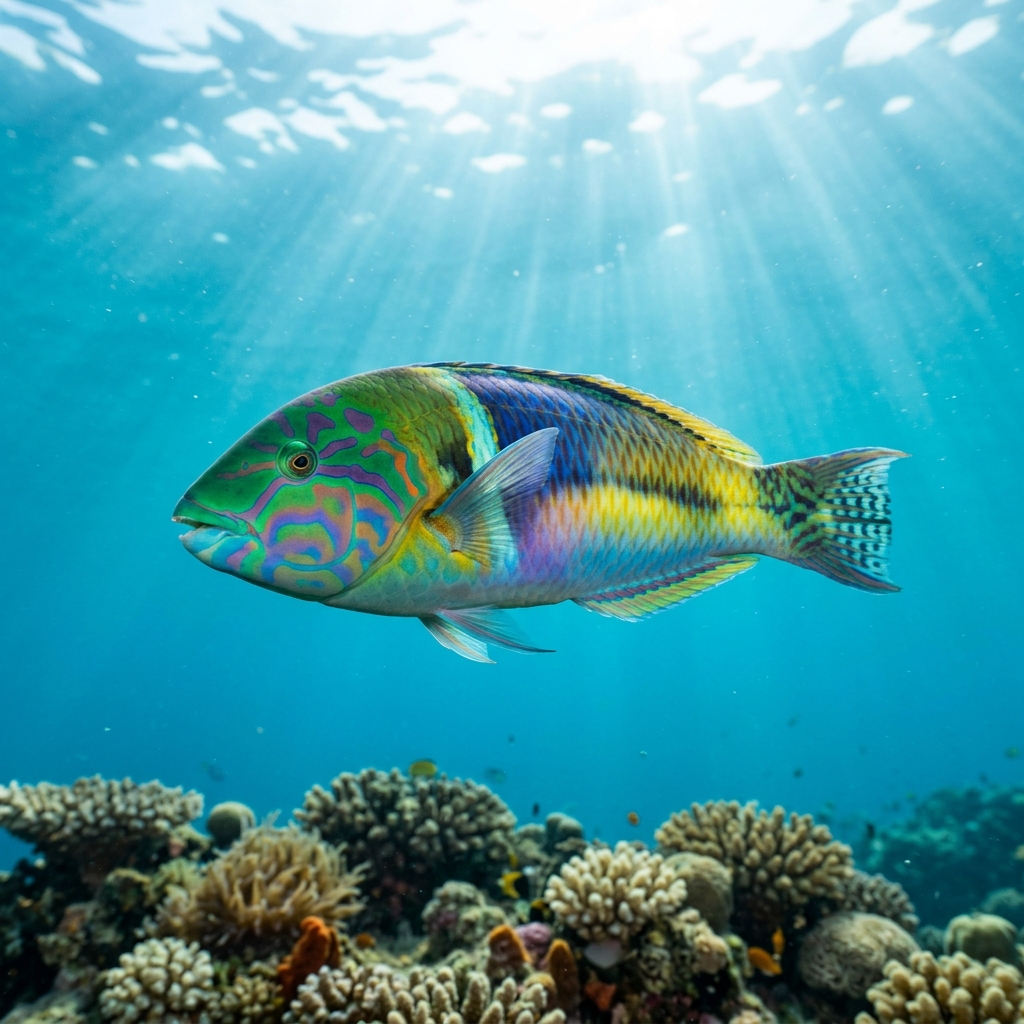
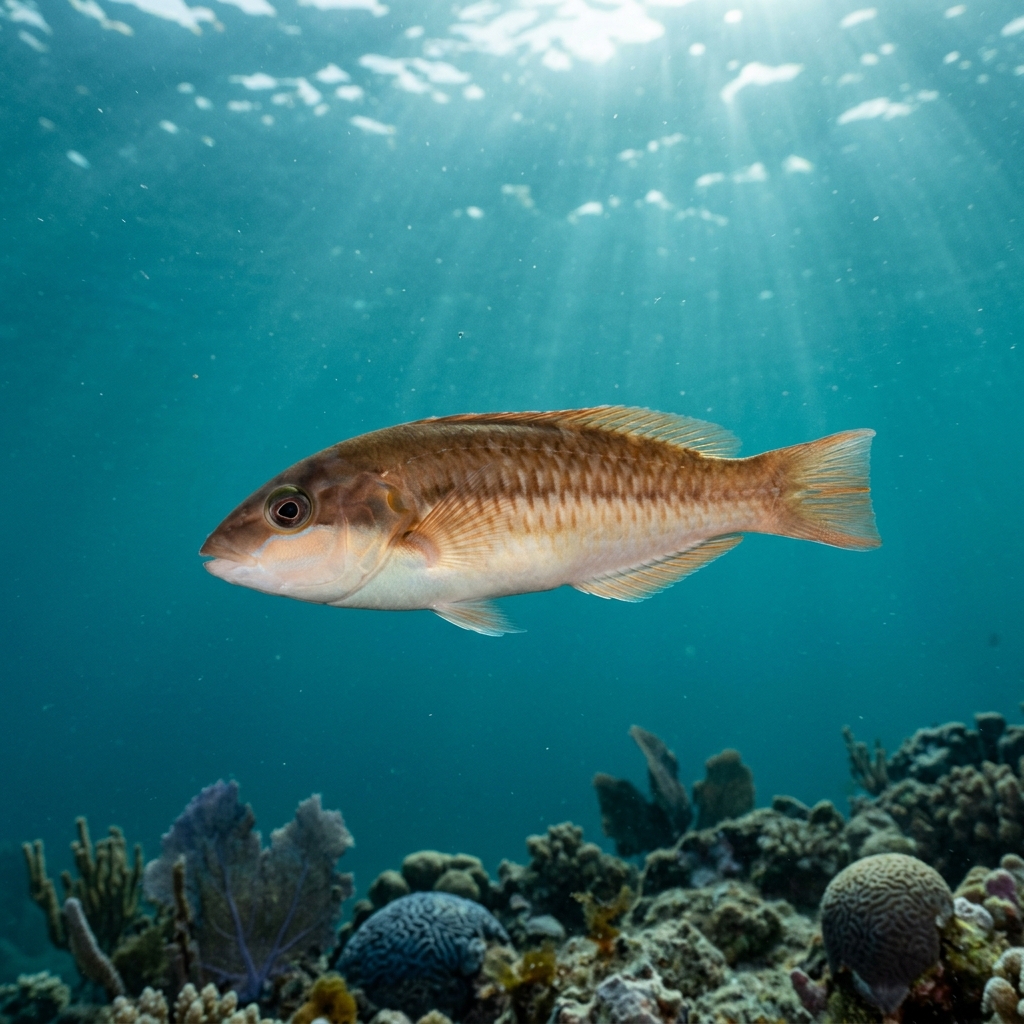
A slim, fast-moving wrasse around 17 cm long, most easily recognised by the terminal-phase male's bold green and blue body with striking pinkish or orange facial markings. Females and initial-phase fish are brownish-red to orange-brown and look far more subdued, often causing them to be overlooked entirely. The body is elongated with a pointed snout typical of Mediterranean wrasses, and the fish holds its pectoral fins out as it sculls through the water.
Turkish Wrasse are quick, inquisitive fish that spend most of their time working over rocky reef and seagrass habitats in the shallows down to moderate depths, picking at small invertebrates and crustacea. They rarely hold still for long, but terminal-phase males are eye-catching enough that divers usually spot them before they disappear. They tend to ignore divers unless approached directly, in which case they simply accelerate to the next rock rather than fleeing far.
Like most wrasses, Turkish Wrasse are protogynous hermaphrodites: dominant females can transition into terminal-phase males, which is why the colourful, vivid males look so completely different from their duller female and initial-phase counterparts.
Sightings are recorded from February through to December across Mediterranean and Canary Islands sites, making it an almost year-round species in its core range. The observed water-temperature niche of roughly 15 to 22 °C fits the Mediterranean seasonal pattern well, so the summer and autumn months tend to produce the highest activity.
Most consistently logged across the western and central Mediterranean, with Spain leading the way, particularly along the Costa Brava and Balearic Islands, followed by strong populations in the French Riviera and Provence, Sardegna, and the Sicilian and Ligurian coasts. Greece is a reliable destination too, especially the Cyclades, and the species is well represented along the Croatian Dalmatian coast and around Cyprus and Turkey. The Canary Islands round out the Atlantic hotspots where sightings are regularly reported.
Mapping where Turkish Wrasse is logged…
The western and central Mediterranean offers the strongest coverage, with Spain's Costa Brava and Balearic Islands, the French Riviera, Sardegna, and the Greek Cyclades all being reliable areas. Croatia's Dalmatian coast, Cyprus, Turkey, and the Canary Islands are also well-documented locations.
Across its Mediterranean and Canary Islands range, Turkish Wrasse are recorded from February through December, so there is no strict season to target. Activity appears highest during the warmer months when water temperatures sit comfortably within its preferred 15 to 22 °C niche.
Look for a slim, fast-moving fish around 17 cm long with a pointed snout that rows itself along with its pectoral fins. Adult males are the giveaway: vivid green and blue with pinkish or orange face markings. Females and younger fish are plain brownish-red and much easier to miss.
Turkish Wrasse typically reach around 17 cm in length. They appear slender in the water, which makes them look smaller than they measure, especially when they dart away between rocks.
Yes. Turkish Wrasse are protogynous hermaphrodites, meaning dominant females can transition into males. This explains why the boldly coloured, green-and-blue terminal-phase males look so different from the brown females, they were often female earlier in life.
Site and sighting data is aggregated from diver logs, iNaturalist and GBIF. For taxonomy and conservation status:
Cleaver Wrasse
2,700 sites