Muraena helena
Spot Mediterranean Moray from the French Riviera to Malta between March and November. Here's how to find and identify one underwater.
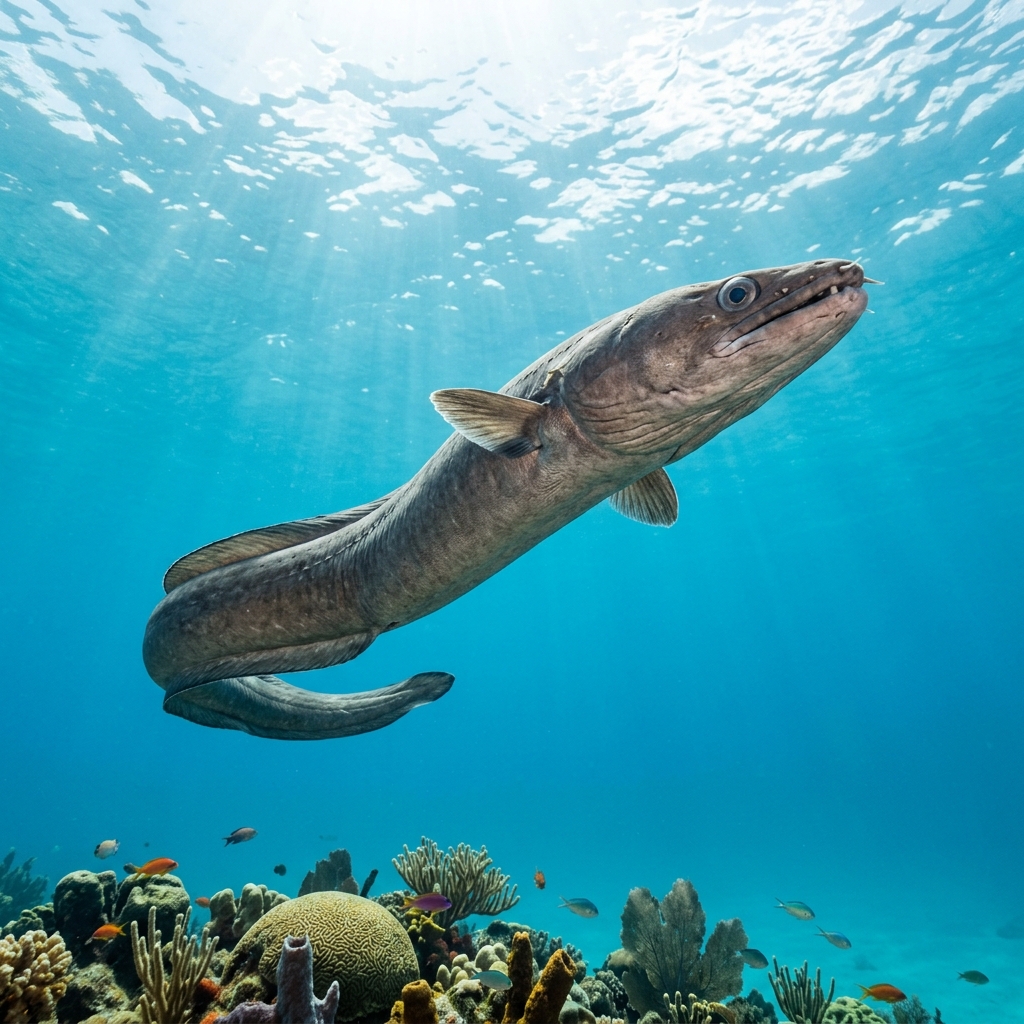
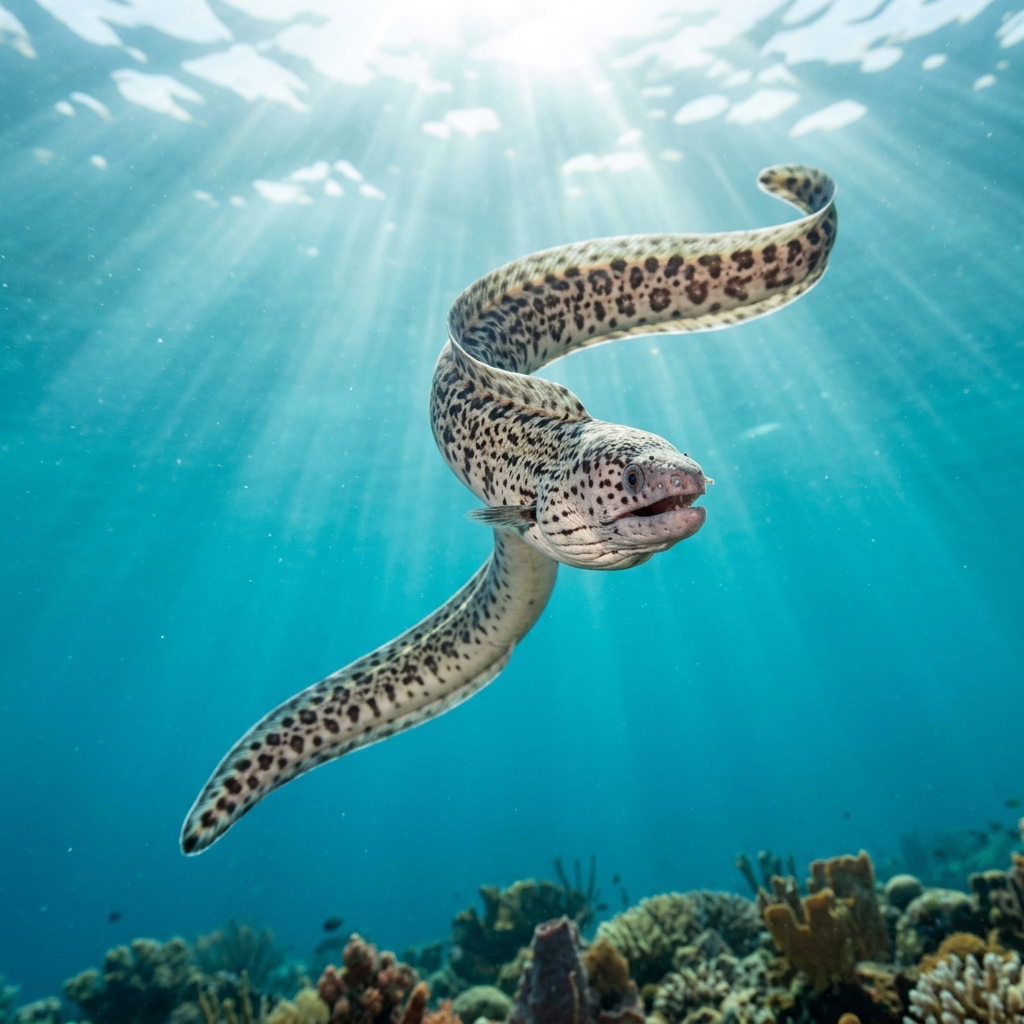
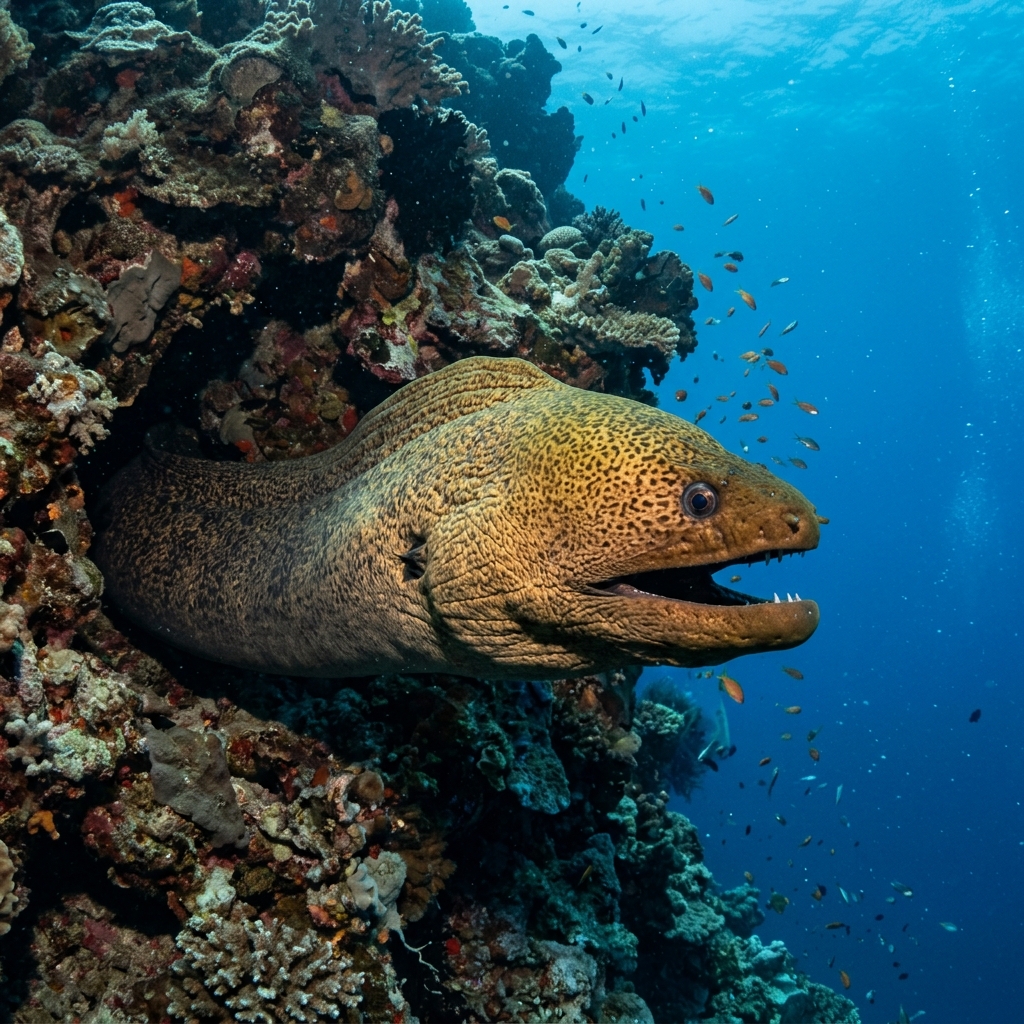
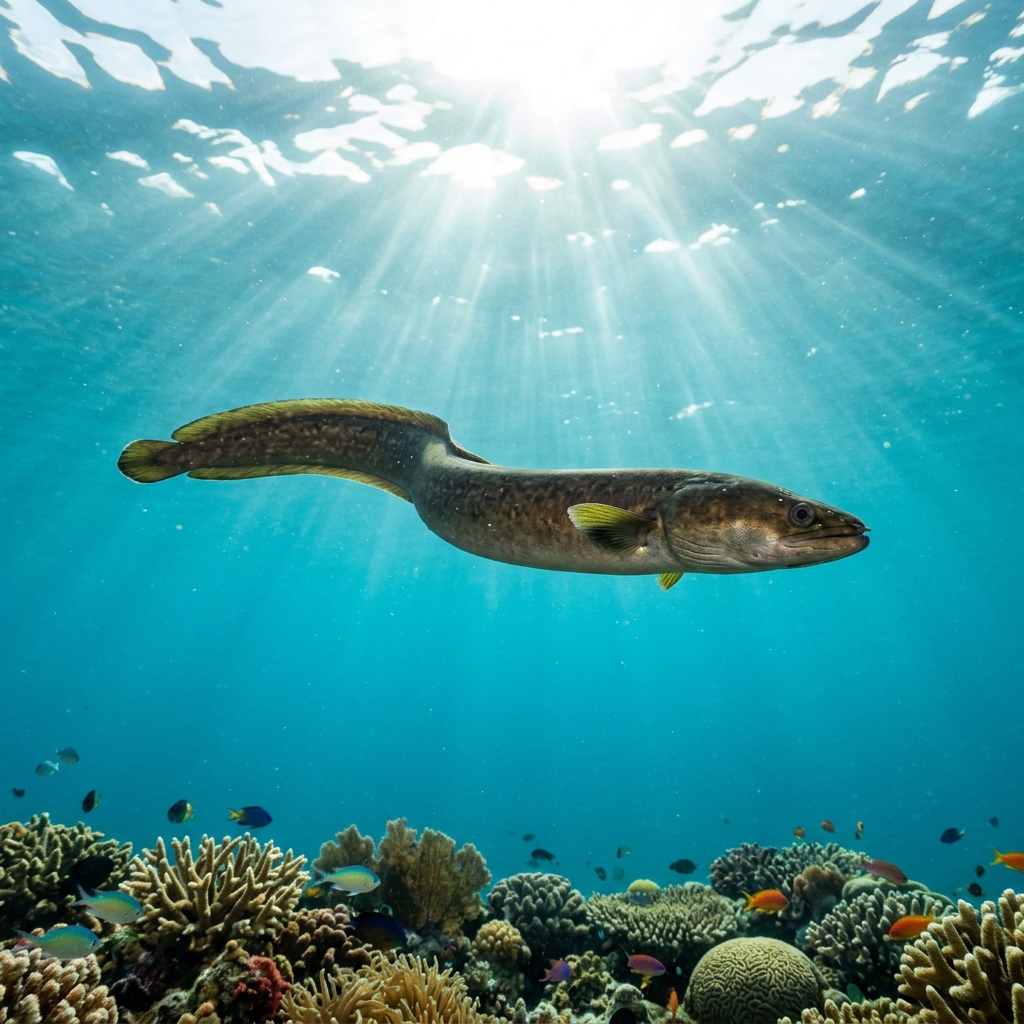
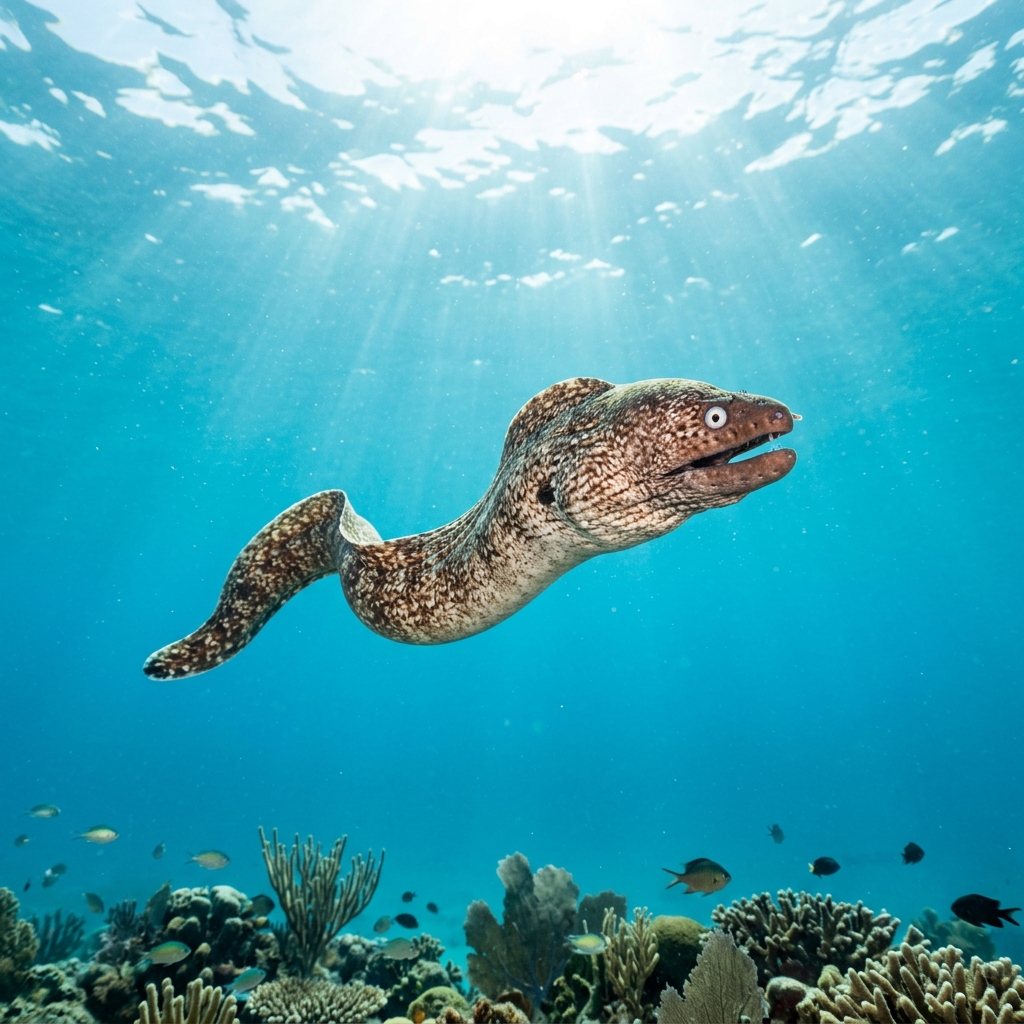
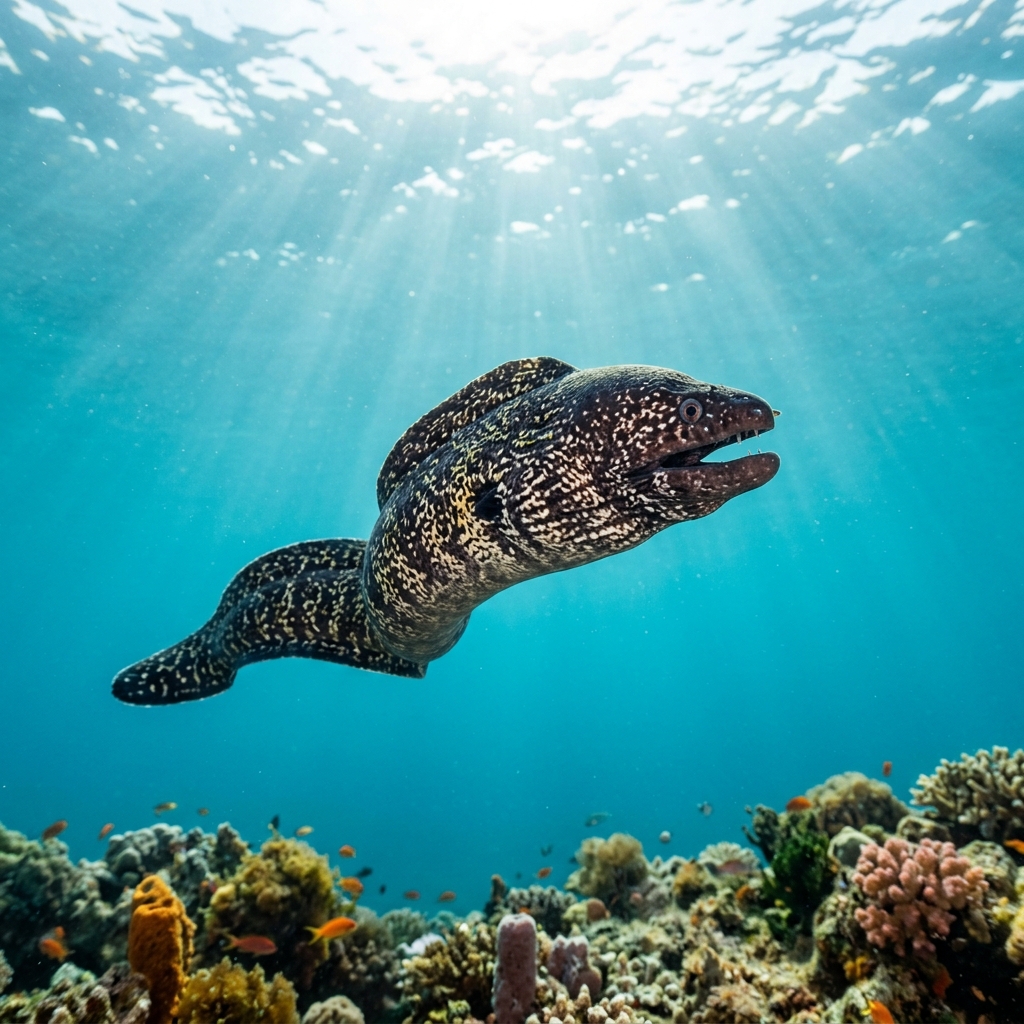
A hefty, muscular eel with dark brown to grey-brown skin covered in irregular pale yellow or white mottling that creates a marbled pattern across the whole body. It lacks the pectoral fins that bony fish have, giving it a smooth, serpentine profile, and its dorsal fin (the ridge running the length of the back) is continuous from just behind the head to the tail. The inside of the mouth is often paler, sometimes yellowish, which you may notice as it opens and closes its jaw rhythmically to pump water over its gills. At close range, look for the distinctive tubular nostrils that project noticeably from the snout.
Almost always spotted with its head or forepart emerging from a rocky crevice, cave, or hole in the reef, holding position while it opens and closes its mouth in that characteristic slow gape. It tends to stay put and ignore divers who keep a respectful distance, though it will retreat deeper into cover if approached too closely or too quickly. Night dives offer a different experience entirely, as it leaves its shelter to hunt actively across the reef.
Mediterranean moray have a second set of jaws hidden in their throat, called pharyngeal jaws, which shoot forward into the mouth to grip and drag prey inward. This is the same mechanism made famous by the film Alien and explains why they don't need to create suction the way most fish do when swallowing.
Sightings concentrate between March and November across the Mediterranean, which lines up with the species' observed water-temperature range of roughly 13 to 22 degrees Celsius as the sea warms through spring and into autumn.
Most consistently logged across Spain, France, and Italy, with the French Riviera and Provence, Costa Brava, and Costa Blanca standing out as the strongest regions in the dataset. Sardinia, Malta's Gozo, the Balearic Islands, and Corsica are also reliable, and solid records extend to Greece, Croatia, Cyprus, and Portugal.
Mapping where Mediterranean Moray is logged…
They are most reliably encountered across the western and central Mediterranean. Spain's Costa Brava and Costa Blanca, France's Riviera and Provence coast, Sardinia, Malta's Gozo, and the Balearic Islands all have strong records. Greece, Croatia, Cyprus, and Portugal round out the range.
Diver sightings concentrate from March through to November. This reflects the animal's preference for water temperatures between roughly 13 and 22 degrees Celsius as the Mediterranean sea warms through spring and stays warm into autumn.
They are not considered dangerous. Like any moray, one that is cornered, harassed, or has food nearby could bite, but unprovoked attacks are extremely rare. Give them space, keep hands out of crevices, and they will generally ignore you entirely.
Look for a large, thick-bodied eel with dark brown to grey-brown skin broken up by irregular pale mottling across the entire body. The projecting tubular nostrils and the continuous dorsal fin ridge are useful close-up details. In the Mediterranean there is very little else it could be confused with.
Adults commonly reach around 1 to 1.2 metres in length, with the largest individuals recorded at close to 1.5 metres. They are among the bulkier moray species you will encounter in European waters, with a notably thick body relative to their length.
It uses a unique set of pharyngeal jaws (a second set of jaws located in the throat) that shoot forward into the mouth to grip and pull prey inward. Most fish swallow by creating suction, but moray eels lack that ability and rely on these ratchet-like inner jaws instead.
Site and sighting data is aggregated from diver logs, iNaturalist and GBIF. For taxonomy and conservation status:
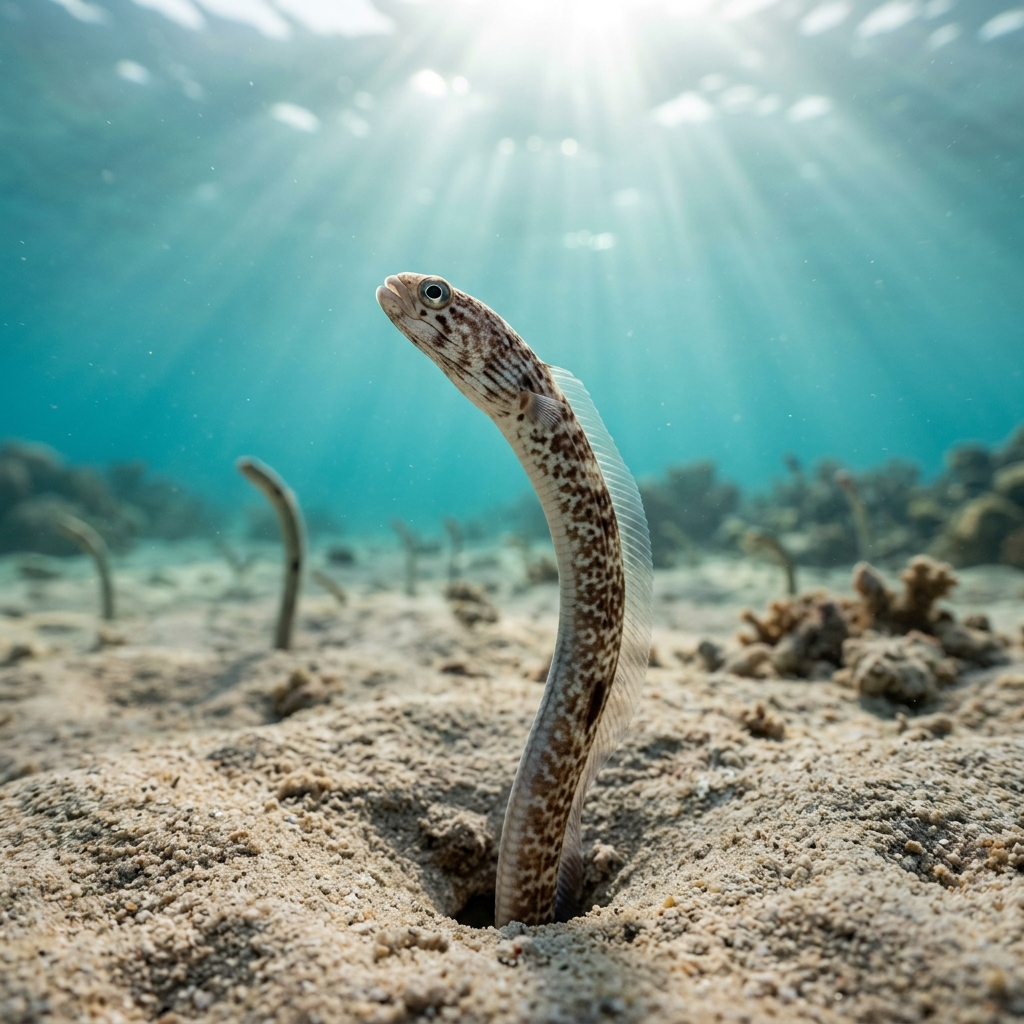
Garden Eel
2,448 sites