Symphodus roissali
A small, spotty reef wrasse common in Catalonia and the French Riviera, in 15-21°C water, seen year-round.
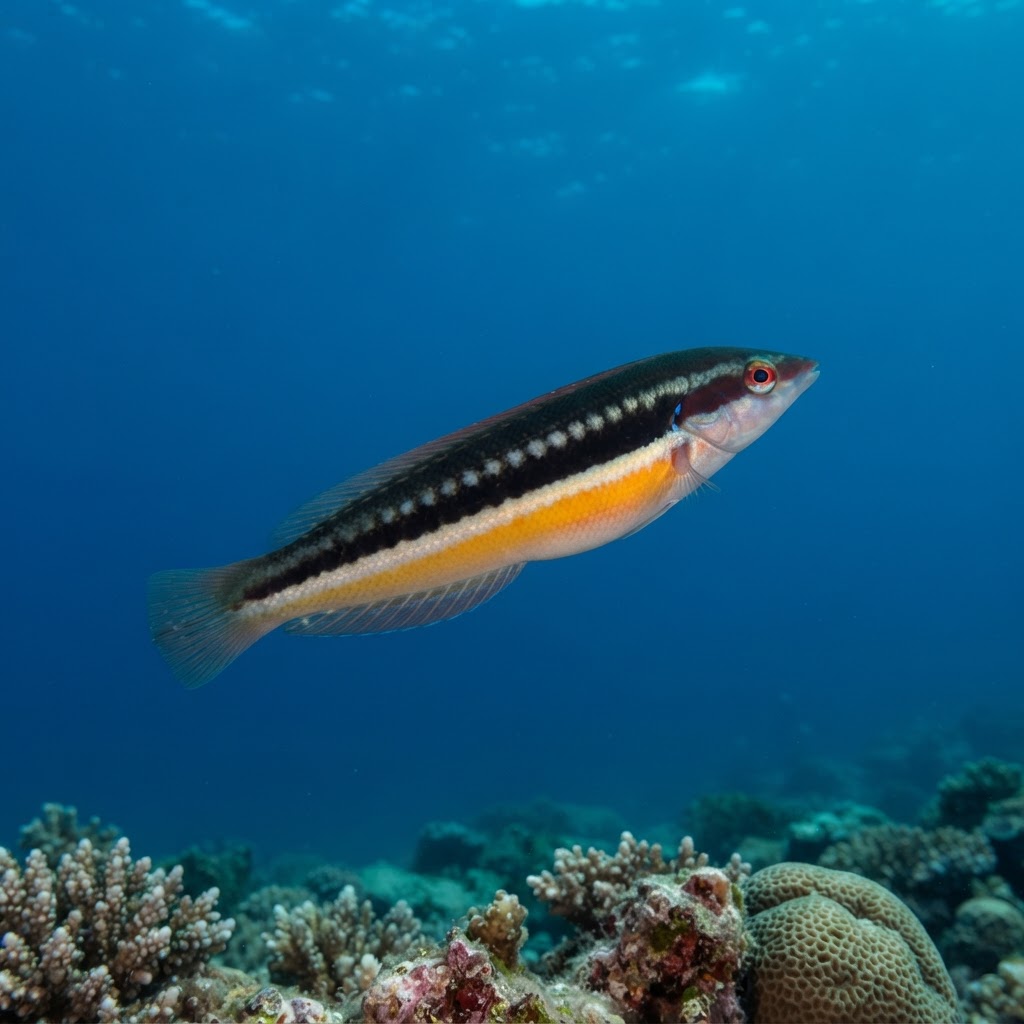
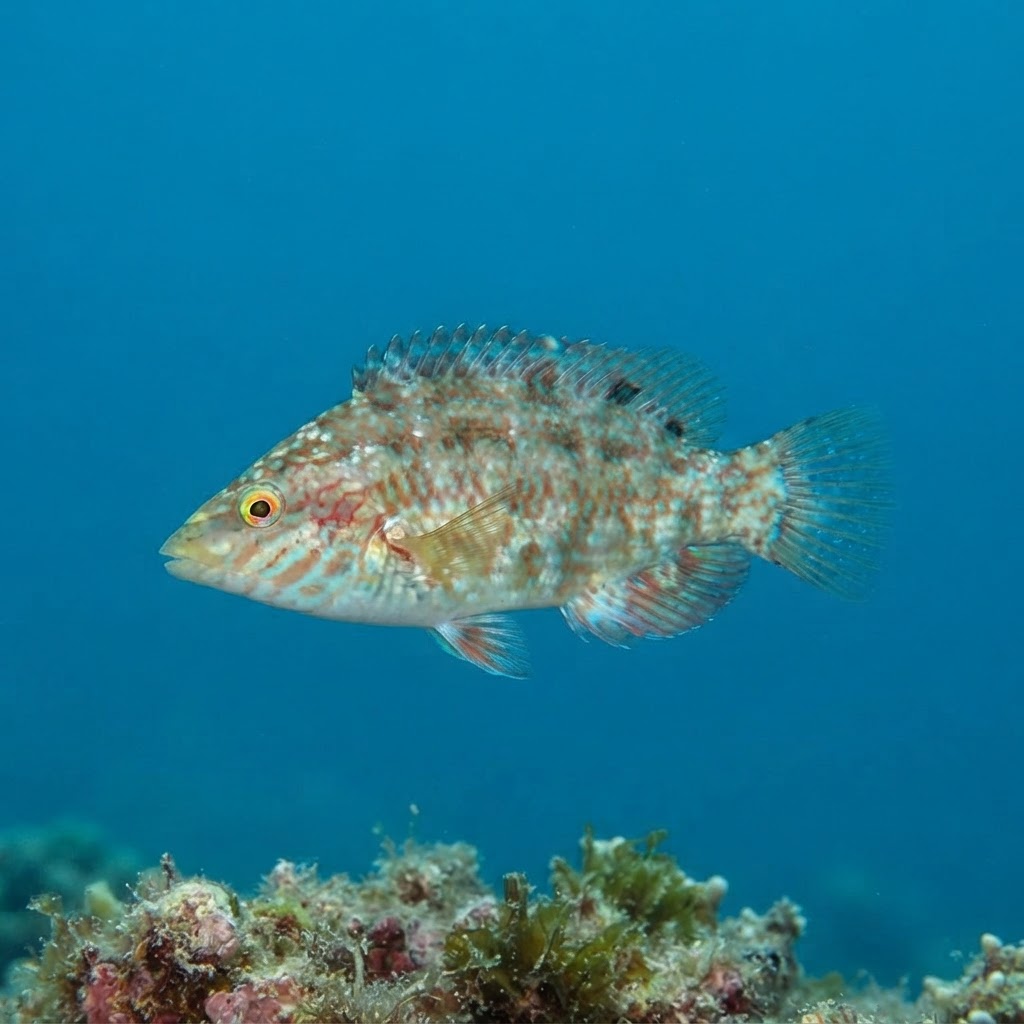
A small, slender wrasse that tops out around 11 cm, easy to overlook against rocky reef and weed. Look for the row of dark spots running along the upper body that gives it its name, set against a mottled brown-green background that shifts with the light. It has the classic wrasse profile: a pointed snout, a single long dorsal fin, and quick, darting movements low over the substrate.
Divers typically find it picking around rocky reef, weed beds, and crevices at fairly shallow depths, hunting small invertebrates rather than schooling in open water. It is not shy exactly, but it keeps a low profile and tends to dart for cover rather than hold still for a photo, so slow, patient approaches work best. Most sightings come from casual daytime dives rather than any particular time slot.
Like many wrasses in the genus Symphodus, it is a nest-builder: males construct and guard a small nest of algae on the seabed during the breeding season, which is worth watching for if you spot territorial behaviour near a patch of weed.
No clear seasonal peak shows up in the data, so treat this as a year-round sighting on Mediterranean reefs where the water sits in its comfortable 15.2 to 21°C range.
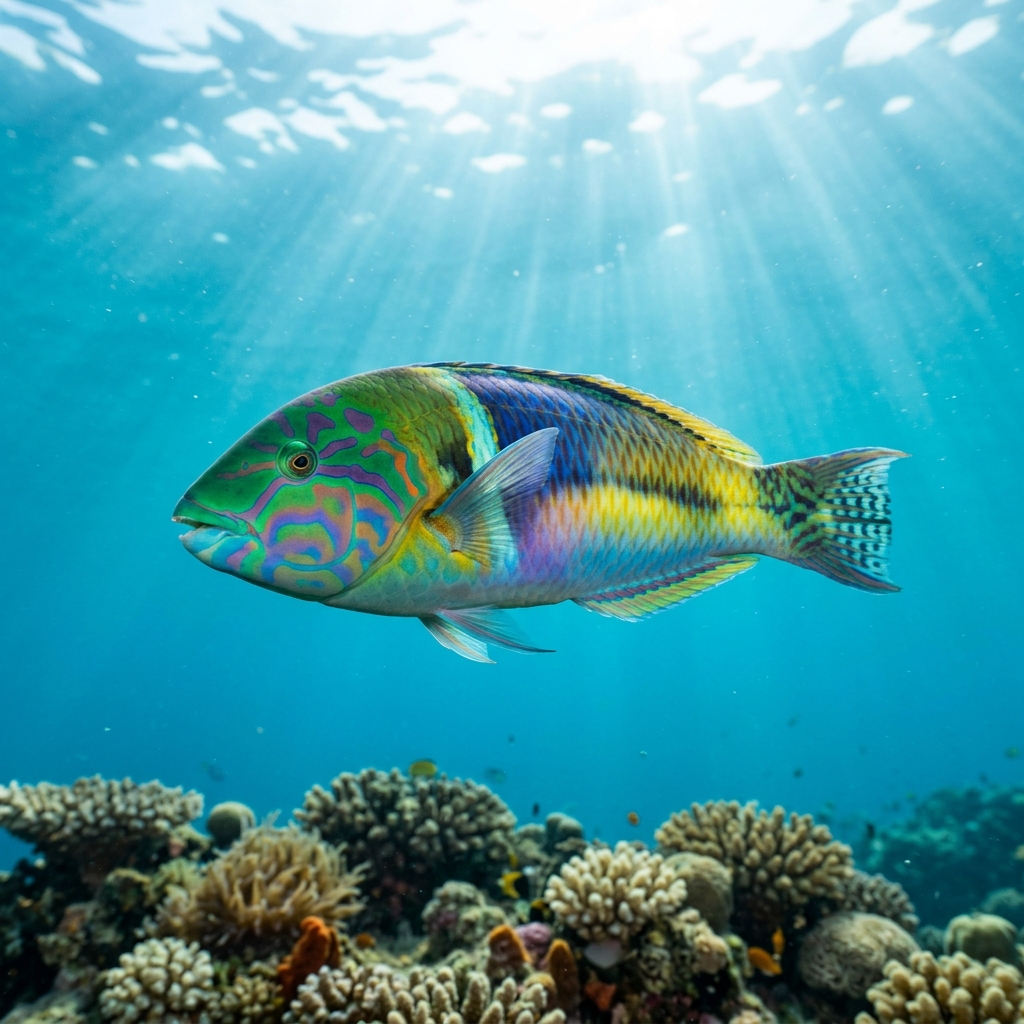
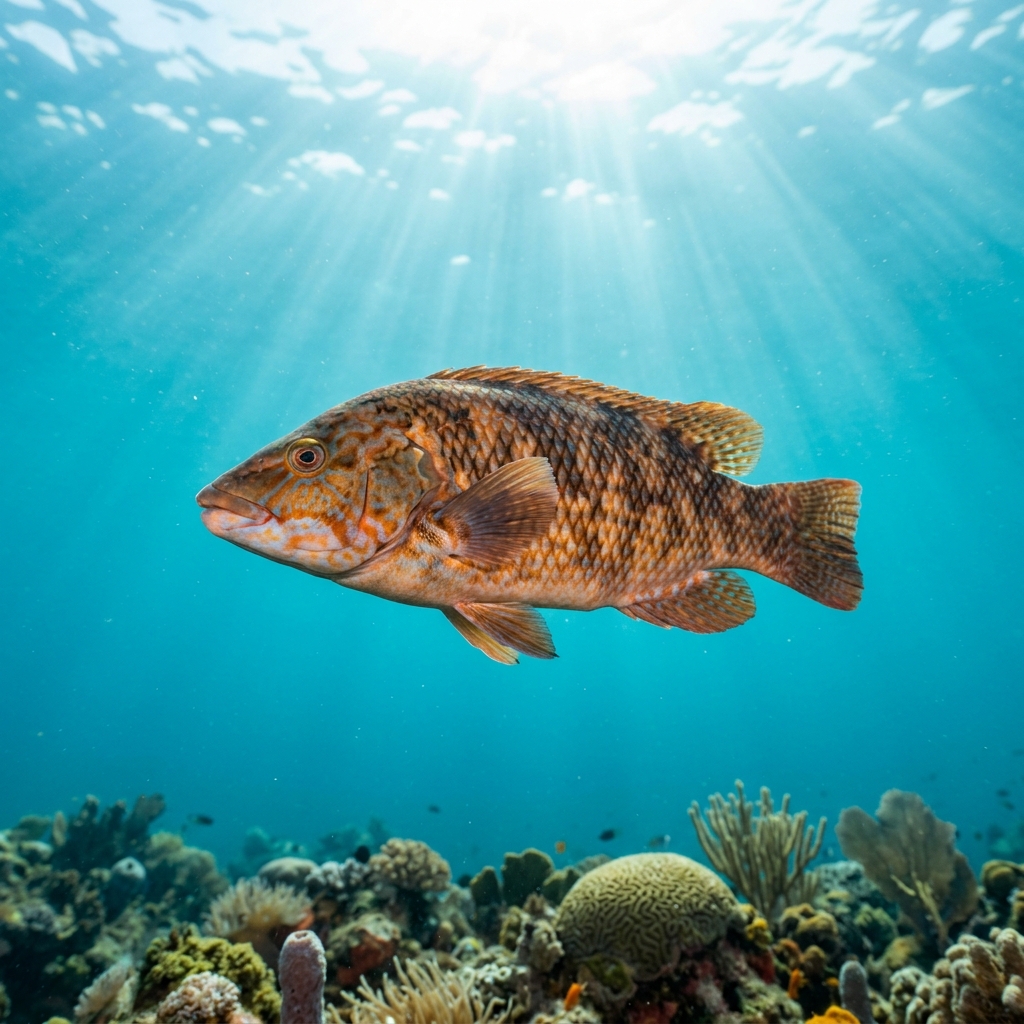
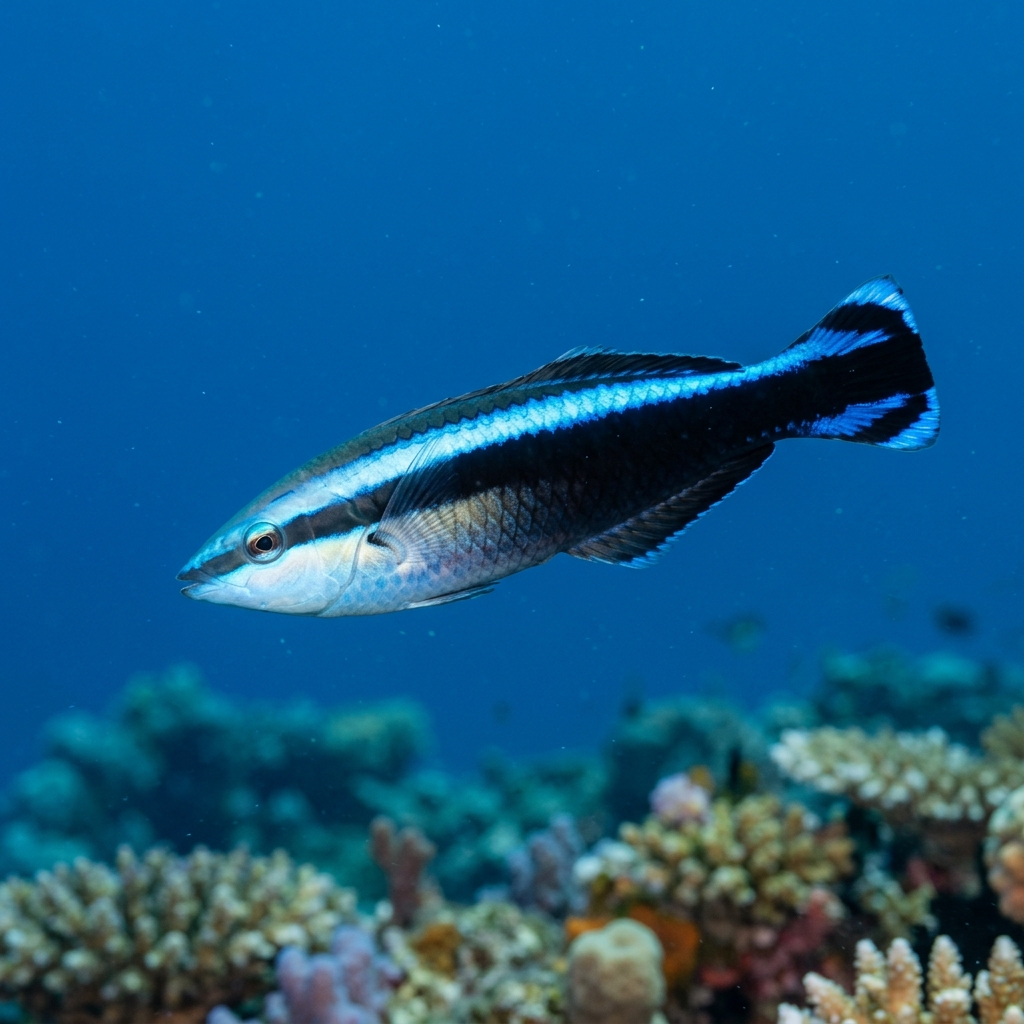
Reef neighbours a diver could mistake it for. Use the identification notes above to tell them apart.
This is a Mediterranean regular, most consistently logged in Spain and France, with the French Riviera and Provence and Catalonia standing out as the strongest areas, followed by Andalusia and Valencia. It also turns up reliably in Italy (notably Tuscany and Liguria), Croatia's Kvarner region, and around Malta, Greece, Portugal, and Turkey in smaller numbers.
Mapping where Five-spotted Wrasse is logged…
It is most reliably seen in the western Mediterranean, especially around the French Riviera and Provence and Catalonia in Spain, with good numbers also in Andalusia, Tuscany, Liguria, and Croatia's Kvarner region.
There is no strong seasonal pattern in sightings, so it is considered a year-round find on Mediterranean reefs within its usual 15 to 21°C temperature range.
Look for a small wrasse, around 11 cm, with a mottled brown-green body and a line of dark spots along its upper back. It moves in short, quick darts close to rocky reef rather than swimming in open water.
They are a small species, typically reaching about 11 cm in length, so they are easy to miss against a busy rocky reef backdrop.
No, it poses no threat to divers. It is a small, harmless reef fish that keeps its distance and has no venom or aggressive behaviour toward people.
Males build and defend small algae nests on the seabed during the breeding season, a behaviour shared with several other Symphodus wrasses in the Mediterranean.
Site and sighting data is aggregated from diver logs, iNaturalist and GBIF. For taxonomy and conservation status:
Bird Wrasses
3,632 sites