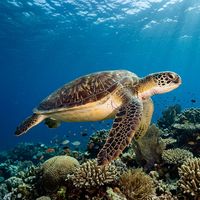
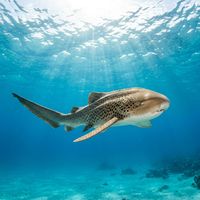
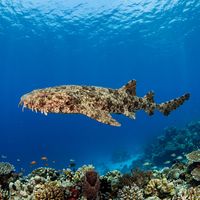
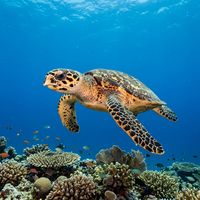
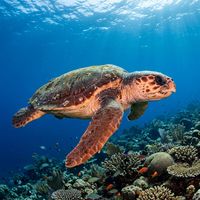
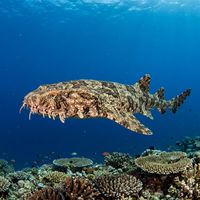
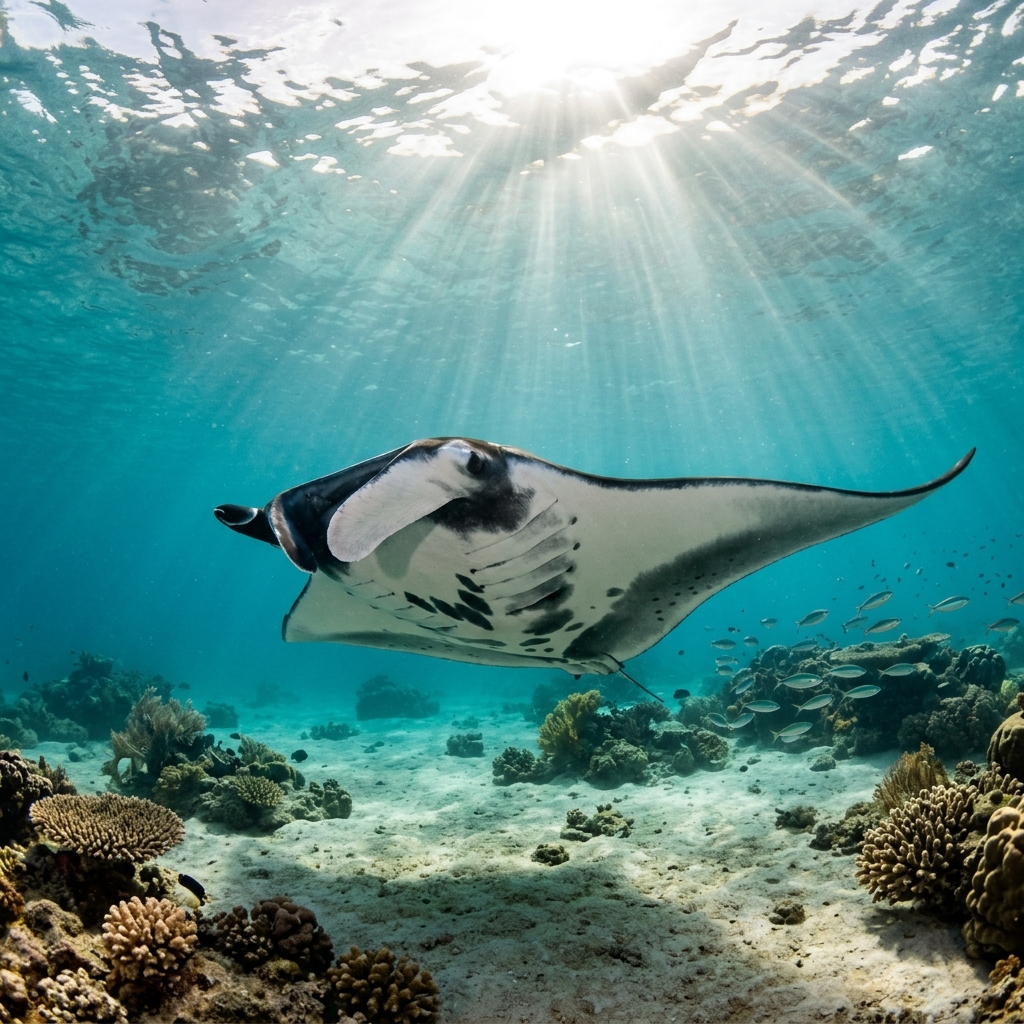
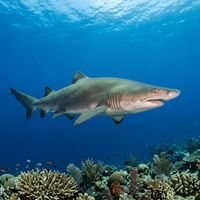
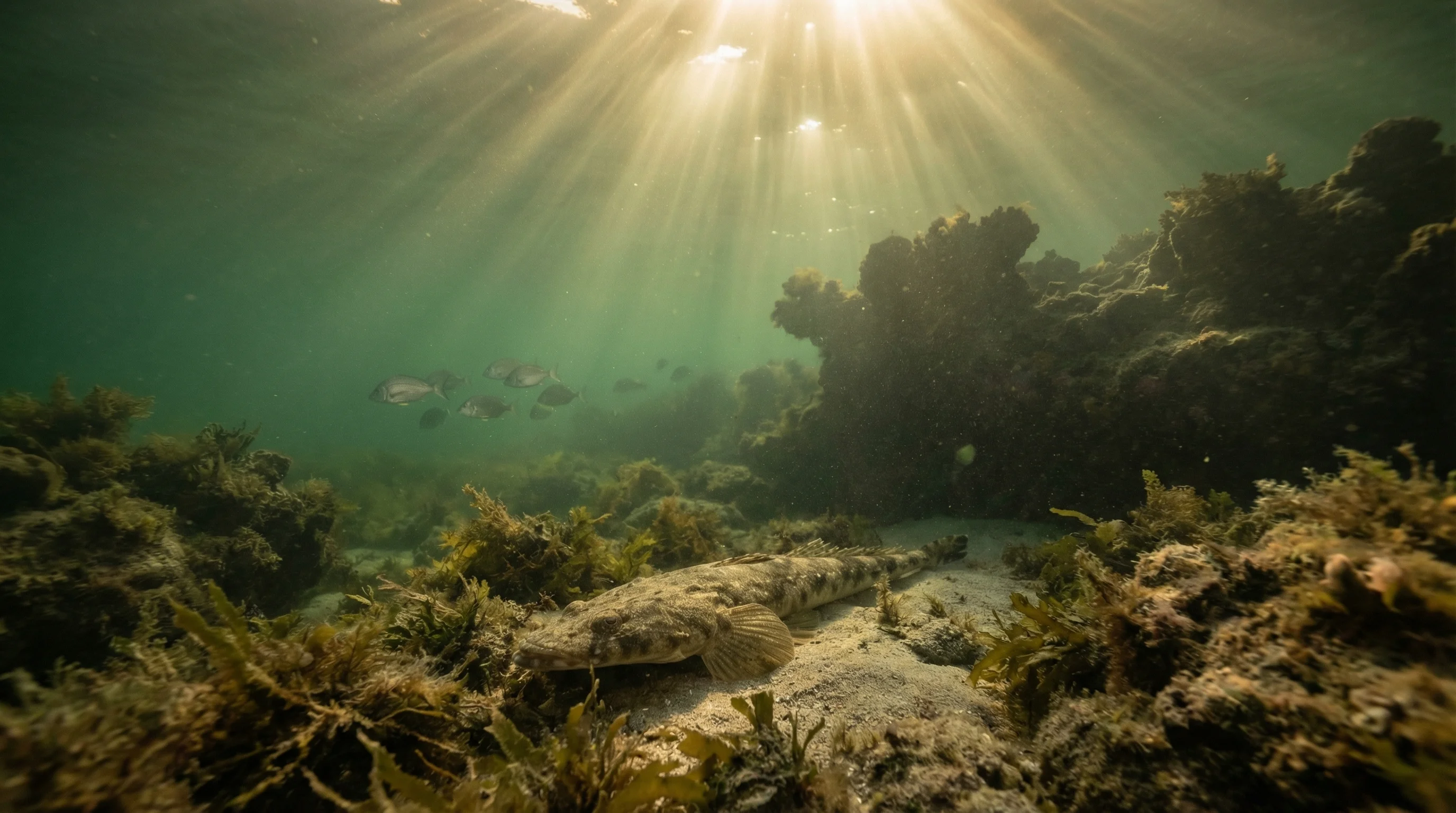
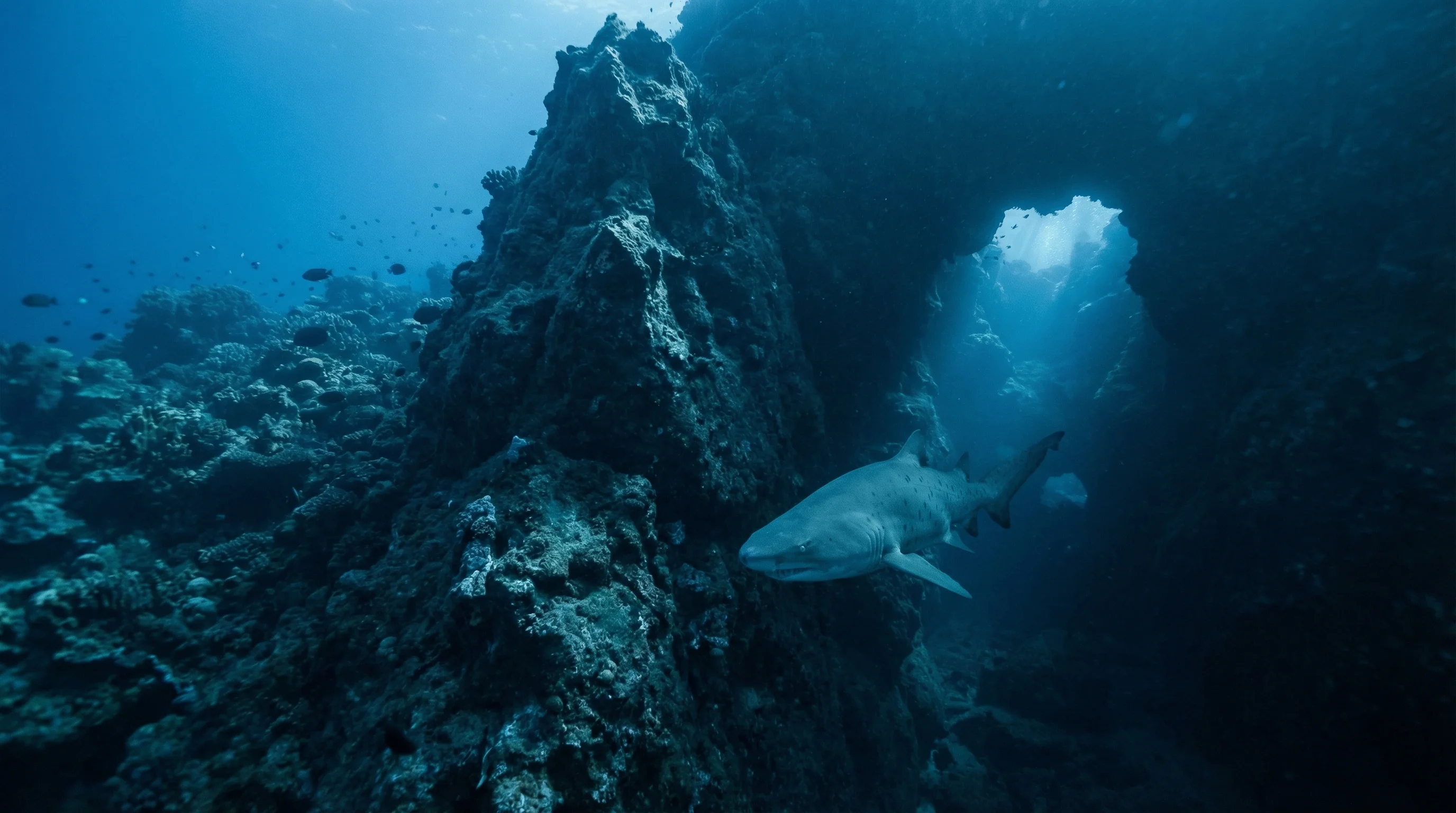
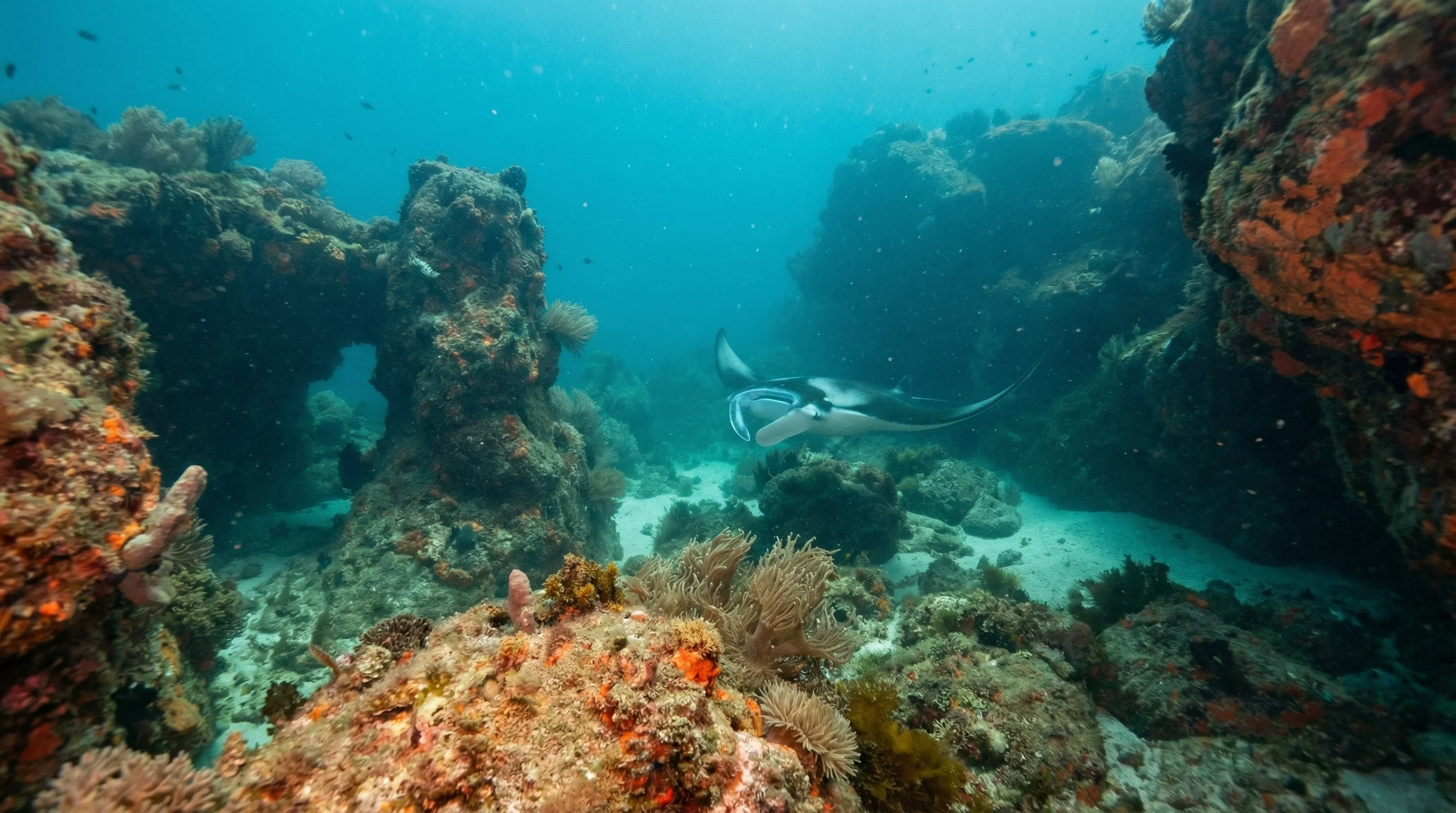
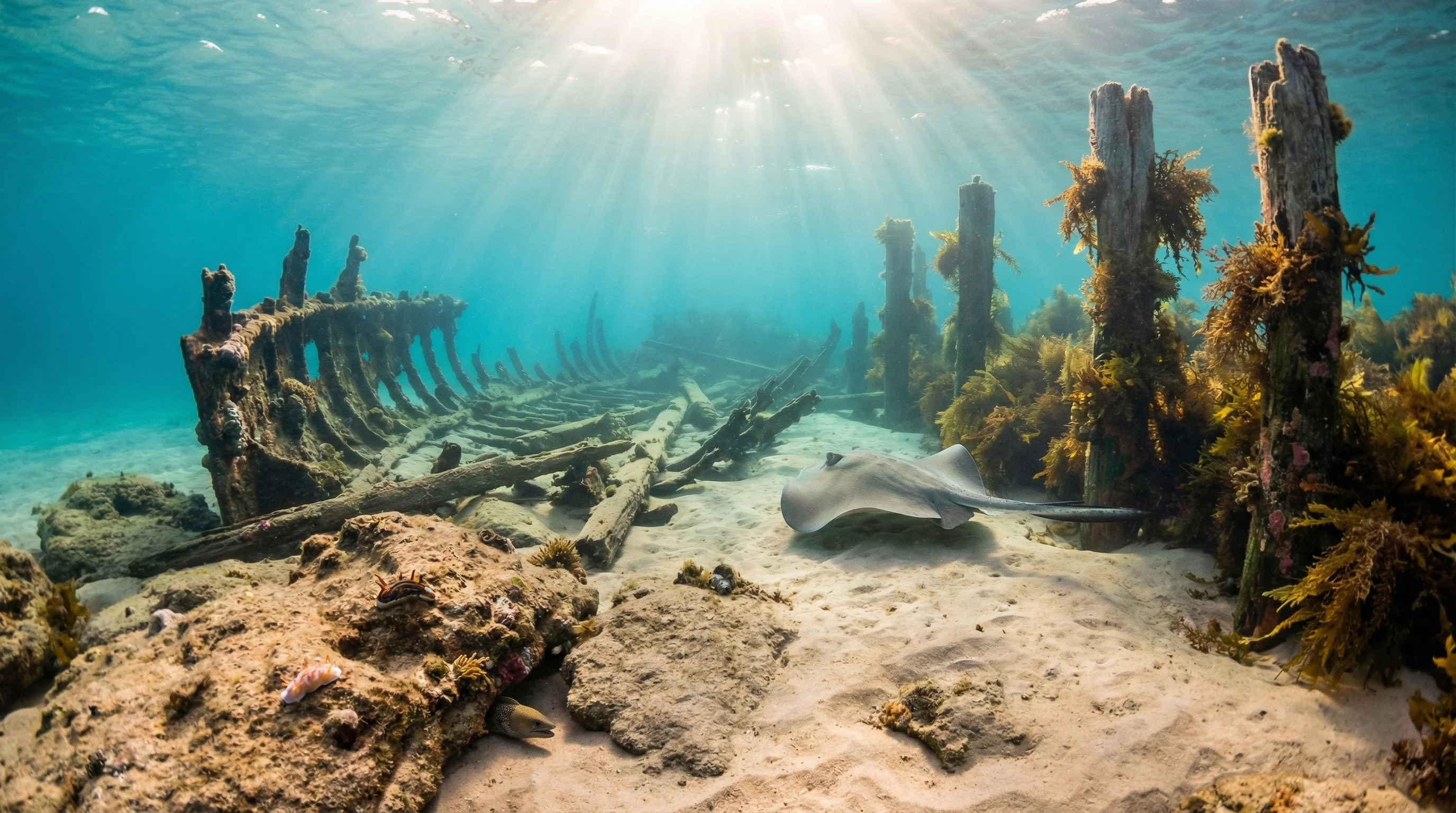
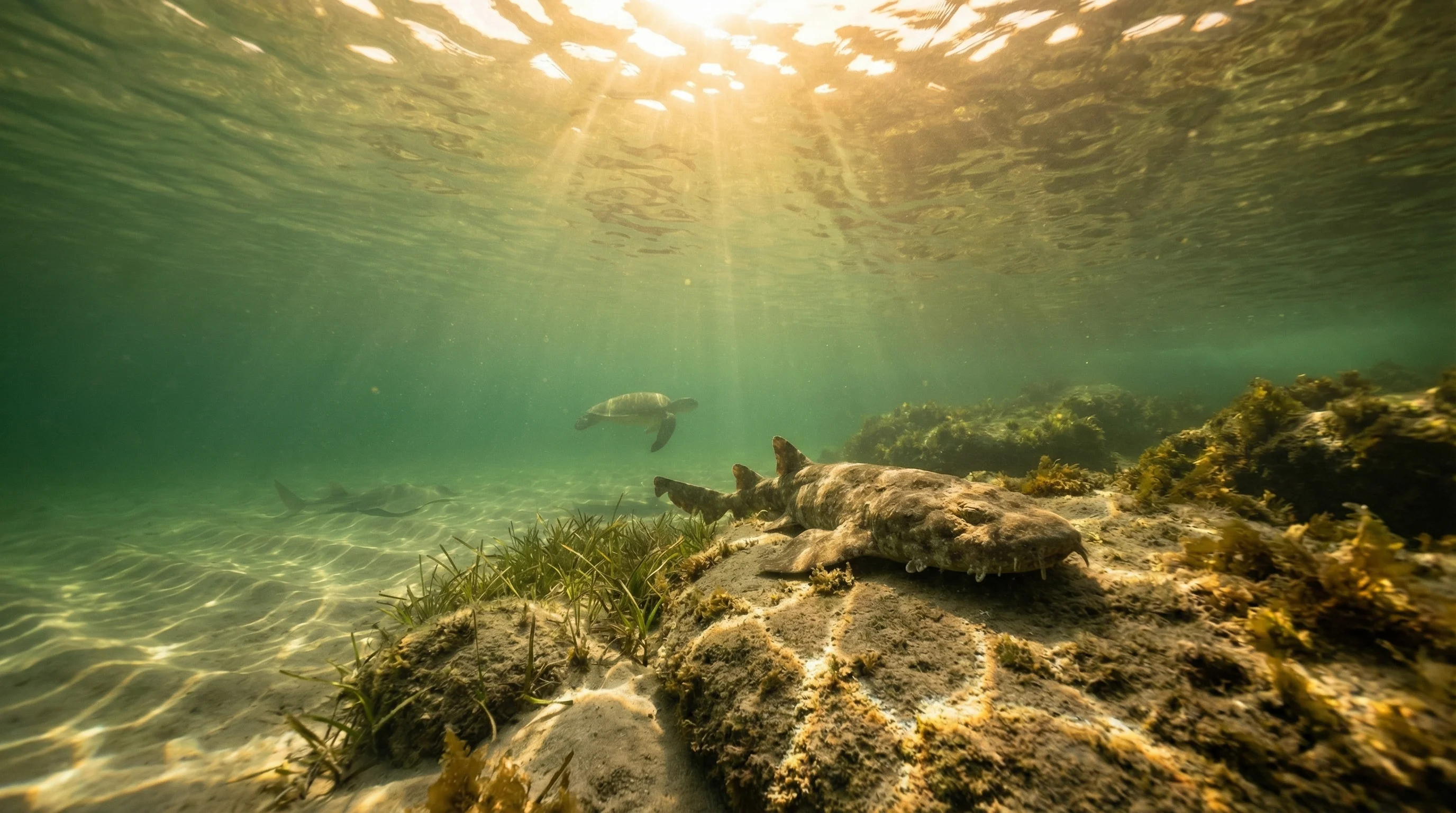
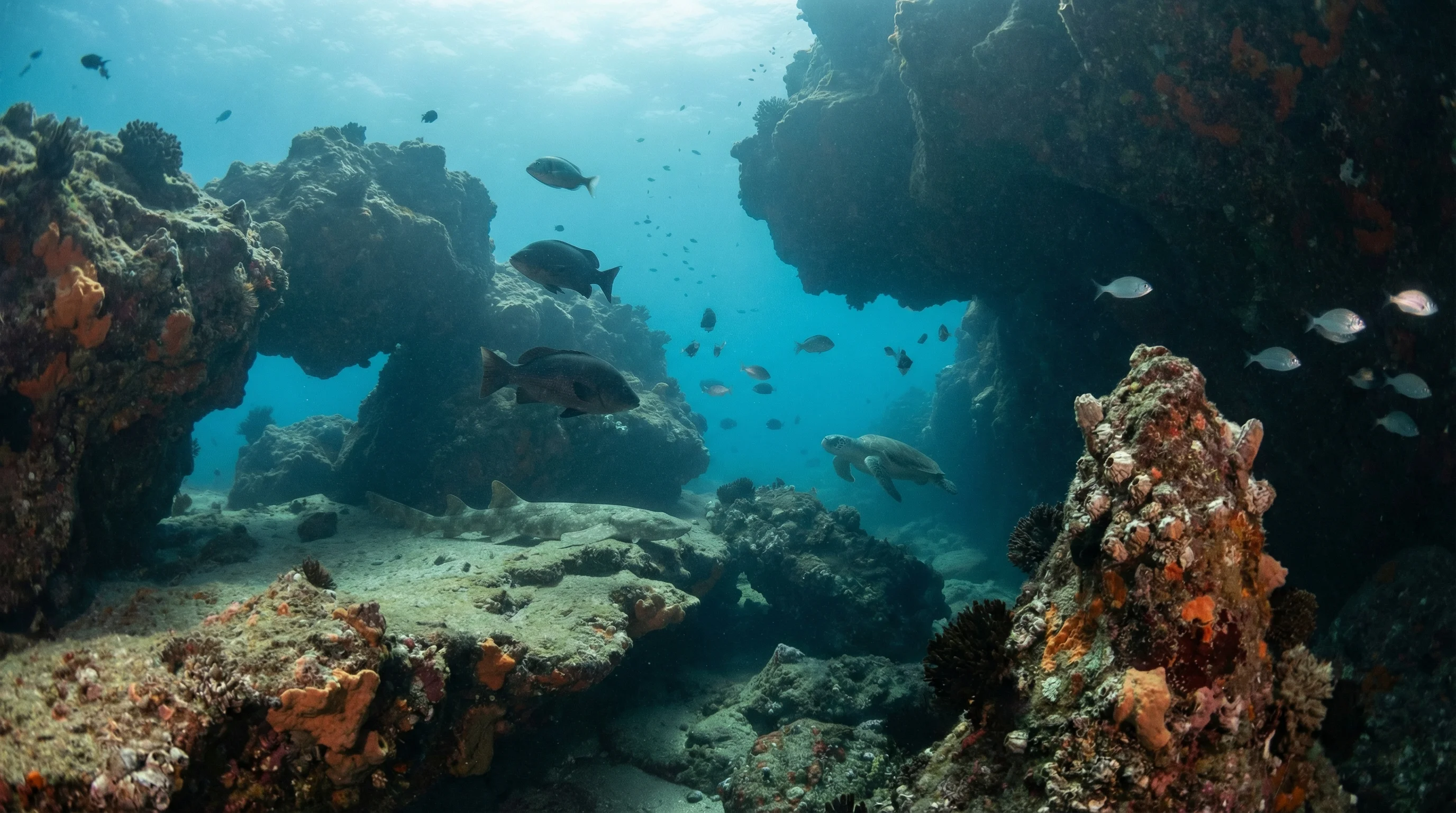
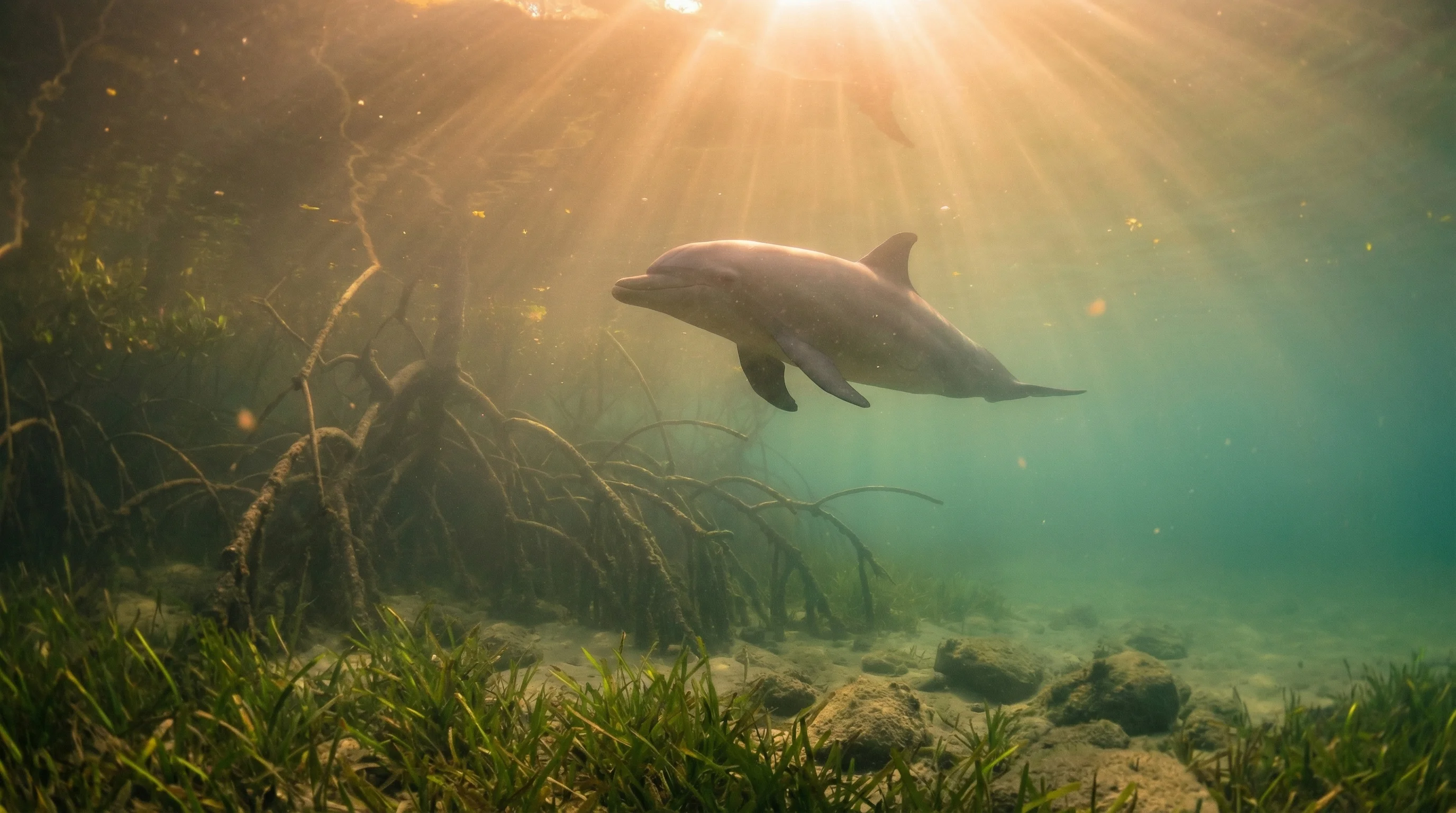
Byron Bay sits within Cape Byron Marine Park, where the Pacific Ocean delivers water that swings from cool in winter to warm in summer. The area's centrepiece is Julian Rocks, a protected sanctuary zone lying roughly two and a half kilometres offshore, where the East Australian Current pushes tropical species south and mixes them with temperate reef life. Divers find reefs, walls, caves, pinnacles, a wreck, and shore dives across the seven sites in our database, reaching depths from the shallows to around twenty metres. Grey nurse sharks and green sea turtles are year-round residents, while summer brings warmer water and a greater concentration of tropical visitors.
1 areas
Monthly water temperature across Byron Bay's sites, from satellite sea-surface data corrected for depth. The band shows the site-to-site spread.
Water temperature peaks in late summer and drops to its coolest in mid-winter, when grey nurse sharks are most reliably encountered at Julian Rocks. Summer and early autumn bring warmer conditions and a broader range of tropical species to the reef.
Water temperature around Byron Bay ranges from about 21°C in July to 27°C in February, based on satellite sea-temperature data for its dive sites.
In the warm season (about 27°C) a rash guard or 3mm shorty is comfortable in Byron Bay; in the coldest months (about 21°C) step up to a 5mm suit.
Fin maps 7 sites in Byron Bay (7 scuba diving sites and 4 snorkelling spots, with some suited to both).
5 more sites to explore