Carcharias taurus
Spot grey nurse sharks resting in groups on reefs in New South Wales and Florida. Comfortable from 12.5 to 28 °C, logged year-round in the Southern Hemisphere.
Safety warning
Grey nurse sharks are listed as dangerous to divers, though documented unprovoked attacks are rare and almost always linked to provocation, spearfishing, or cornering. Maintain a respectful distance of at least two metres, never block their exit route inside a cave or gutter, and avoid erratic movements. The risk is low for a calm, observant diver, but their size and dentition mean any contact can cause serious injury.
If you're bitten
BiteGeneral first-aid guidance, not a substitute for professional medical care. In an emergency, call your local emergency number.
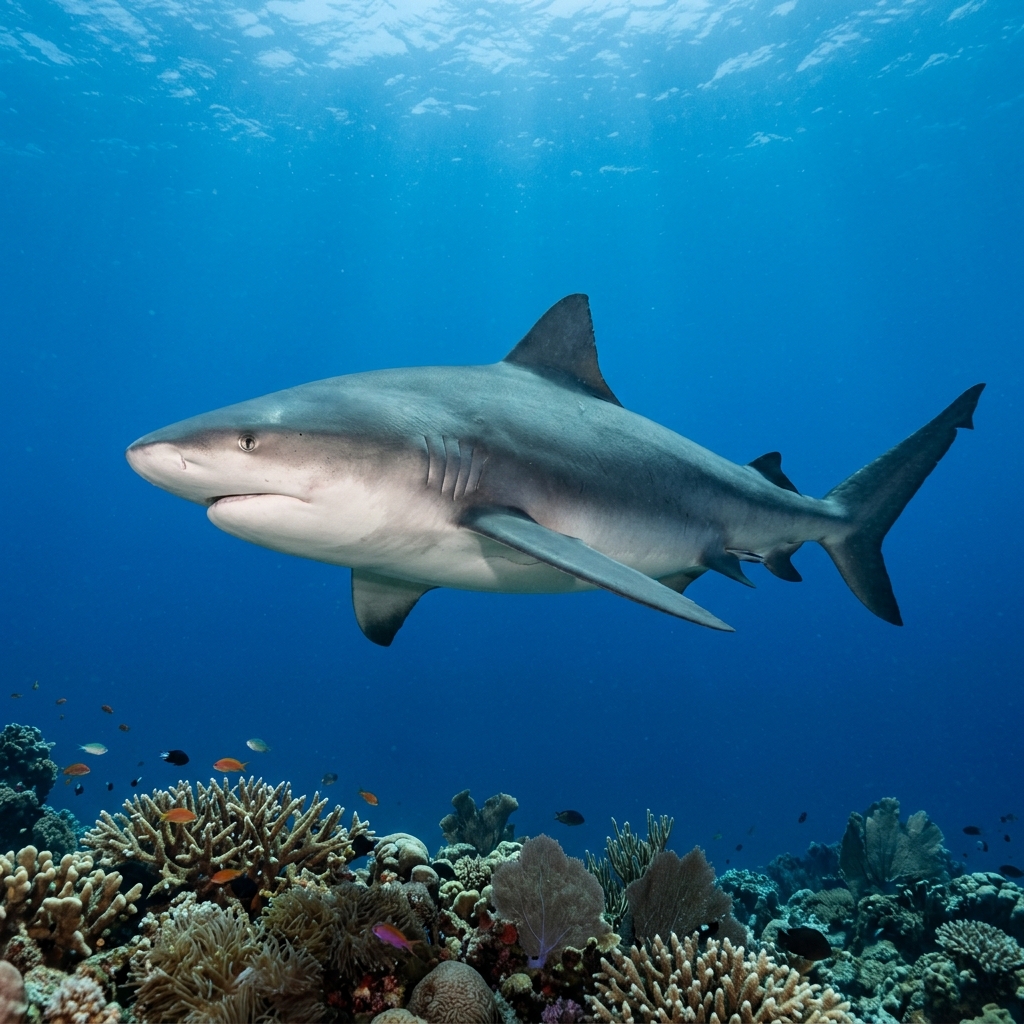
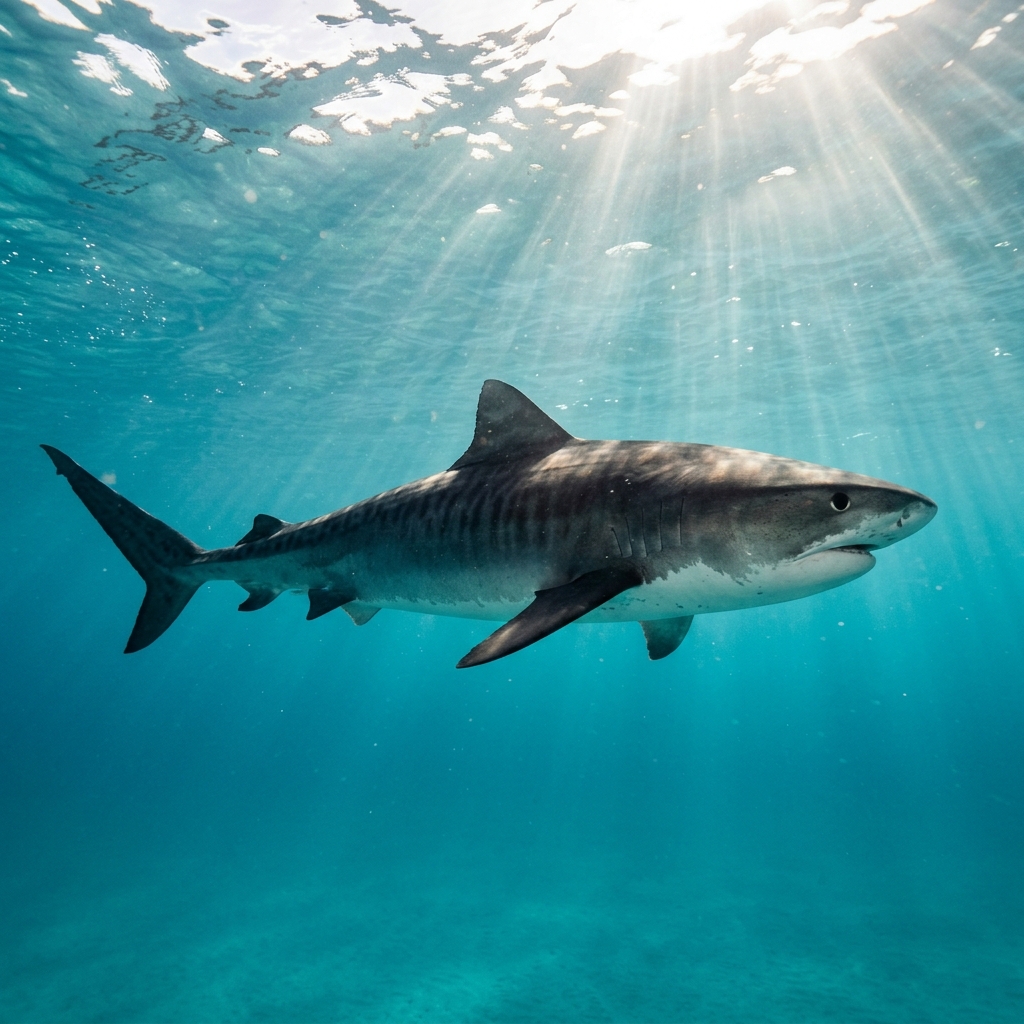
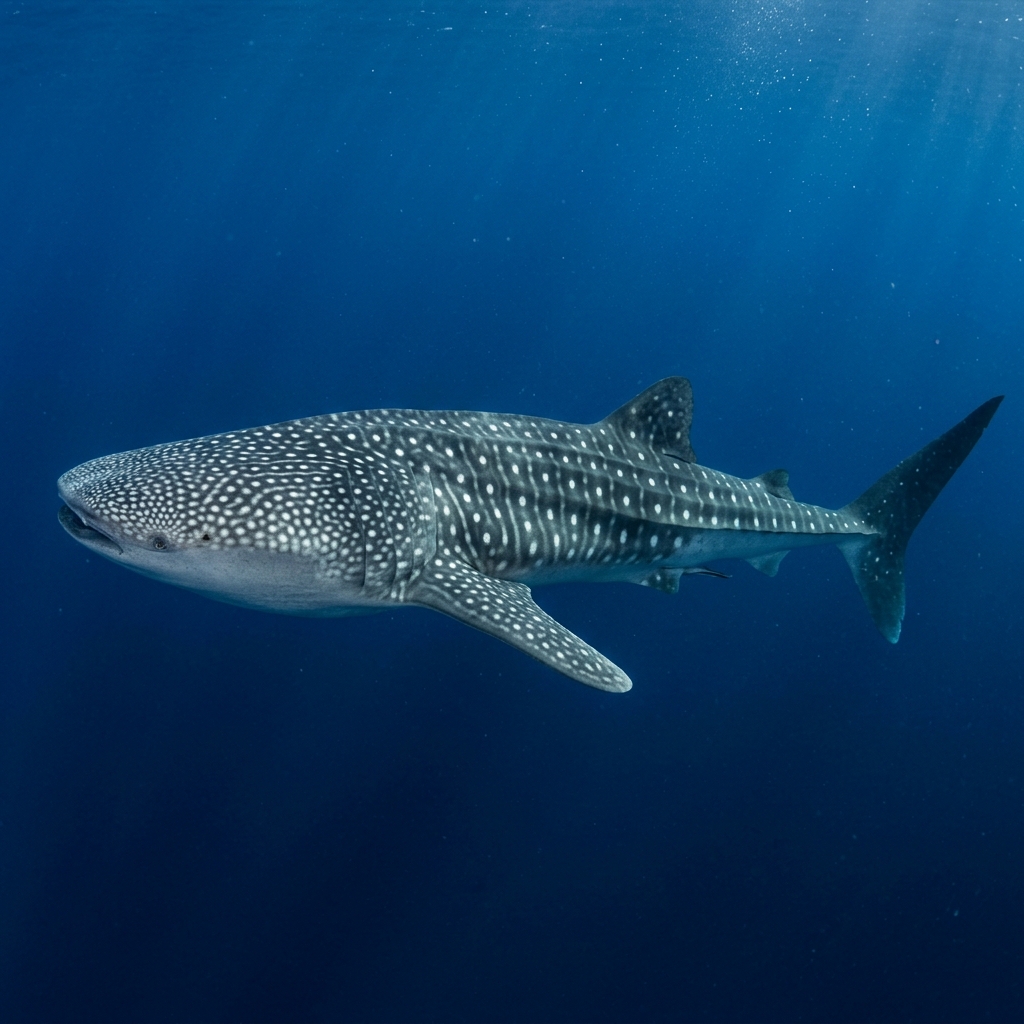
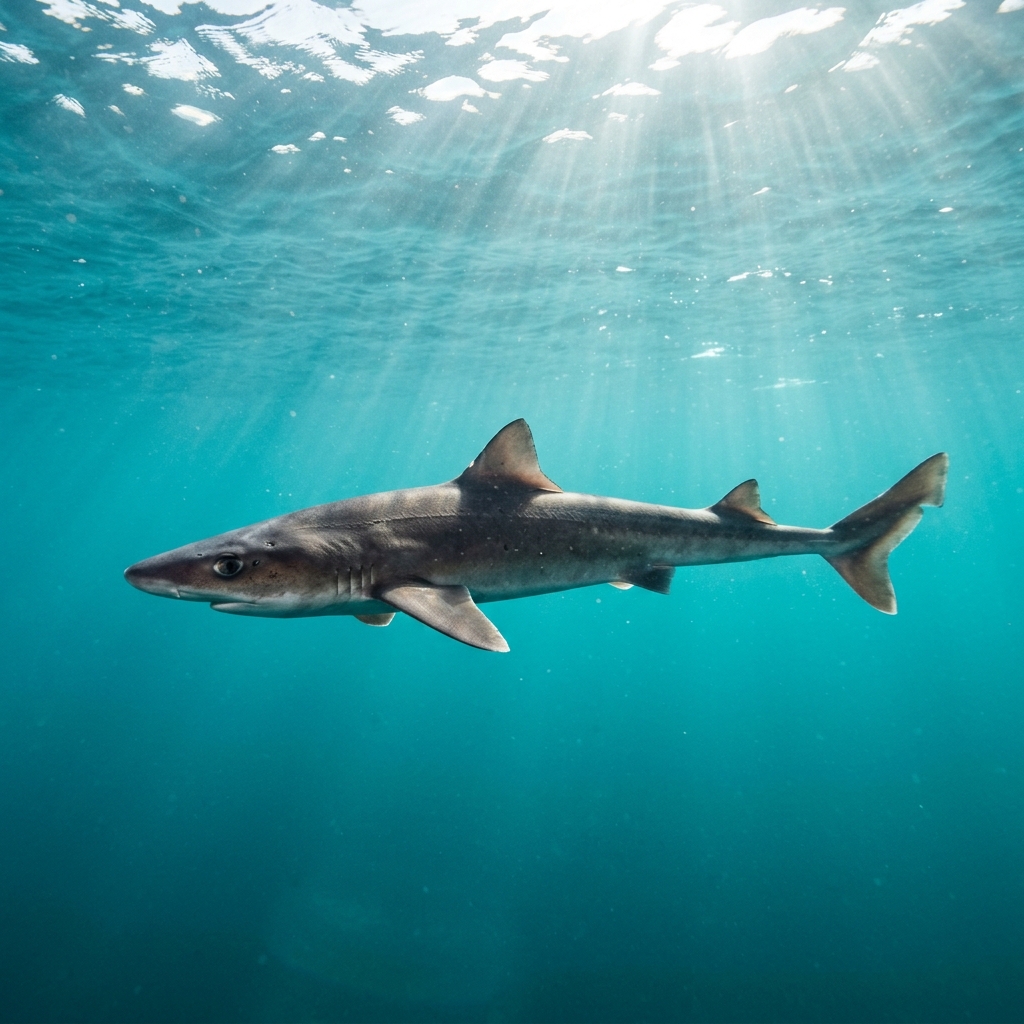
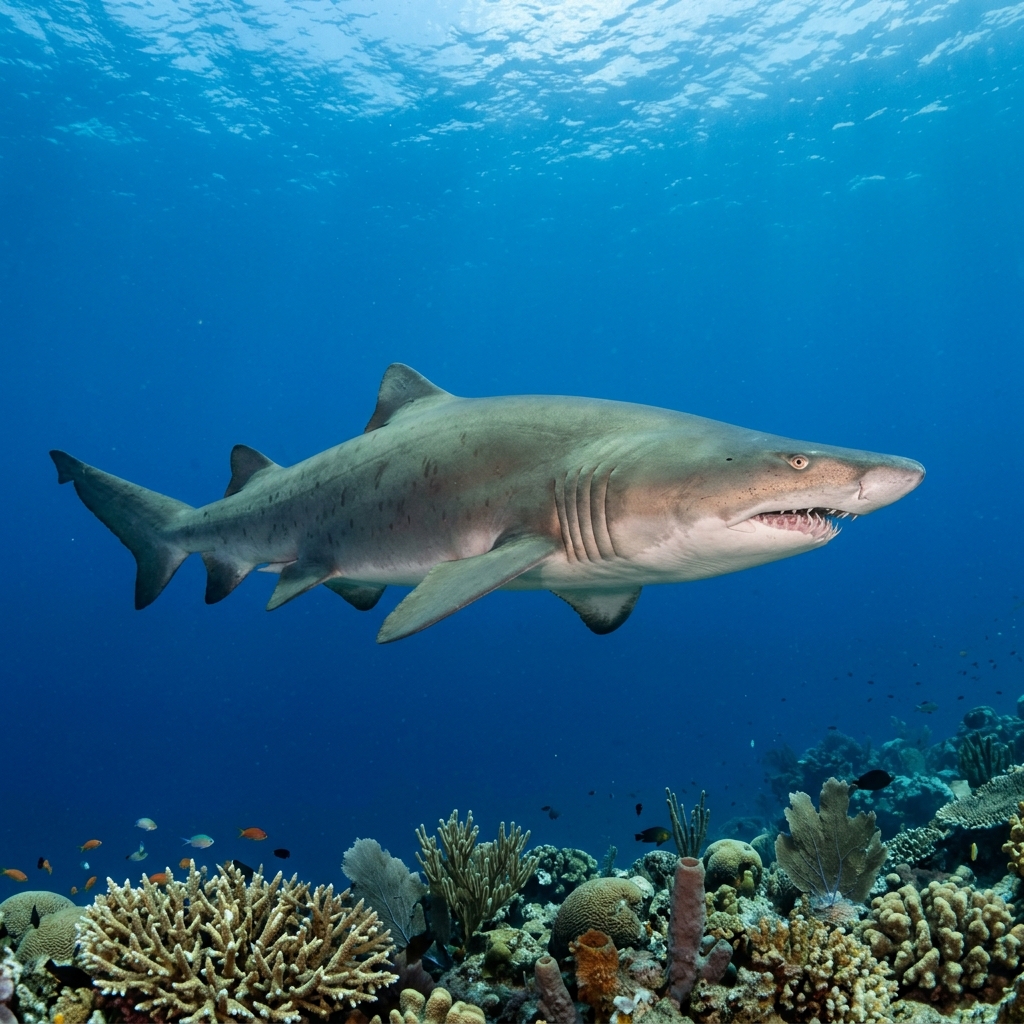
A large, heavy-bodied shark reaching around 2.3 metres, with a brownish-grey back, a pale underside, and scattered reddish-brown spots along the flanks and tail. The most distinctive feature is the mouth: teeth protrude visibly even when closed, giving it a permanently jagged, toothy grin that no other commonly encountered shark shares. The second dorsal fin is nearly as large as the first, which helps distinguish it from most other species at a glance. Females grow noticeably larger than males, and males can be identified at close range by the claspers (paired reproductive organs) visible along the inner pelvic fins.
During the day, grey nurse sharks are typically found resting or cruising slowly in loose groups inside caves, gutters, or along the base of rocky reefs, and they are famously unbothered by divers who approach calmly. They tend to hold their position or move away slowly rather than show any curiosity or aggression, making prolonged observation straightforward as long as you keep your distance and avoid sudden movements. Hunting happens at night, so daylight dives are your best window for relaxed, close-range watching.
Grey nurse sharks are one of the few sharks known to gulp and hold air at the surface, using the air in their stomachs as a buoyancy aid, effectively acting as a swim bladder. This lets them hover motionless in the water column, which is part of why they look so unnervingly still during those daytime rest periods.
In the Southern Hemisphere, grey nurse sharks are present year-round with no concentrated season, reflecting their tolerance for water temperatures from around 12.5 to 28 °C. Plan around local aggregation sites rather than calendar months.
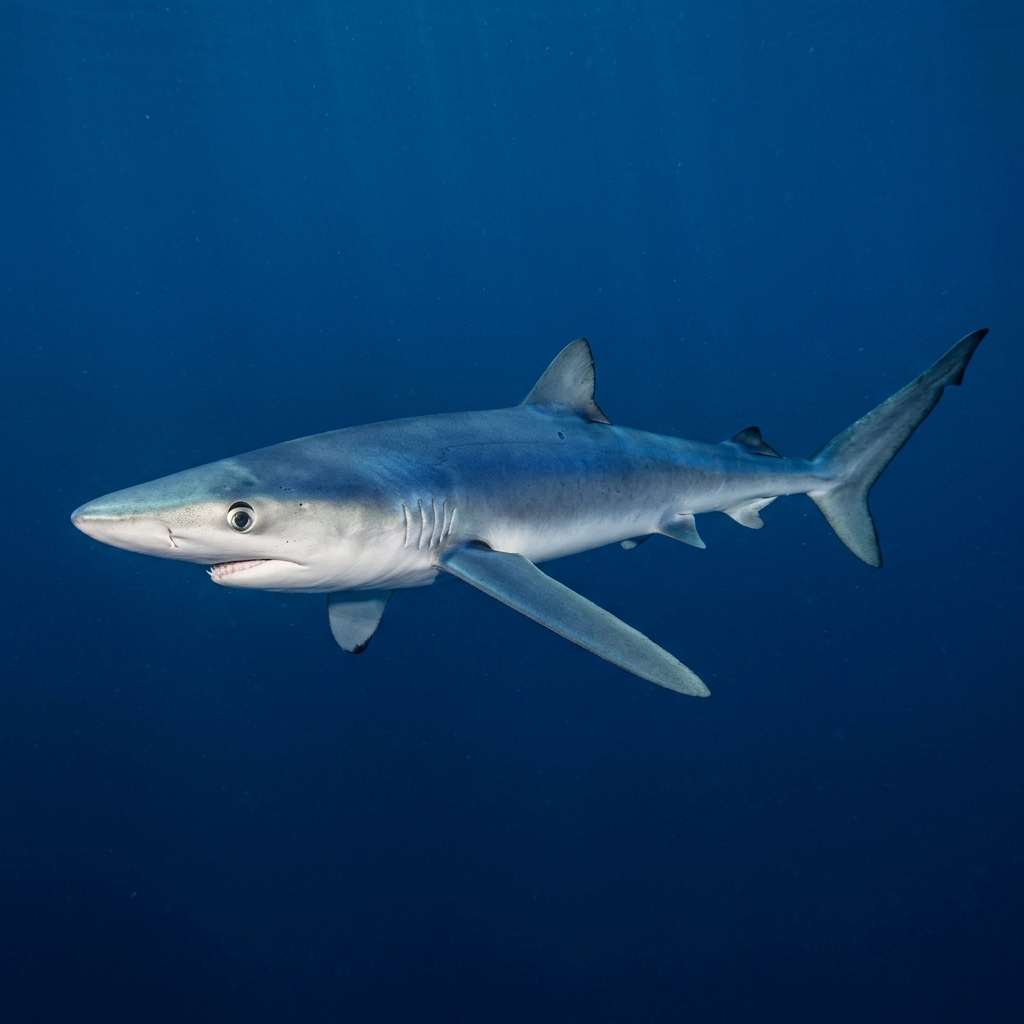
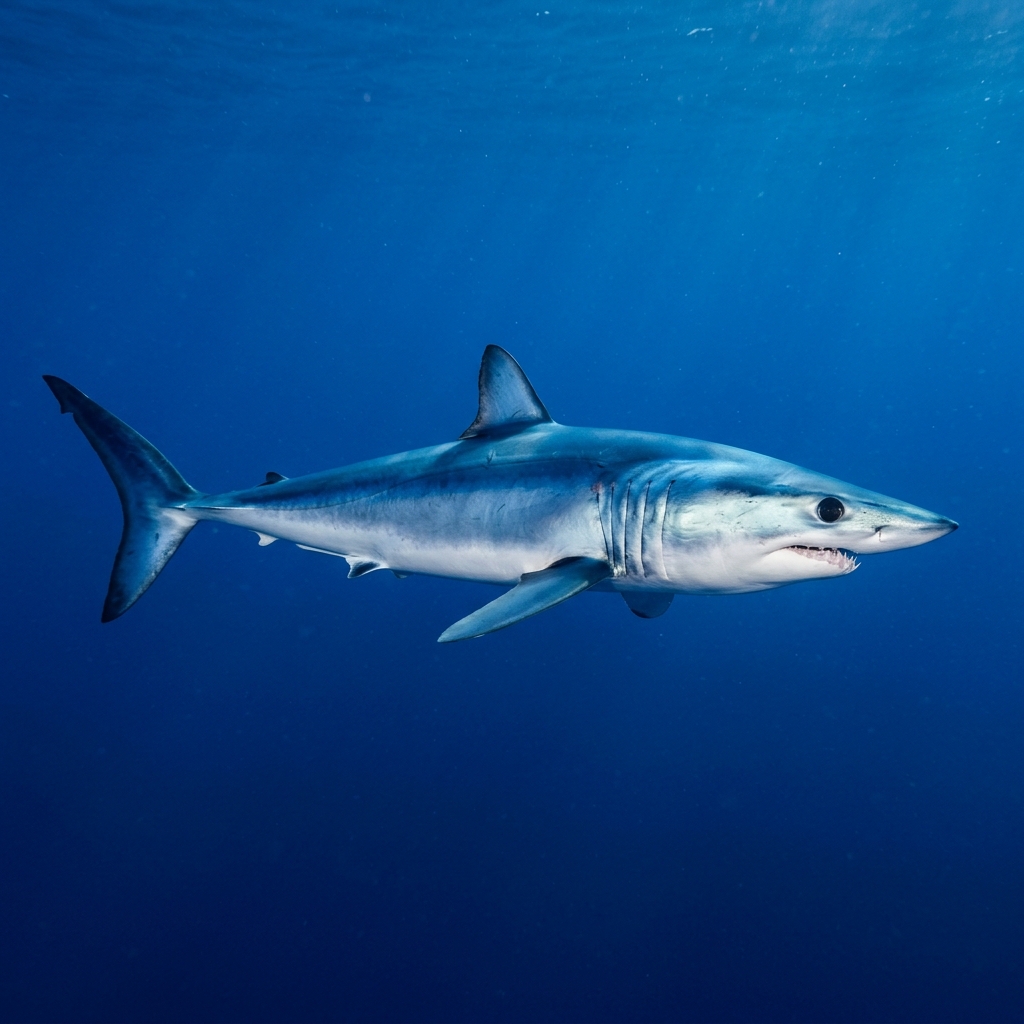
Reef neighbours a diver could mistake it for. Use the identification notes above to tell them apart.
Most reliably logged in New South Wales, Australia, and across Florida and the south-eastern United States, where sightings are frequently rated common to very common. Strong populations are also recorded in Western Australia, and the species appears across the Mediterranean, including Sardegna, Sicily, and the Aegean coast of Turkey, though sightings there tend to be less frequent.
Mapping where Sand Tiger Shark is logged…
The strongest, most consistent sightings come from New South Wales in Australia and from Florida and the south-eastern United States. Western Australia is also a reliable spot, and scattered records exist across the Mediterranean in areas like Sardegna, Sicily, and the Aegean coast of Turkey.
In the Southern Hemisphere, they are present year-round with no peak season, tolerating water temperatures from around 12.5 to 28 °C. Timing your dive around known aggregation sites and gutters matters more than the time of year.
They carry a dangerous classification, but unprovoked attacks are rare. Their usual response to divers is indifference or a slow retreat. Risks rise sharply if you corner them in a cave, make sudden movements, or spearfish nearby. Give them space and they are among the more relaxed large sharks to observe.
Look for the protruding, ragged teeth visible even with the mouth closed, a bulky grey-brown body with reddish-brown spots, and a second dorsal fin almost as large as the first. No other commonly dived shark combines all three of those features.
Typical adults reach around 2.3 metres. Females are the larger sex and the largest individuals recorded exceed 3 metres, though that is not the norm. In the water, they read as a heavy, solidly built shark rather than a slender, fast-moving one.
Yes, they are listed as Critically Endangered on the IUCN Red List, making them one of the most threatened sharks in the world. Populations in some regions, particularly eastern Australia, are very small. Divers should avoid disturbing resting groups and support local monitoring efforts where possible.
The Sand Tiger Shark is listed as critically endangered by the IUCN. Observe from a distance, avoid touching or feeding it, and report sightings to local marine research organisations.
Grey nurse sharks are listed as Critically Endangered globally, with populations in some regions critically small. Avoid touching, chasing, or interfering with resting aggregations, and report sightings and injuries through local shark monitoring programmes where available.
Site and sighting data is aggregated from diver logs, iNaturalist and GBIF. For taxonomy and conservation status:
Blue Shark
1,527 sites